 Image 1 of 21
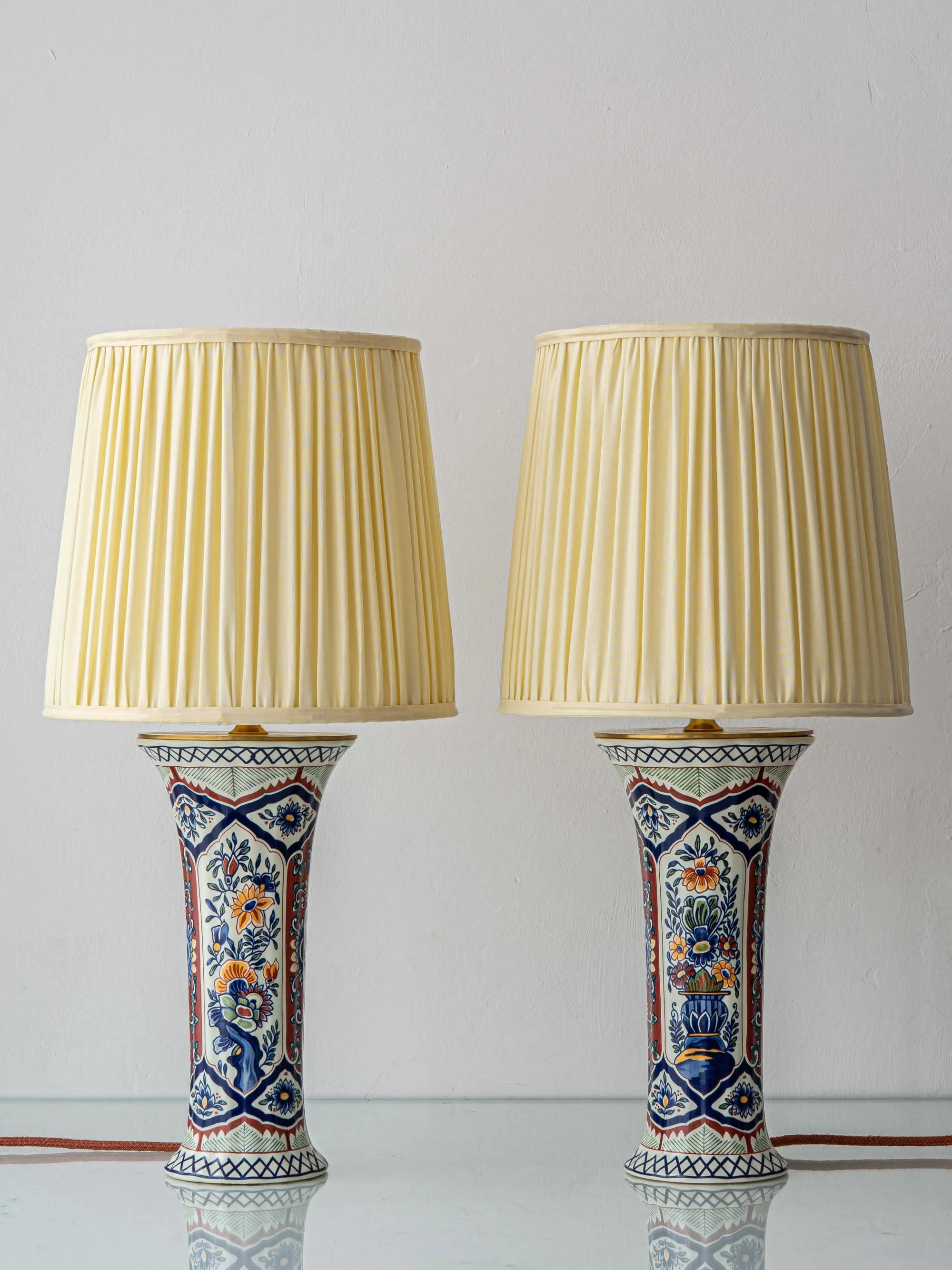 Image 2 of 21
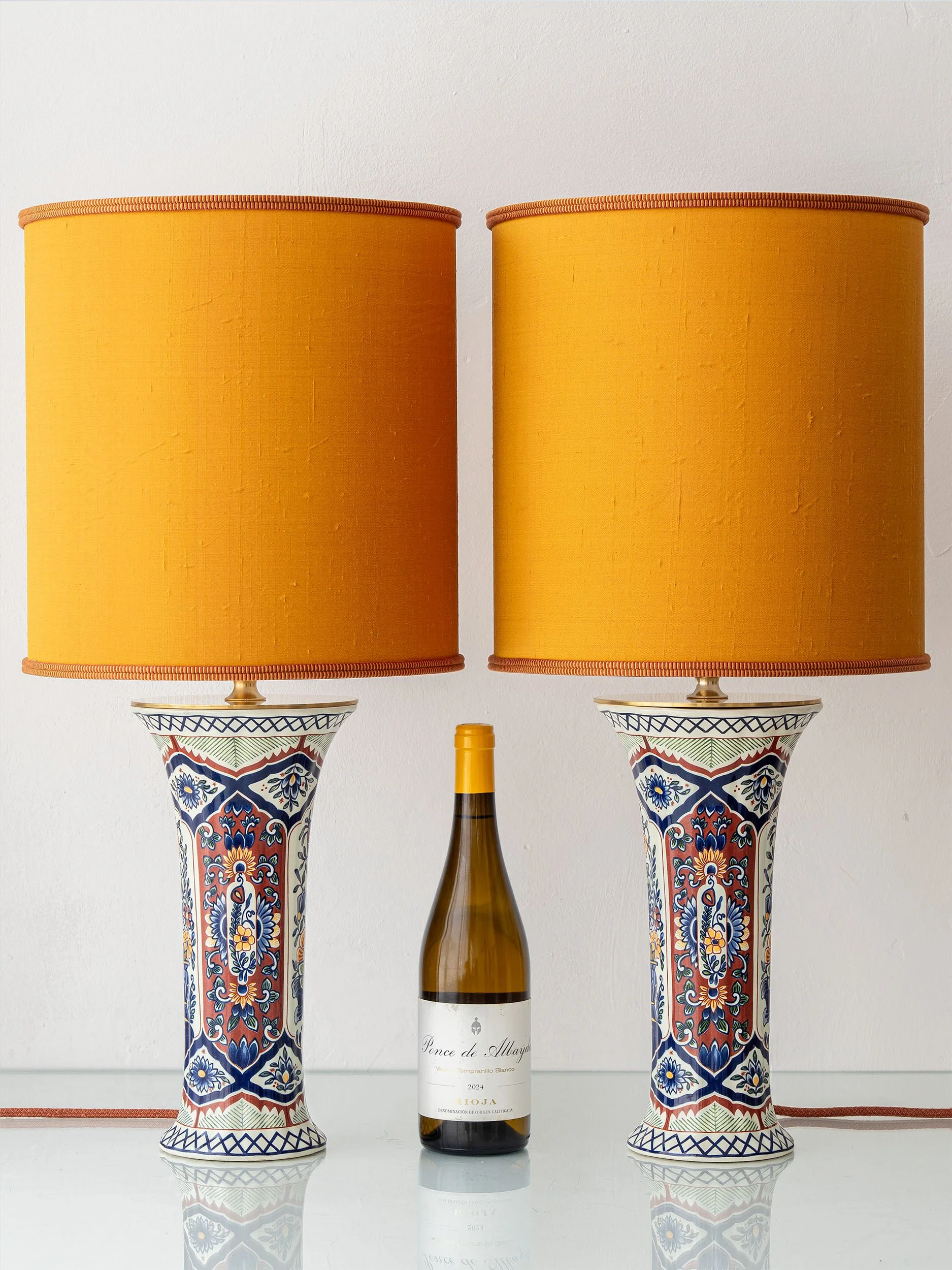 Image 3 of 21
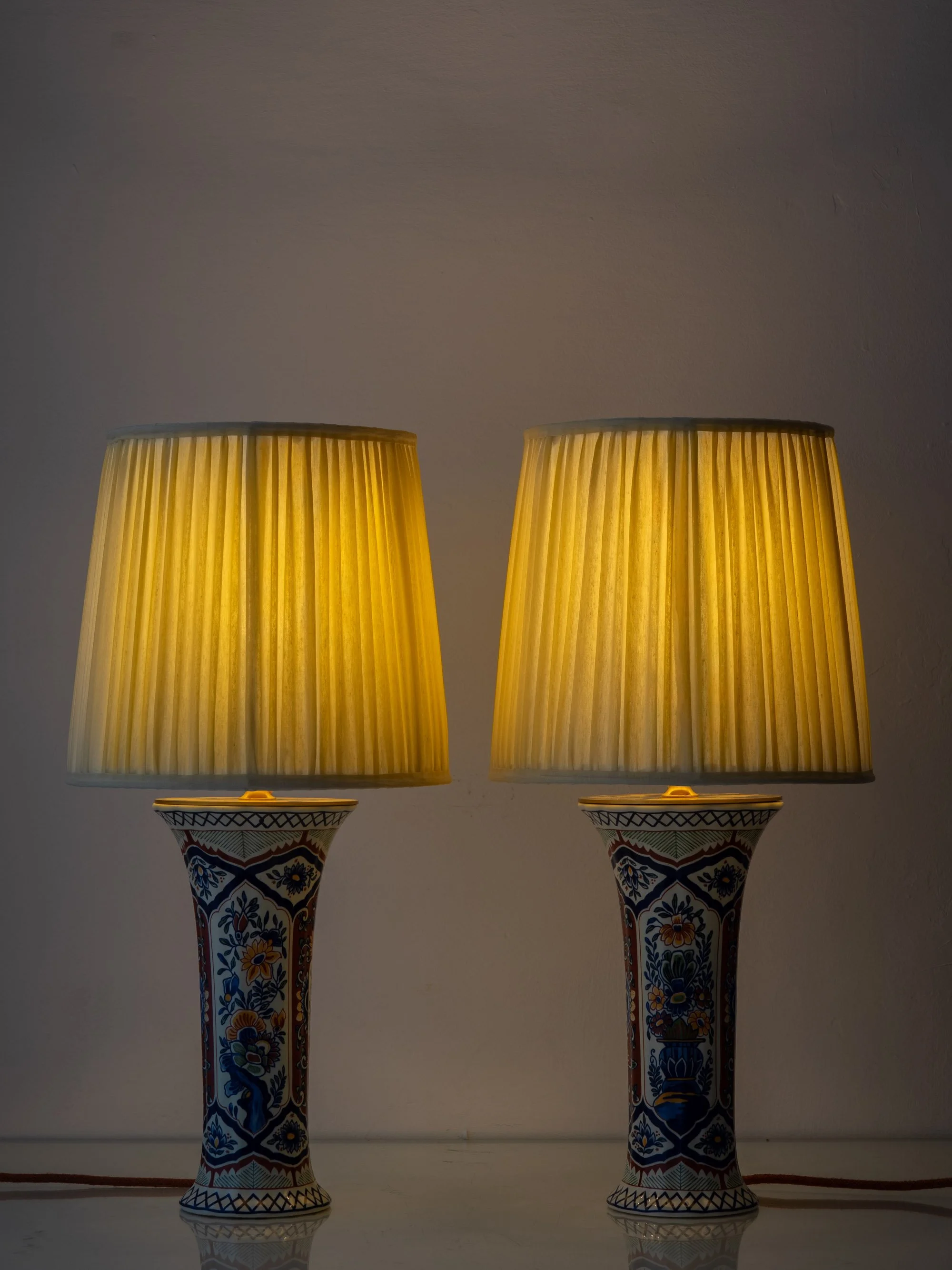 Image 4 of 21
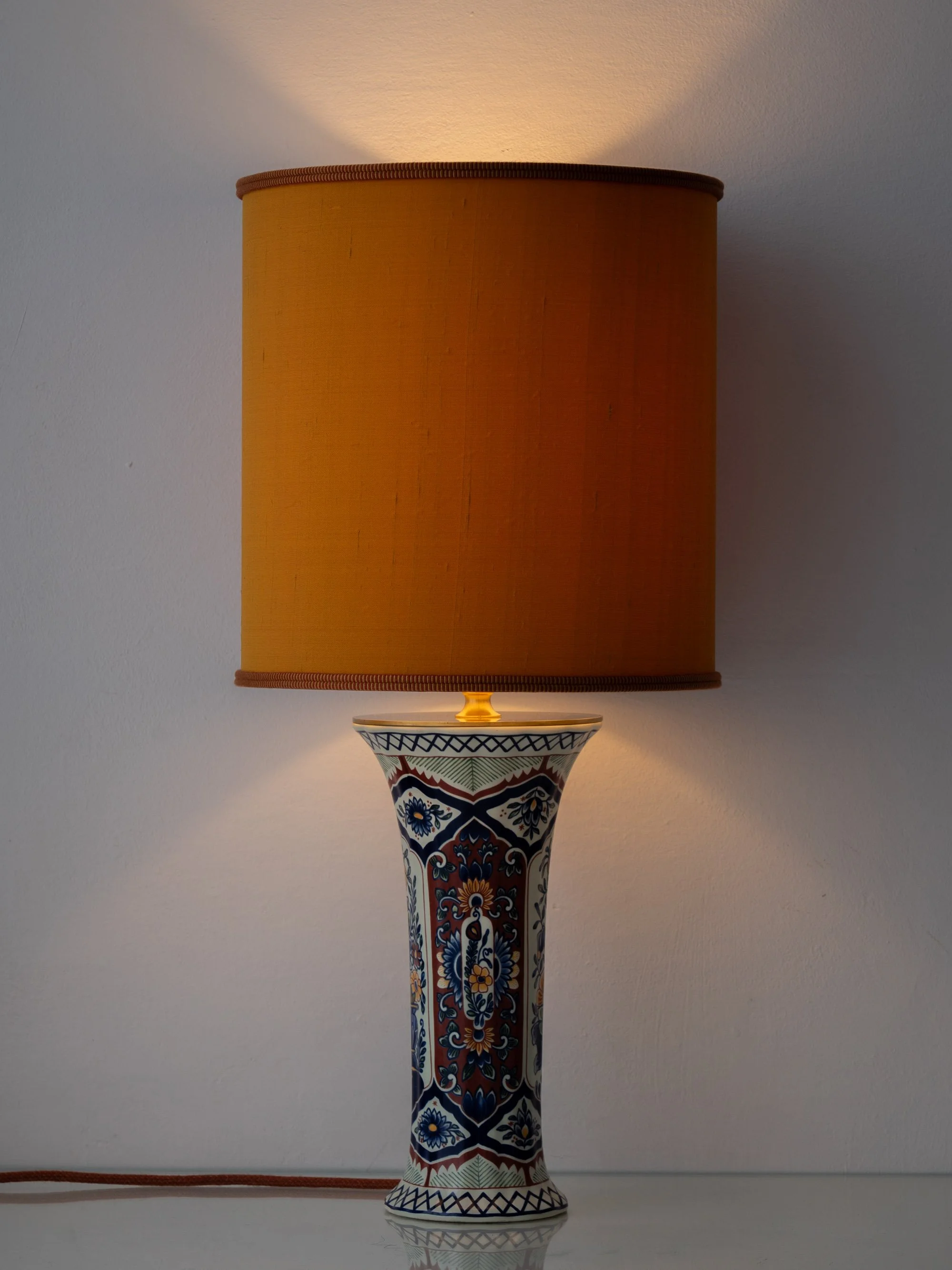 Image 5 of 21
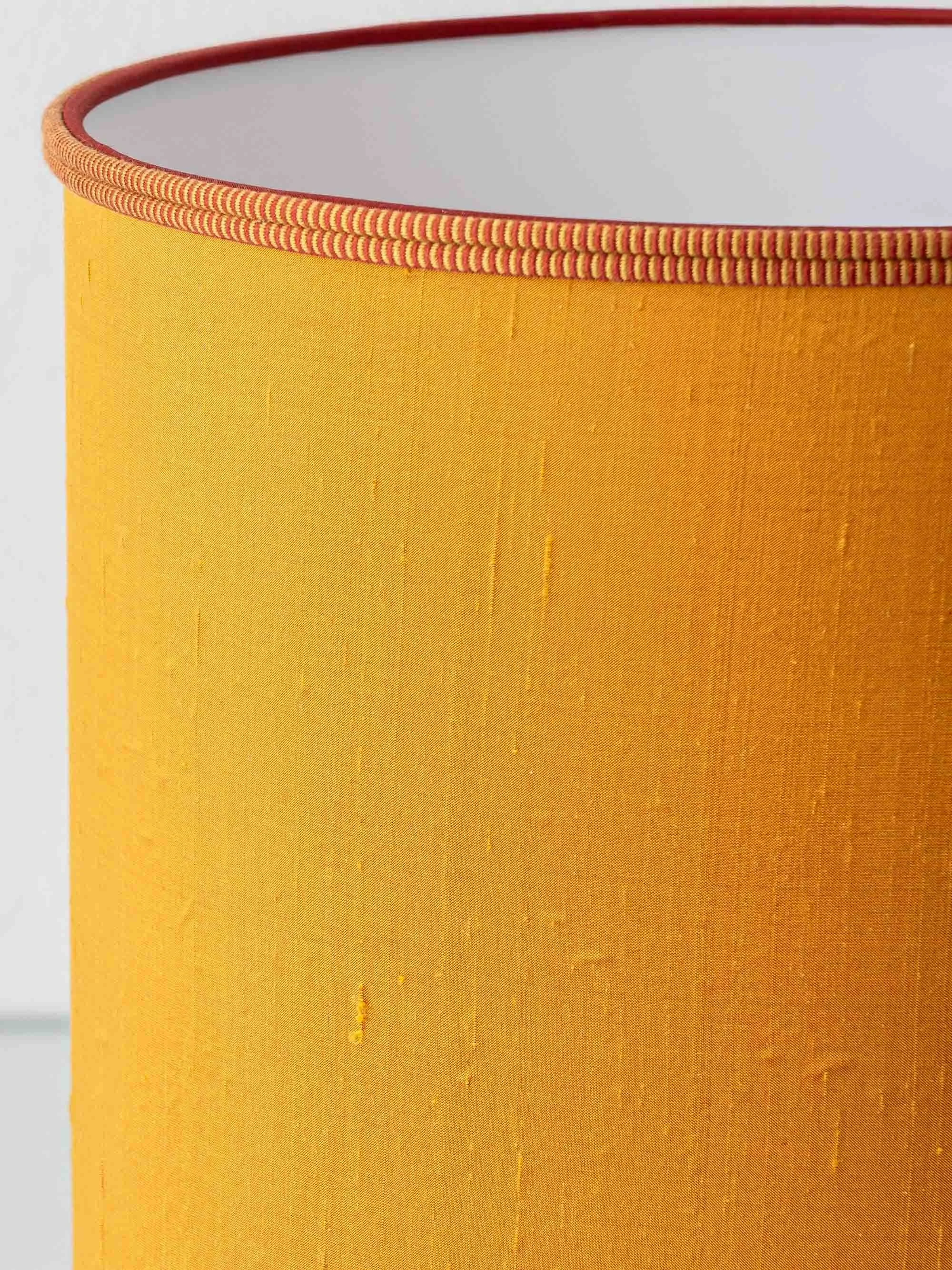 Image 6 of 21
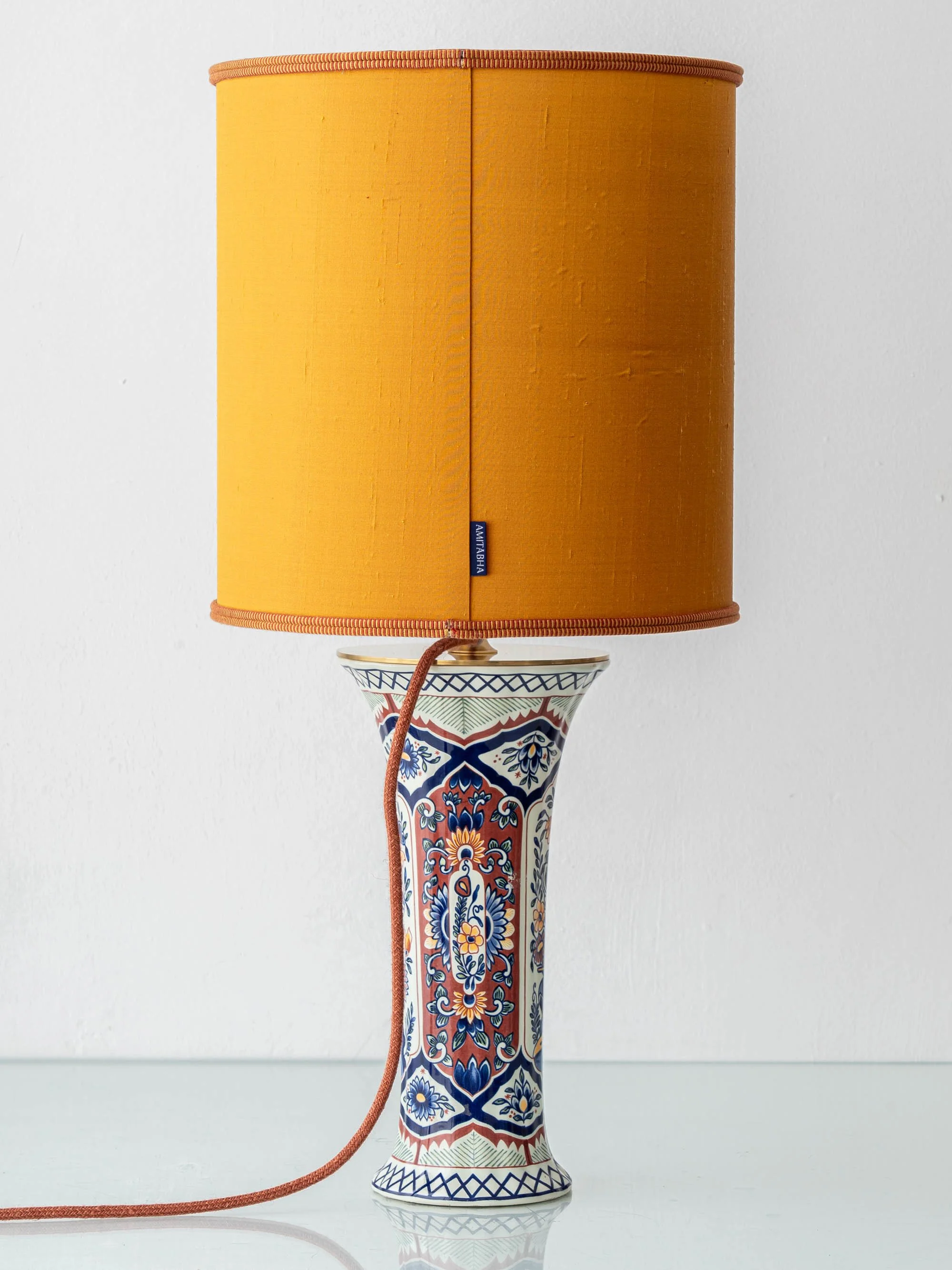 Image 7 of 21
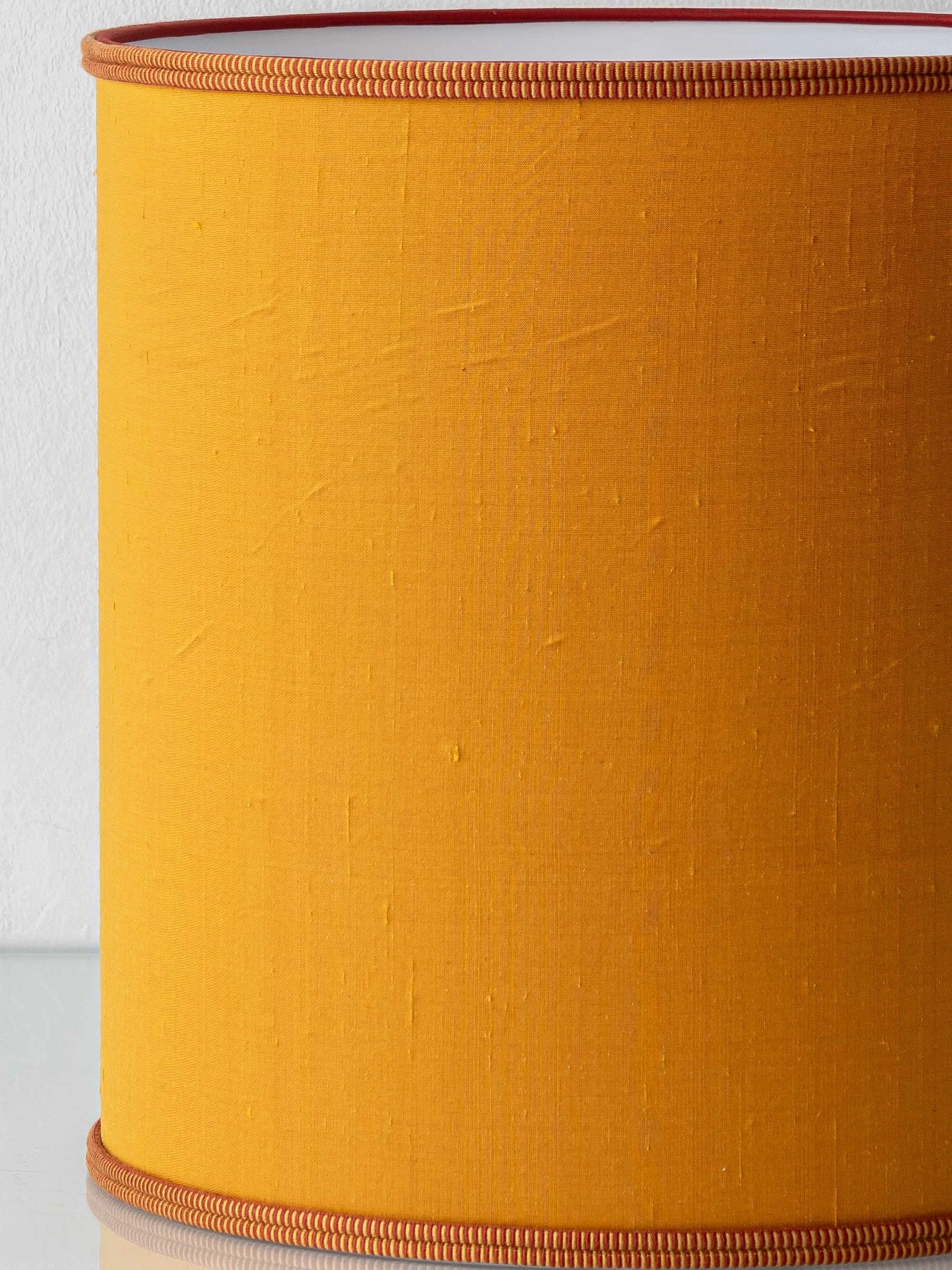 Image 8 of 21
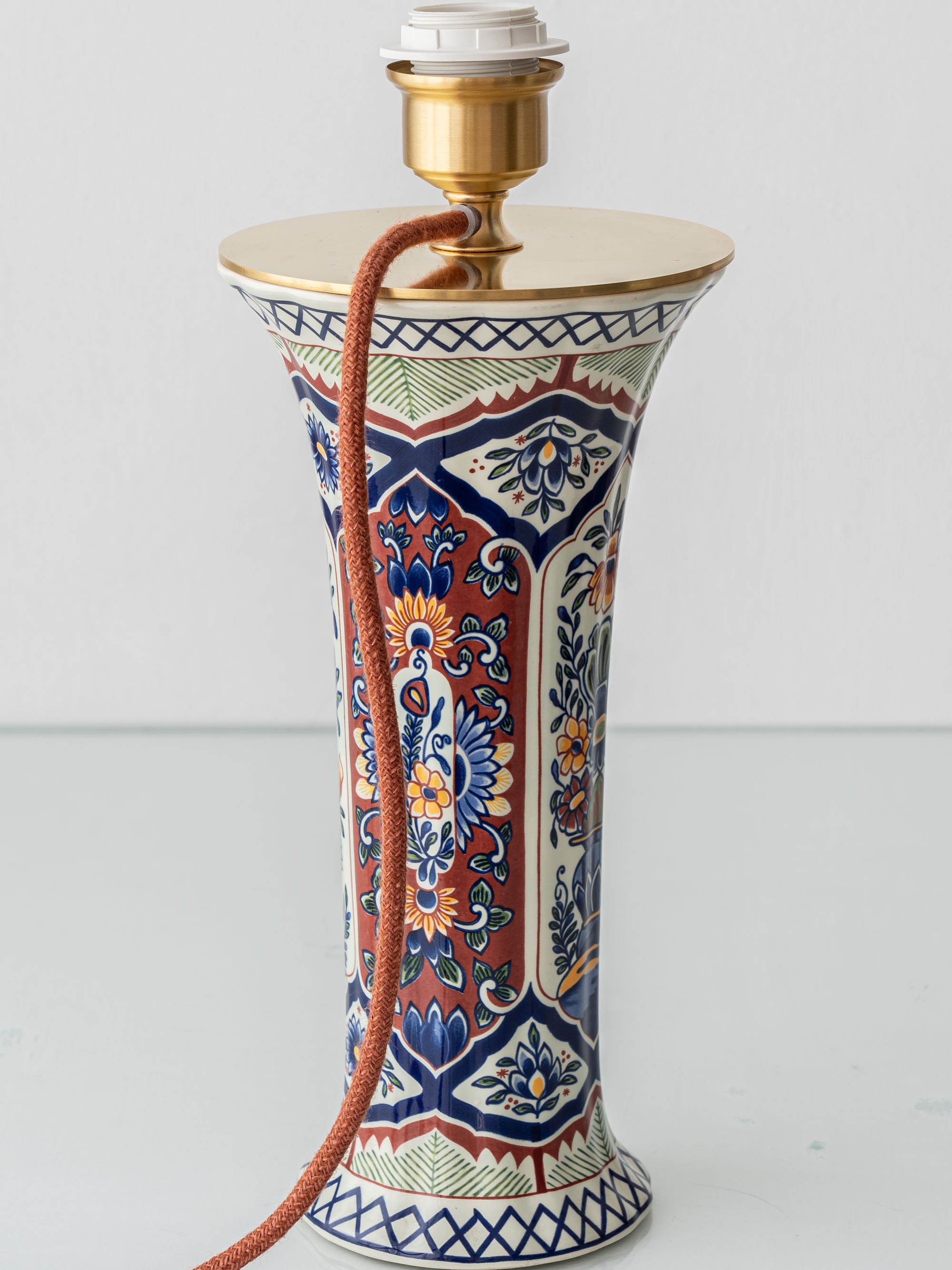 Image 9 of 21
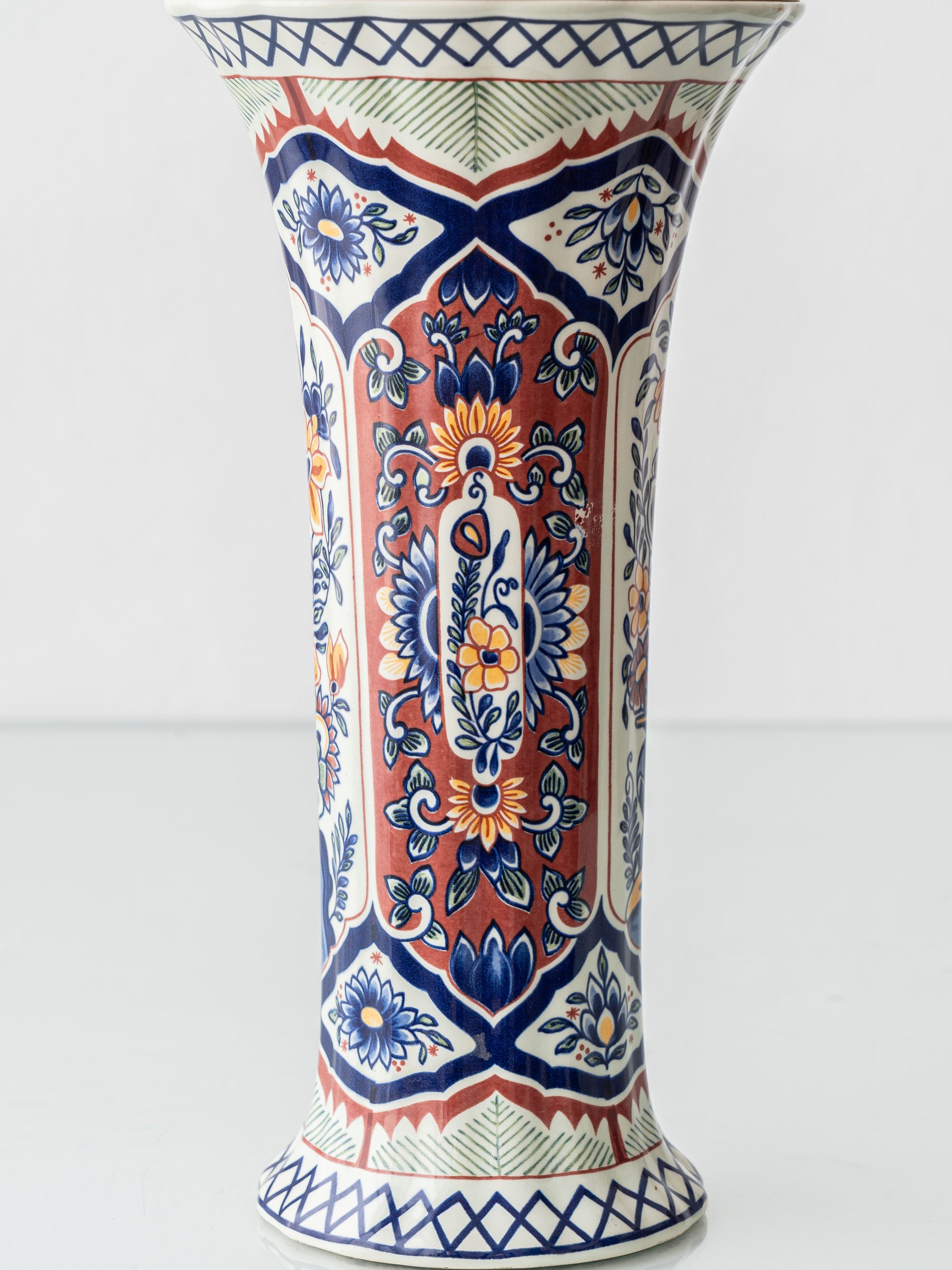 Image 10 of 21
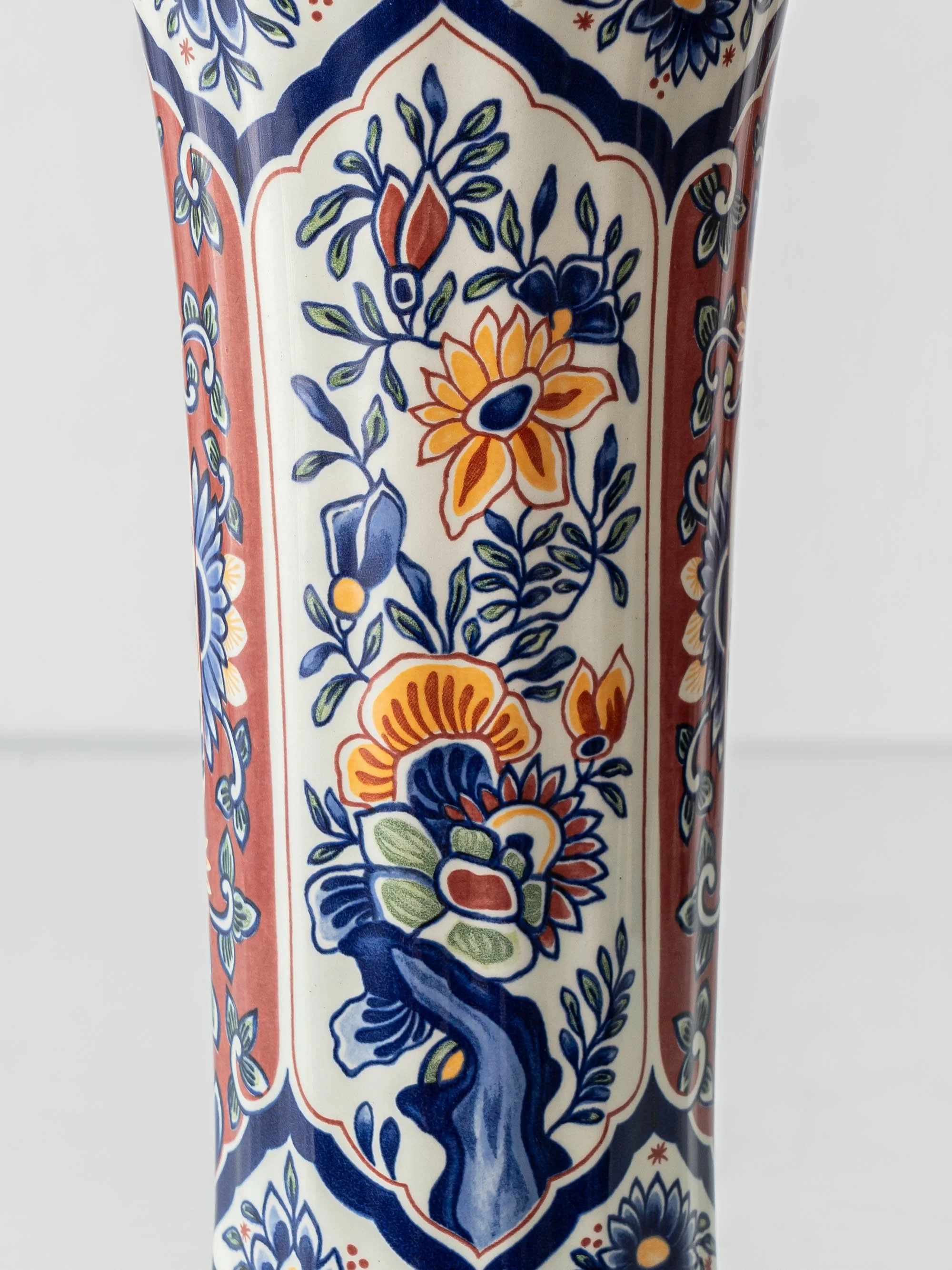 Image 11 of 21
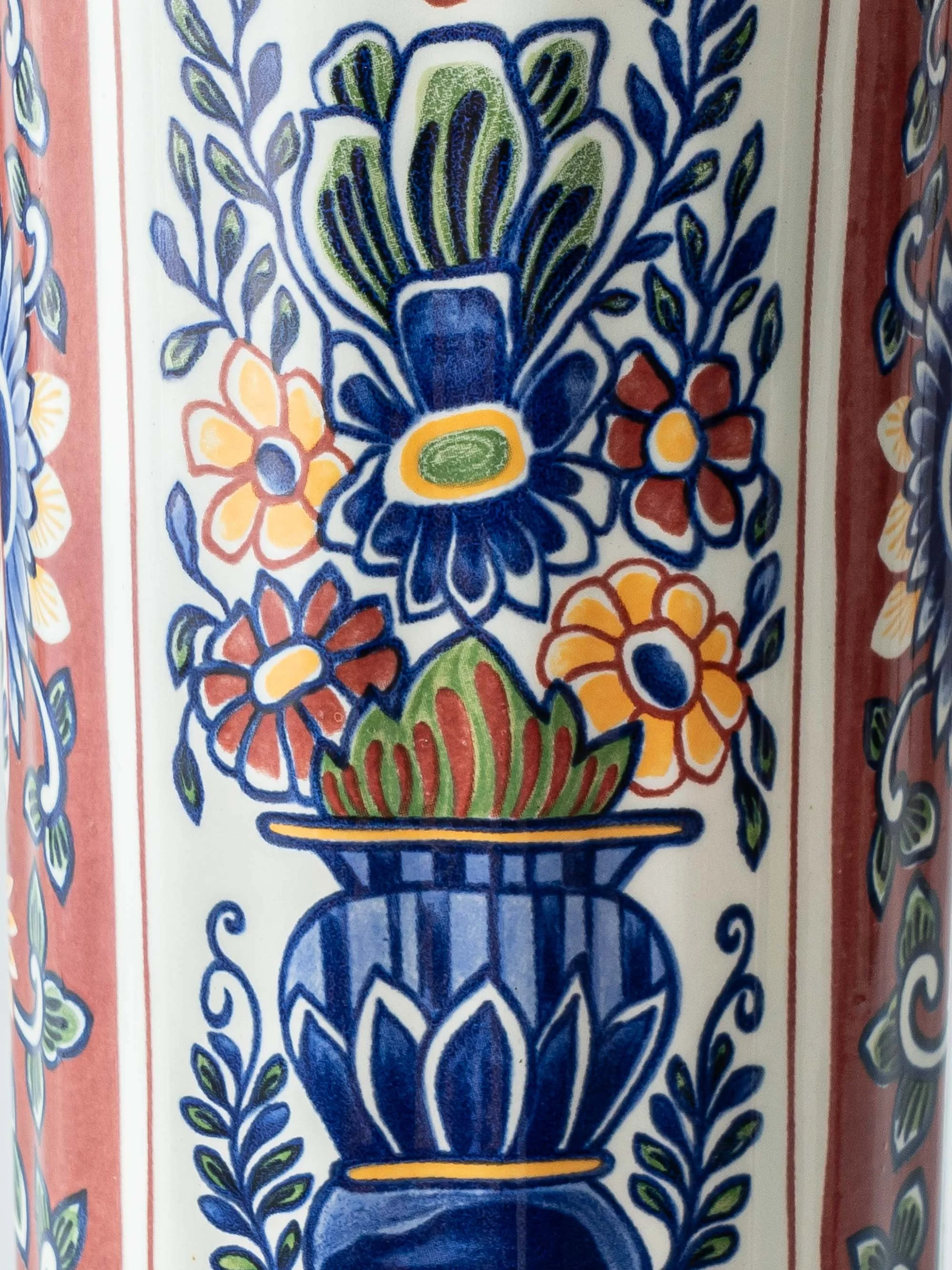 Image 12 of 21
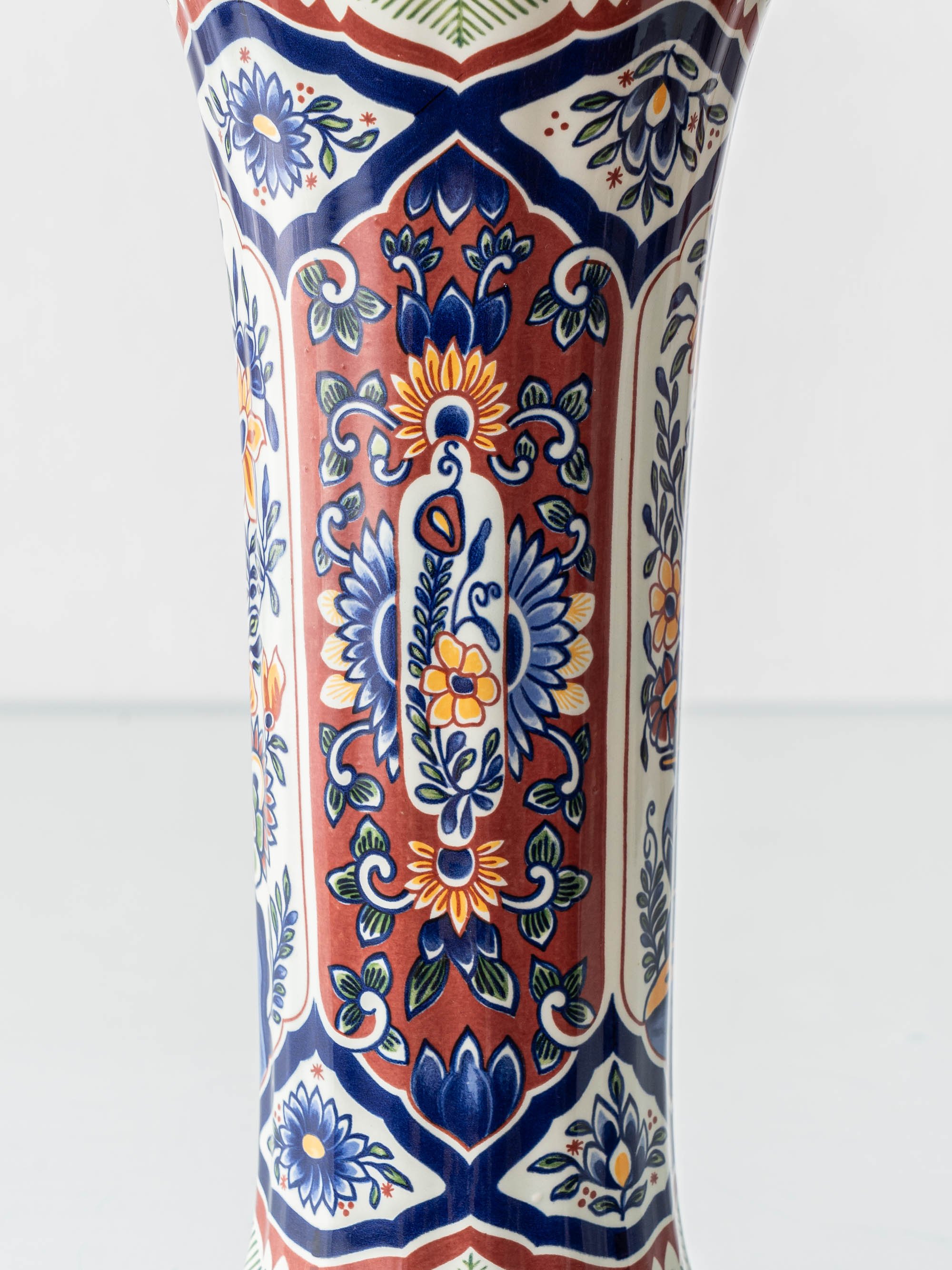 Image 13 of 21
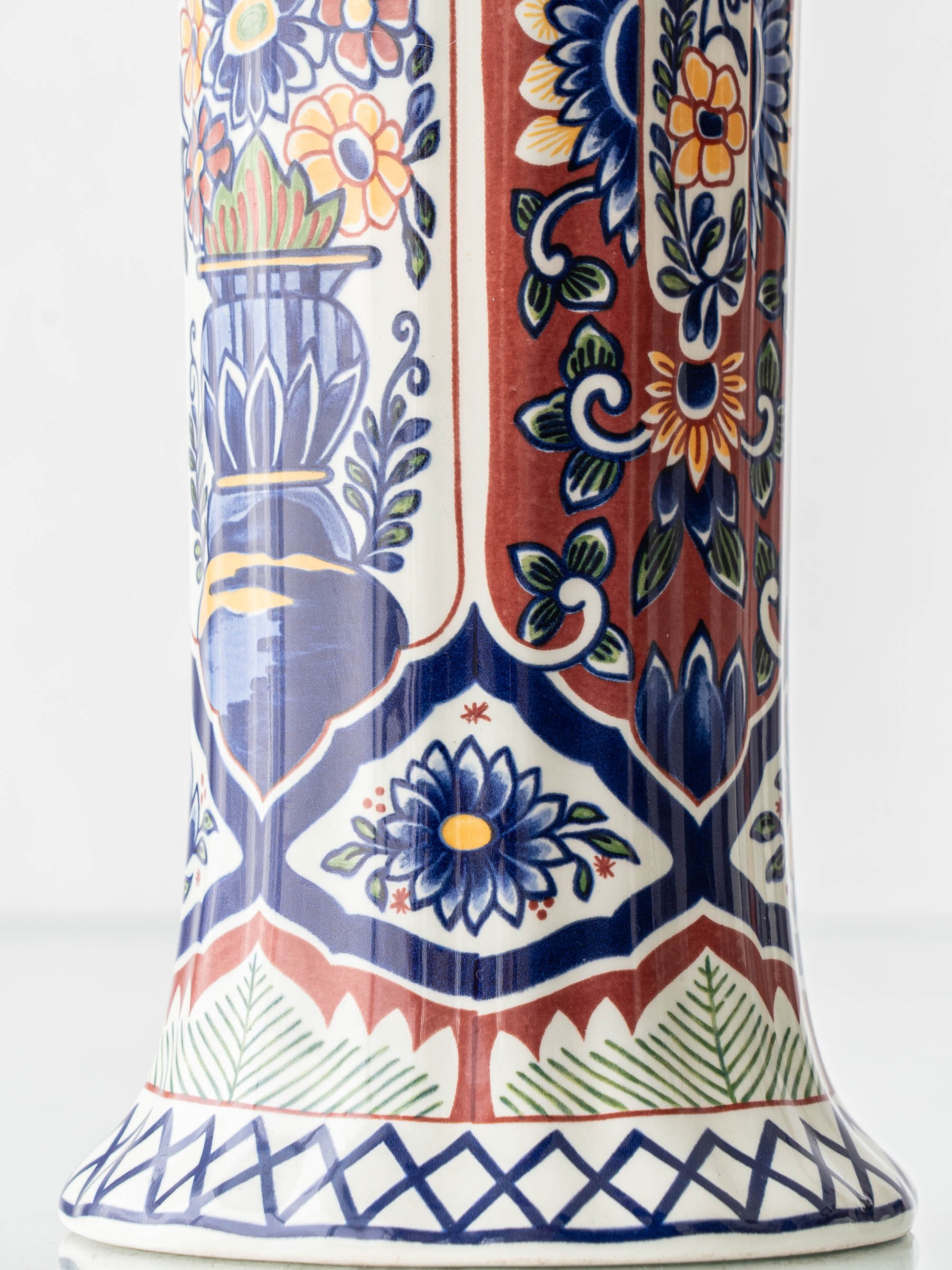 Image 14 of 21
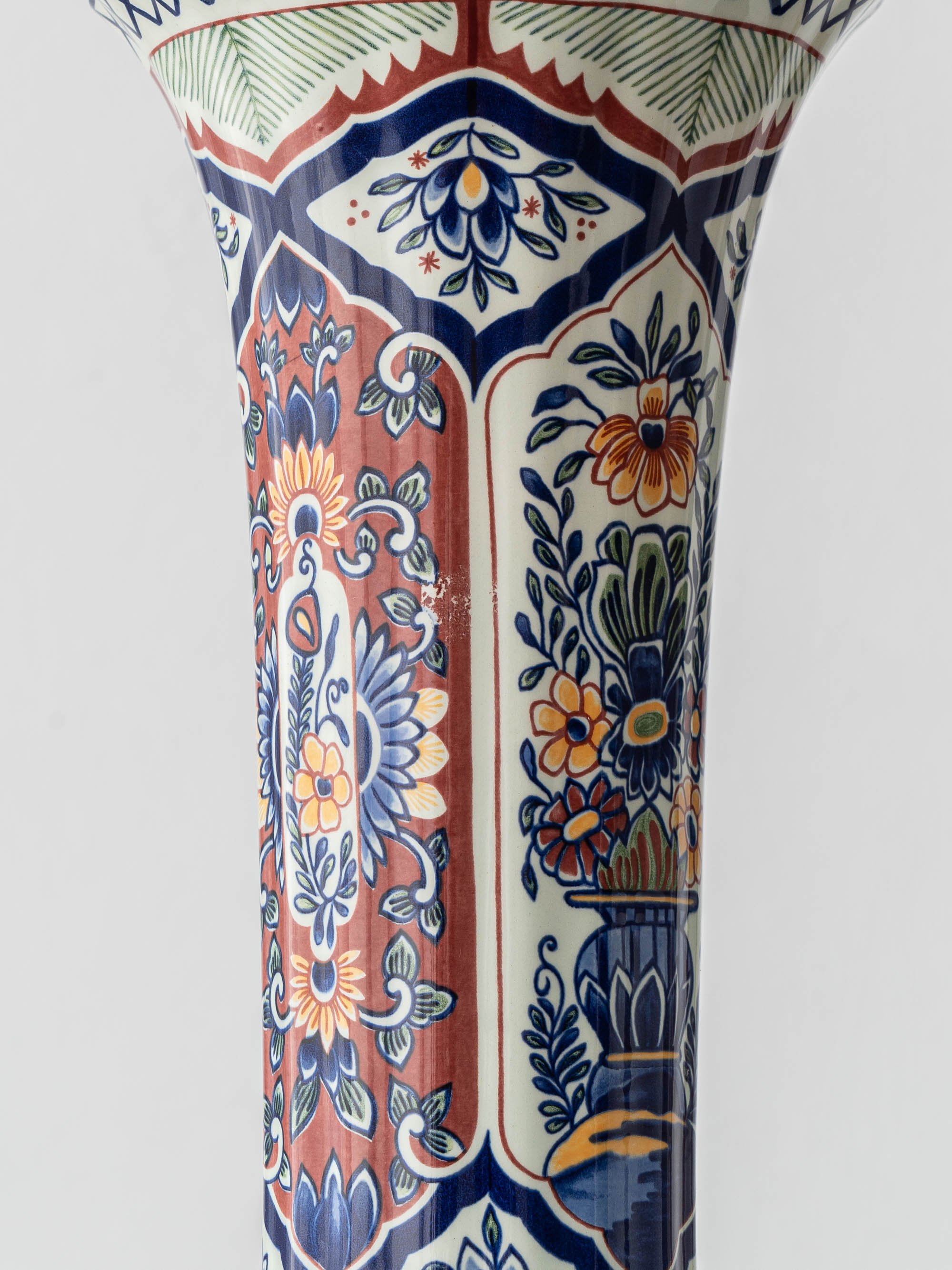 Image 15 of 21
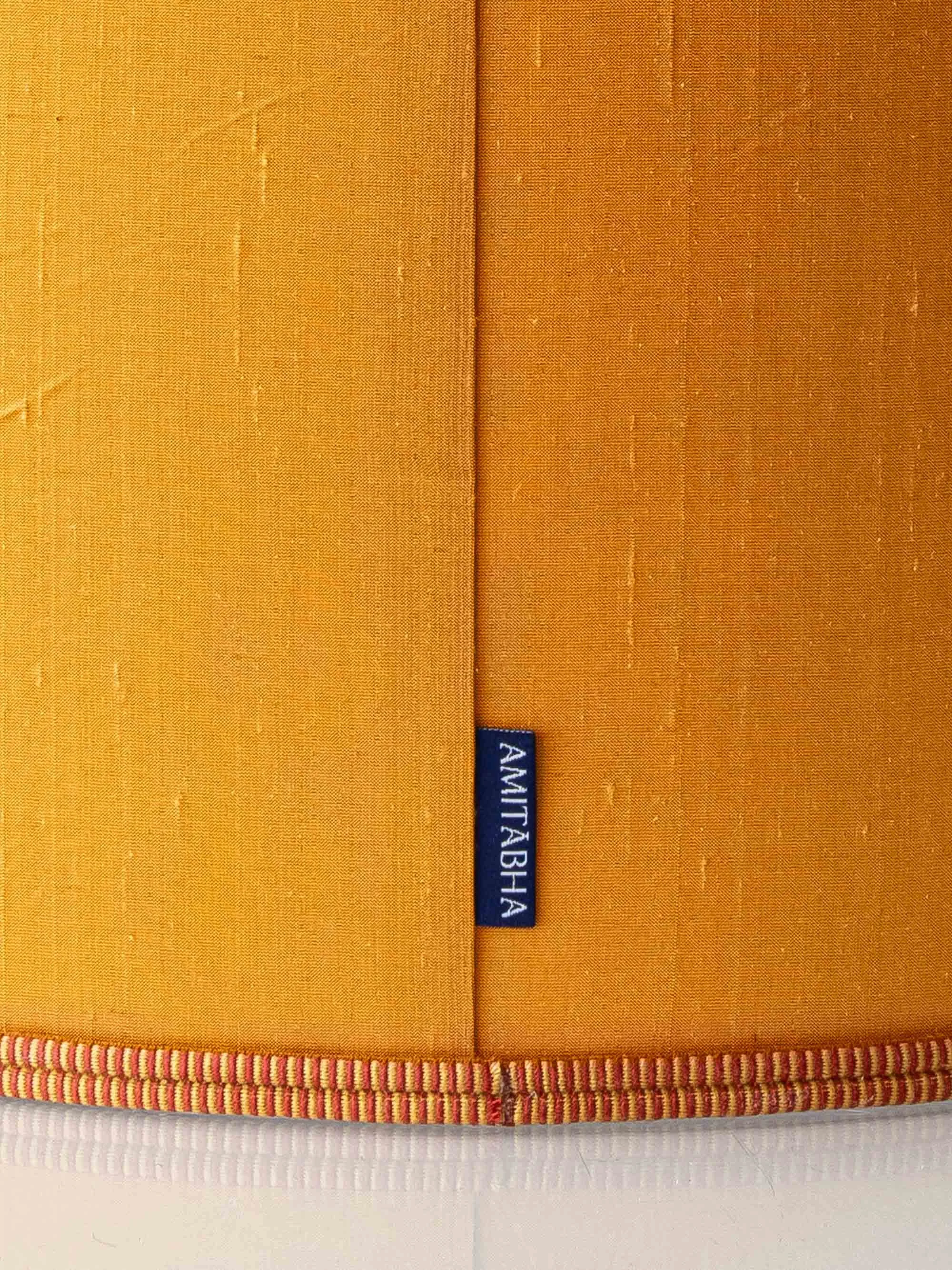 Image 16 of 21
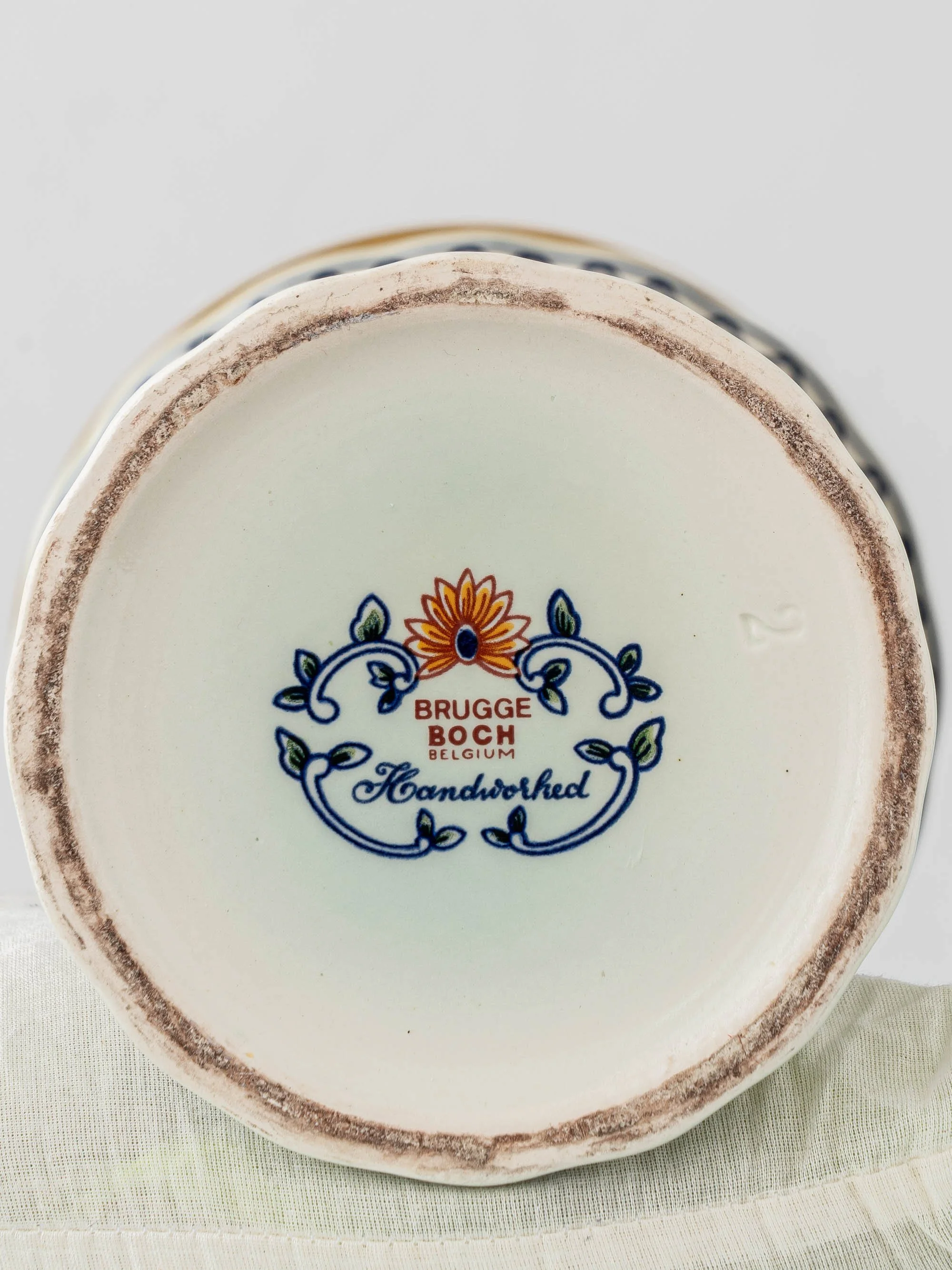 Image 17 of 21
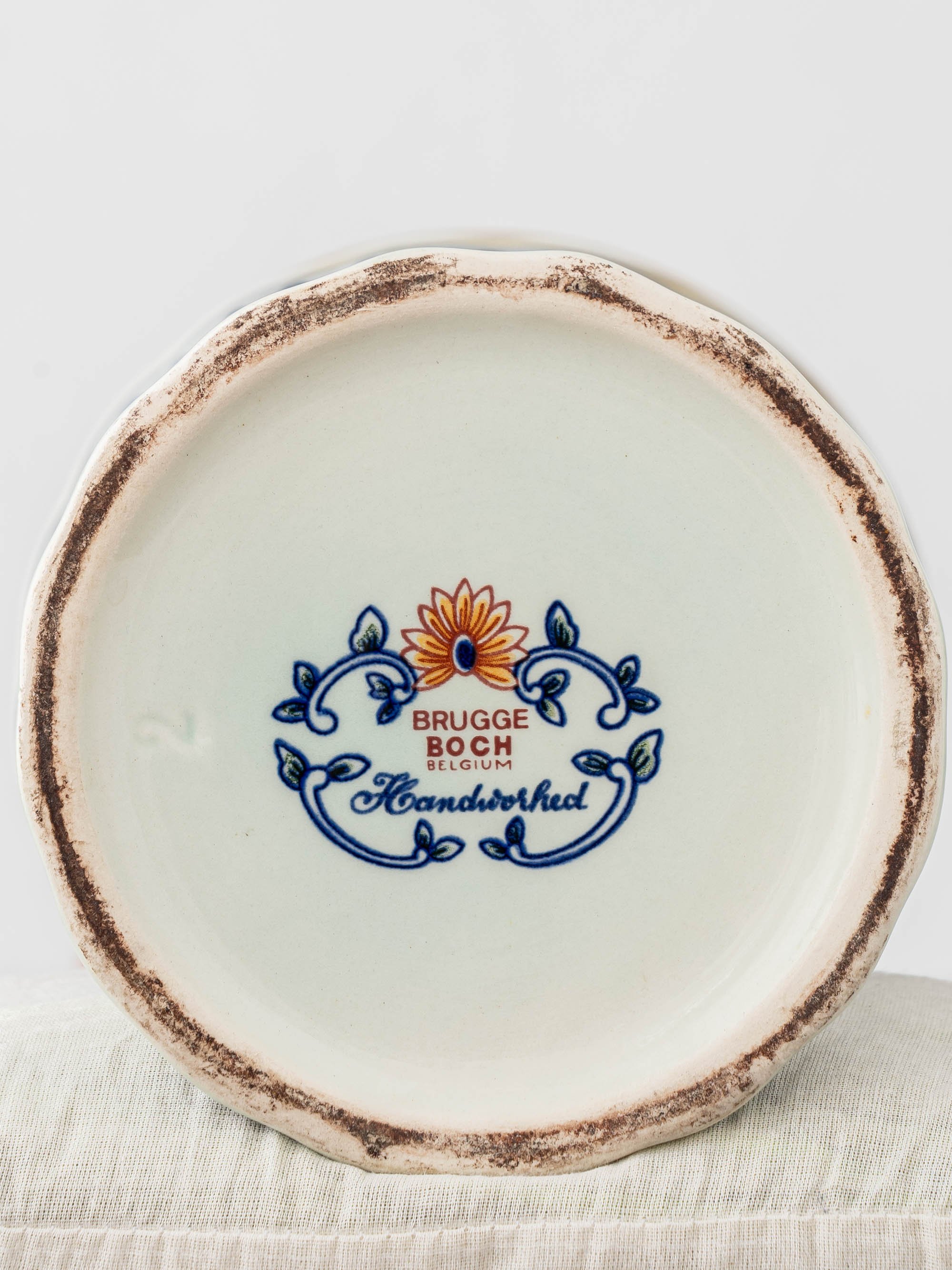 Image 18 of 21
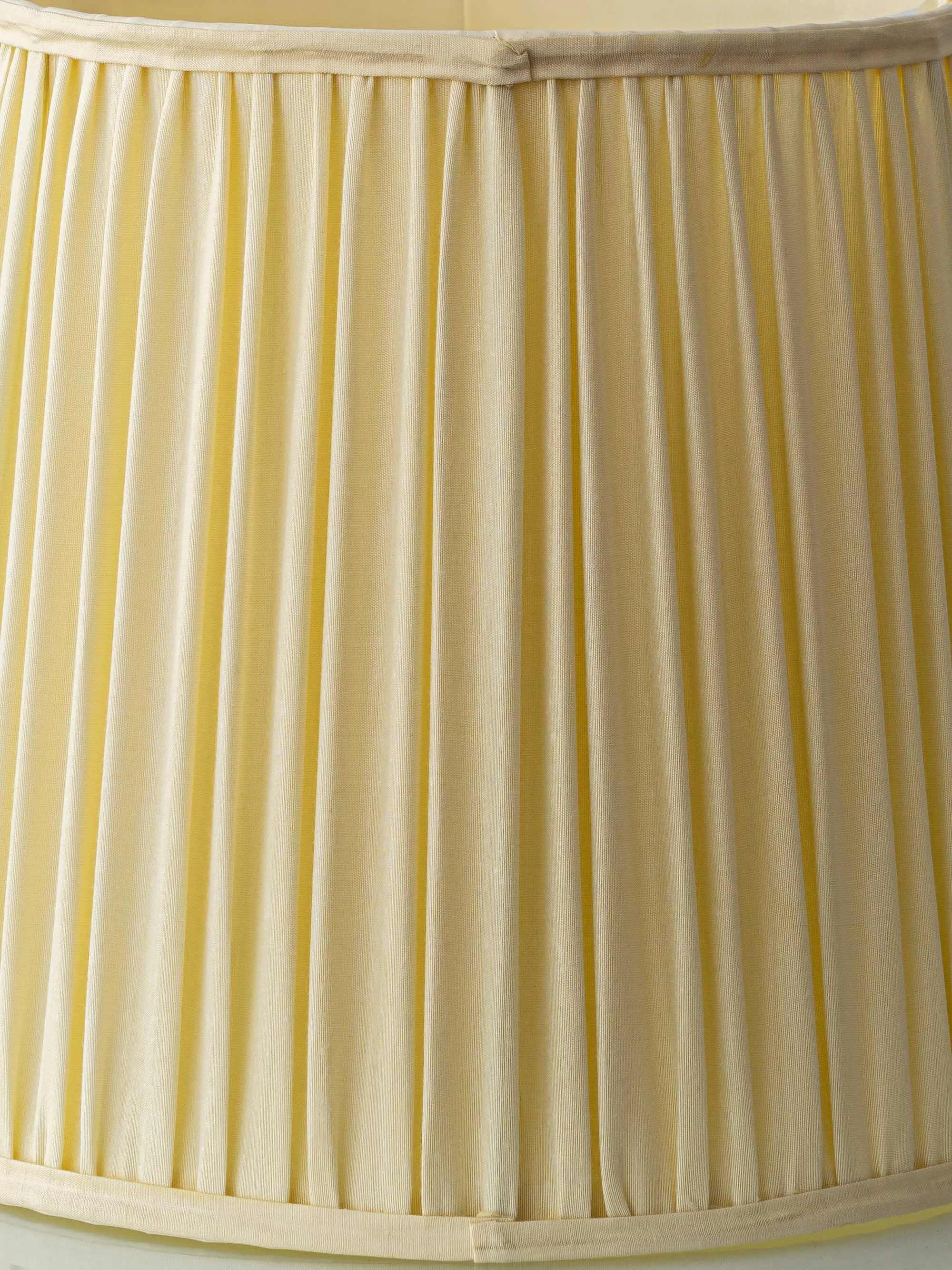 Image 19 of 21
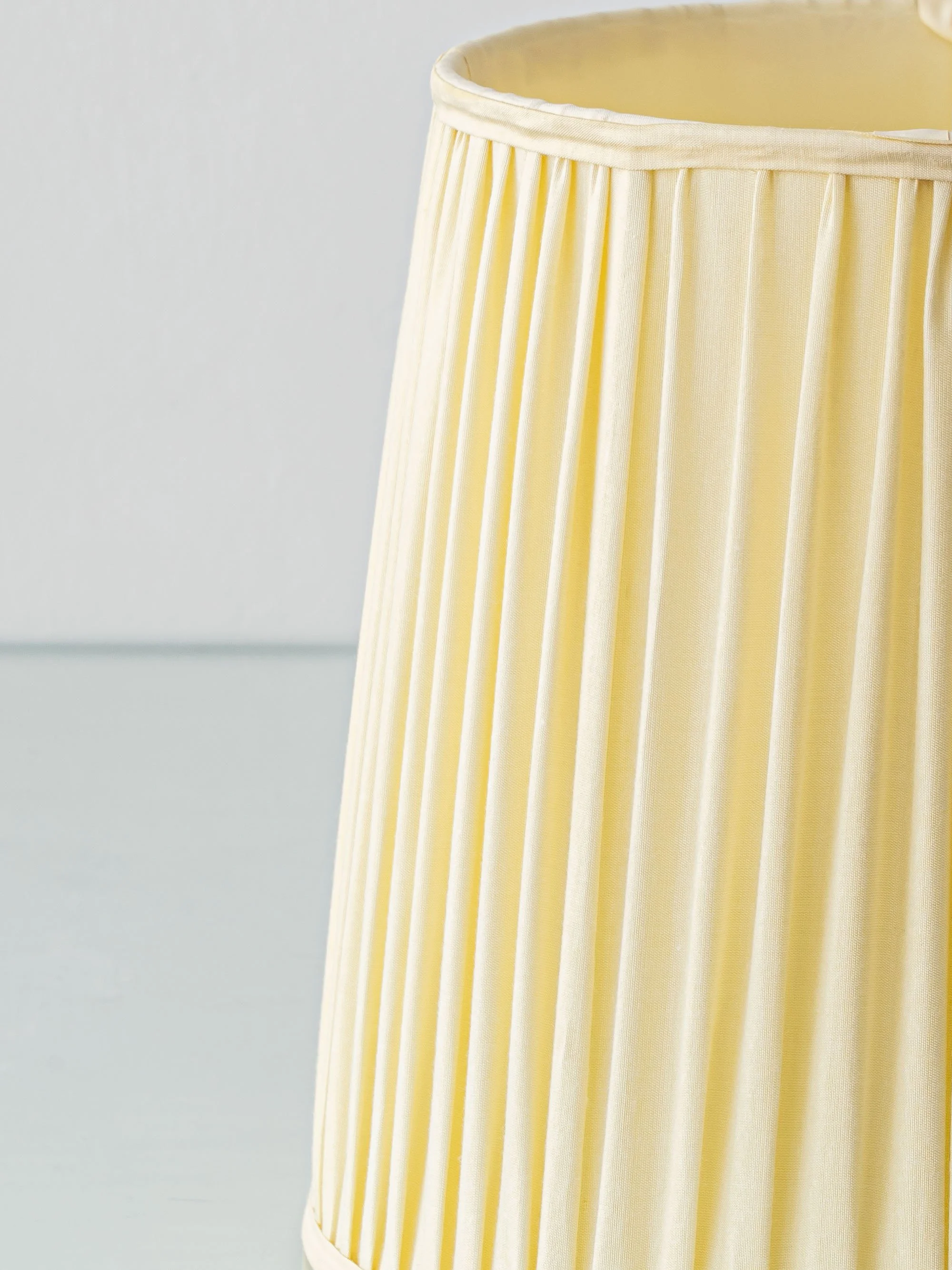 Image 20 of 21
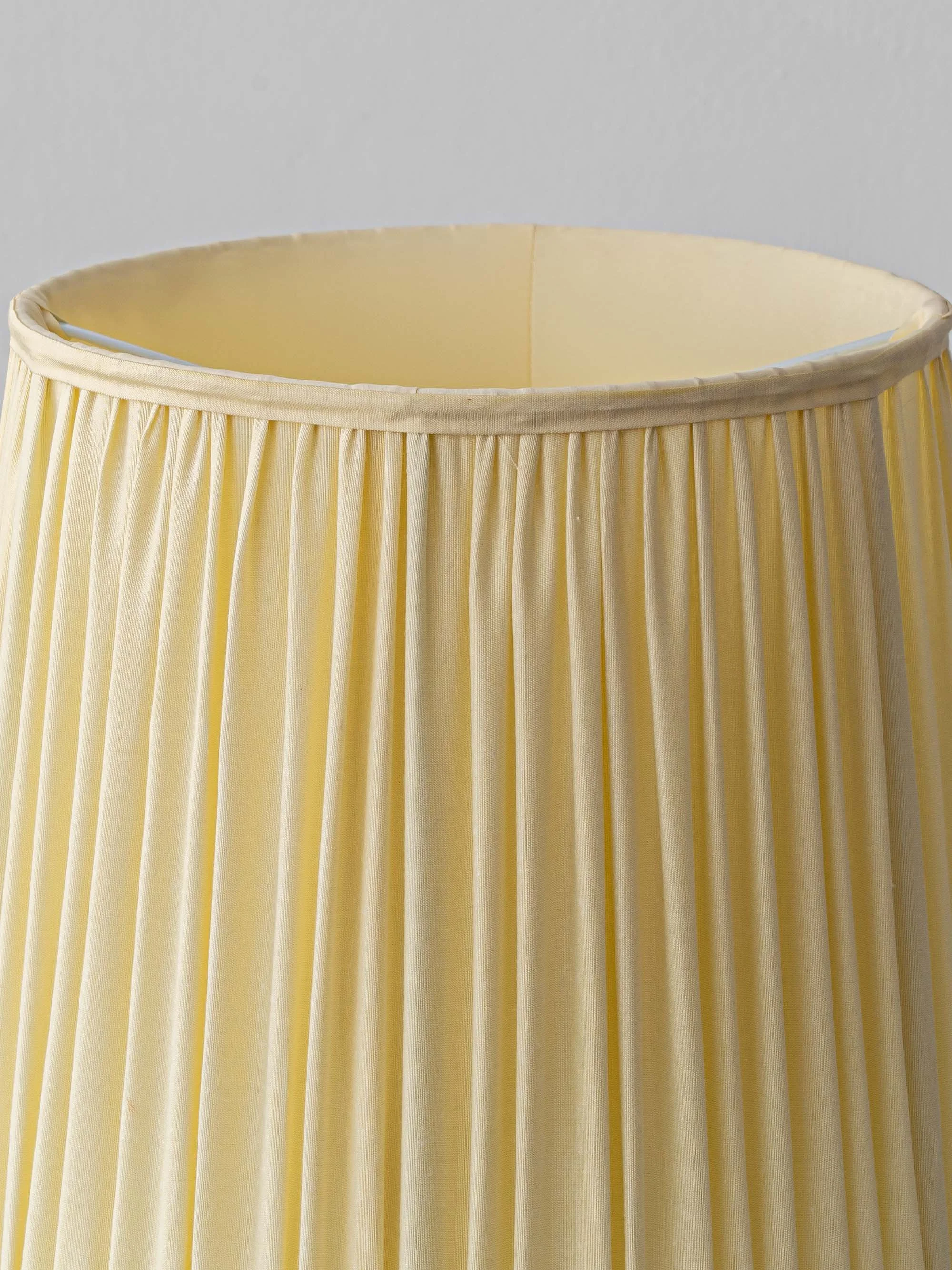 Image 21 of 21
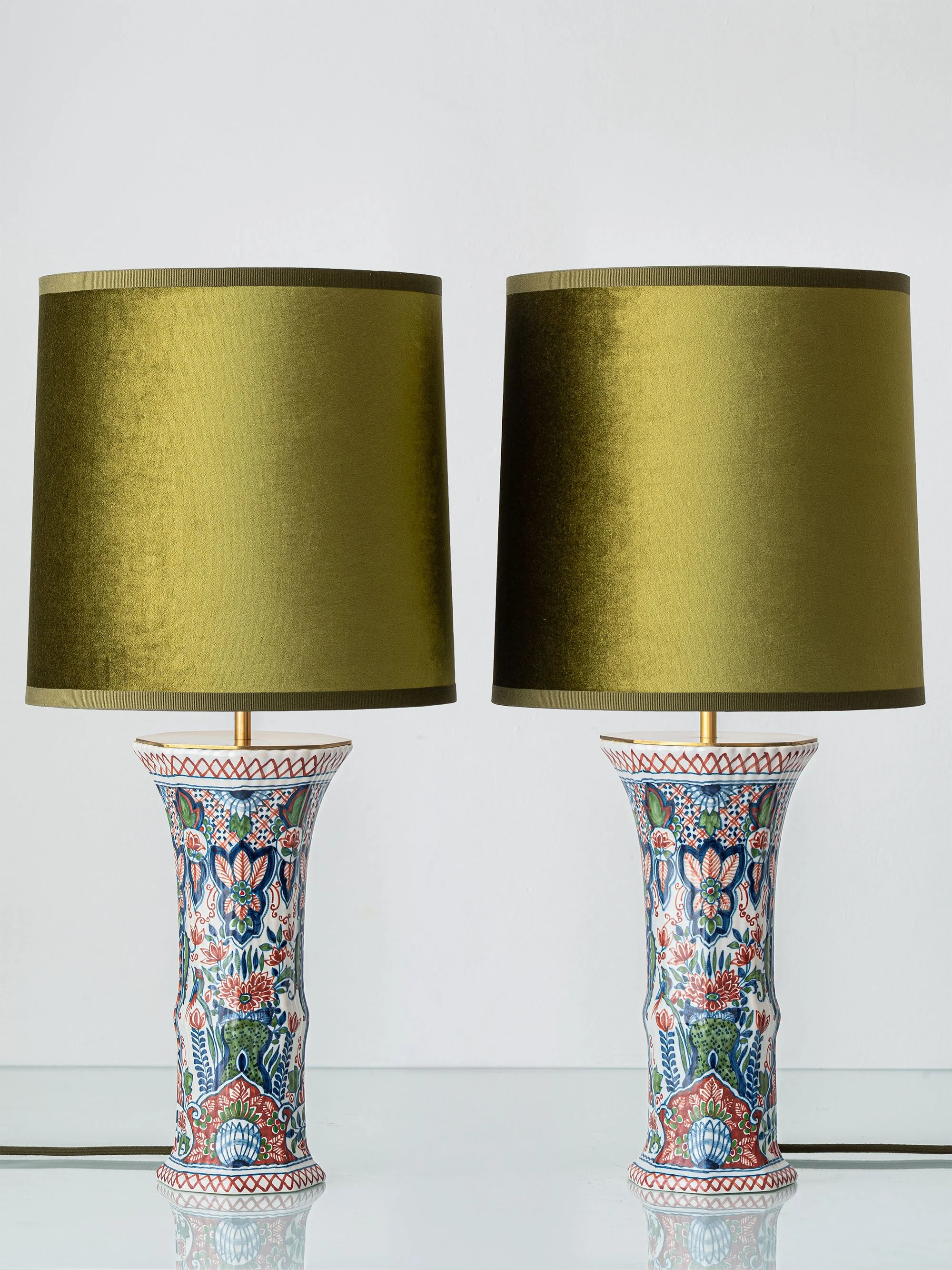
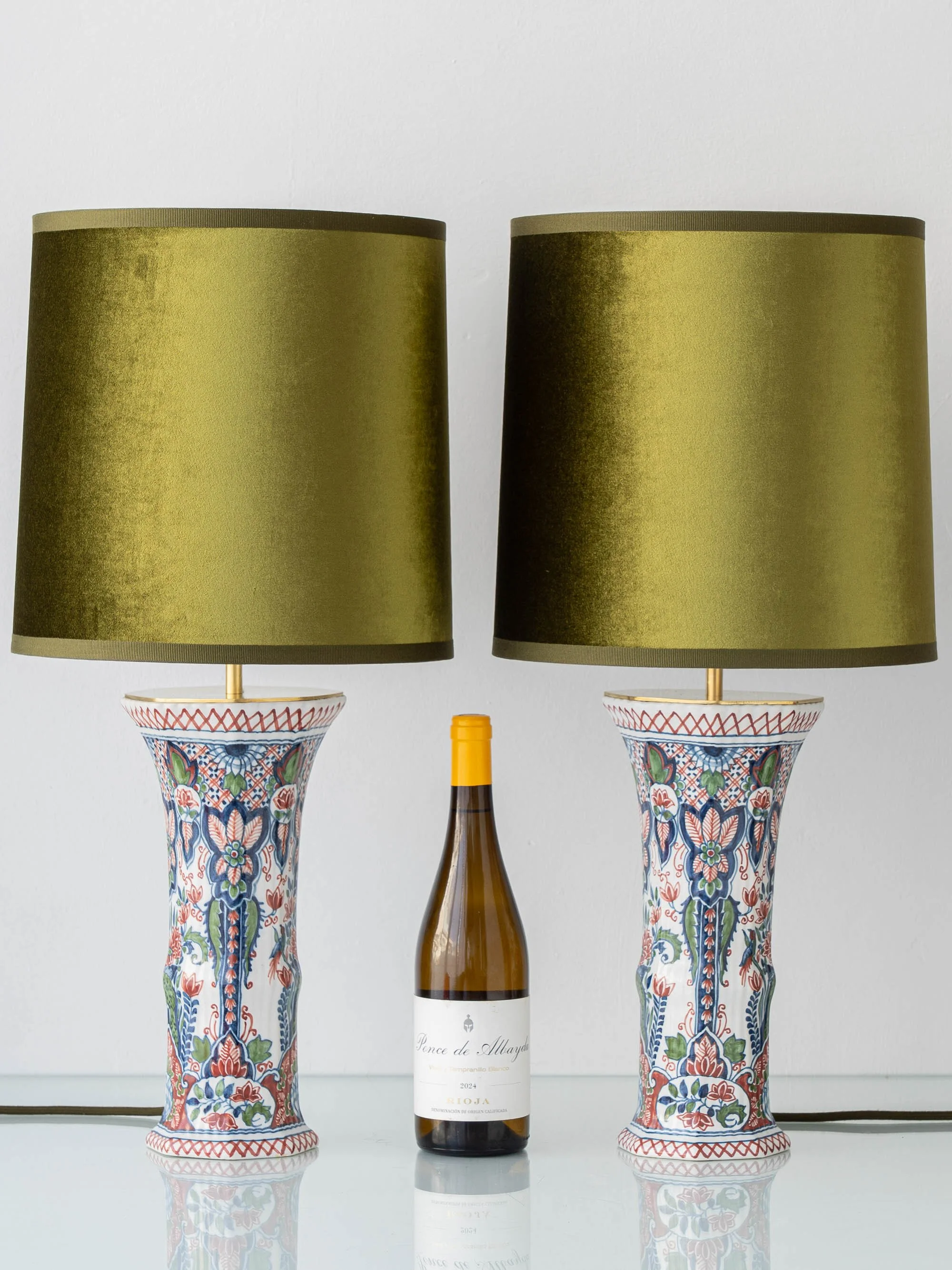
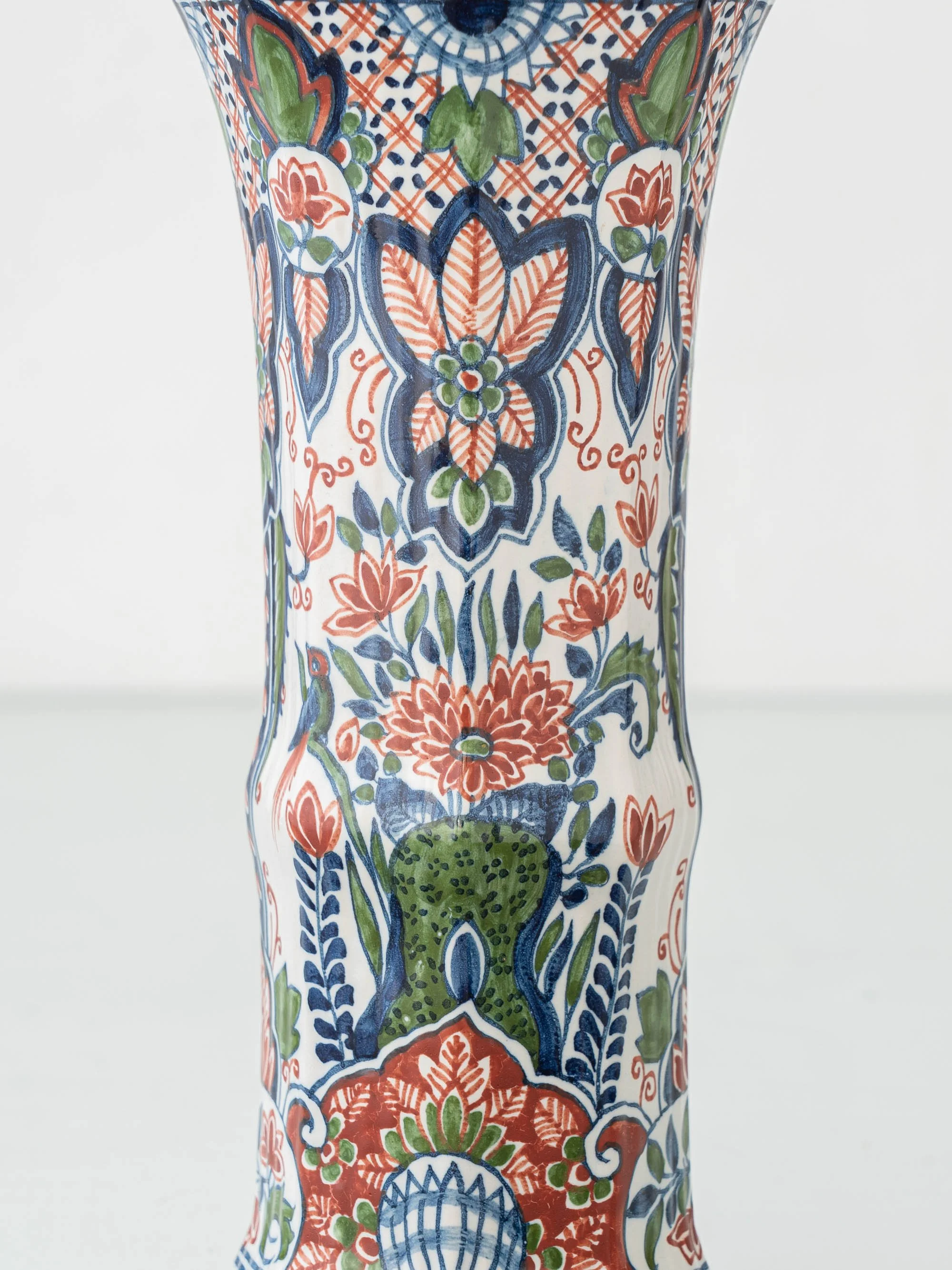
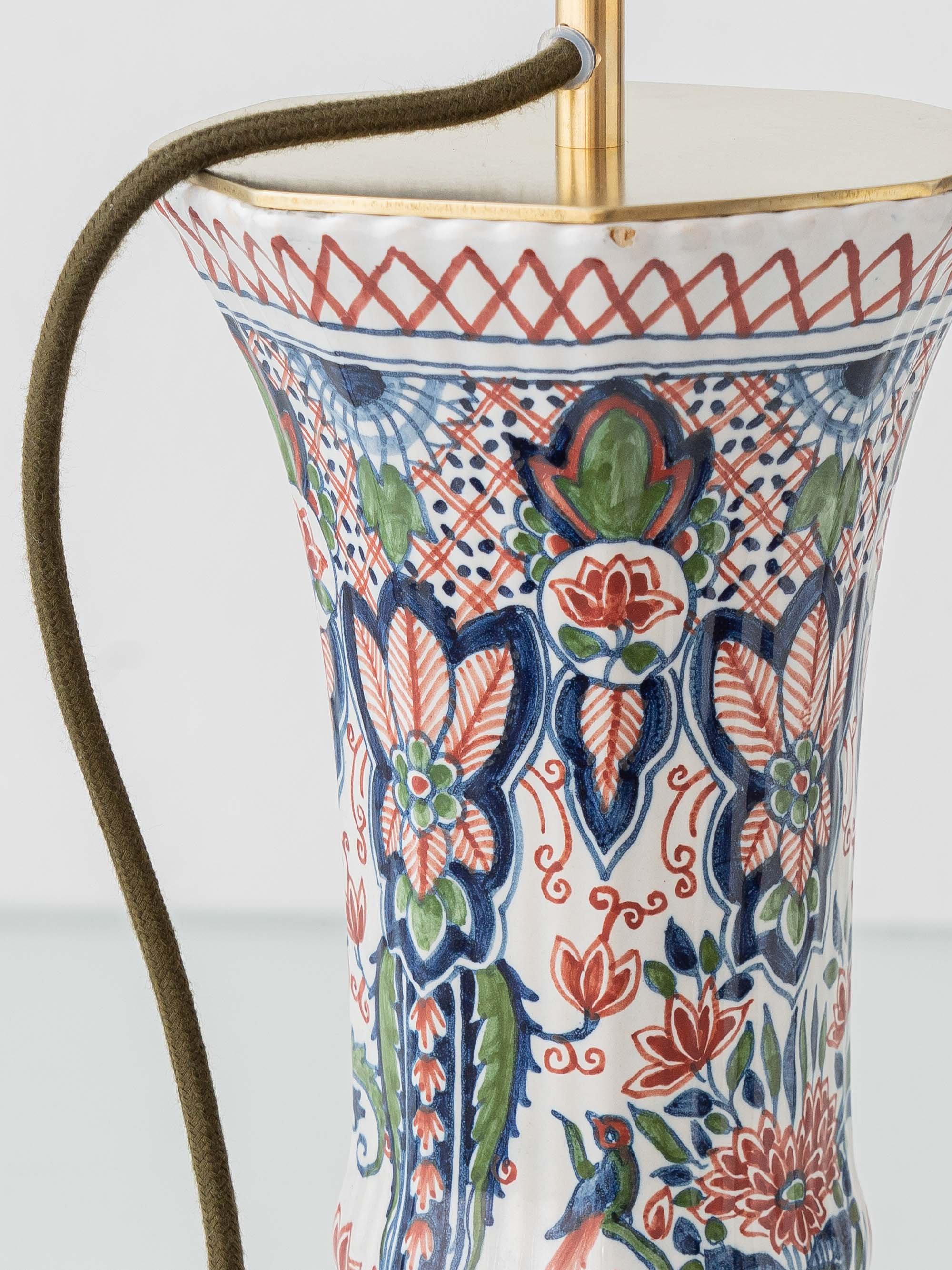
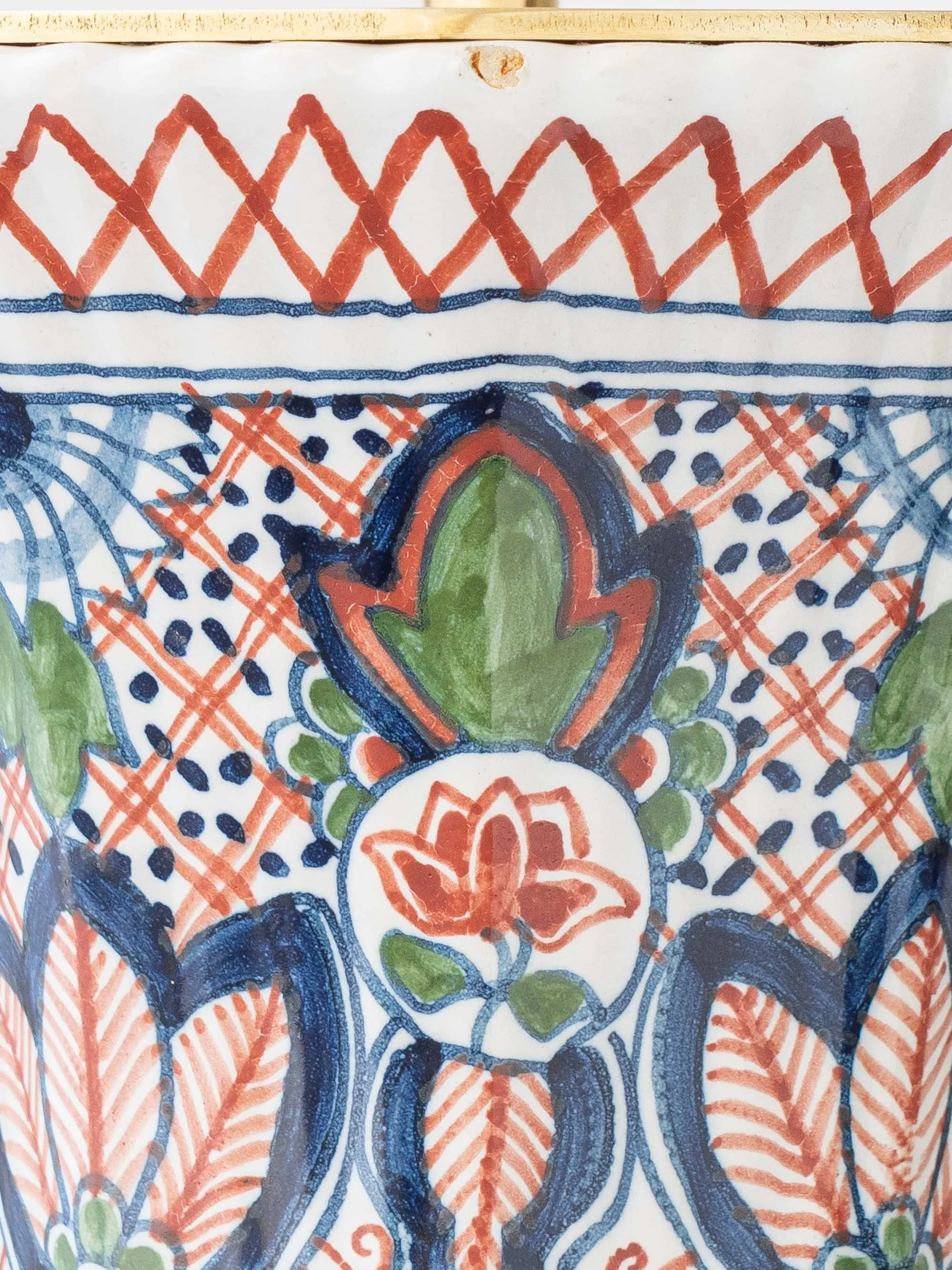
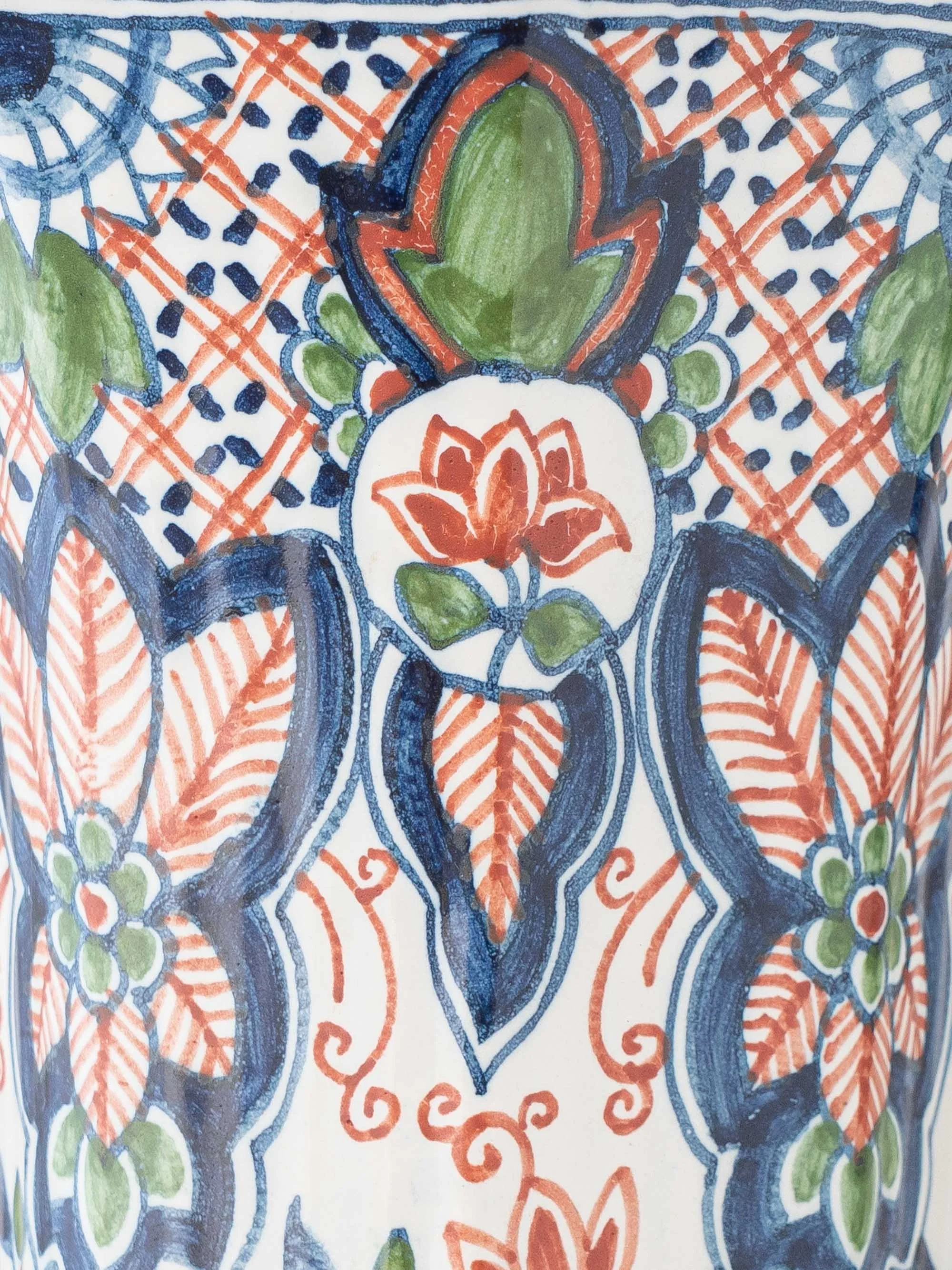
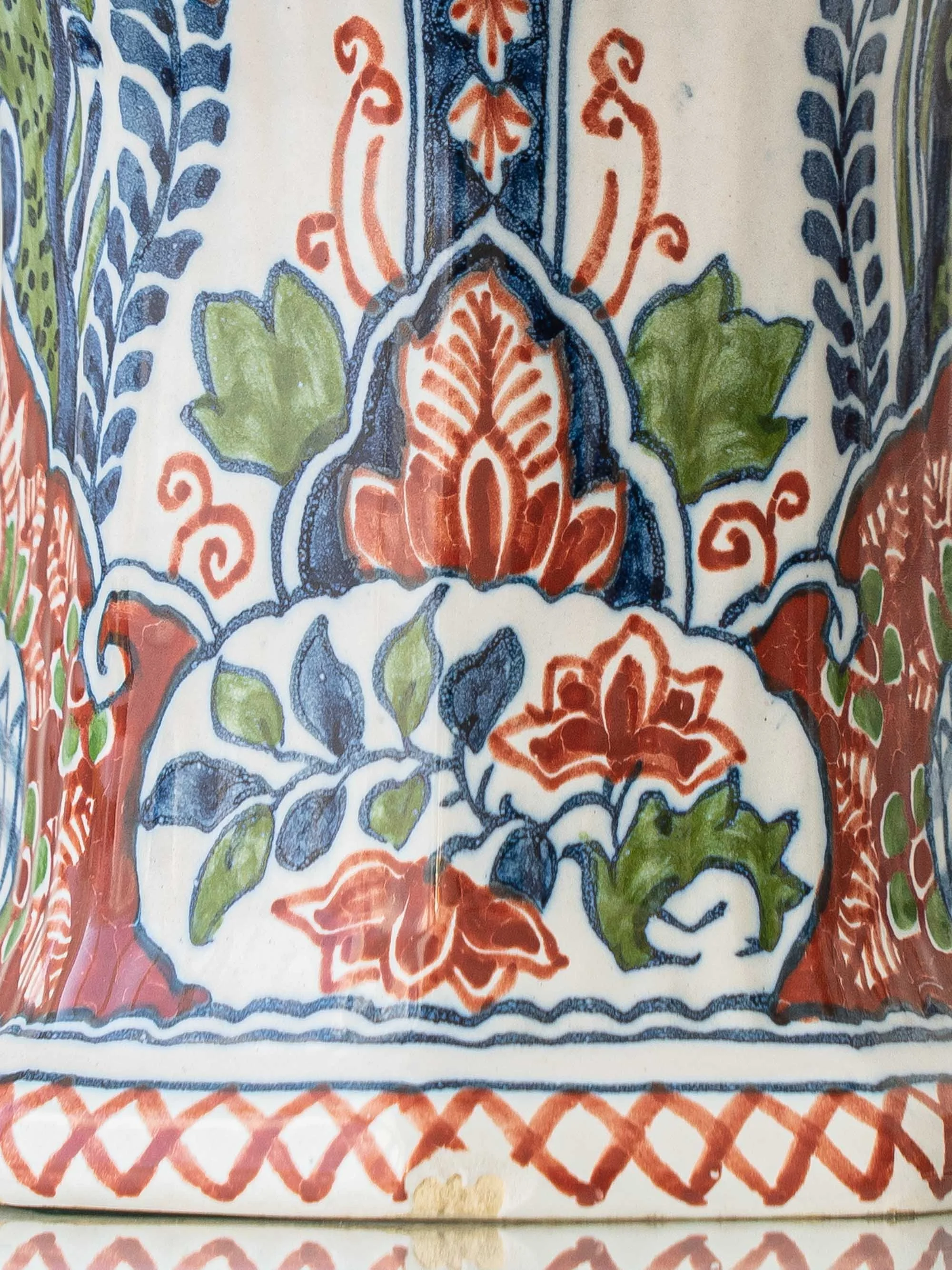
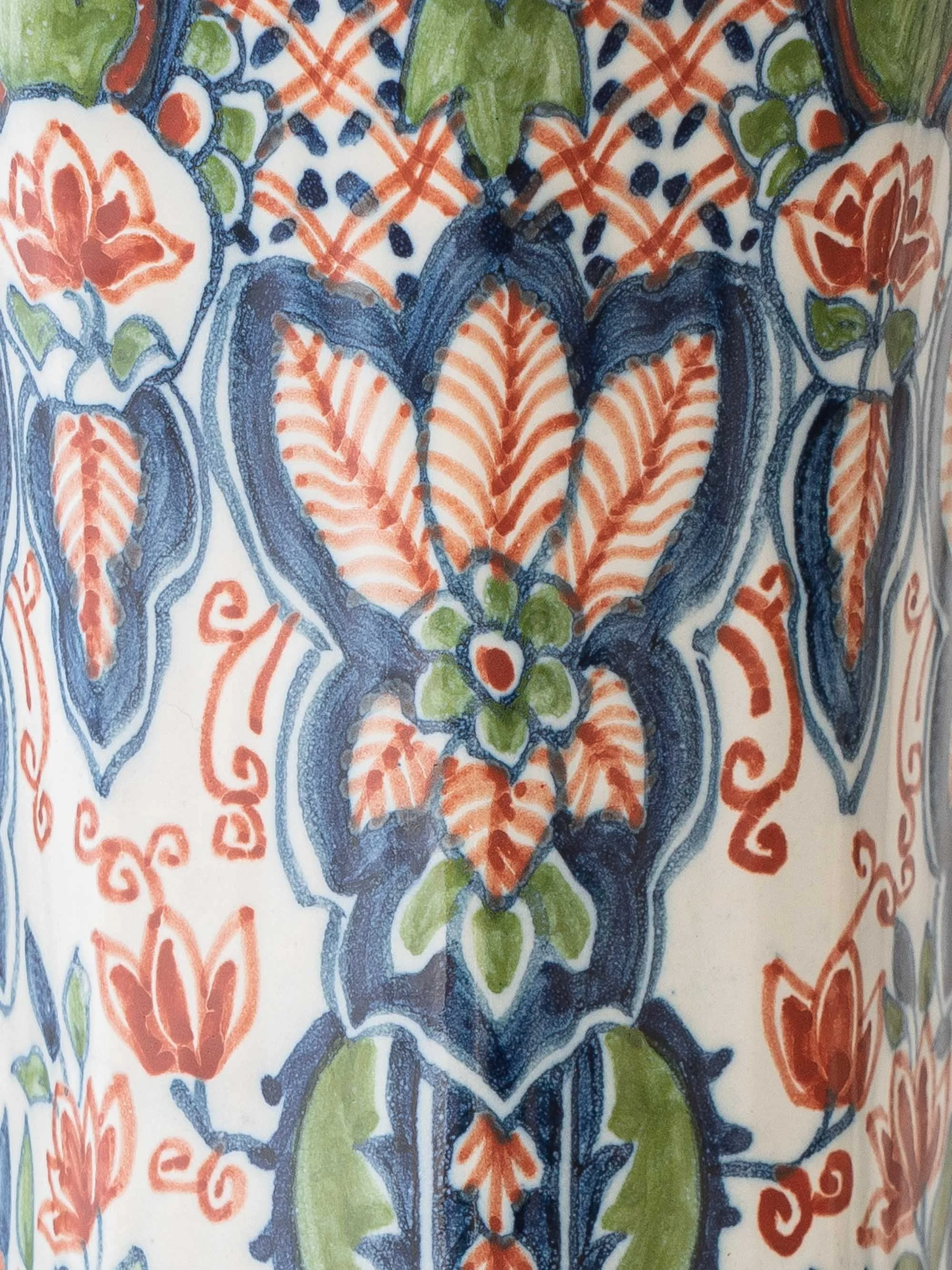
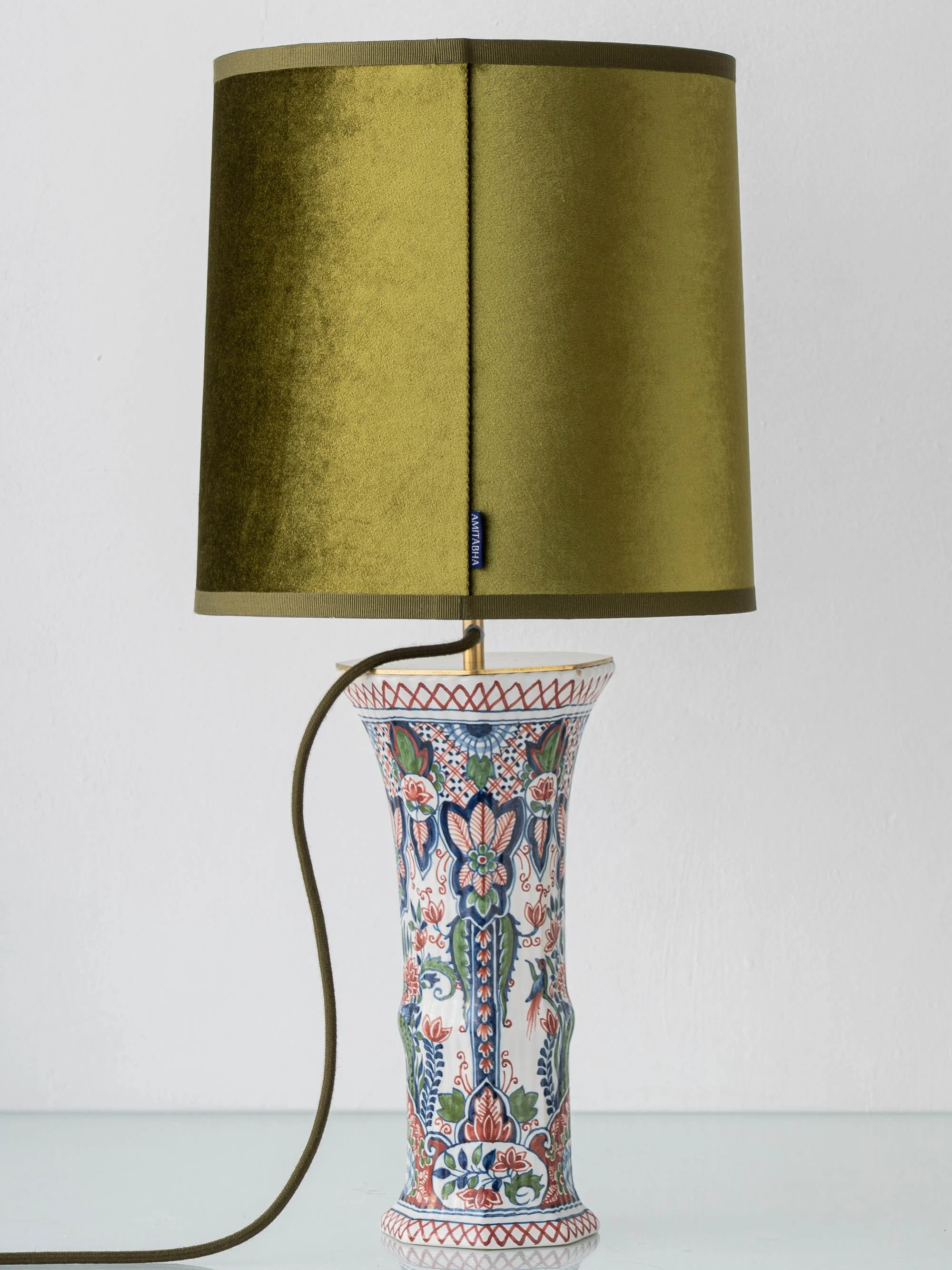
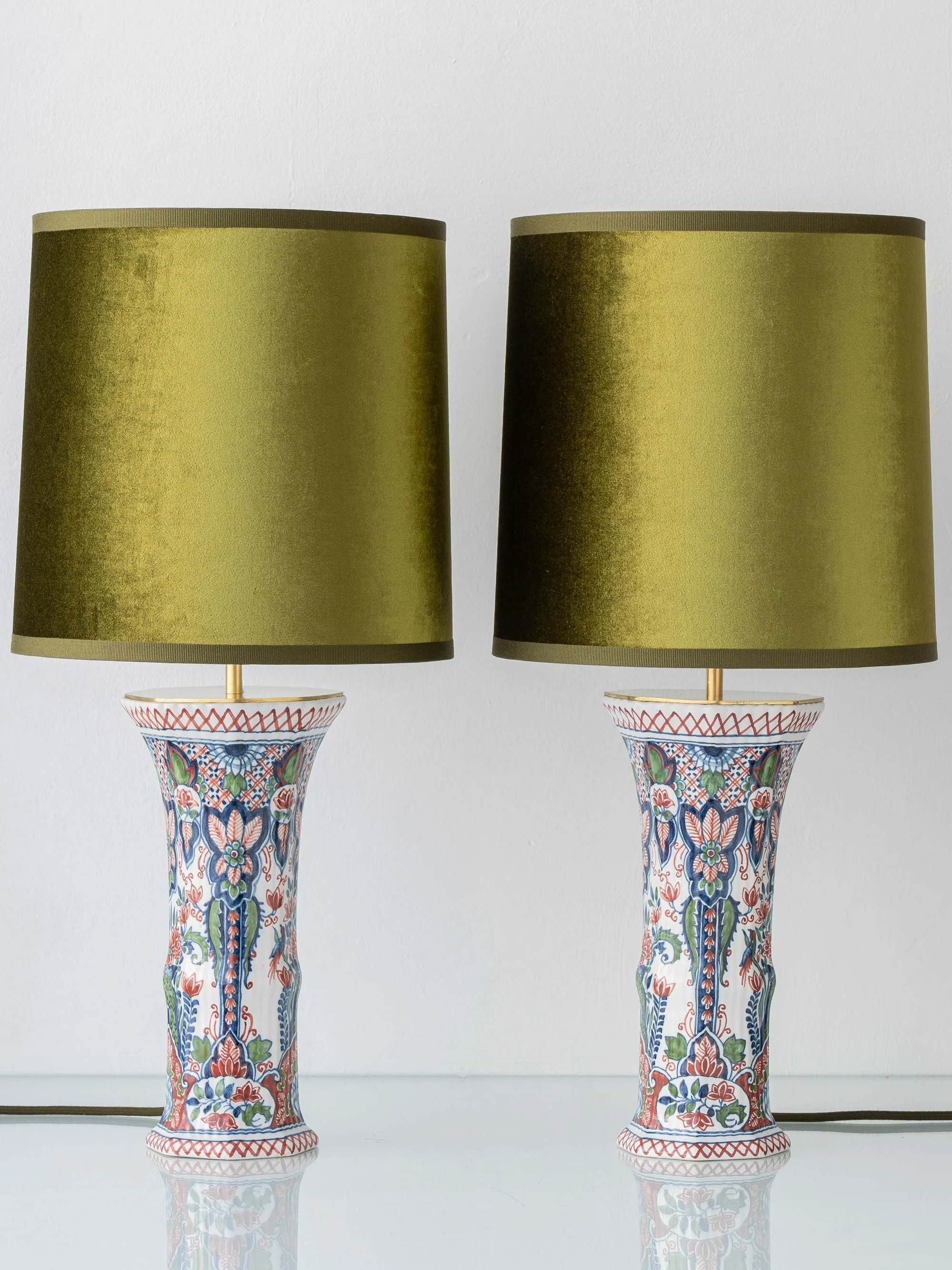
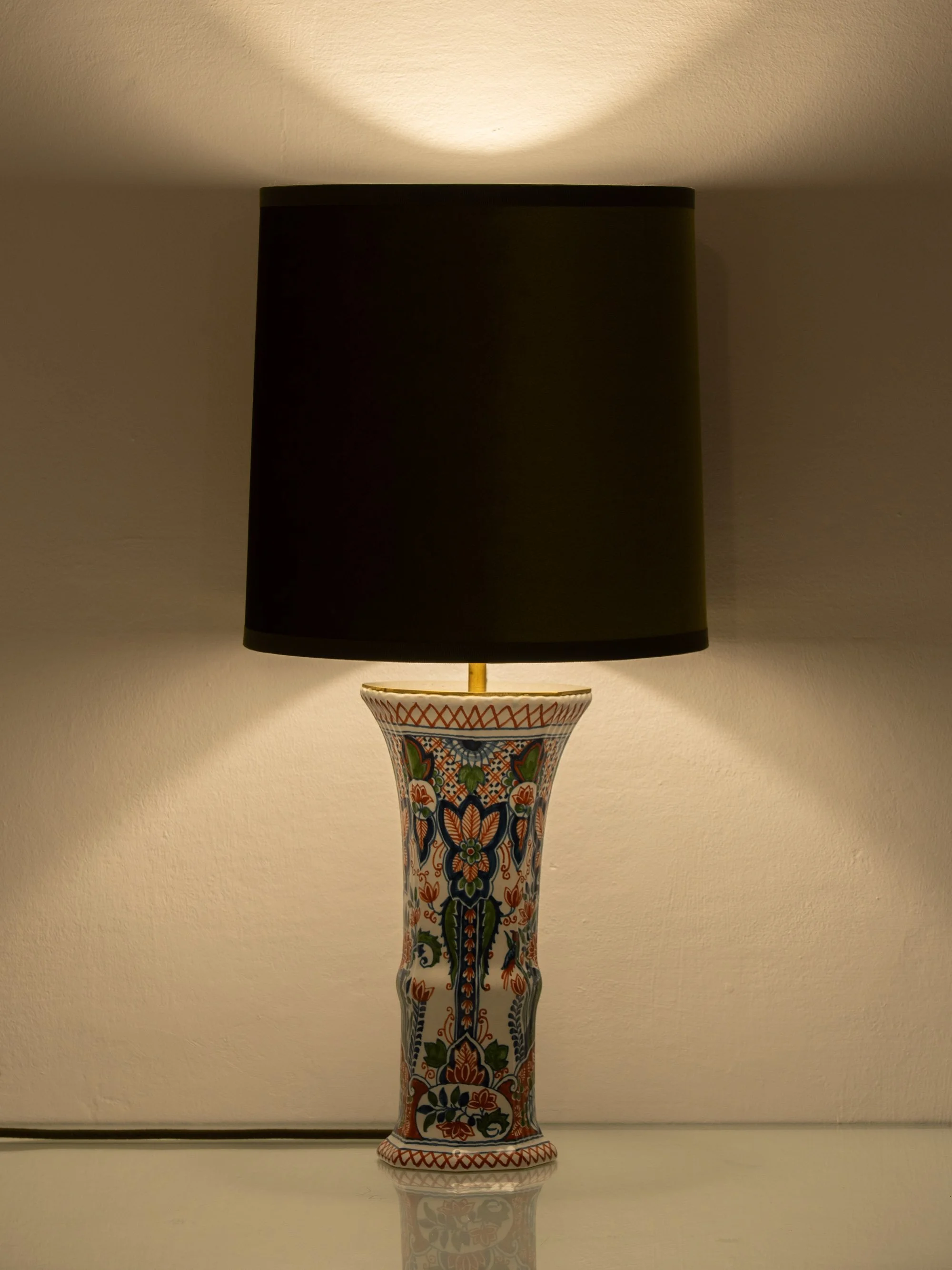
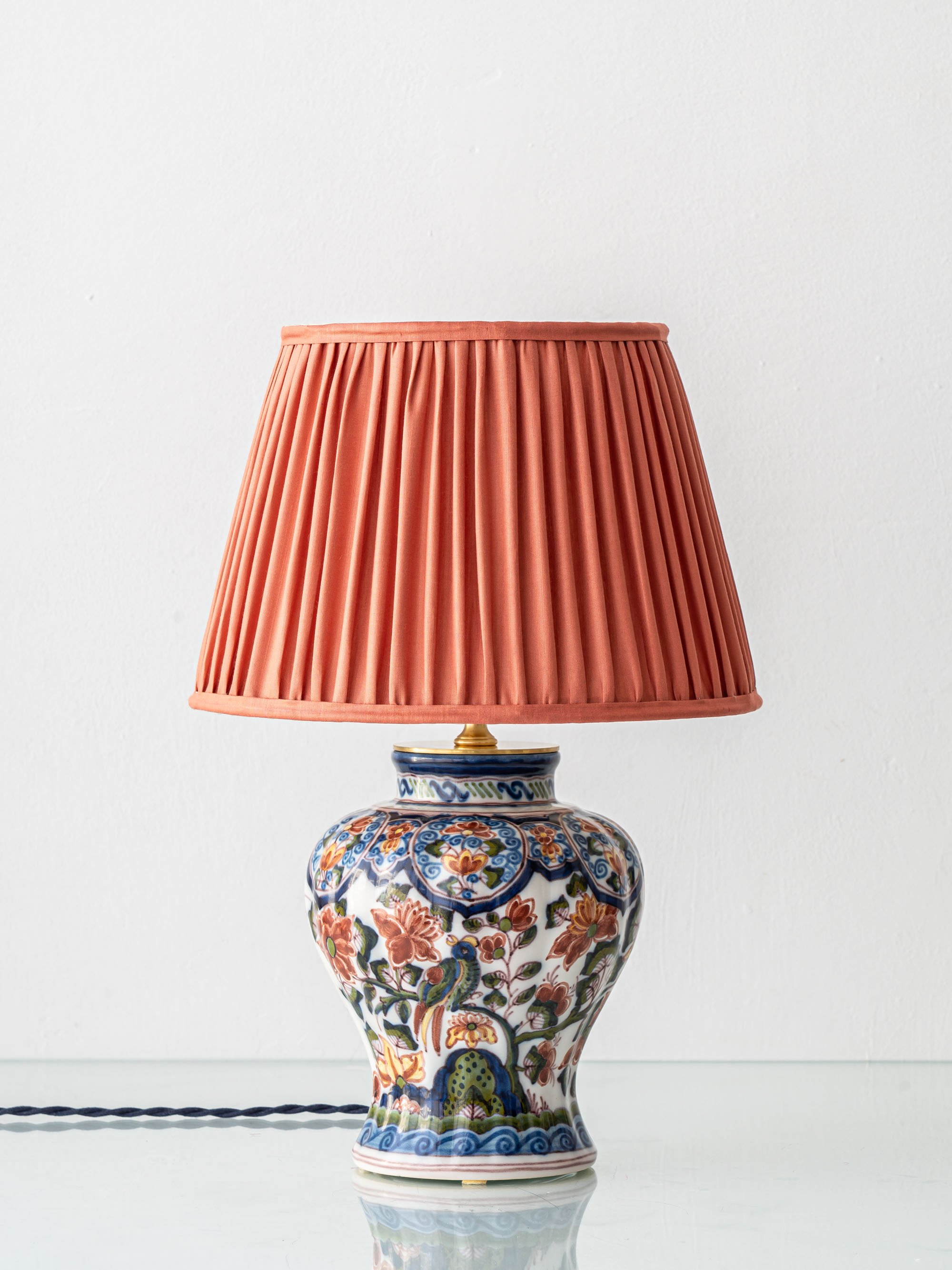
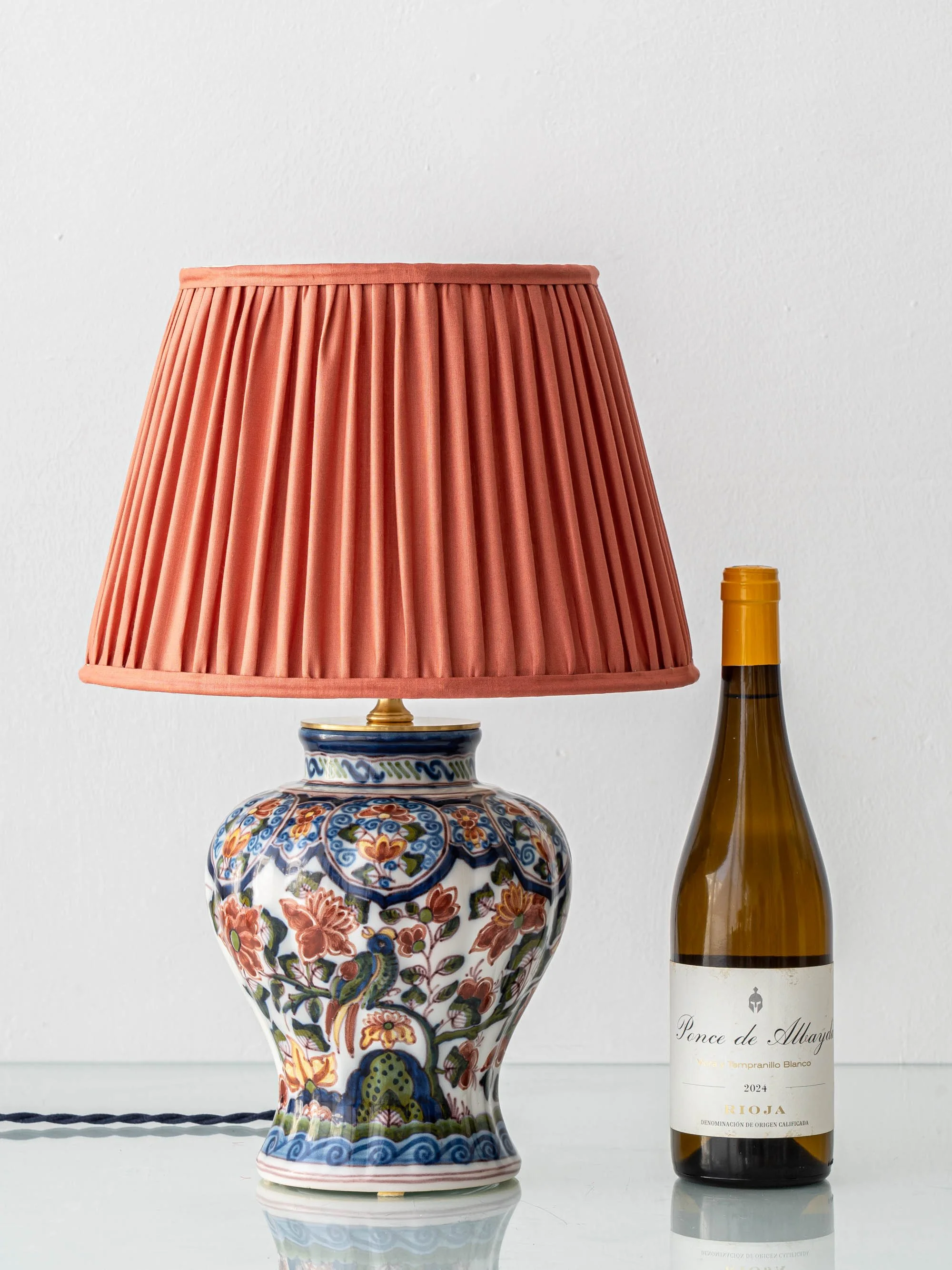
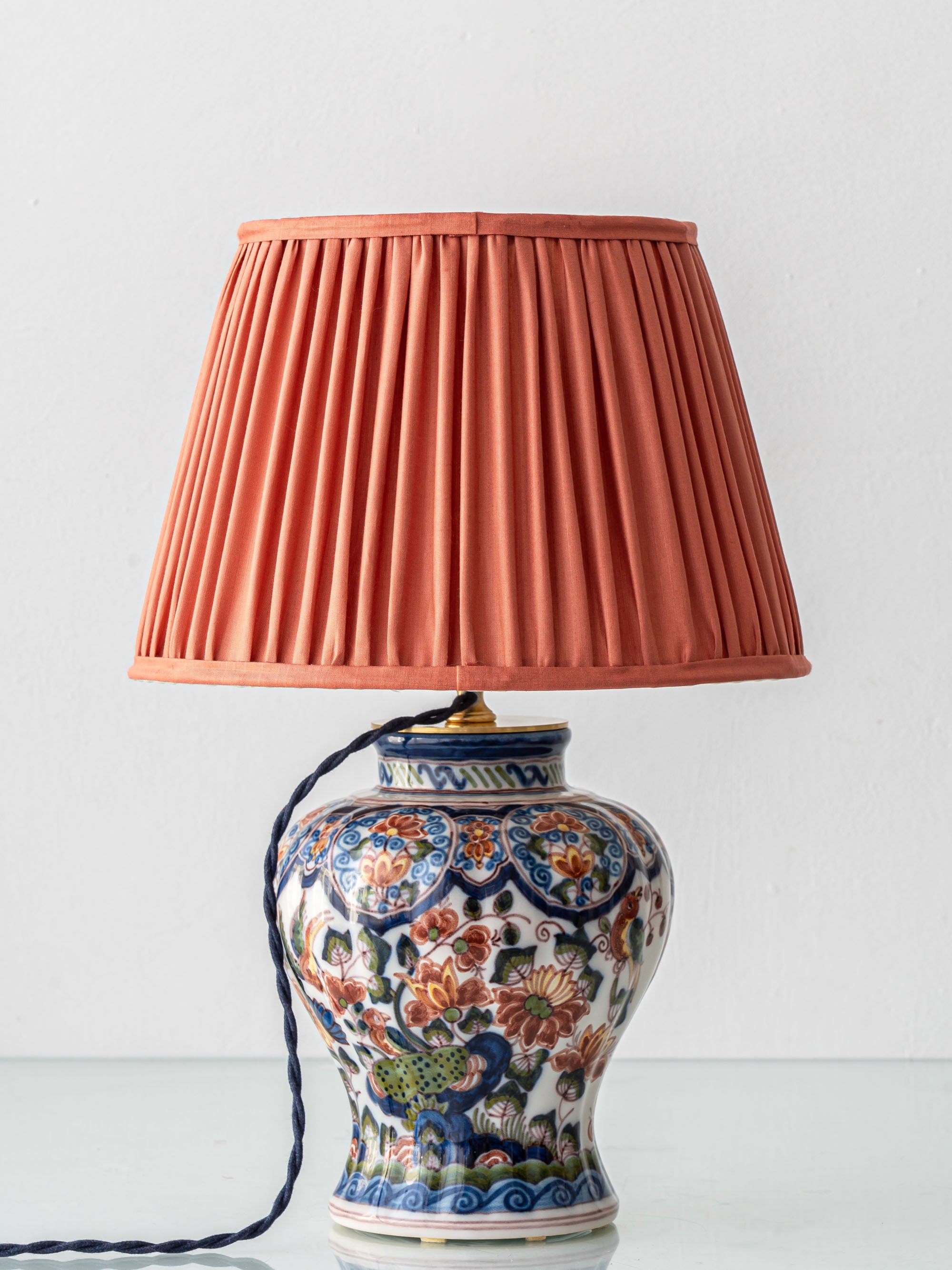
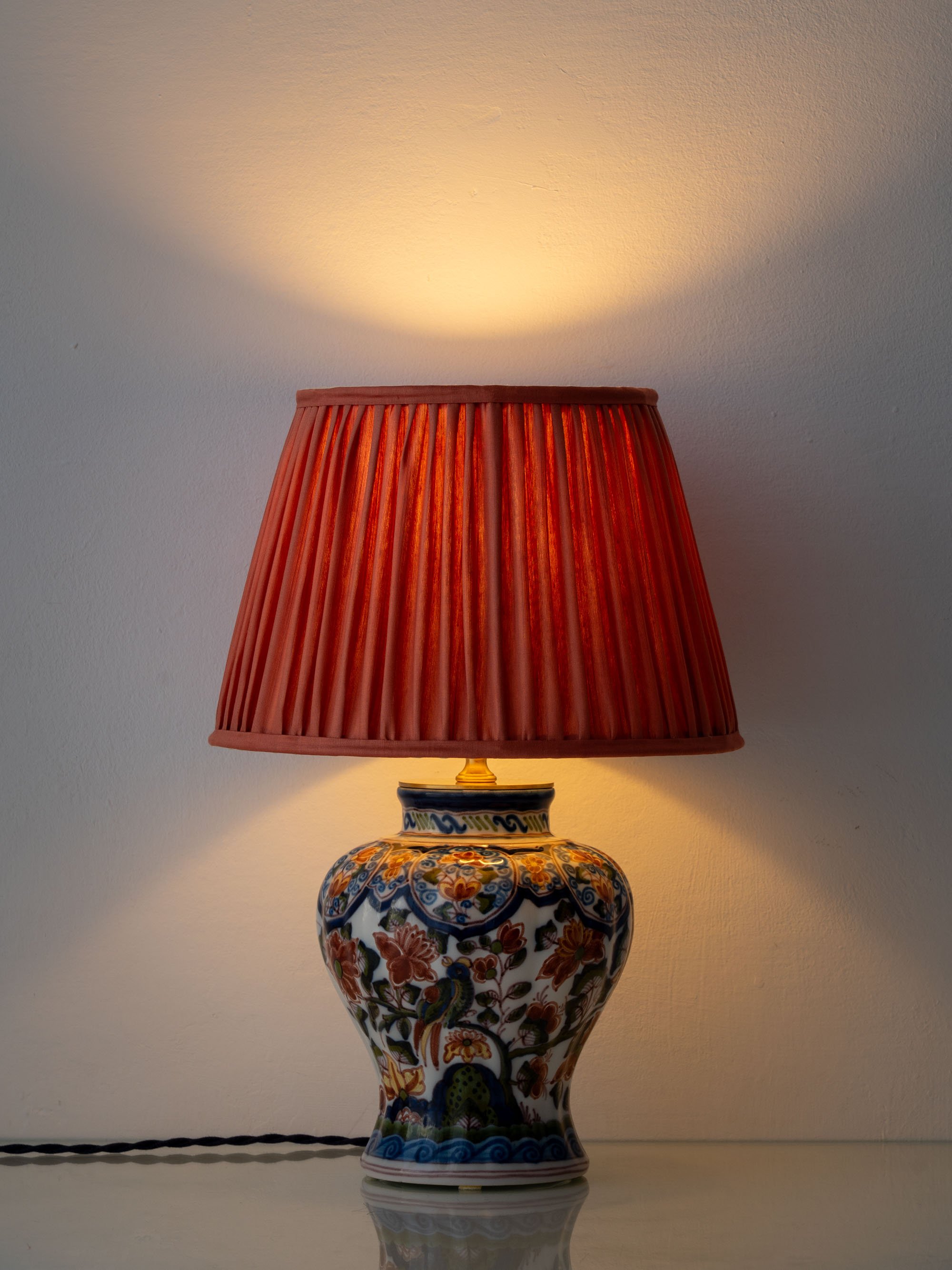
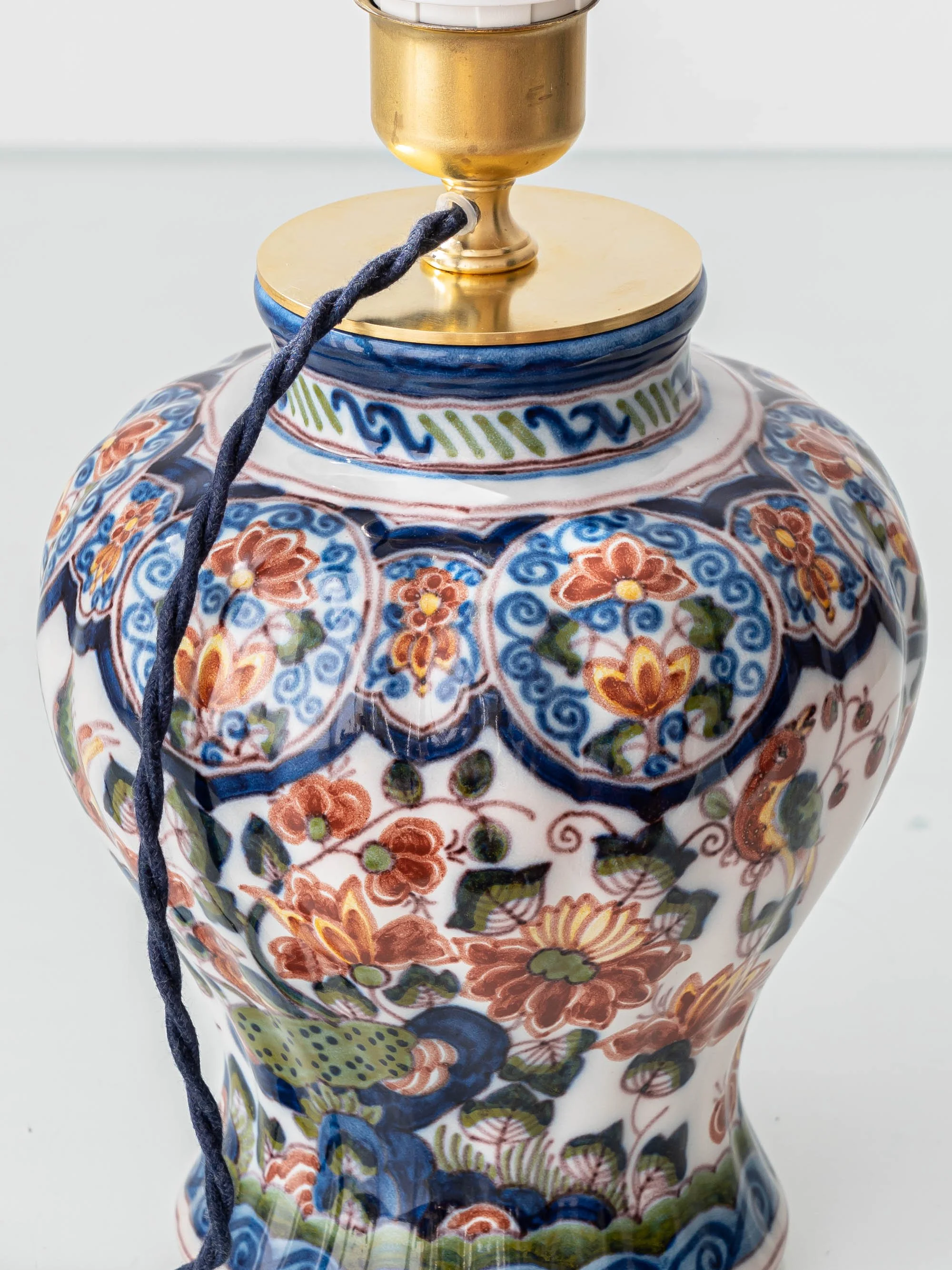
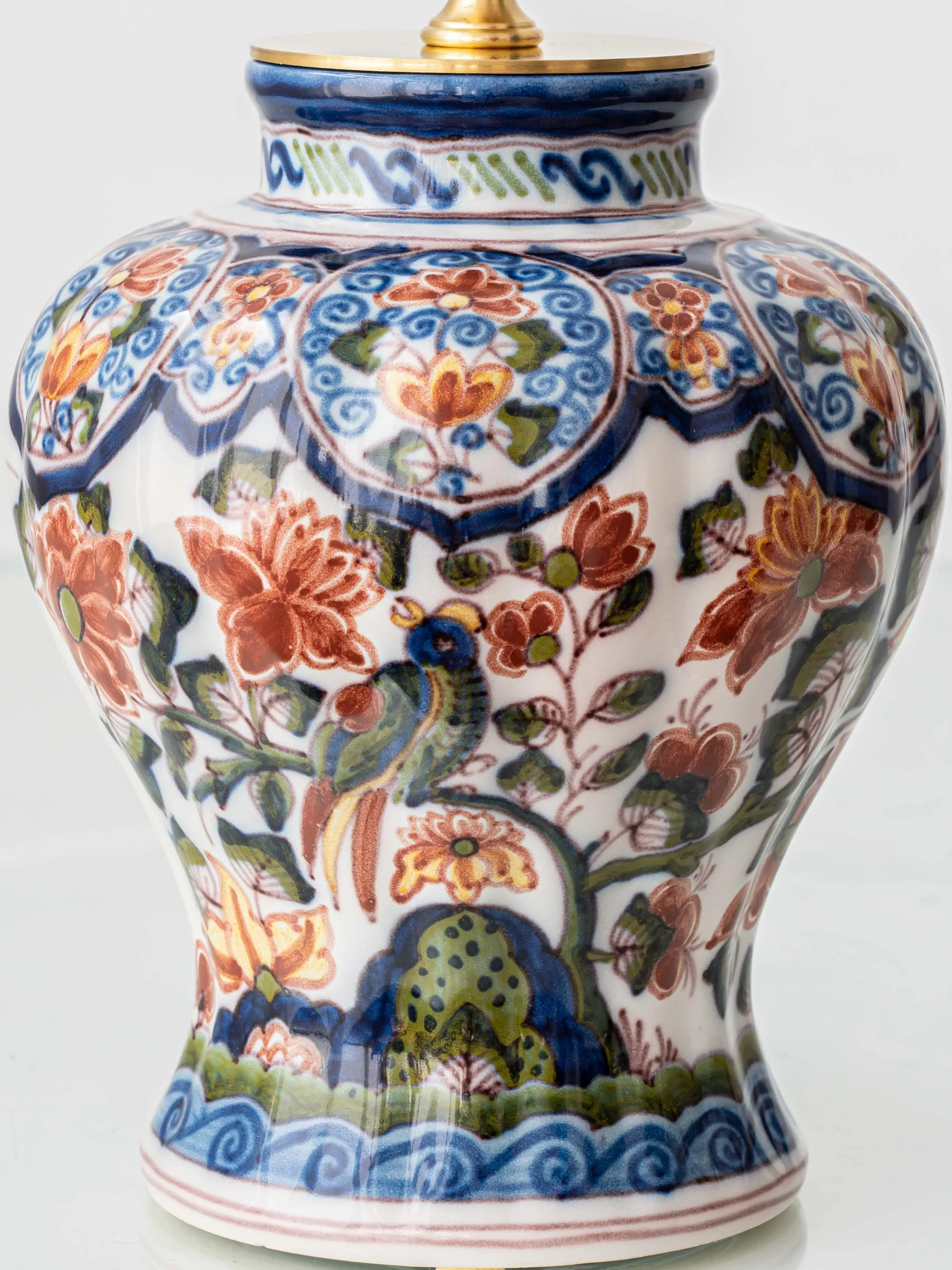
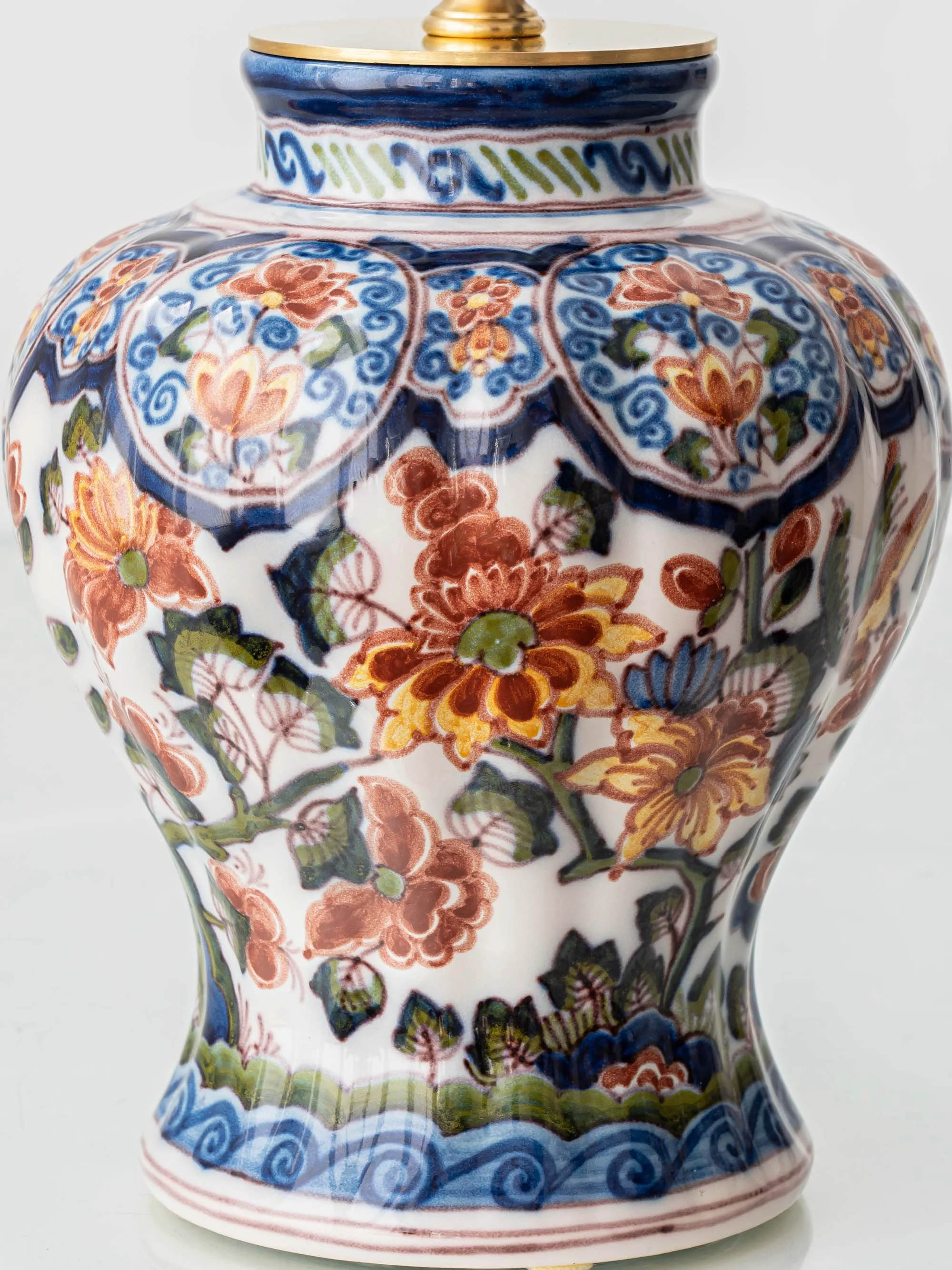
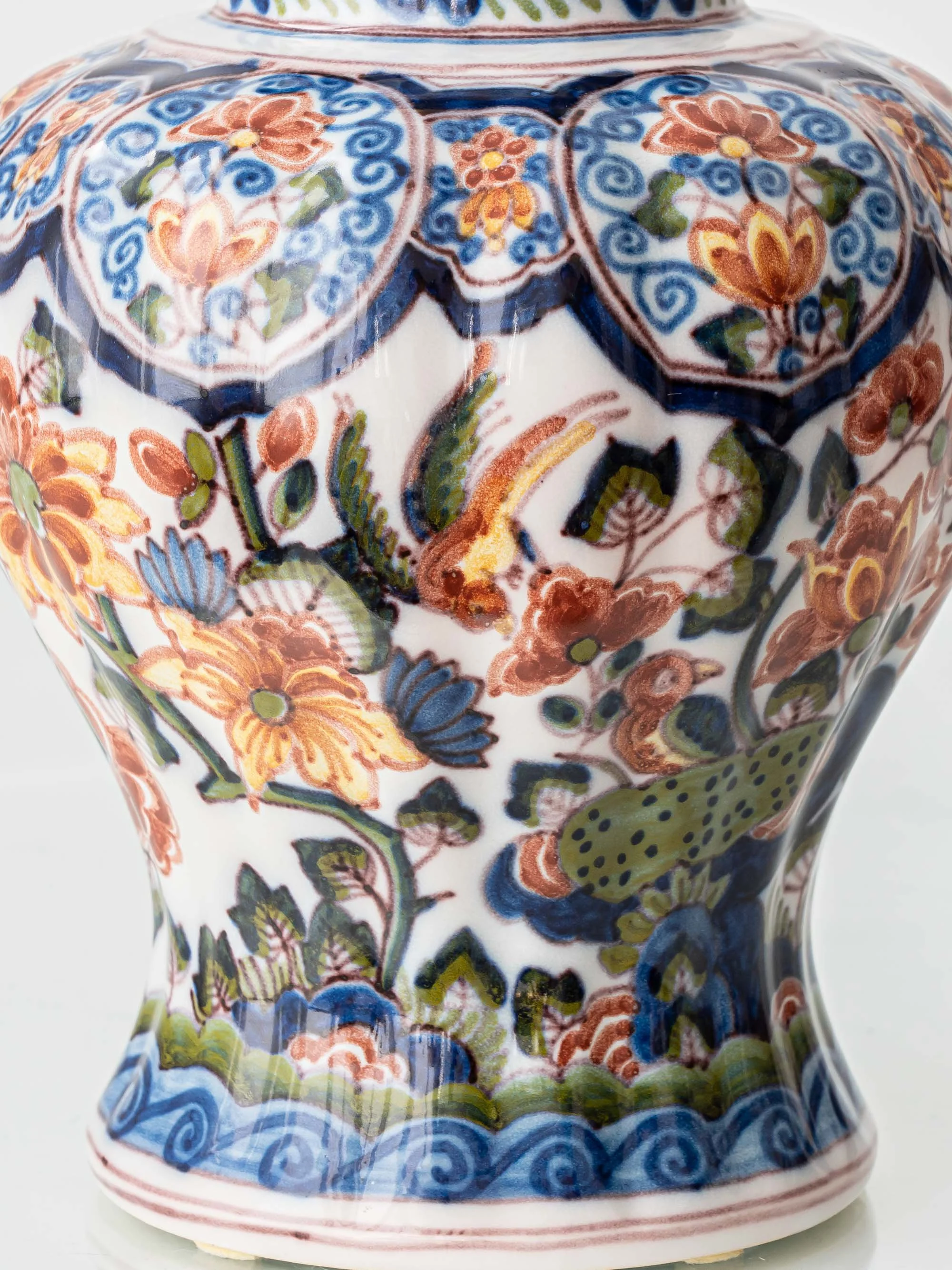
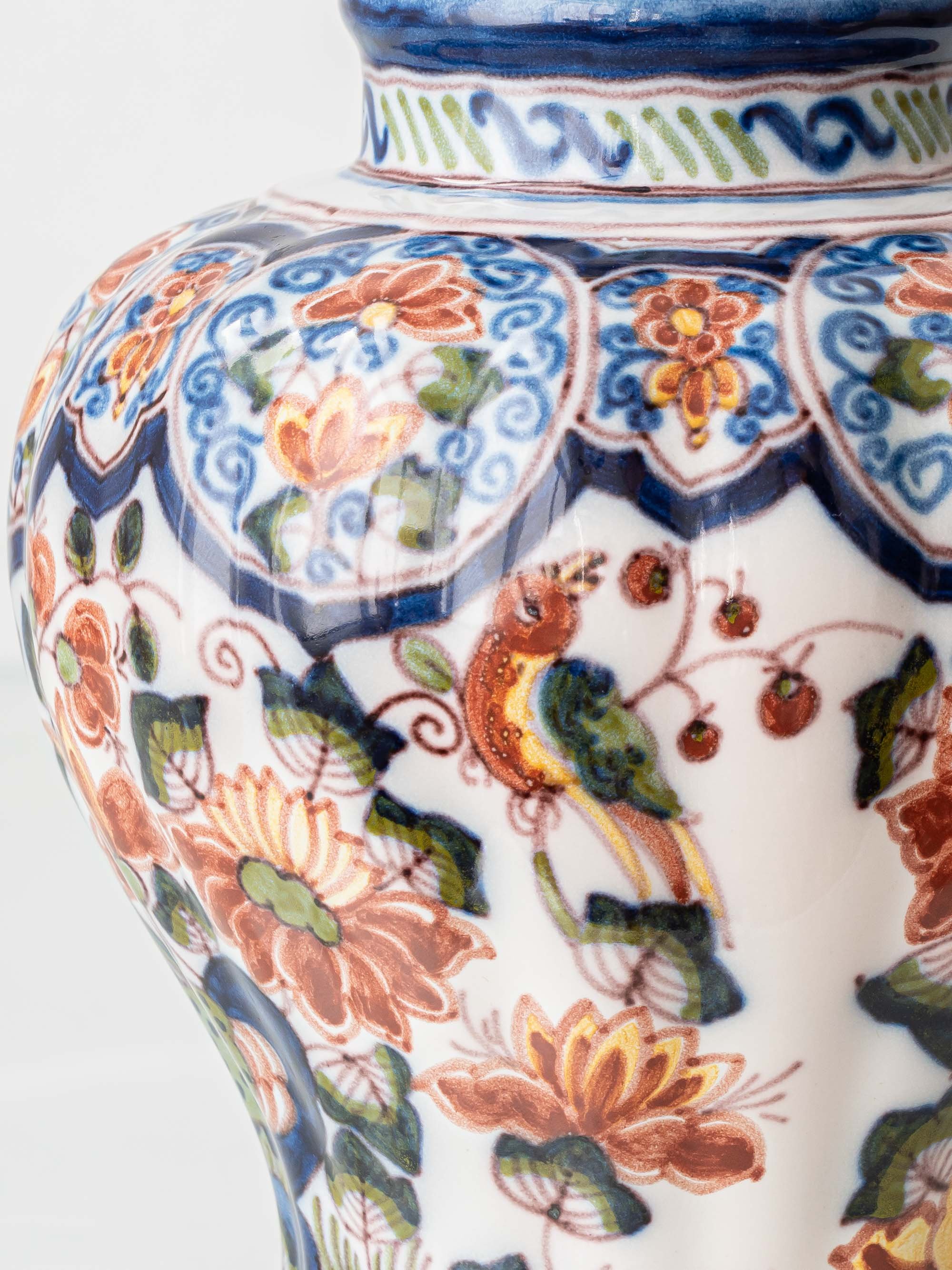
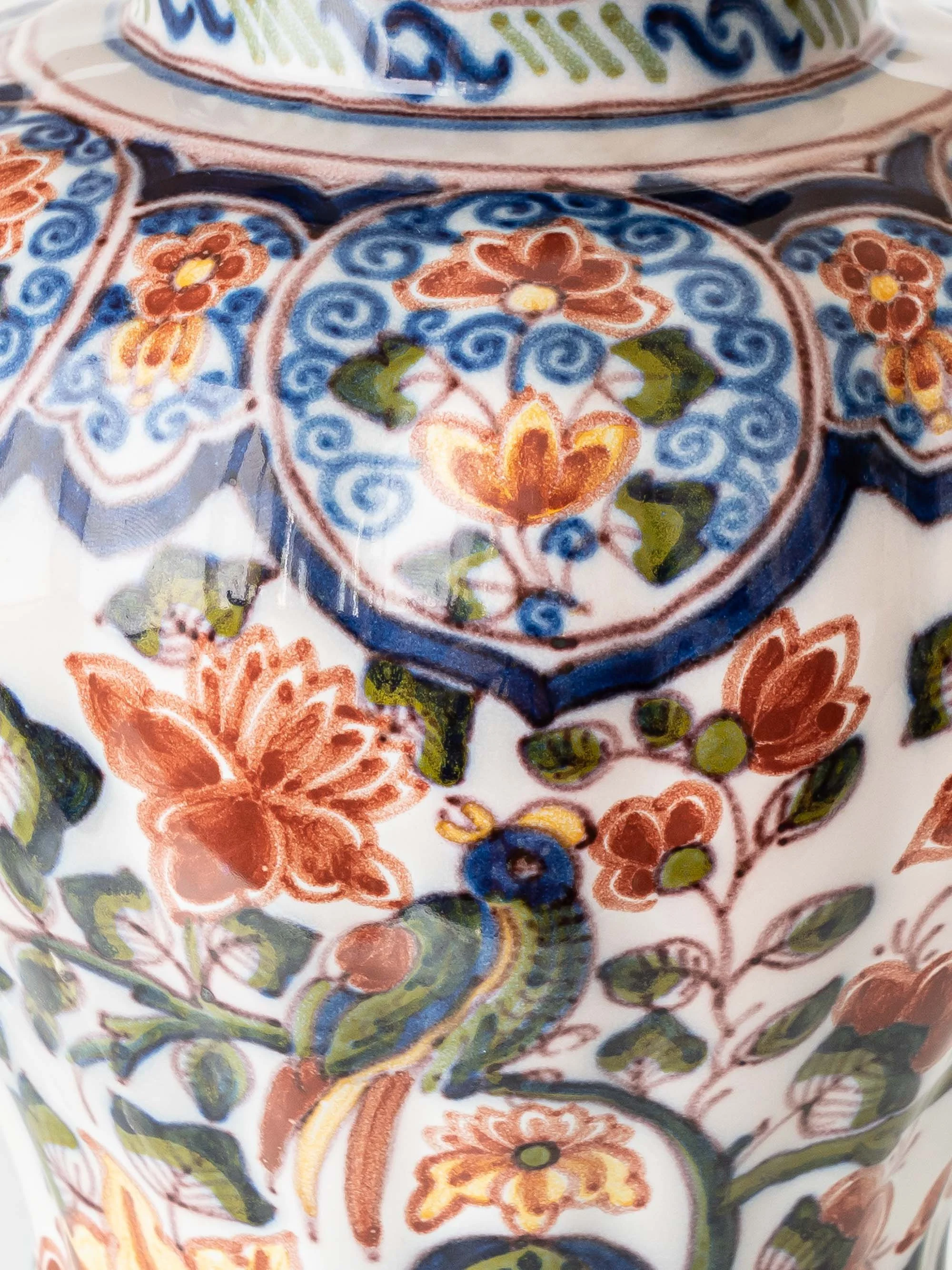
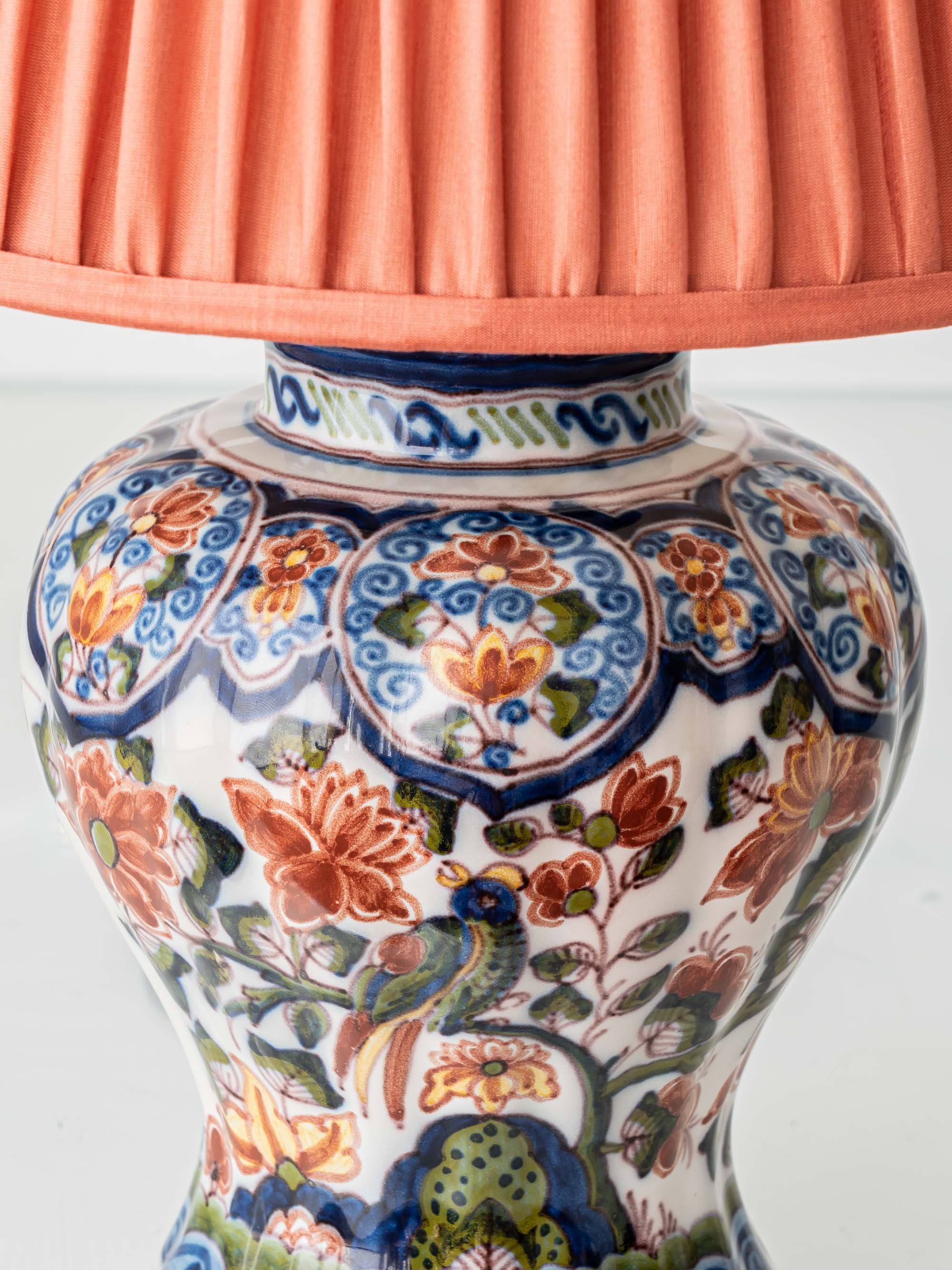
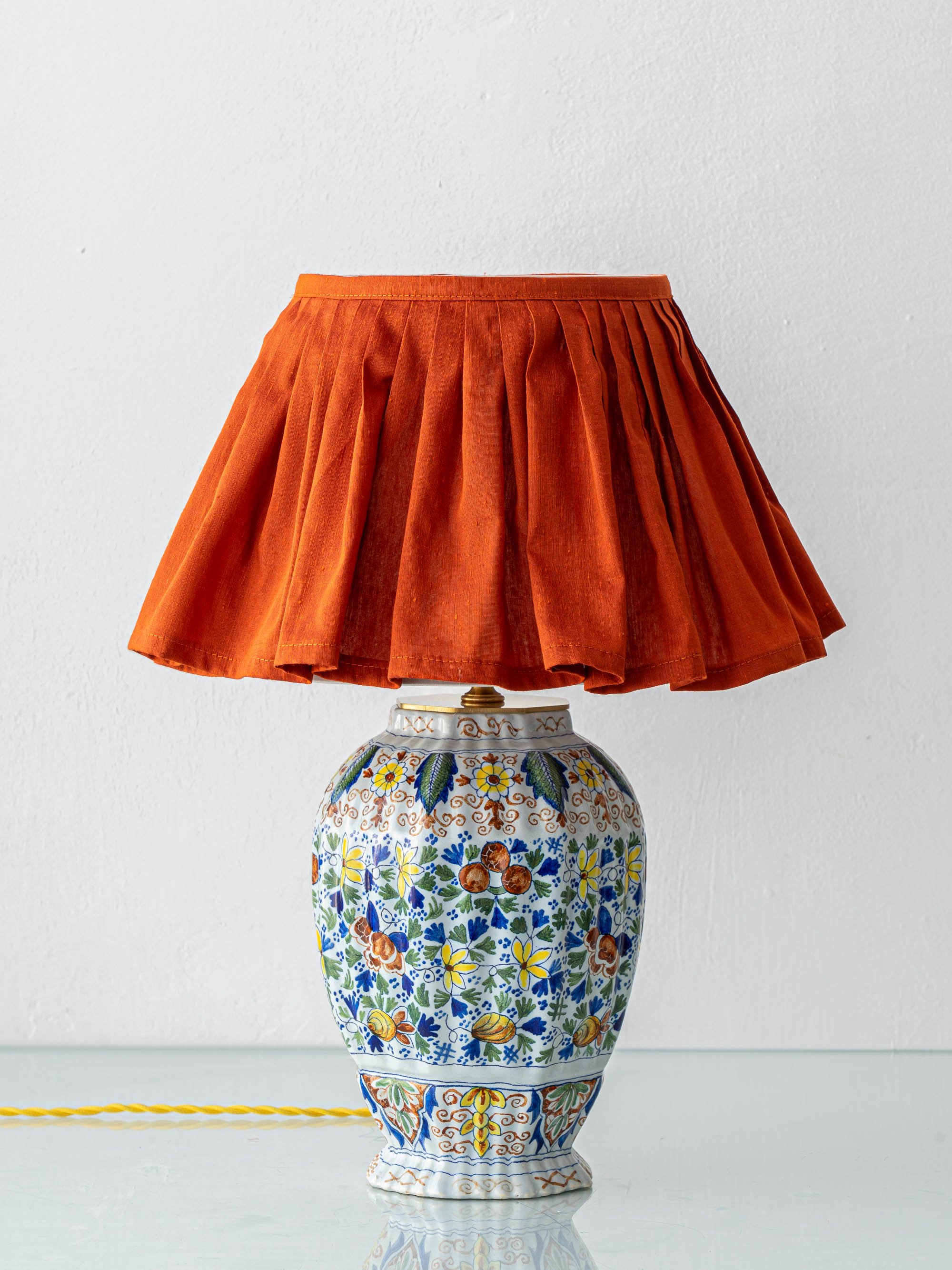
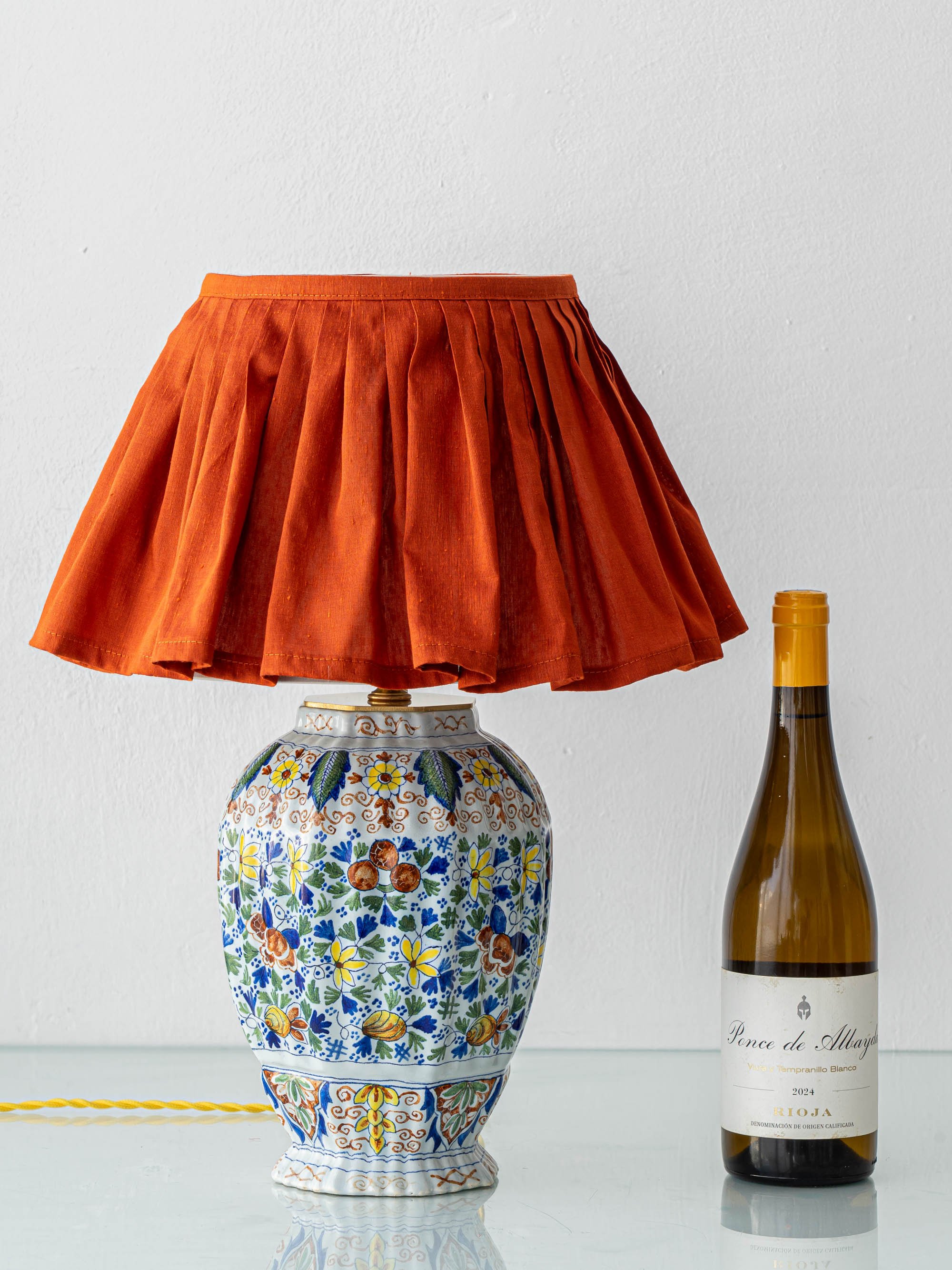
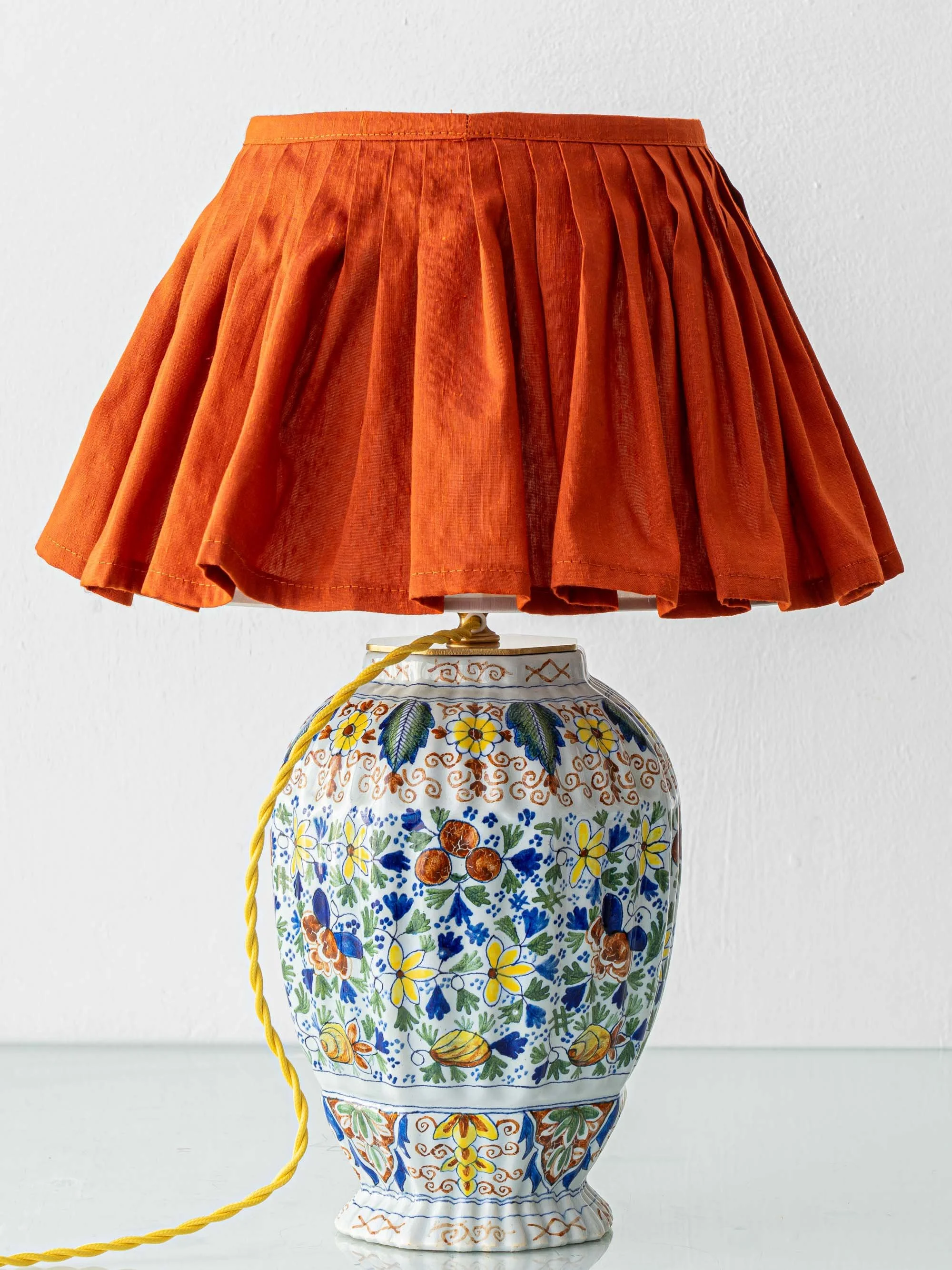
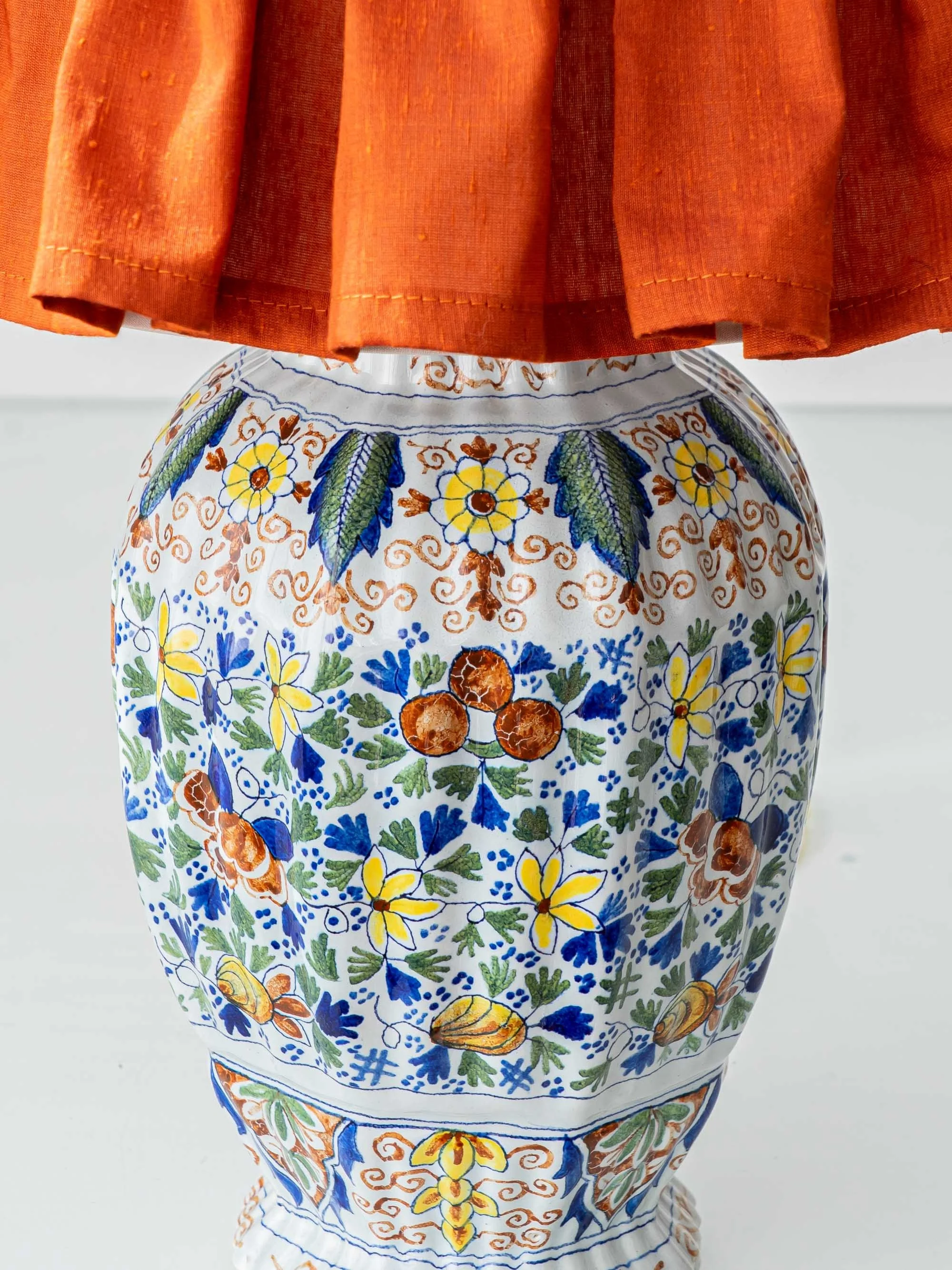
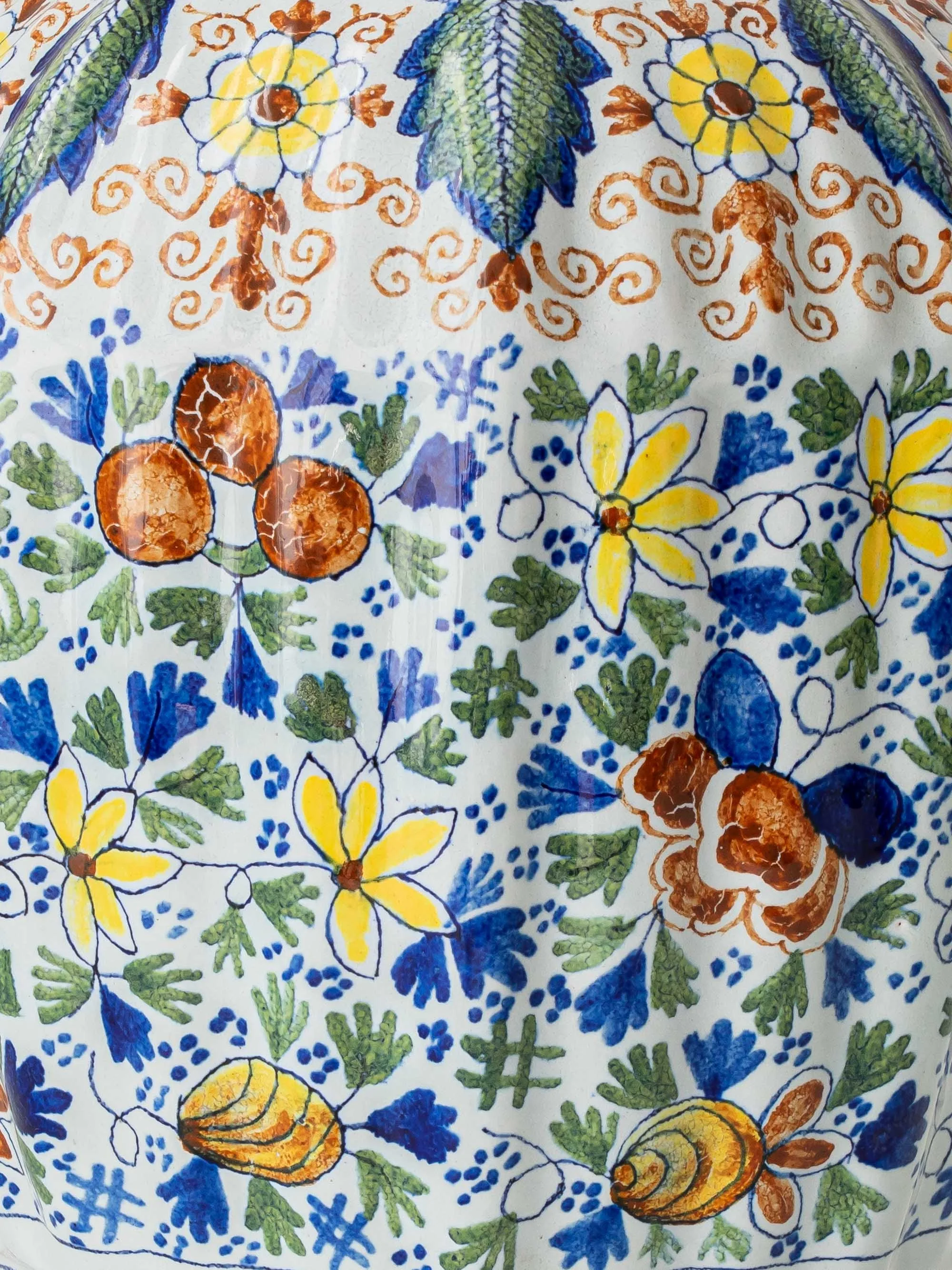
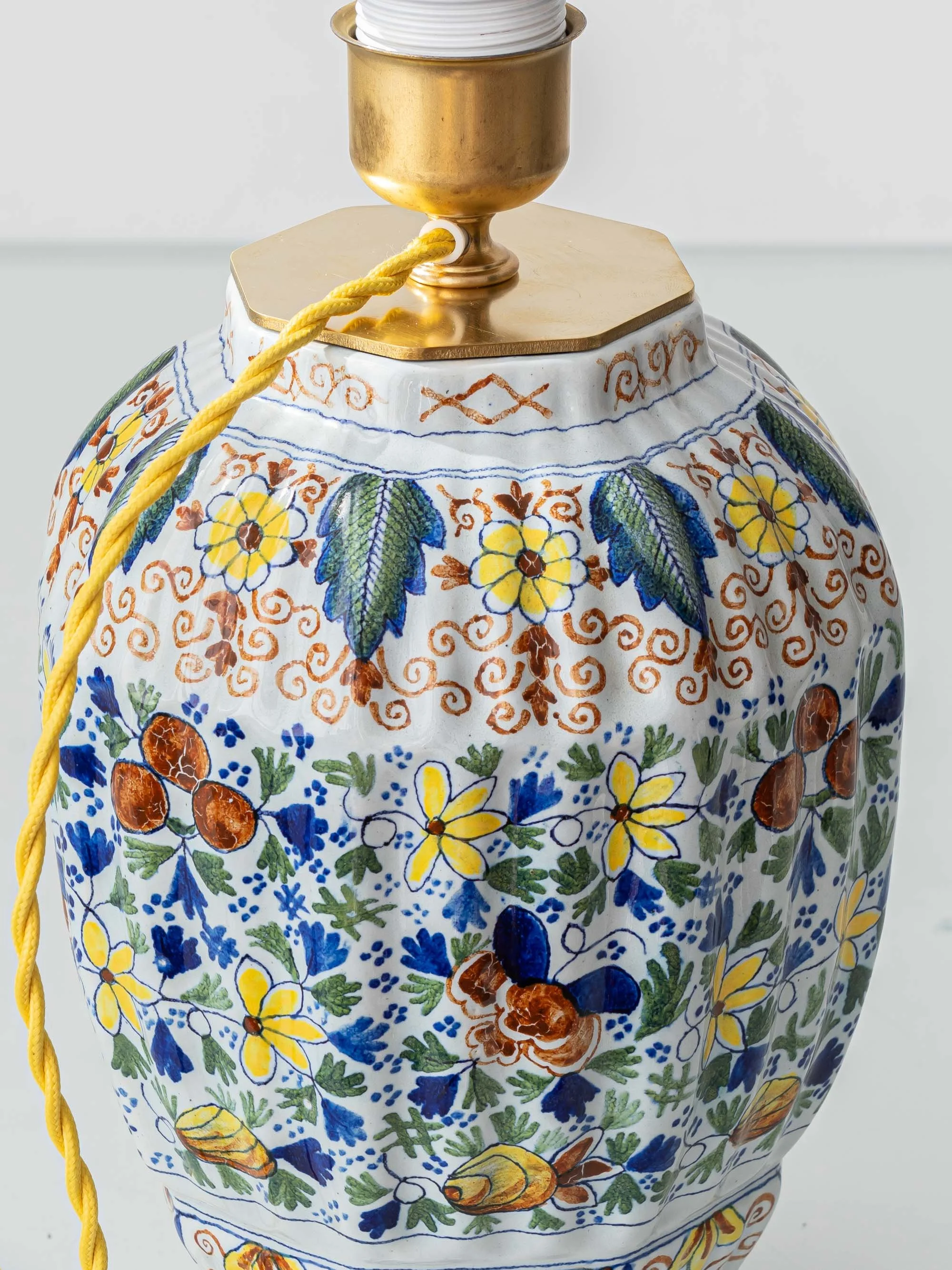
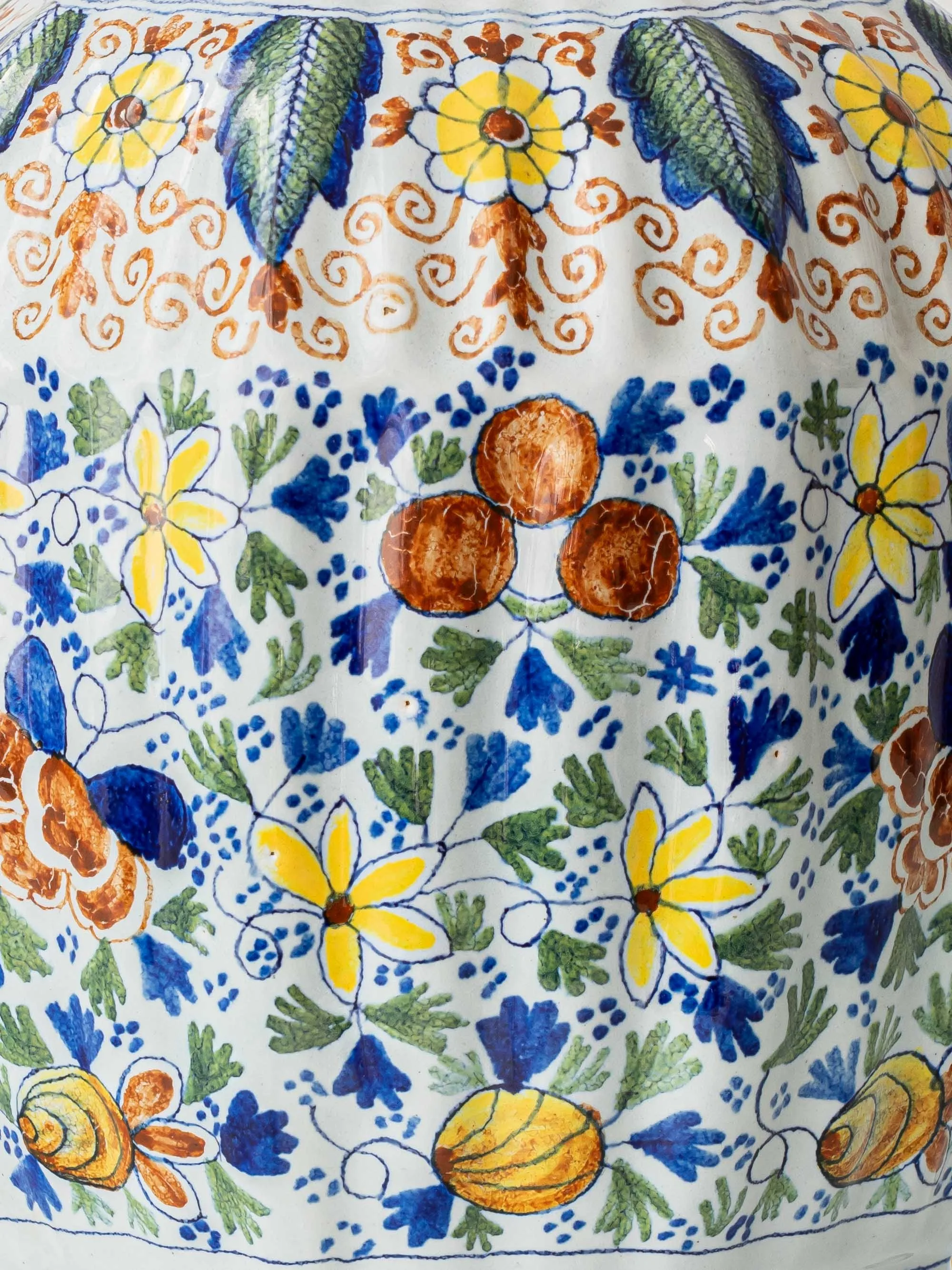
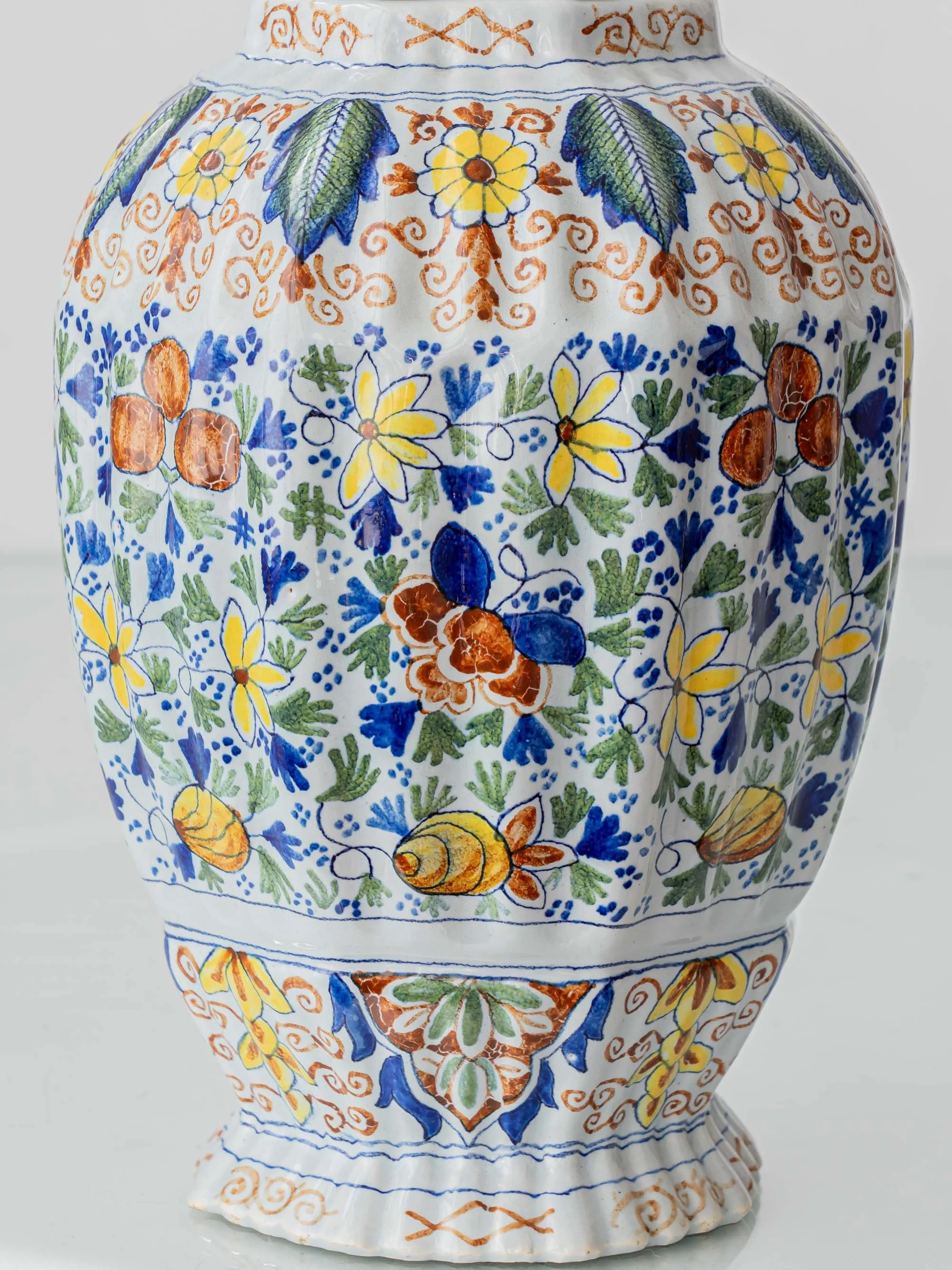
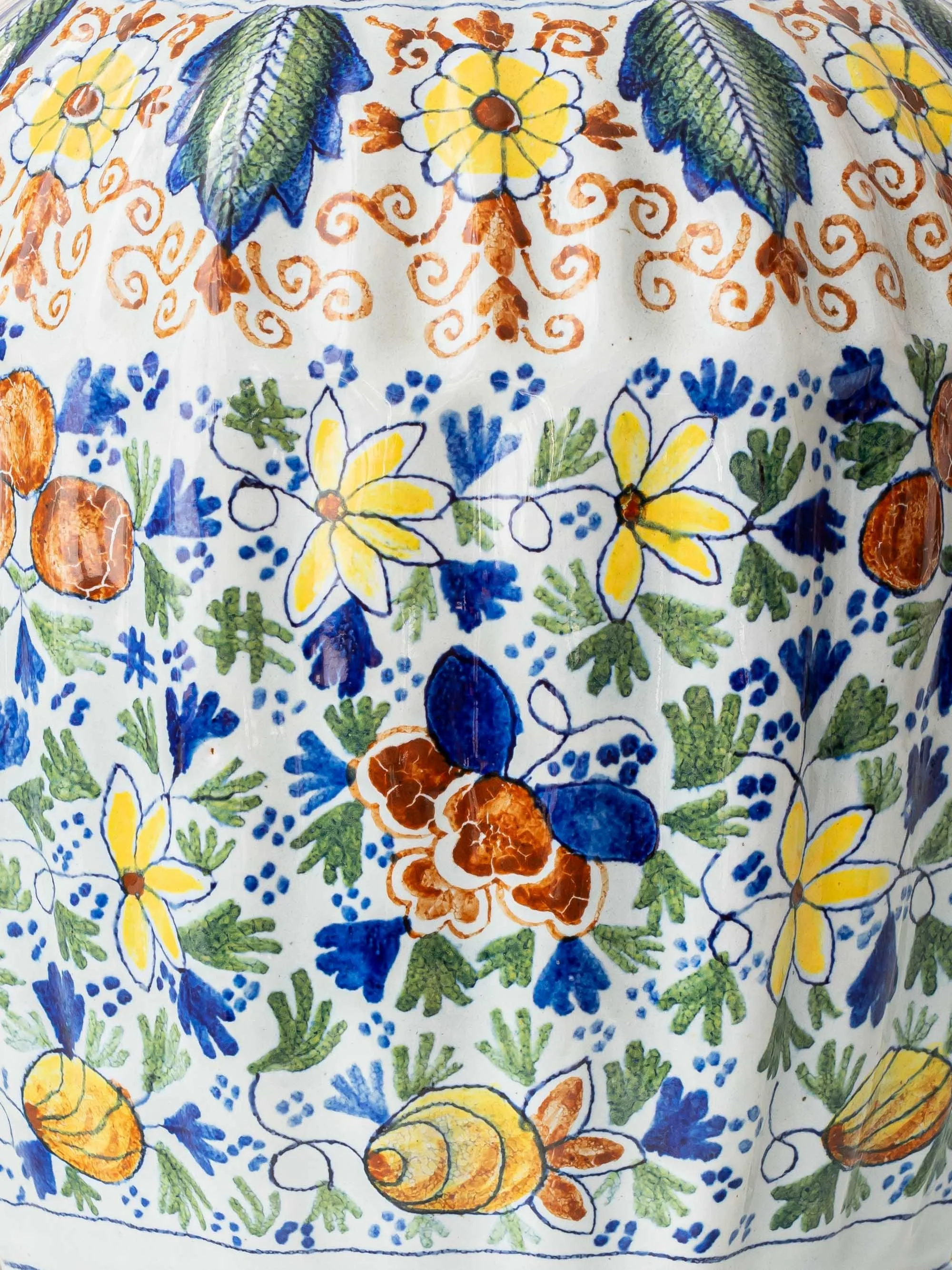
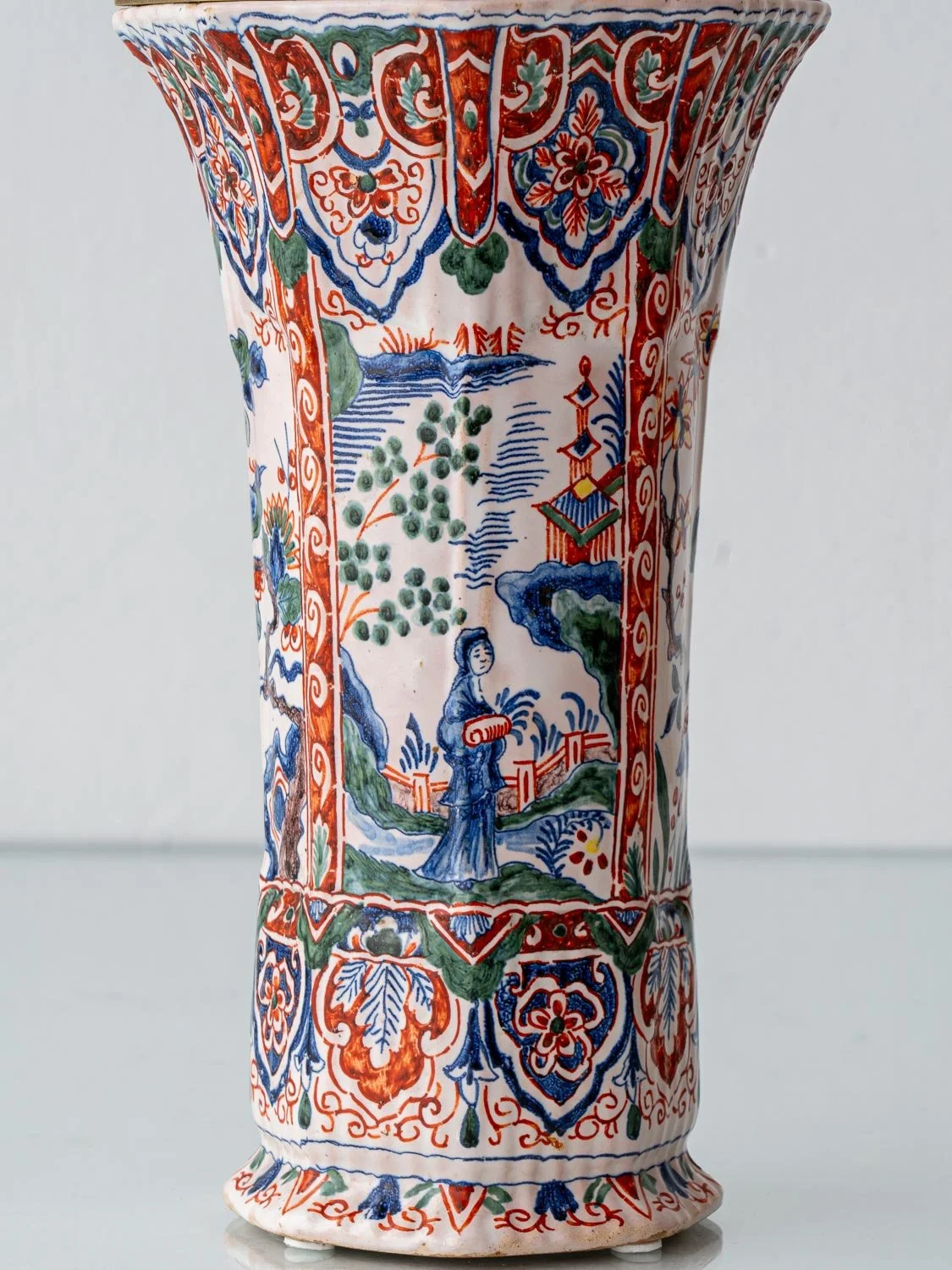
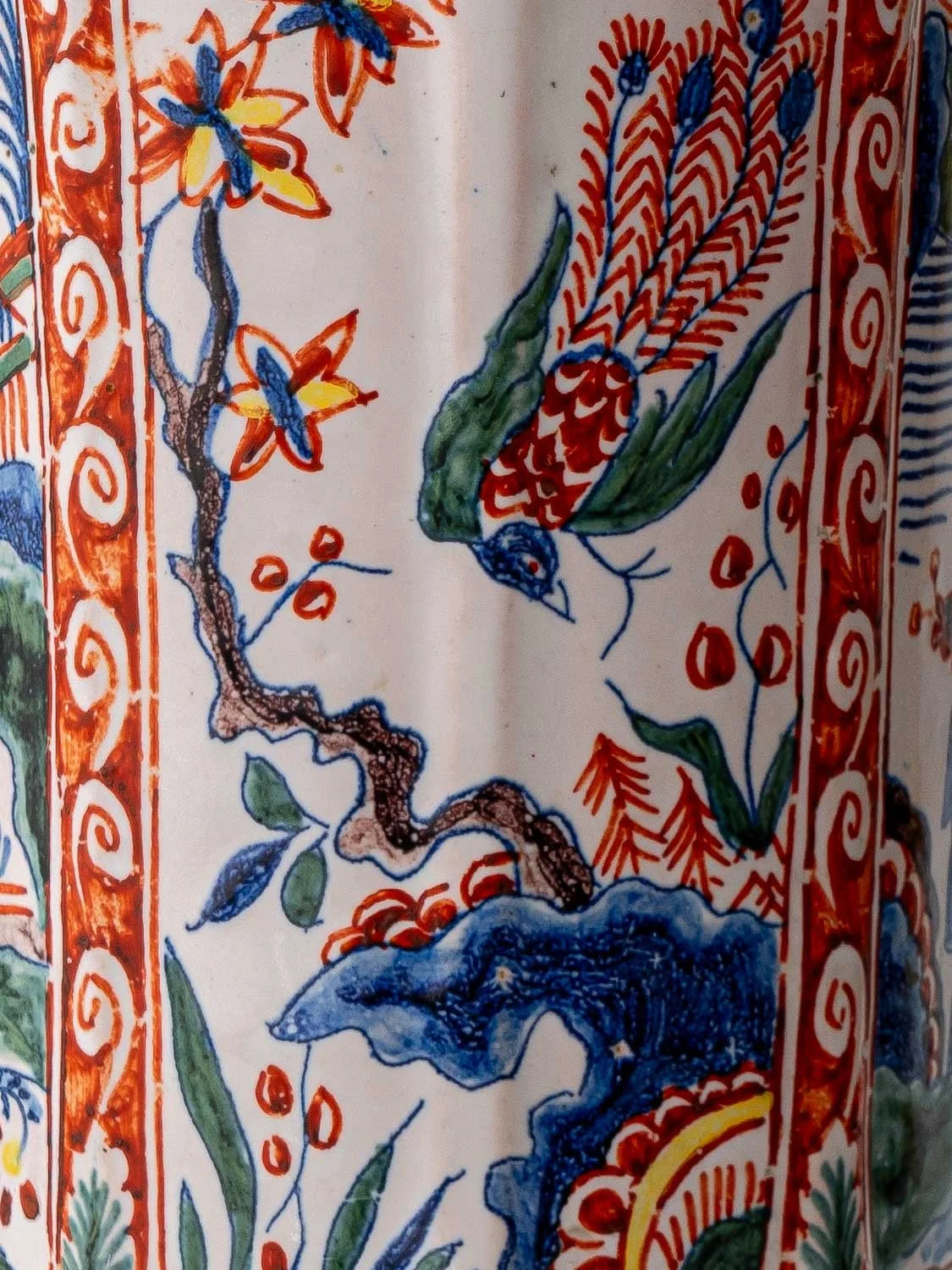
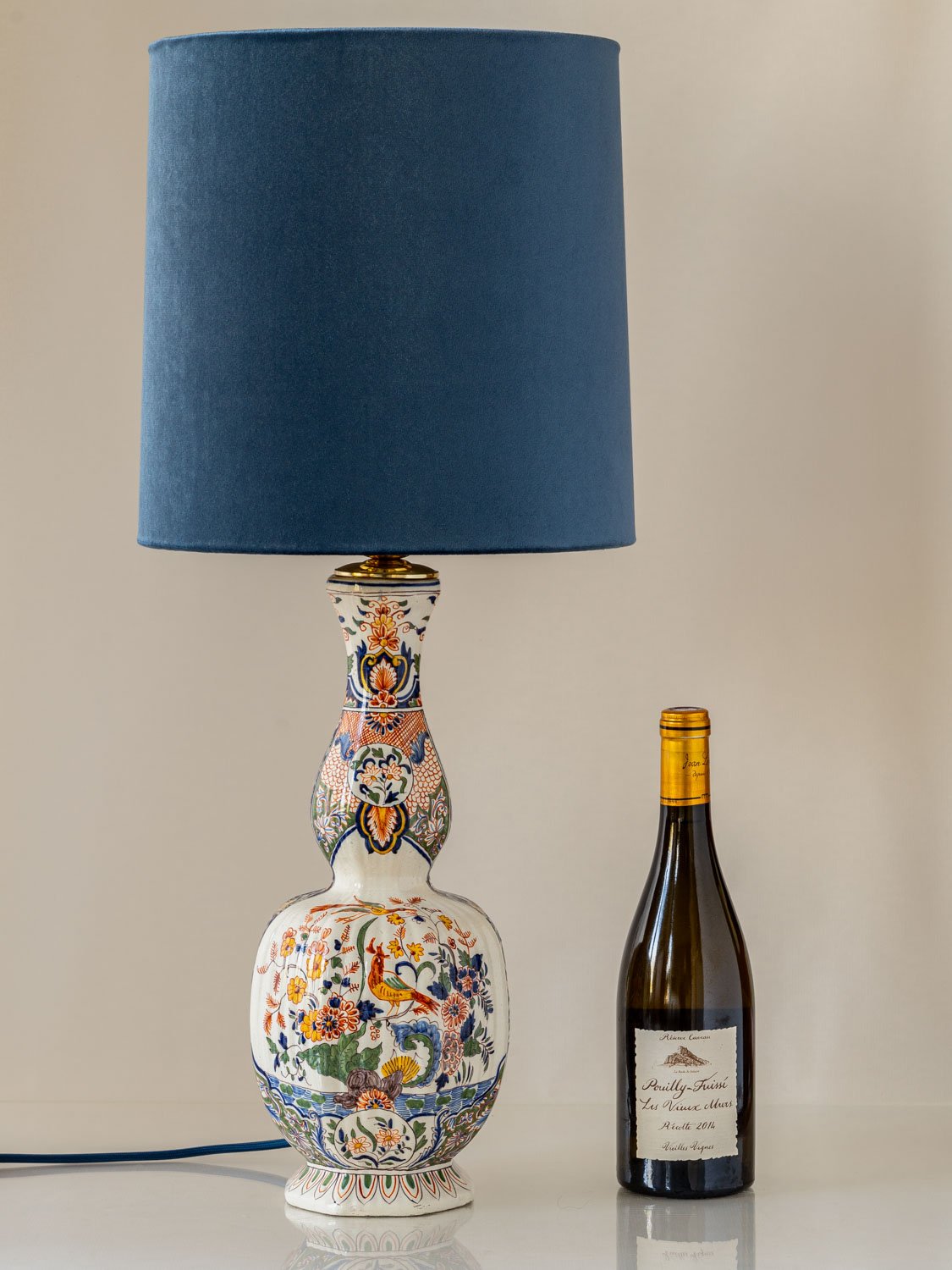
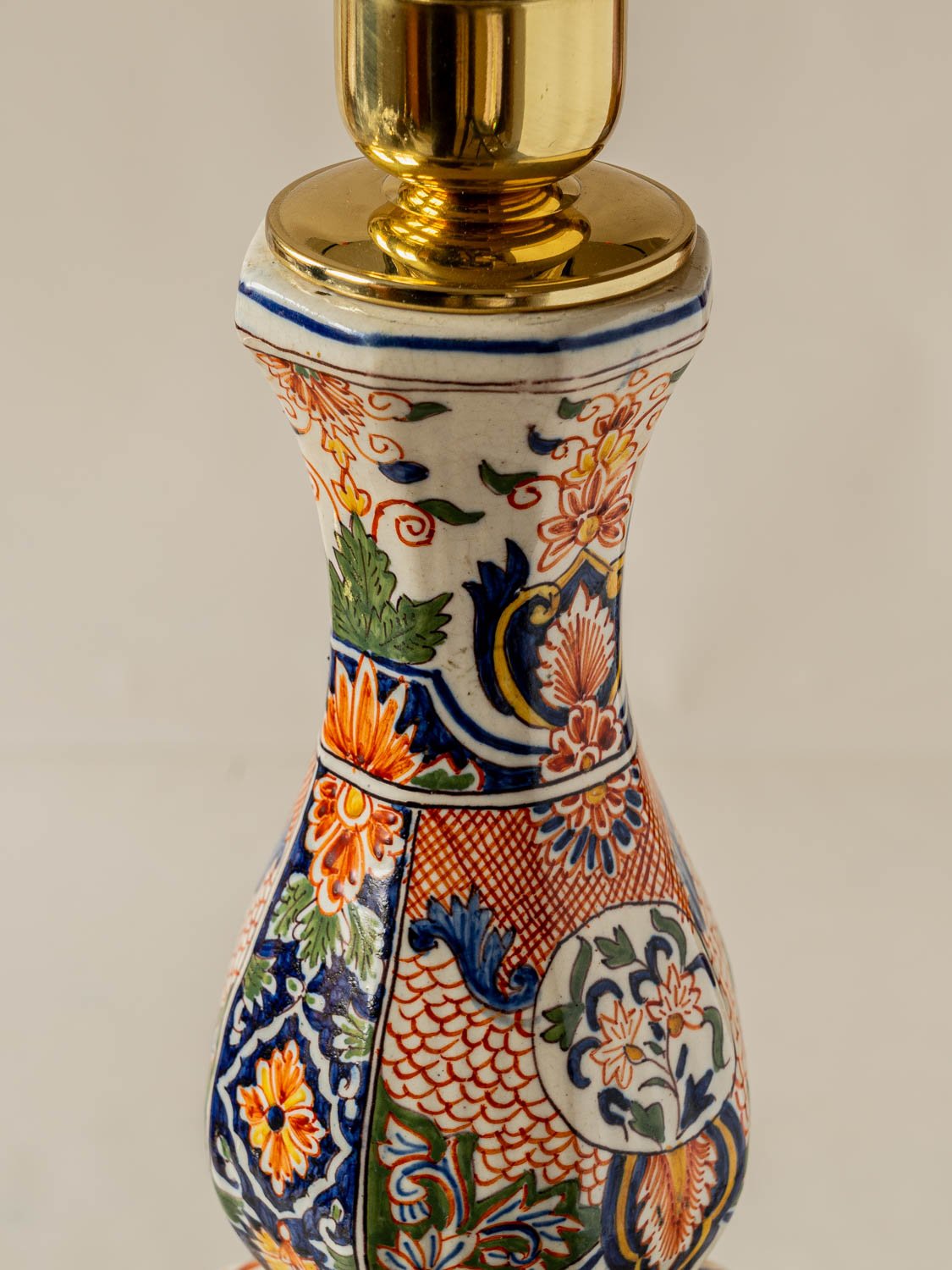
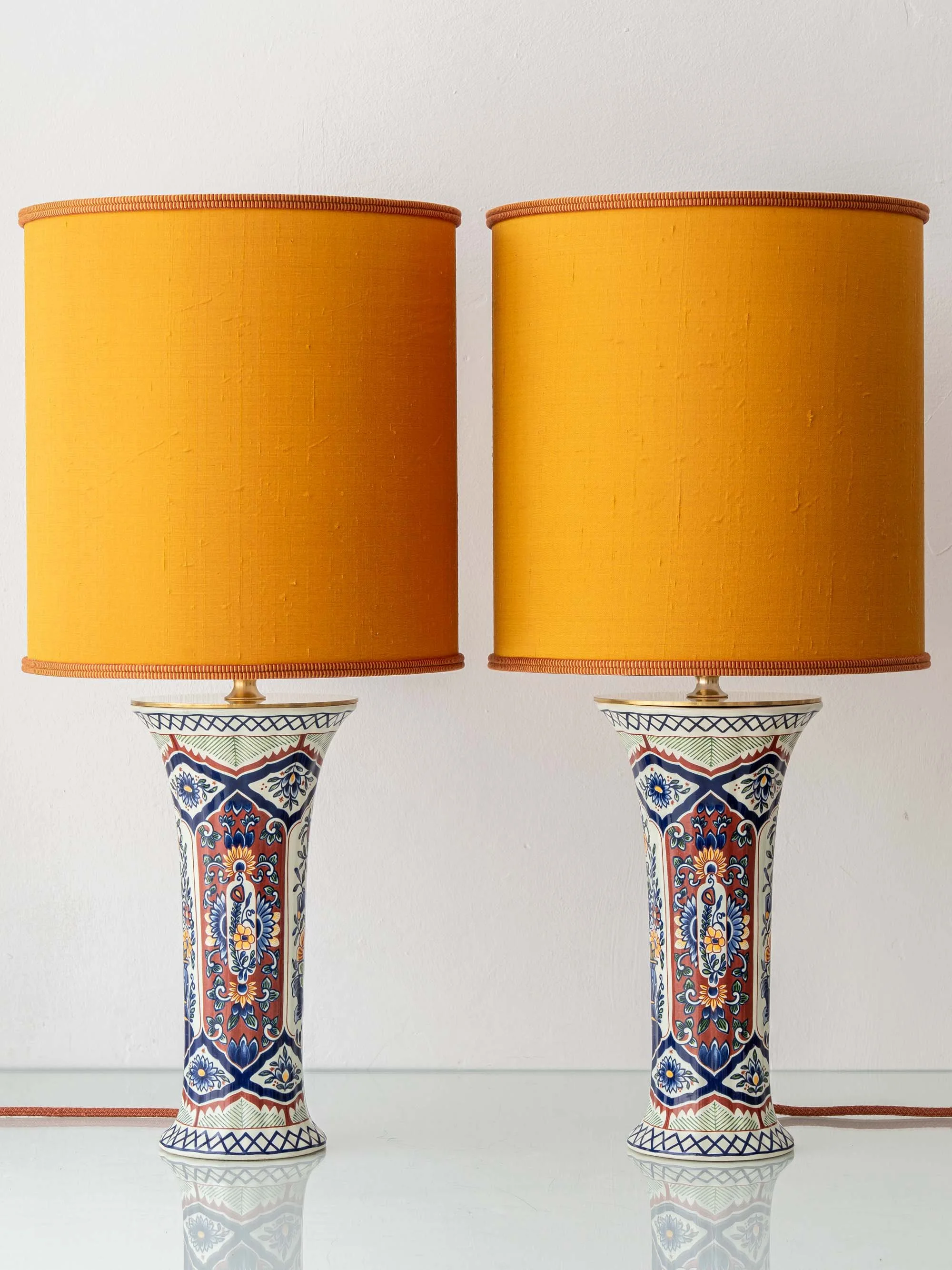
The two vases take the trumpet shape — a tall flared beaker that has a long history in Dutch Delft. Vases like these were originally made as garniture sets, lined up with lidded jars along a mantelpiece, a fashion that goes back to the late 1600s. Belgian potteries later took up both the form and the Delft painting style, turning out export wares in blue-and-white and, as here, in the fuller polychrome range. The painting on this pair is laid out in vertical panels: a cobalt framework over a brick-red ground, filled with flowers, curling leaves and a central reserve holding a flower-filled vase, all in green, saffron and red. Diamond and zig-zag borders run around the flared rim and foot, and the two lamps are painted to match.
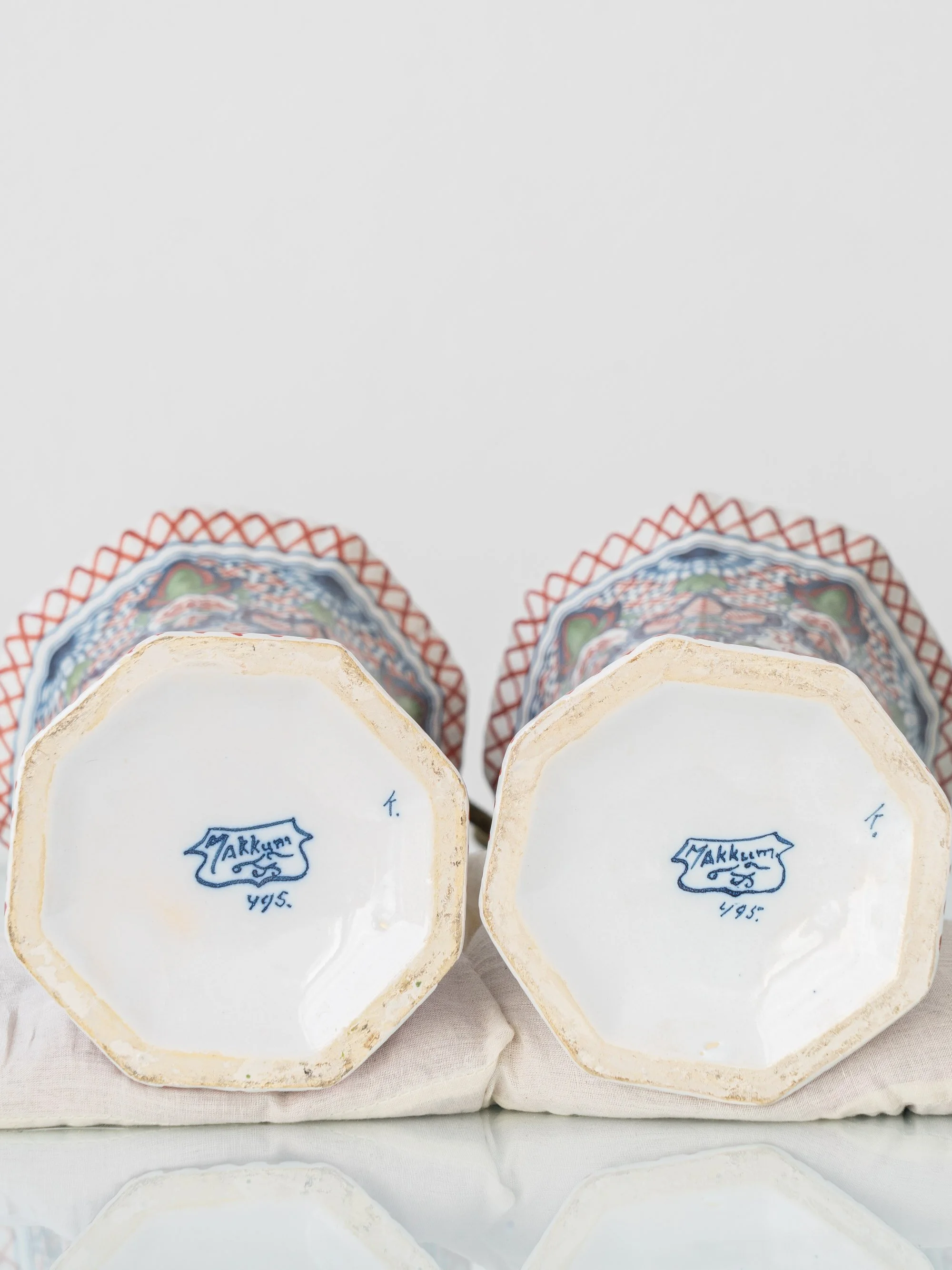
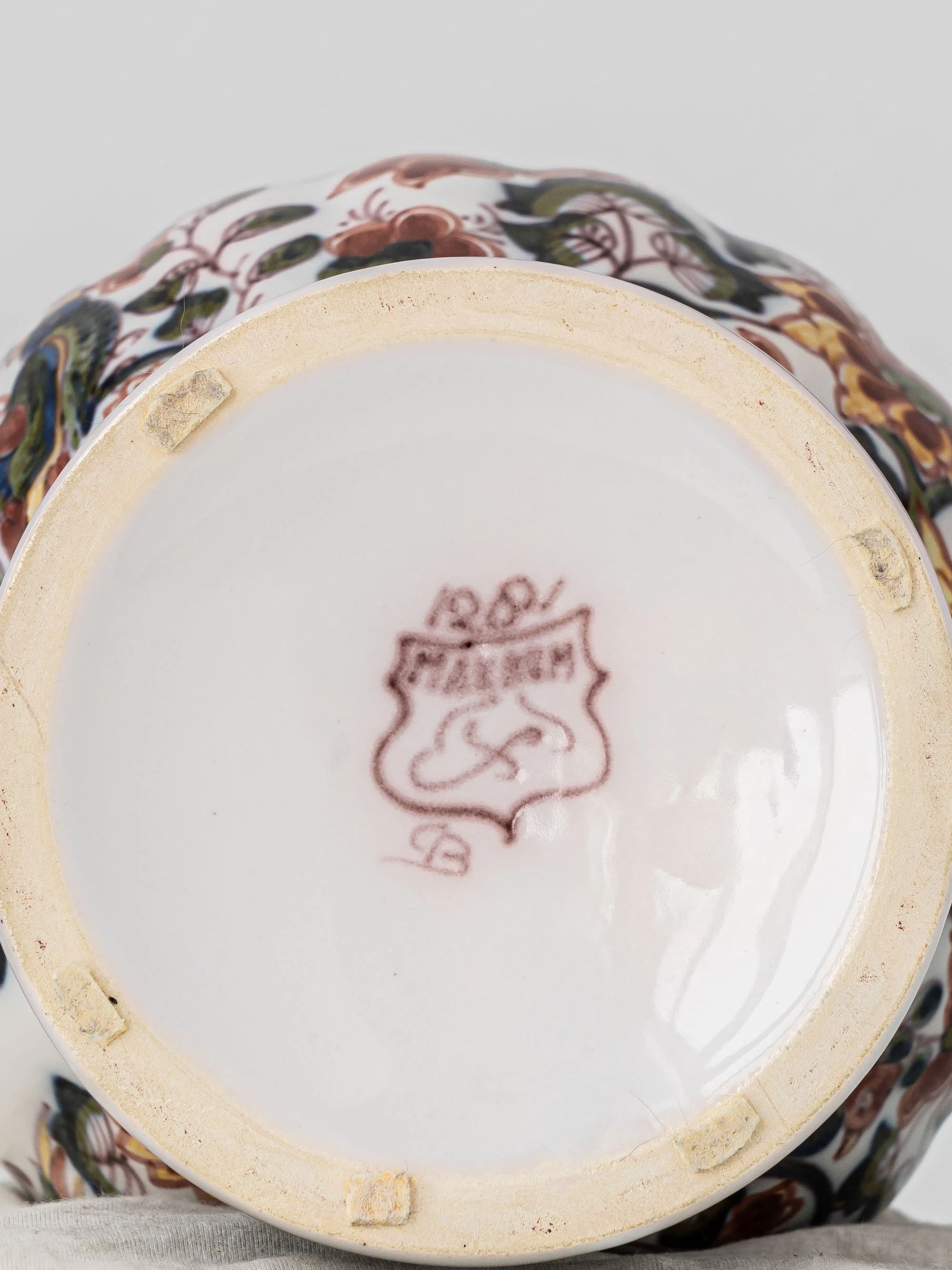
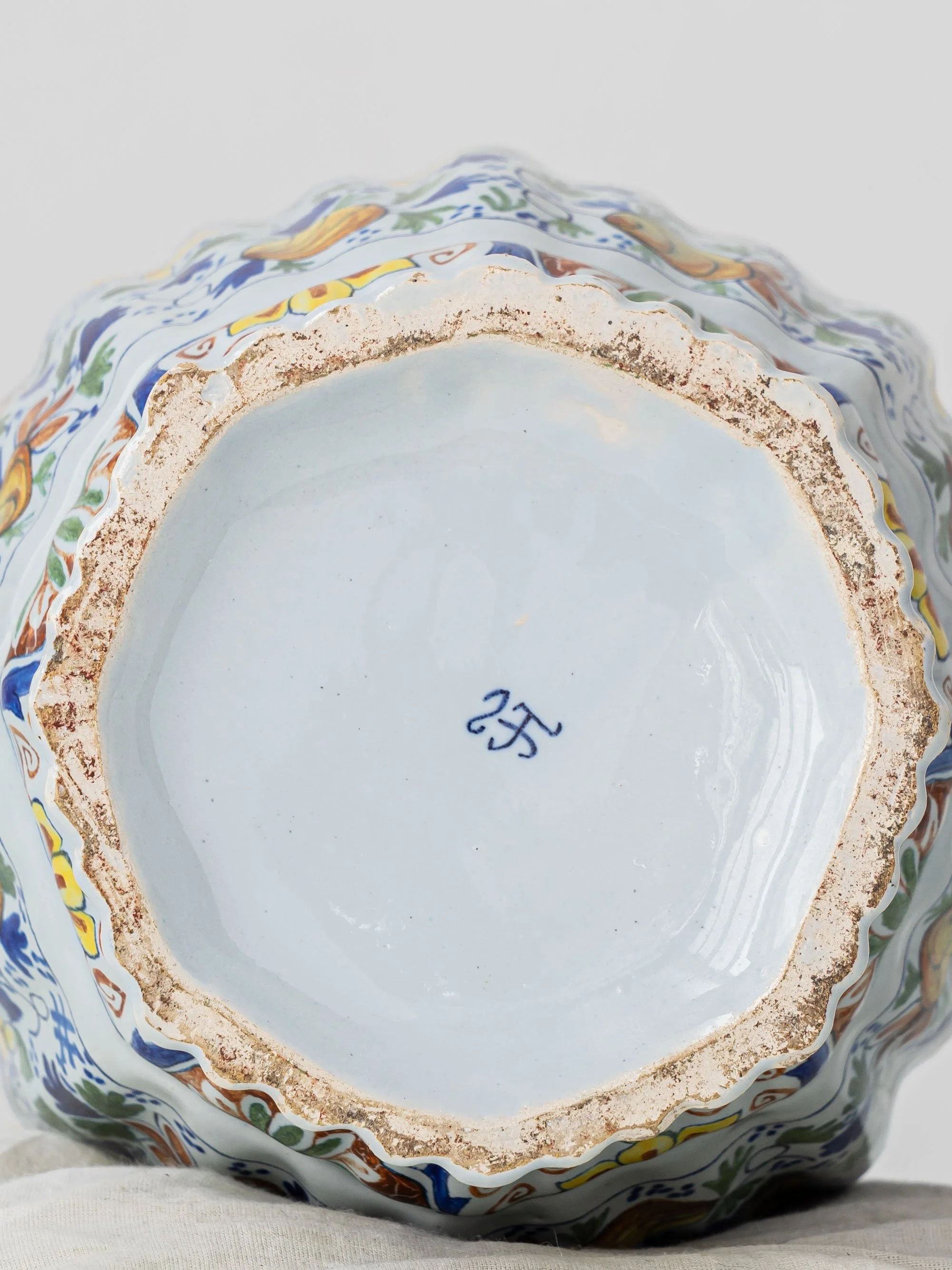
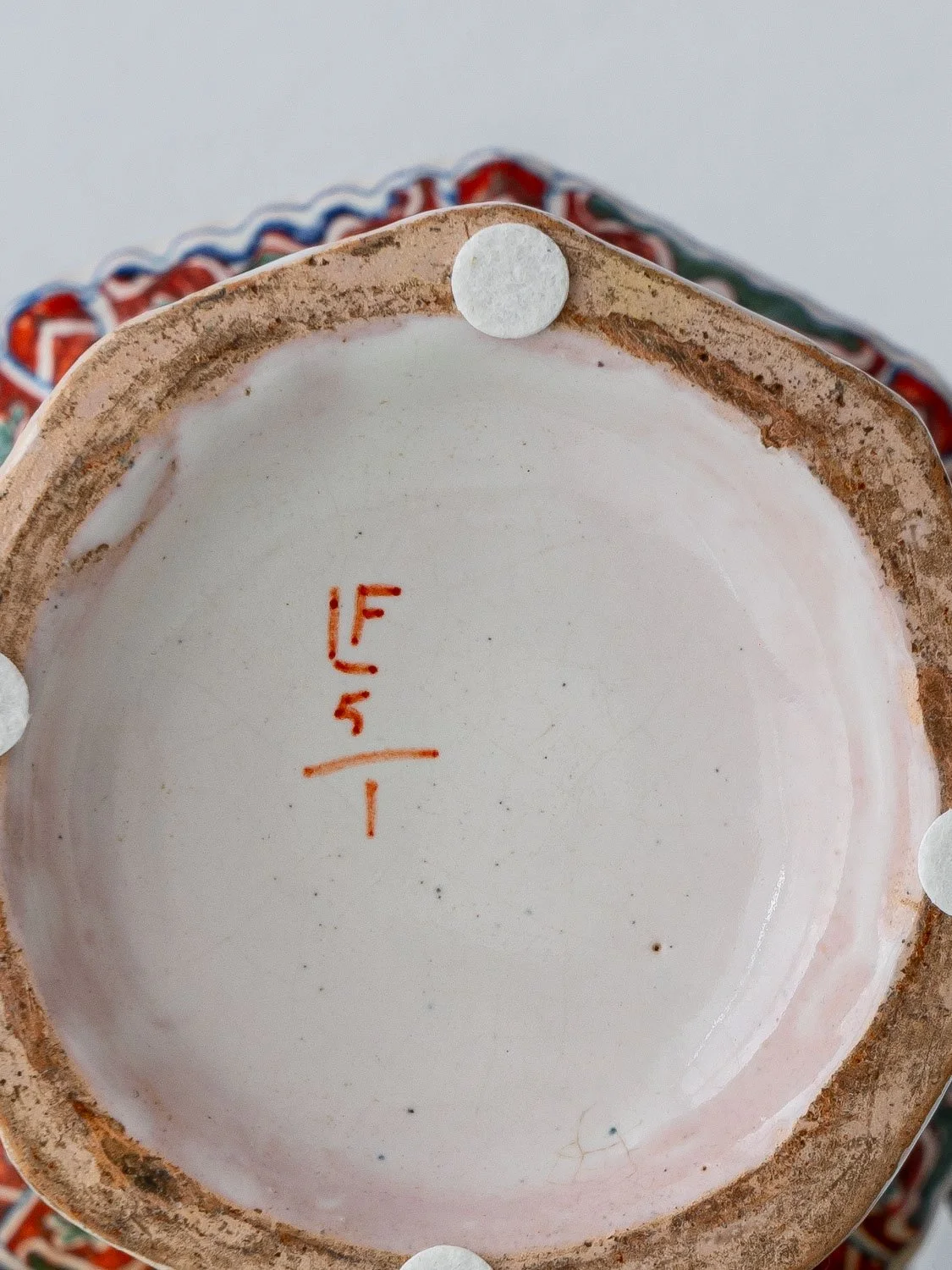
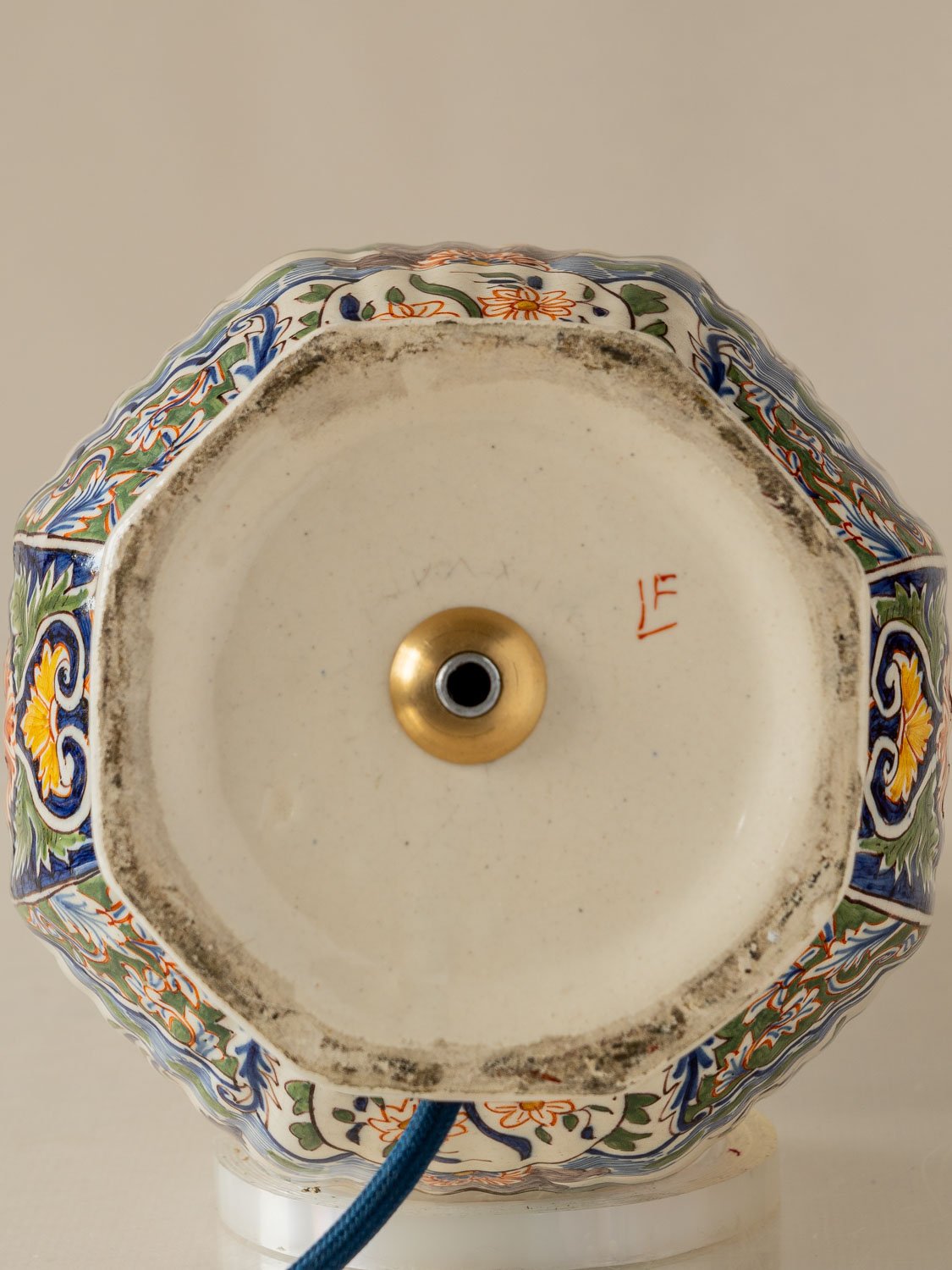
Underneath, each base shows a printed cartouche reading "Brugge Boch Belgium — Handworked," the stamp of a hand-decorated Boch line. The mid-century dating places them in the run of Delft polychrome export ware that La Louvière kept producing through the postwar years.
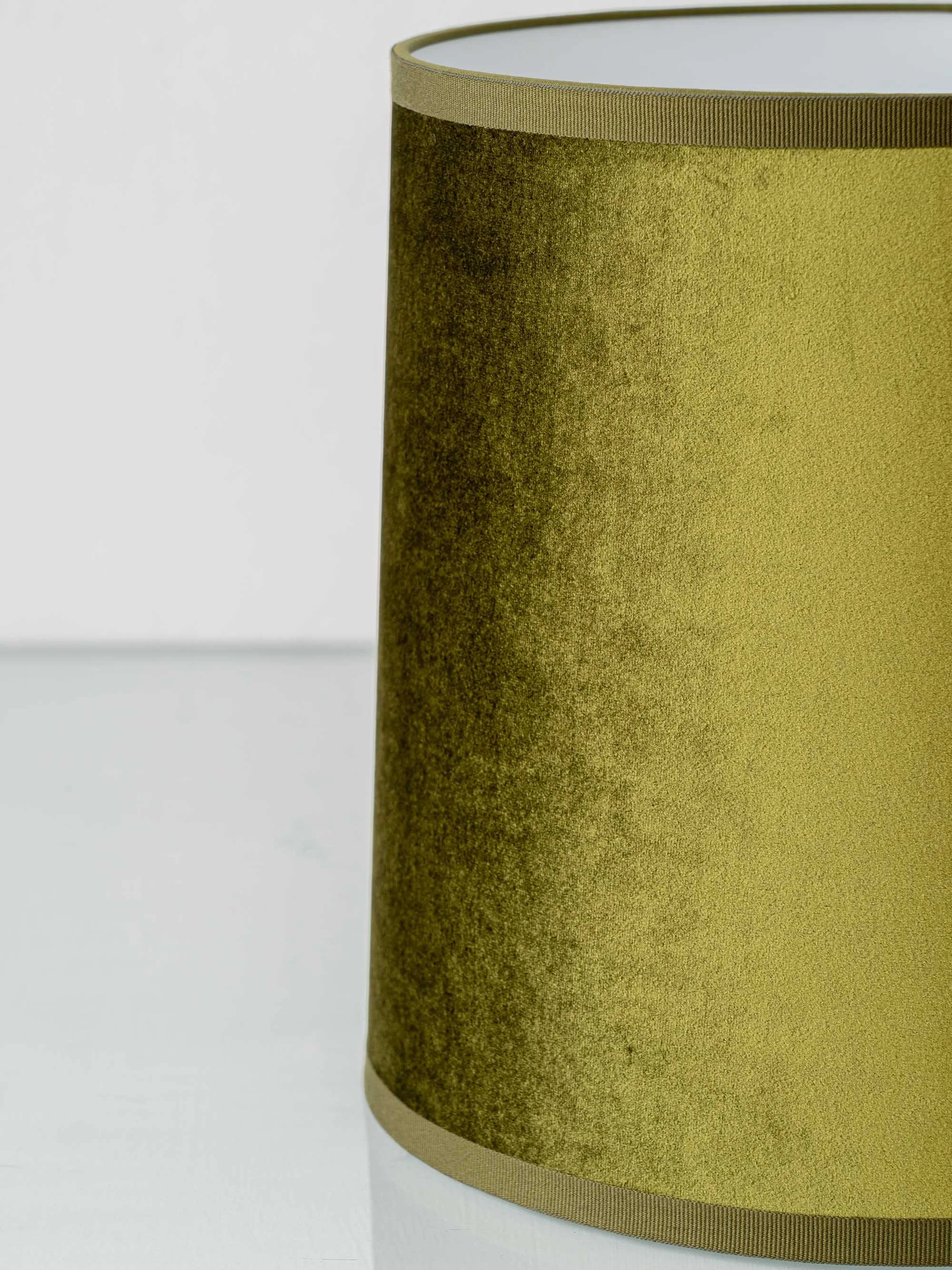
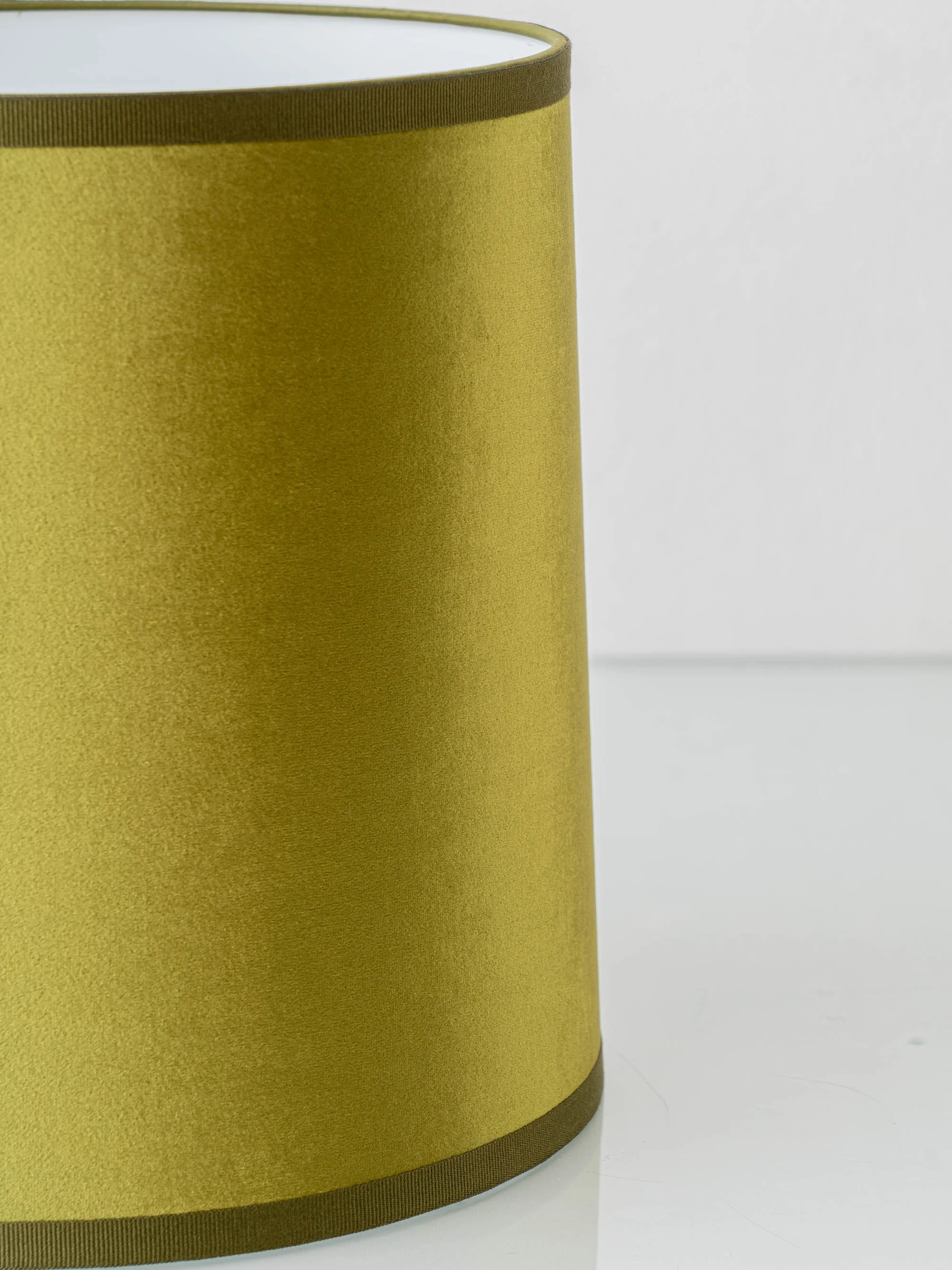
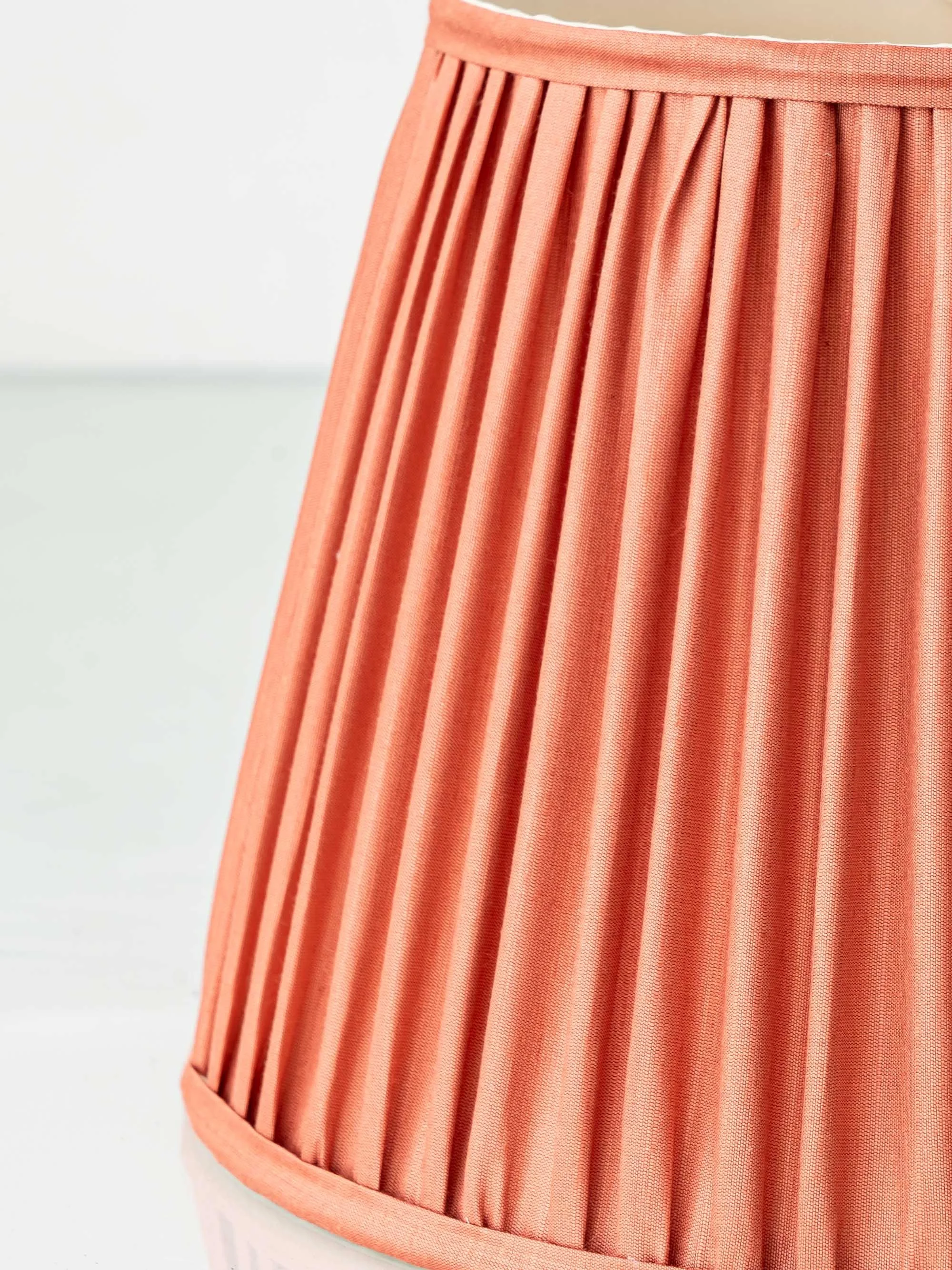
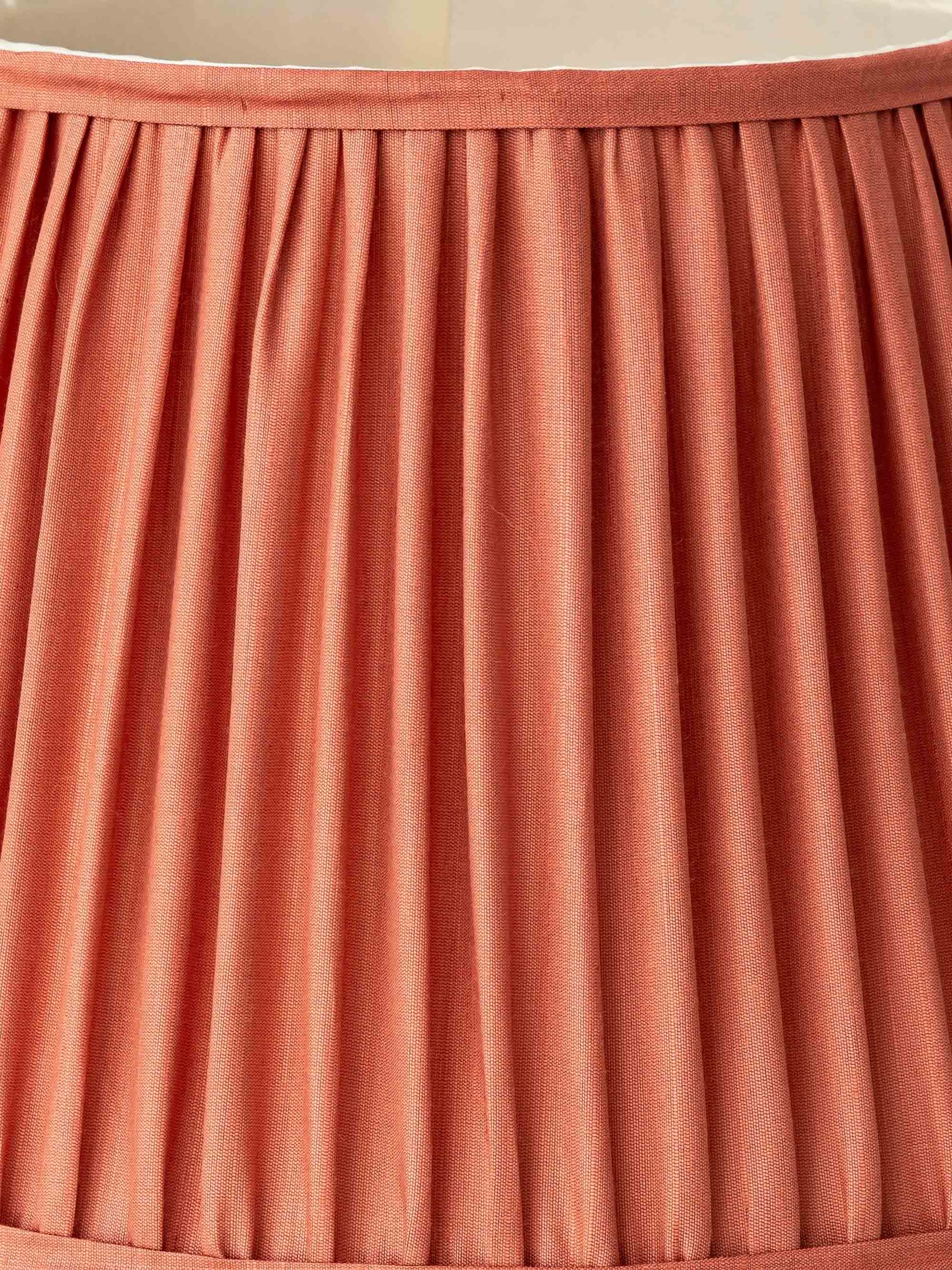
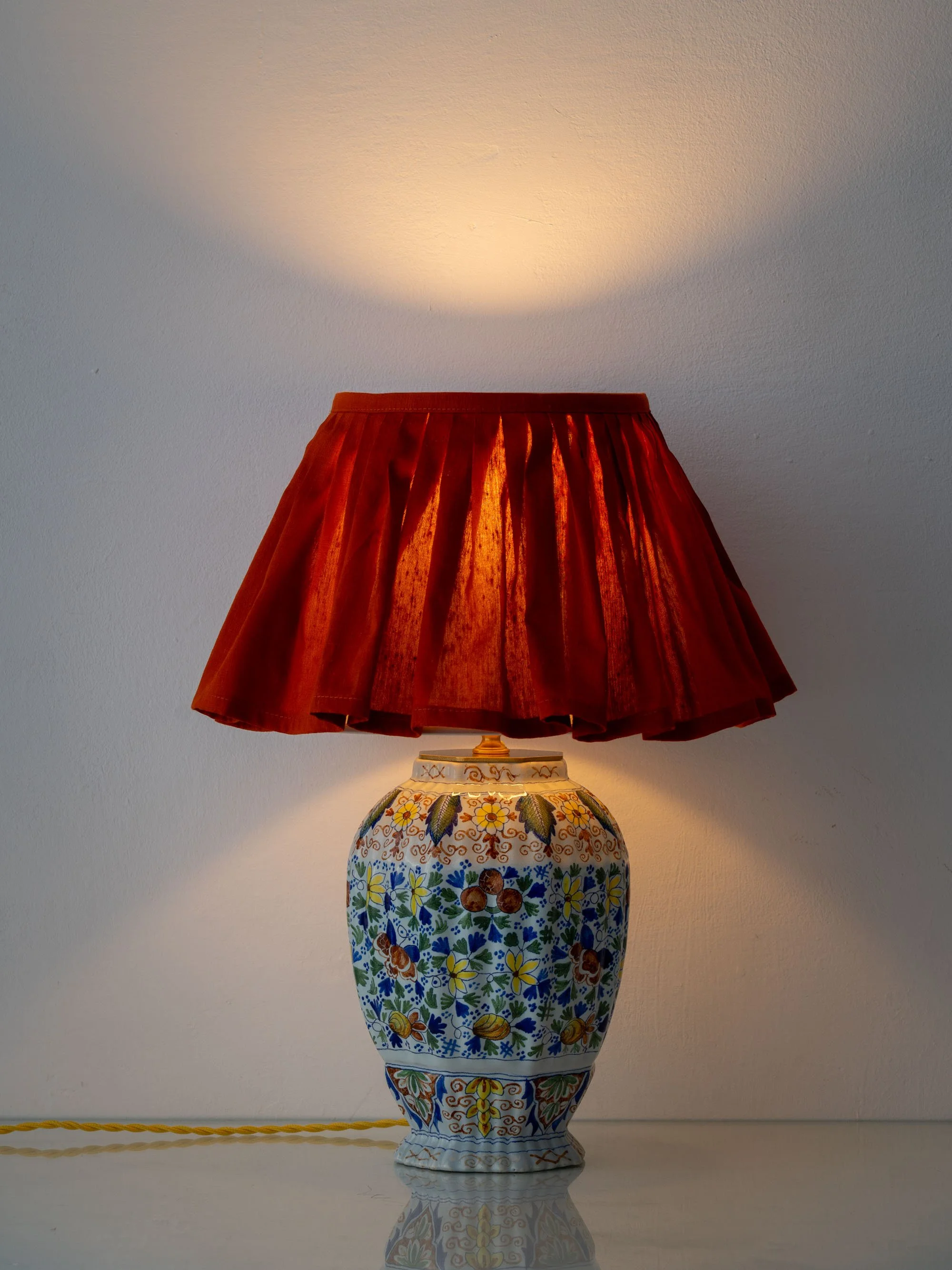
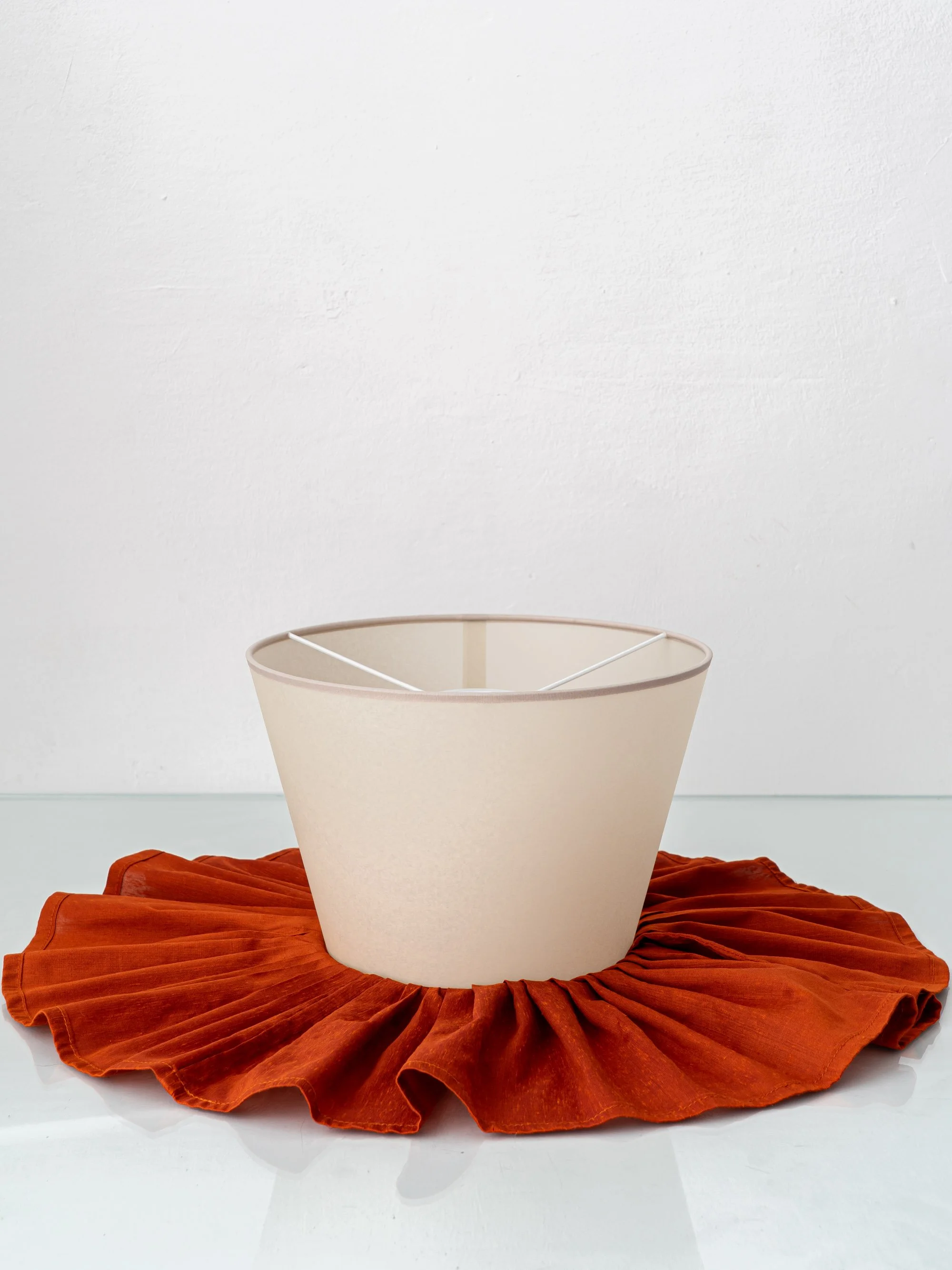
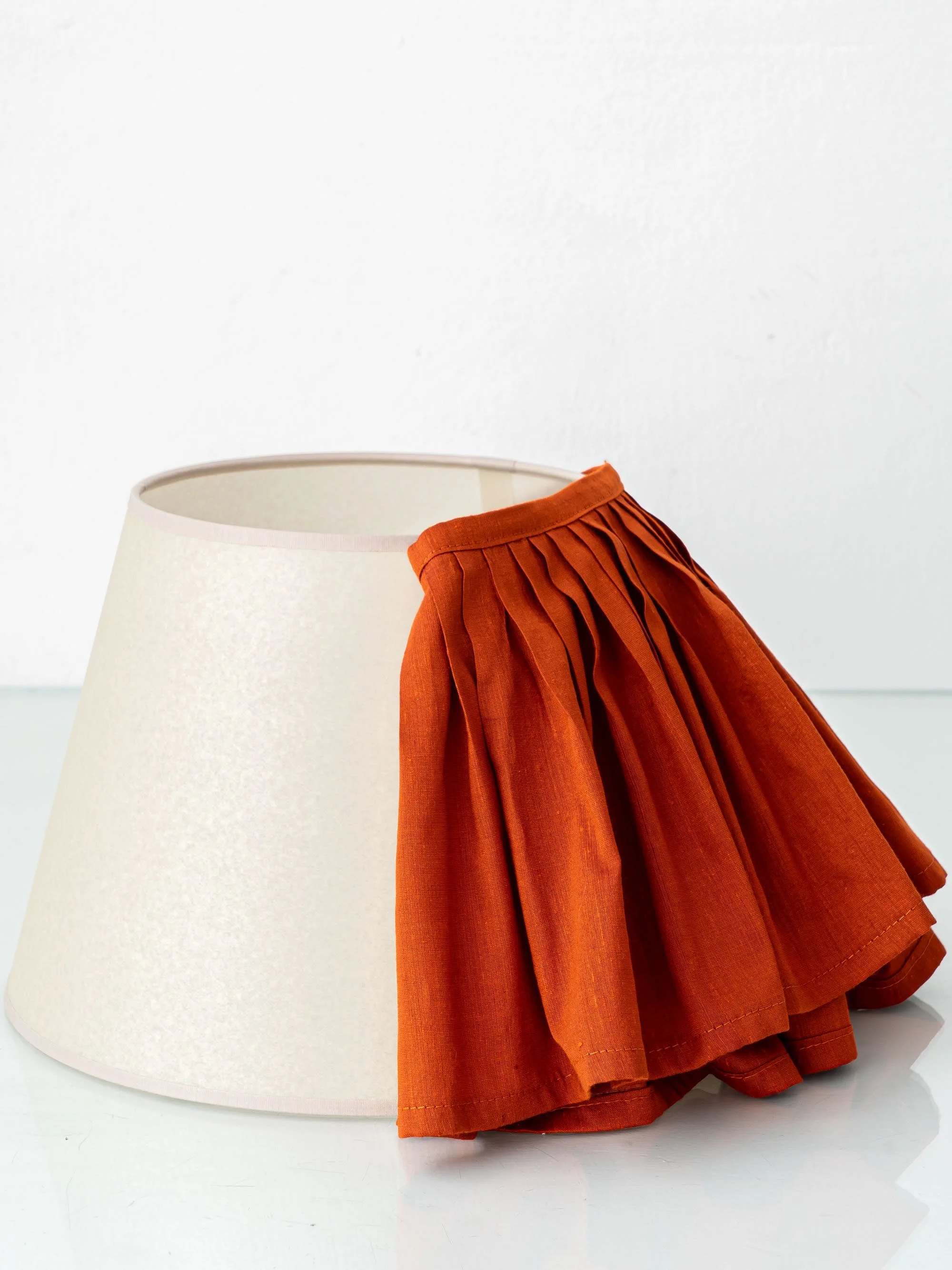
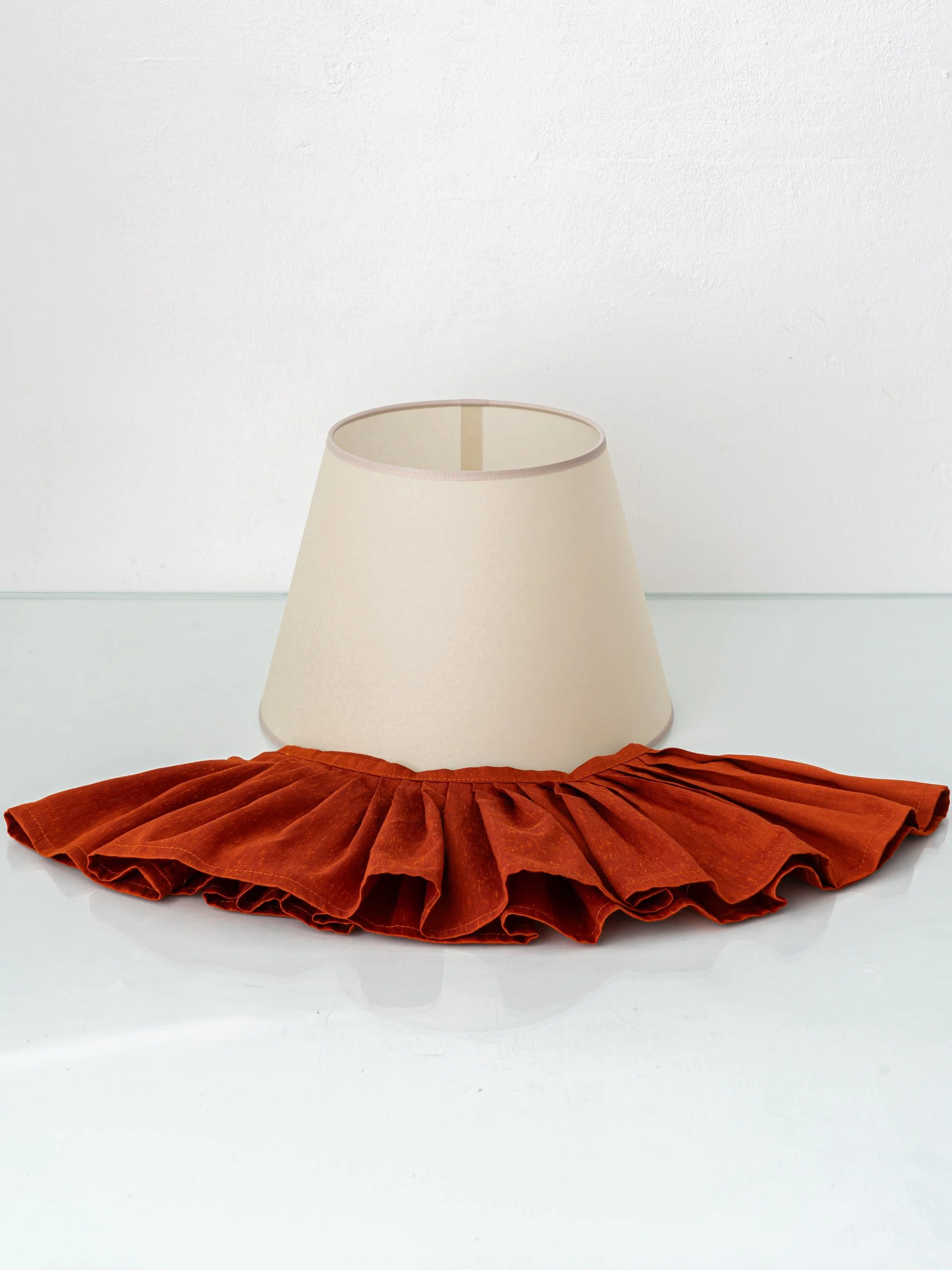
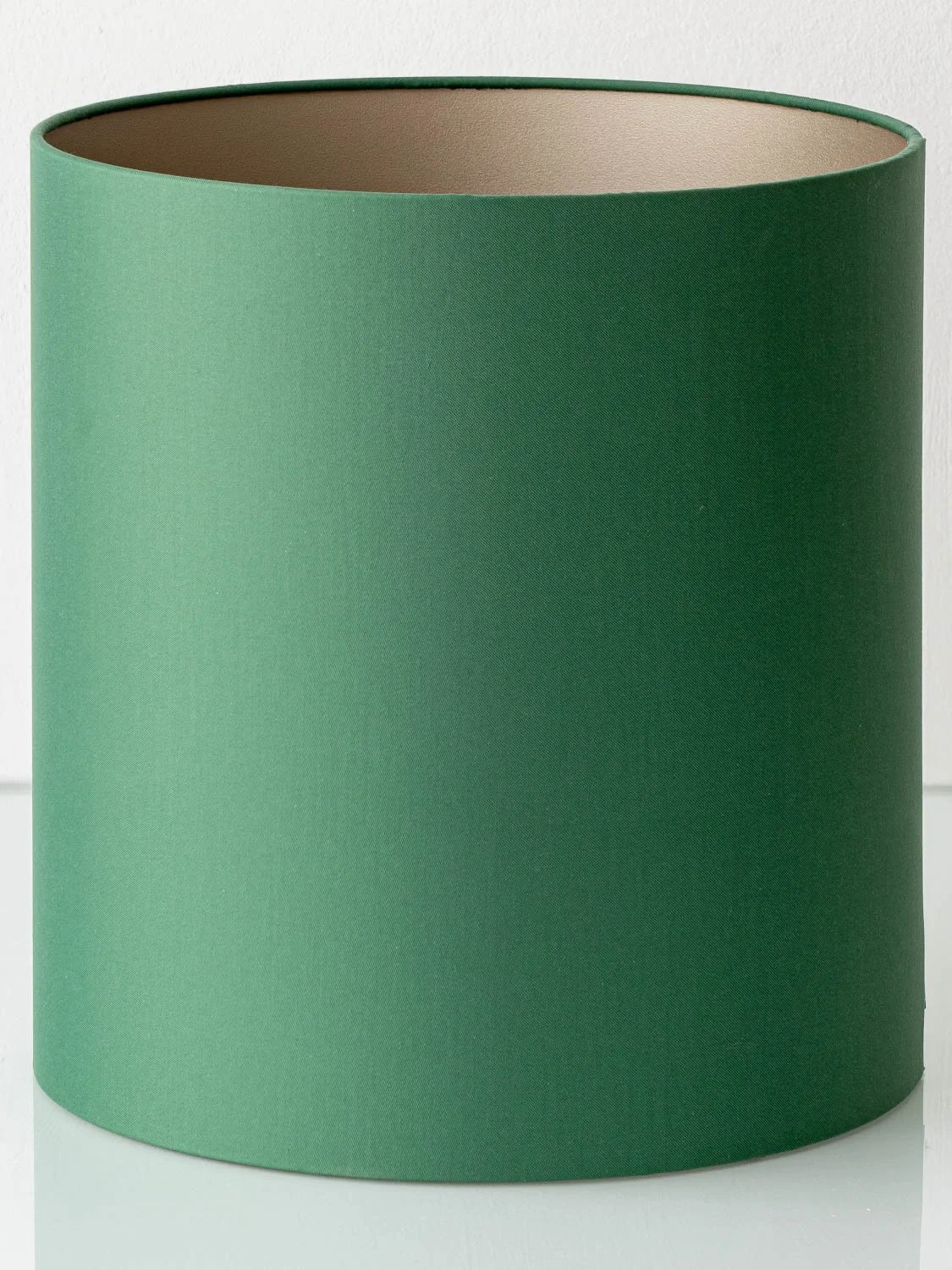
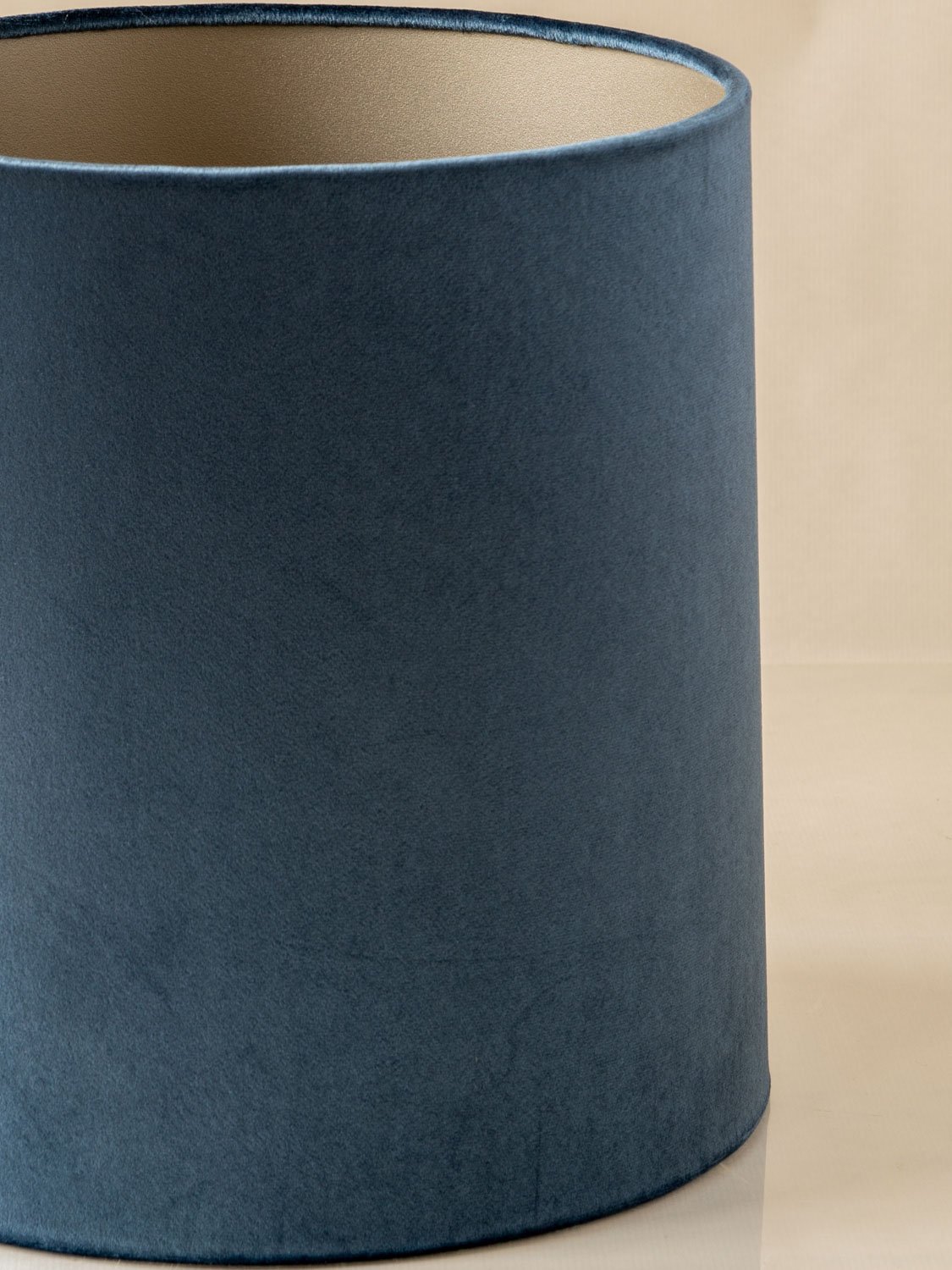
Both shades were made to order in dupion, a silk woven on the hand loom, its threads carrying the small irregular slubs that account for the cloth's broken, tactile finish. It is in the nature of dupion not to sit glass-smooth; the slight ripples and the slubs are the fabric, not a fault in the making. The double-cord trim was chosen to draw out the saffron ground and the red of the painting, with brass fittings and a wrapped cord to match.
About Boch Frères Keramis
The firm was founded in 1841 at La Louvière by the Boch family, faïenciers who had already worked for generations across Lorraine and the Saarland. By the close of the 19th century it ranked among Belgium's foremost potteries, with a range that ran from the Art Nouveau and Art Deco art wares — most famously Charles Catteau's in the 1920s — through to the traditional Delft-style polychrome export lines it continued to make for decades after. Its original works survives today as the Keramis ceramics museum.