 Image 1 of 16
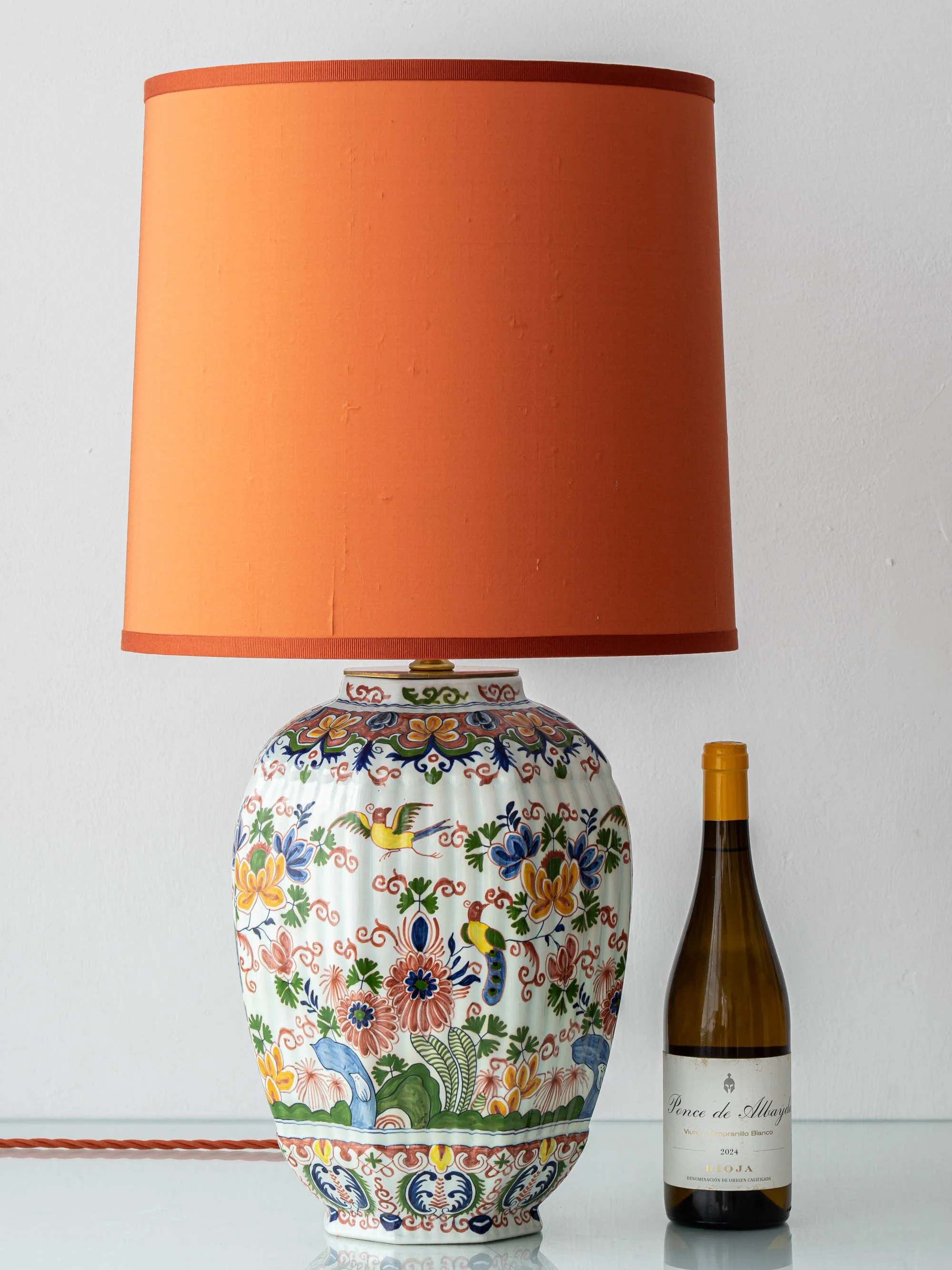 Image 2 of 16
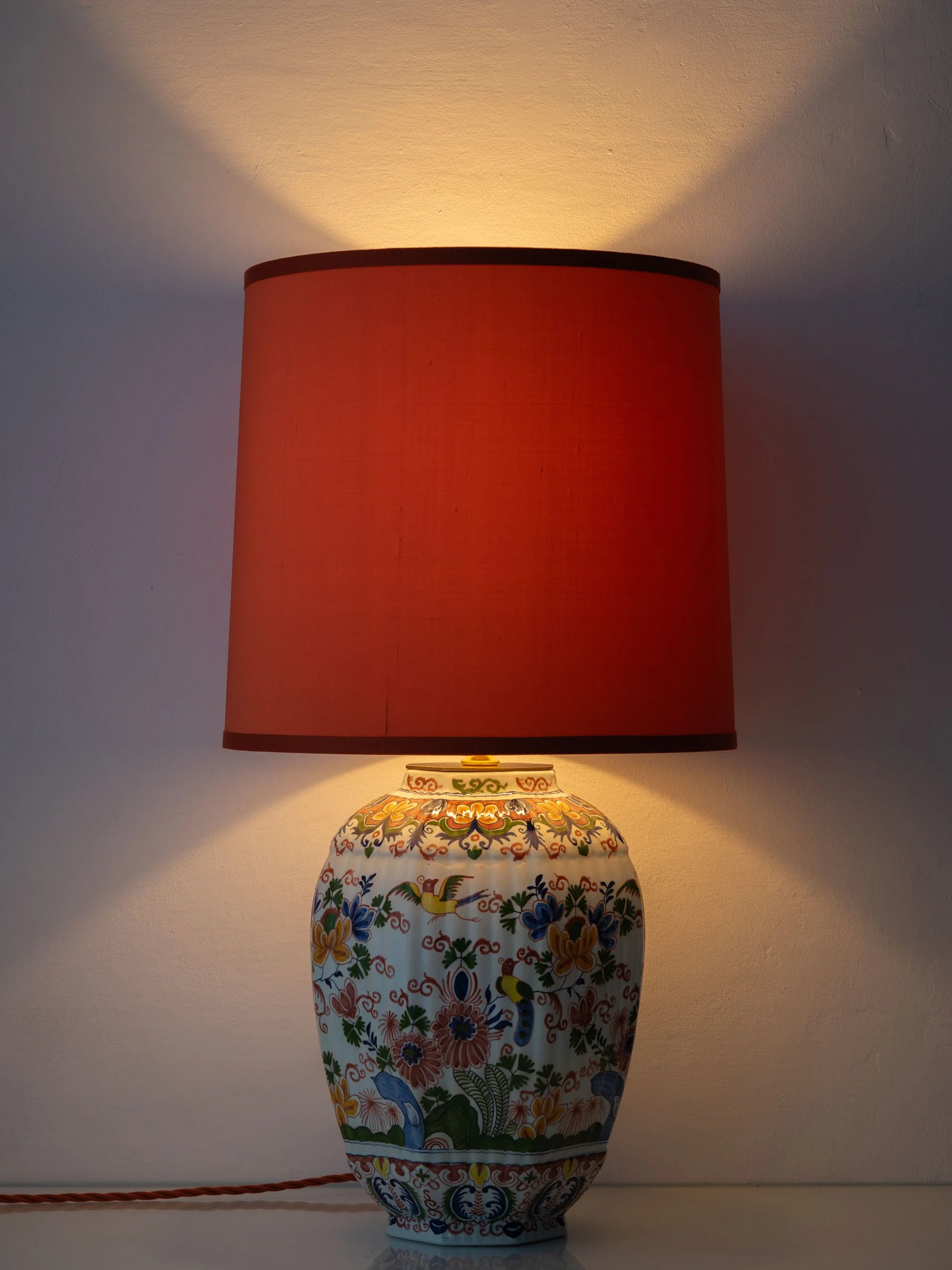 Image 3 of 16
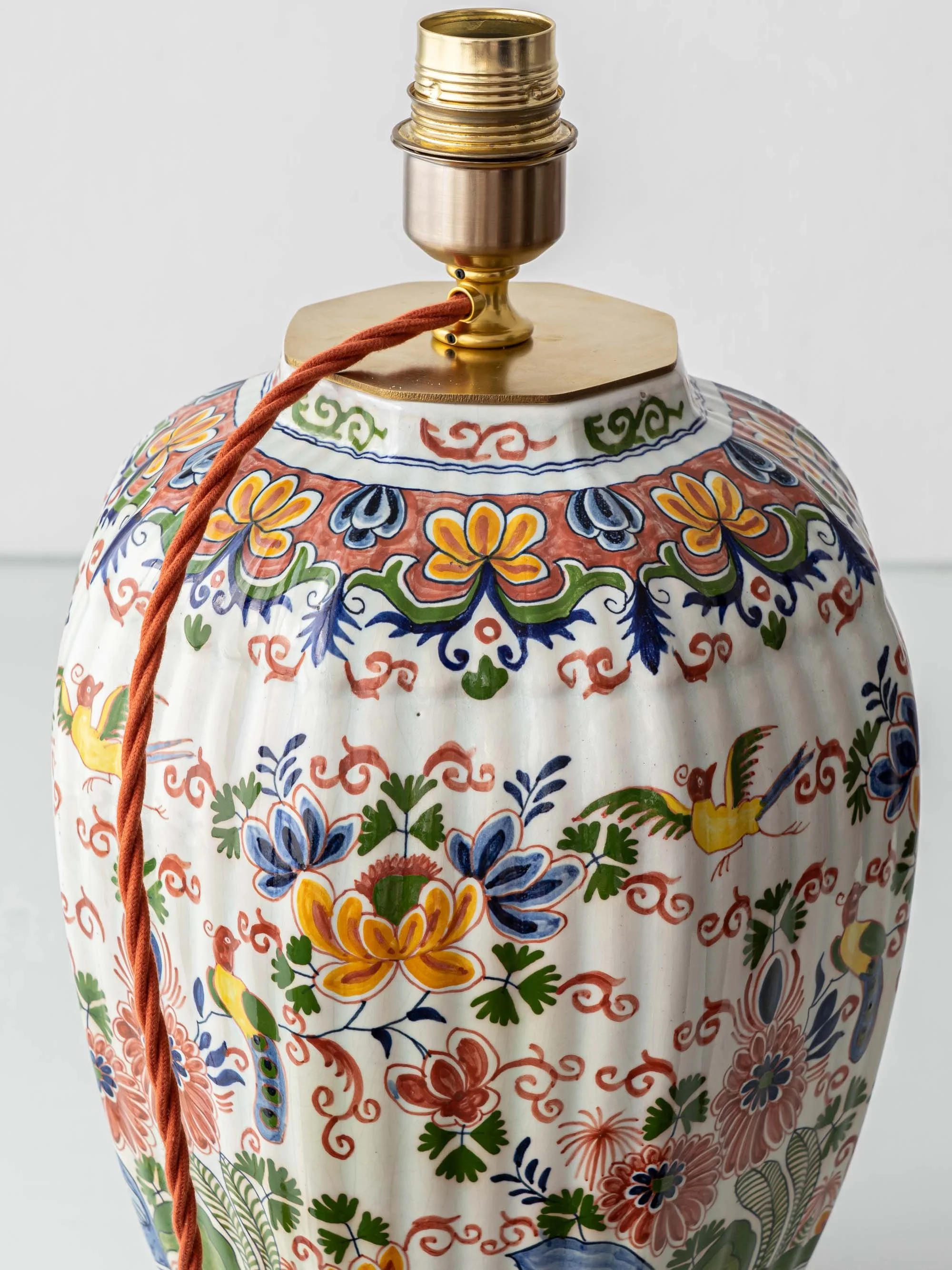 Image 4 of 16
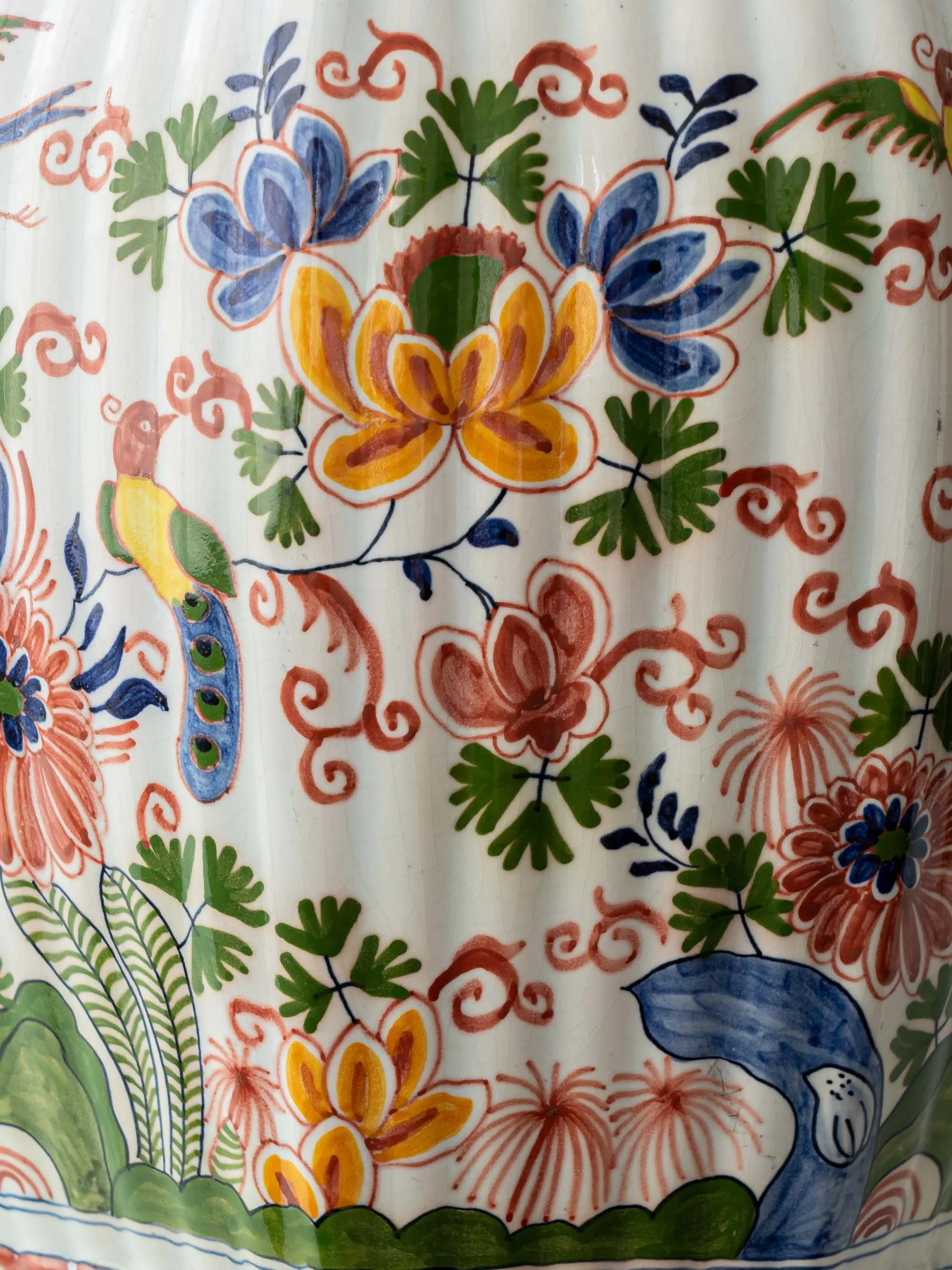 Image 5 of 16
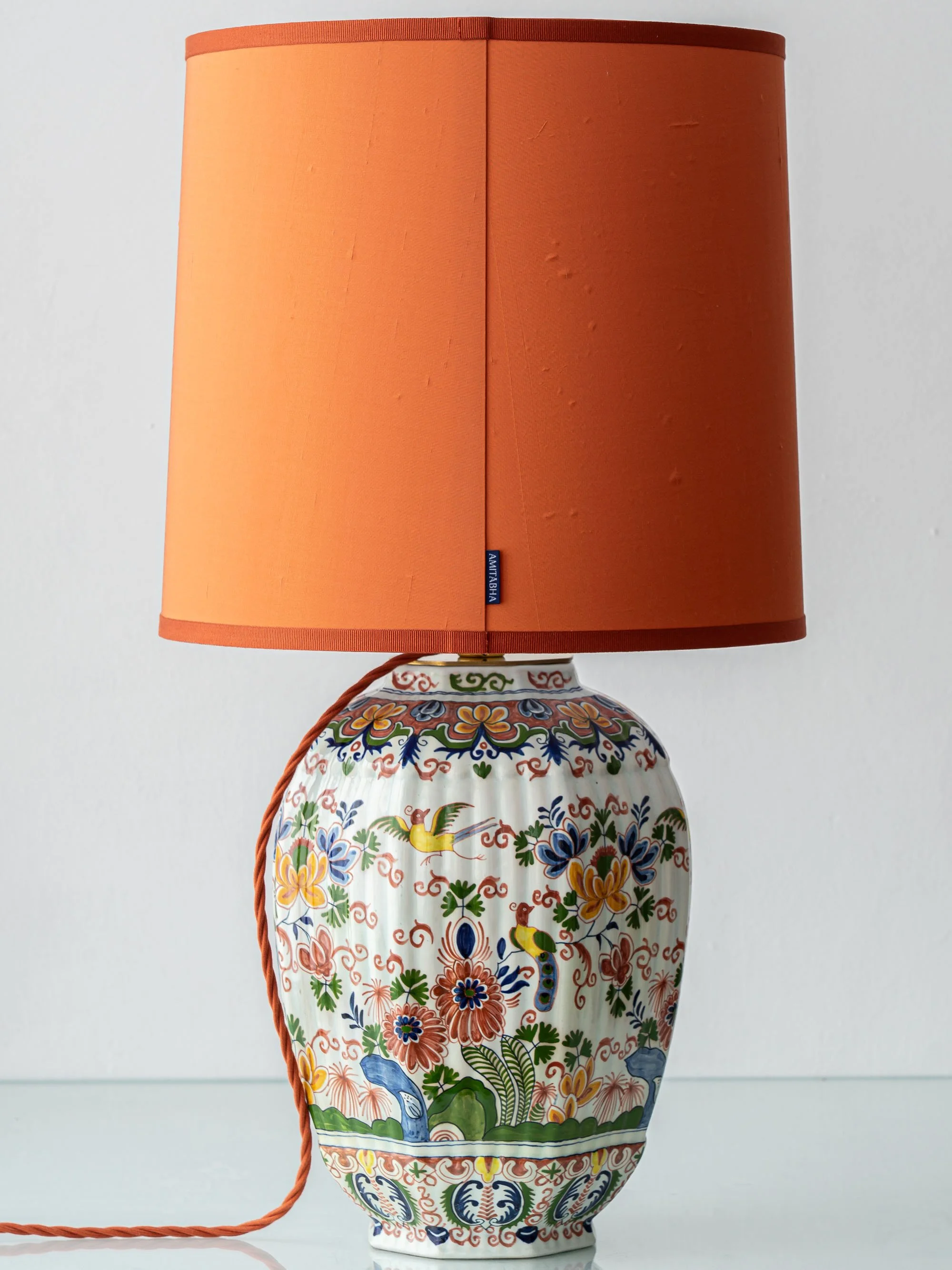 Image 6 of 16
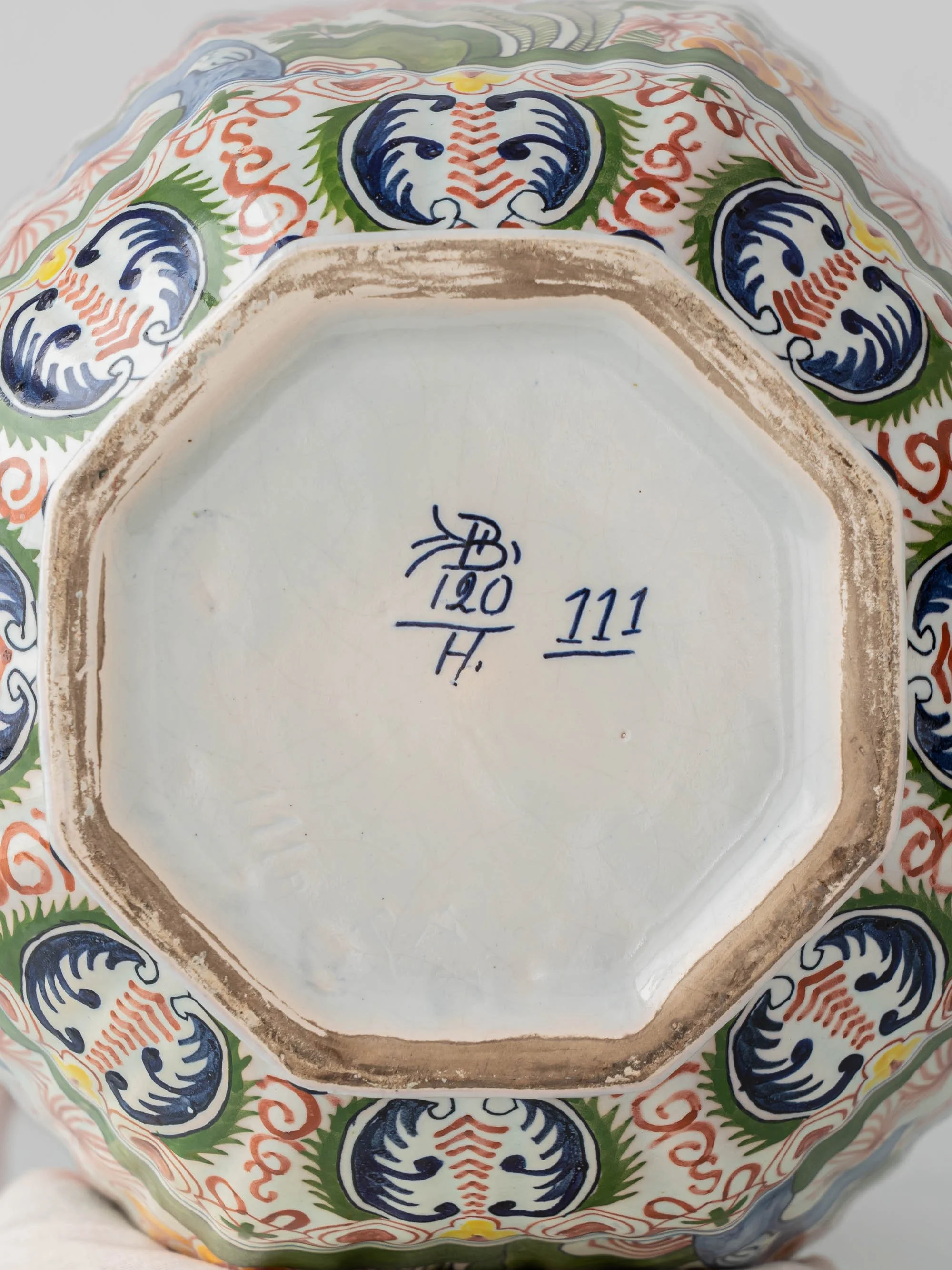 Image 7 of 16
 Image 8 of 16
 Image 9 of 16
 Image 10 of 16
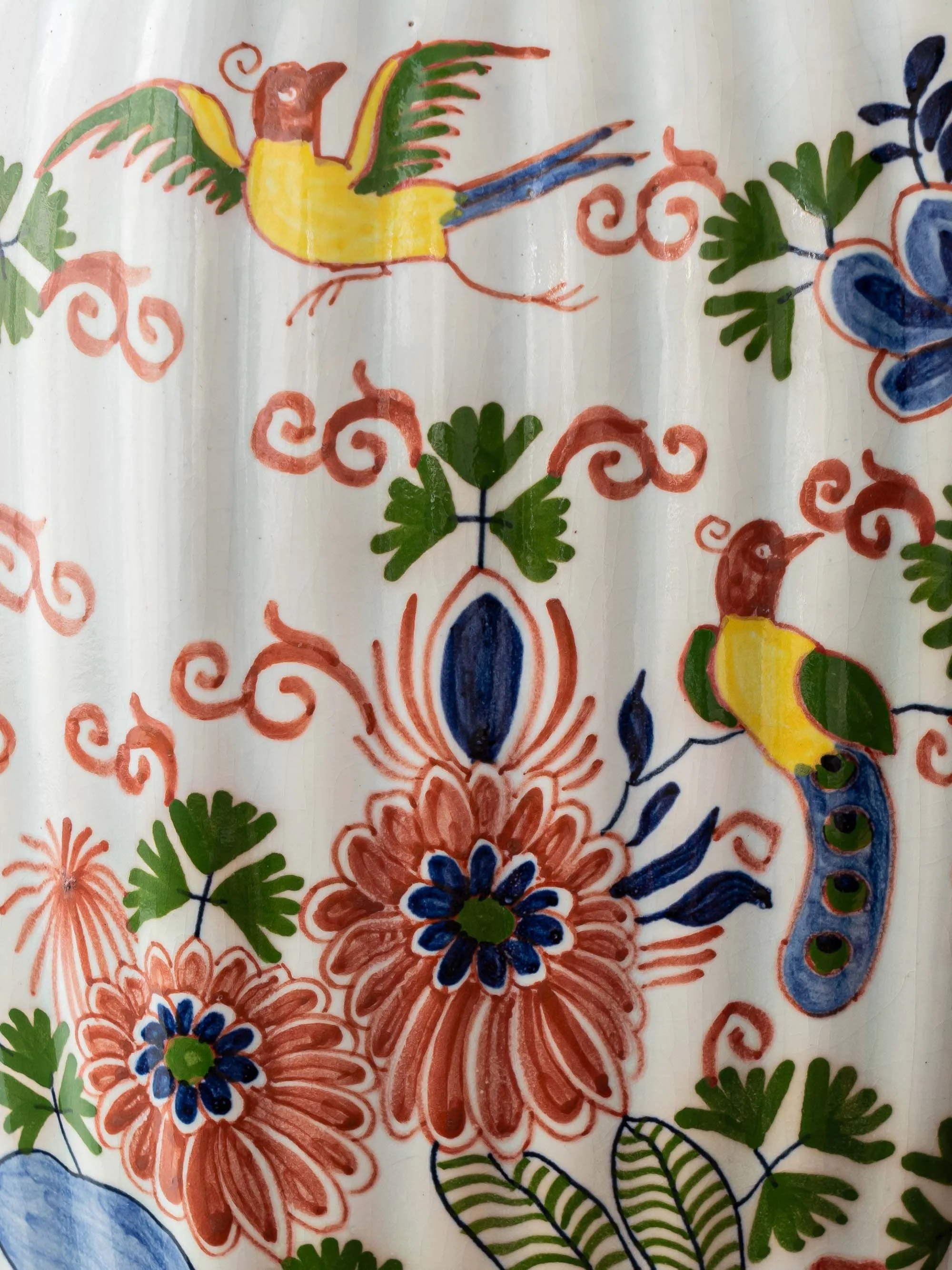 Image 11 of 16
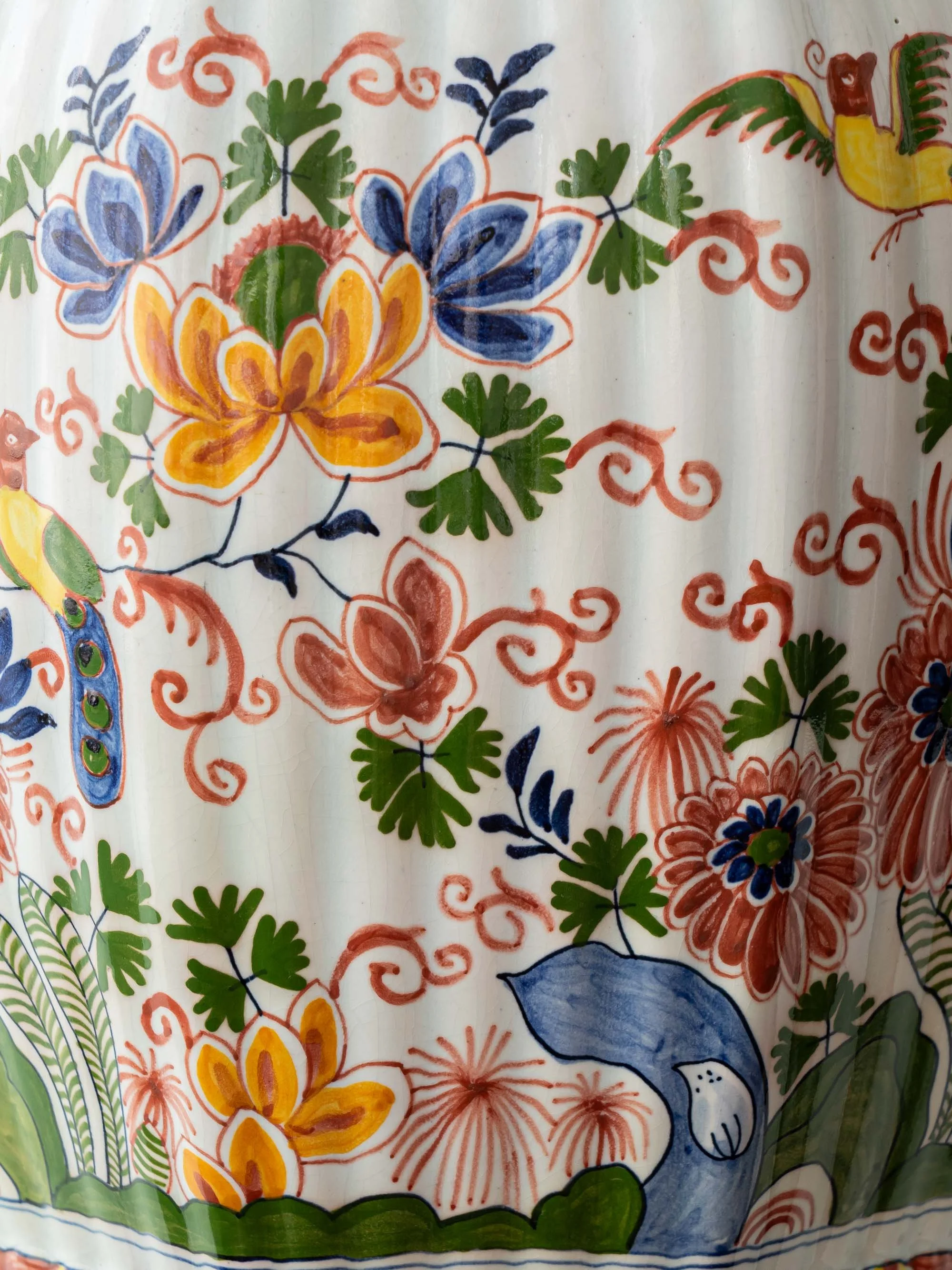 Image 12 of 16
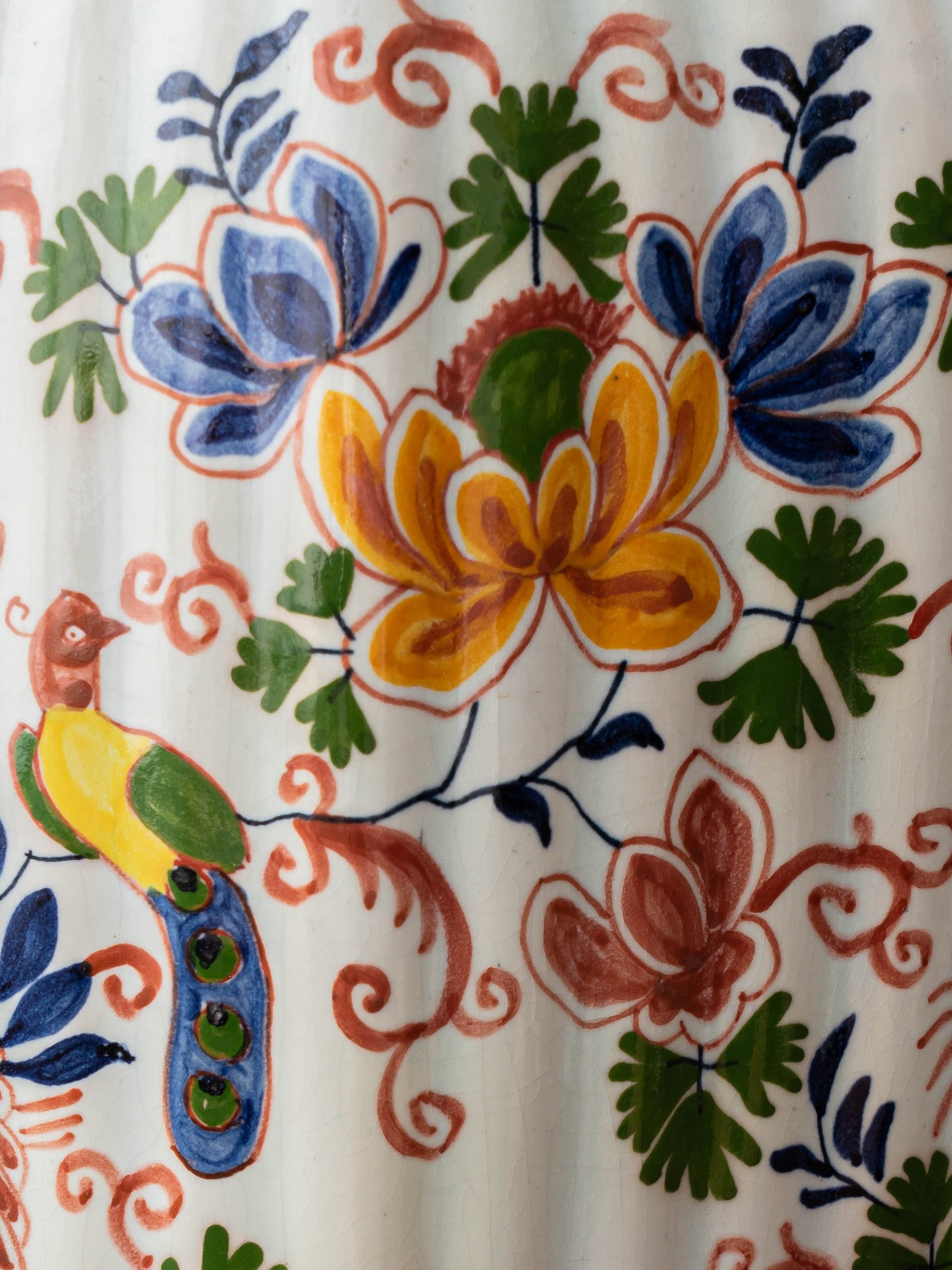 Image 13 of 16
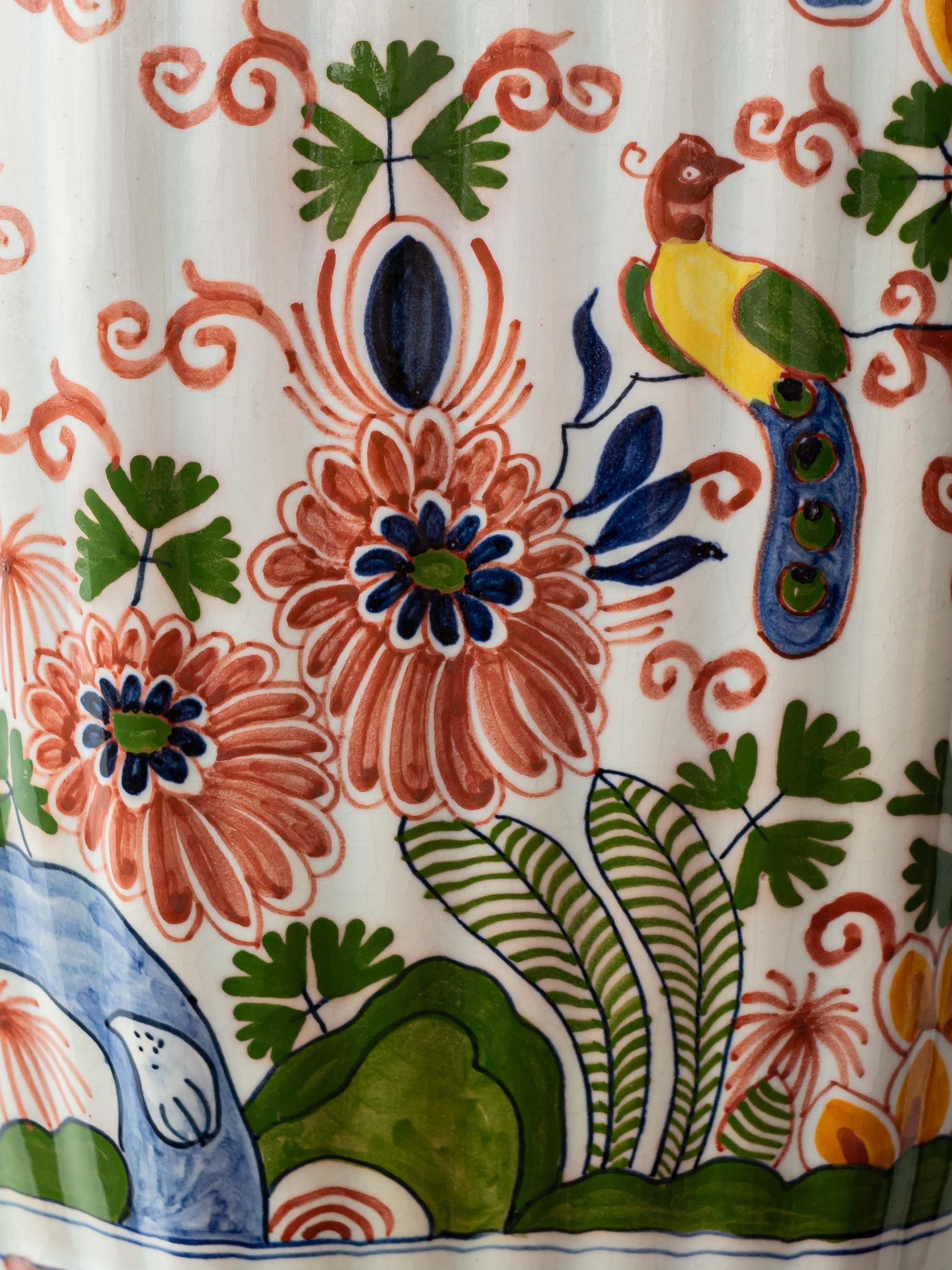 Image 14 of 16
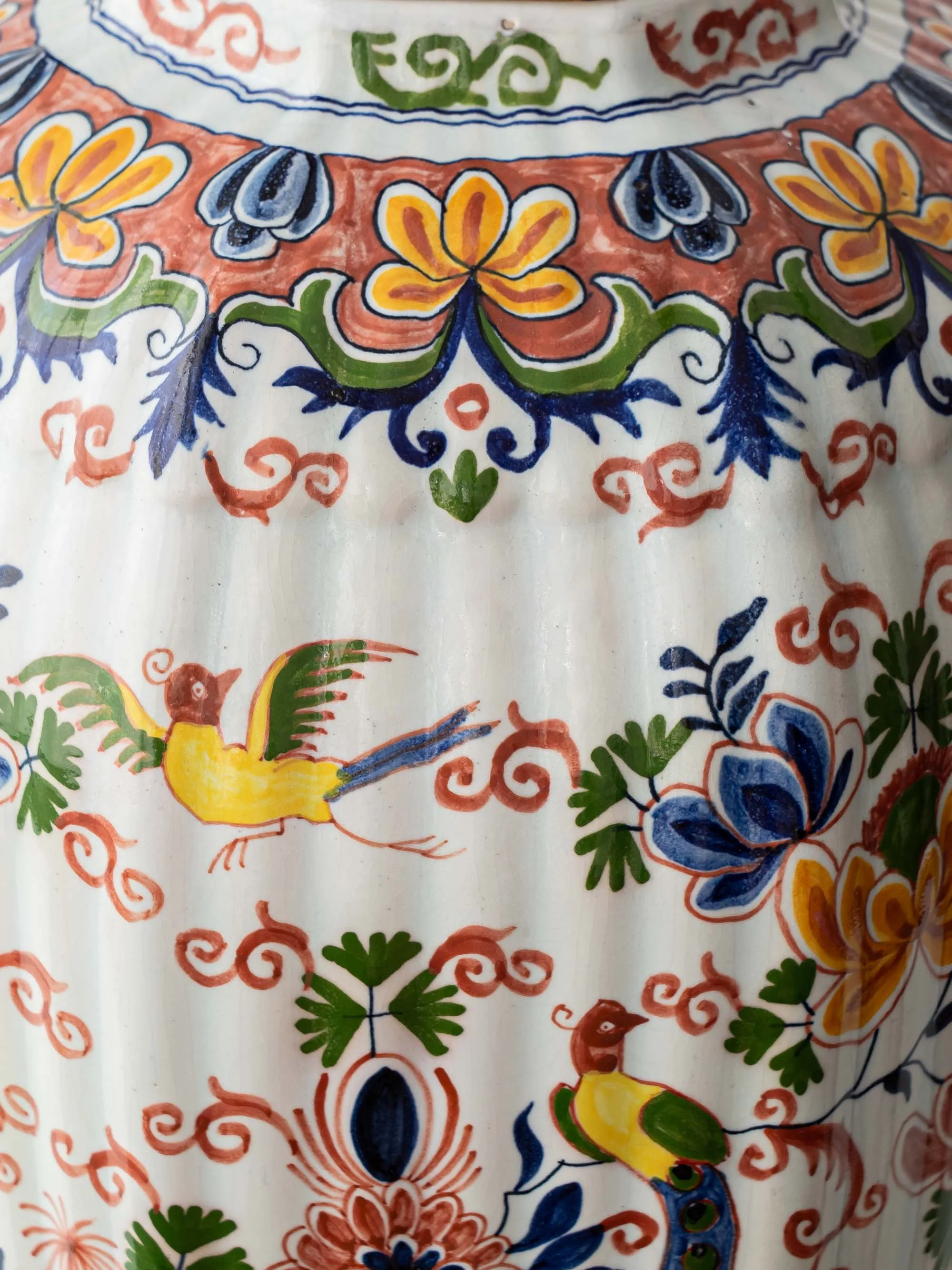 Image 15 of 16
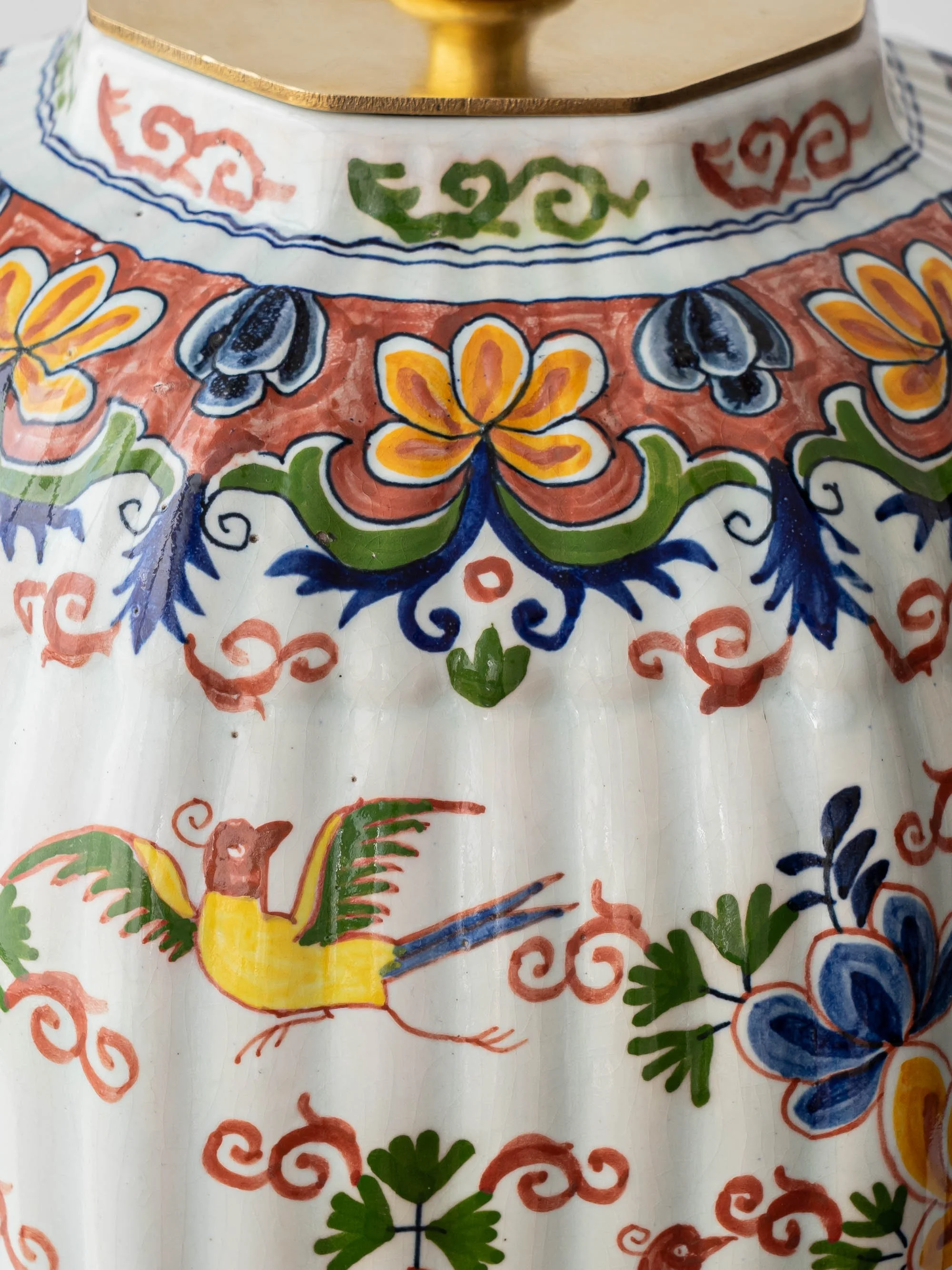 Image 16 of 16
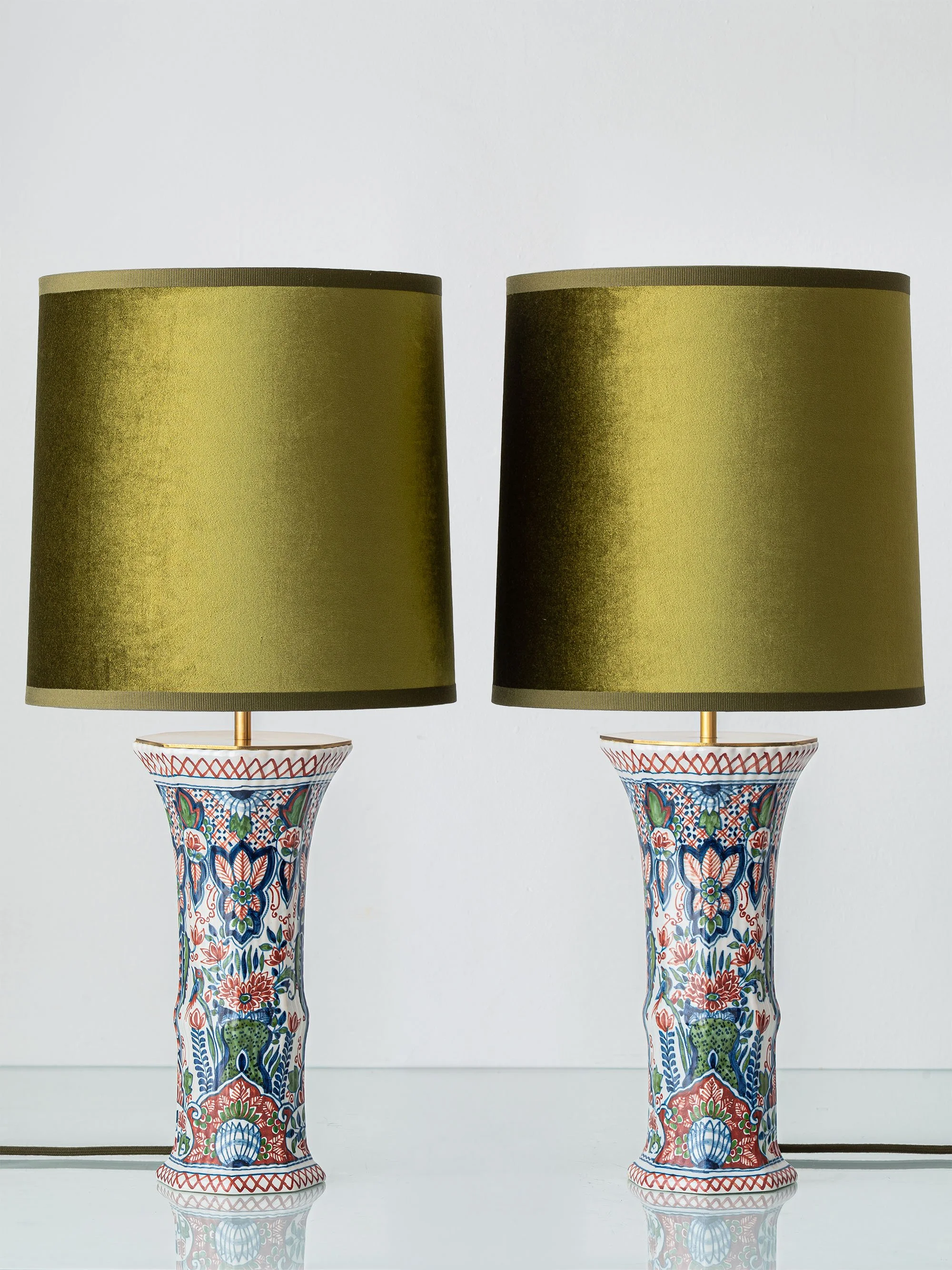
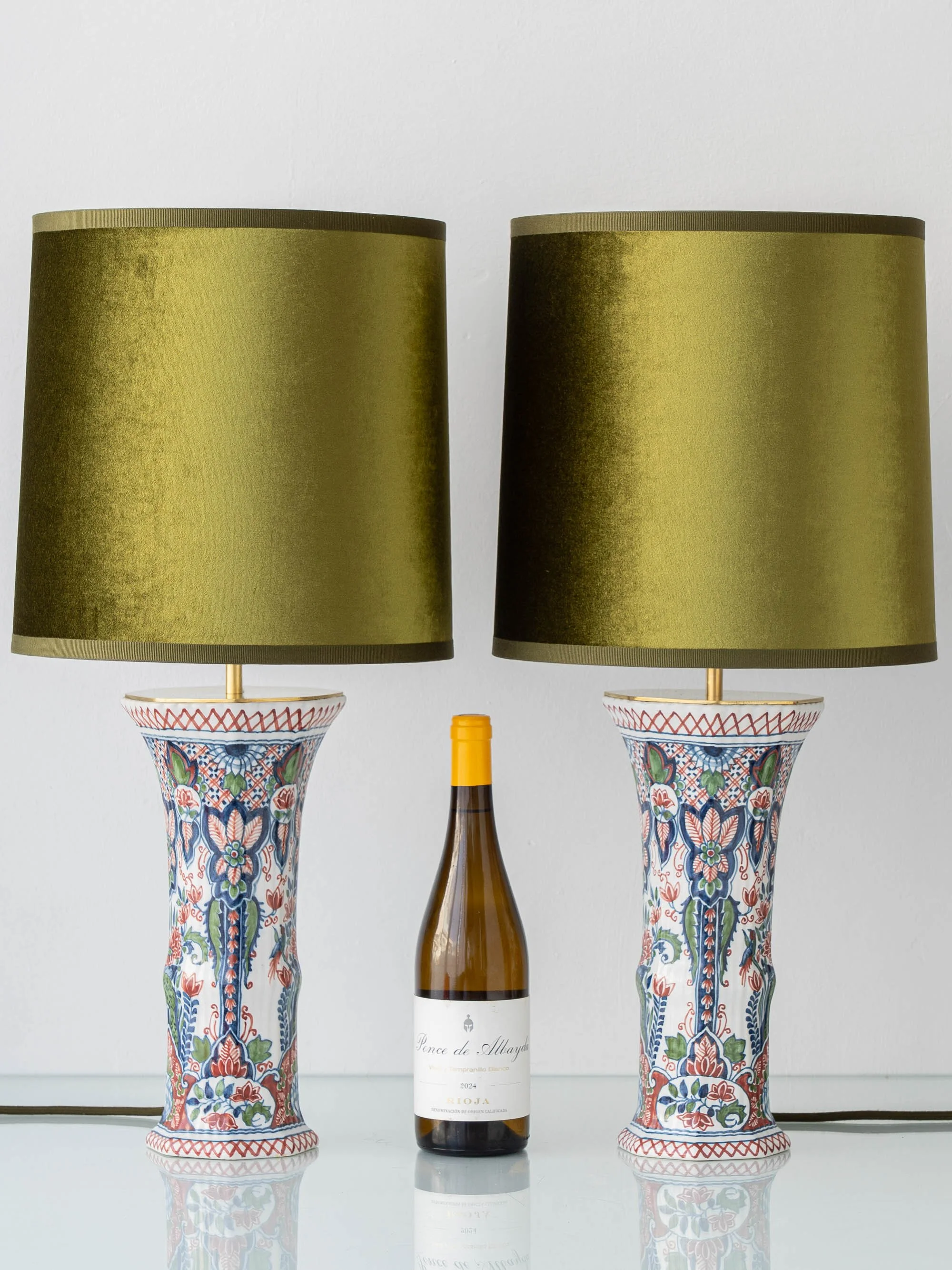
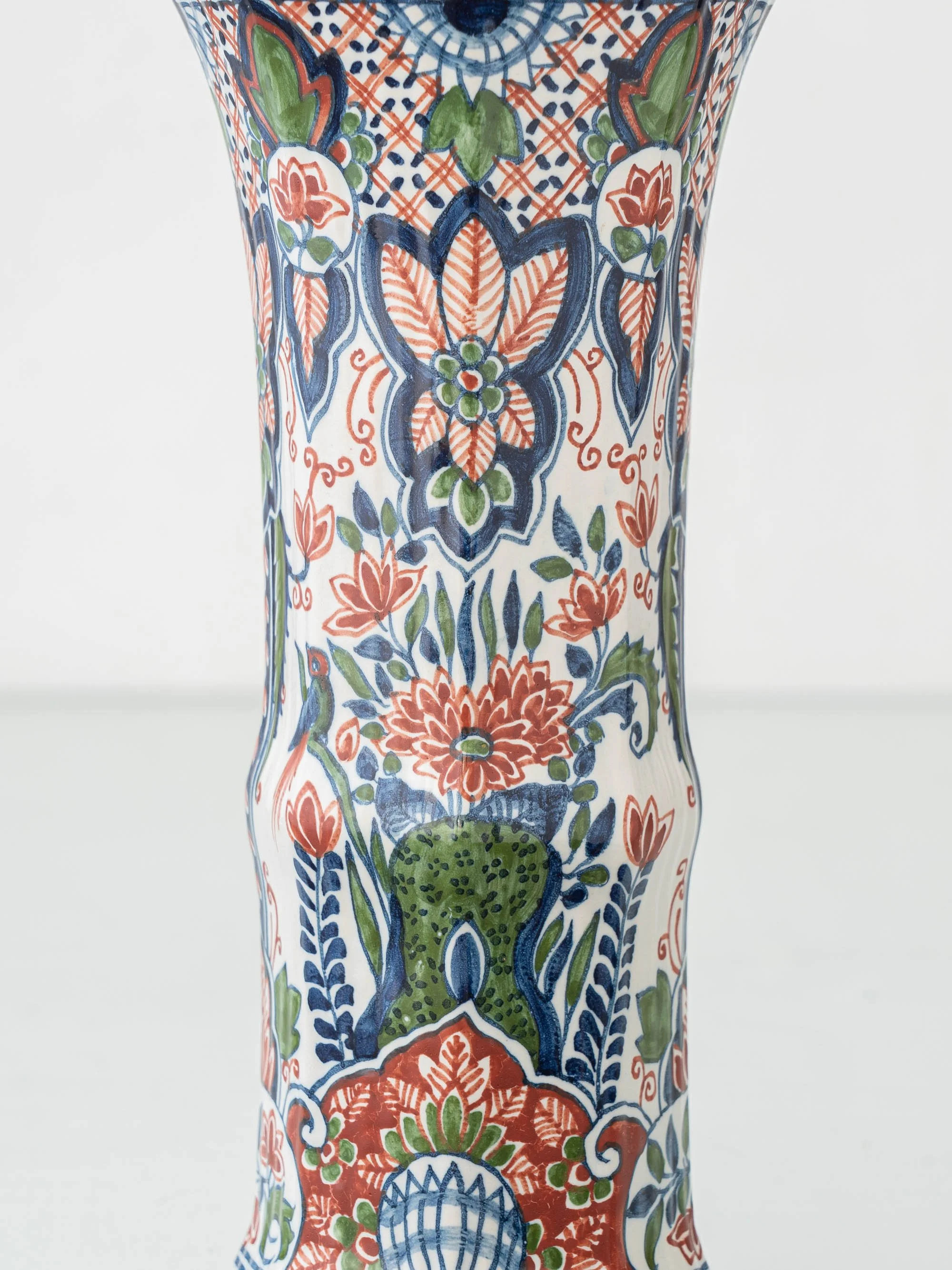
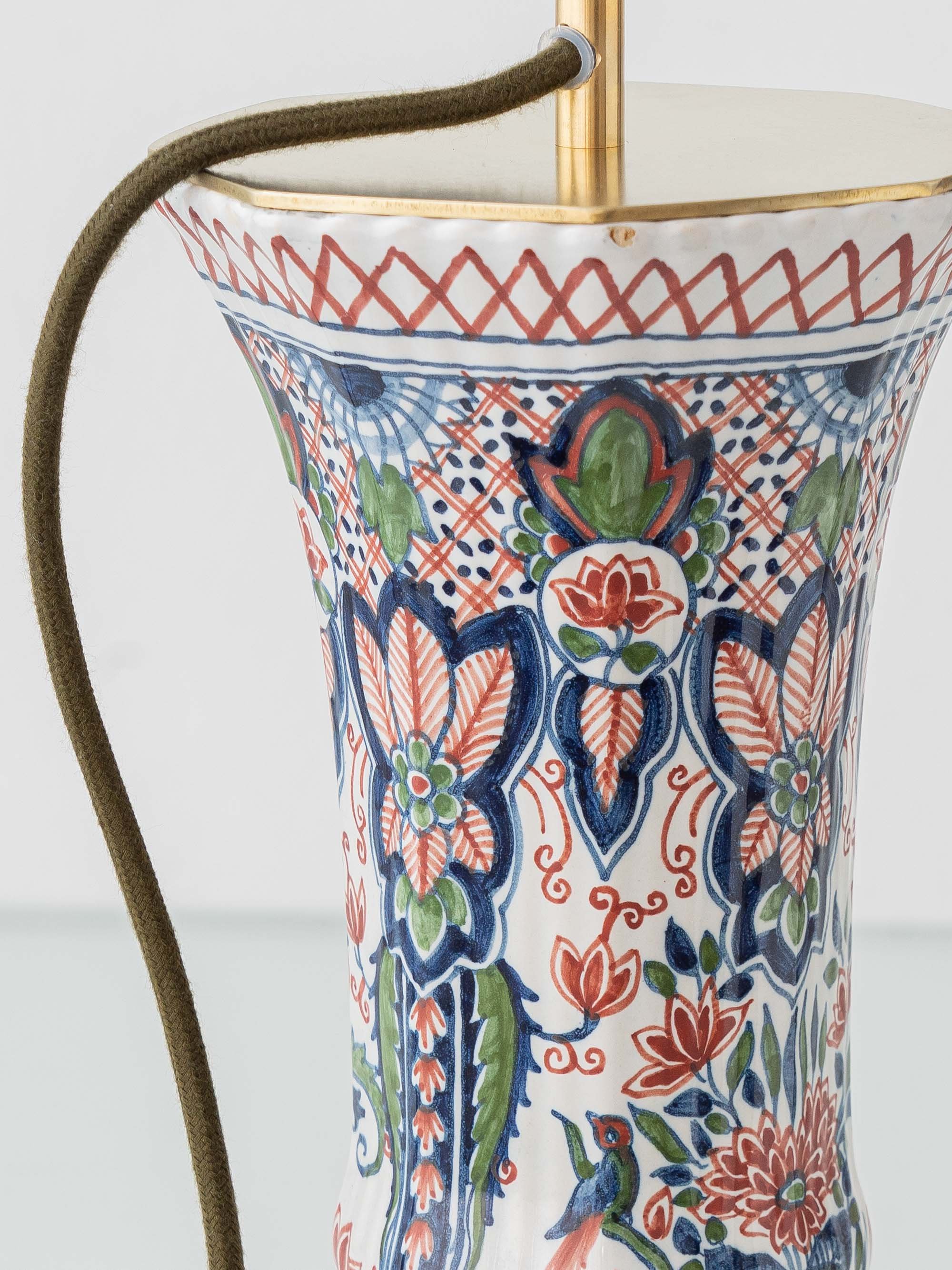
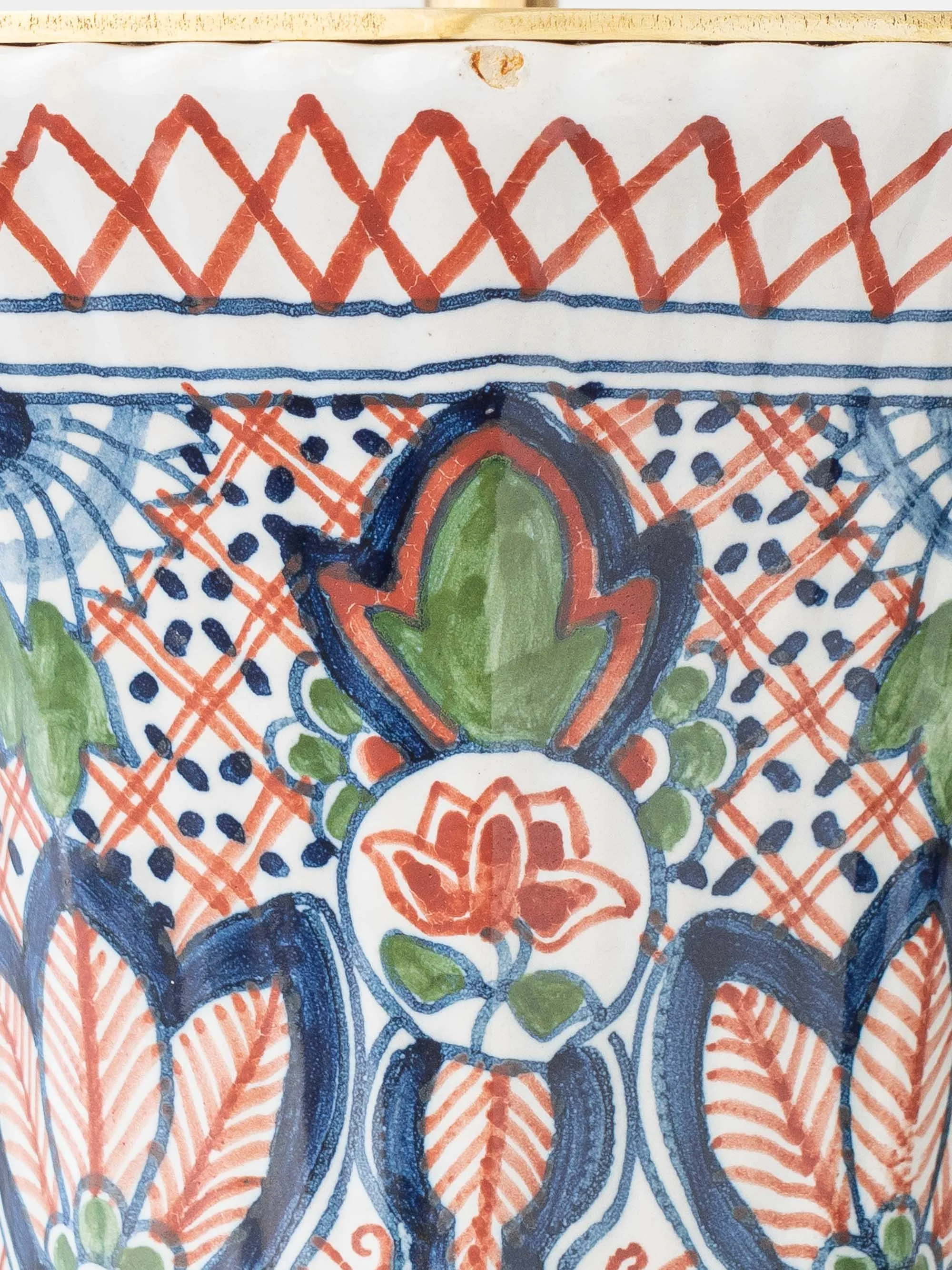
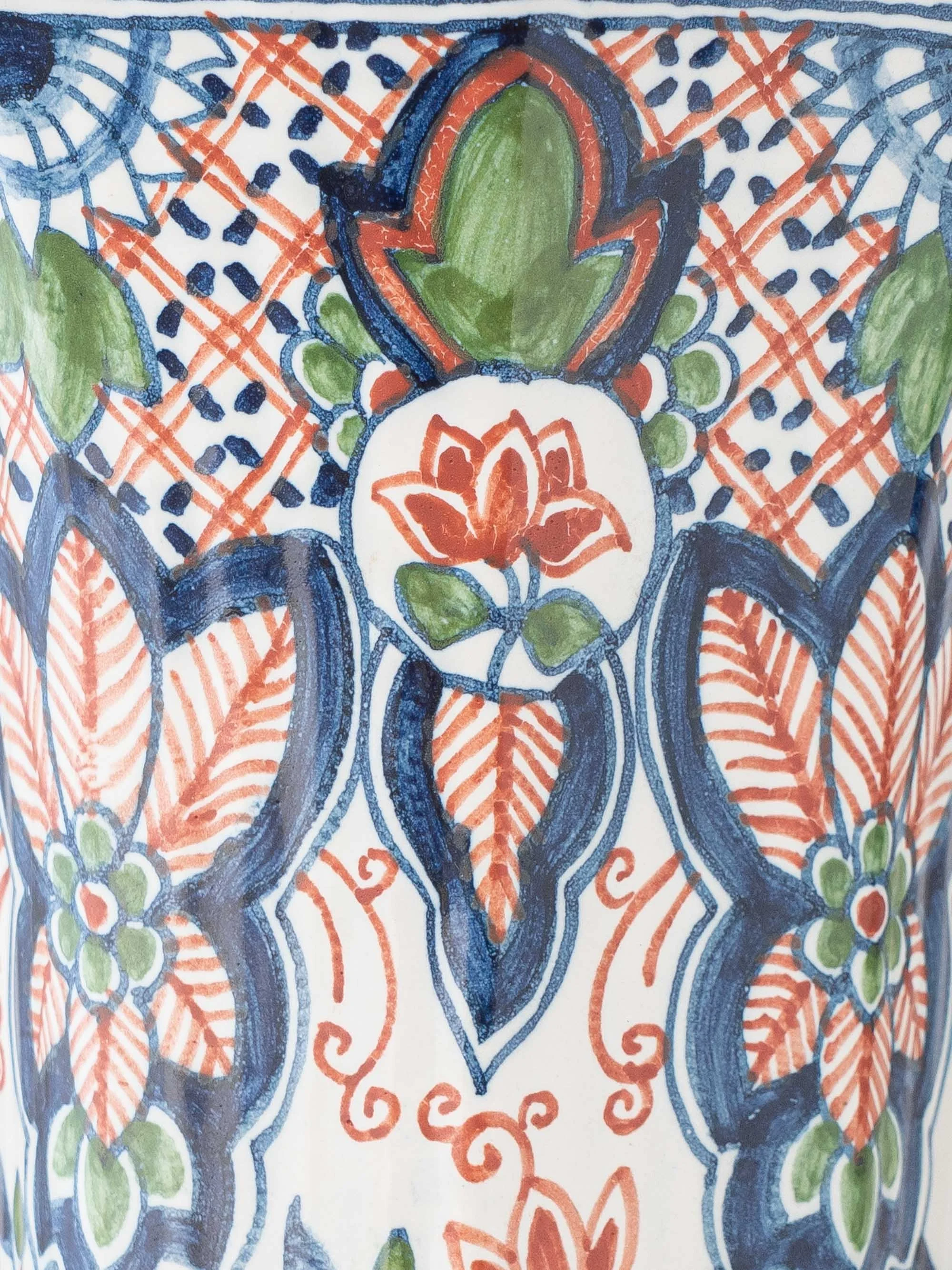
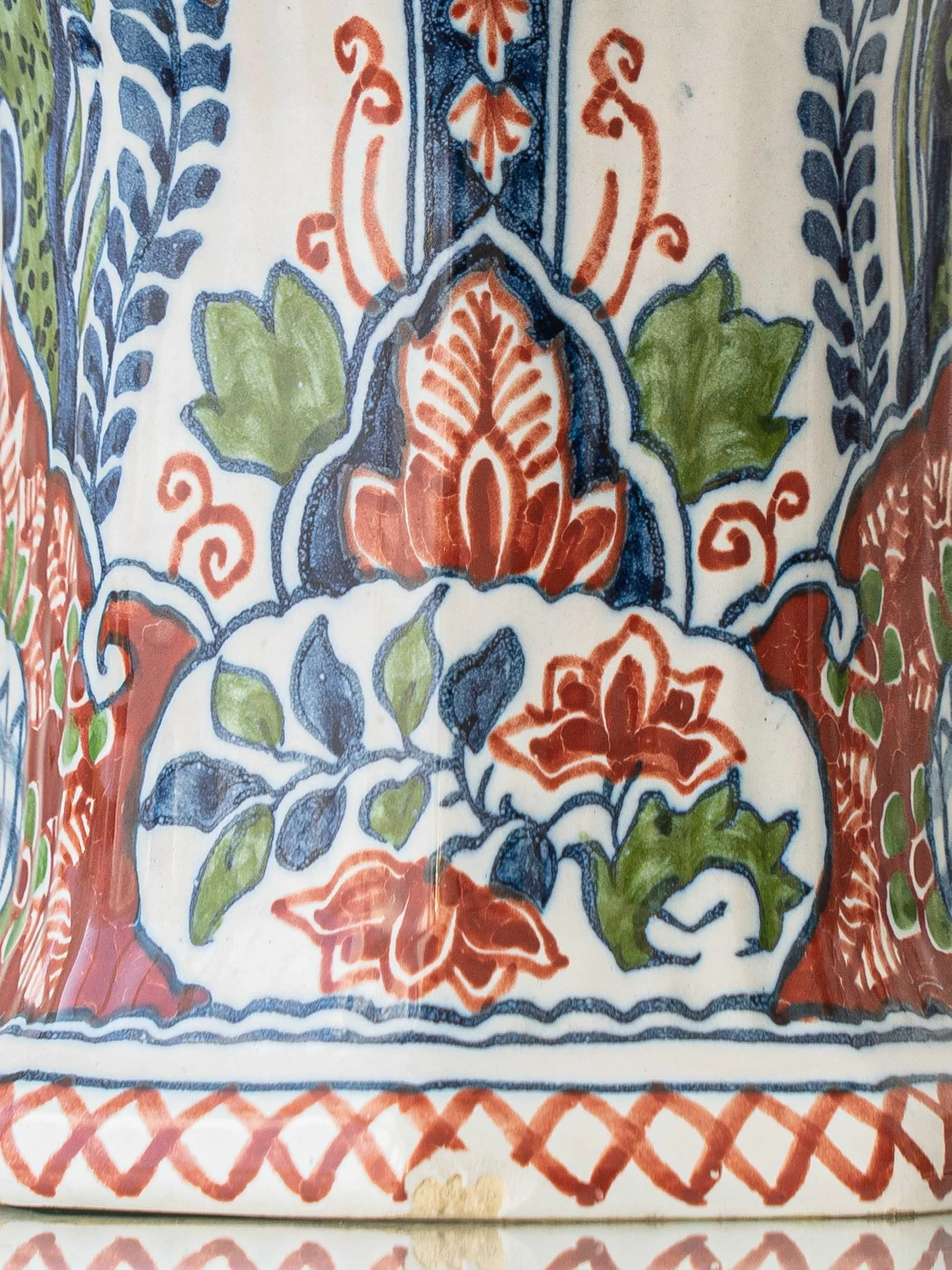
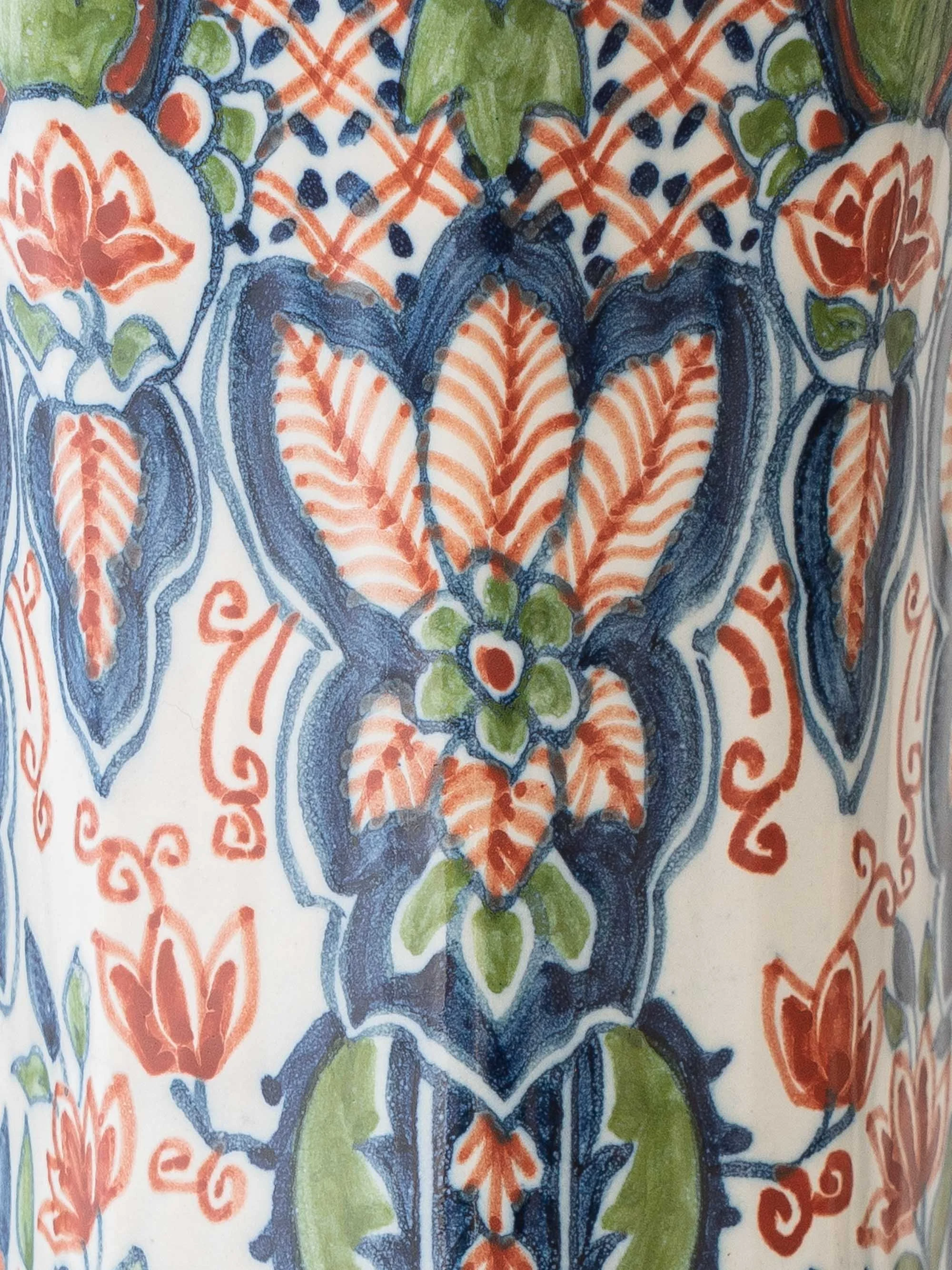
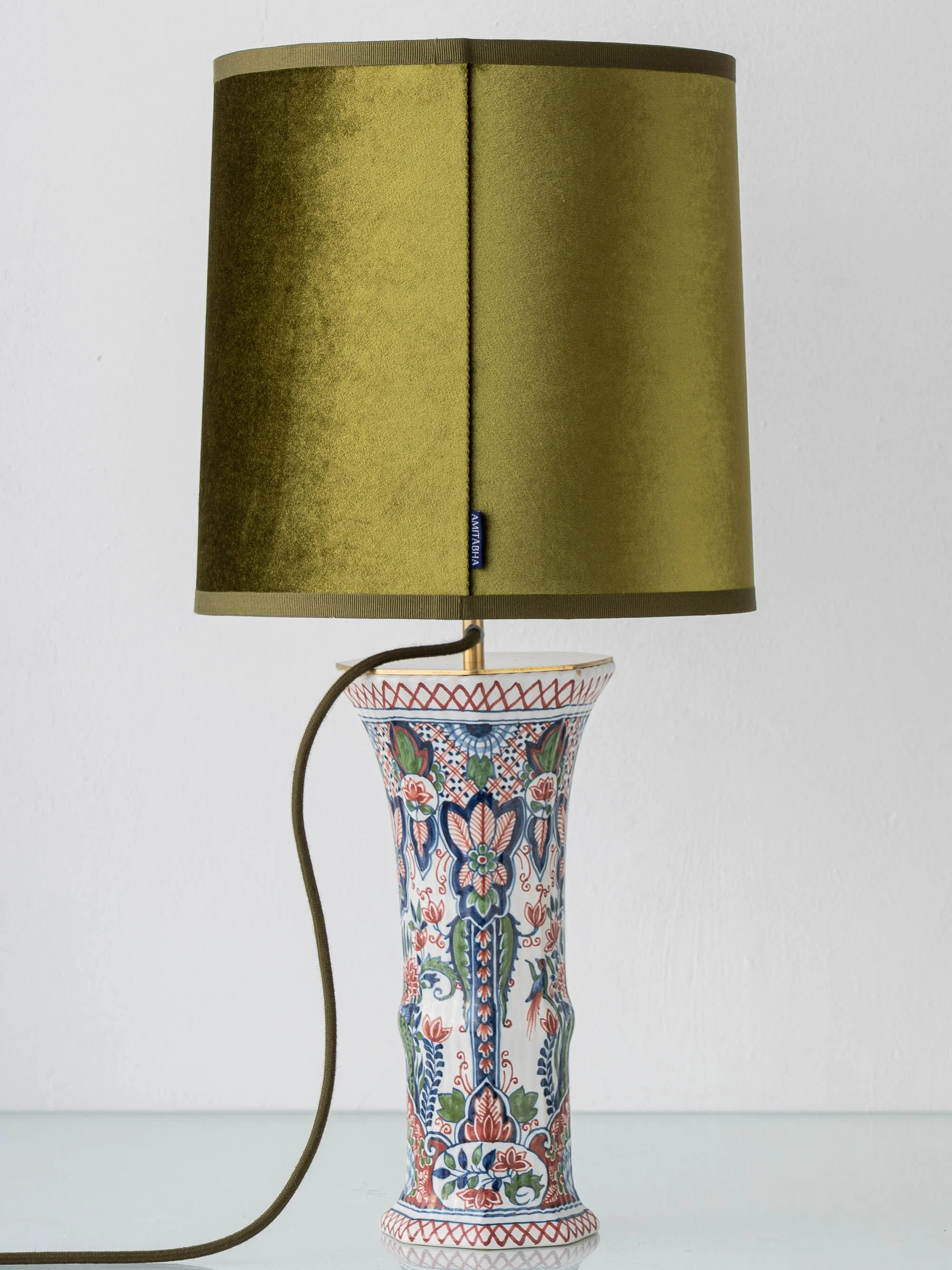
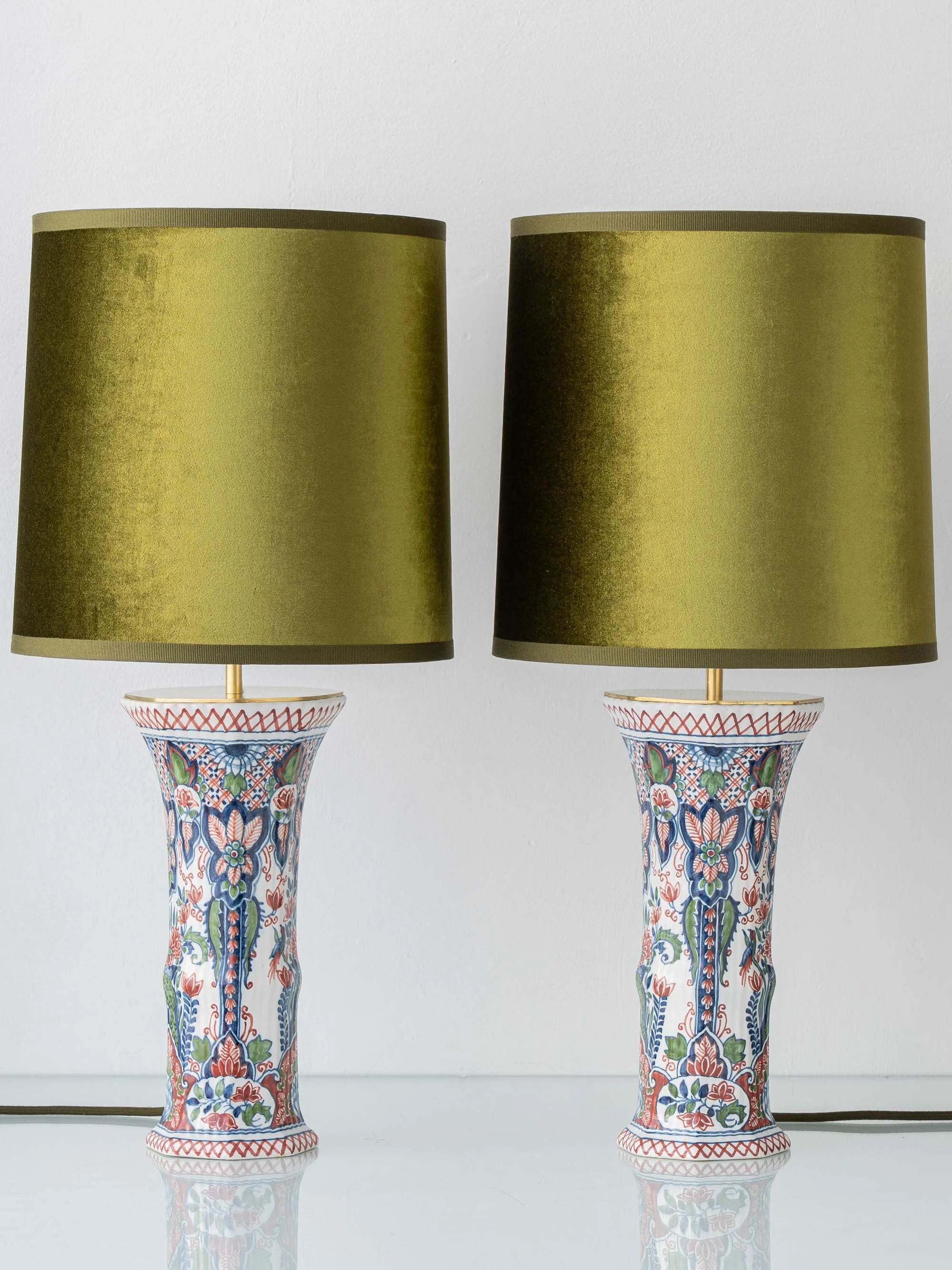
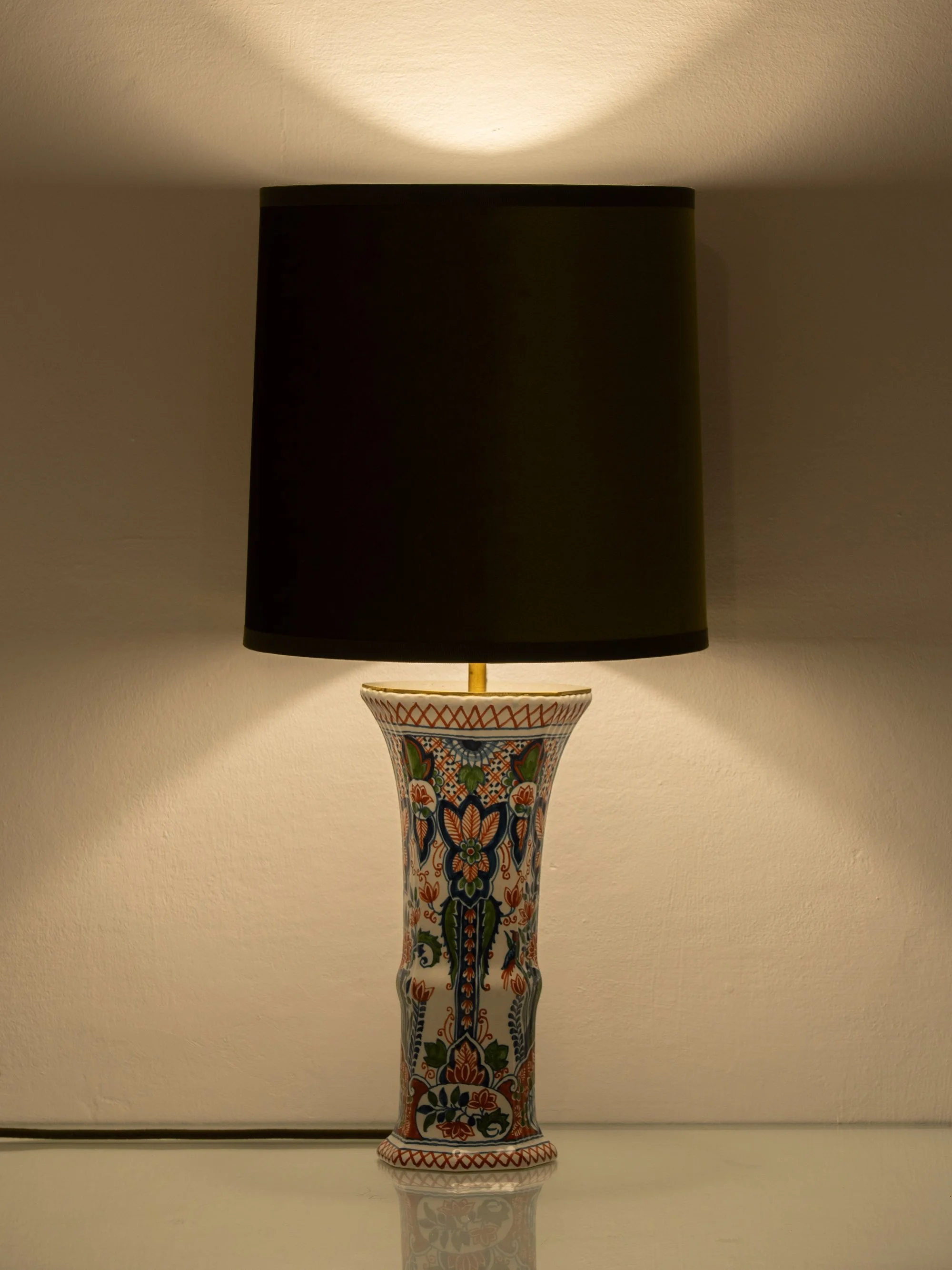
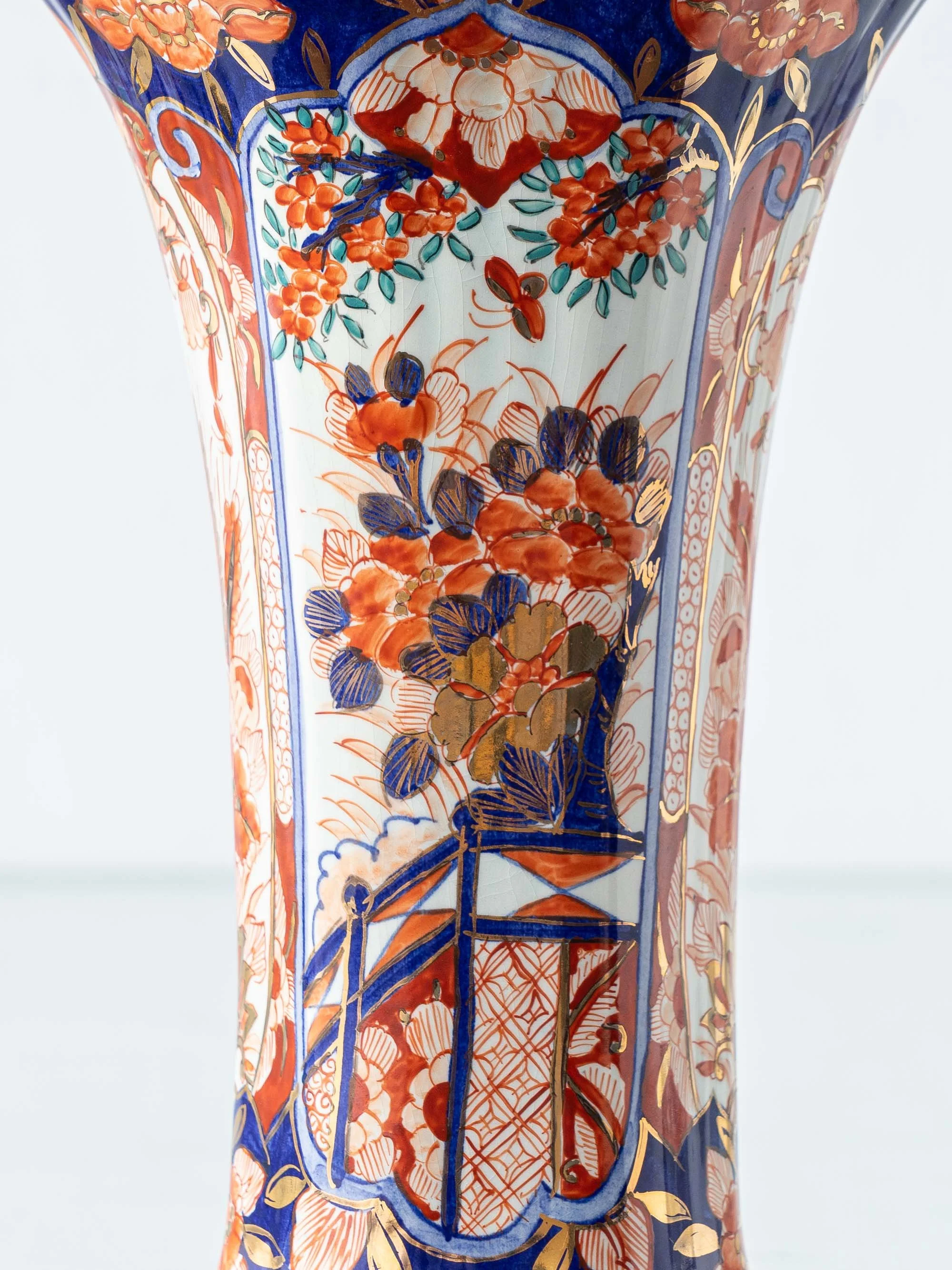
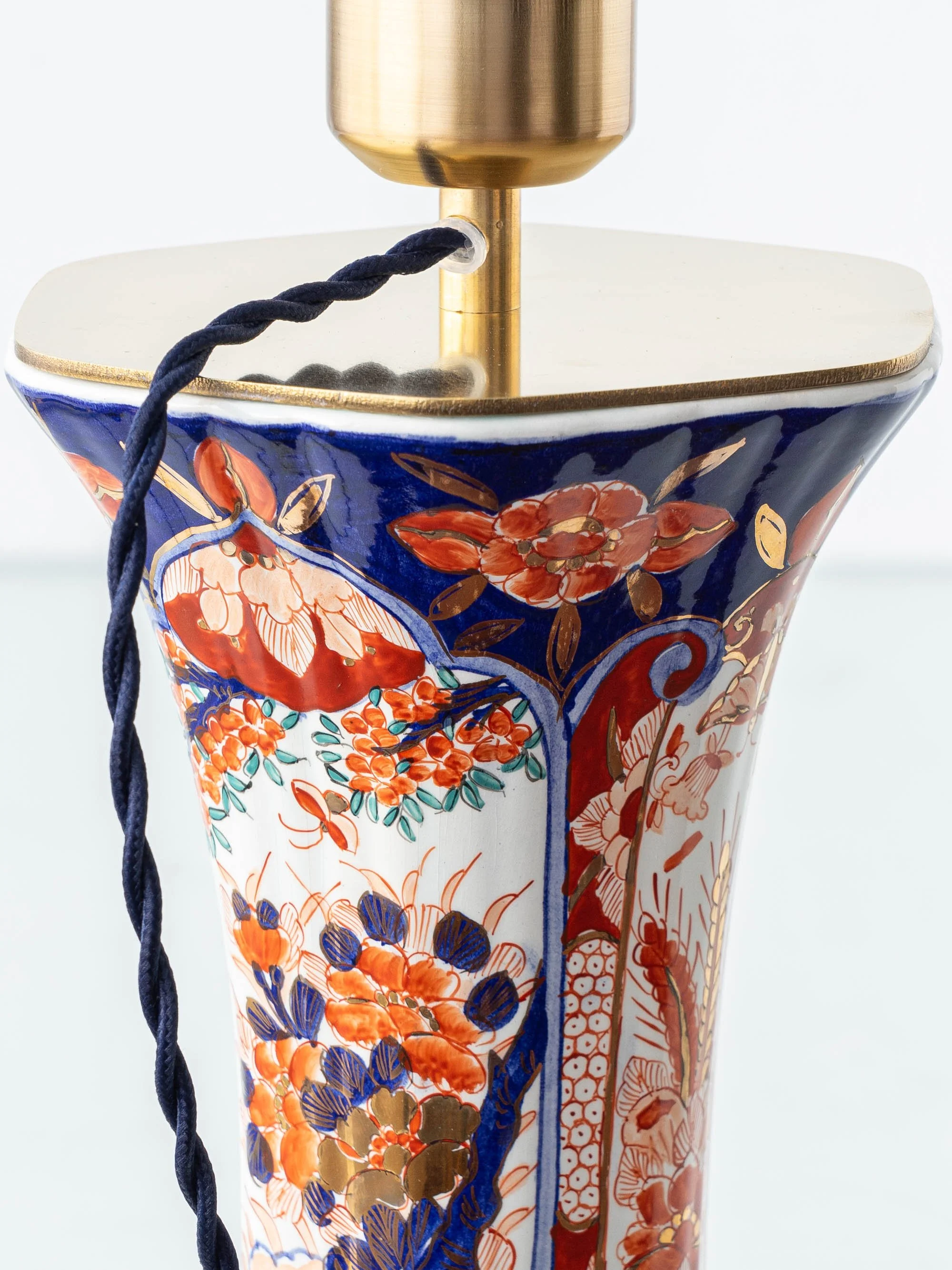
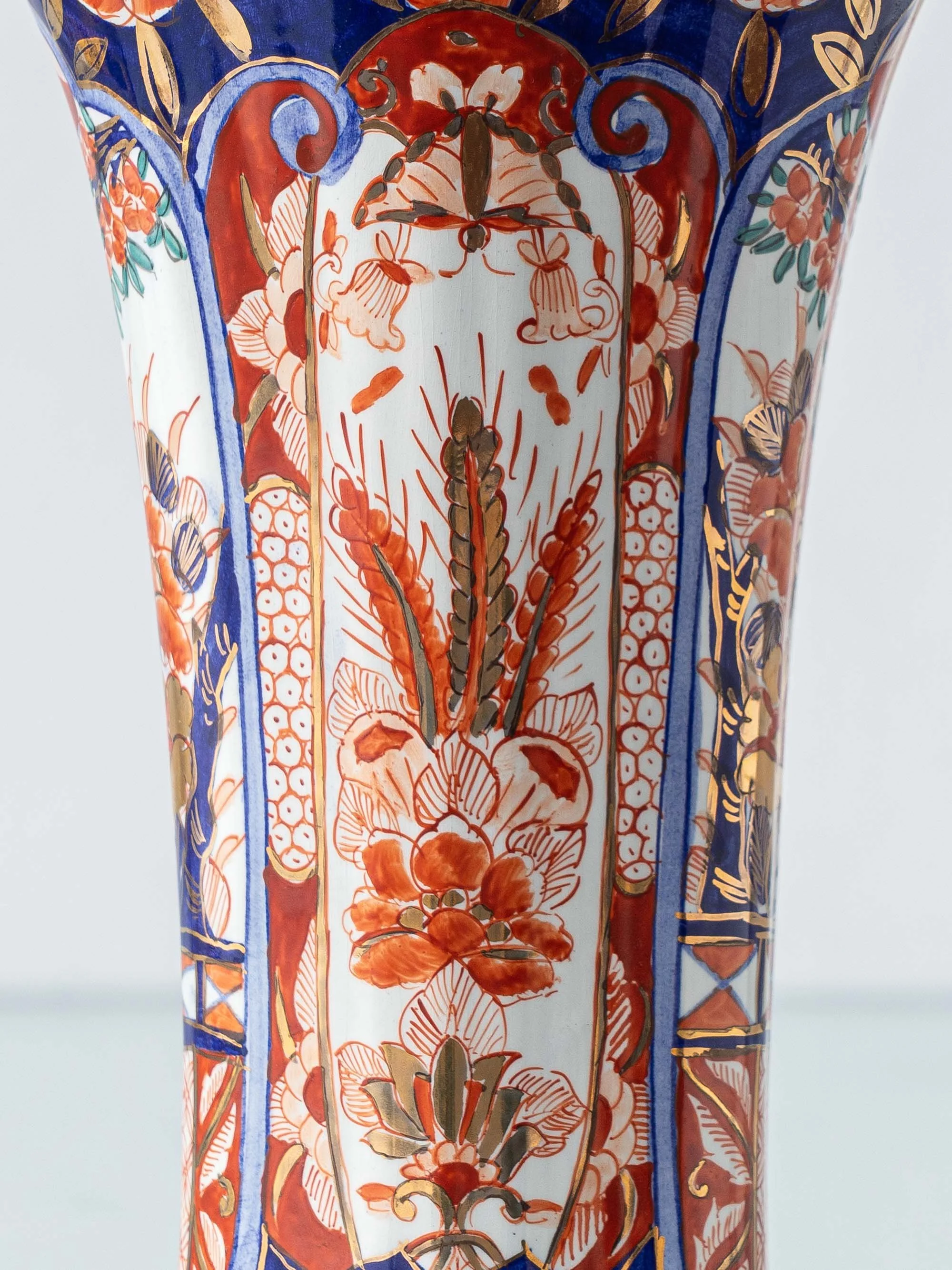
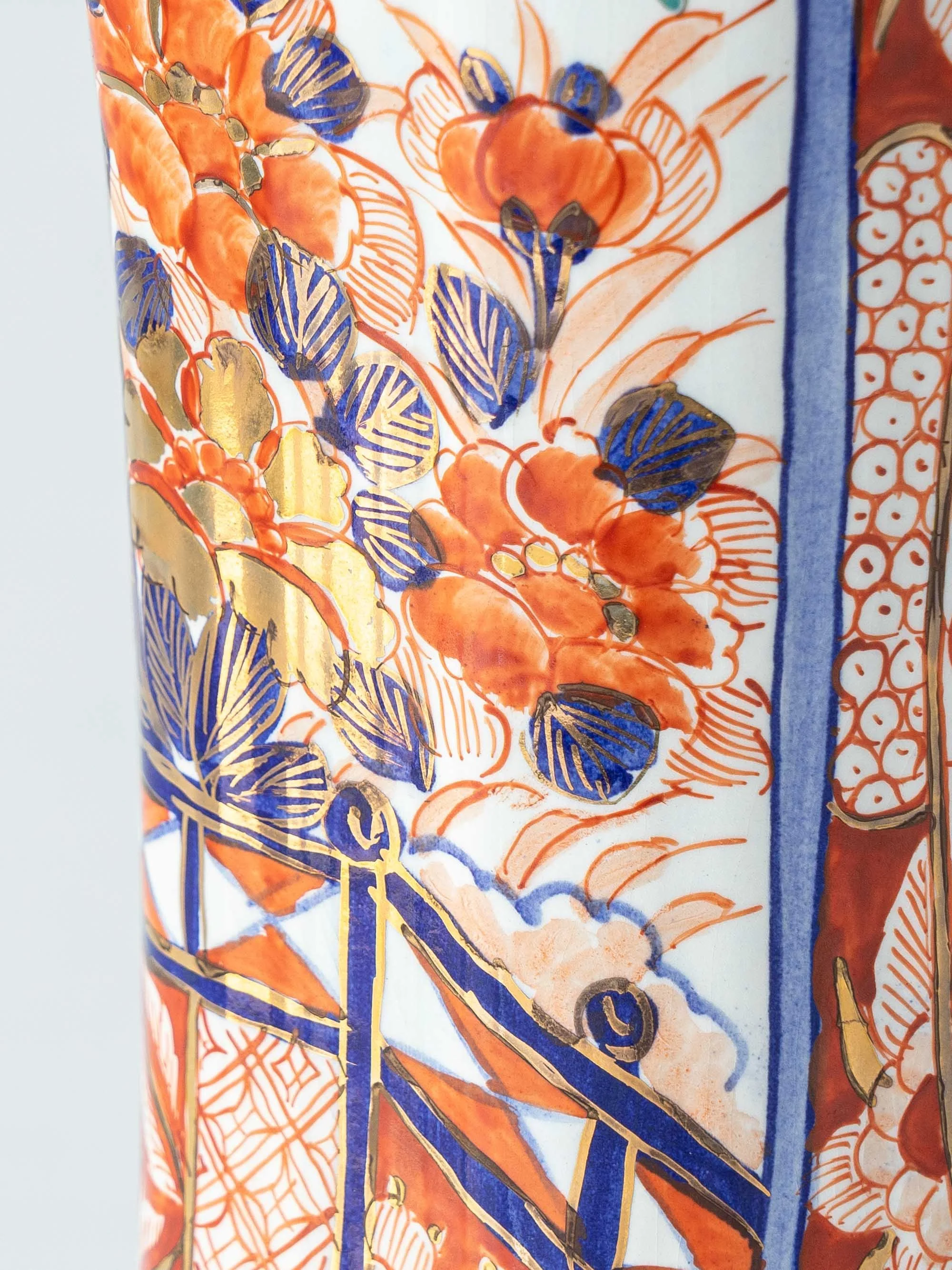
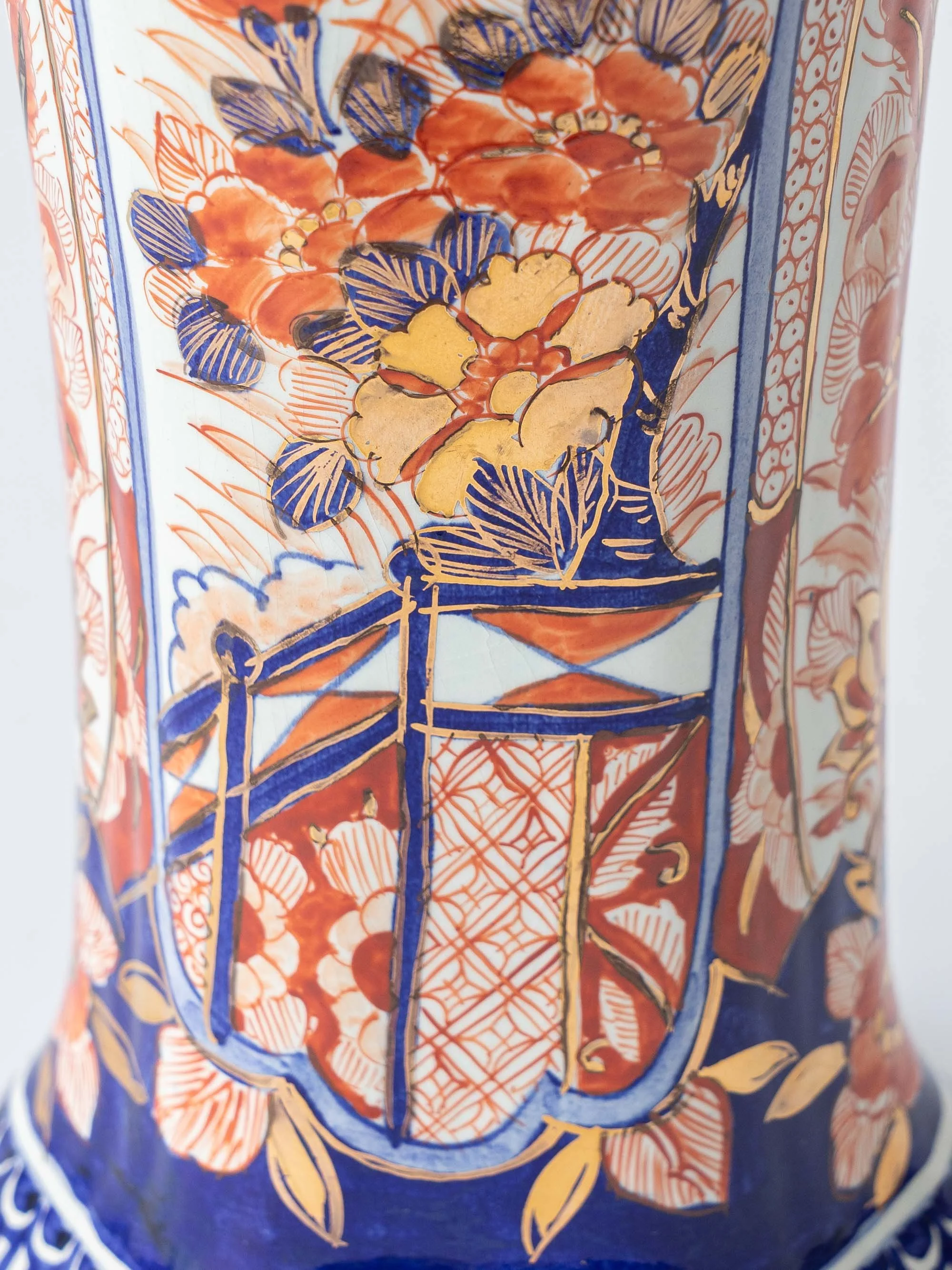
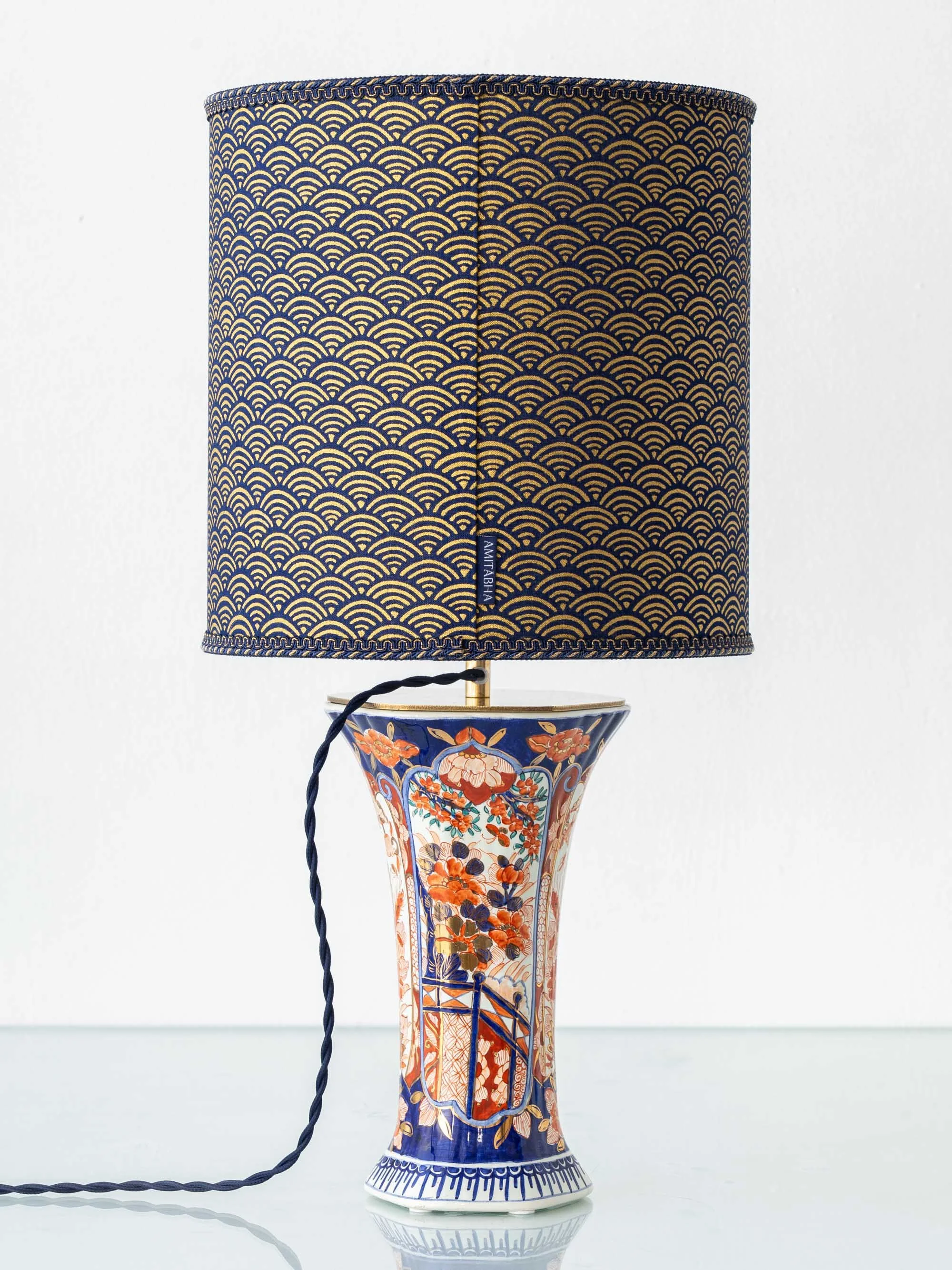
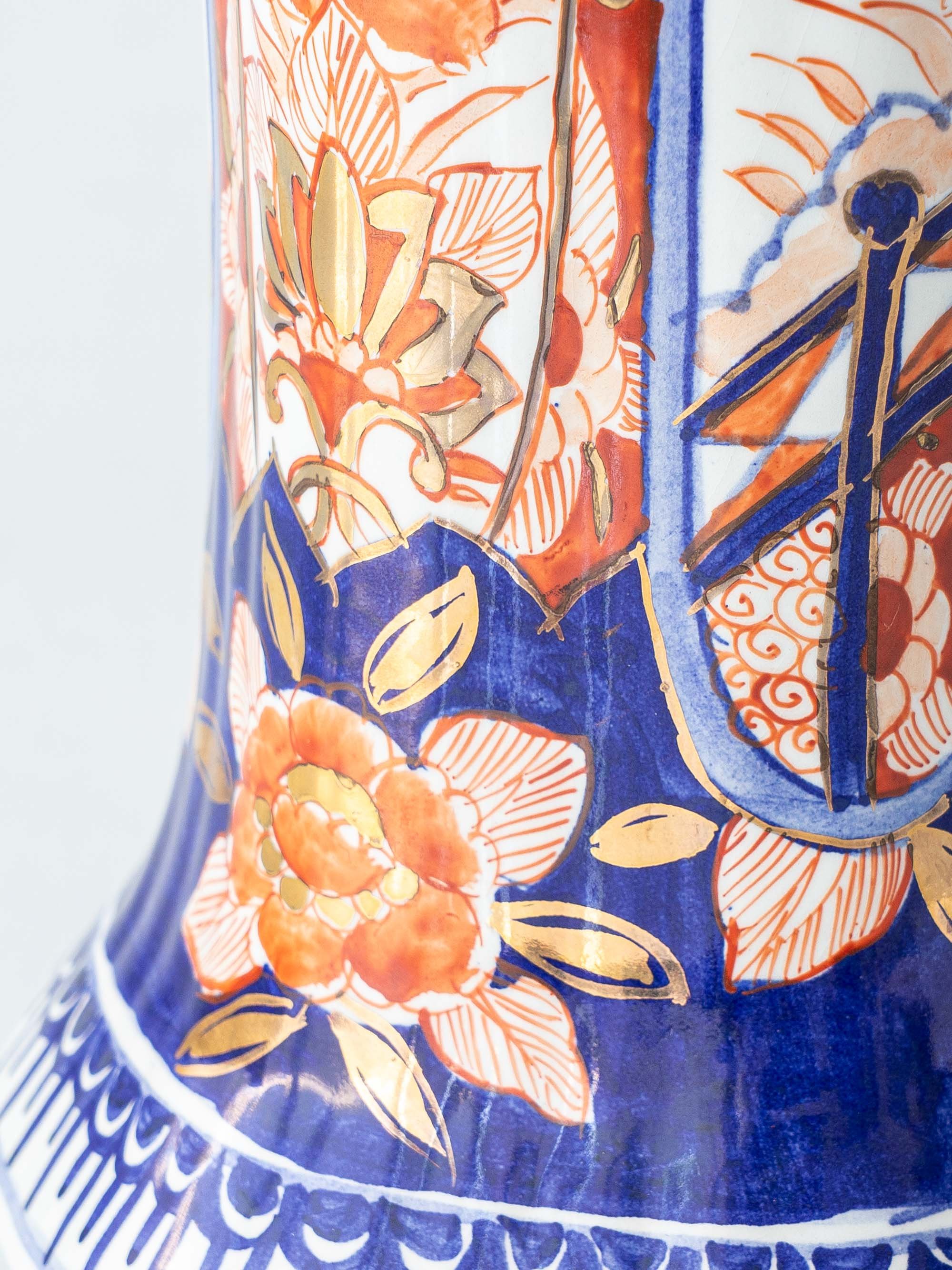
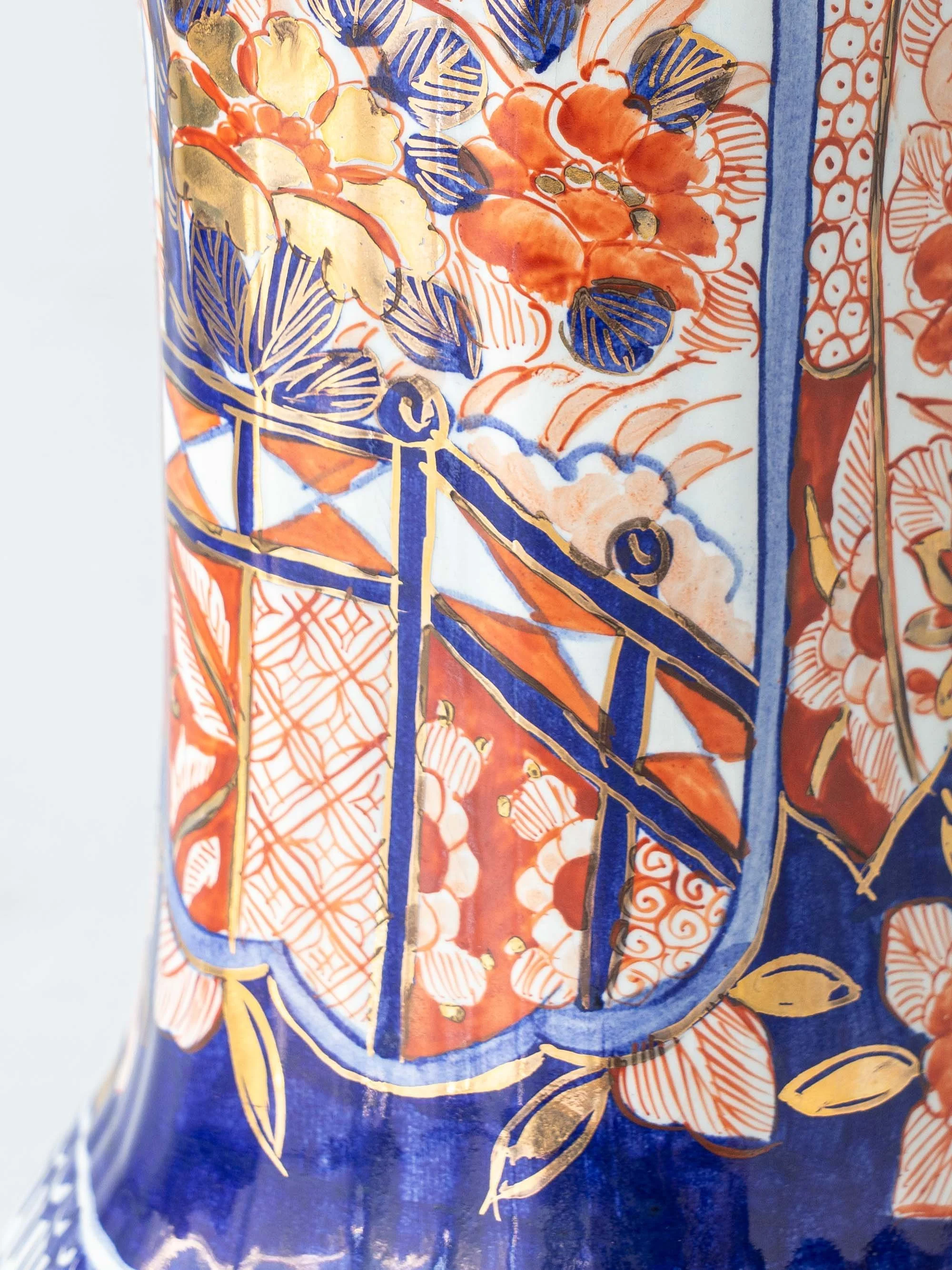
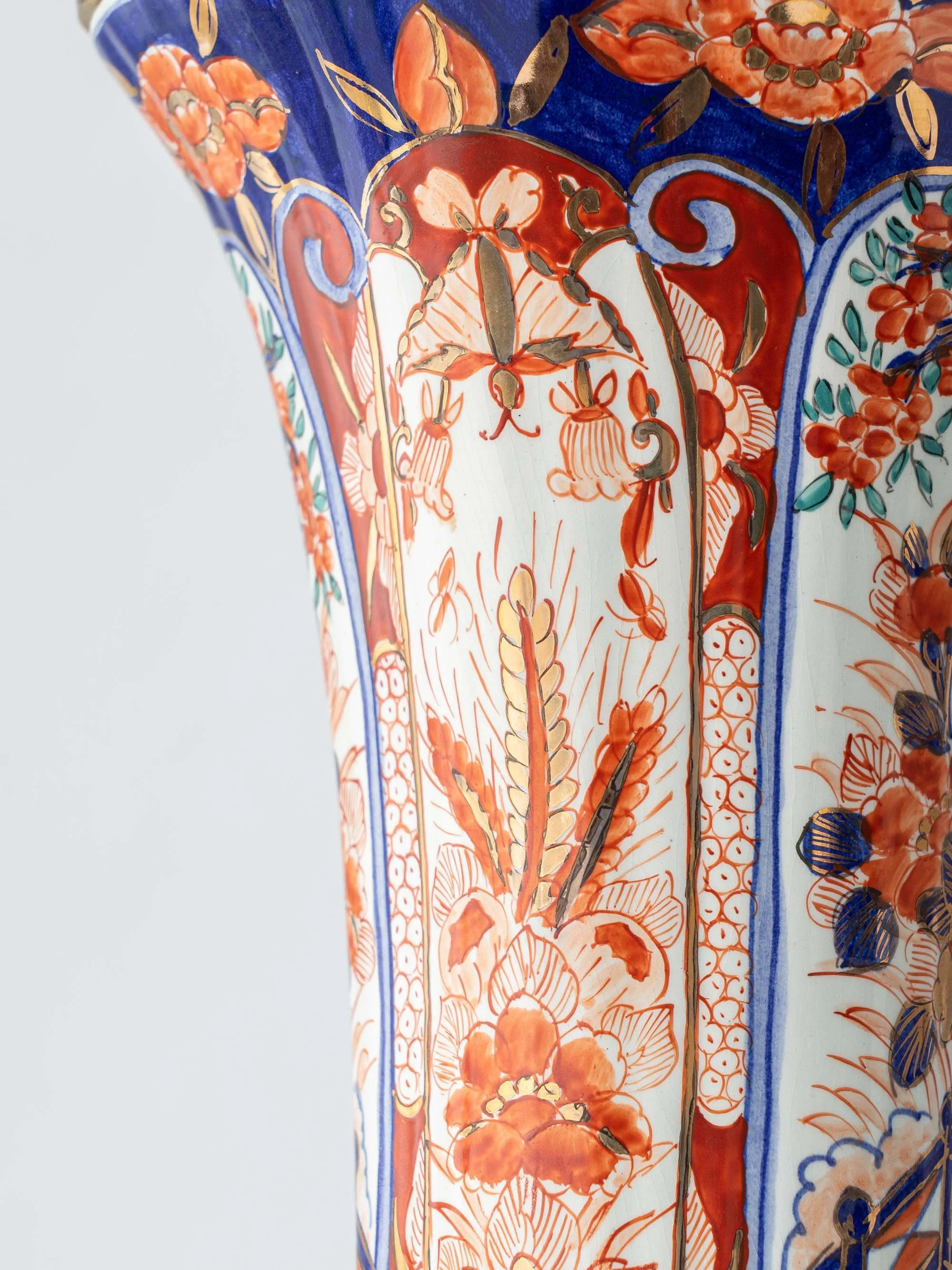
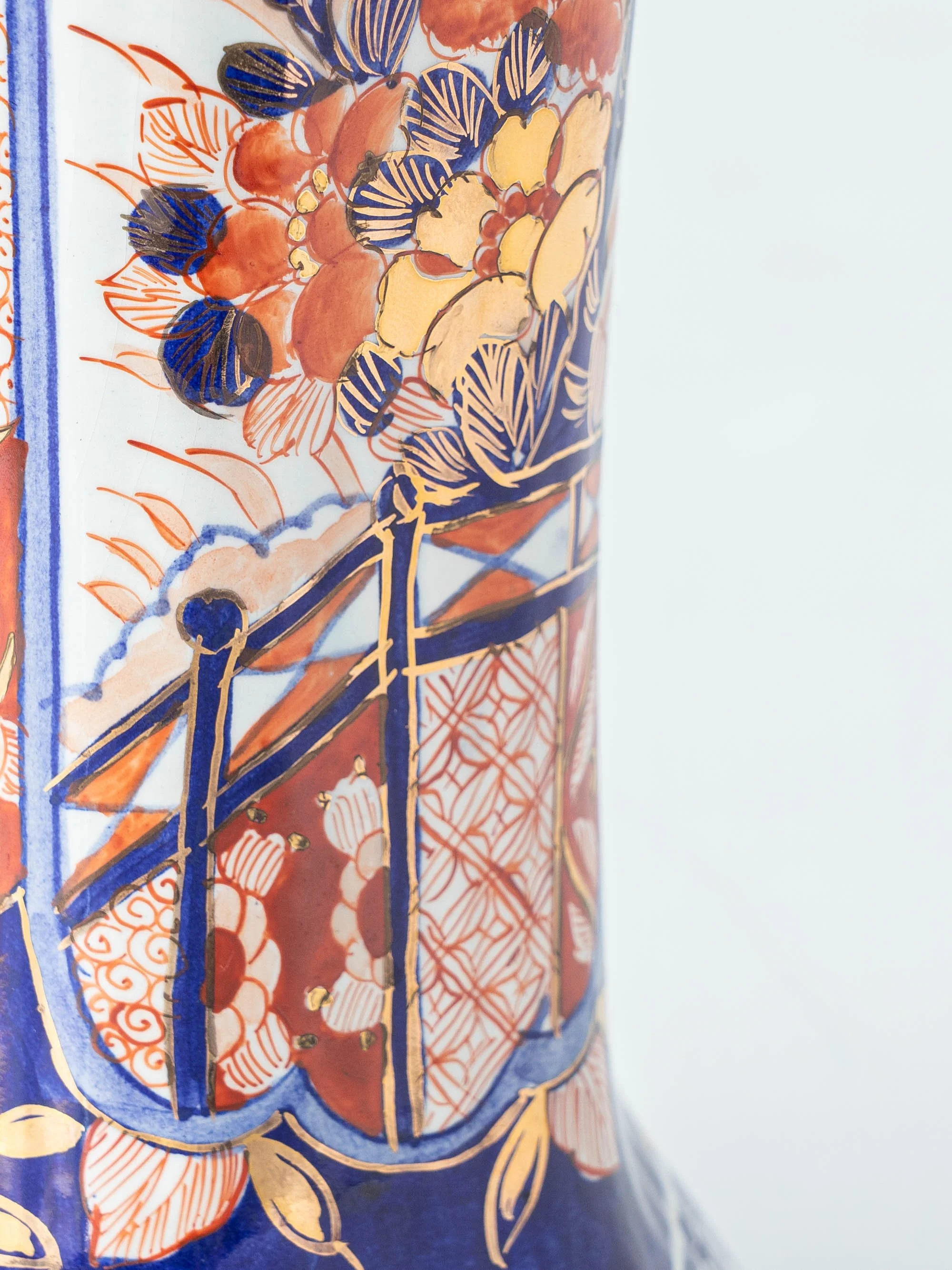
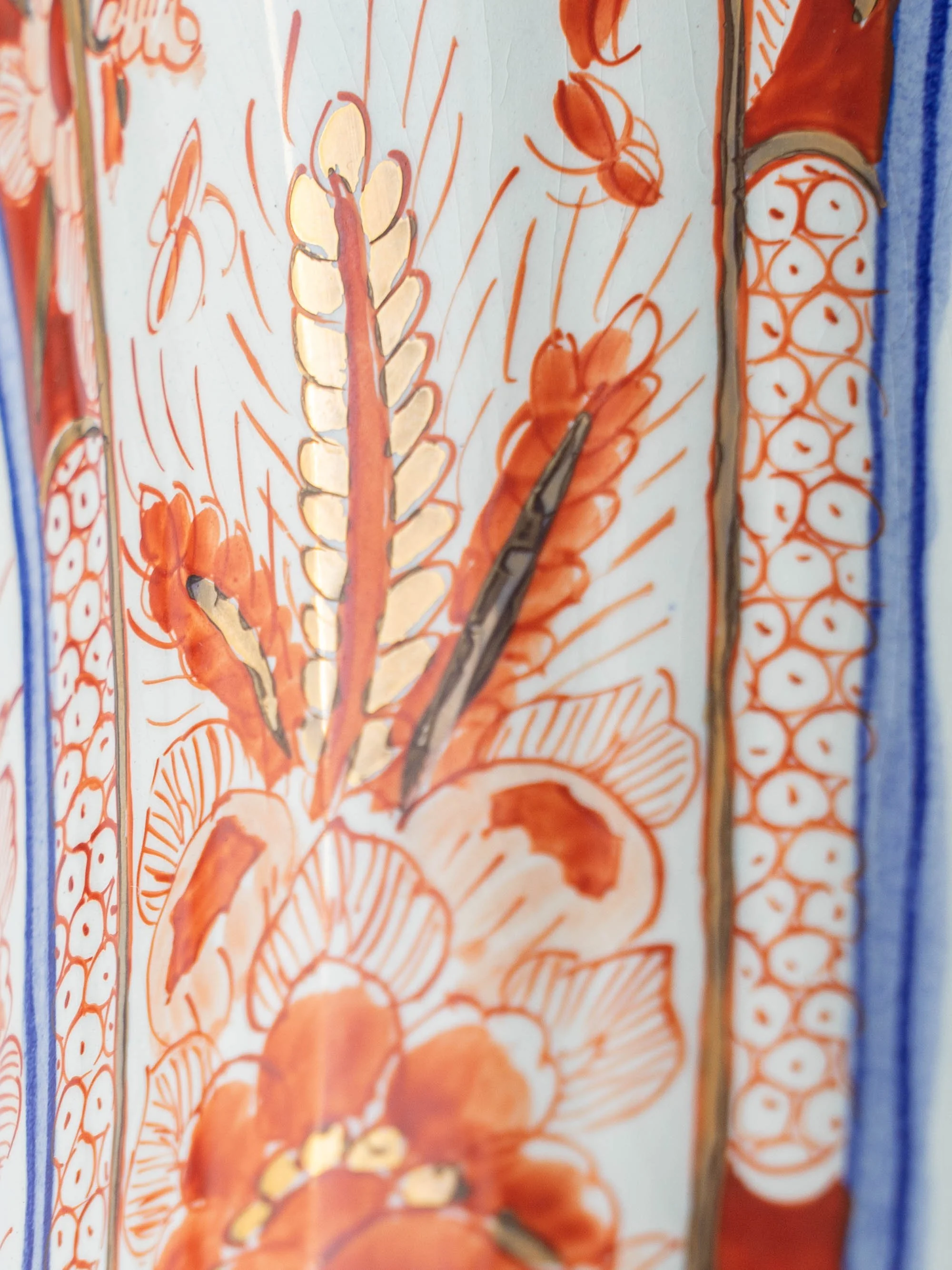
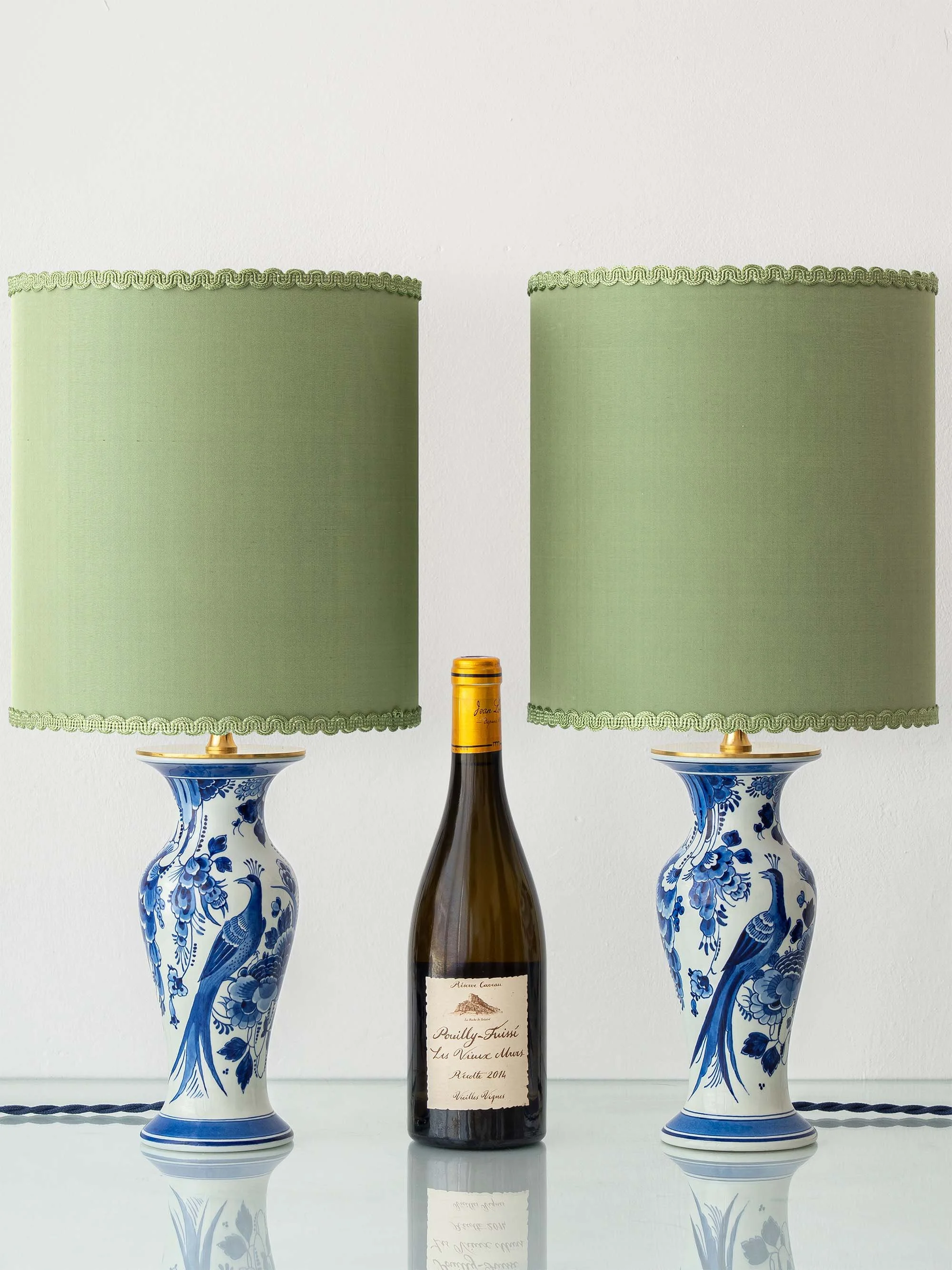
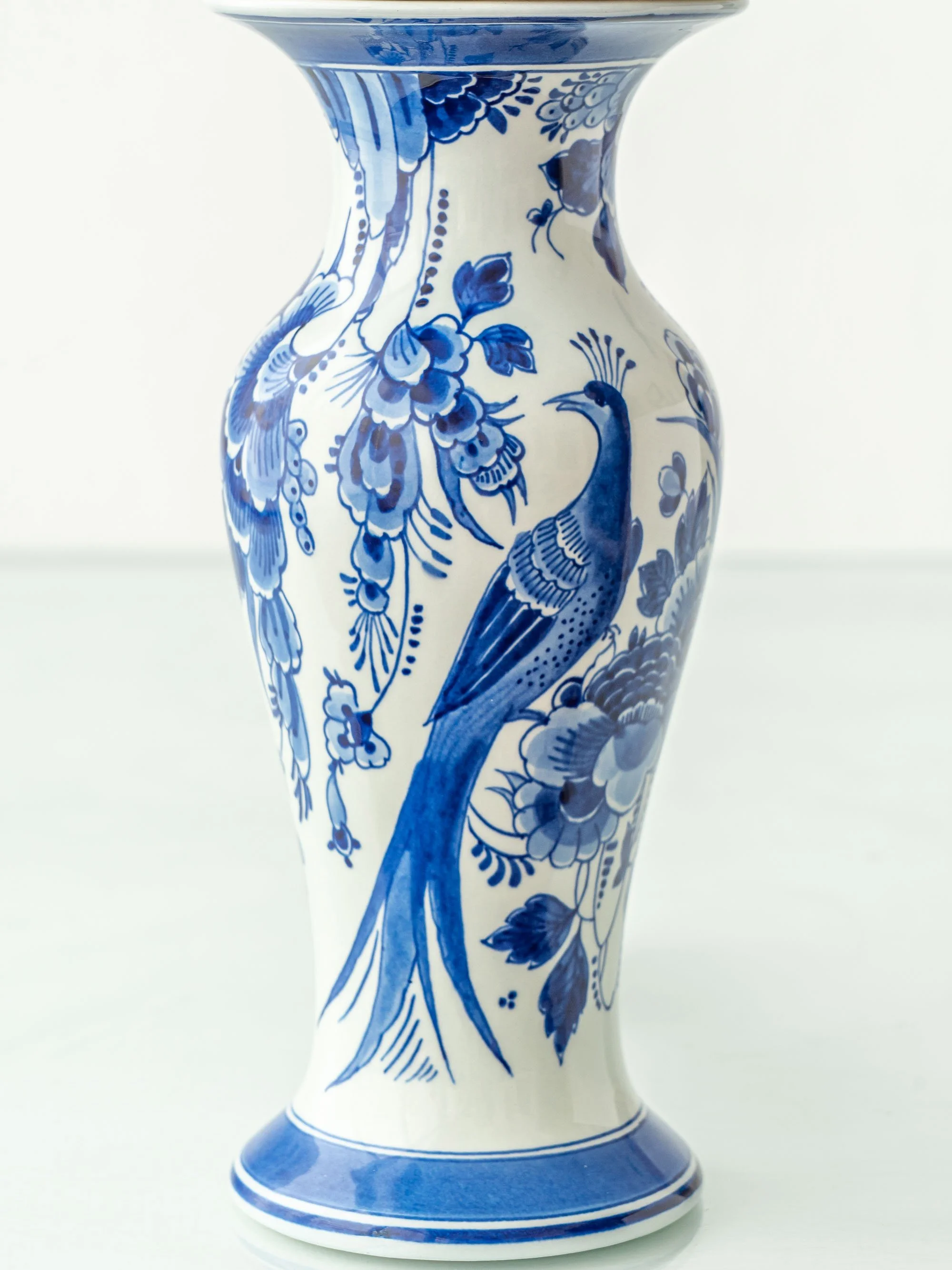
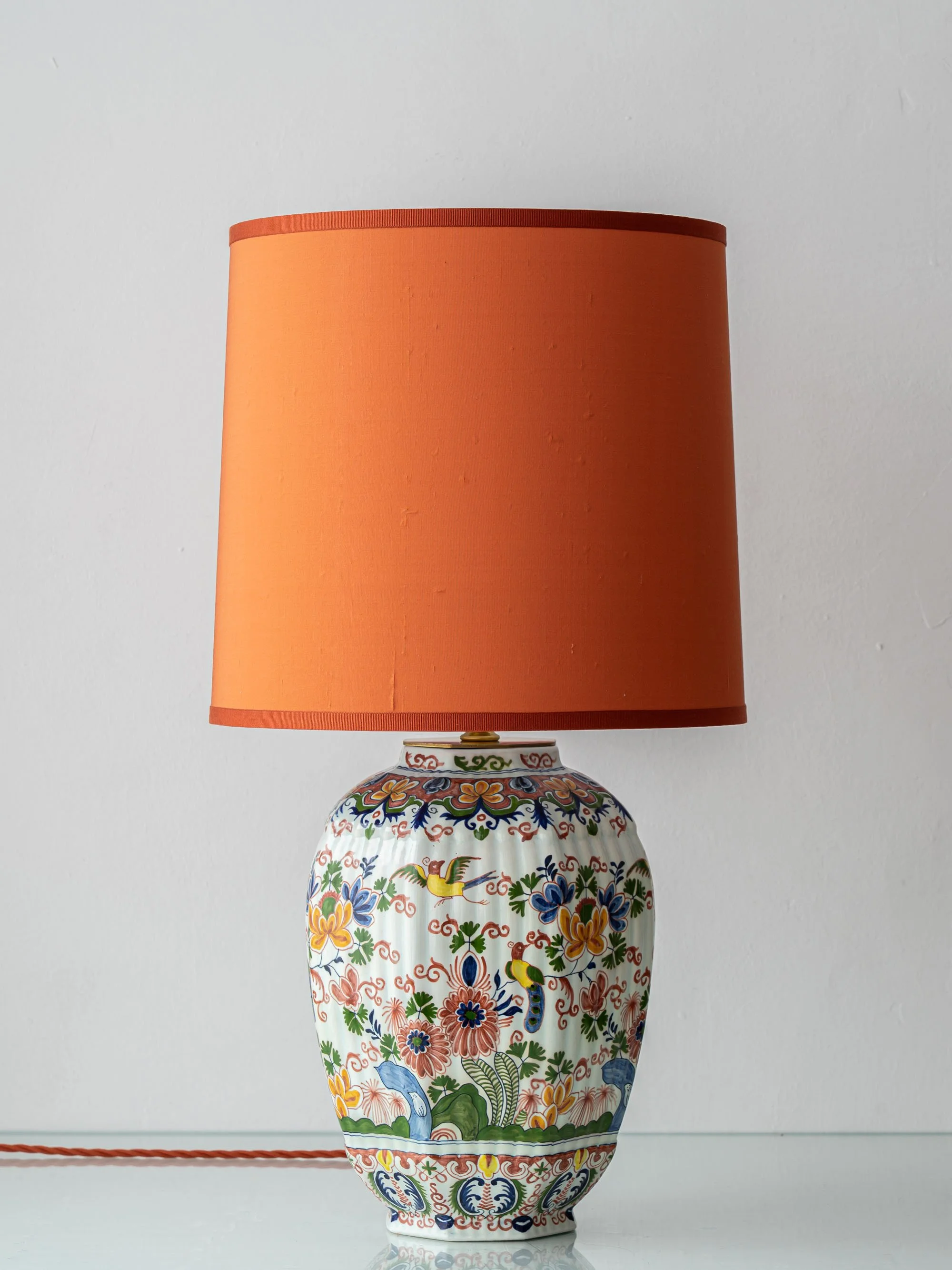
Anna is made from a ribbed vase painted entirely by hand on a white ground. Blue, yellow and rust-red blossoms with radiating petals are set among green foliage, striped leaves and scrolling rust tendrils, with birds in yellow and blue whose long tails carry green eyes. Bands of ornament run around the shoulder and the foot. The subject is chinoiserie in the Dutch manner, the Asian-inspired floral vocabulary that Delftware took from imported porcelain, worked here in full color rather than the blue and white most often associated with Delft.
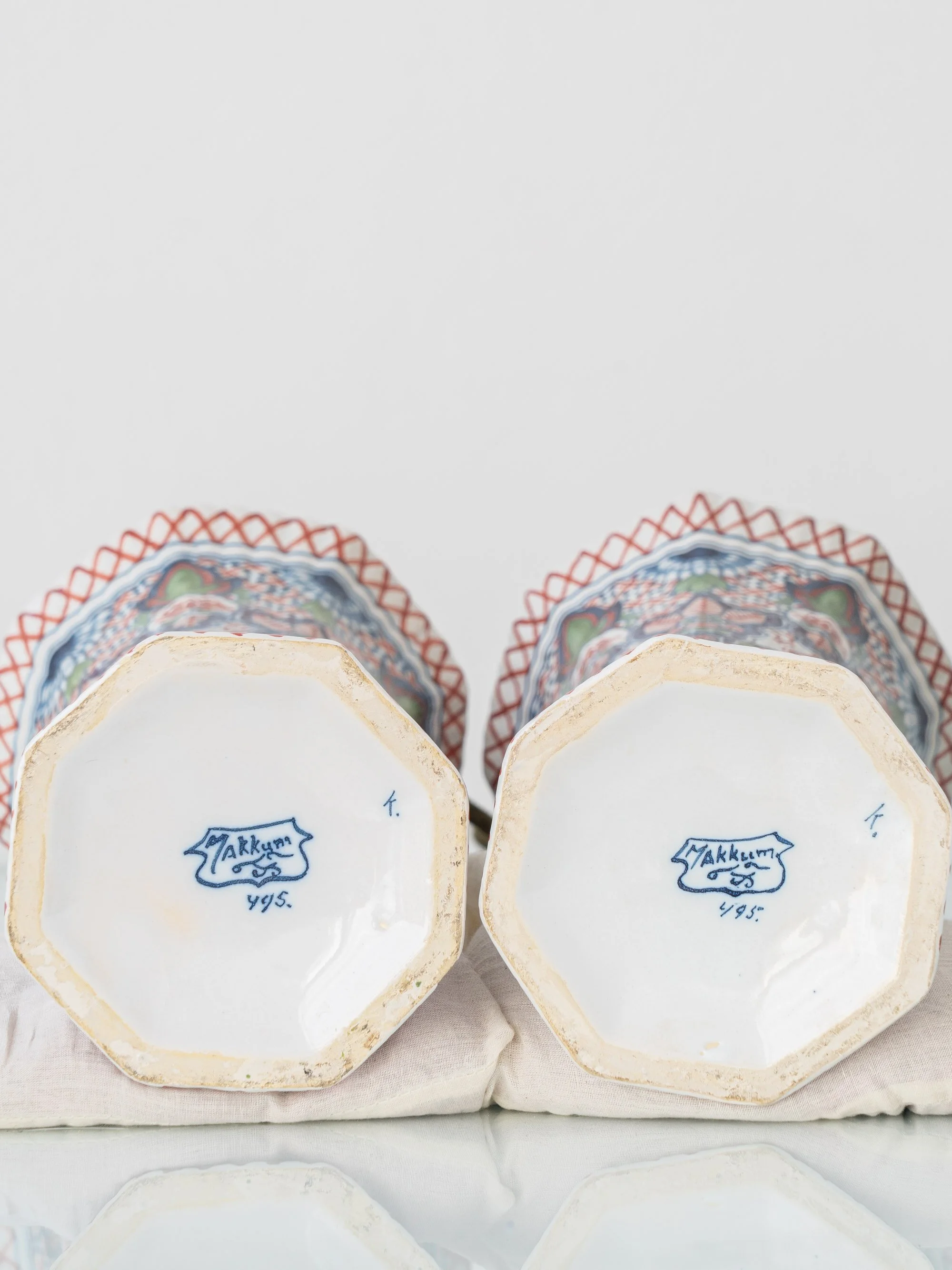
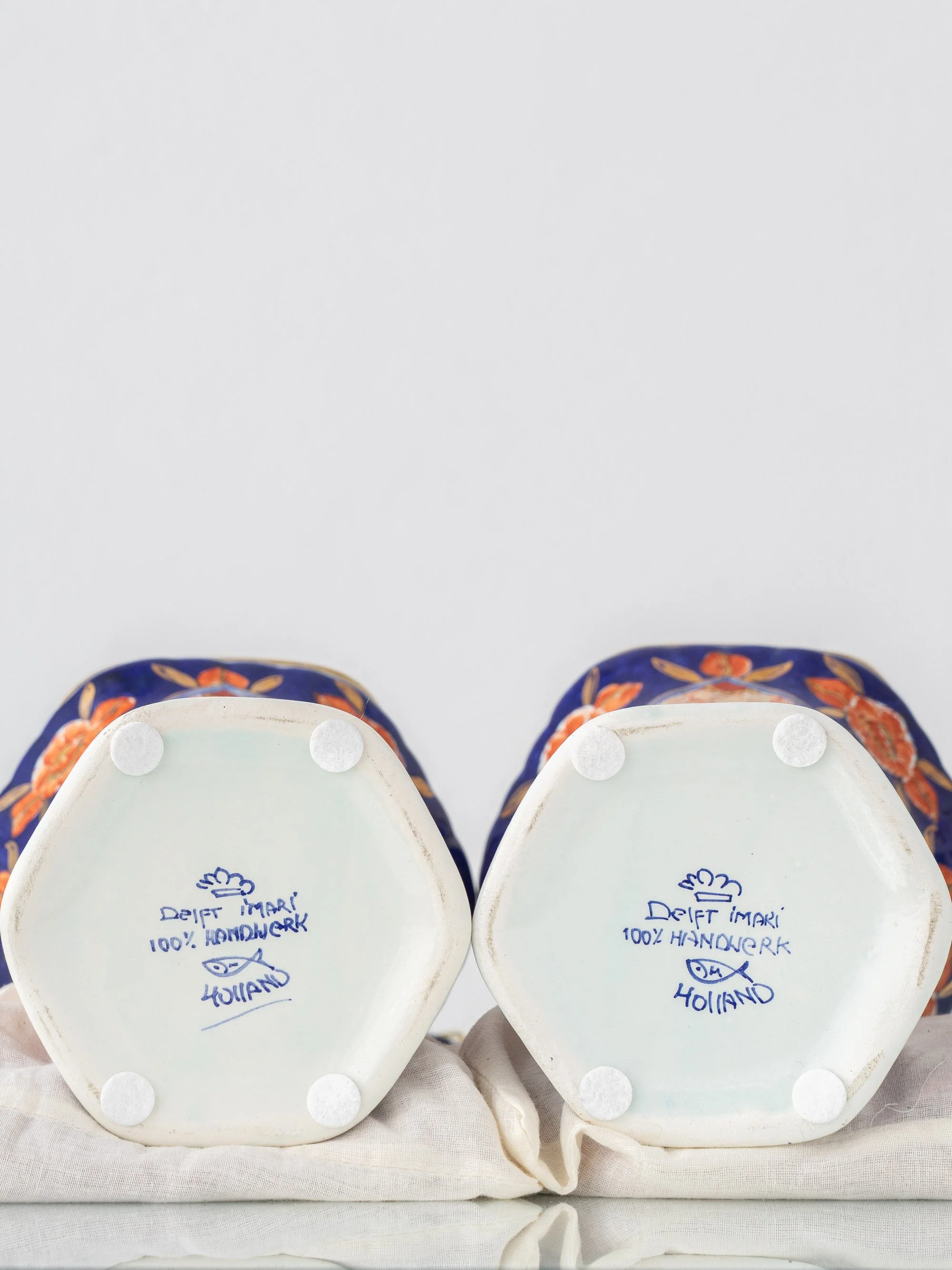
Though made in Belgium rather than Delft, the vase belongs to a deliberate revival. Around 1874, as collectors’ interest in old faience grew, Victor Boch recruited experienced Dutch faience painters from Maastricht to the Keramis works in La Louvière. Their hand-painted Delft decoration became a specialty of the factory, known as the Chambre des Peintres Hollandais, the Dutch Painters’ Chamber. Its pieces are recognizable by a hand-painted signature of the interlaced letters B, F and K, for Boch Frères Keramis, on the underside. Anna’s base carries it.
About Boch Frères Keramis
Founded in 1841 in La Louvière, Belgium, by Eugène and Victor Boch and their brother-in-law Jean-Baptiste Nothomb, Boch Frères Keramis grew with the town around it: the district housing the factory became the independent municipality of La Louvière in 1869, and the works employed nearly a thousand people by 1900. From the 1870s a hand-painting workshop of Dutch artists revived the Delft style, and from 1906 Charles Catteau’s designs brought the factory a second reputation in Art Deco. The painter Anna Boch, a member of Les XX, also drew designs for the factory, and this lamp is named for her. The company traded as Royal Boch from 1989 and was closed in 2009.