 Image 1 of 25
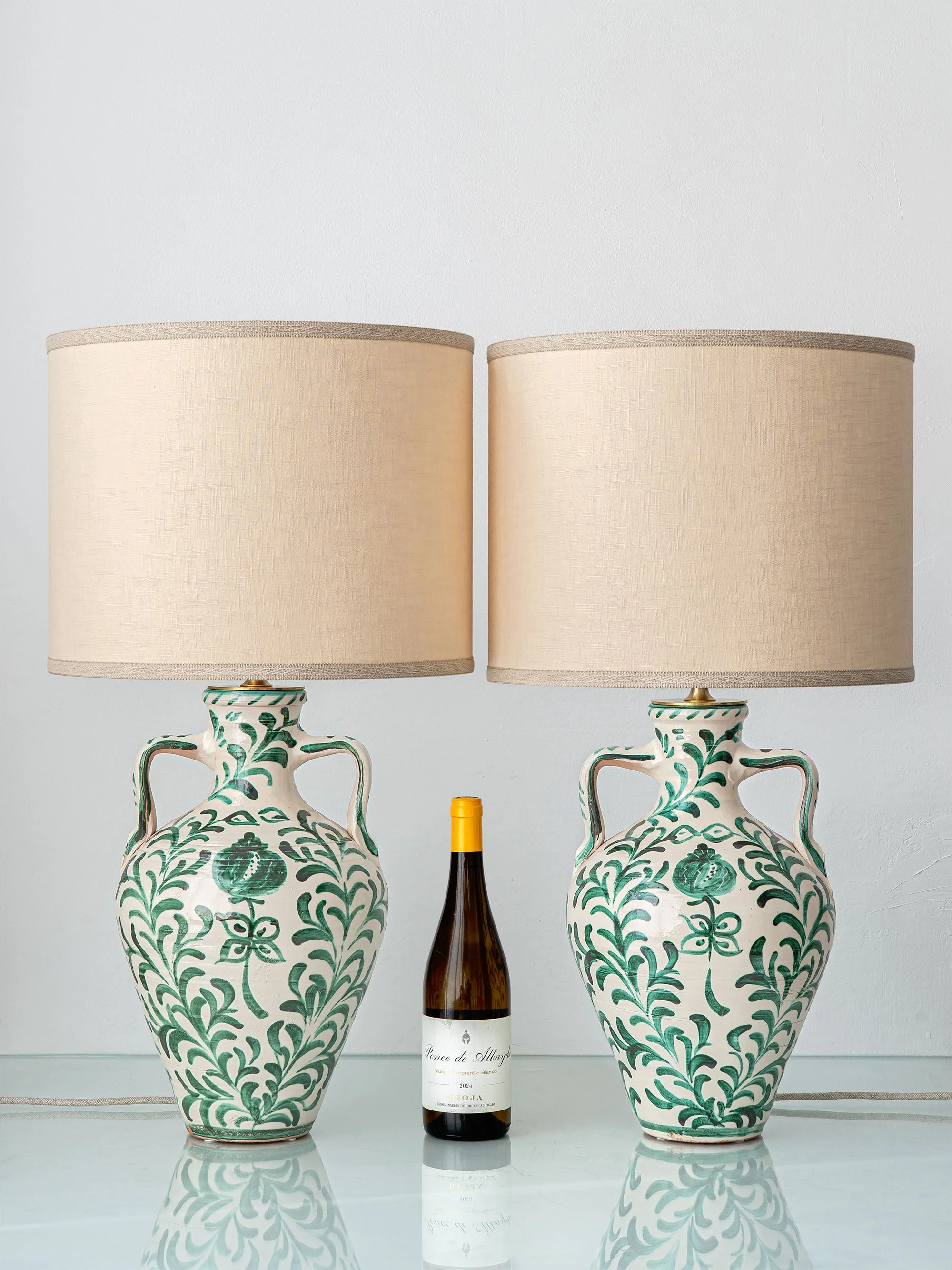 Image 2 of 25
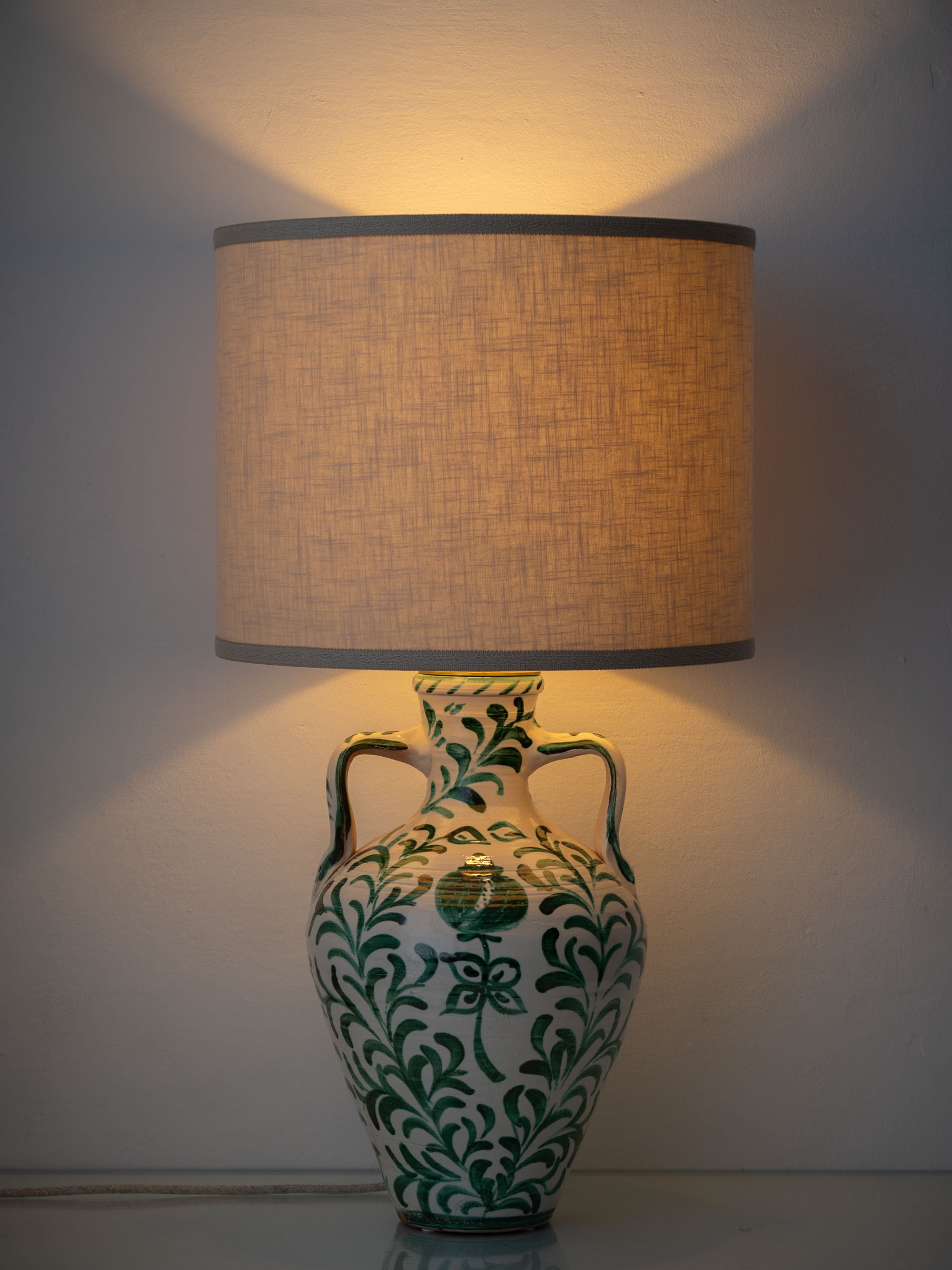 Image 3 of 25
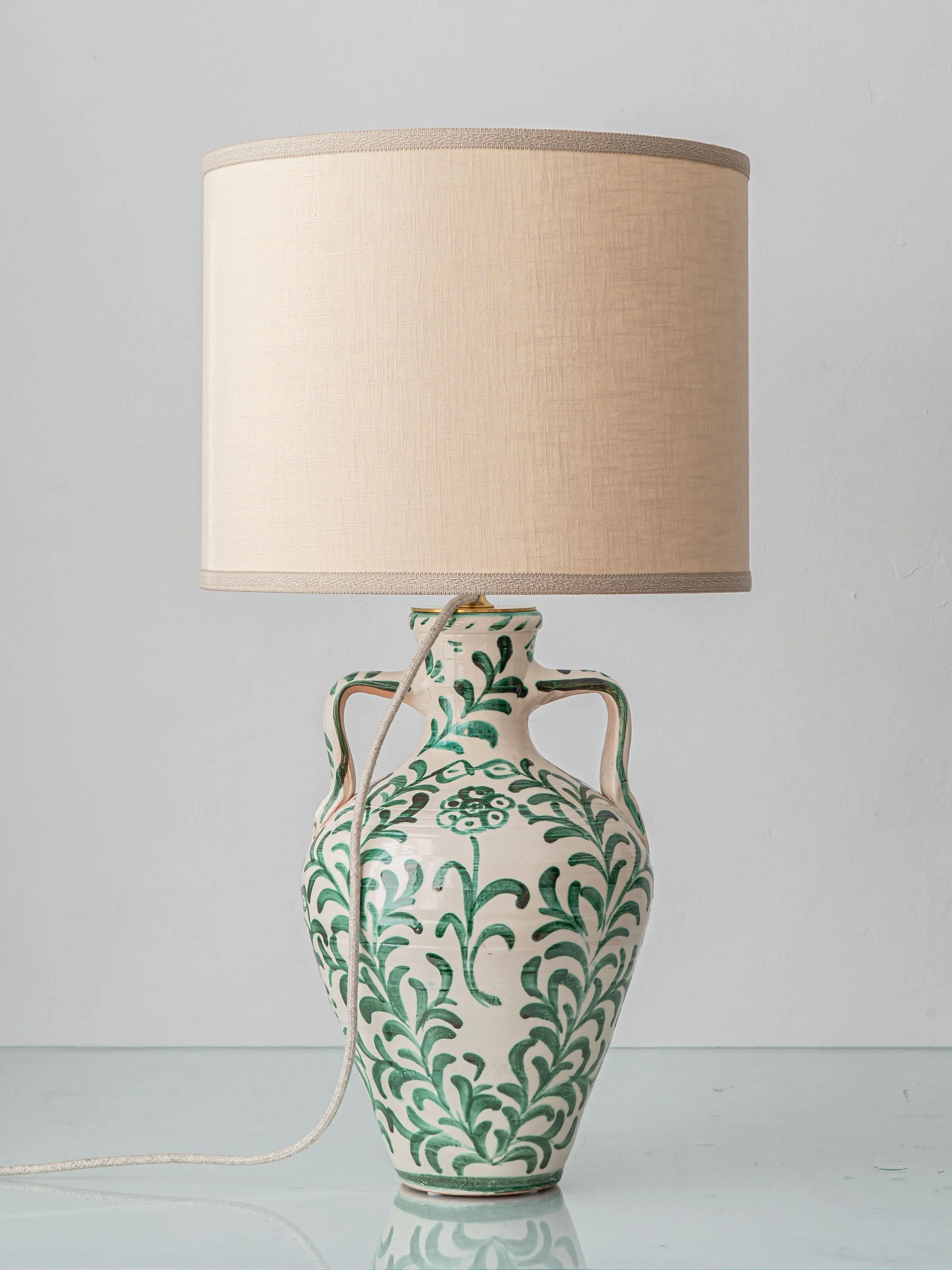 Image 4 of 25
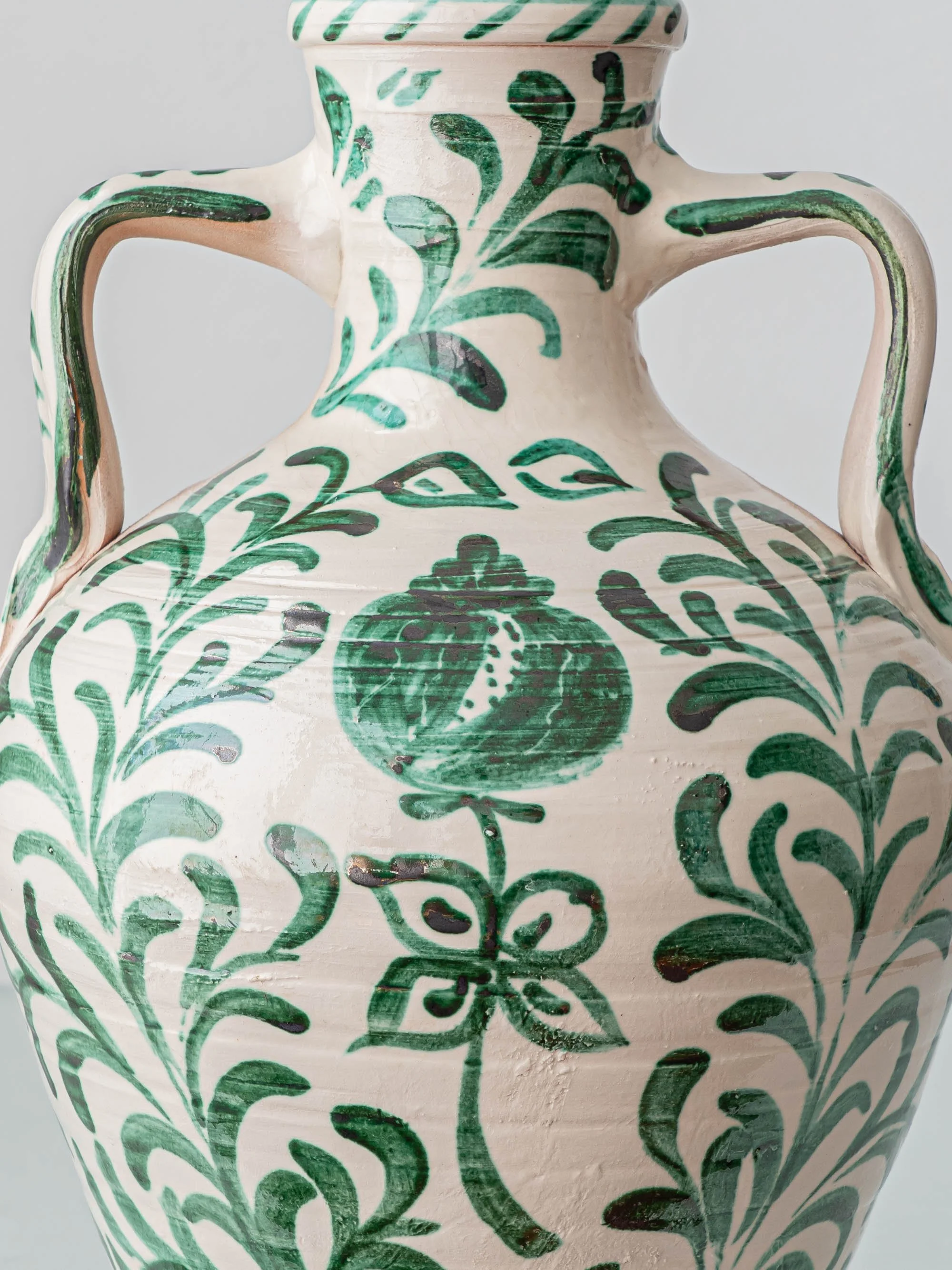 Image 5 of 25
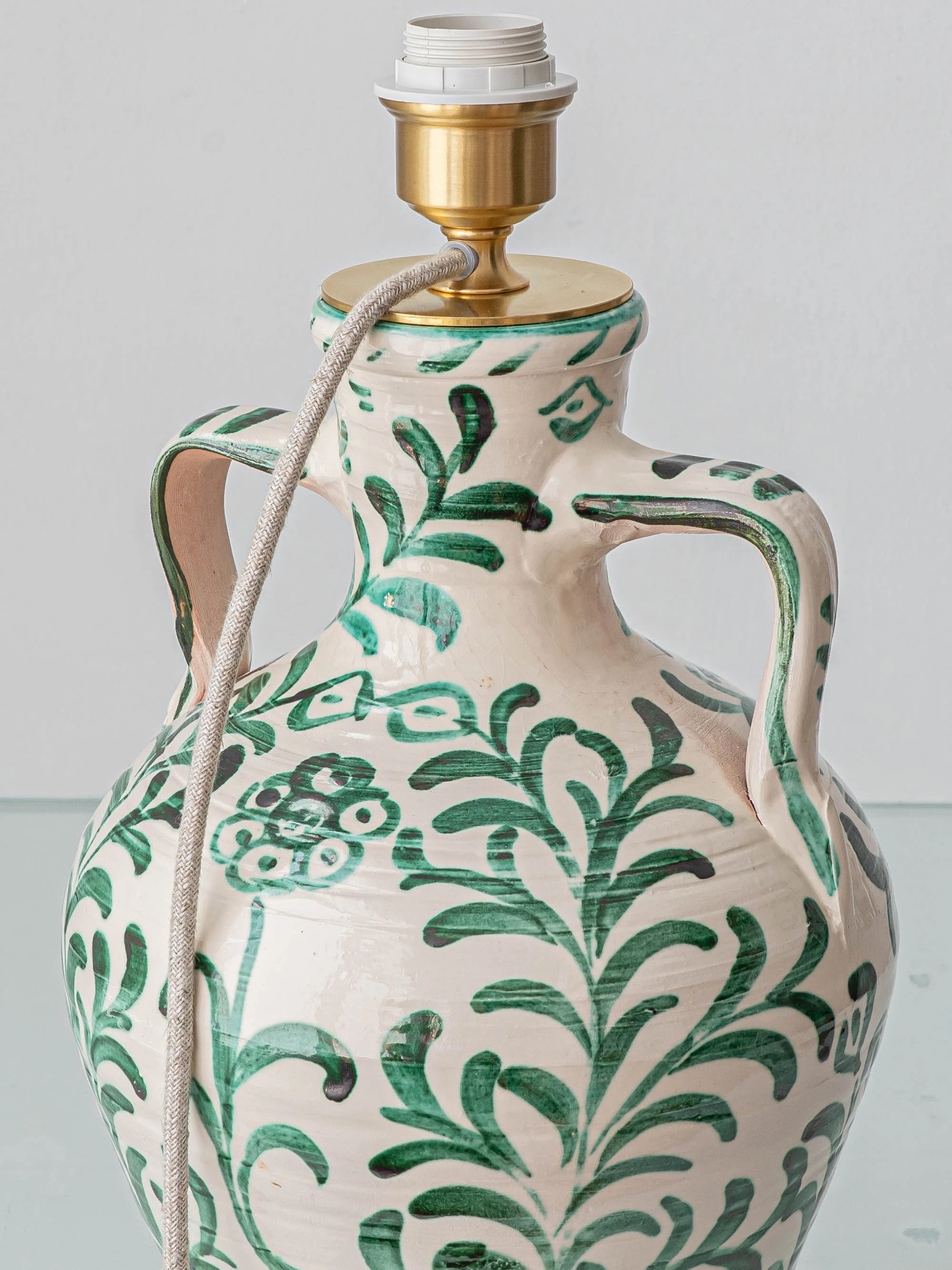 Image 6 of 25
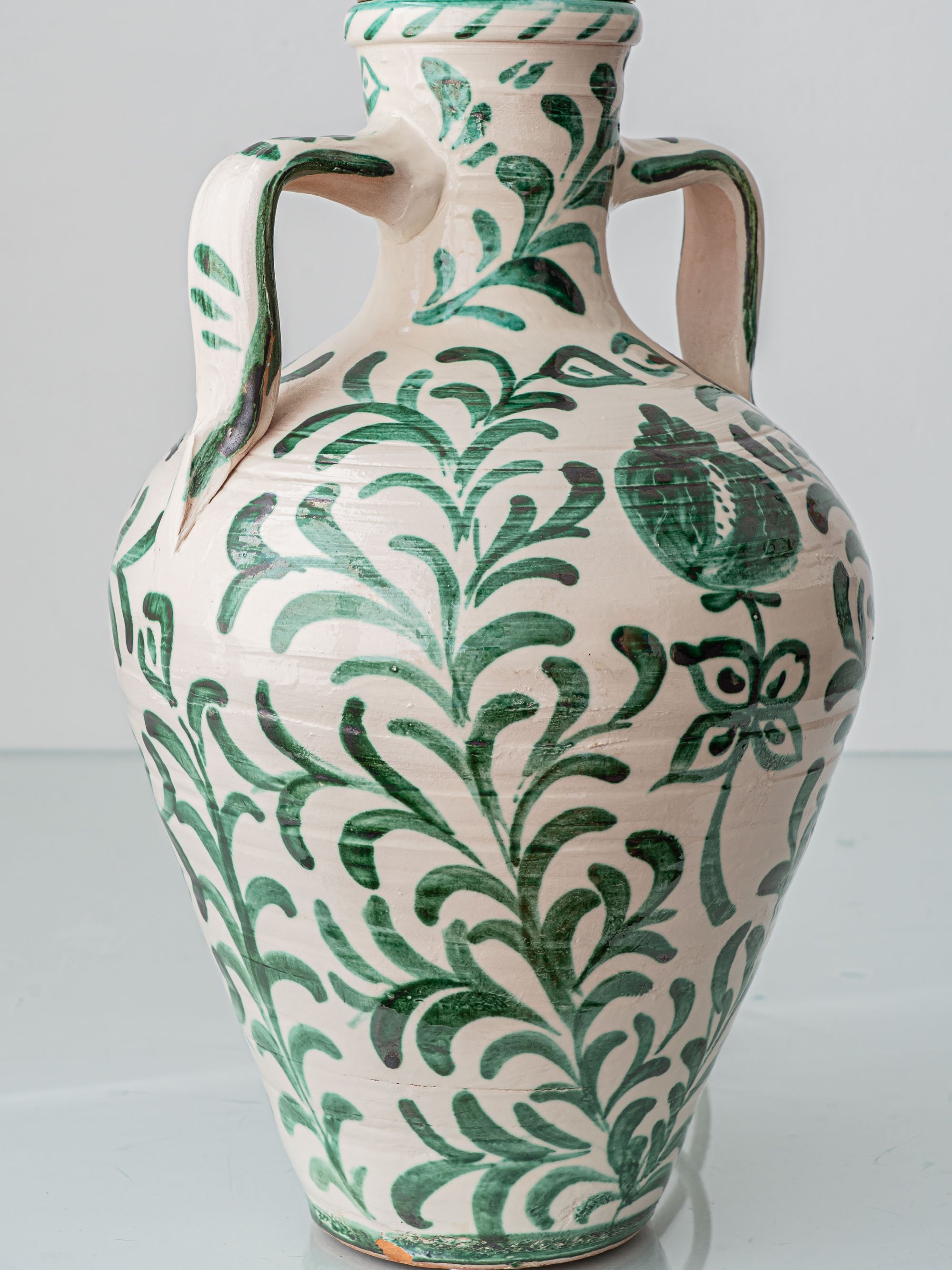 Image 7 of 25
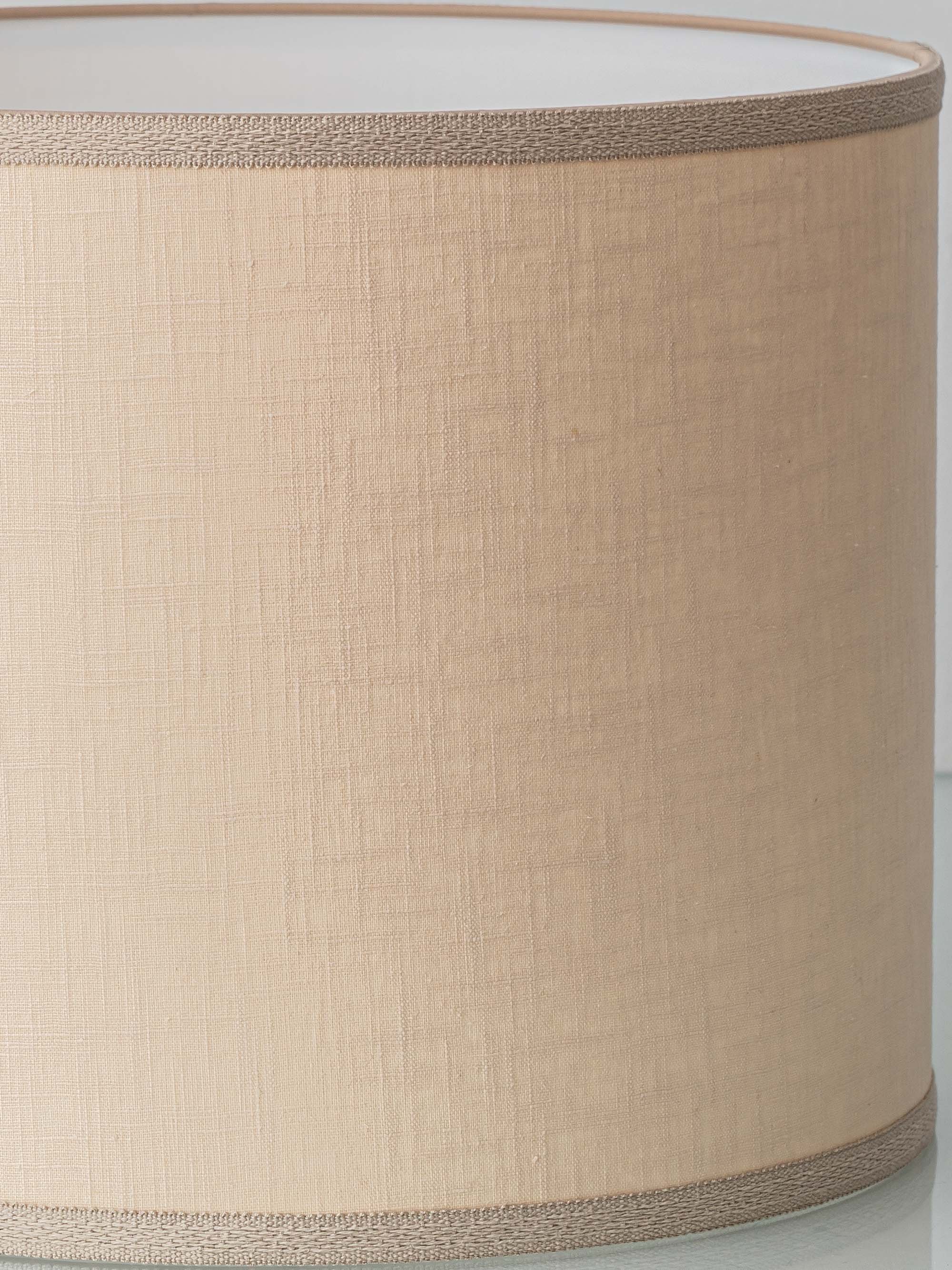 Image 8 of 25
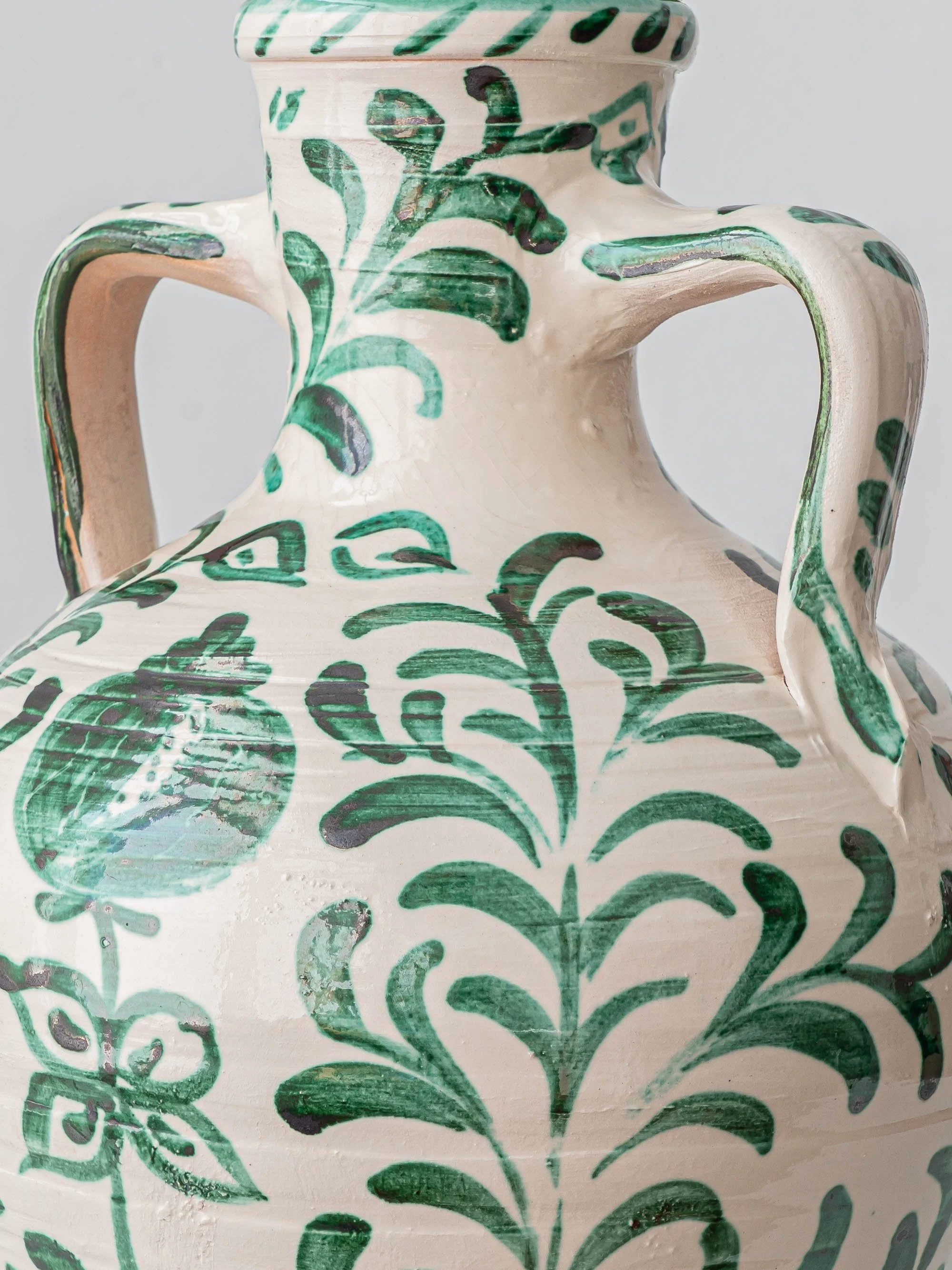 Image 9 of 25
 Image 10 of 25
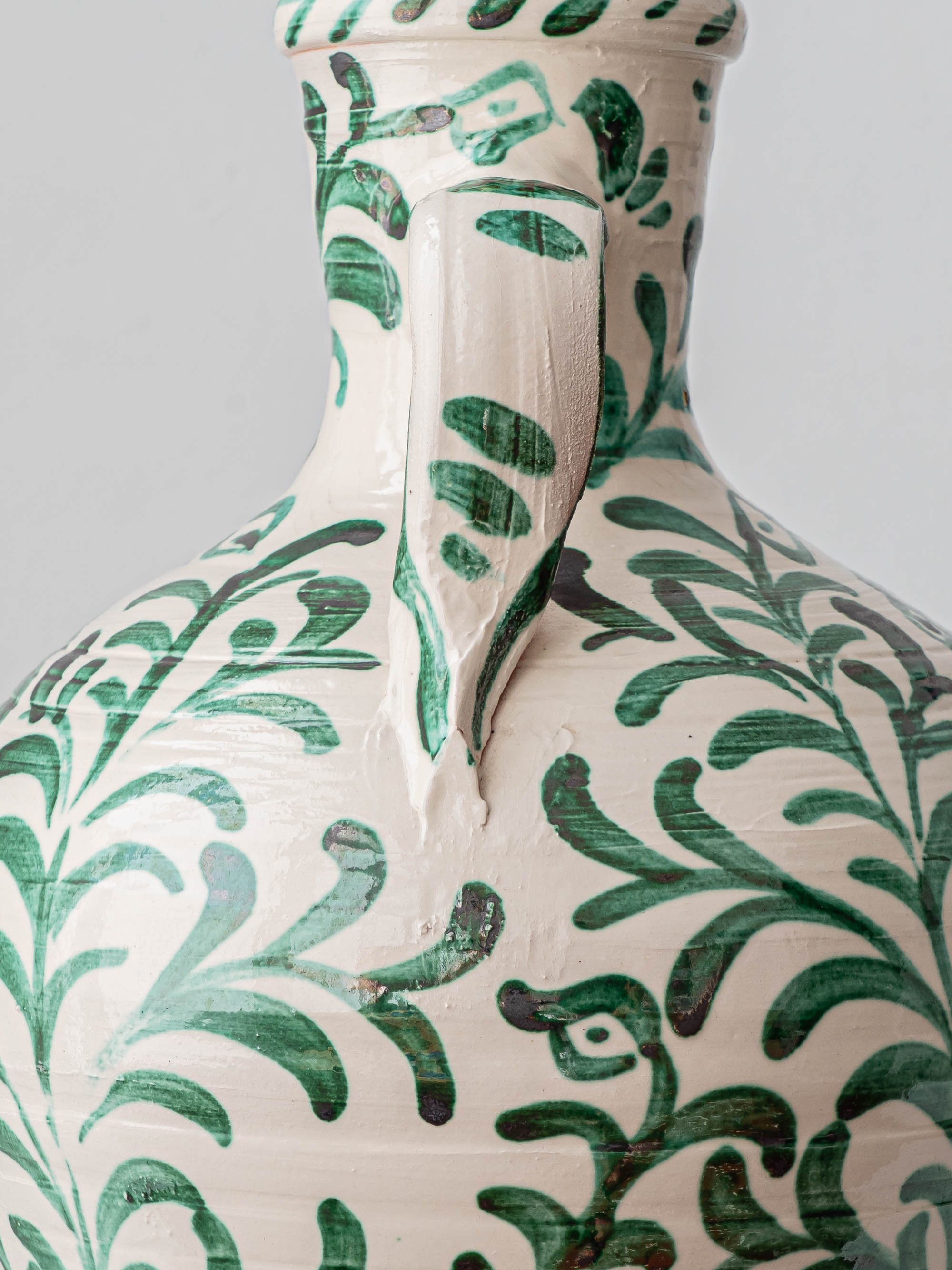 Image 11 of 25
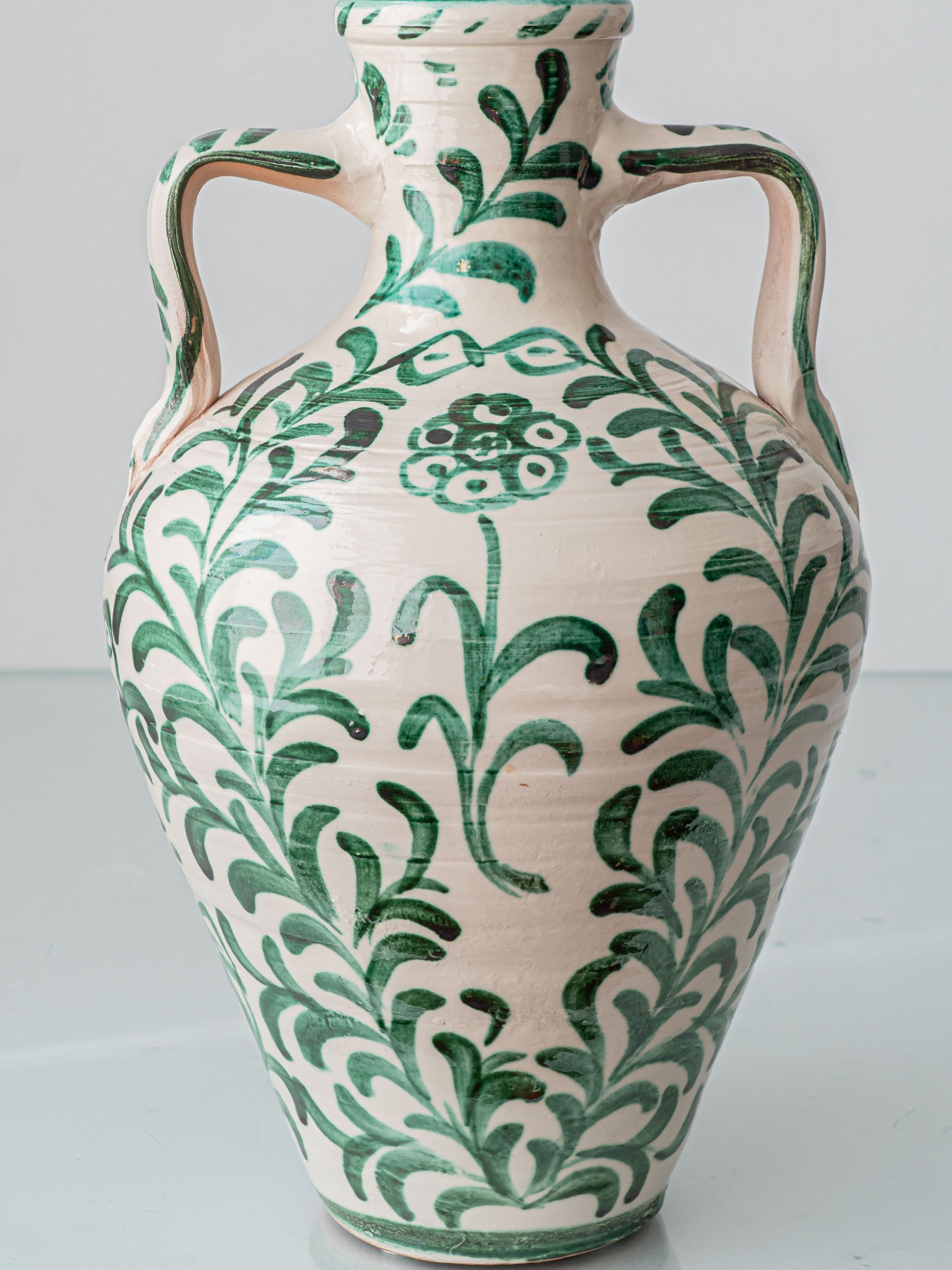 Image 12 of 25
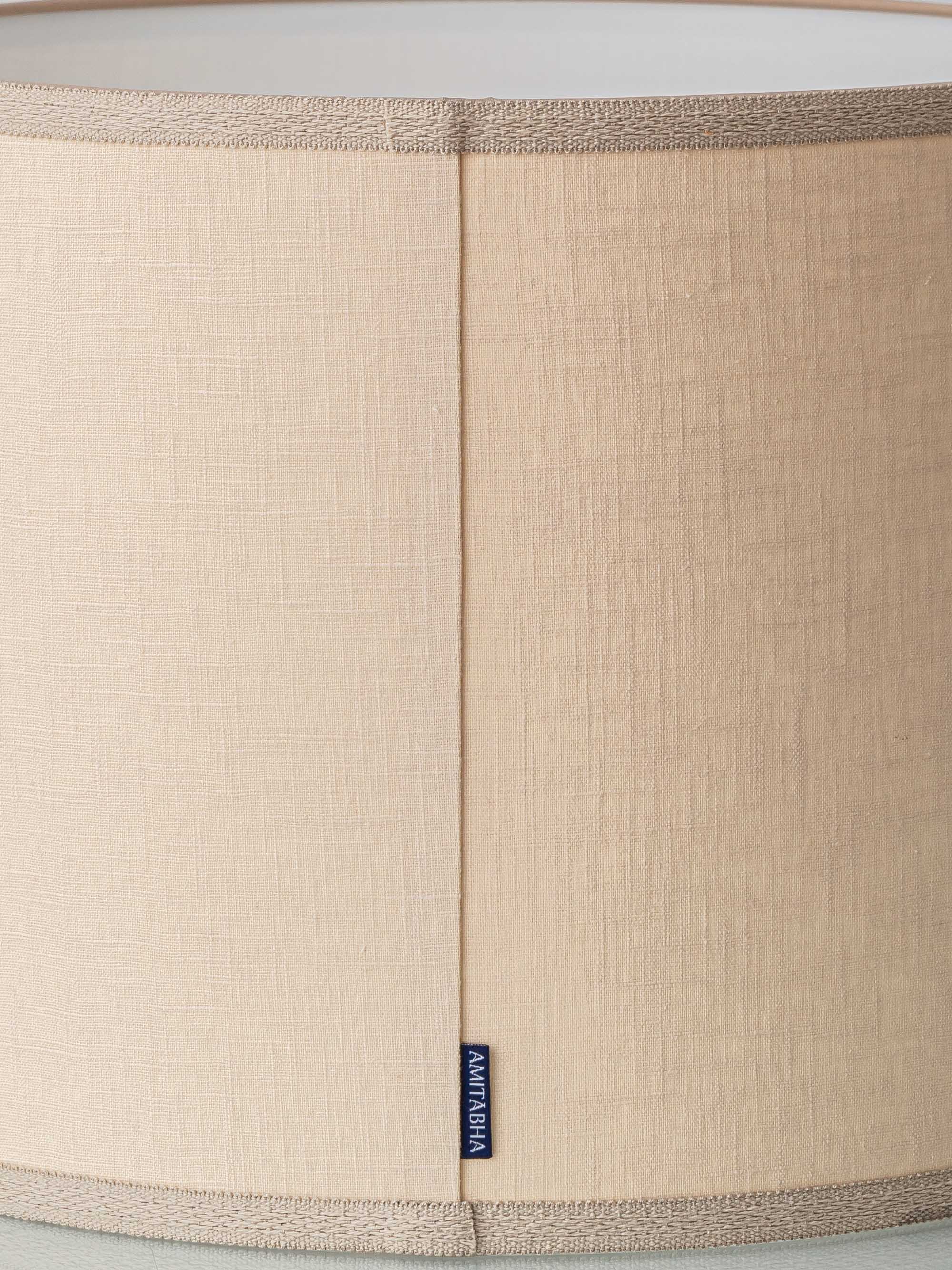 Image 13 of 25
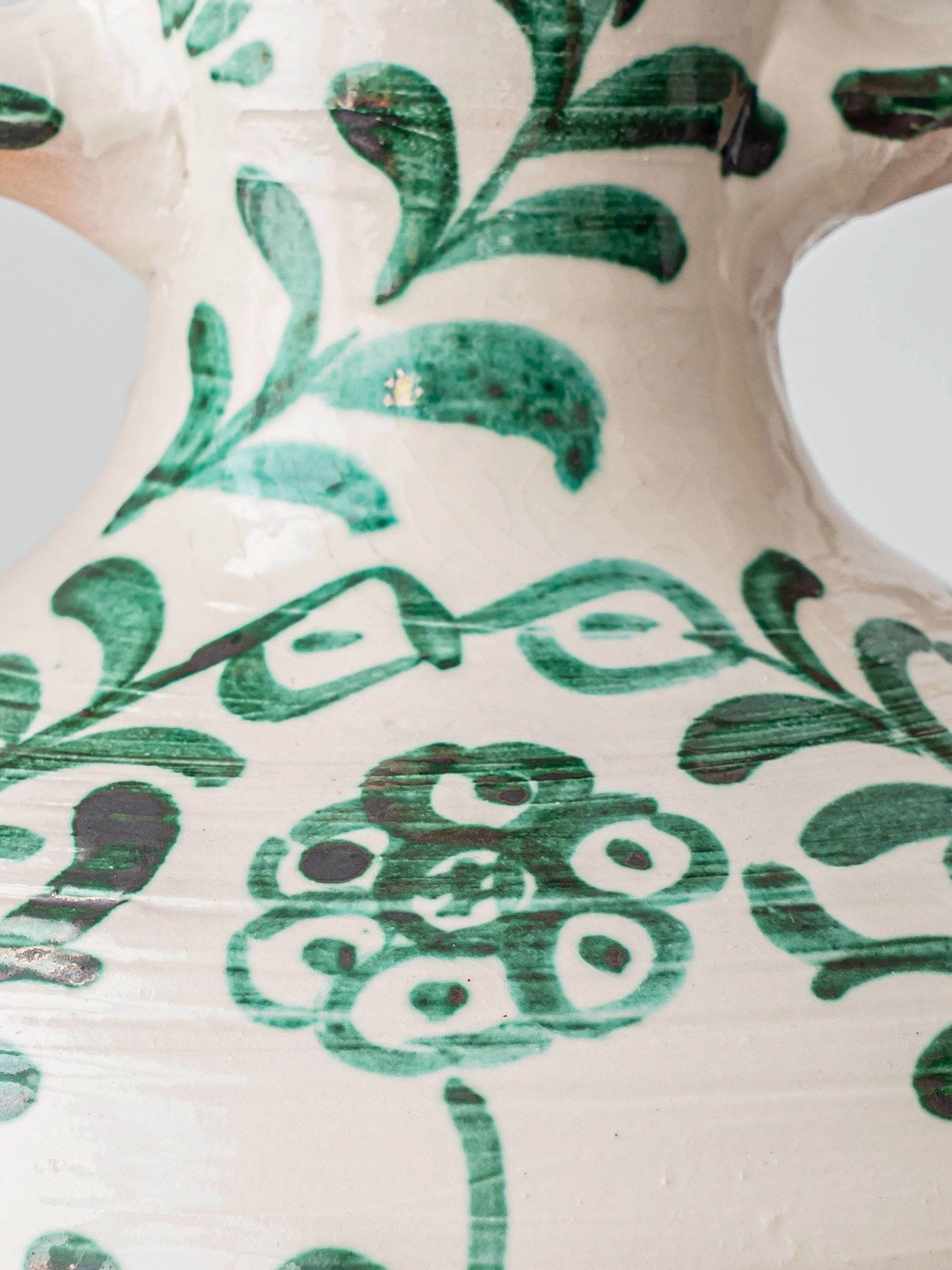 Image 14 of 25
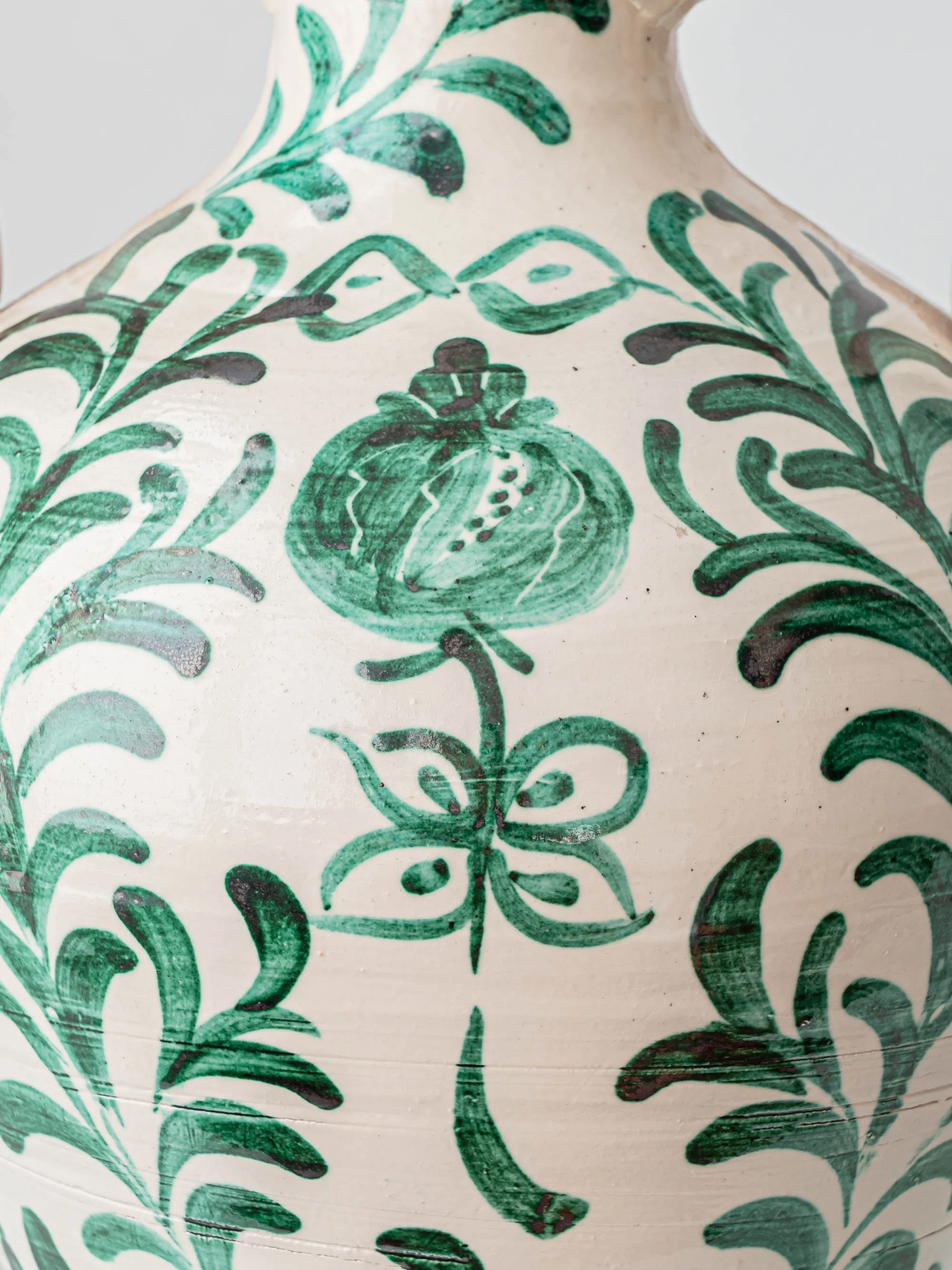 Image 15 of 25
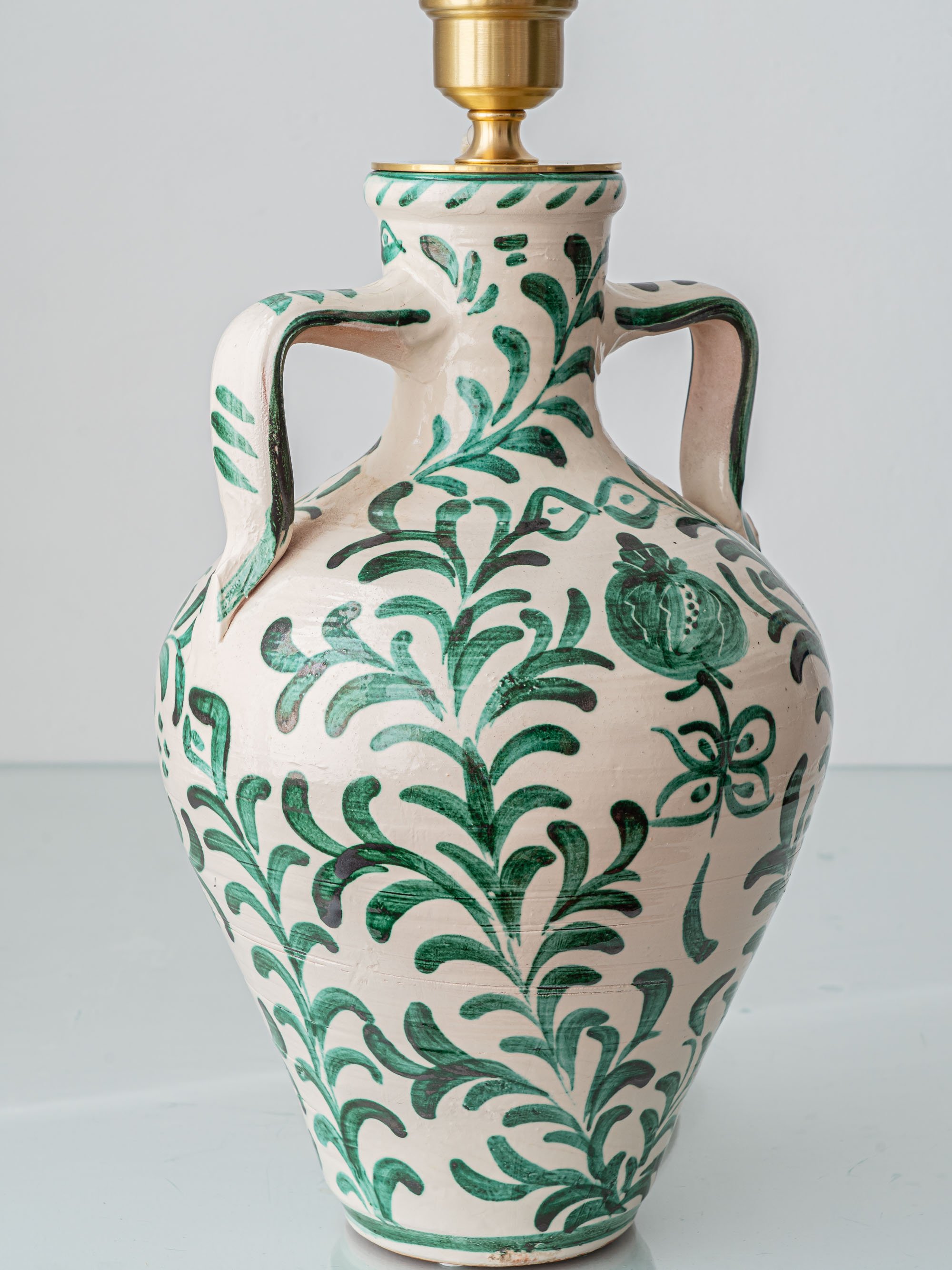 Image 16 of 25
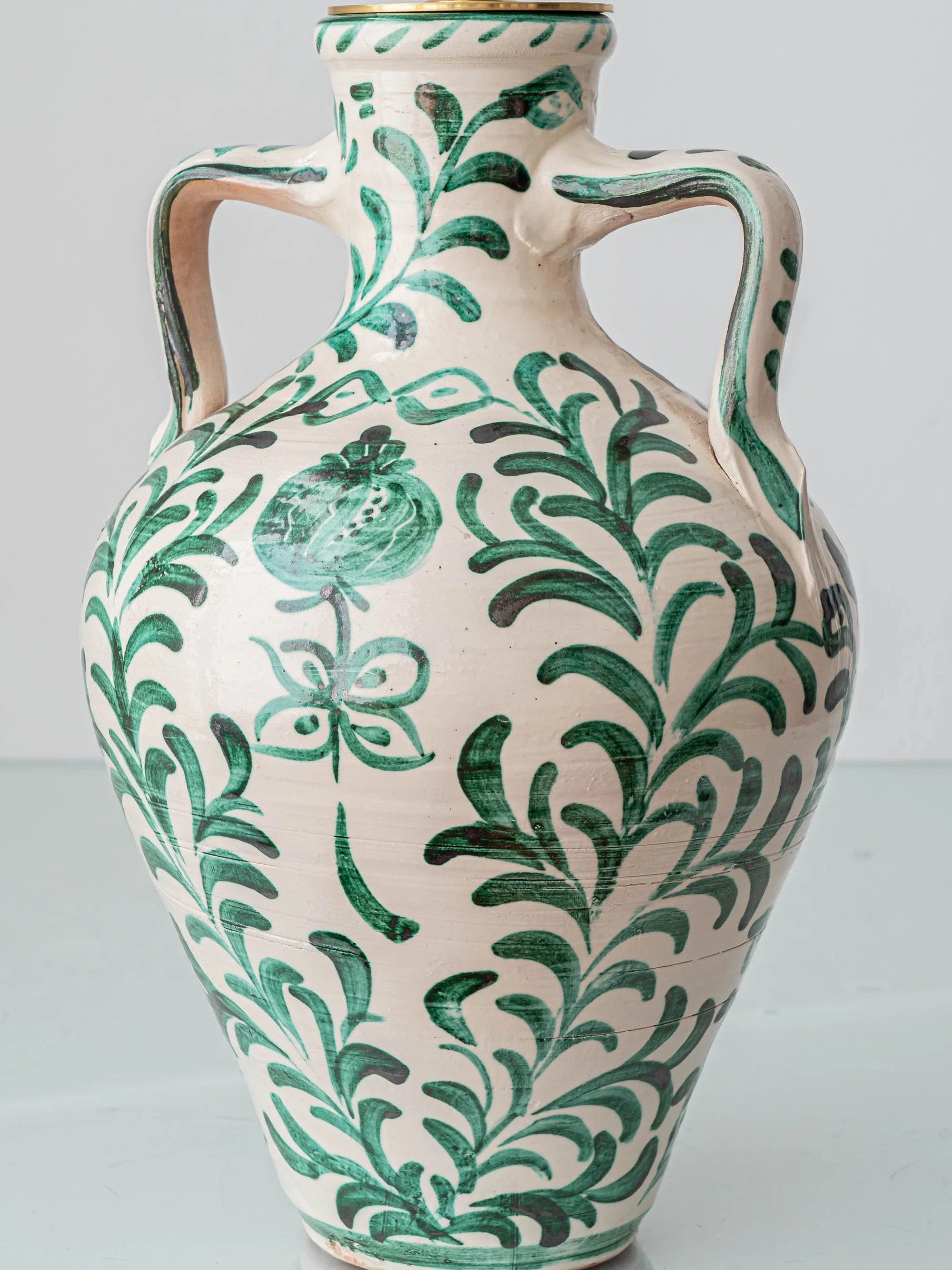 Image 17 of 25
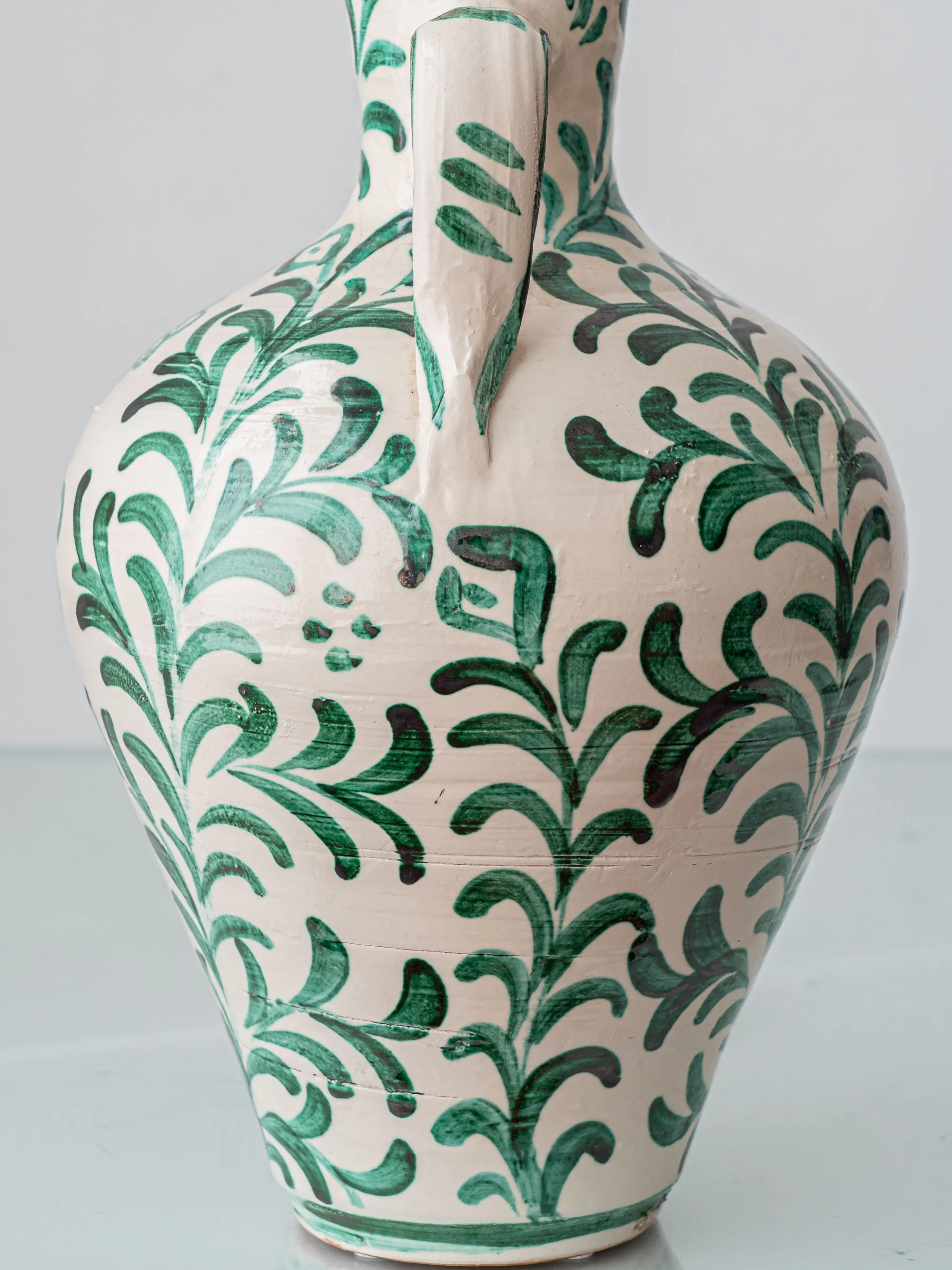 Image 18 of 25
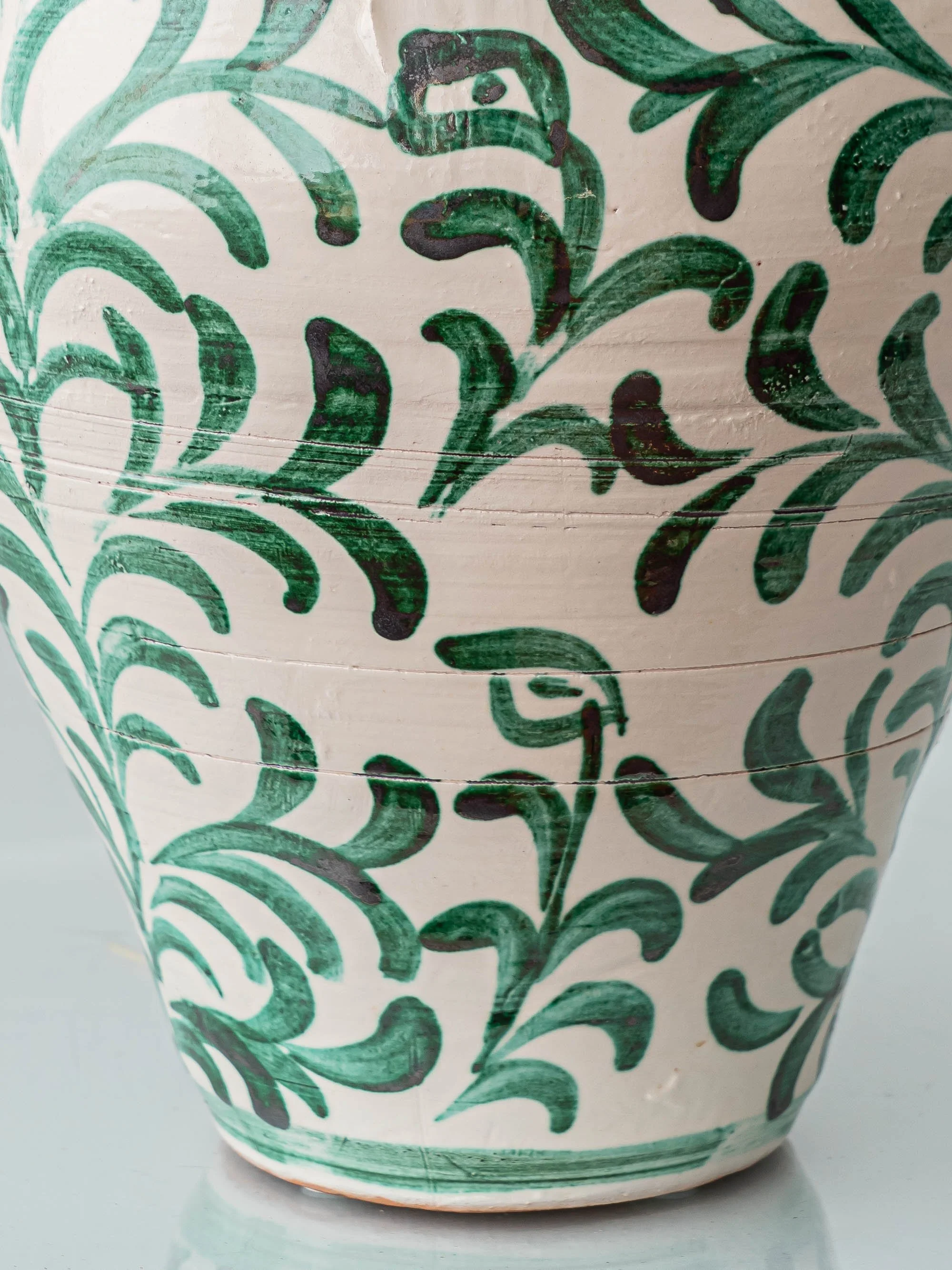 Image 19 of 25
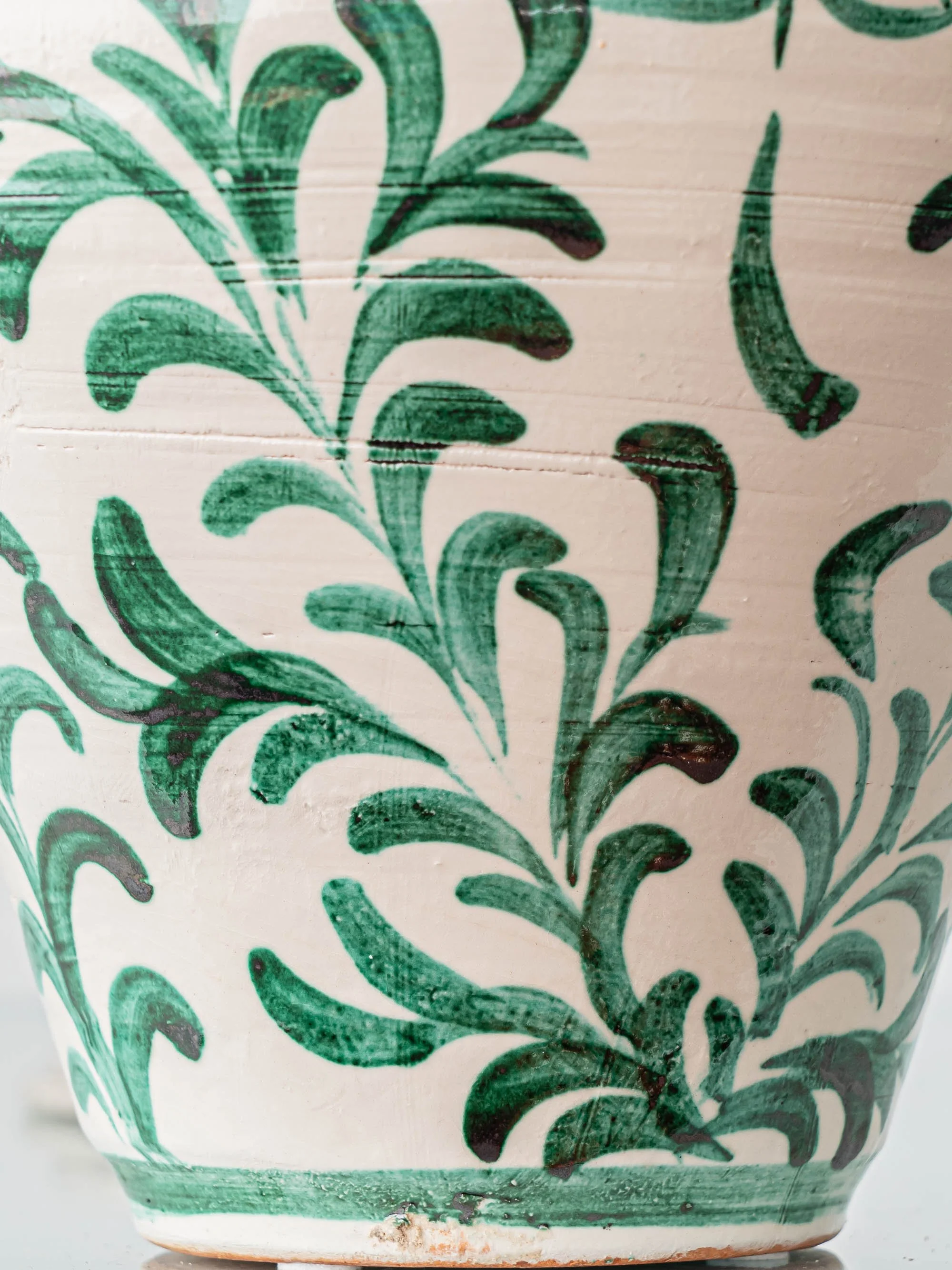 Image 20 of 25
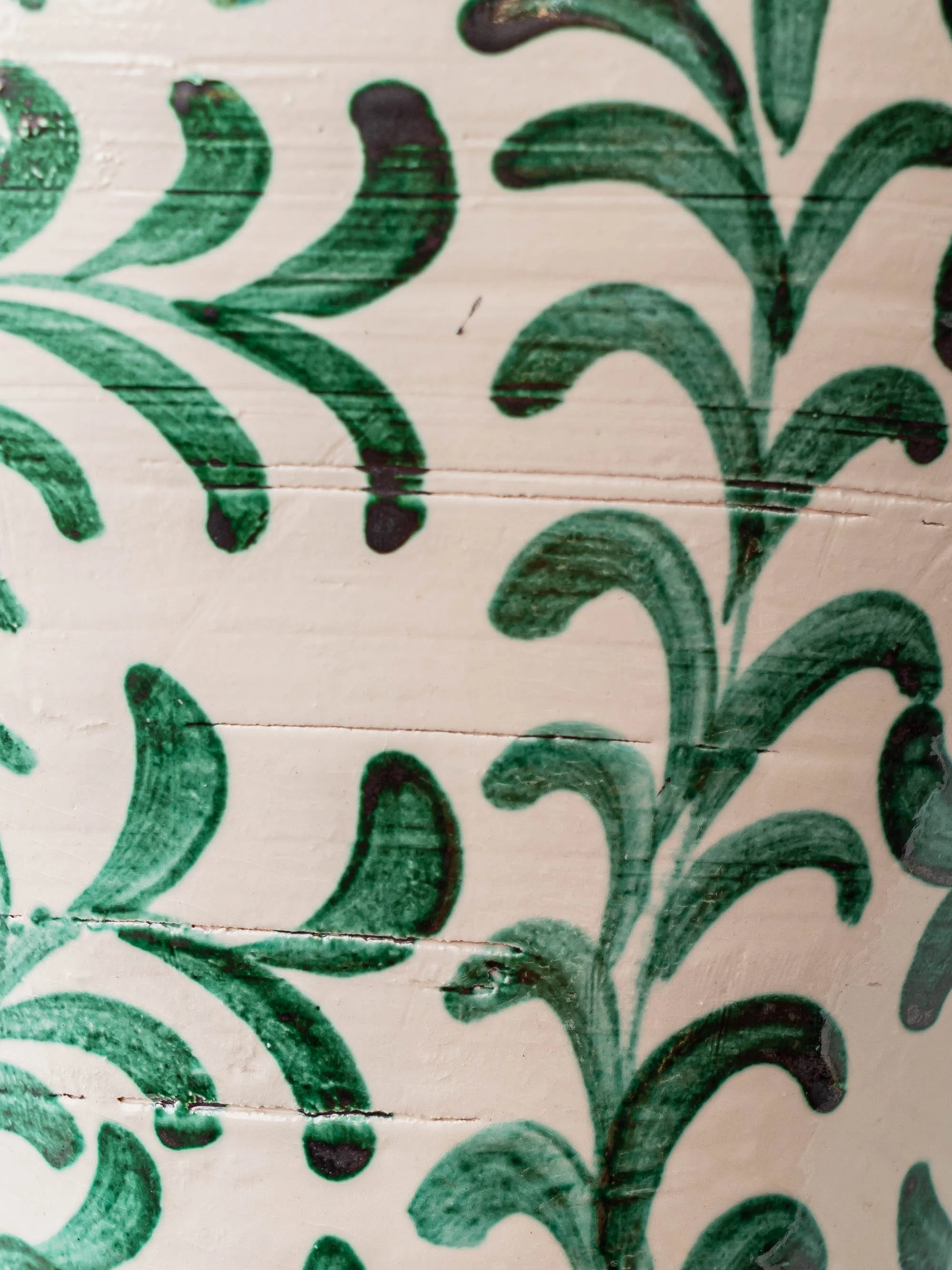 Image 21 of 25
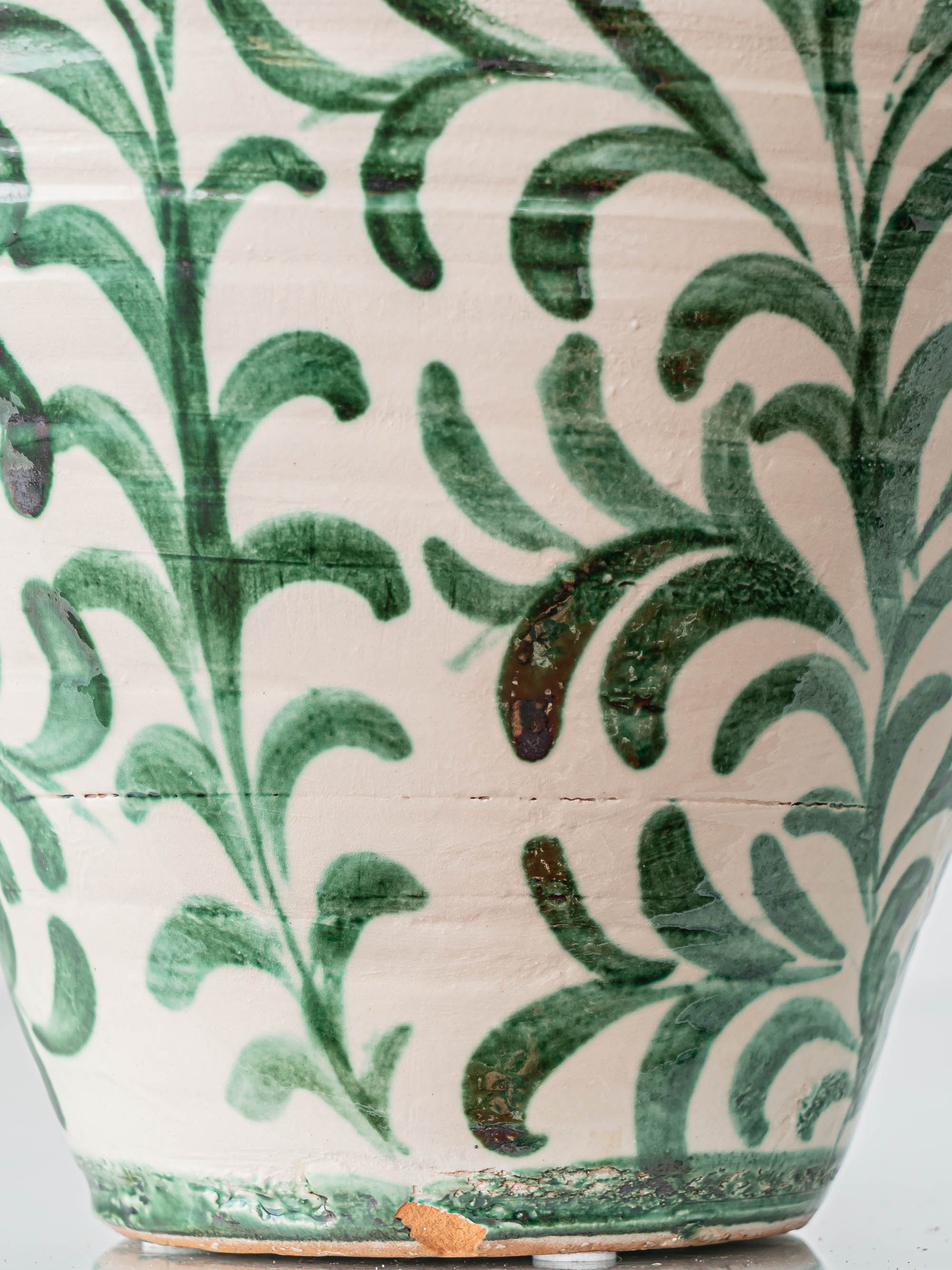 Image 22 of 25
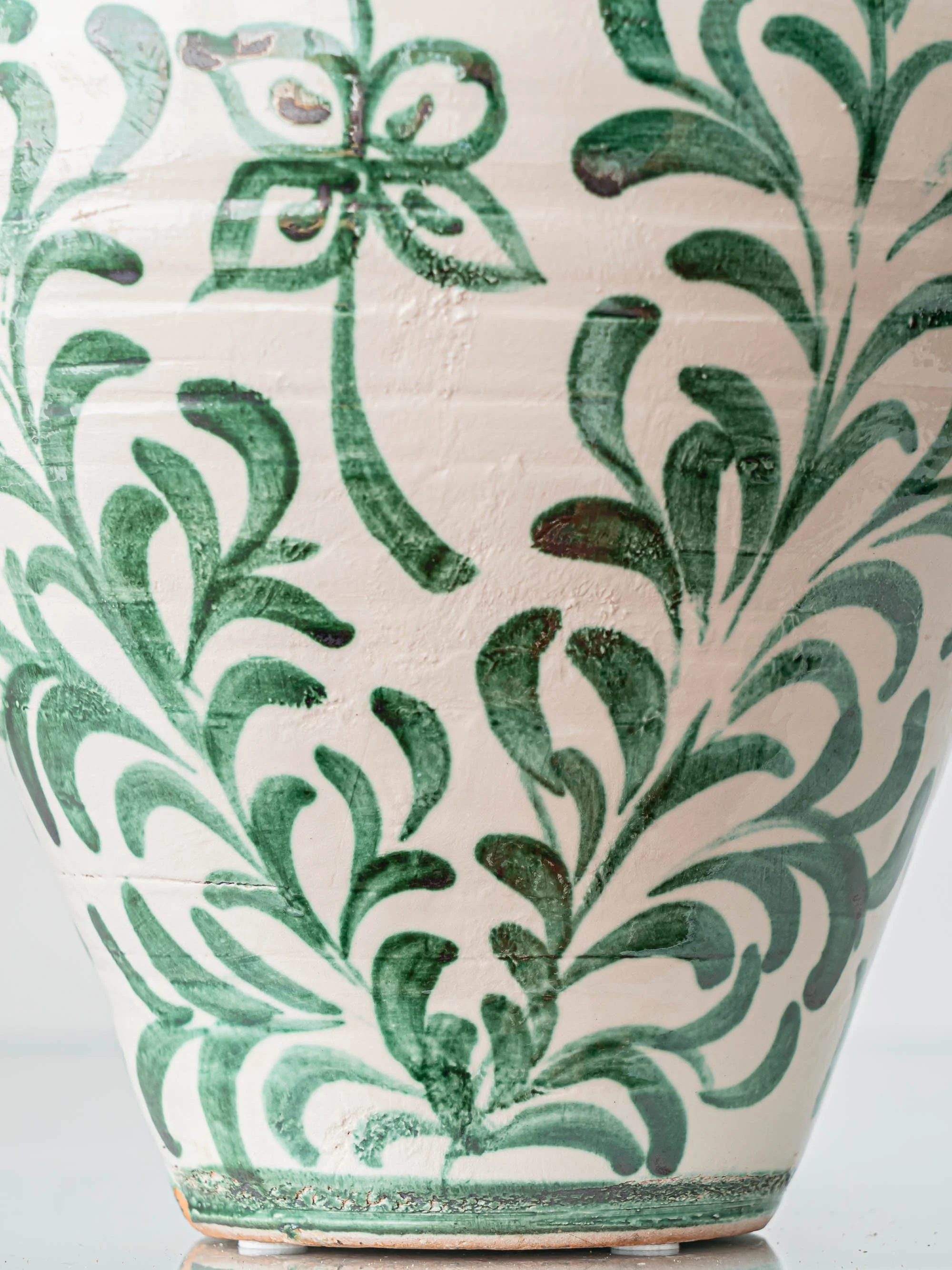 Image 23 of 25
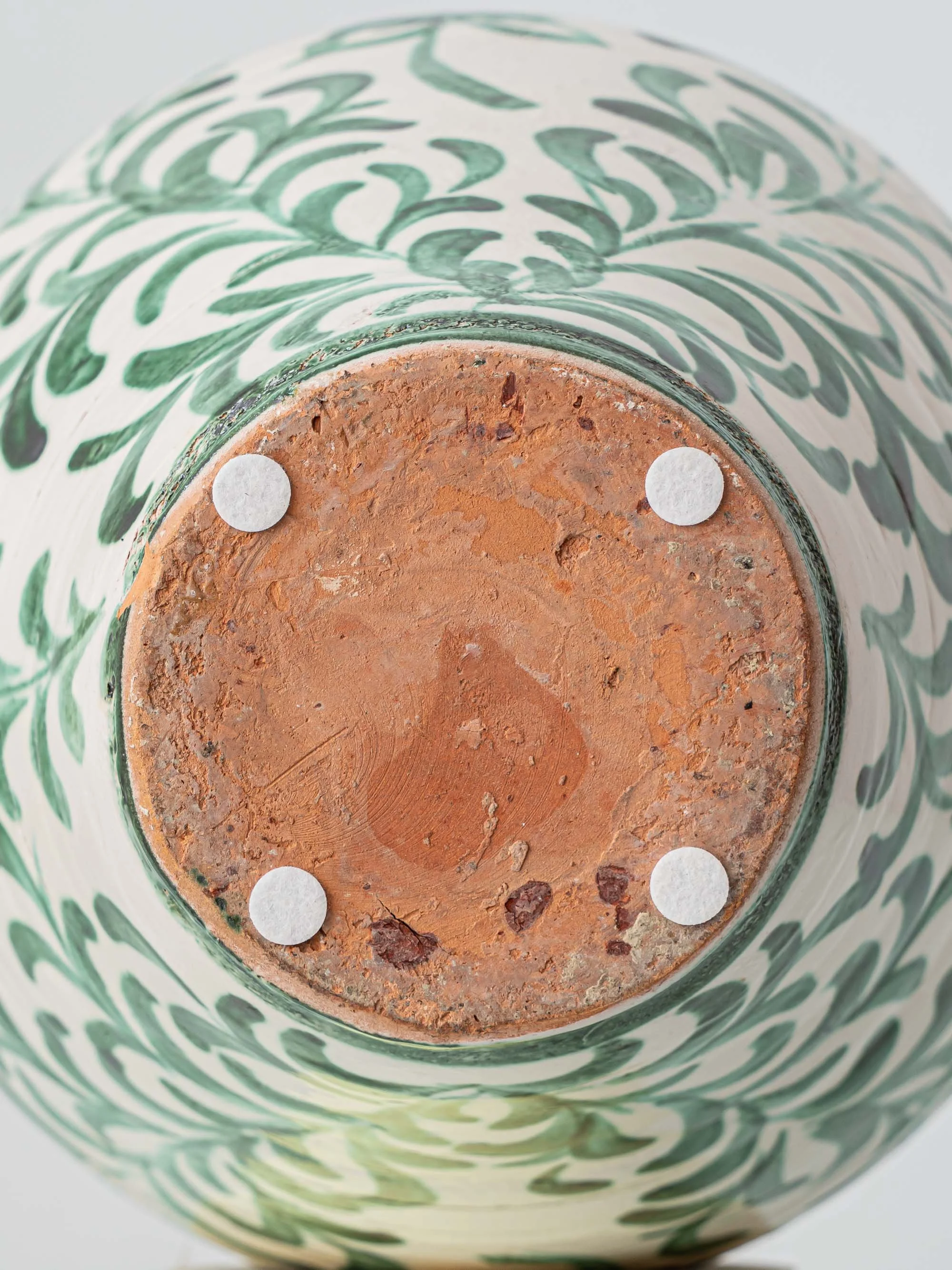 Image 24 of 25
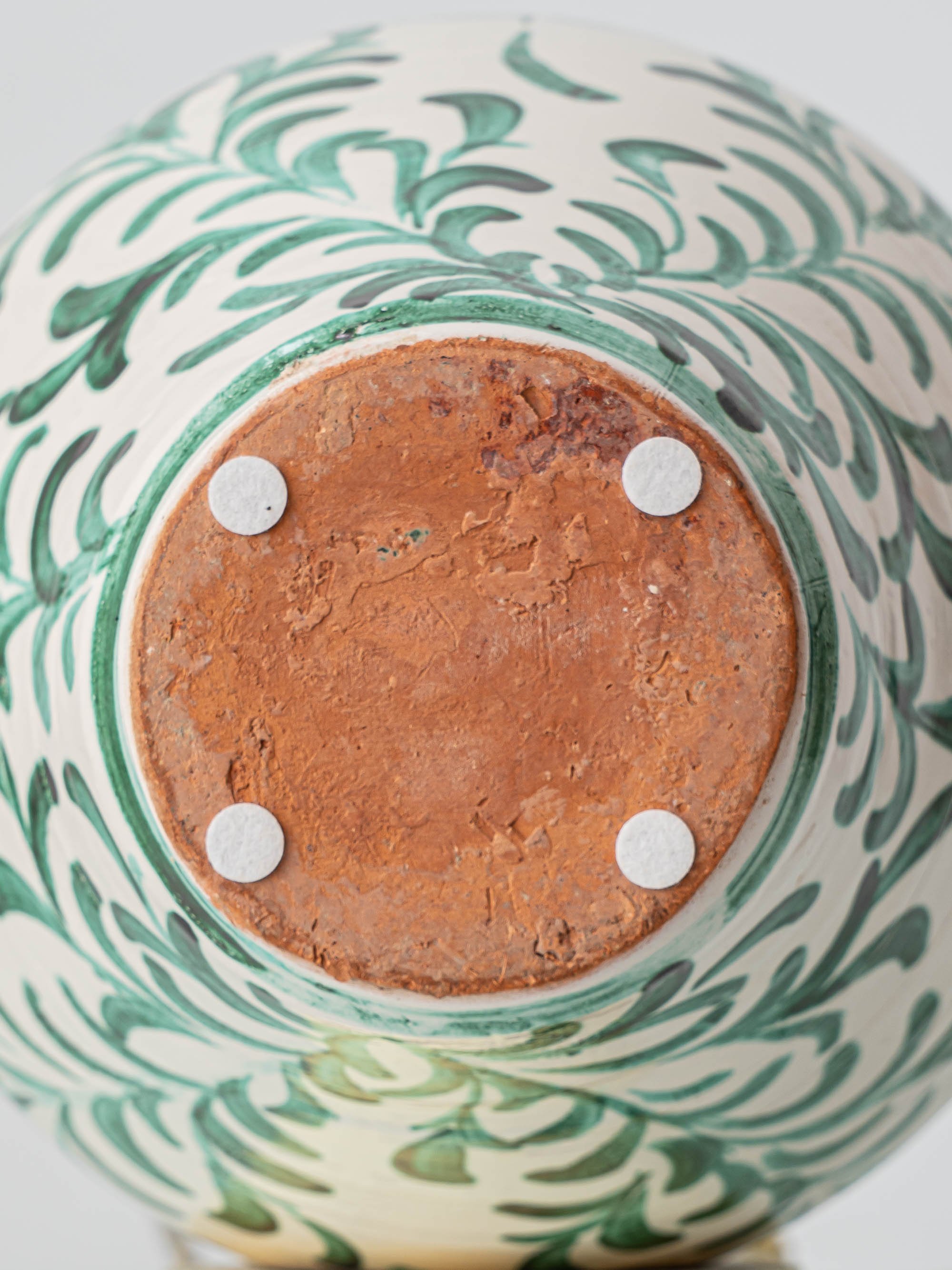 Image 25 of 25
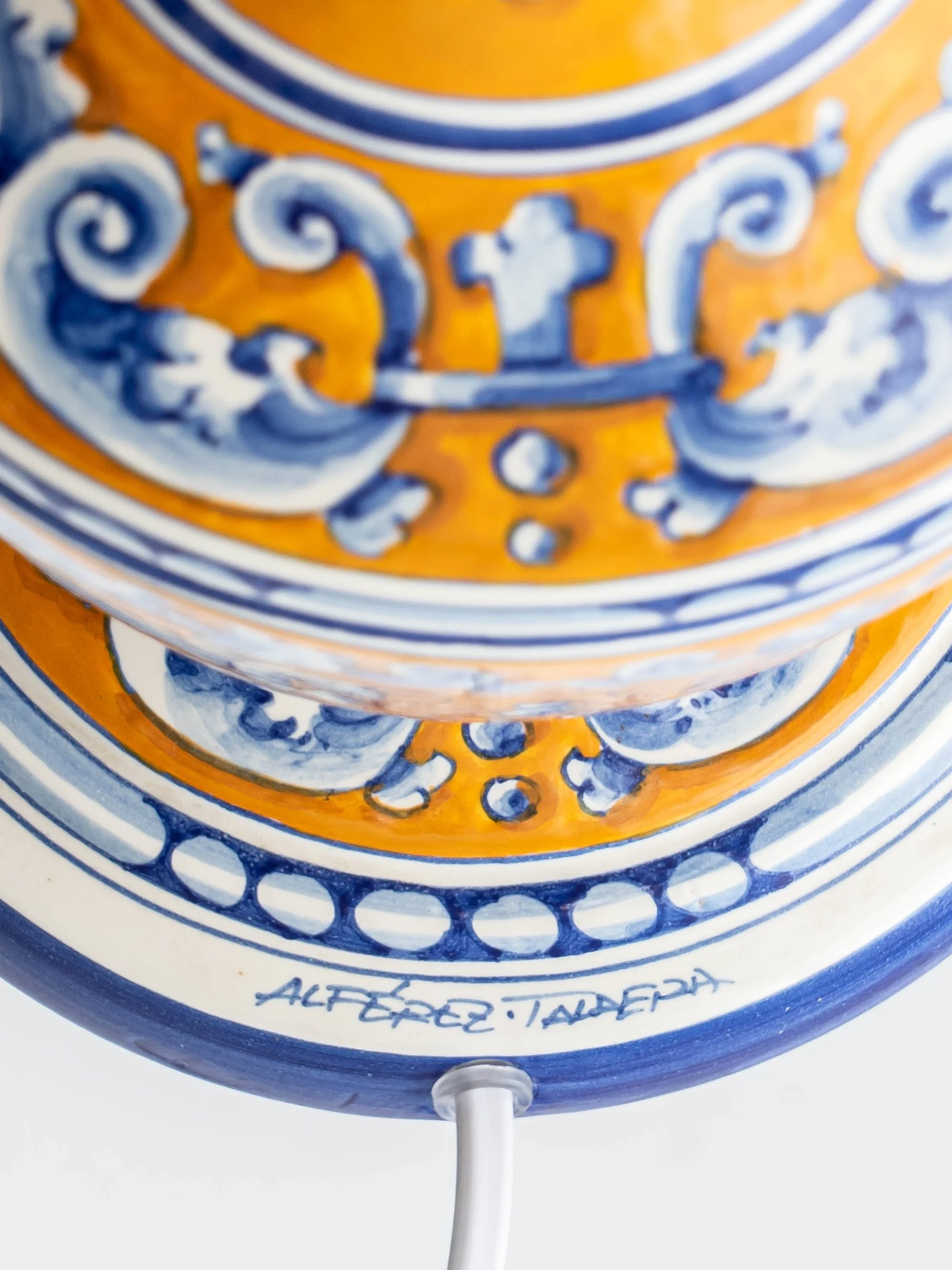
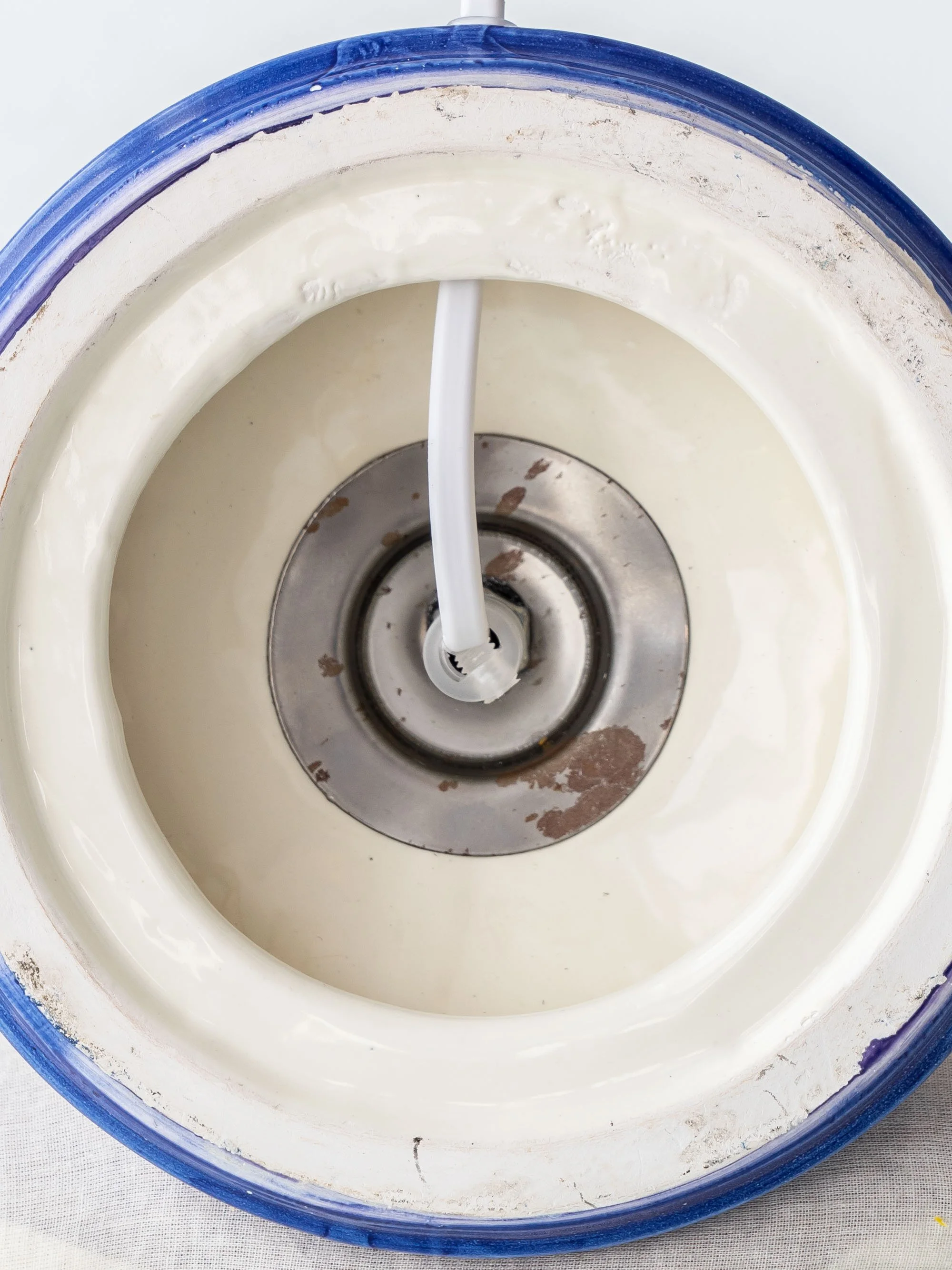
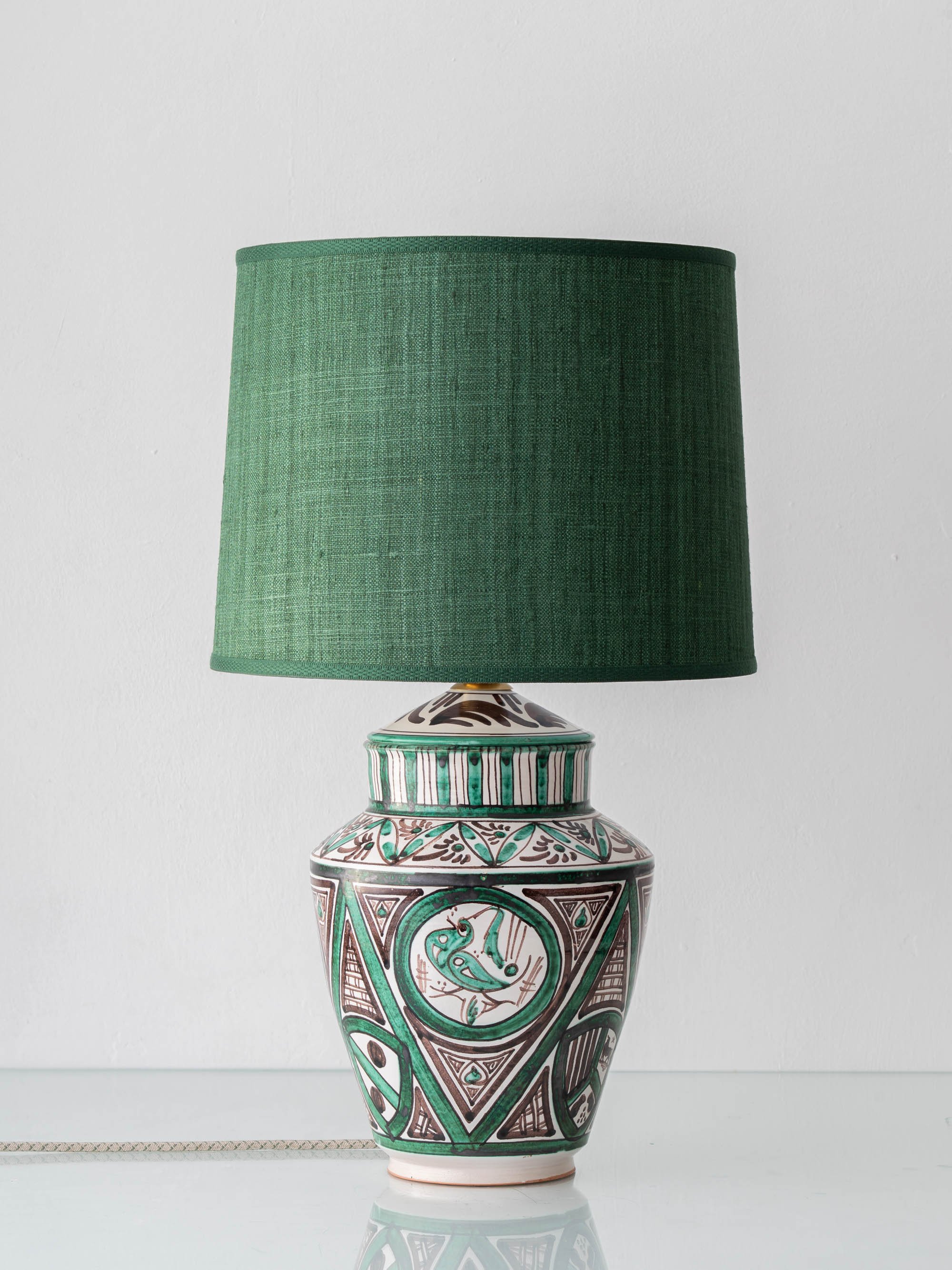
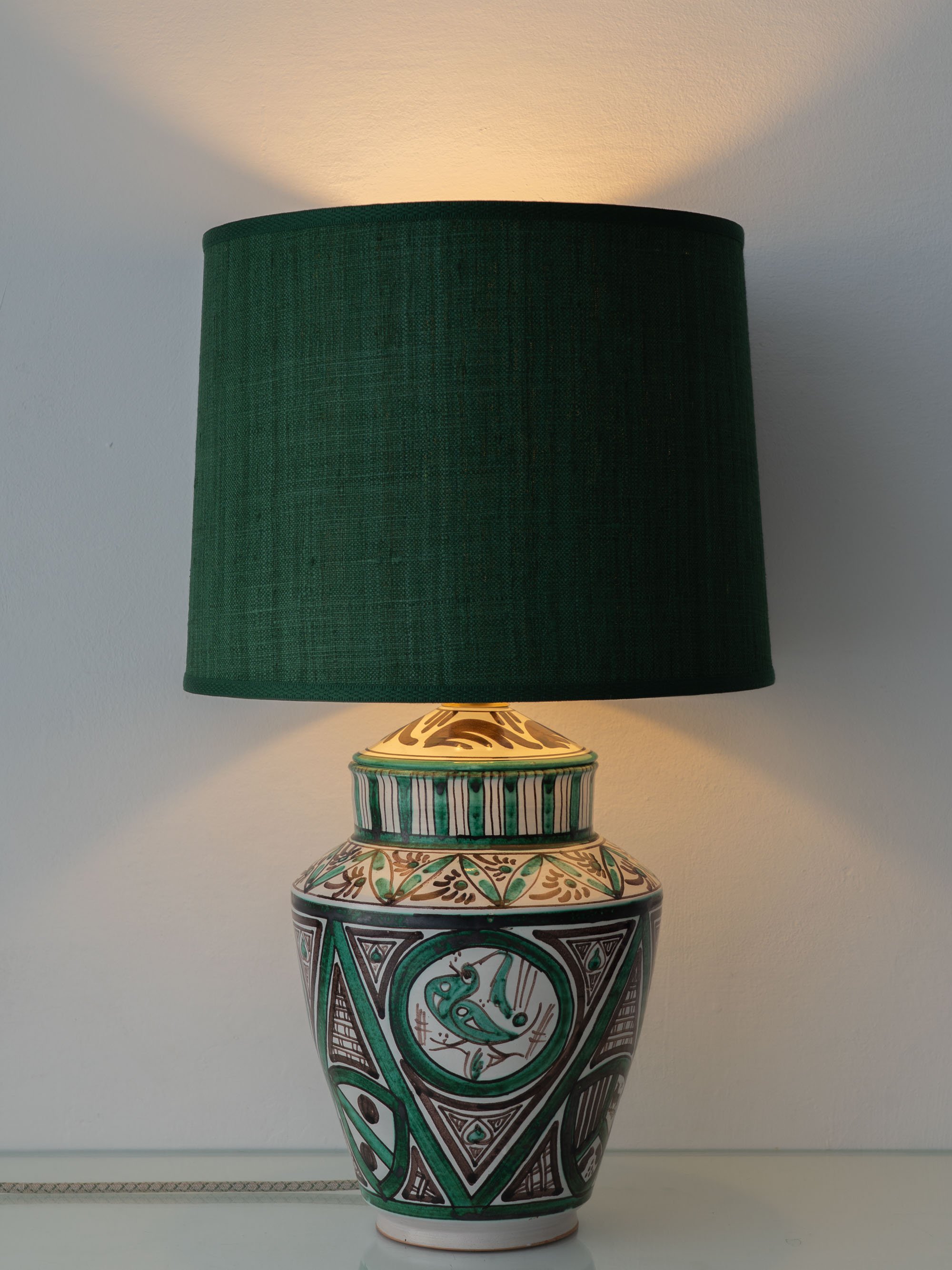
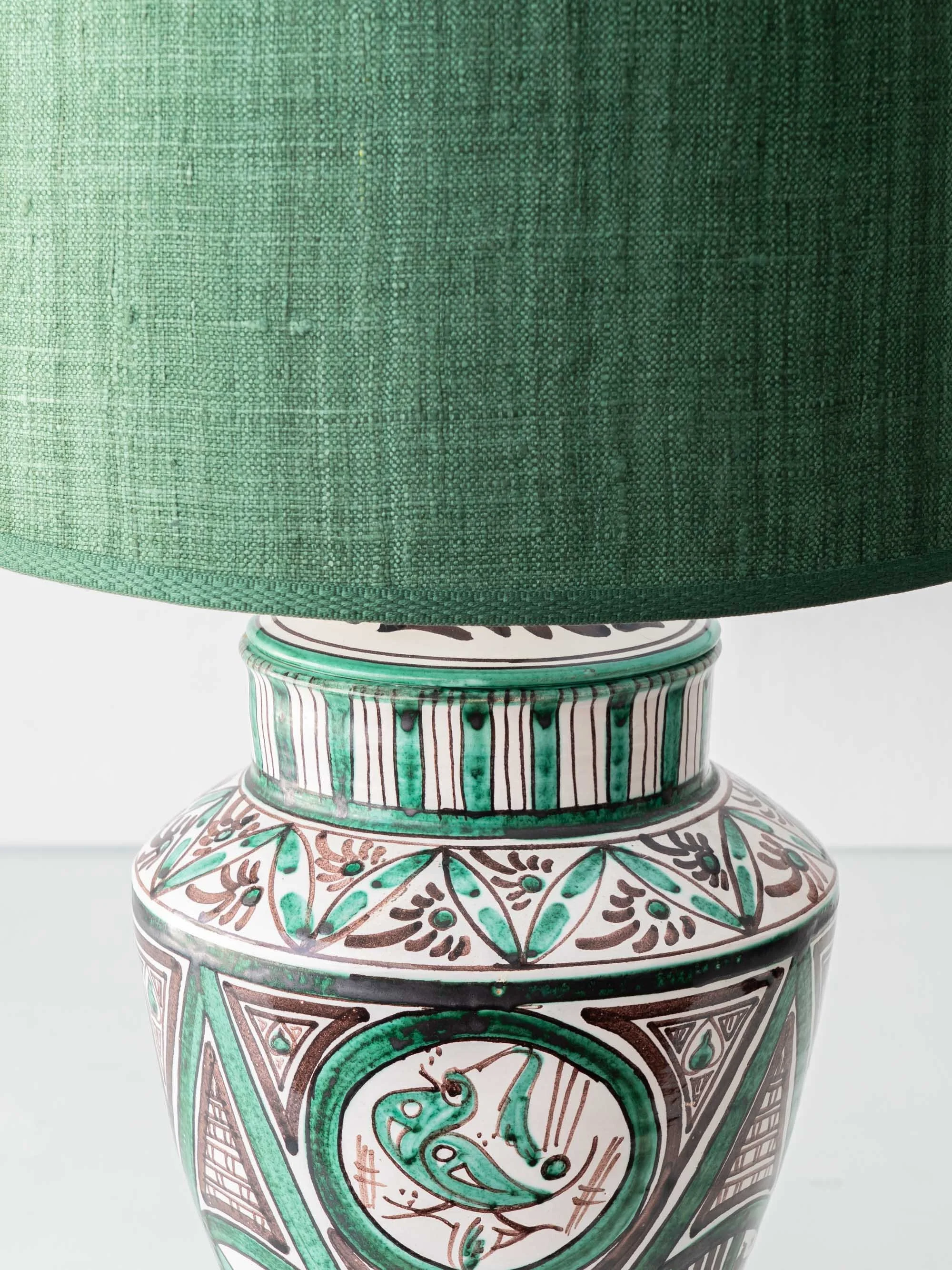
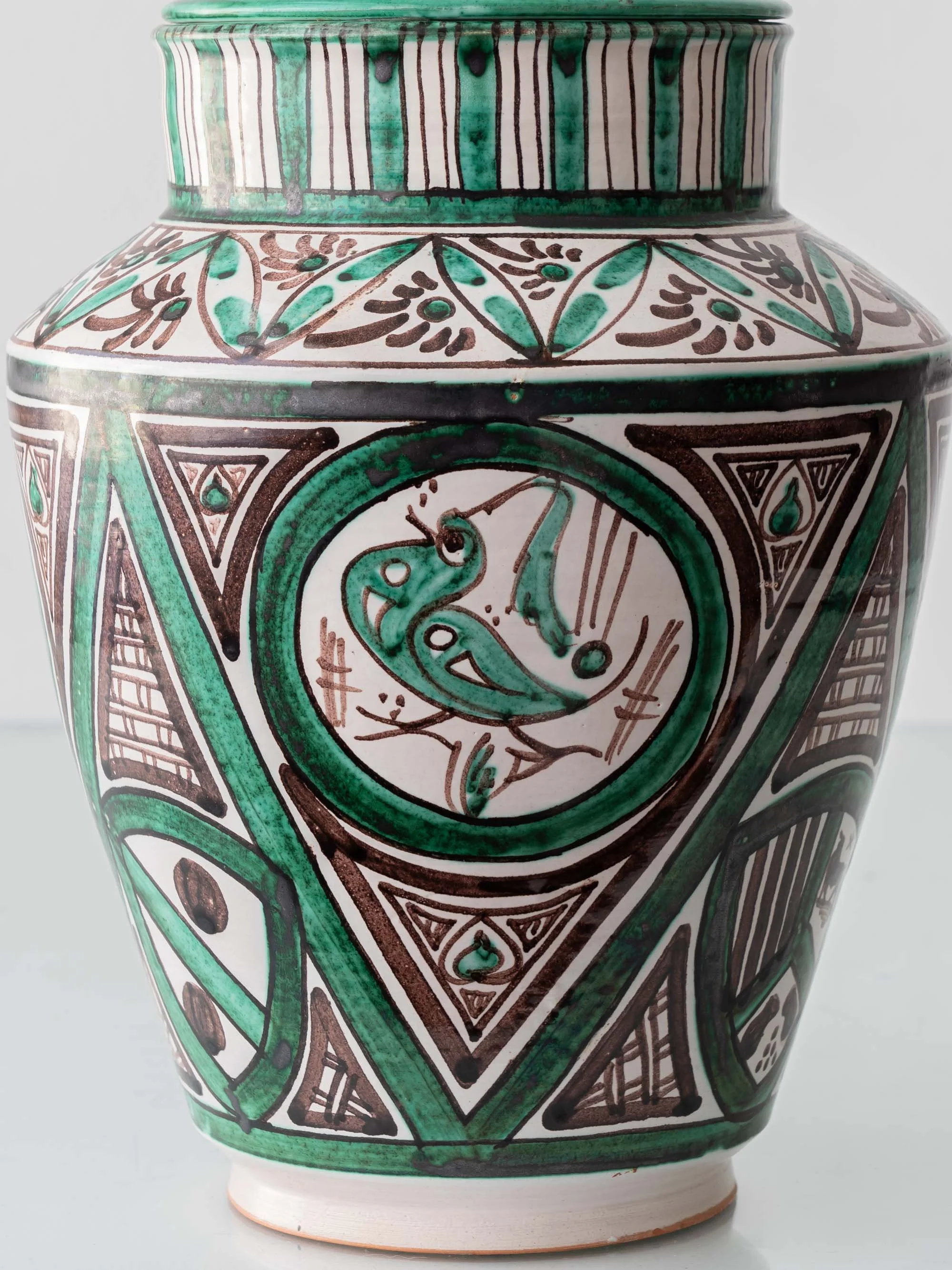
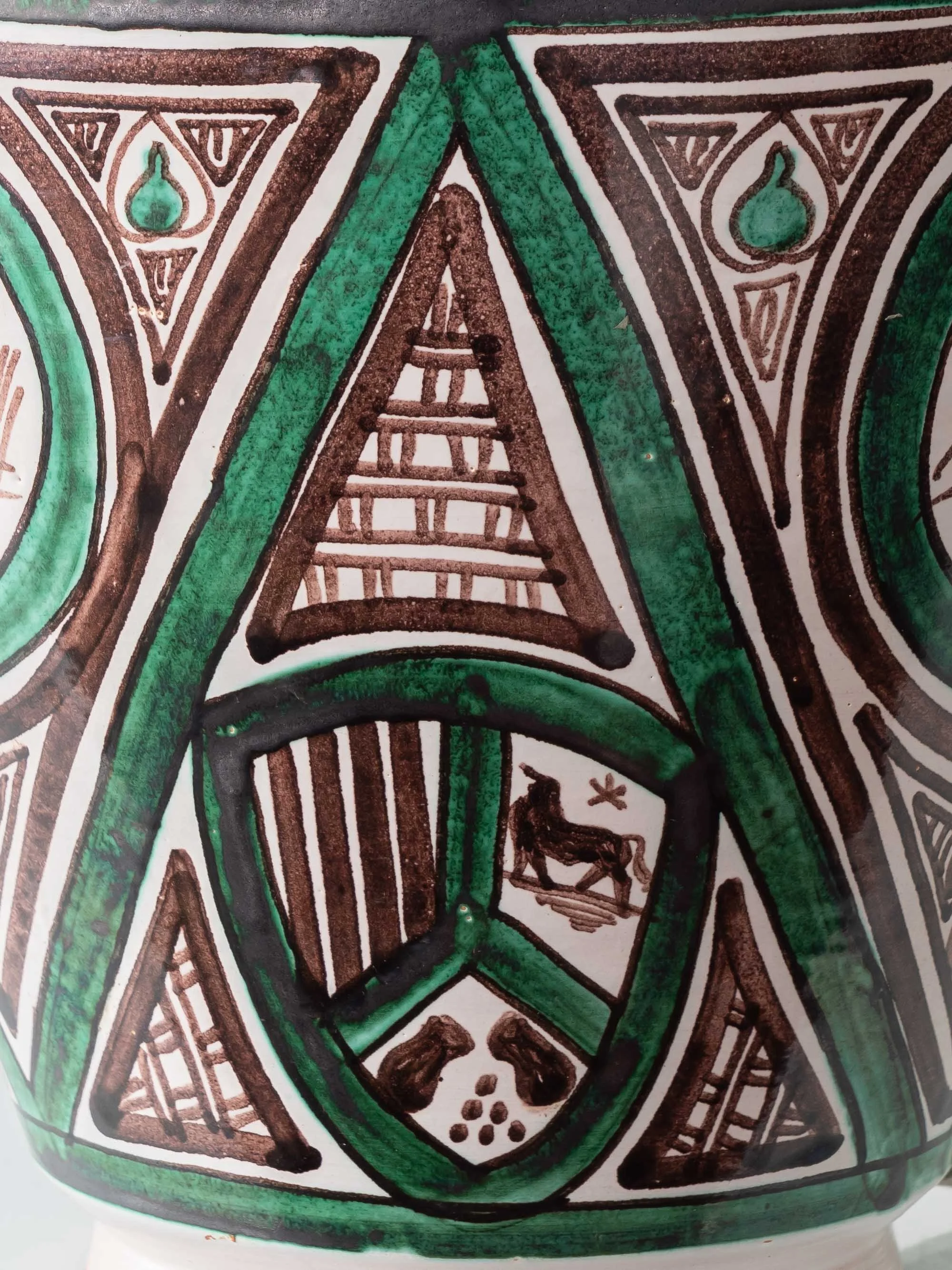
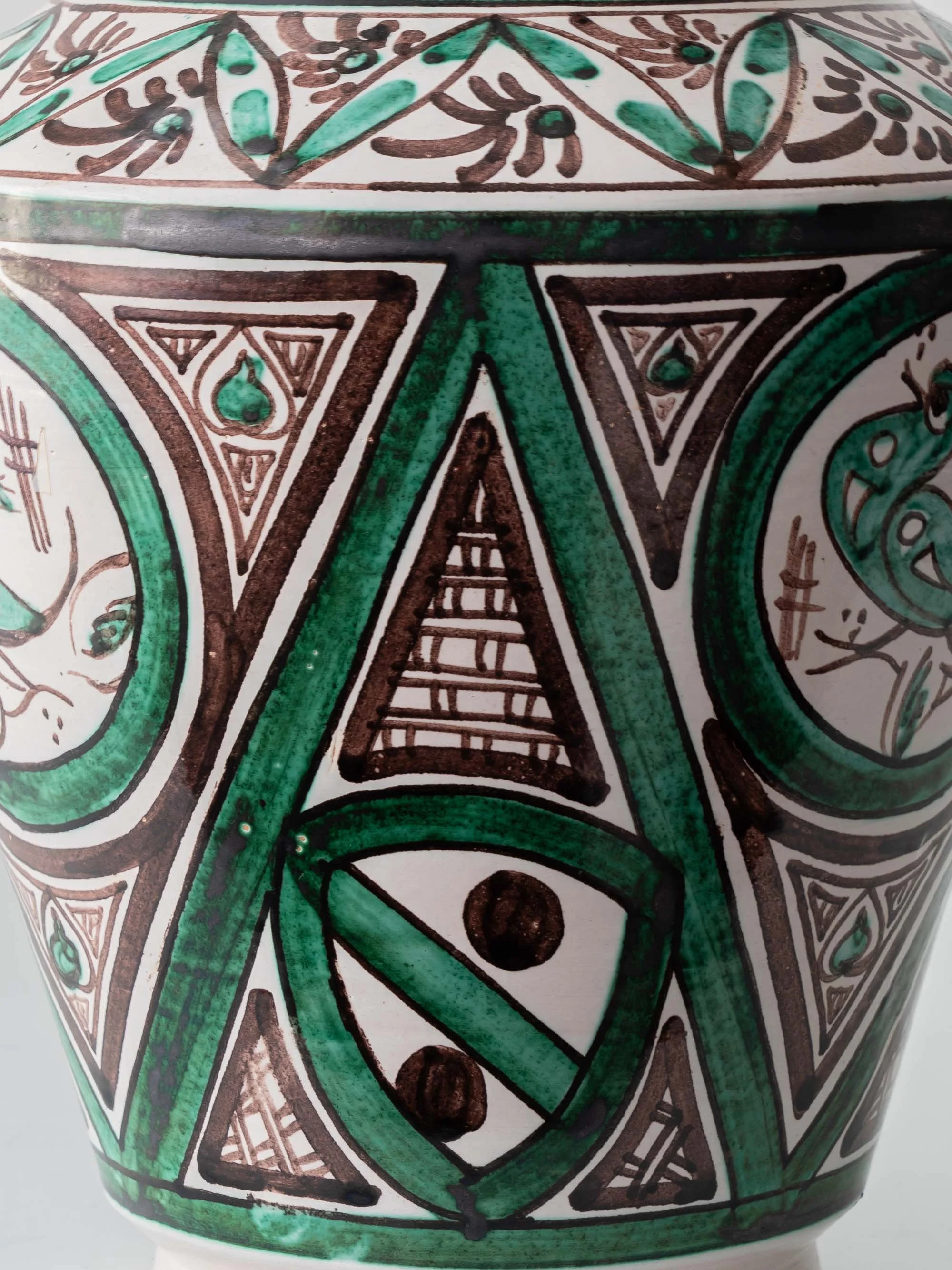
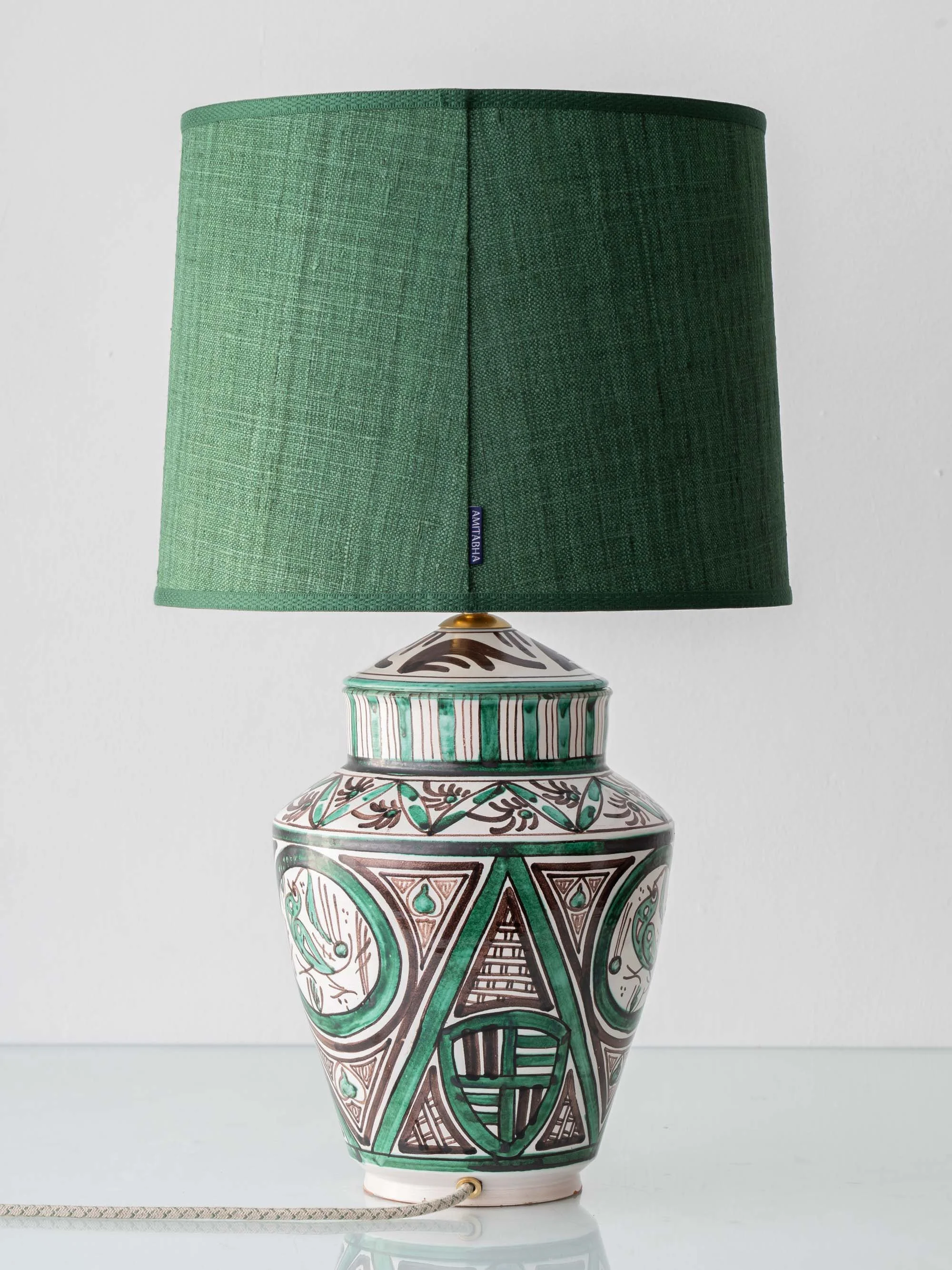
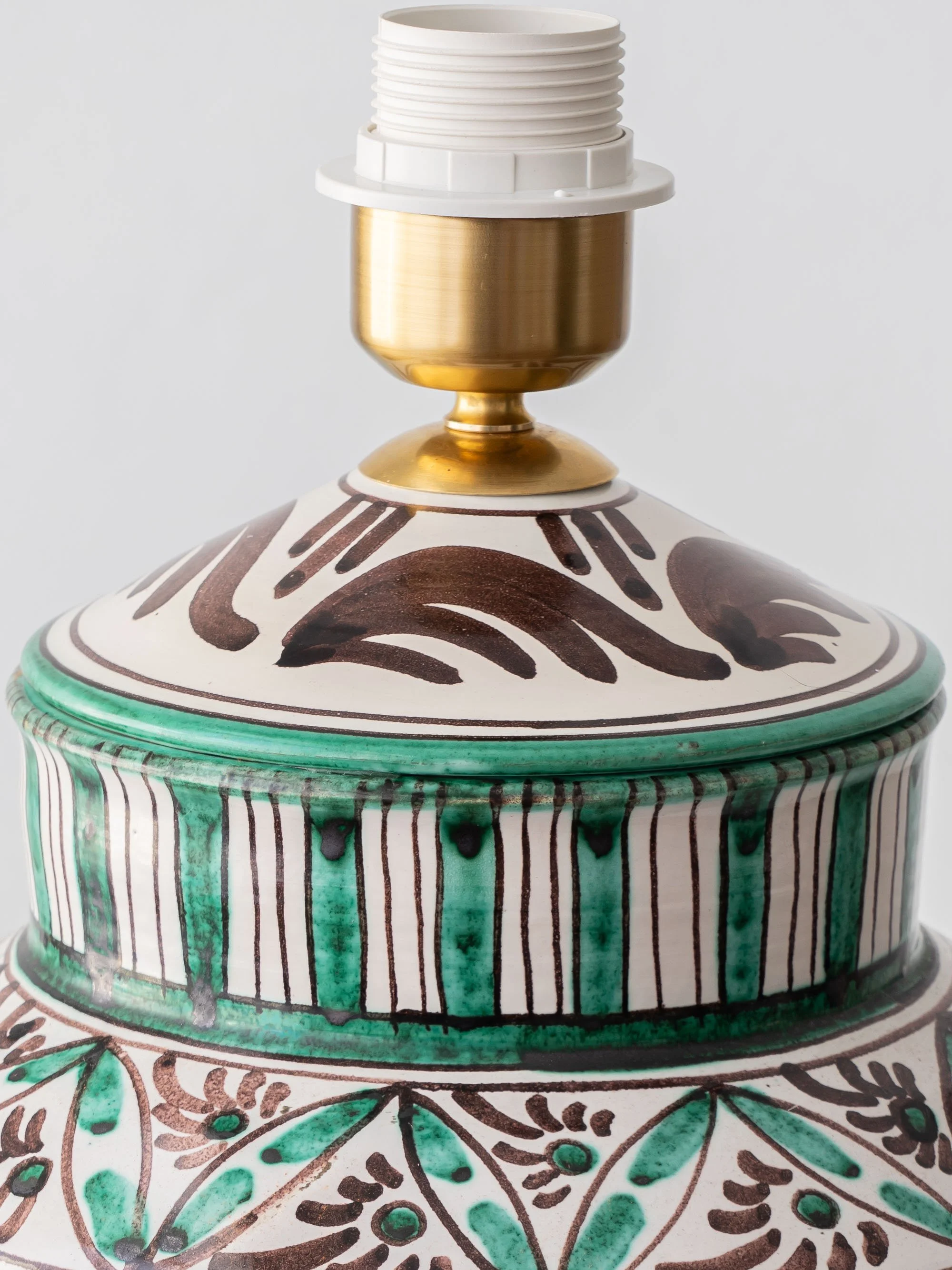
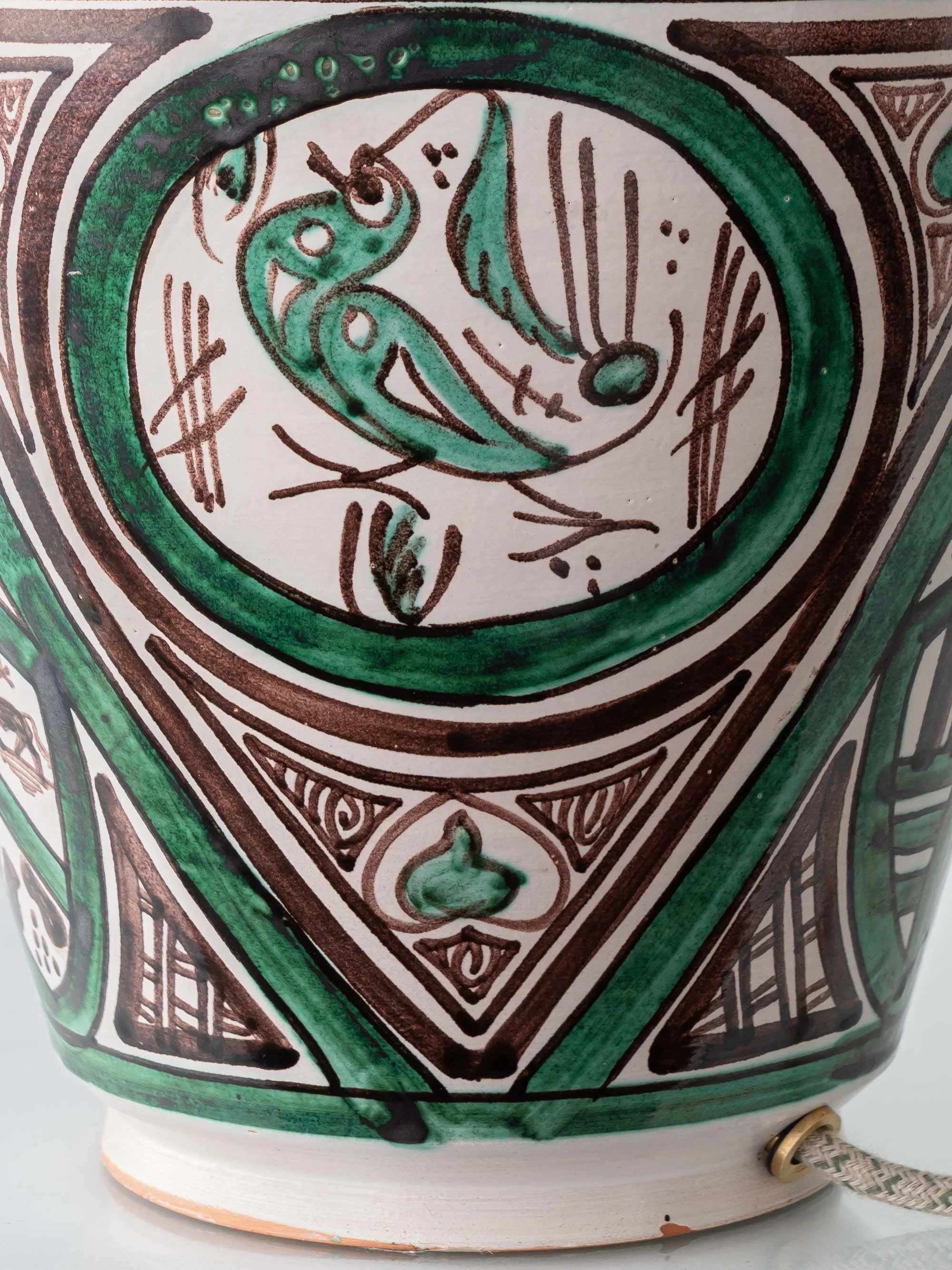
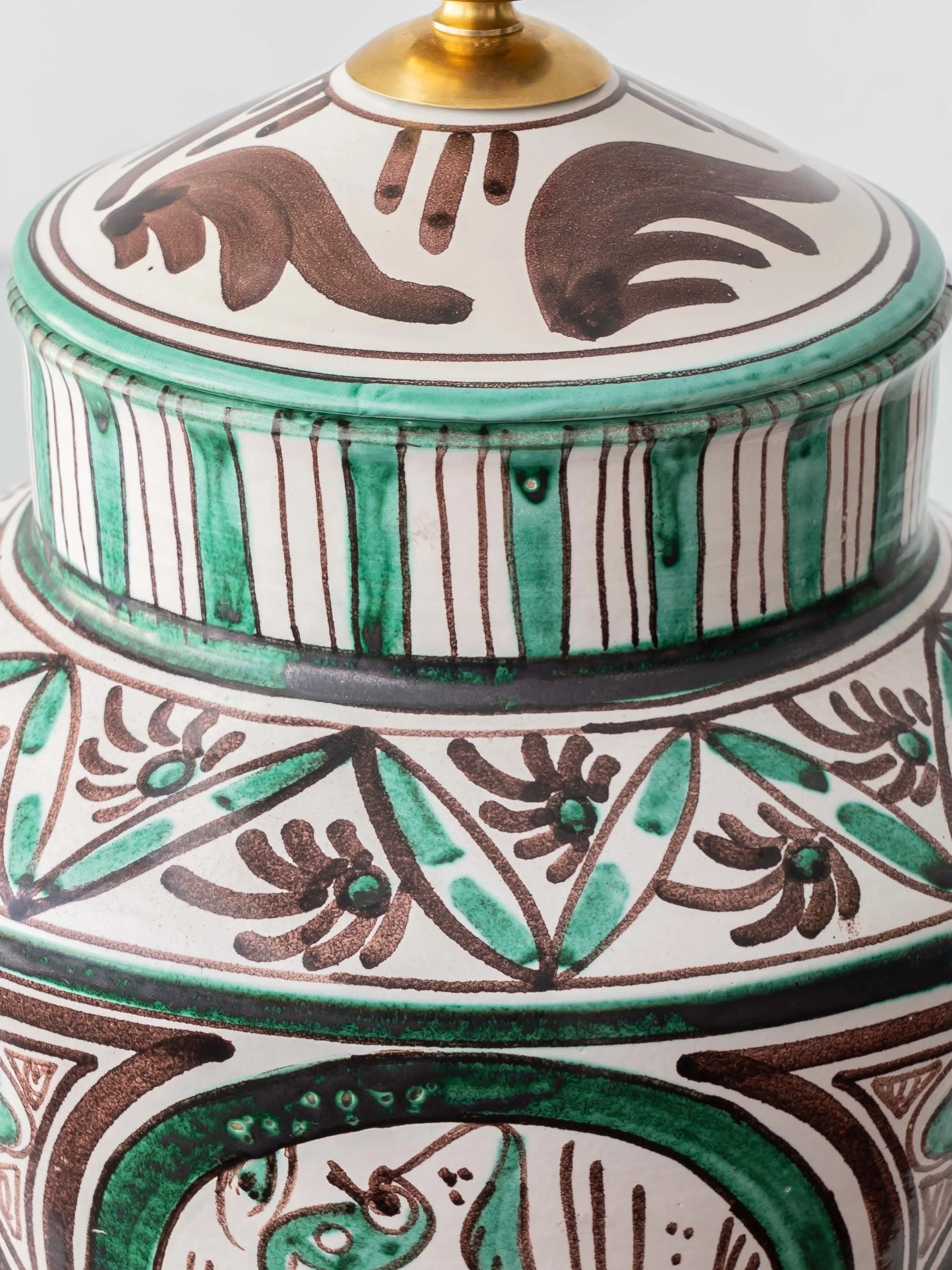
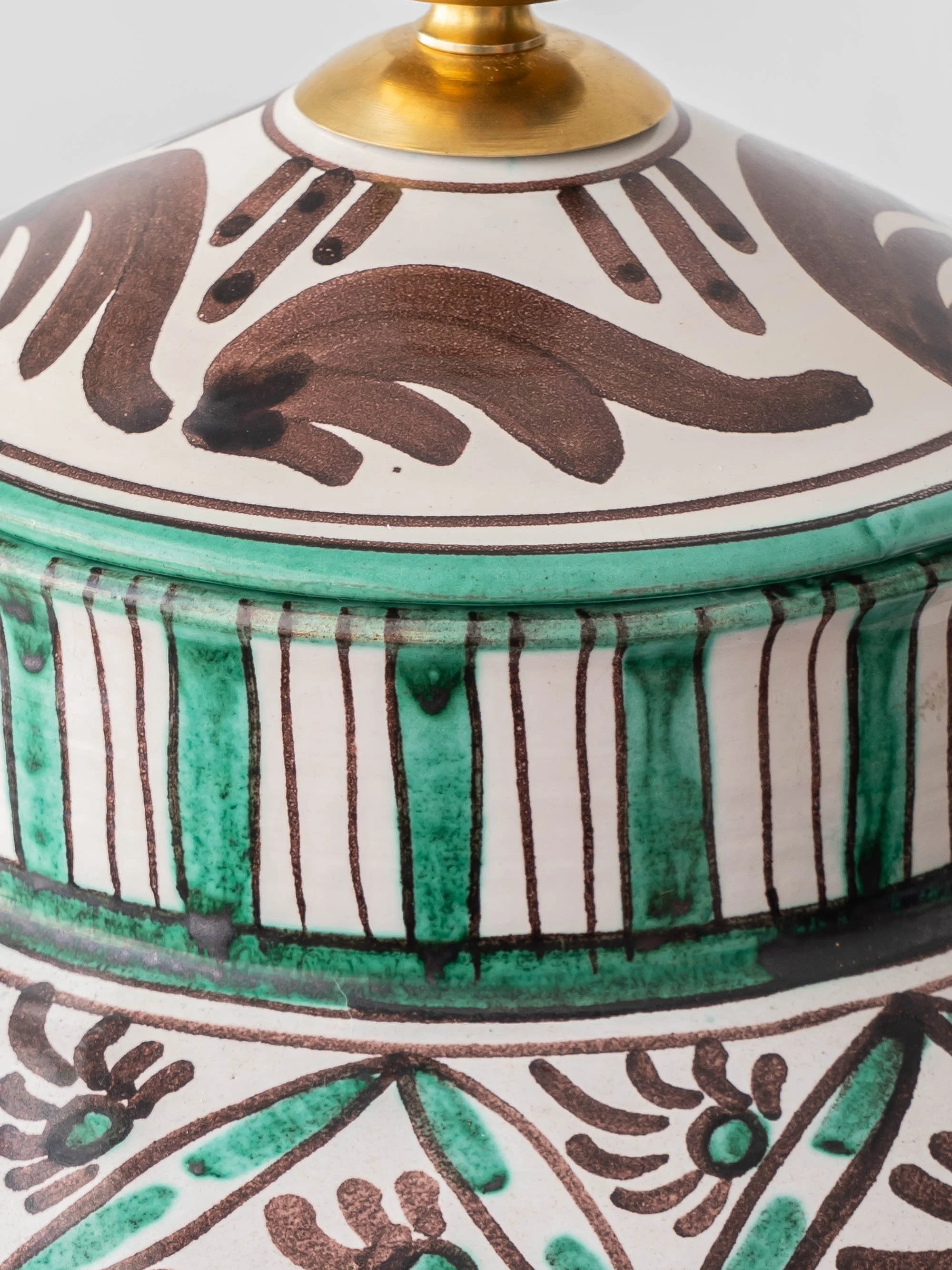
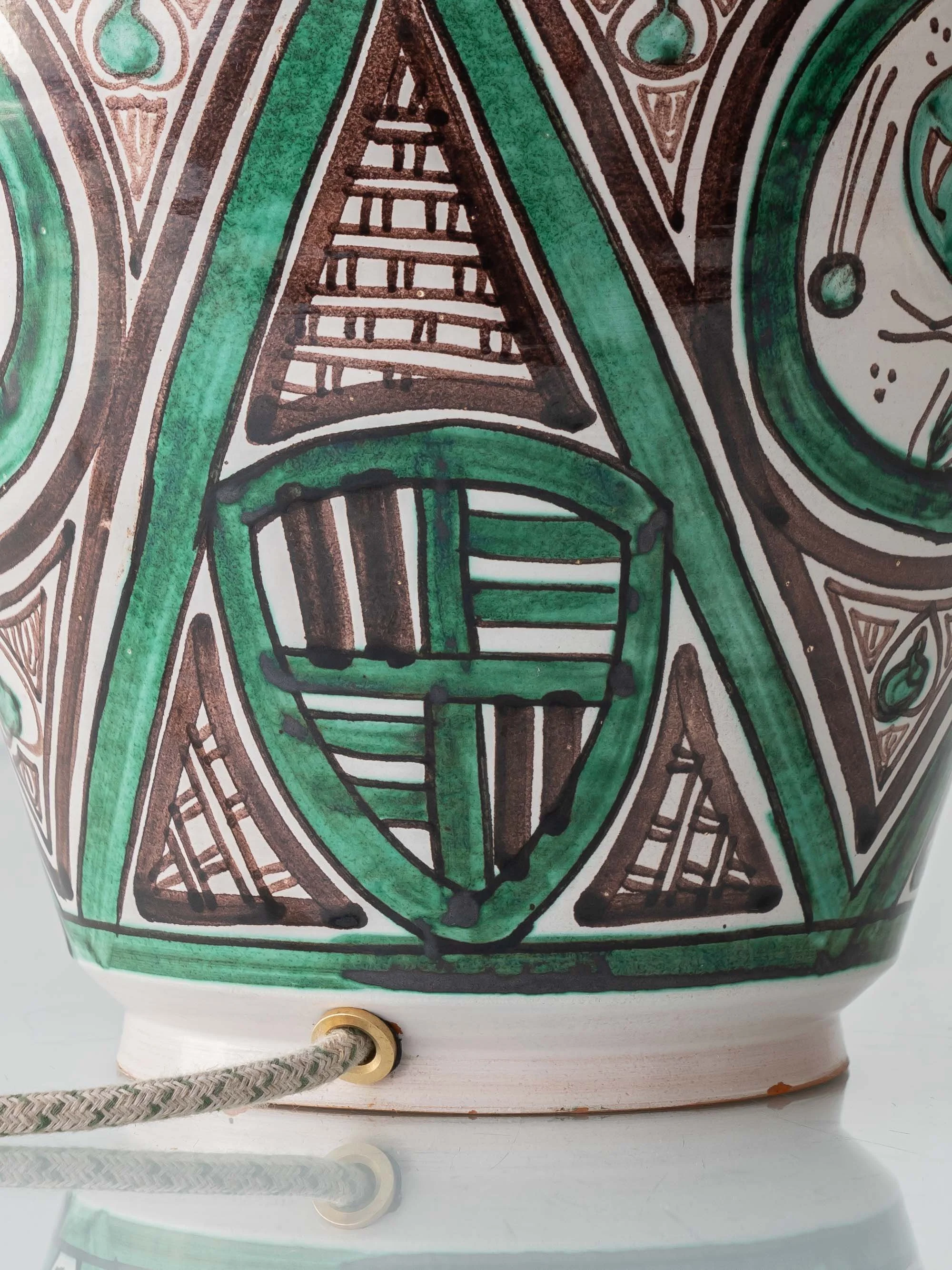
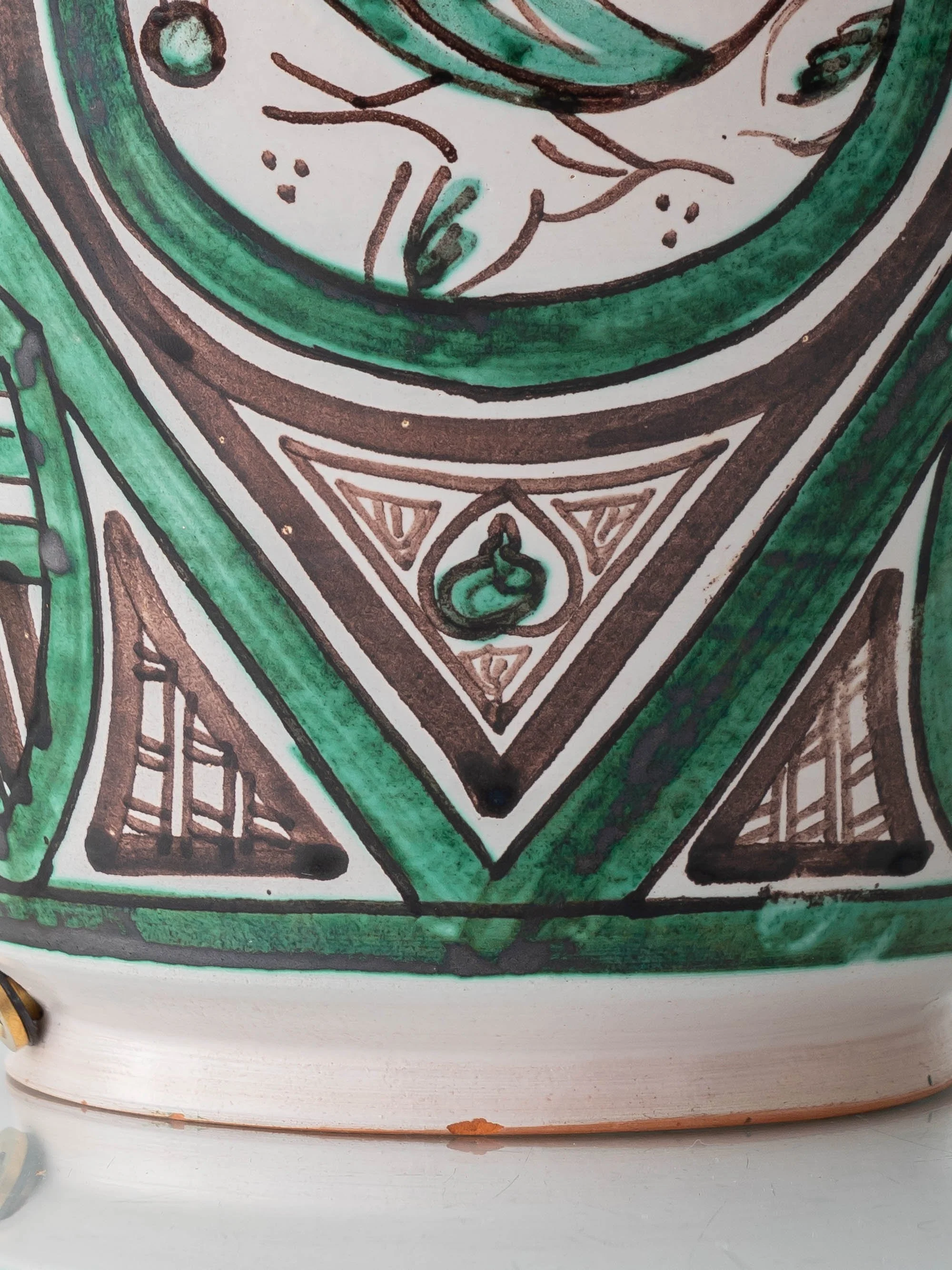
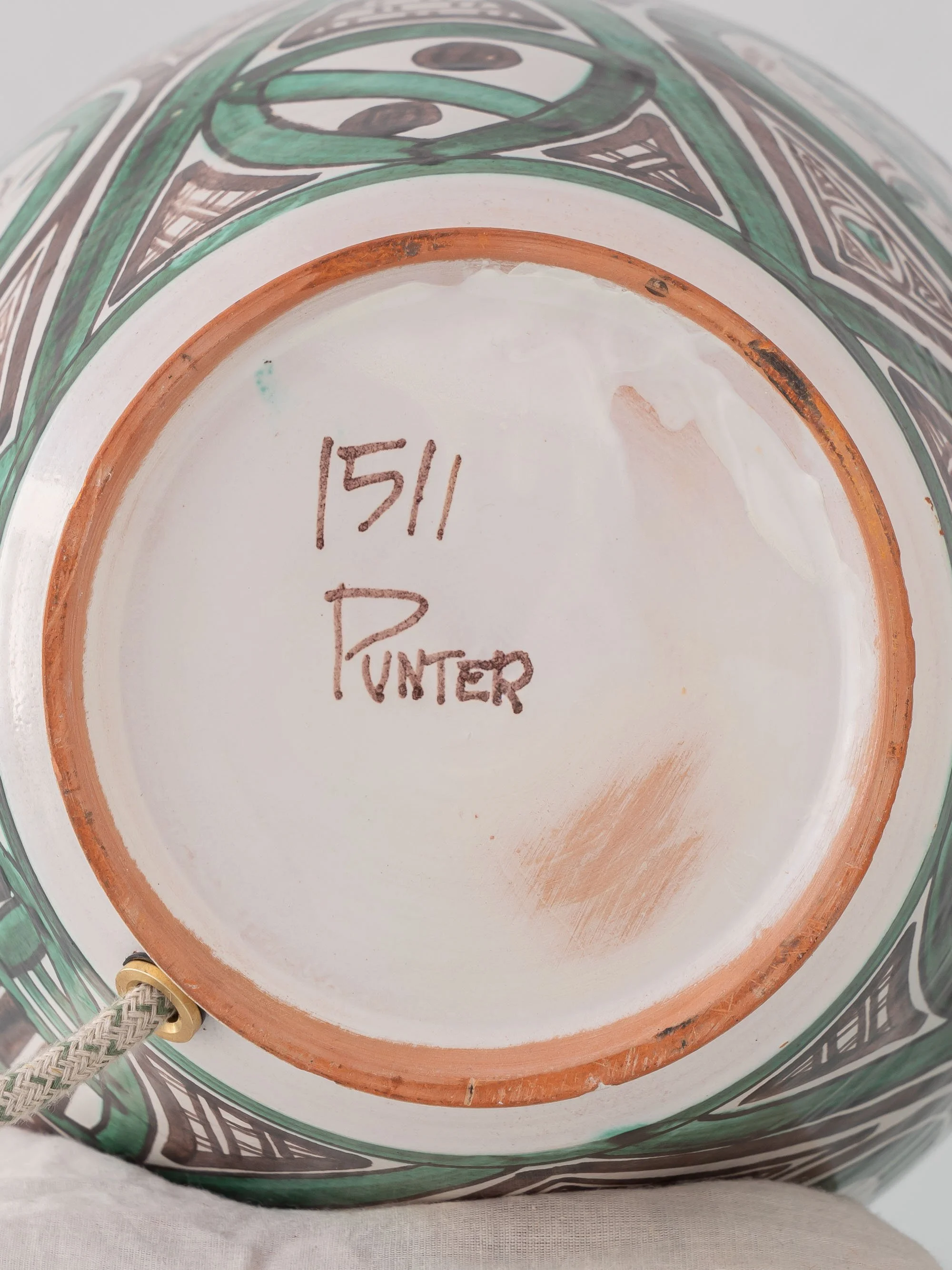
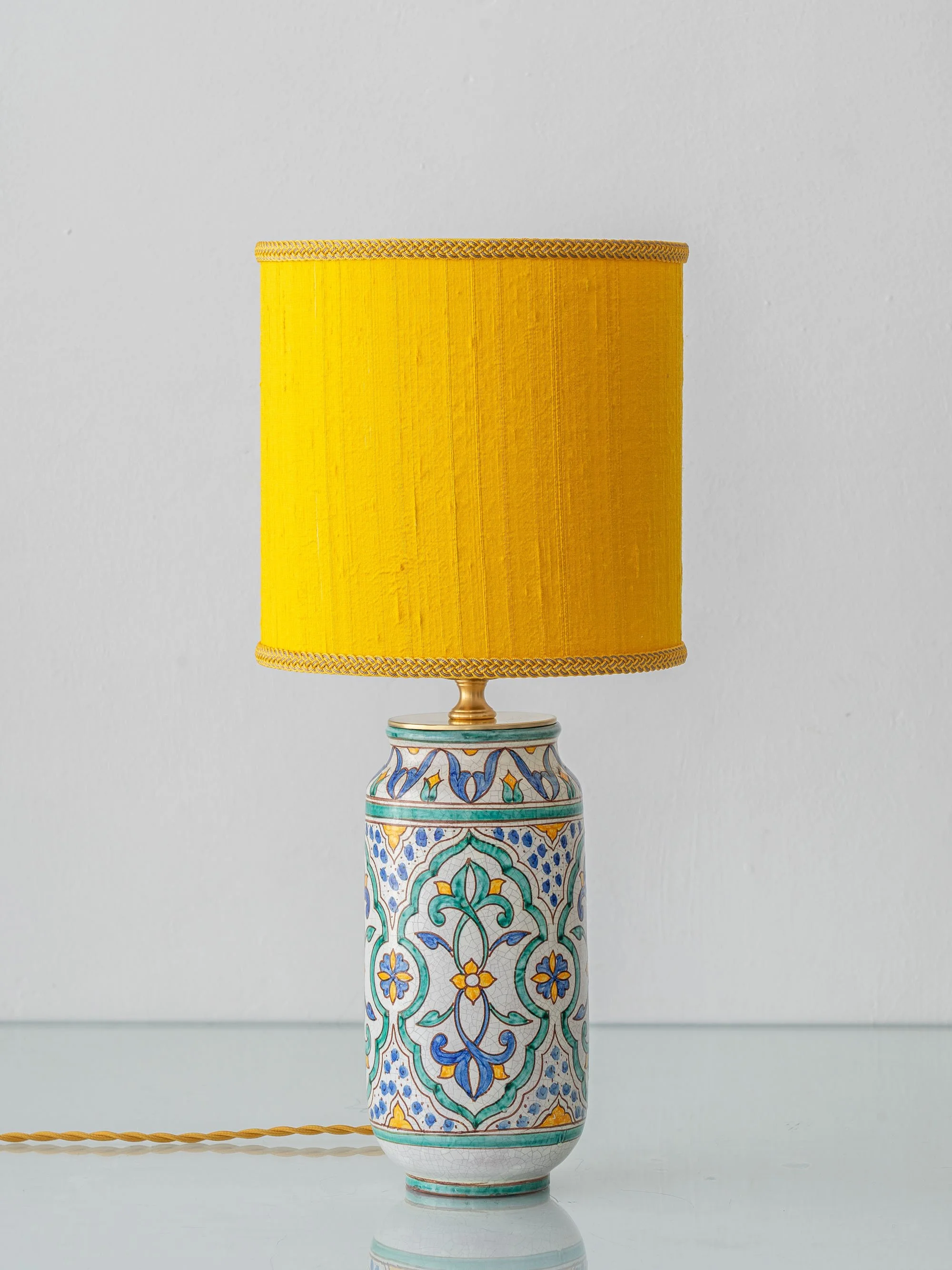
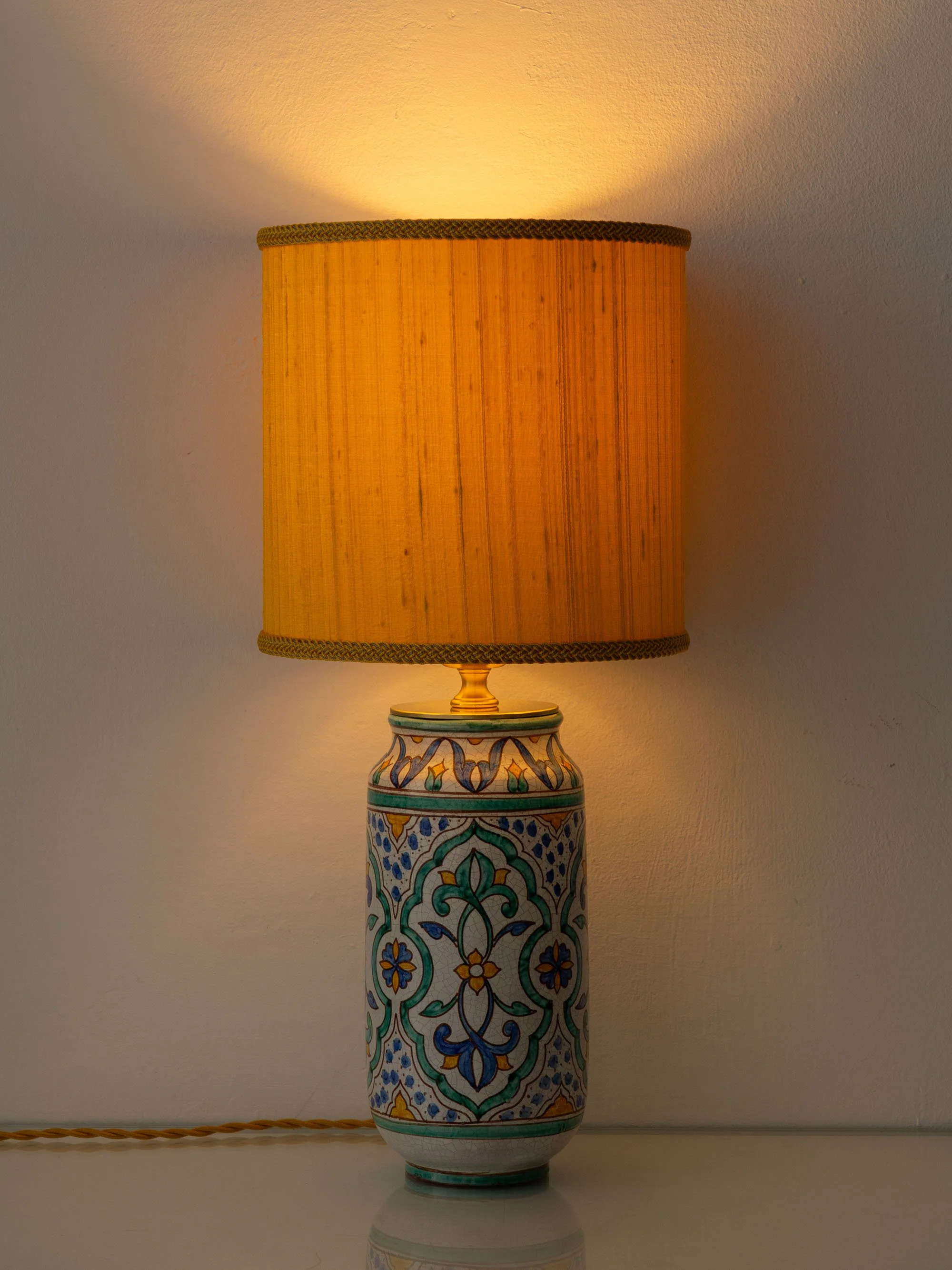
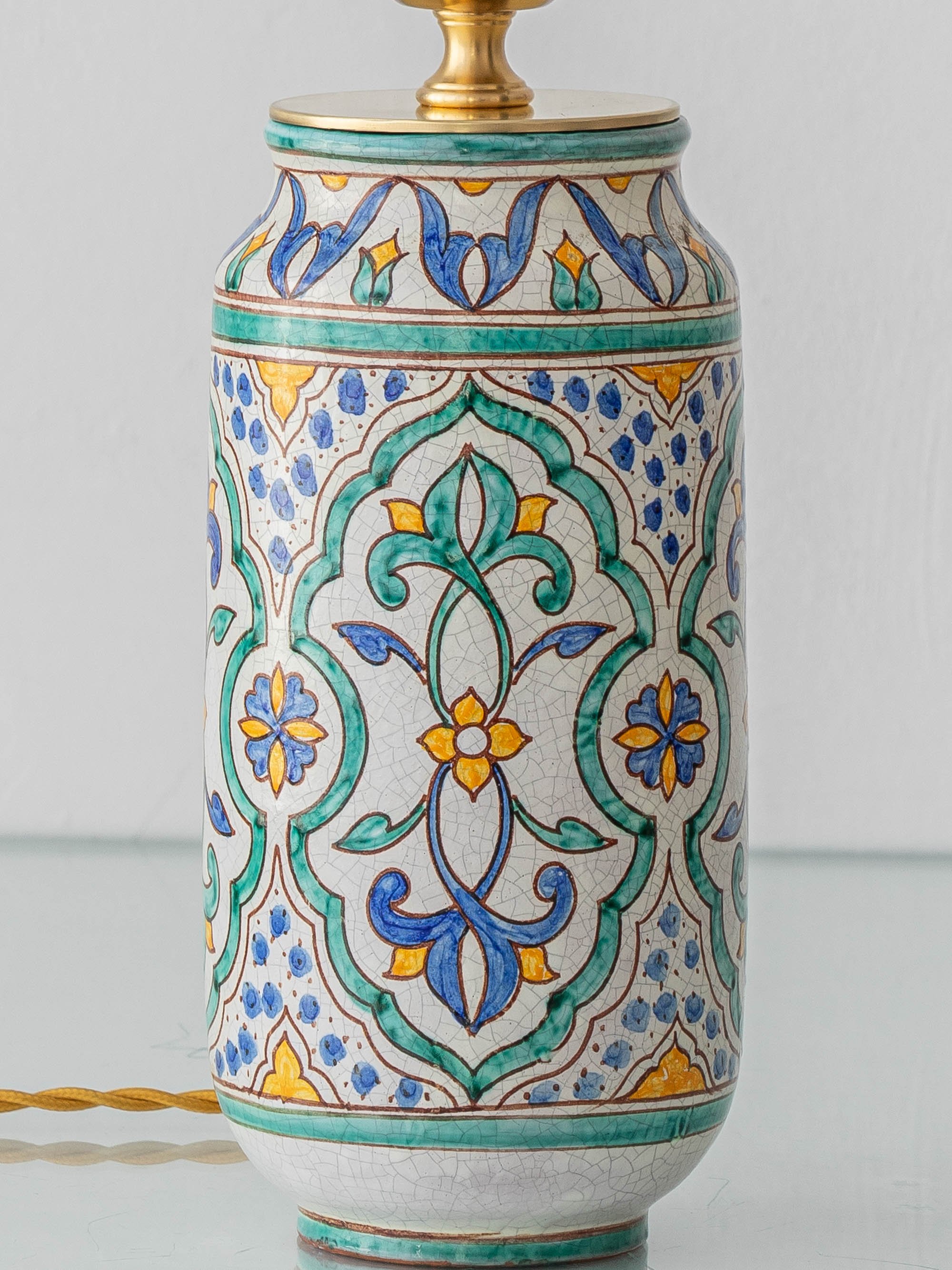
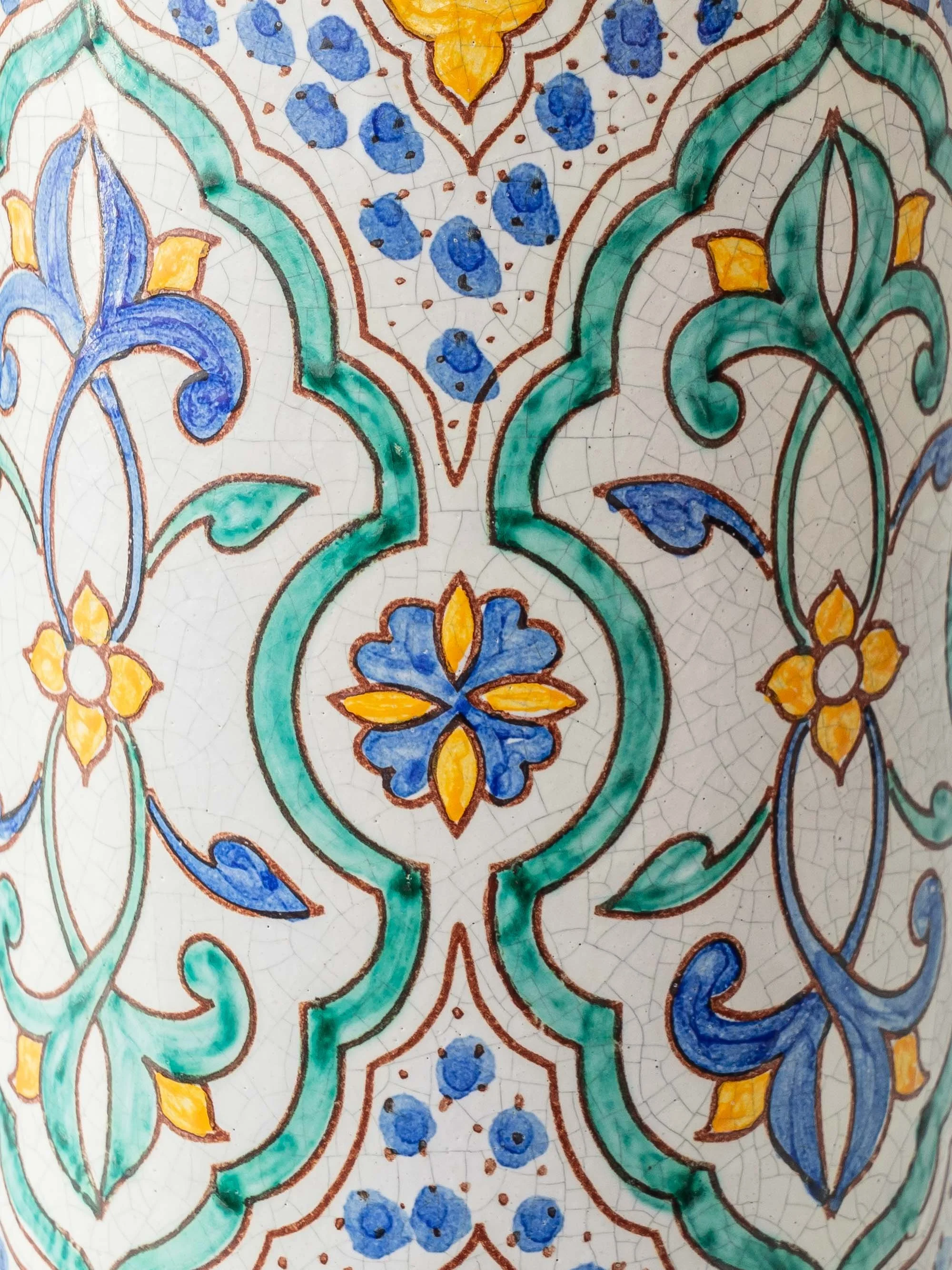
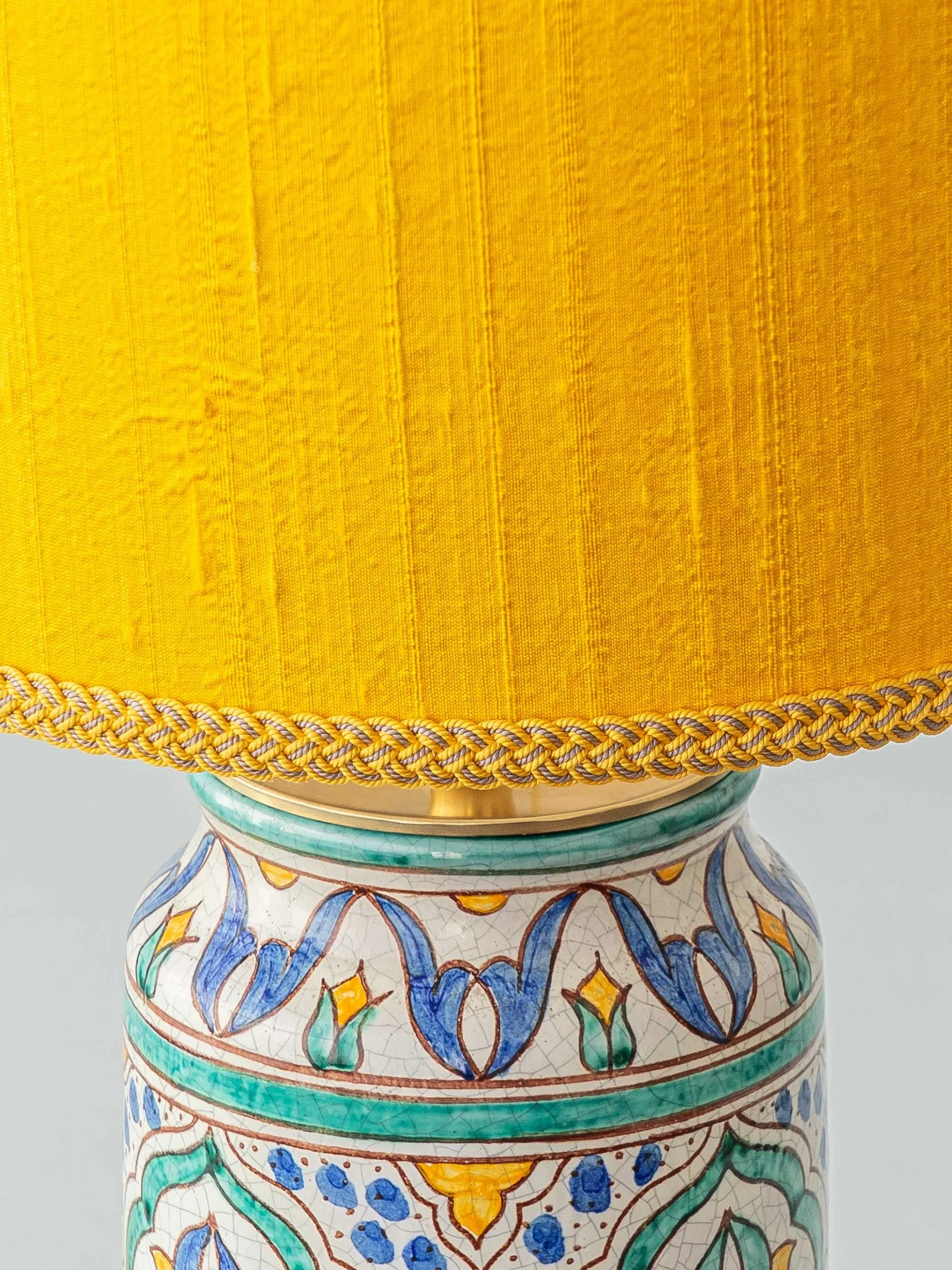
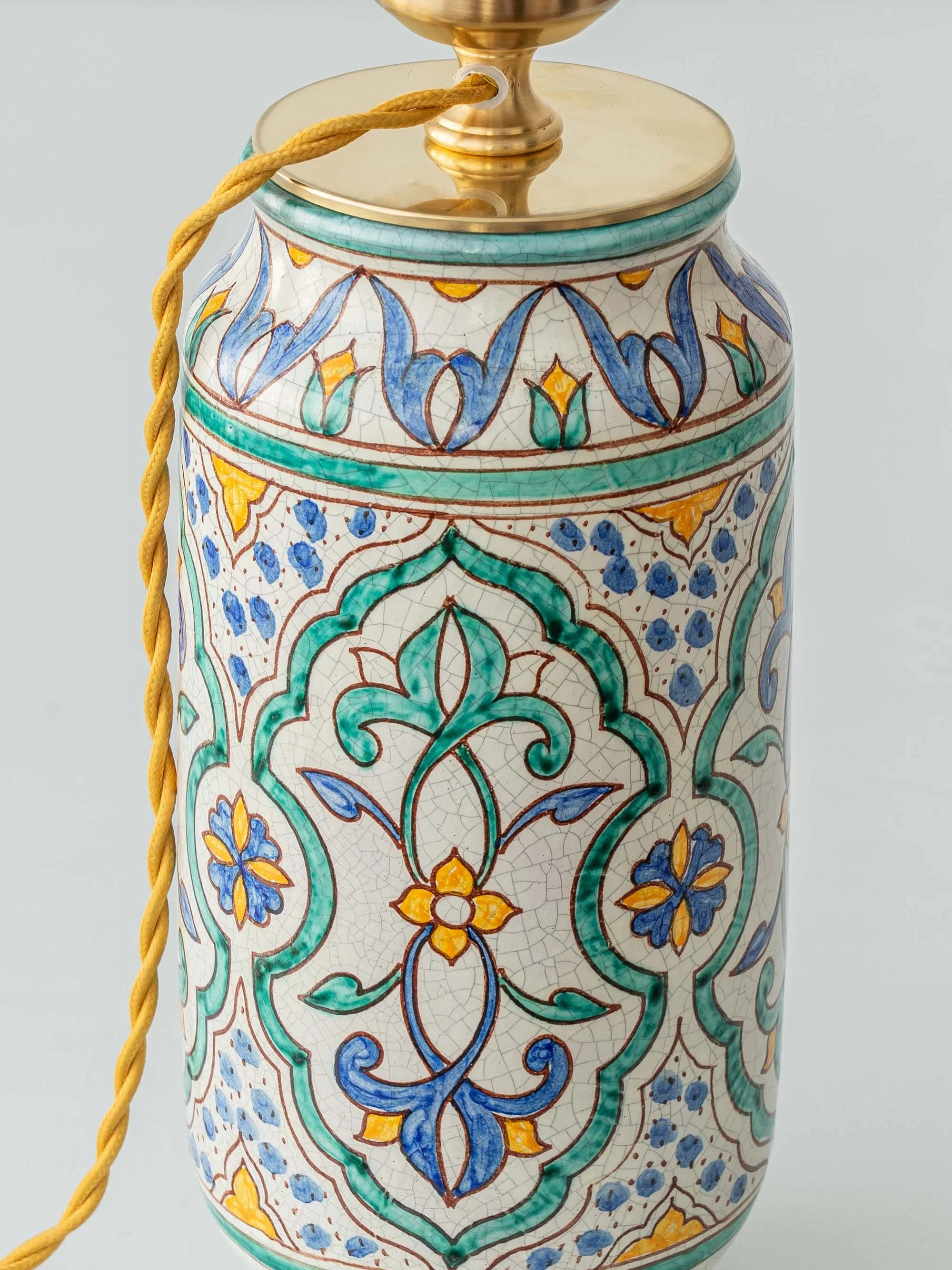
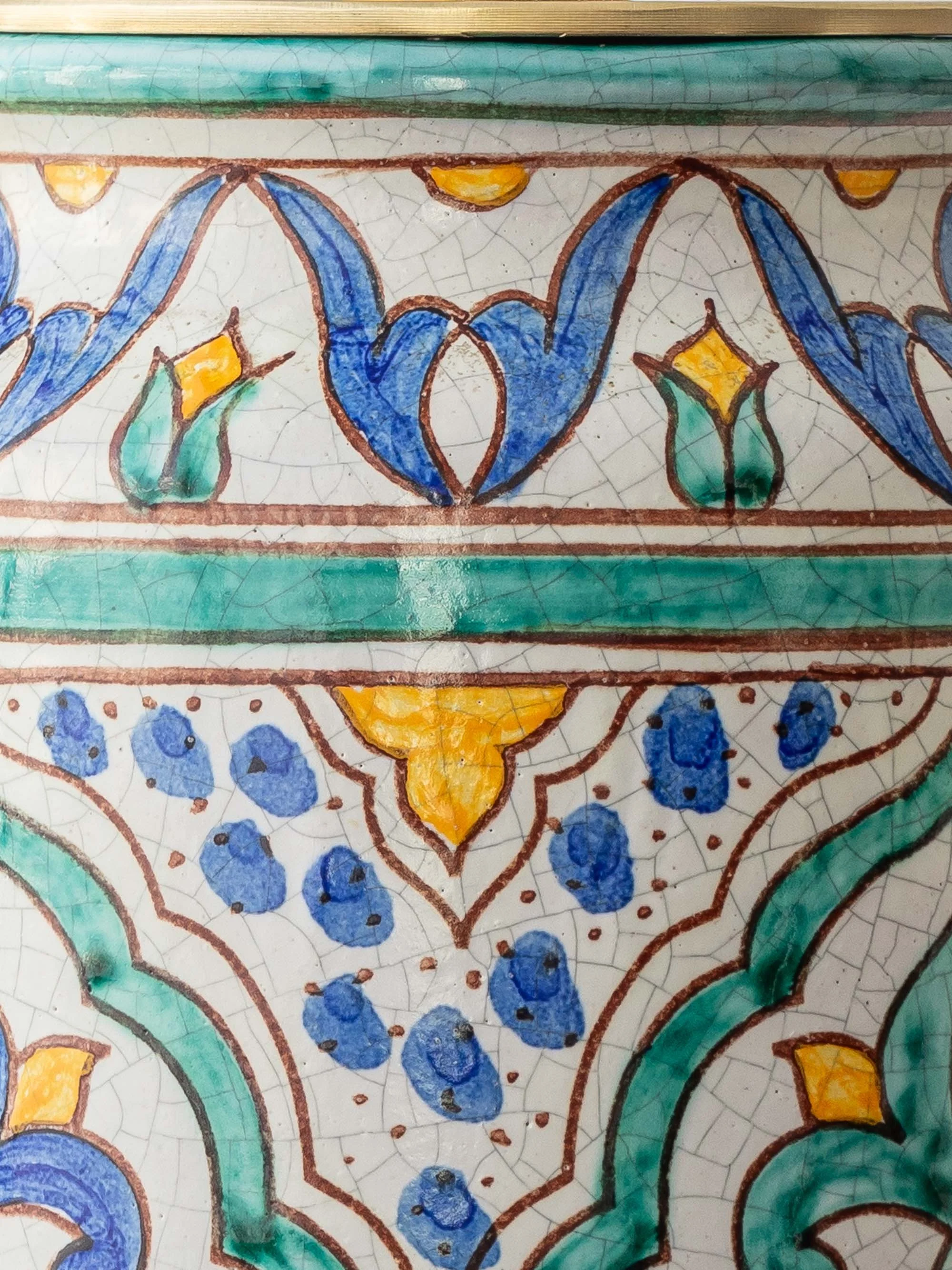
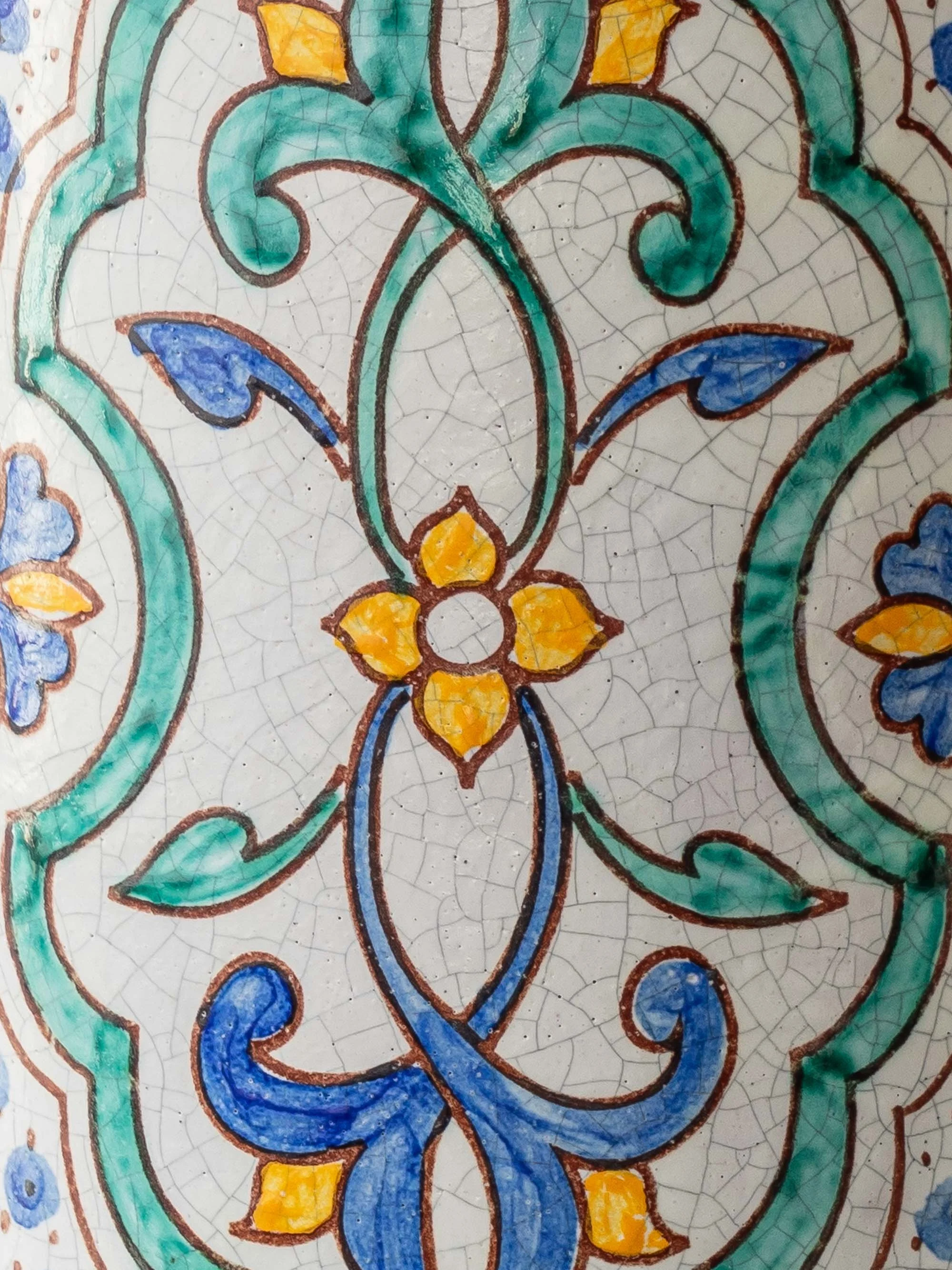
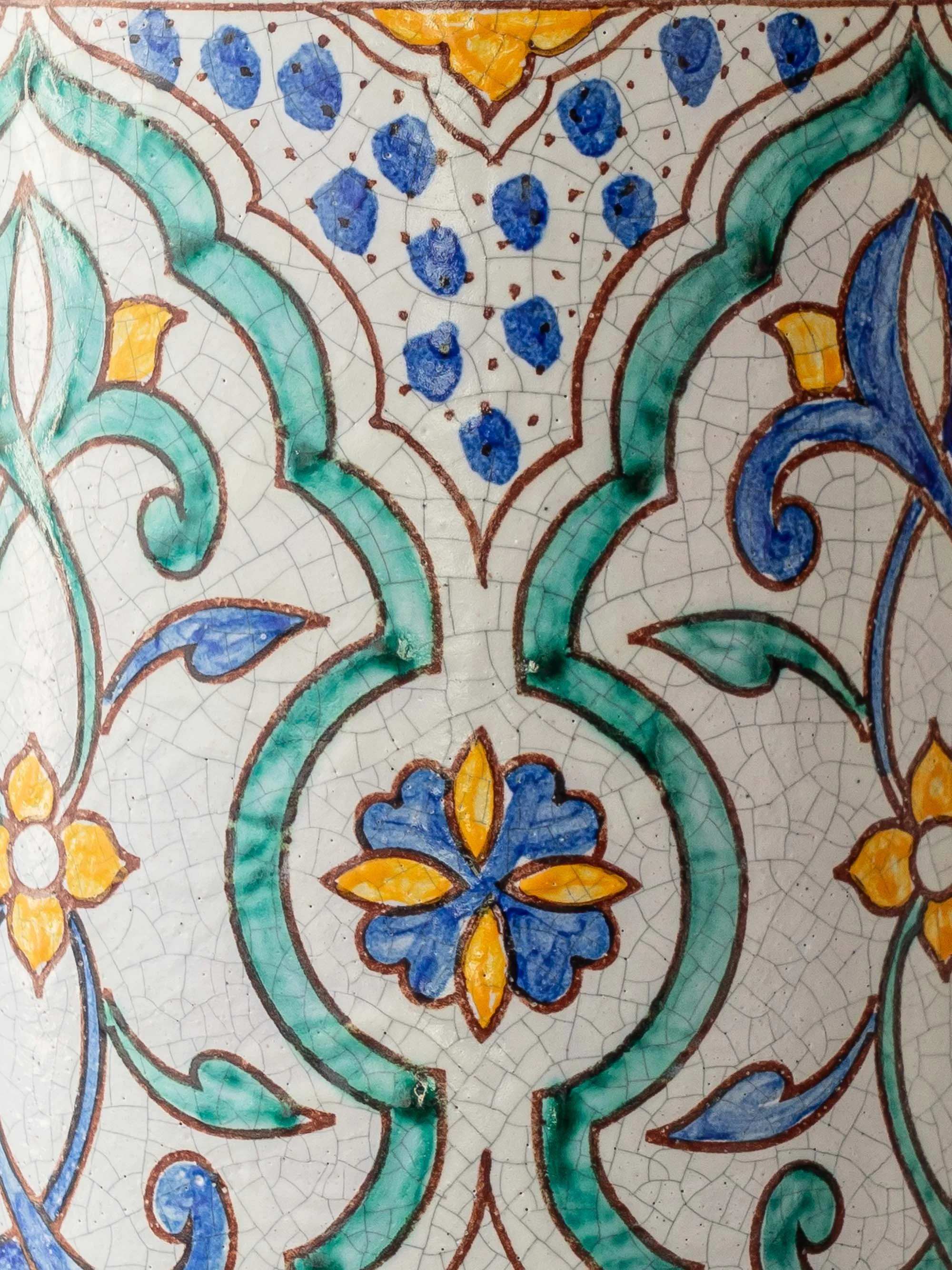
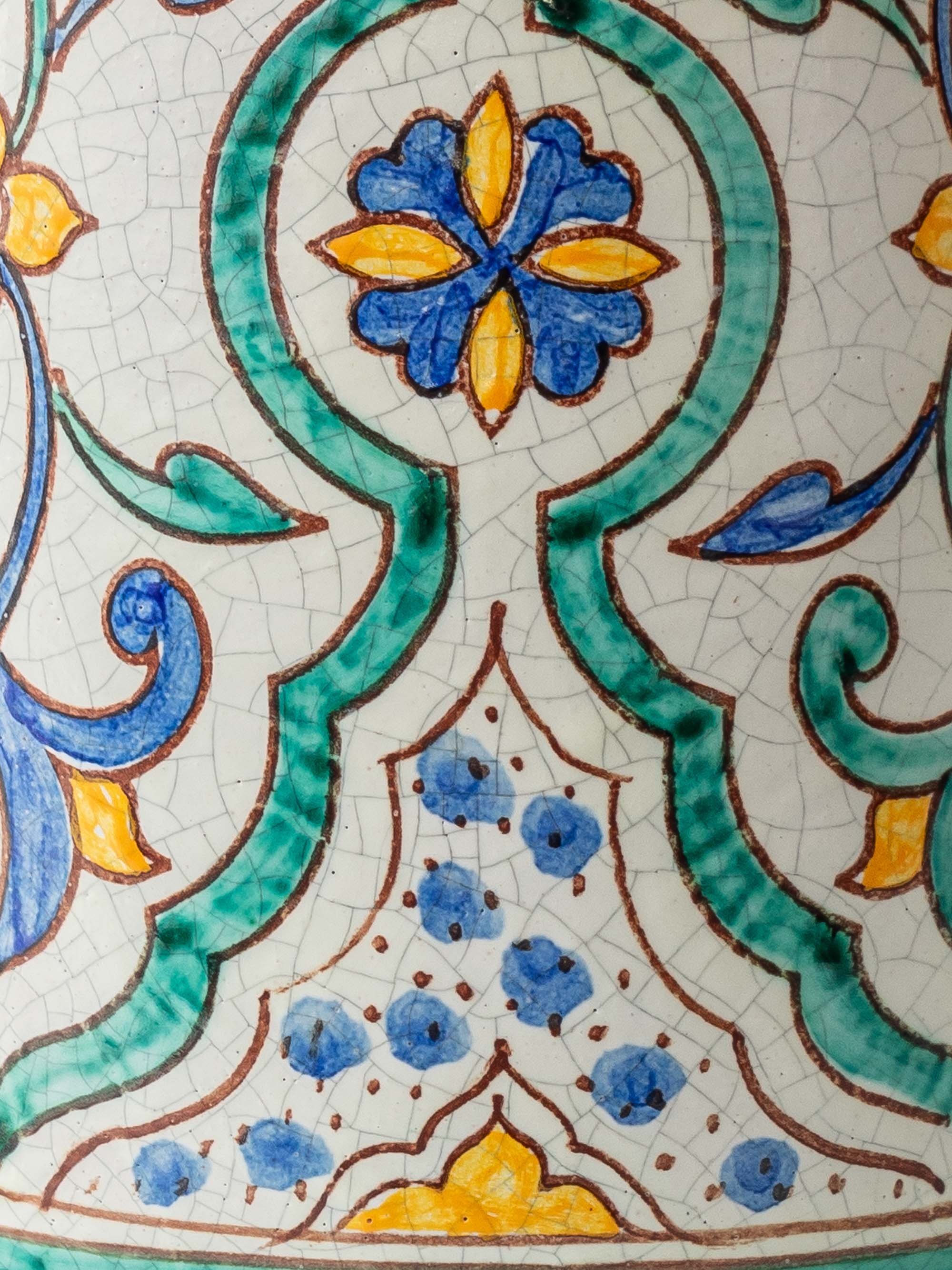
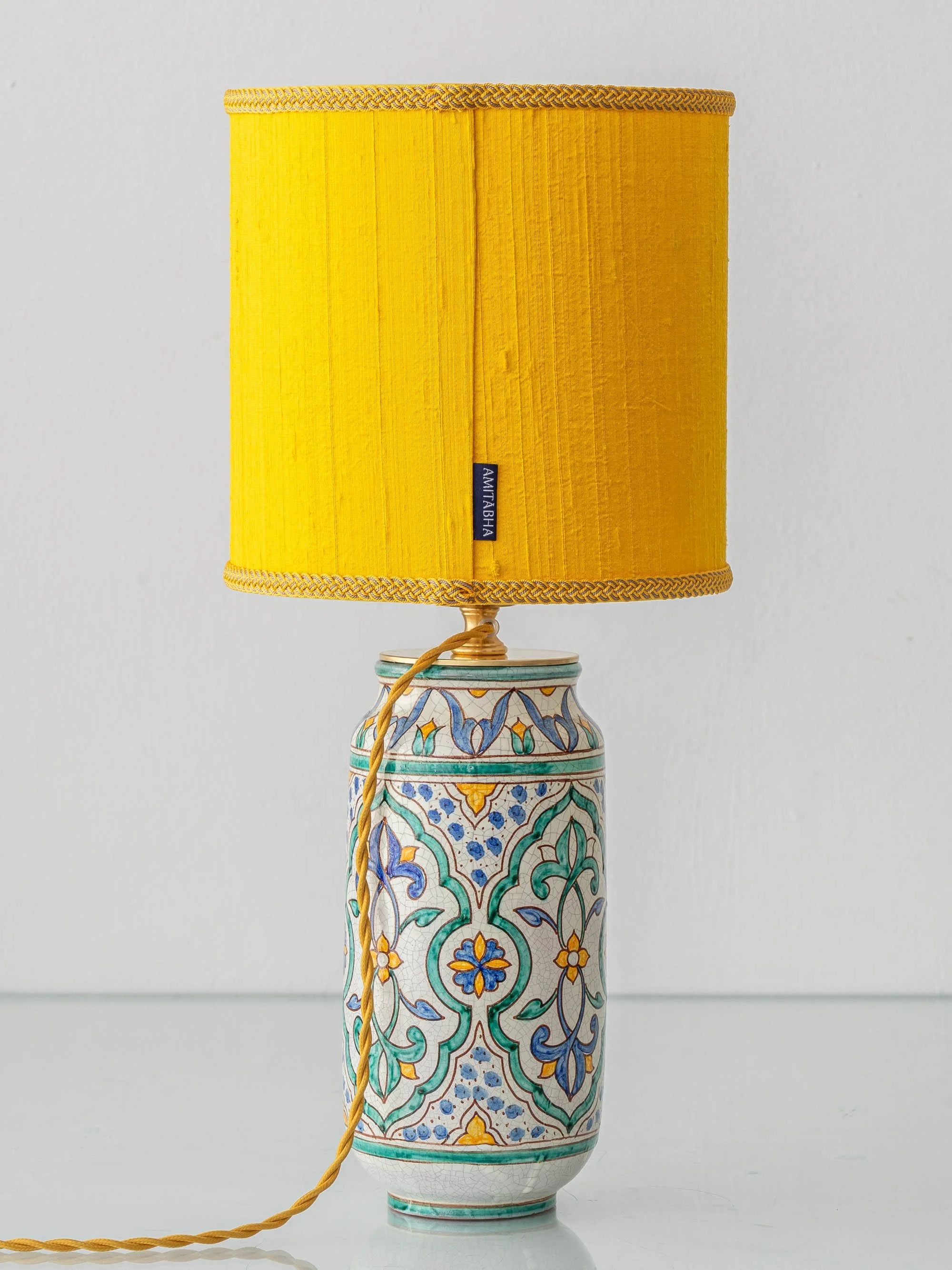
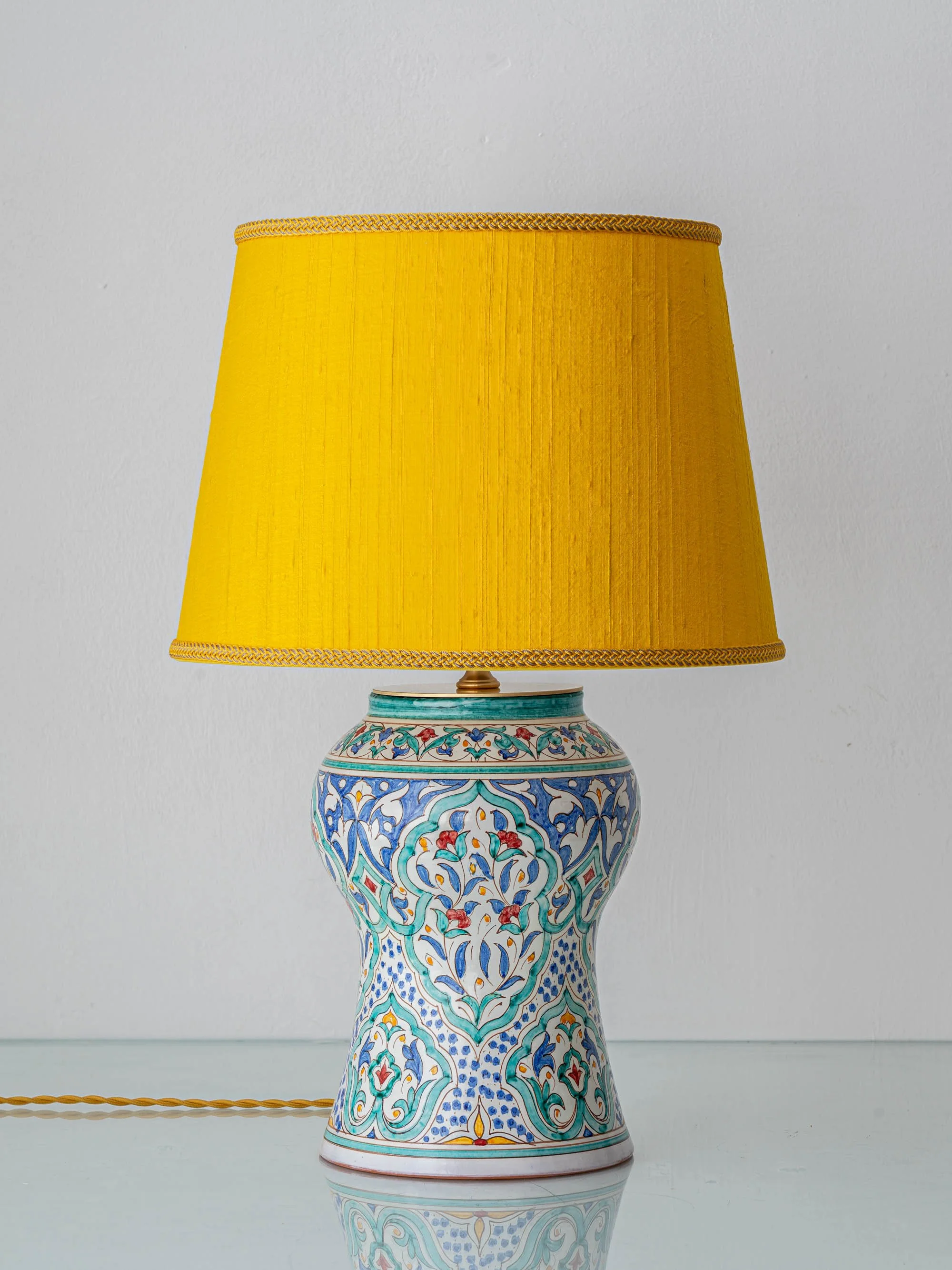
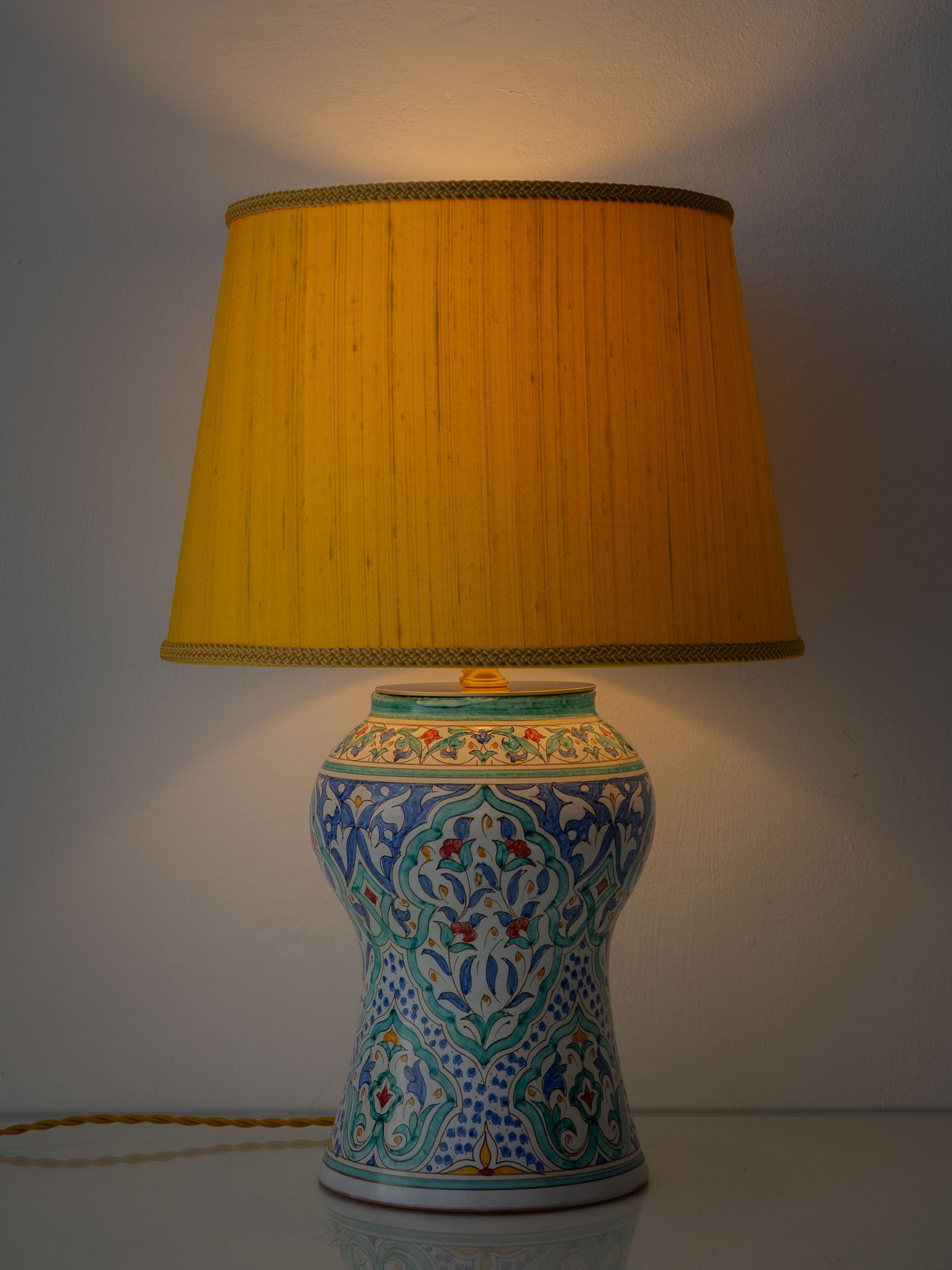
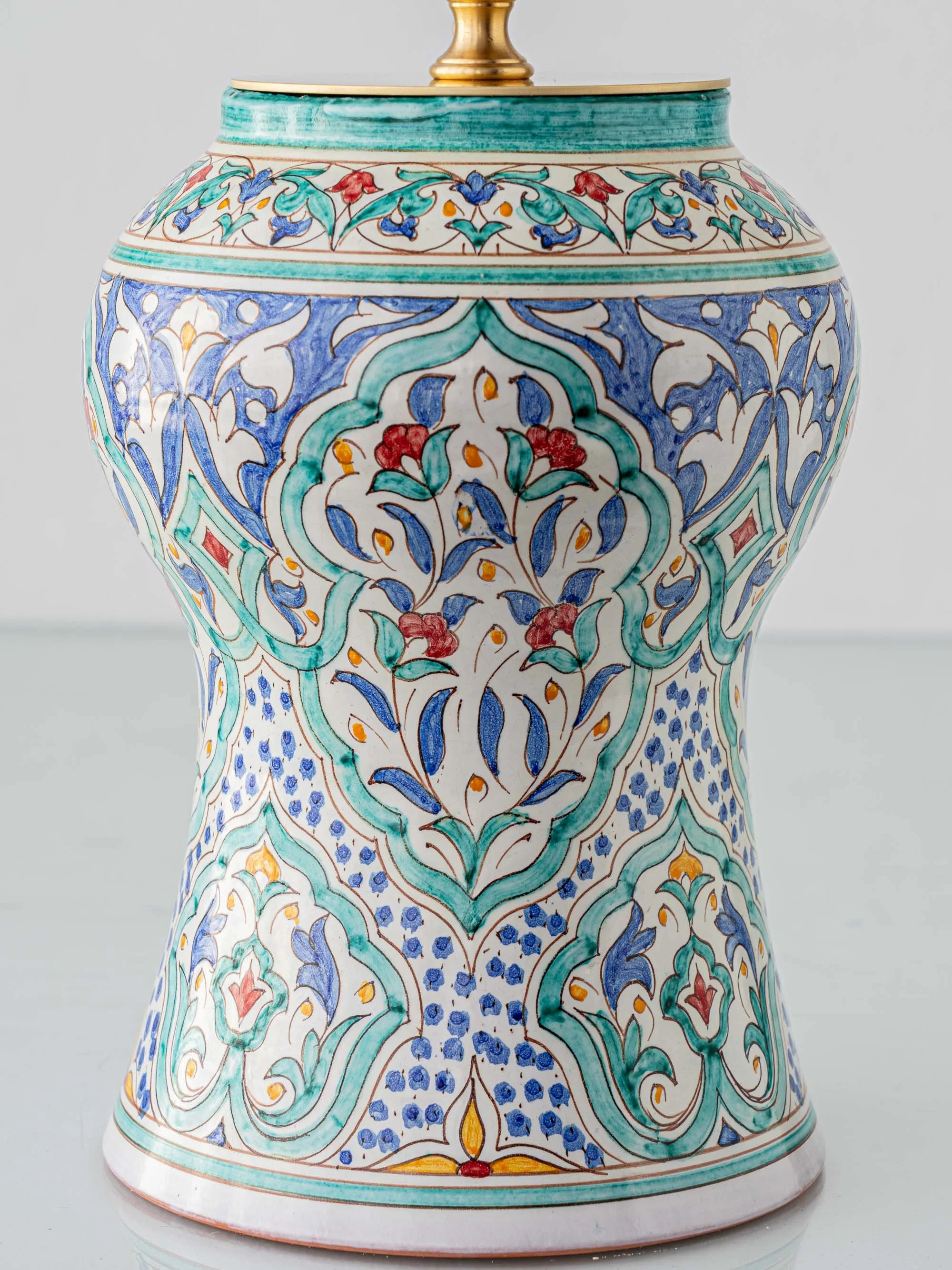
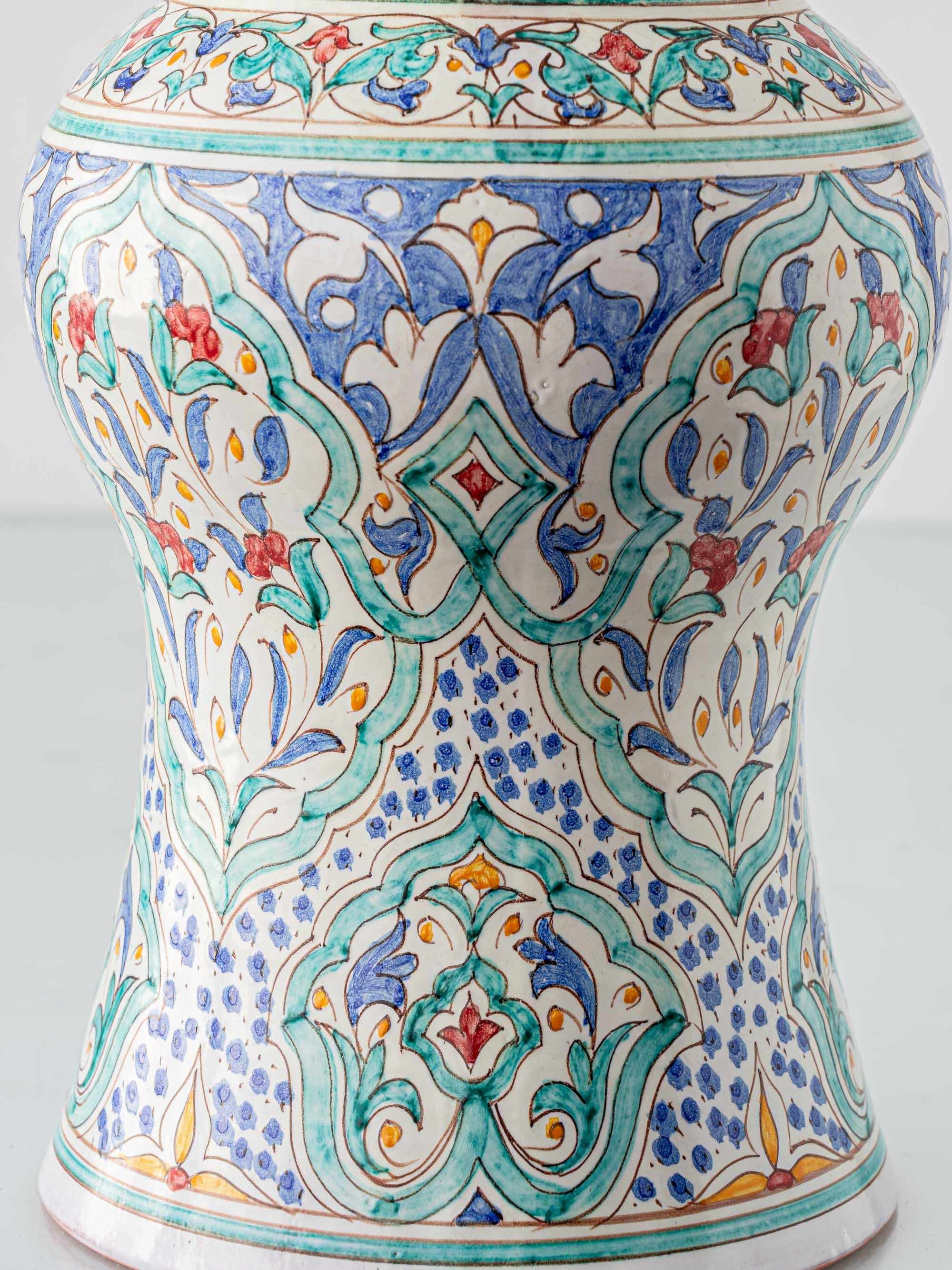
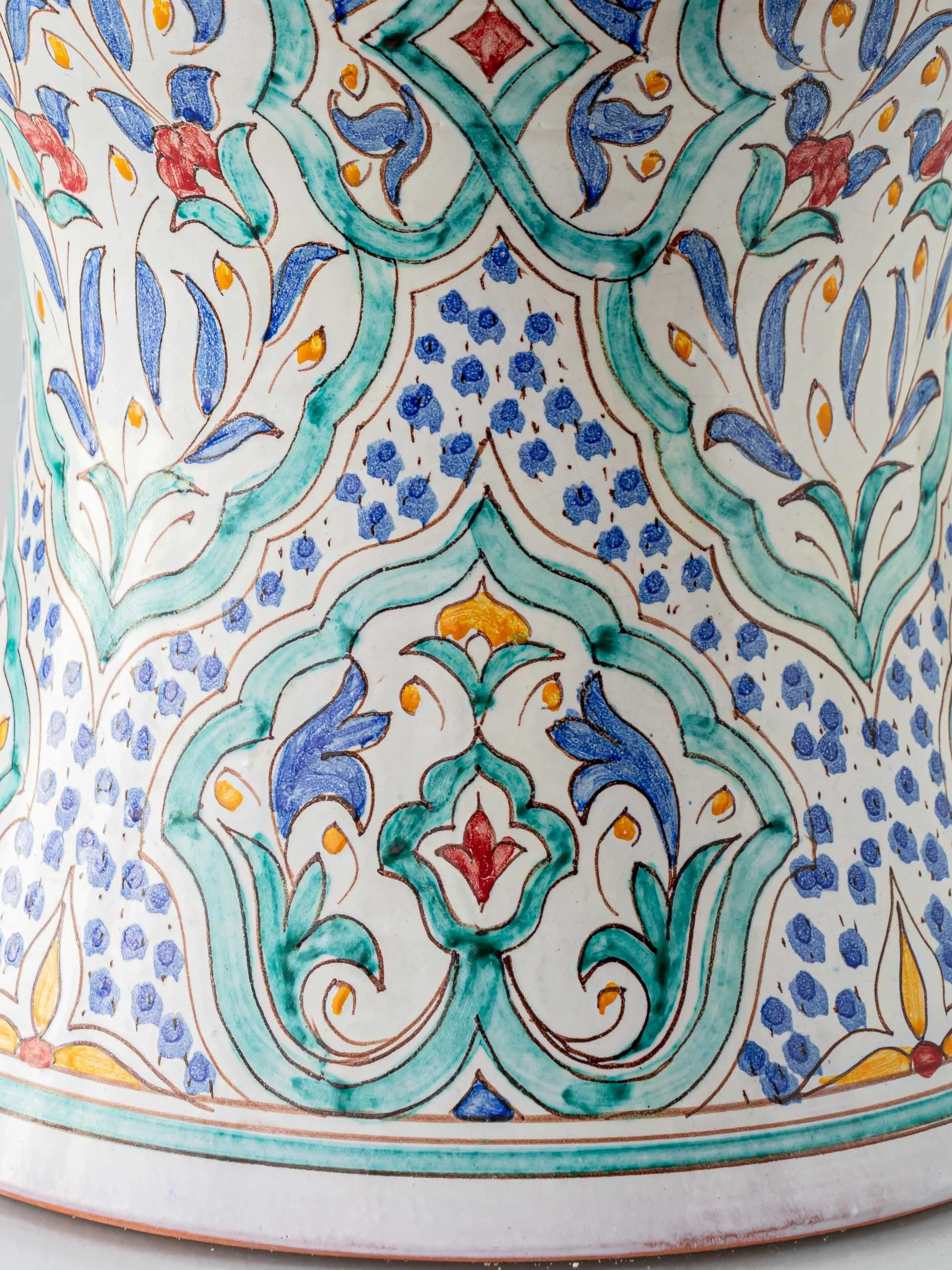
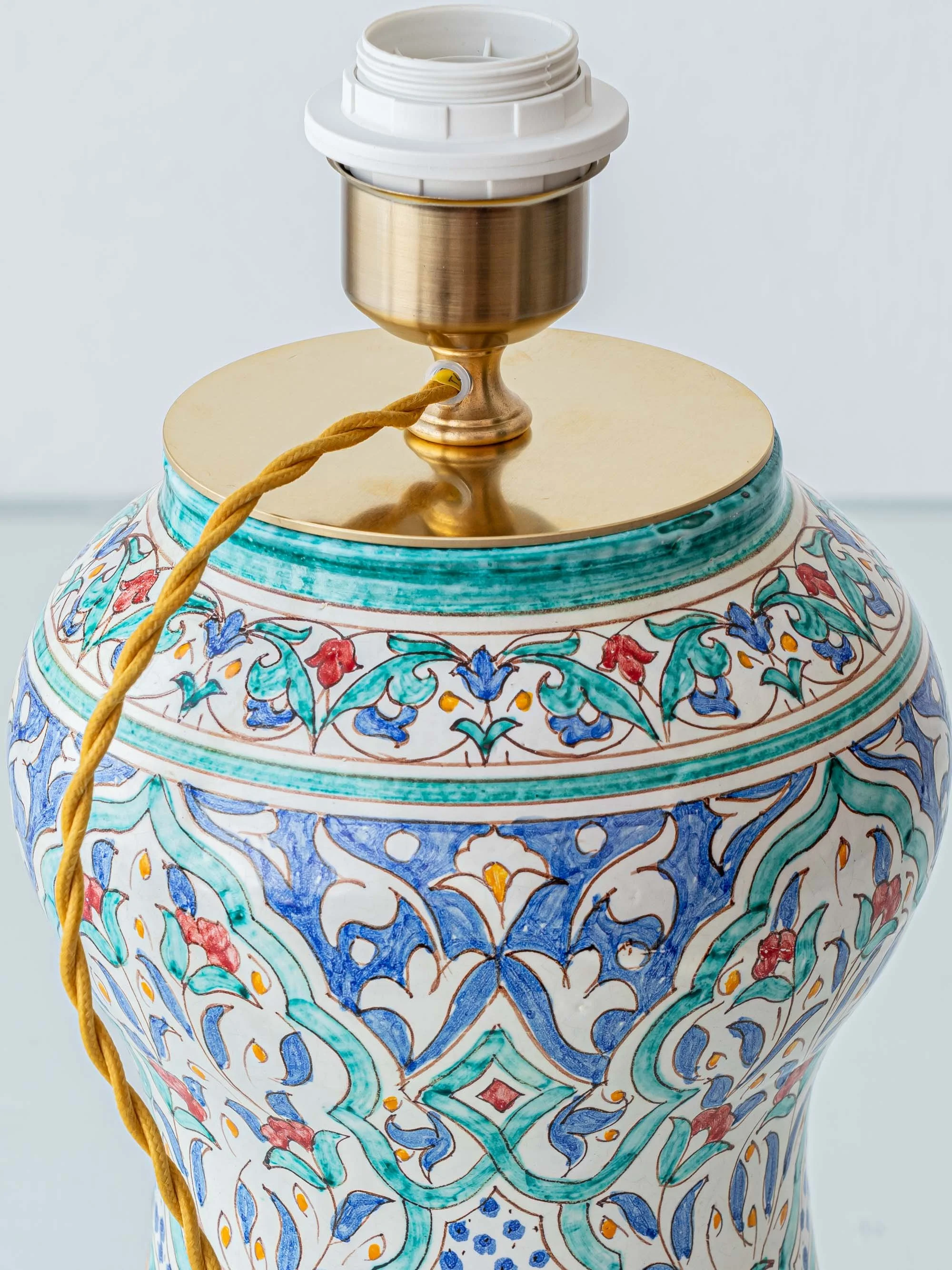
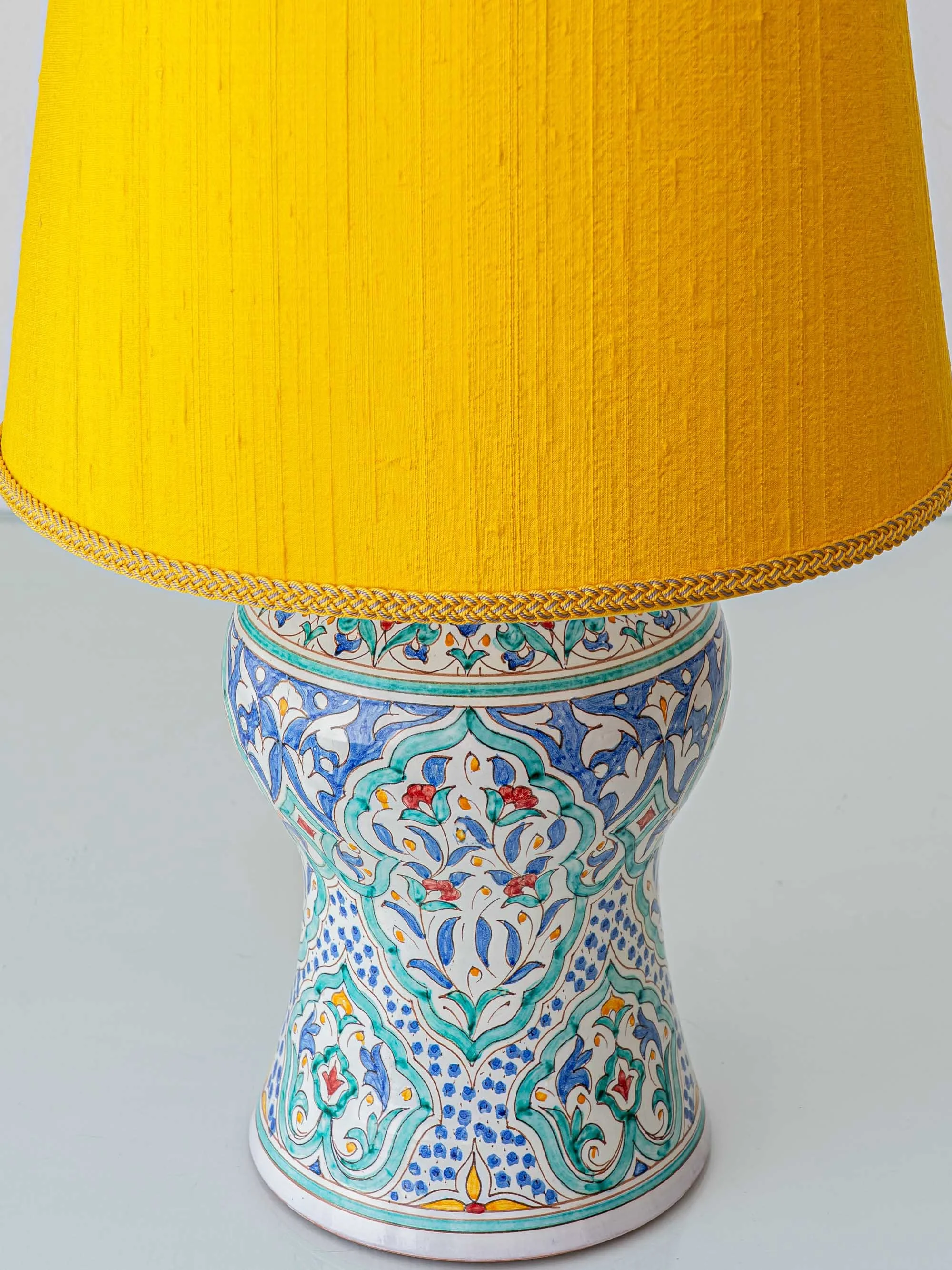
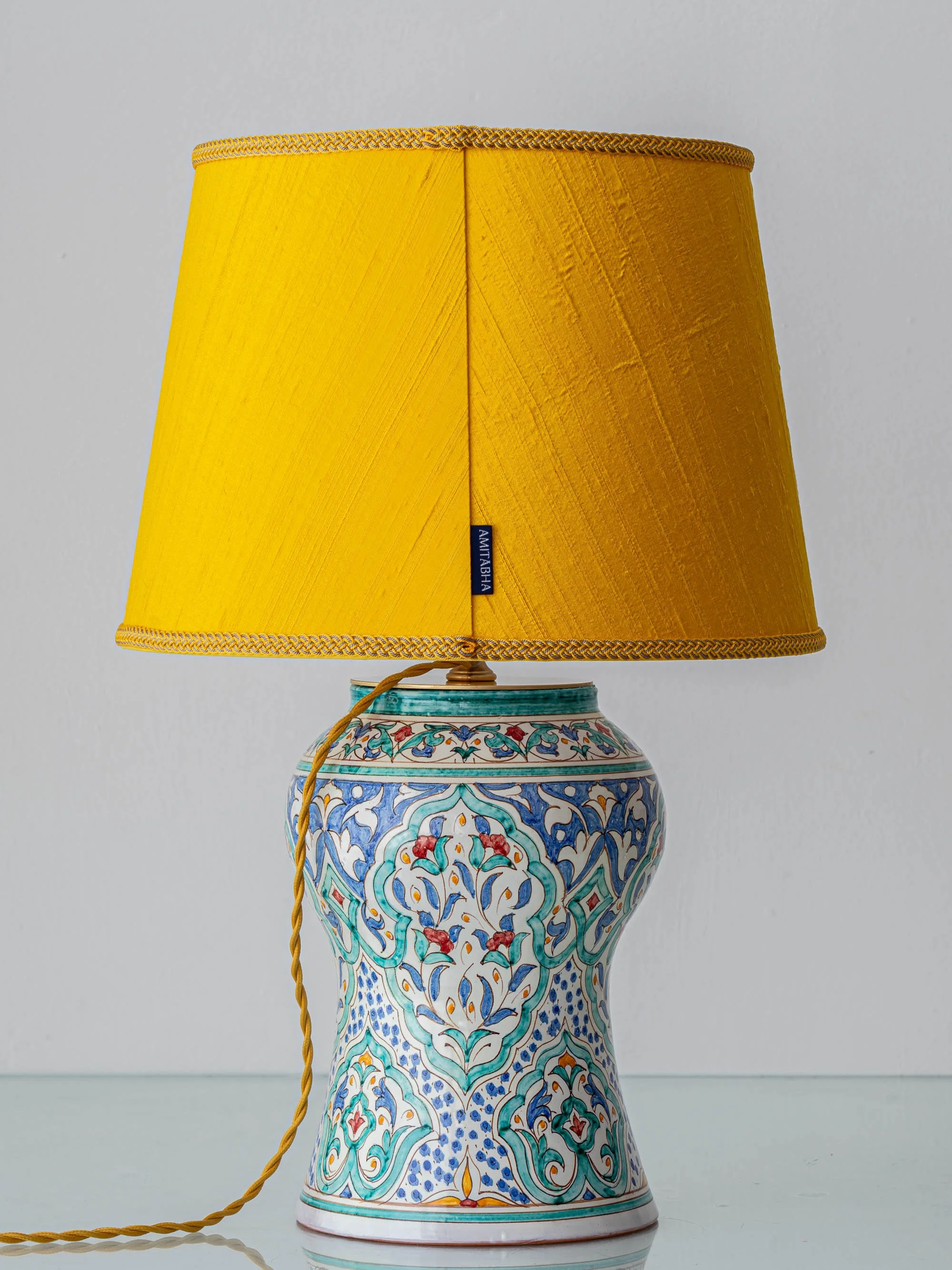
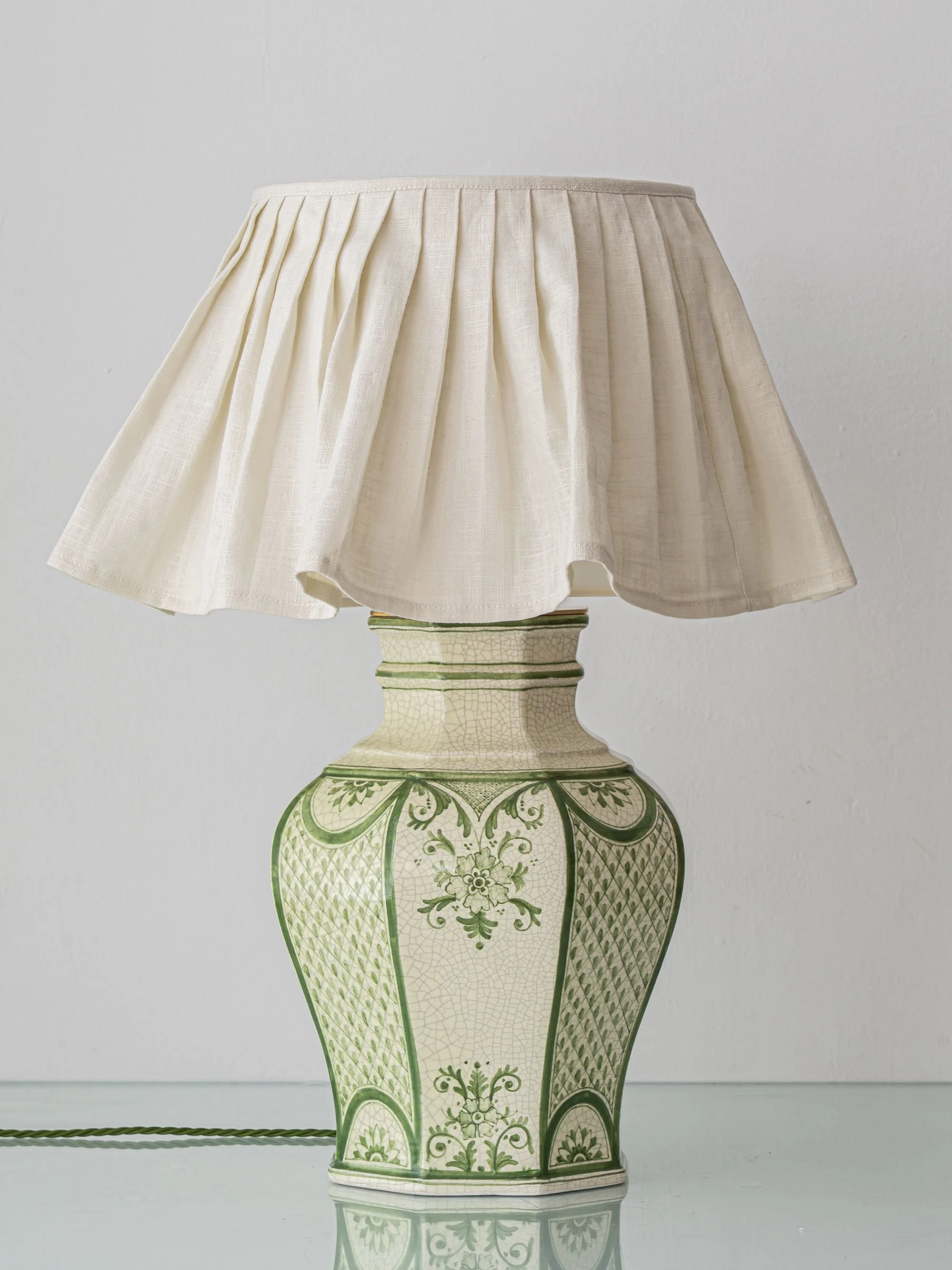
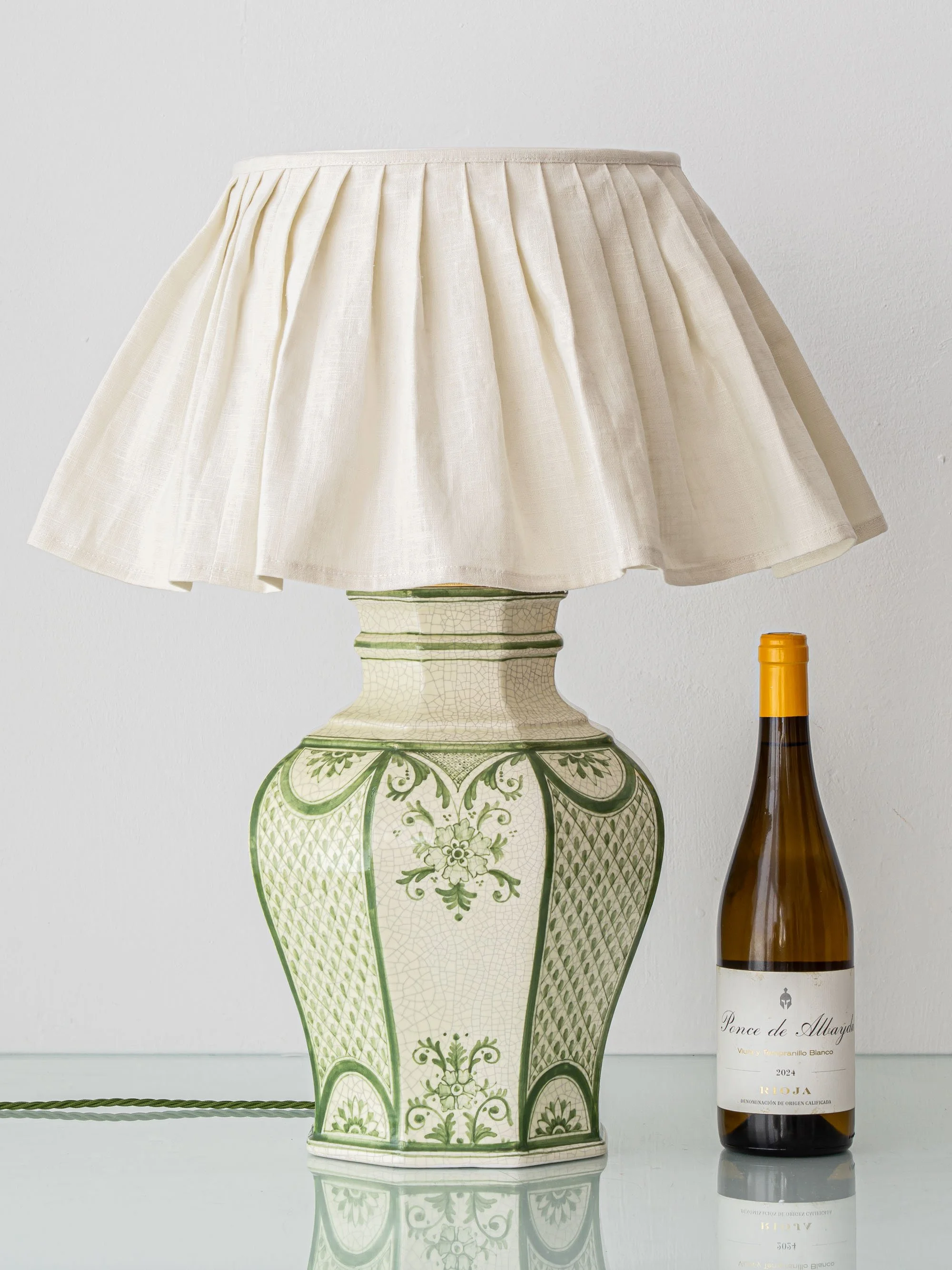
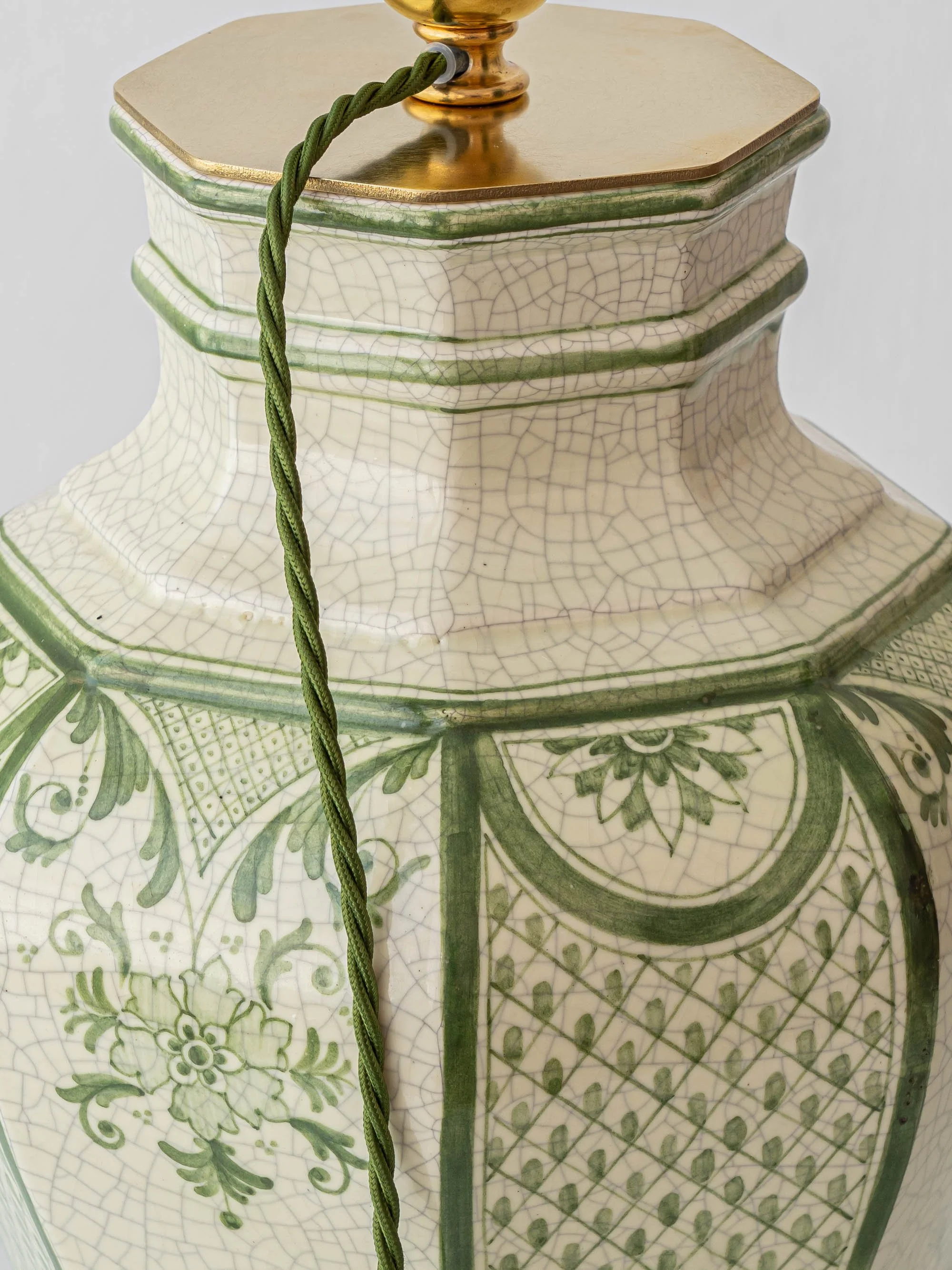
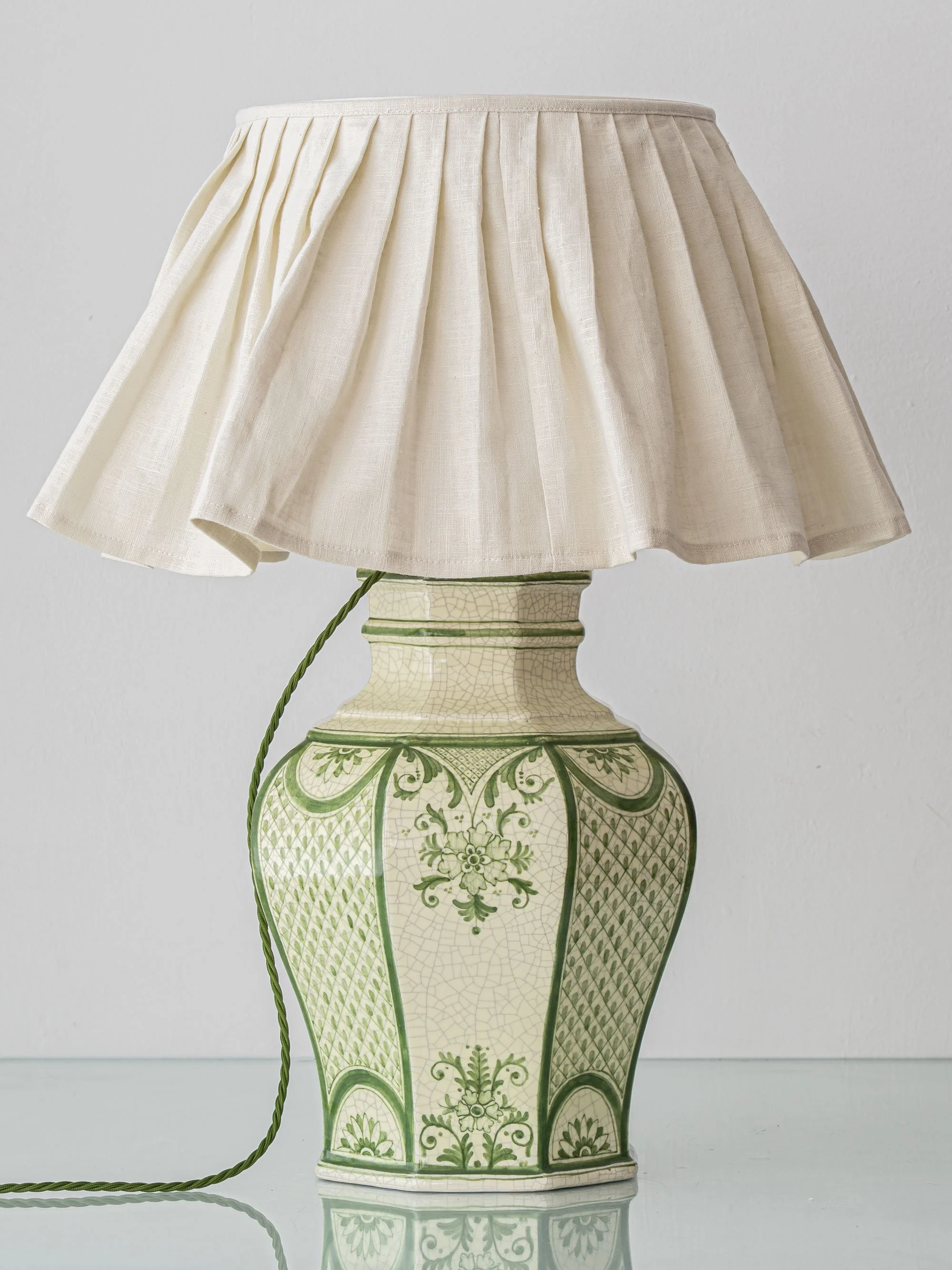
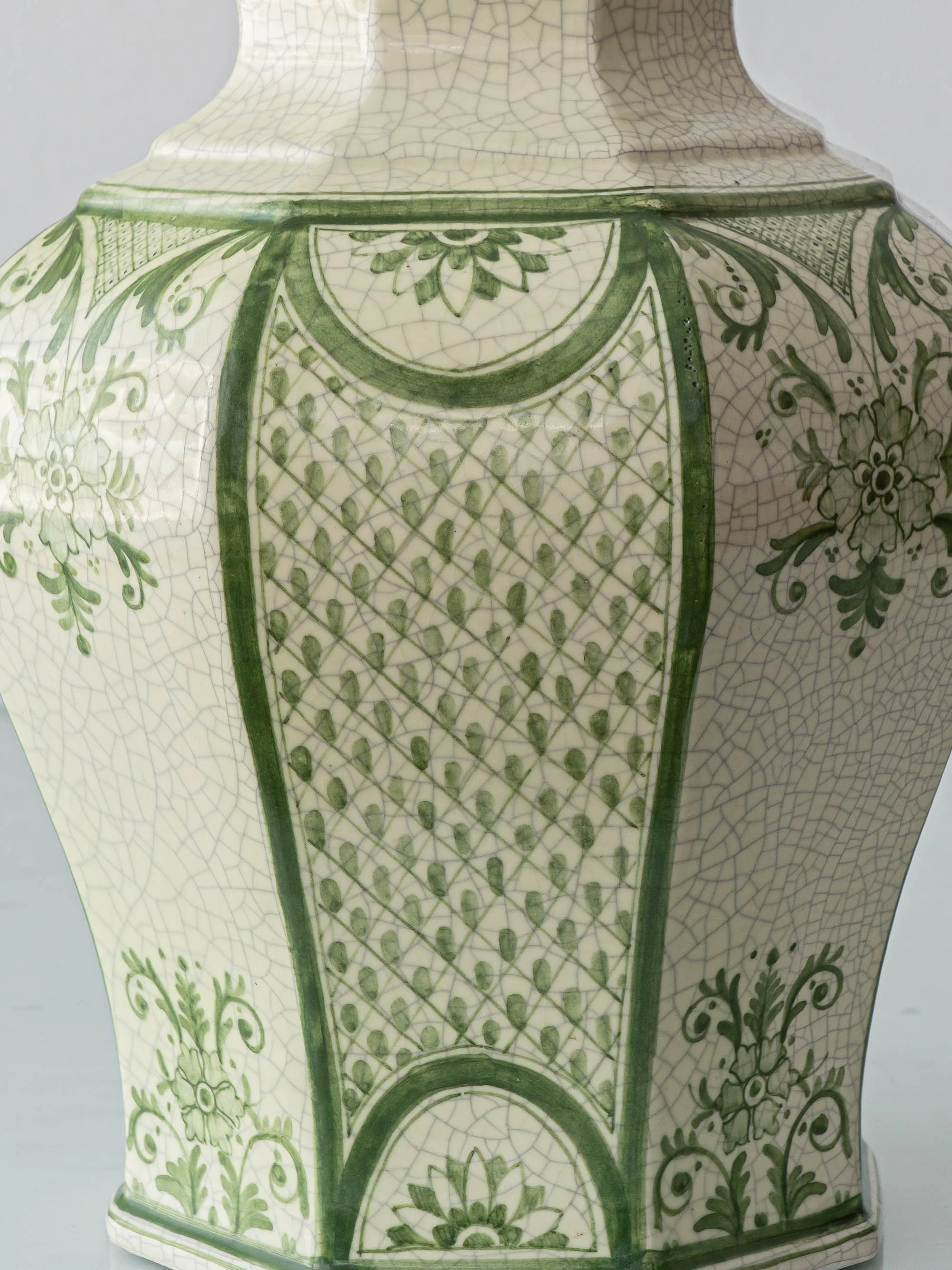
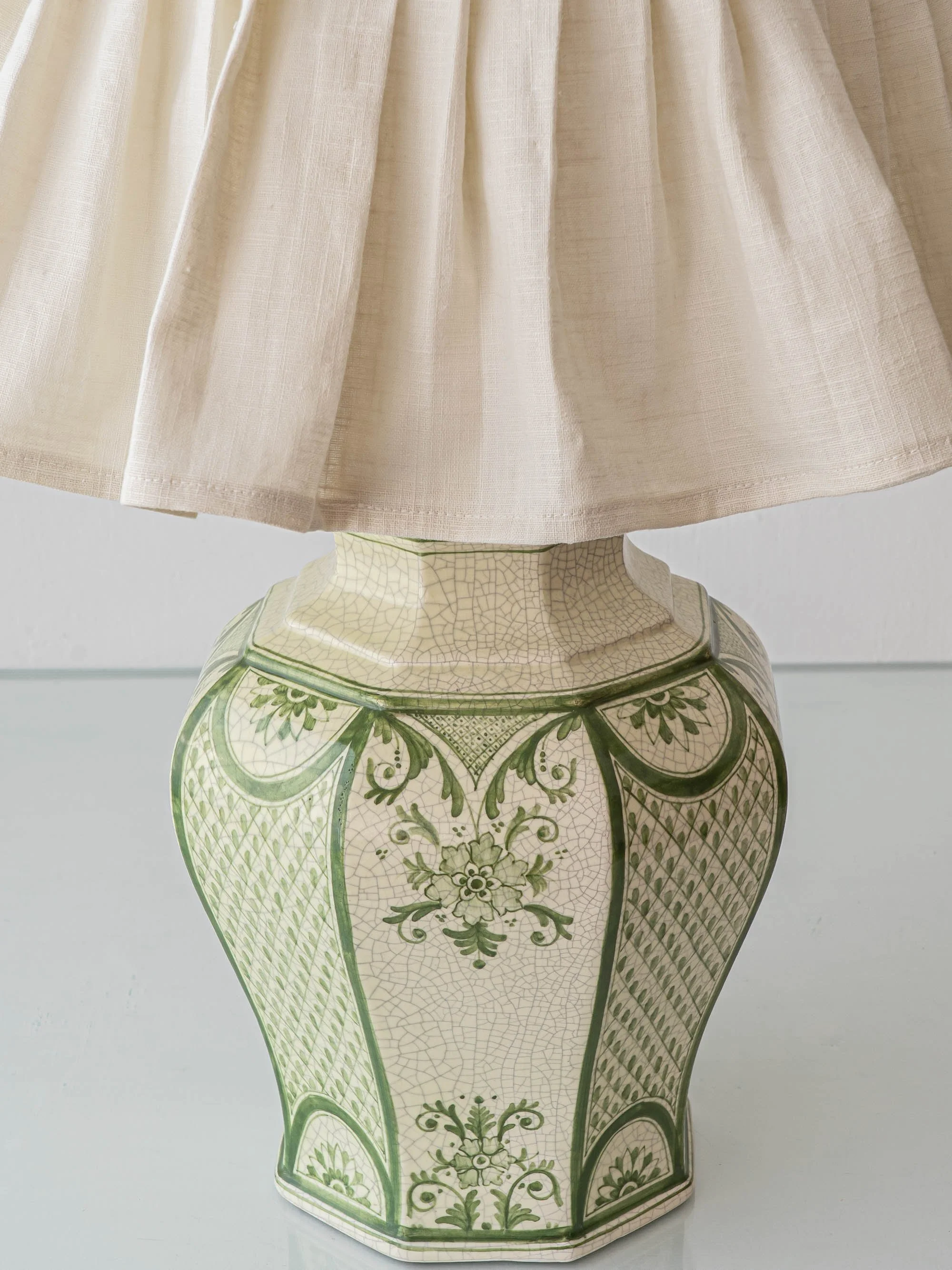
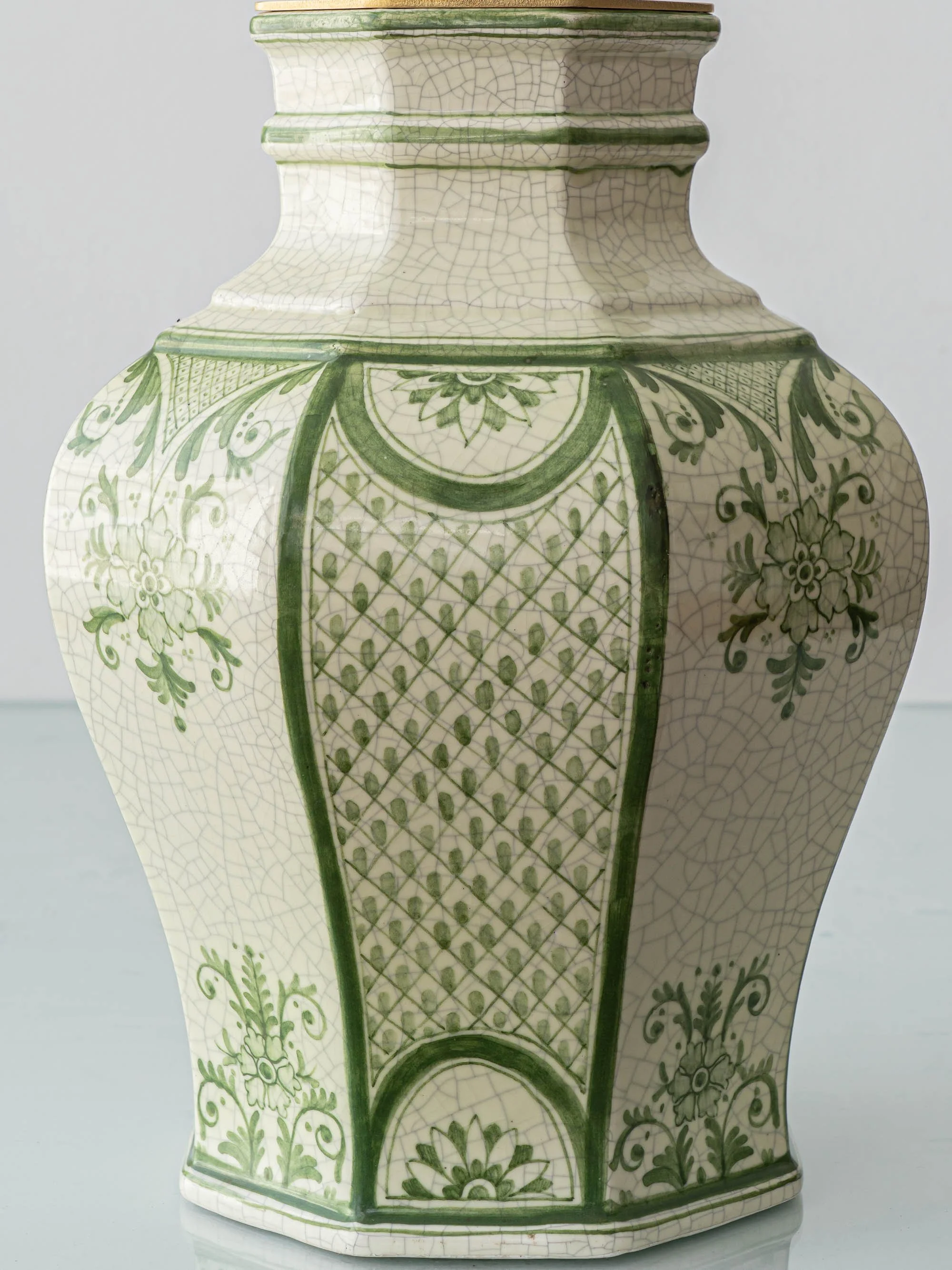
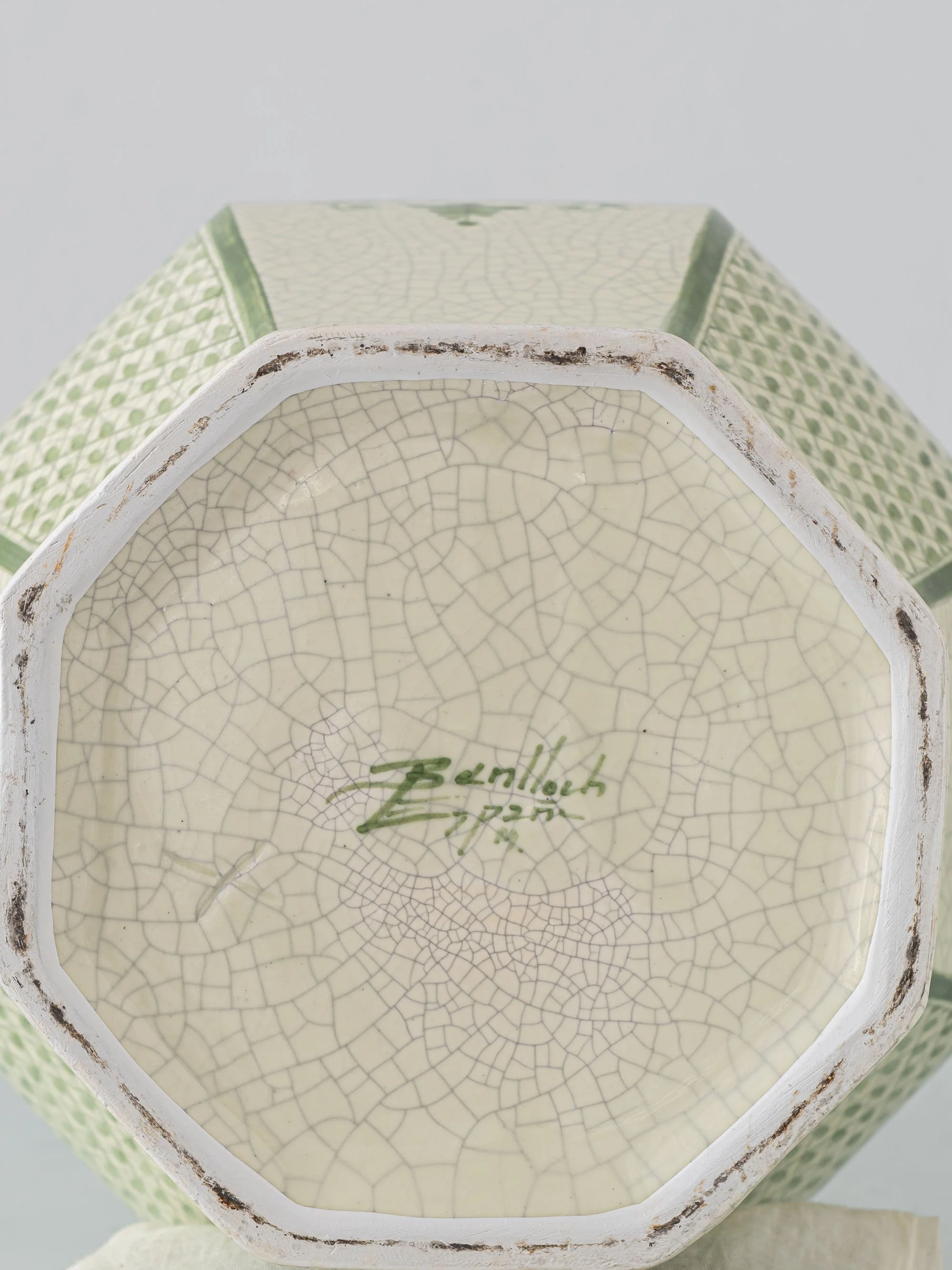
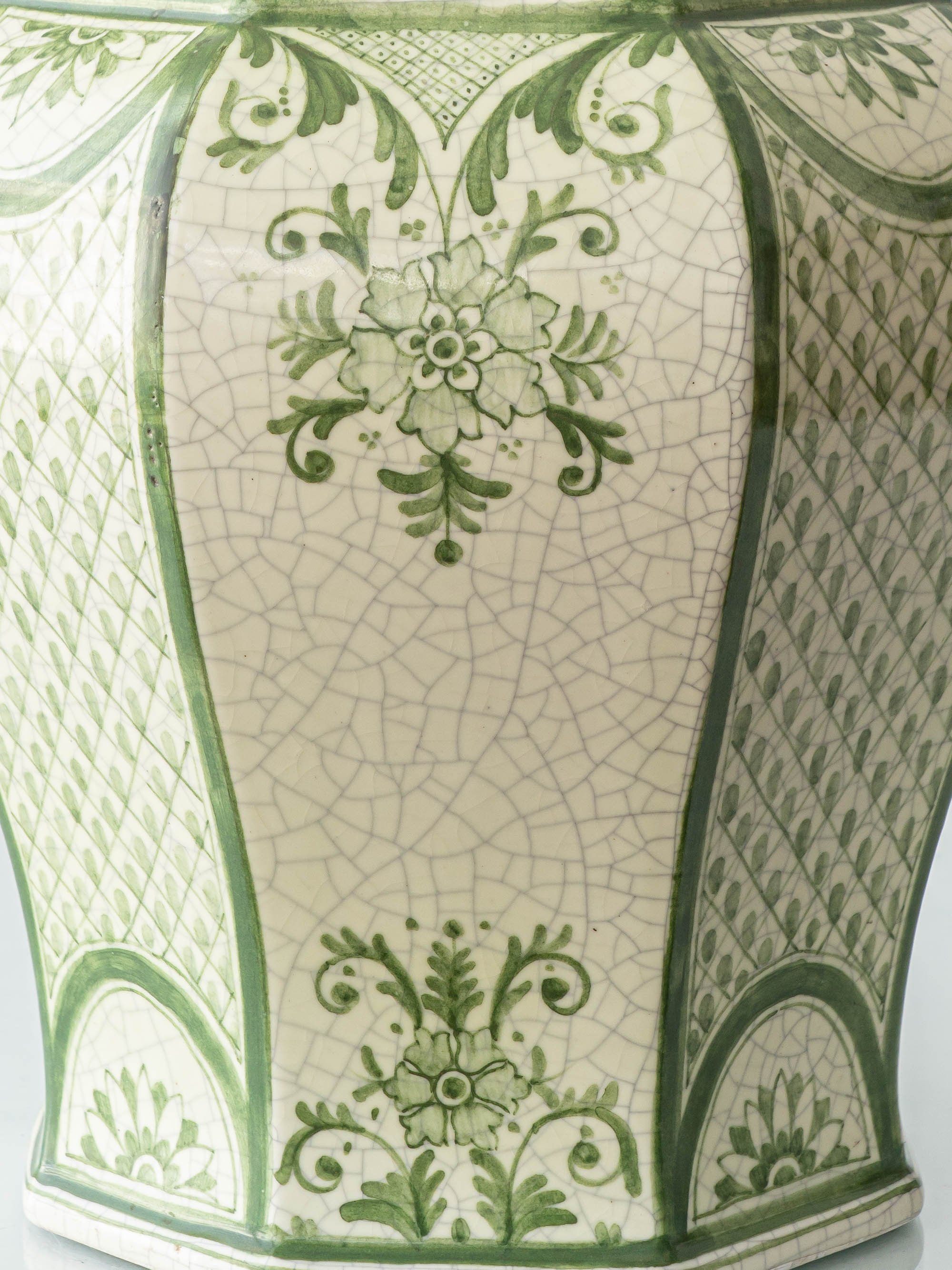
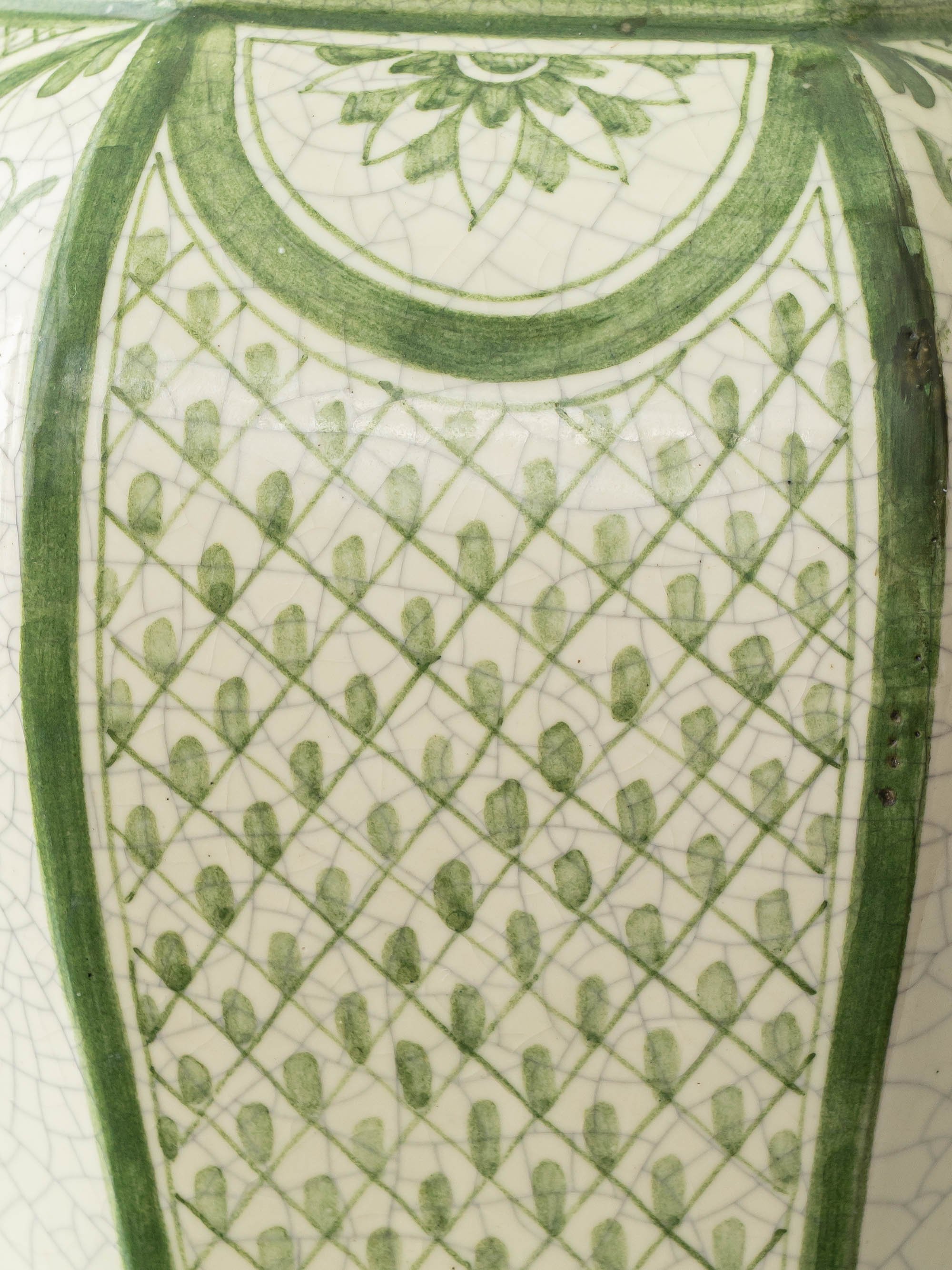
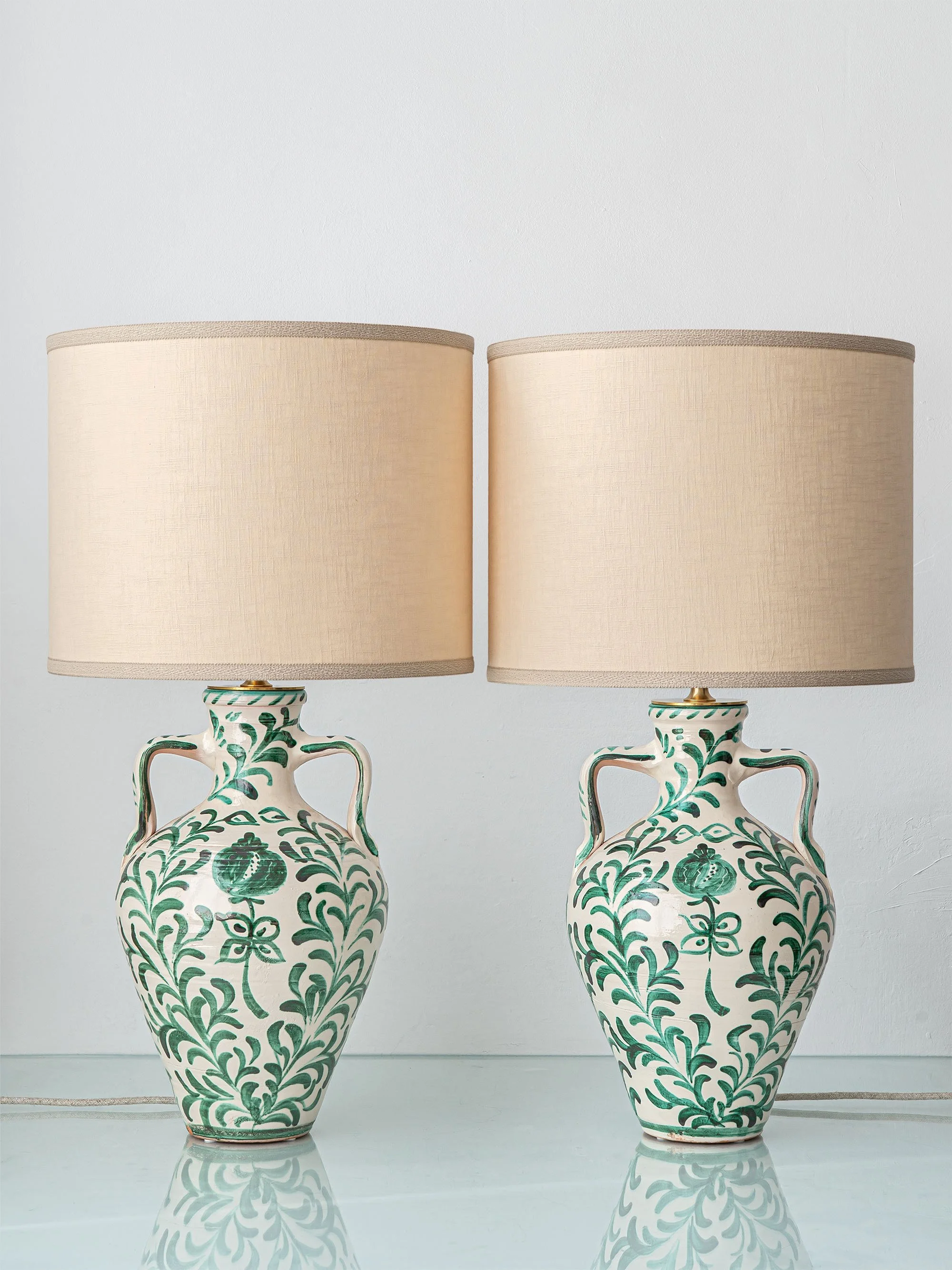
Both bases are Fajalauza amphorae, thrown on the wheel and painted freehand before glazing. The decoration is the workshop's traditional copper green over a cream glaze: foliate sprays running loosely around the body, and among them a pomegranate — the fruit that gives Granada its name and sits at the centre of the city's arms.
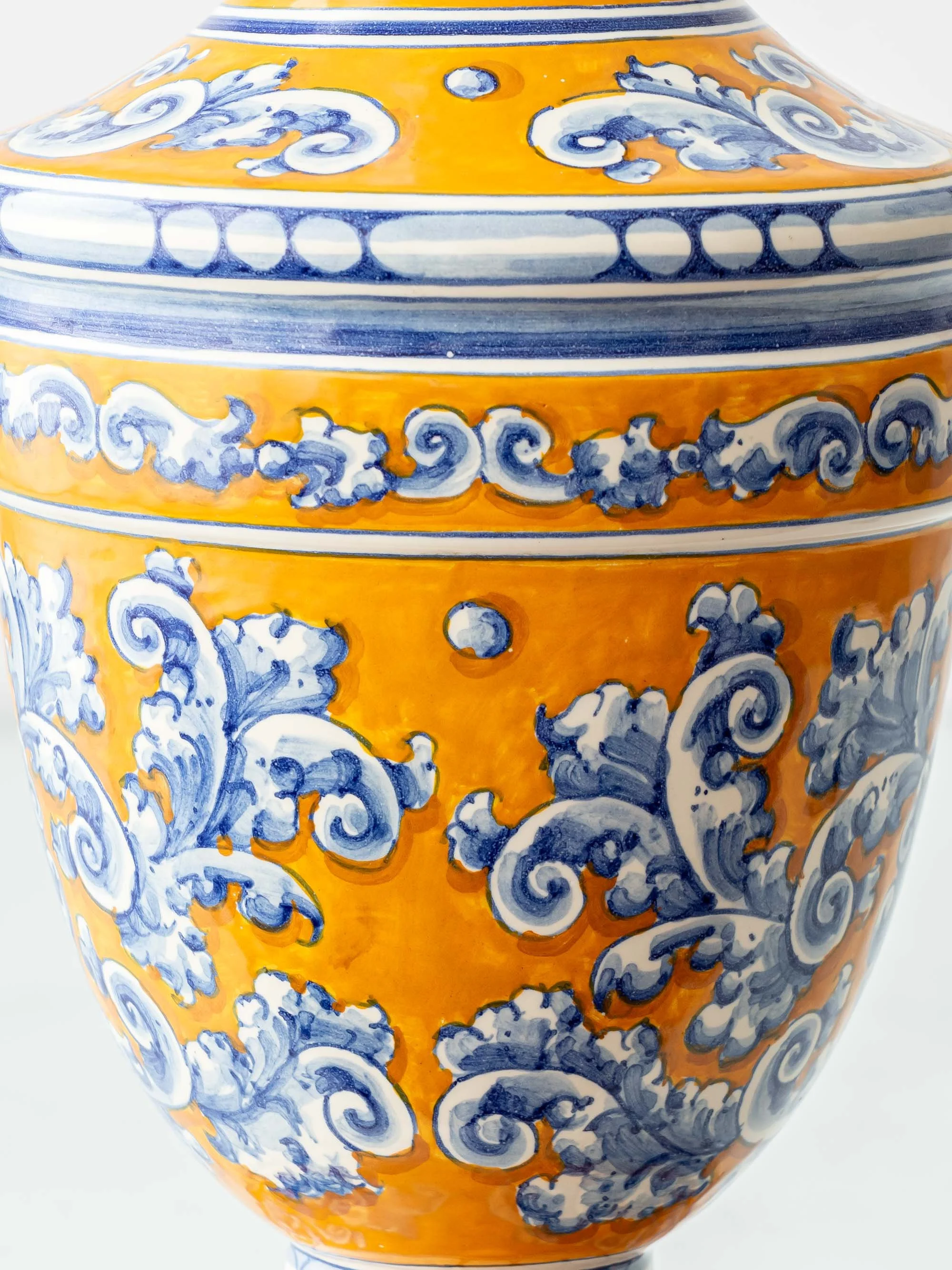
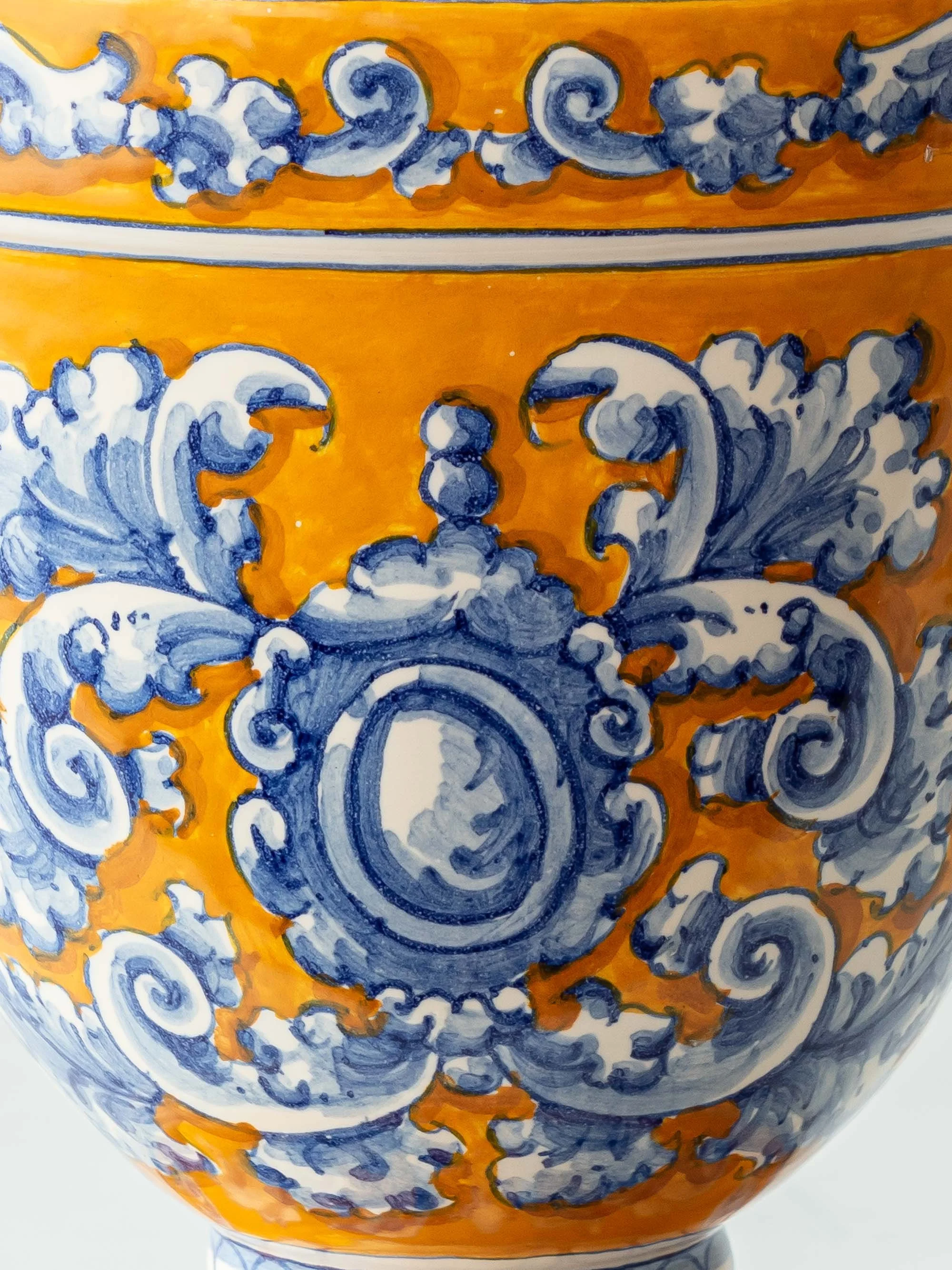
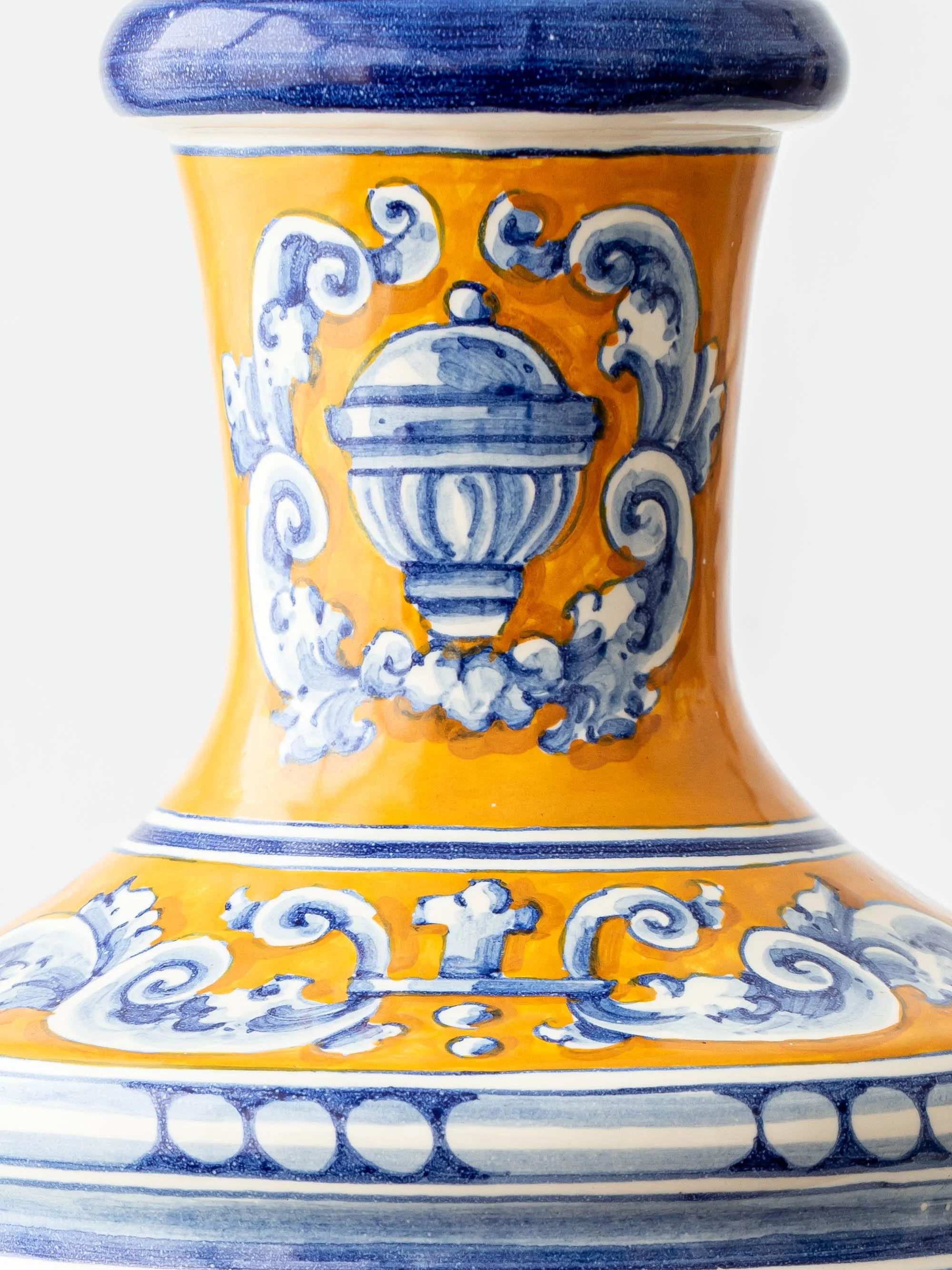
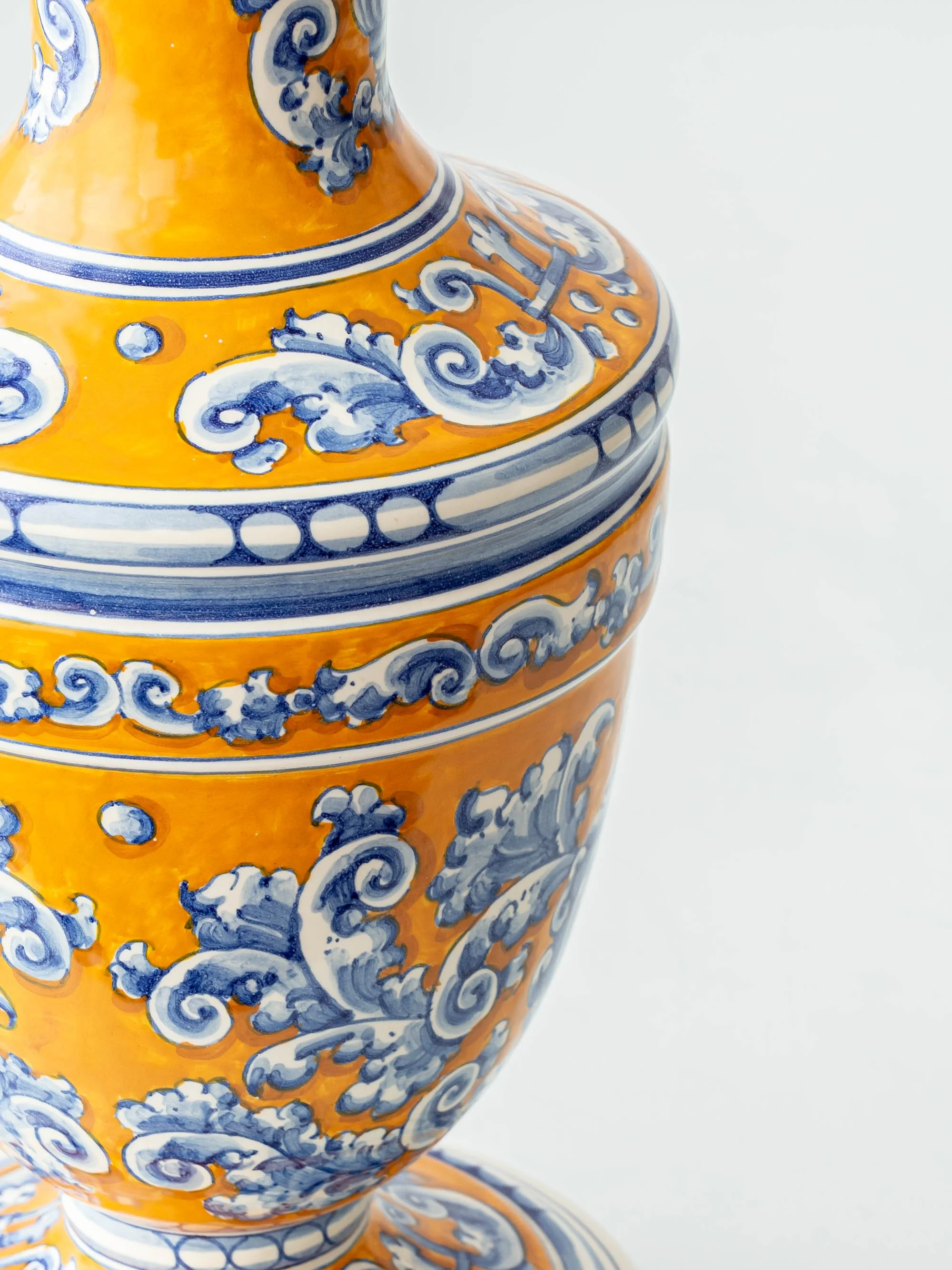
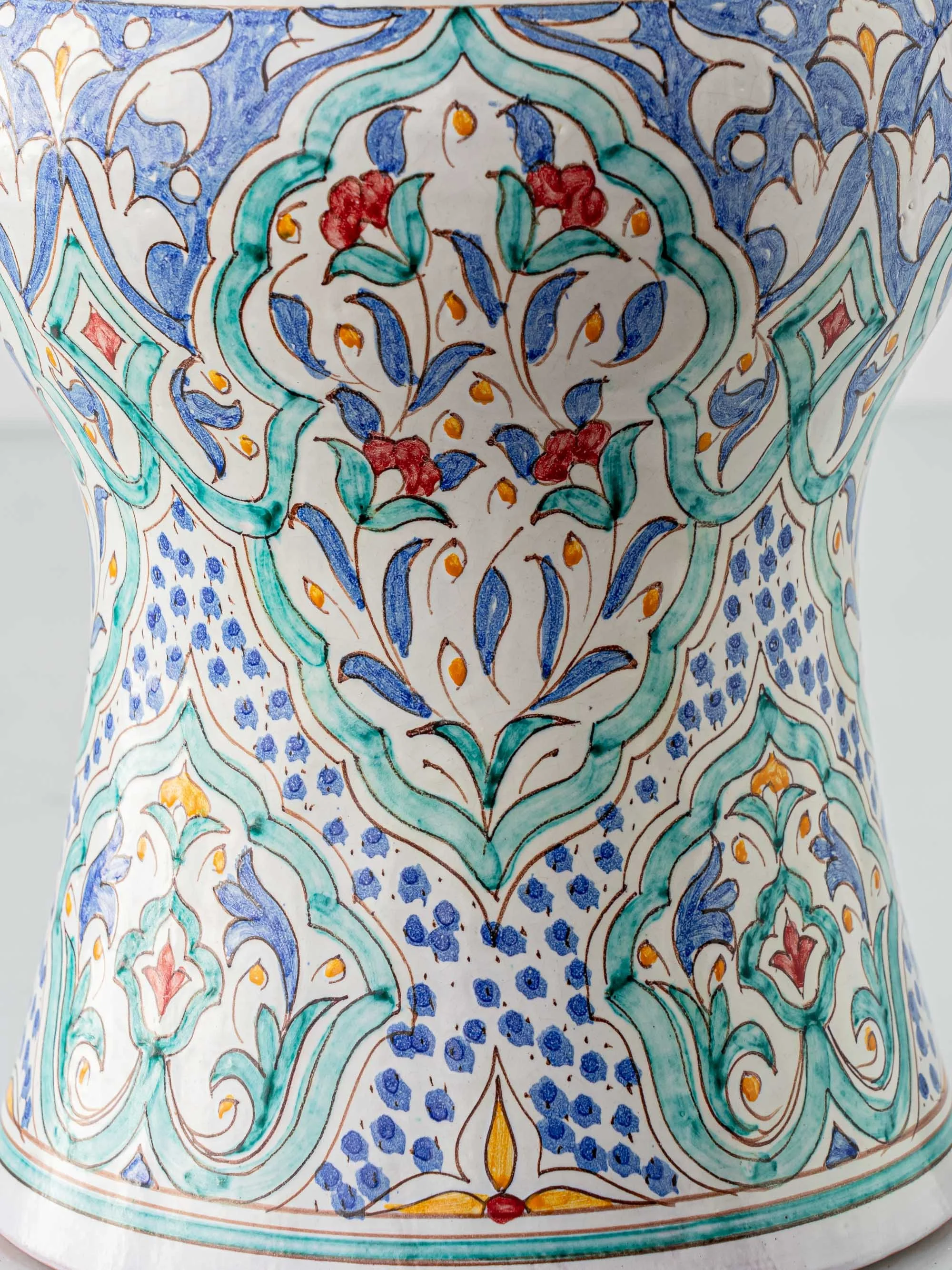
Fajalauza ware was never made to be uniform. Every piece is thrown and painted by hand, and these two are rustic in the exact sense of the word: the glaze surface soft rather than glassy, the brushwork quick and unhesitating. The palette is the one Andalusian potters have used since the Nasrid period.
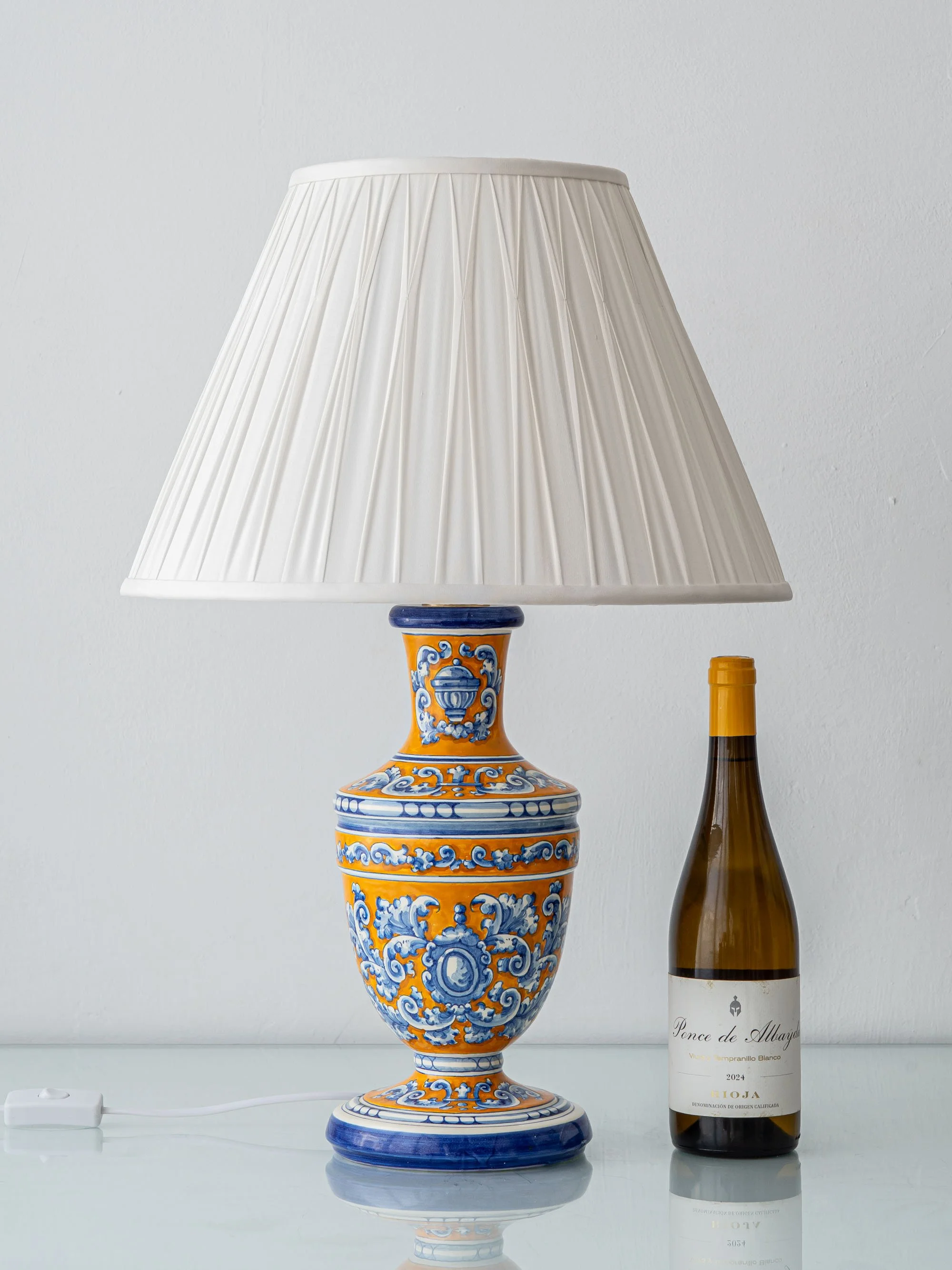
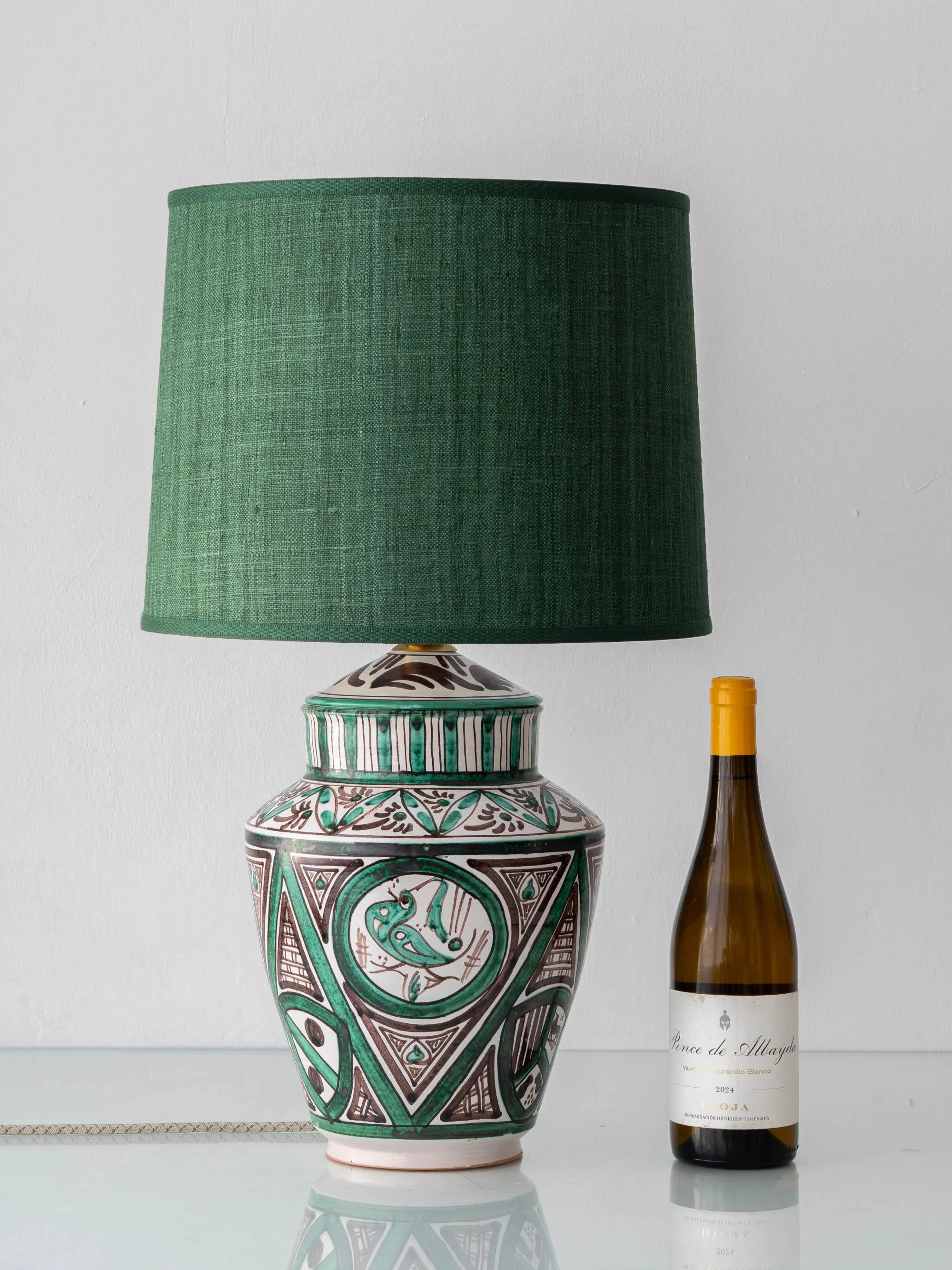
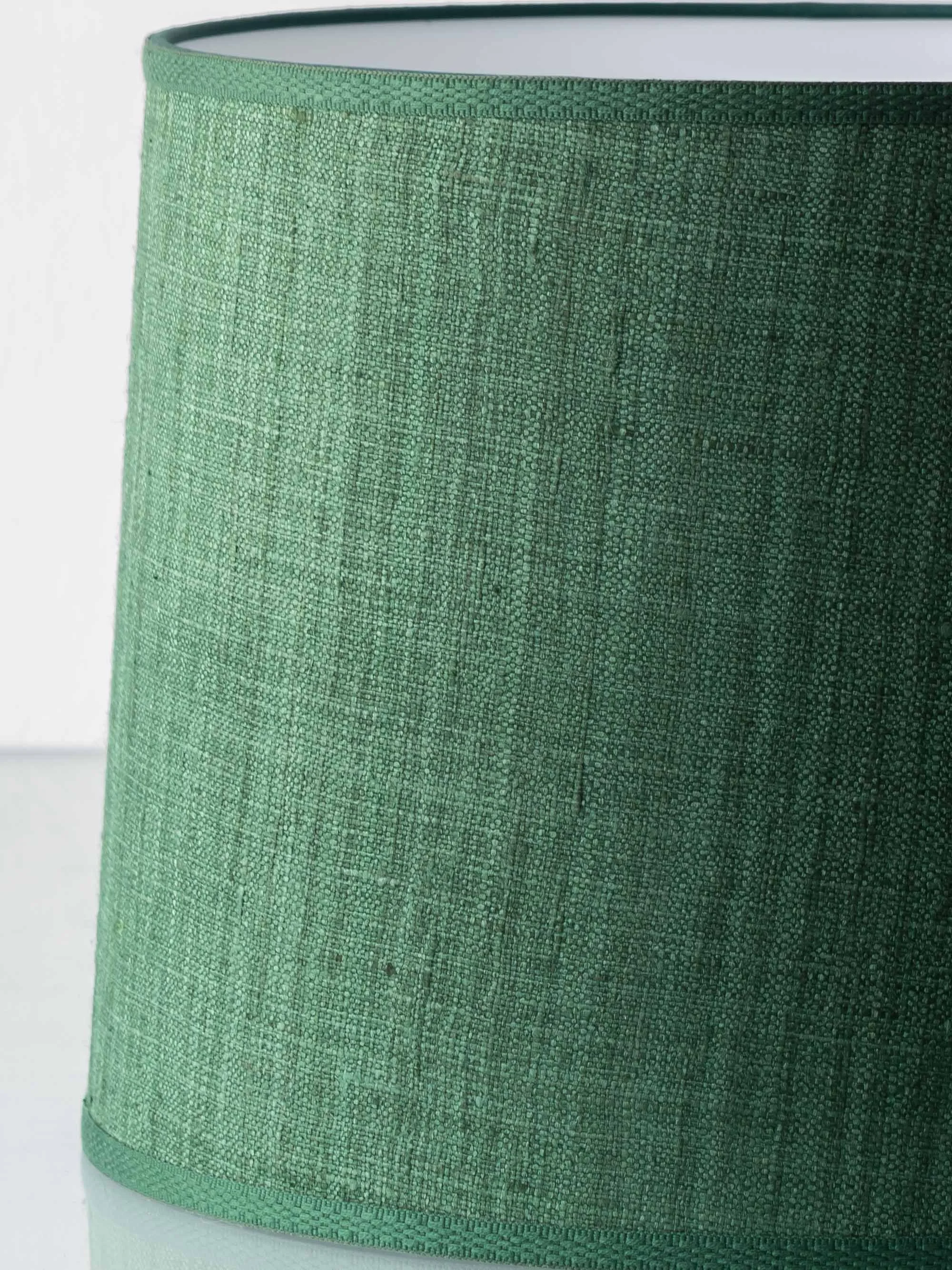
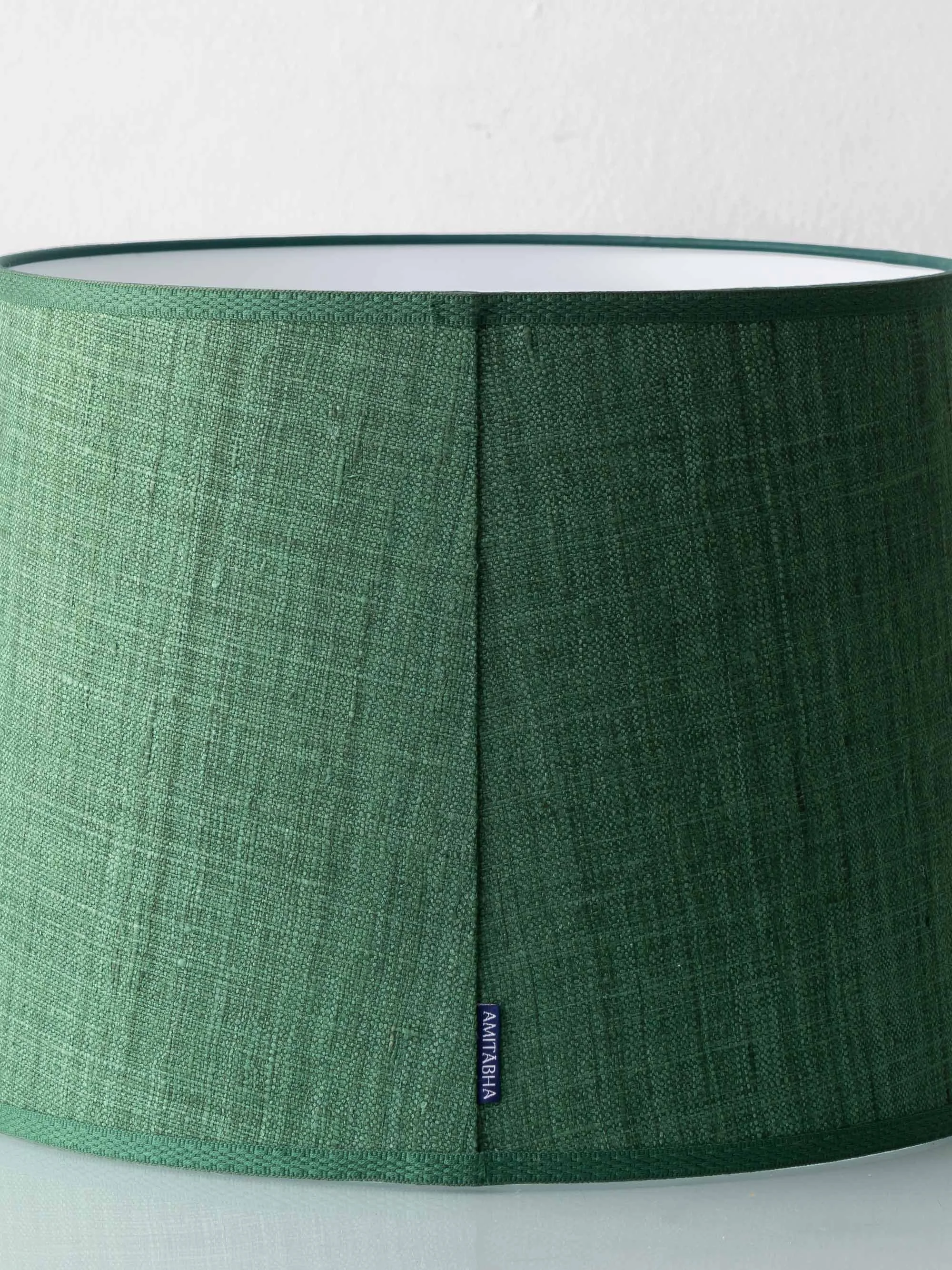
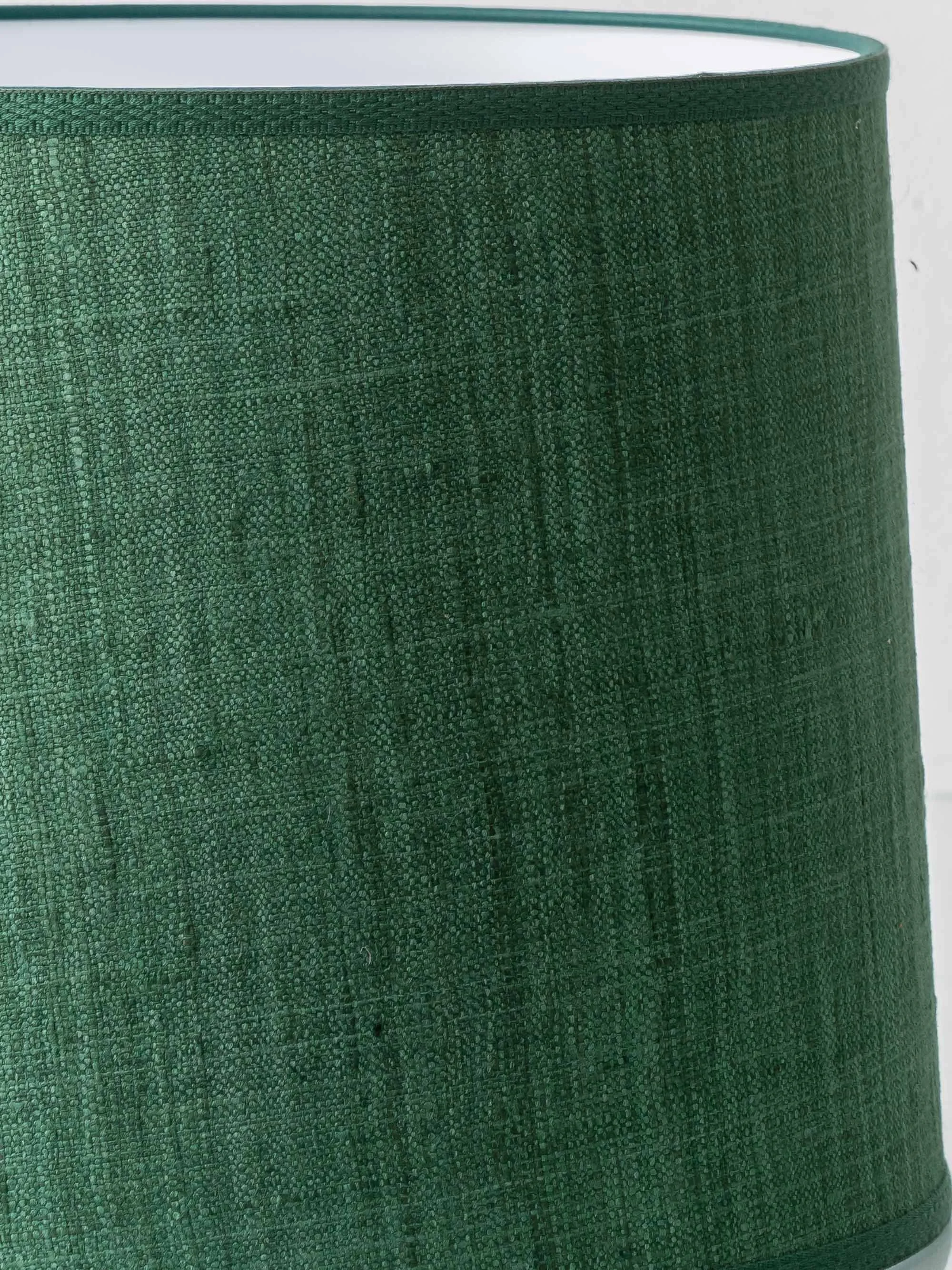
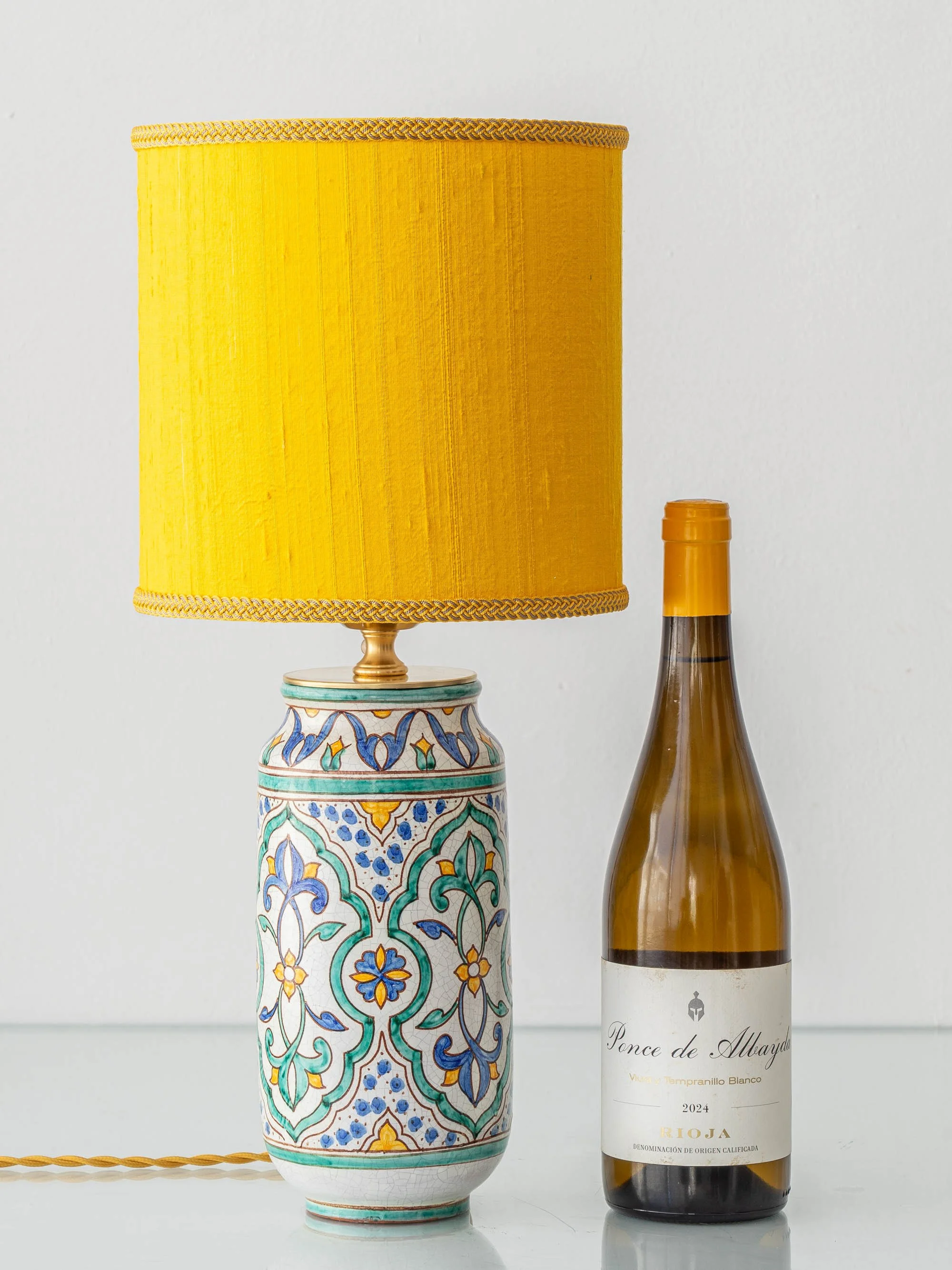
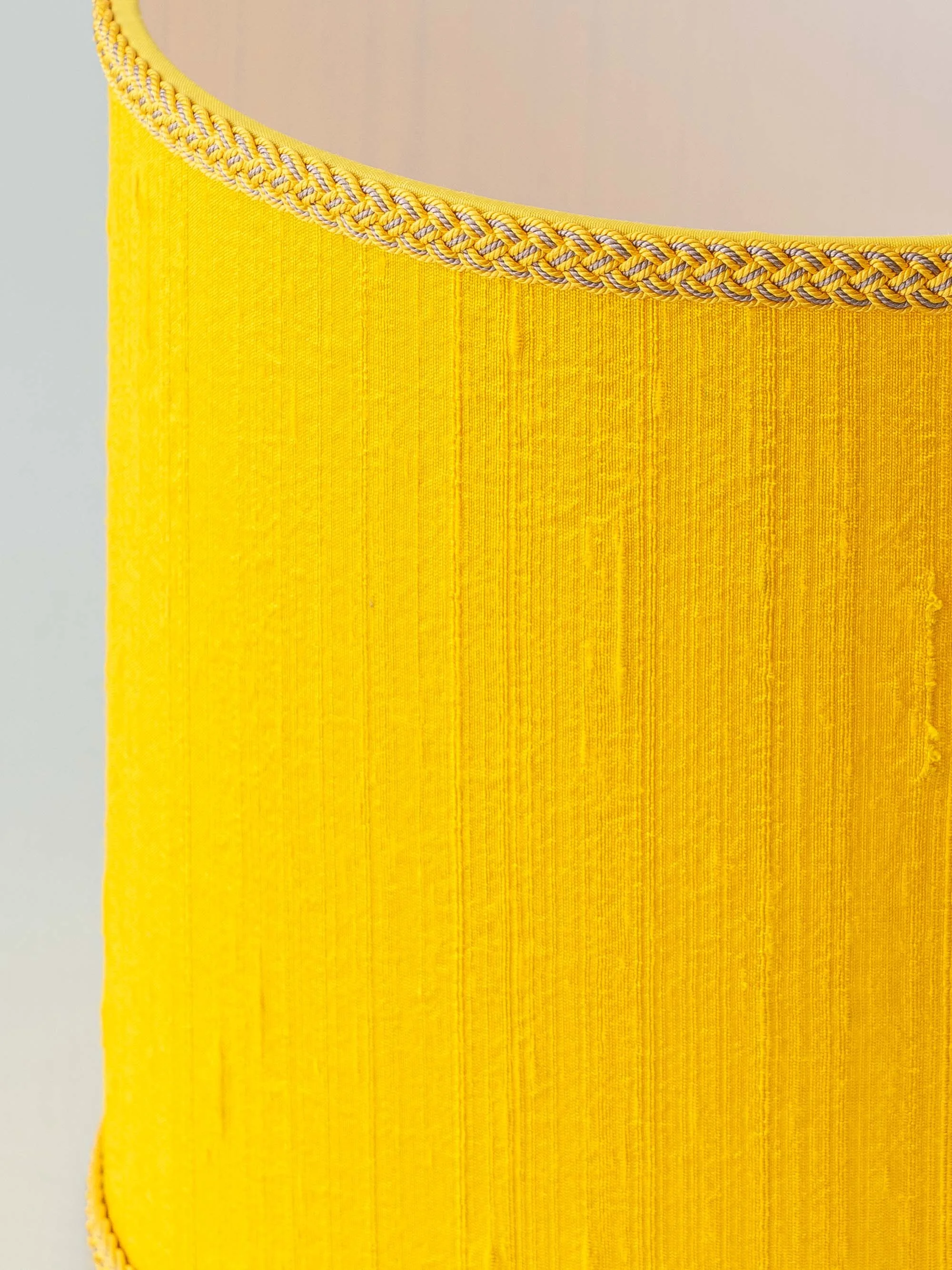
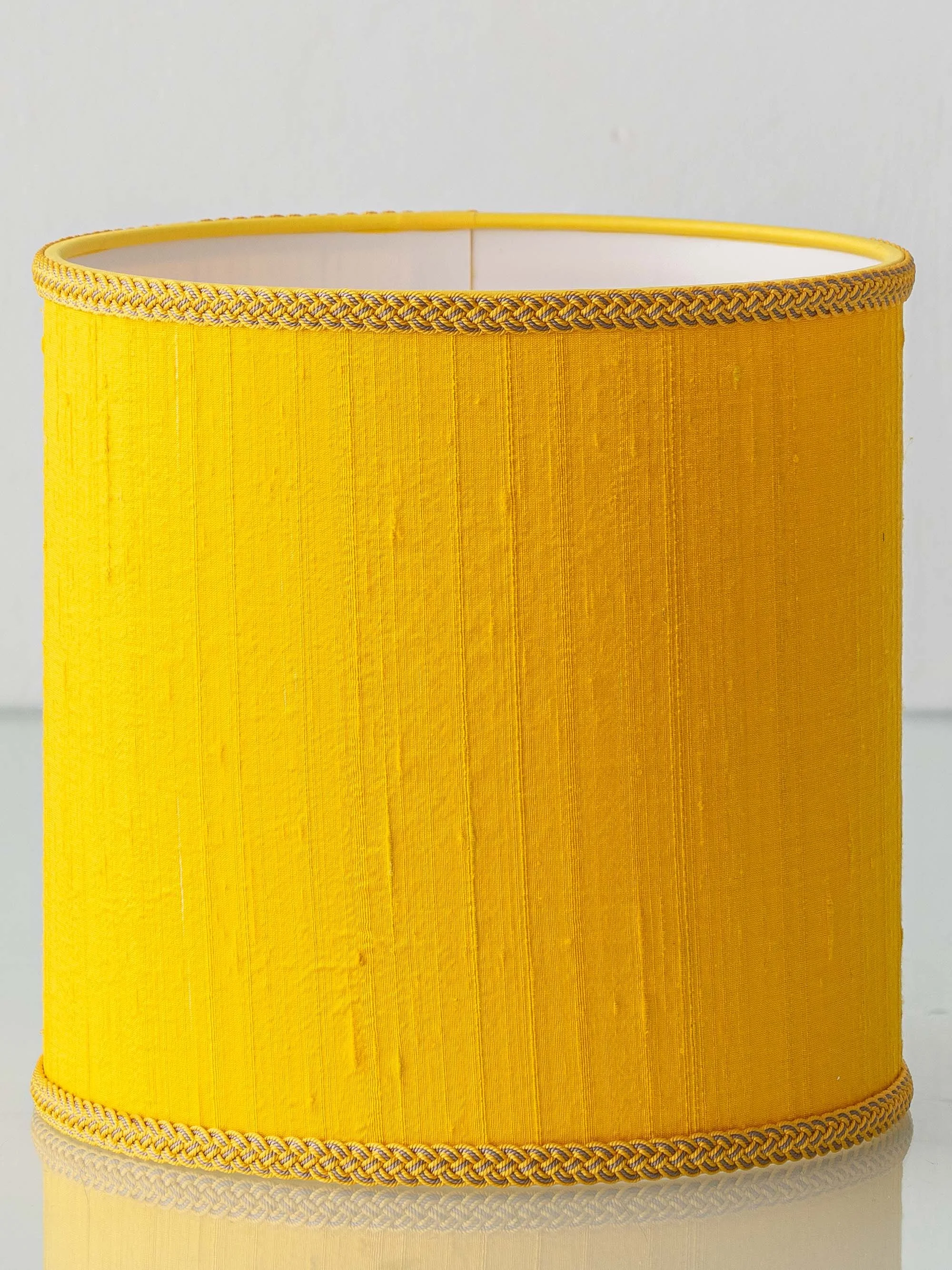
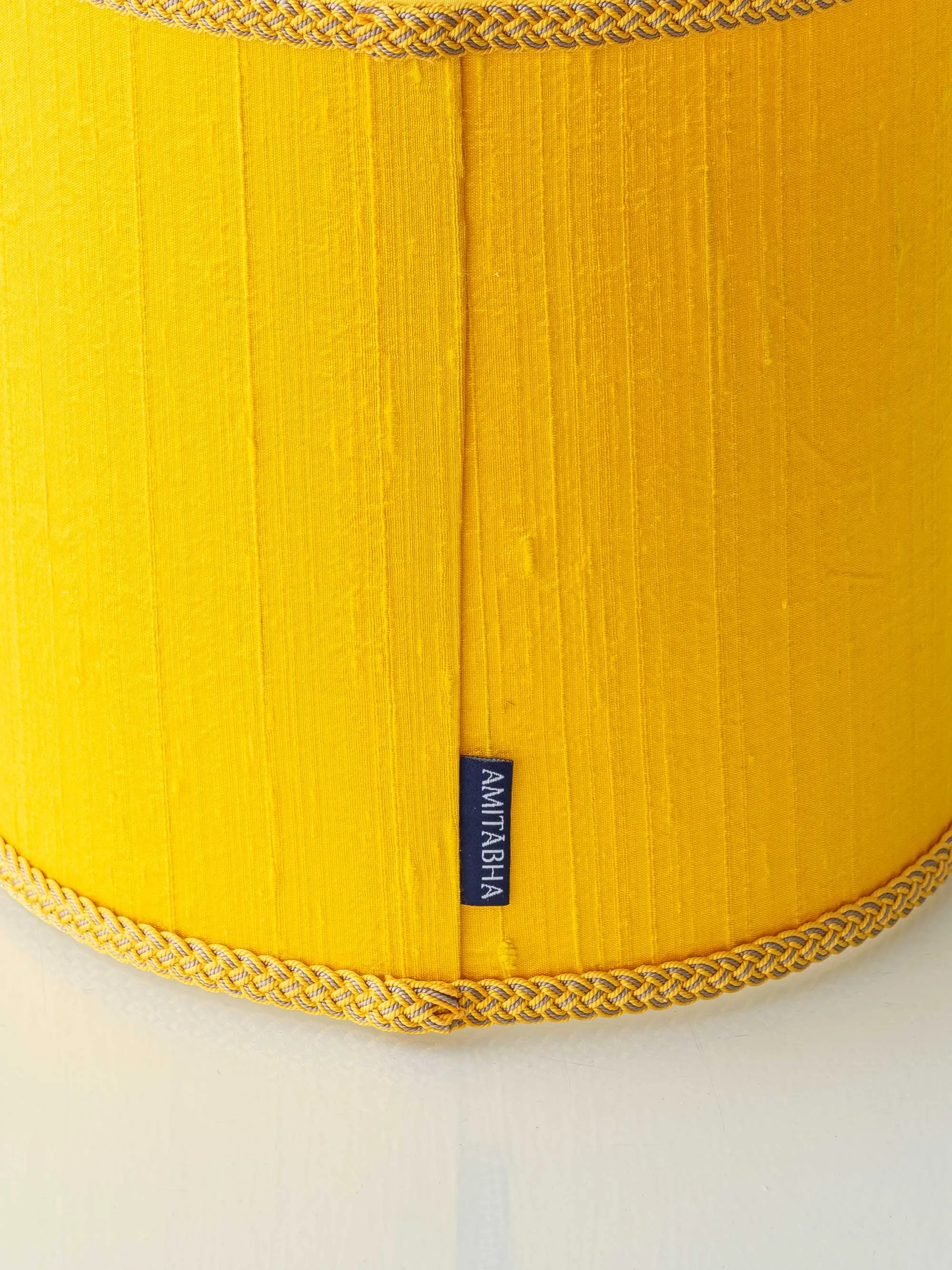
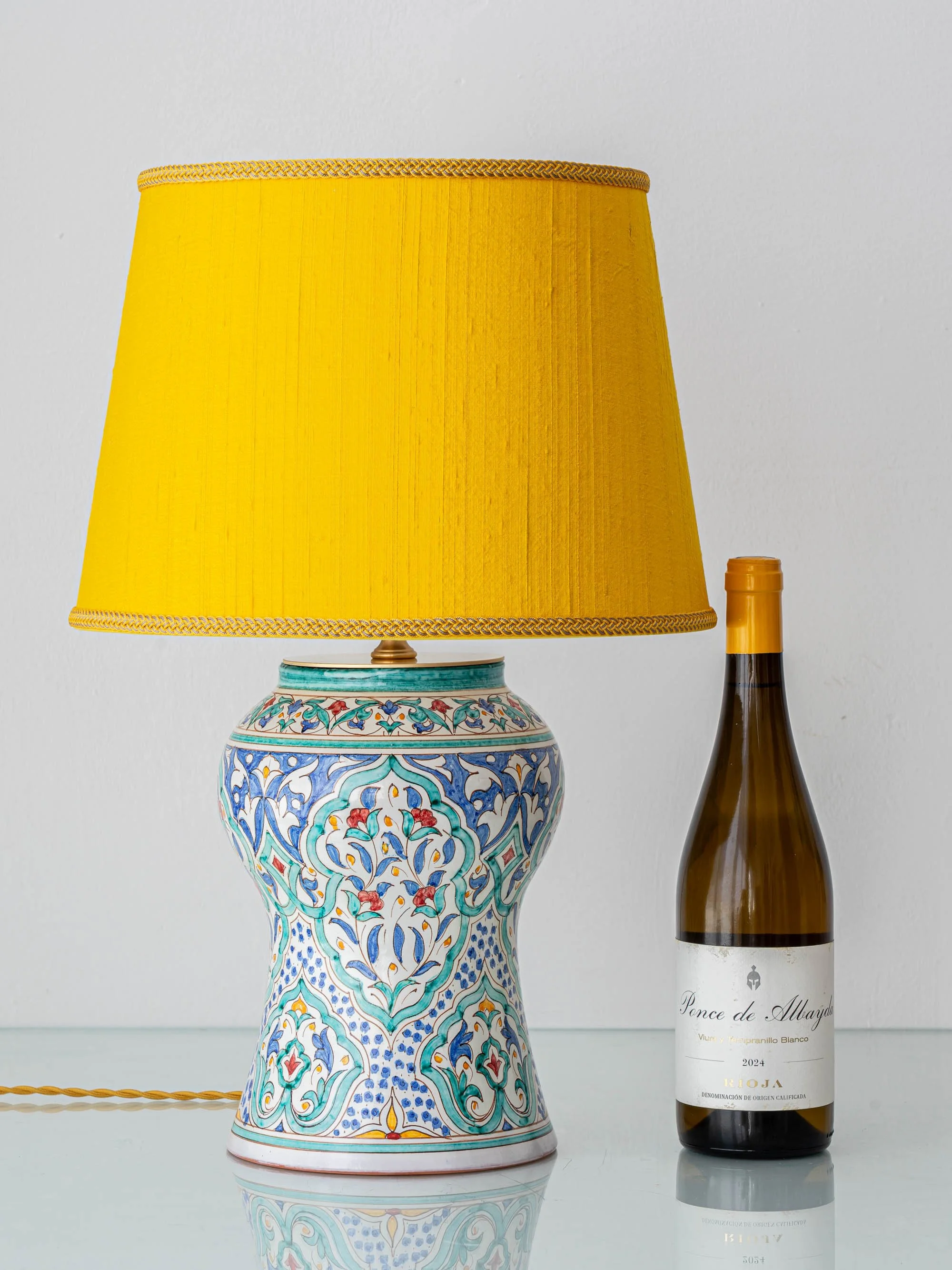
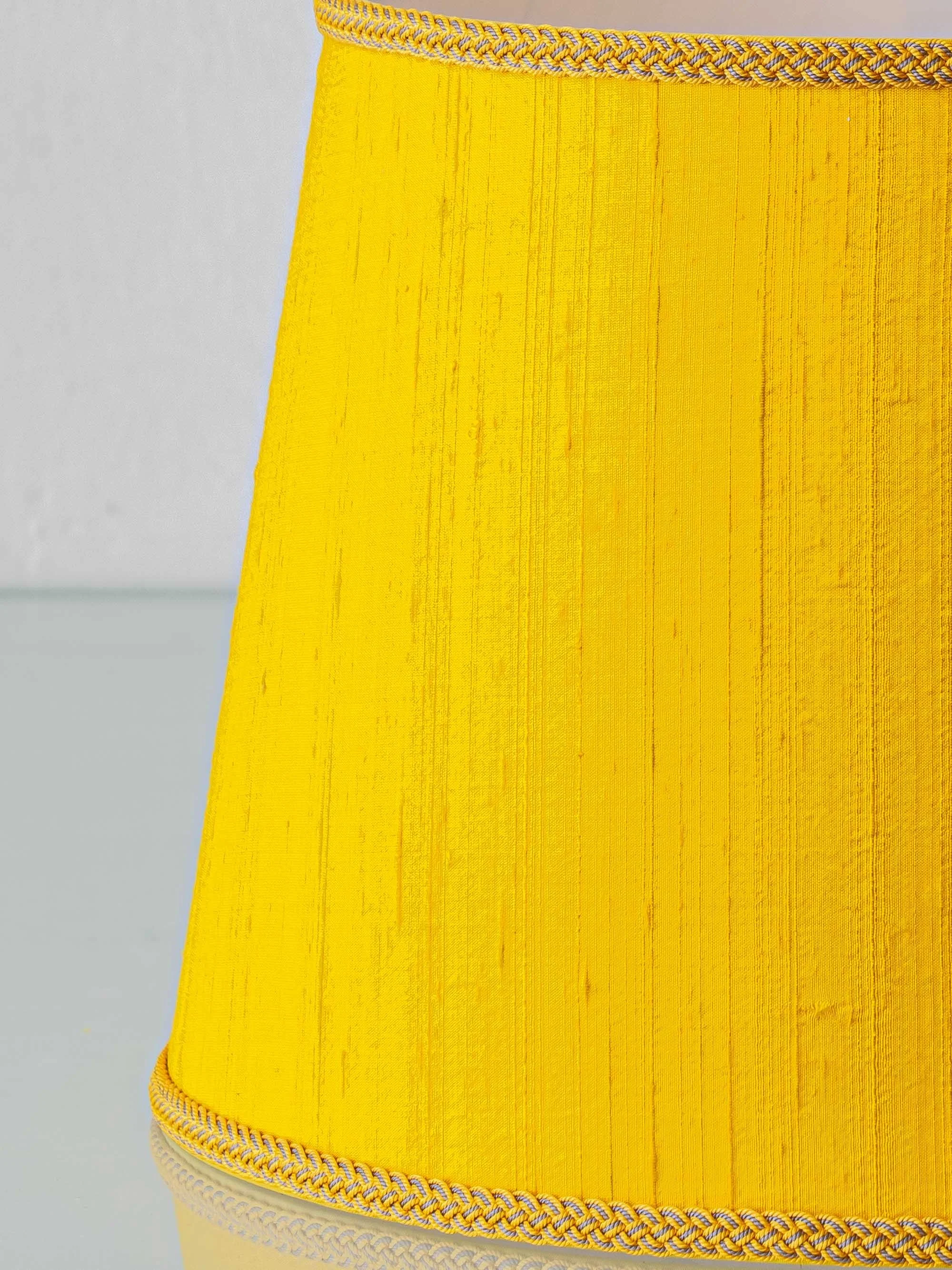
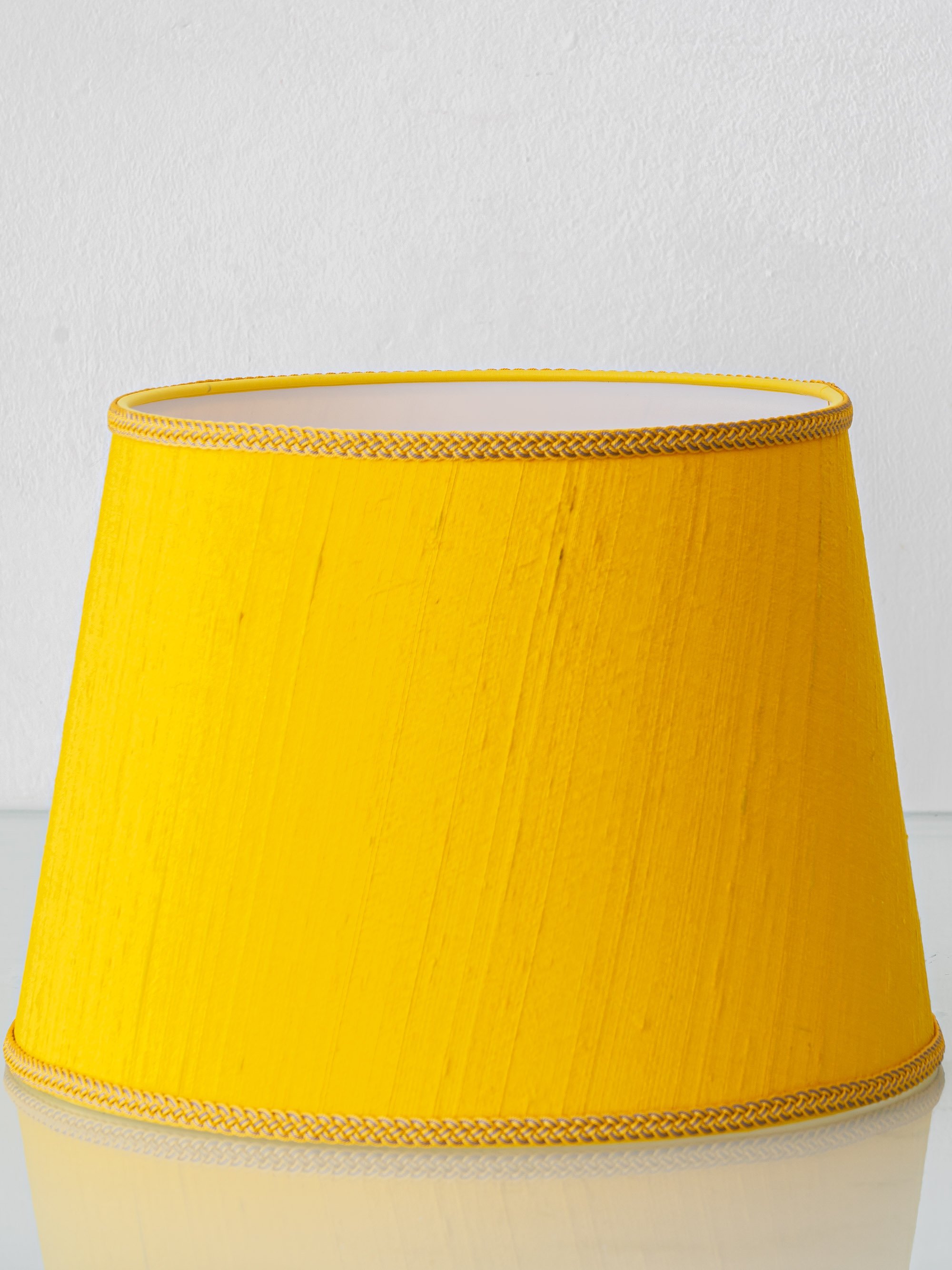
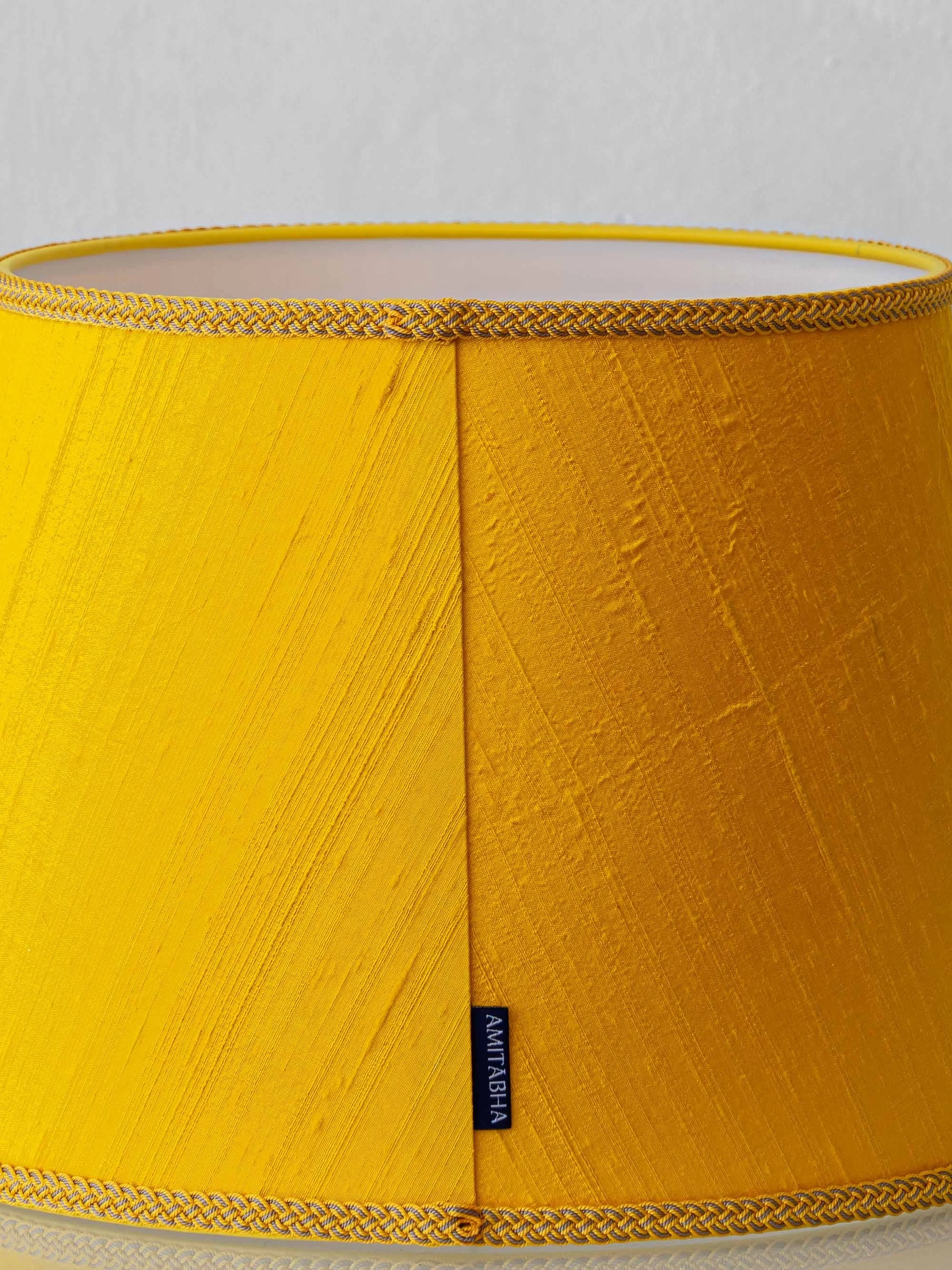
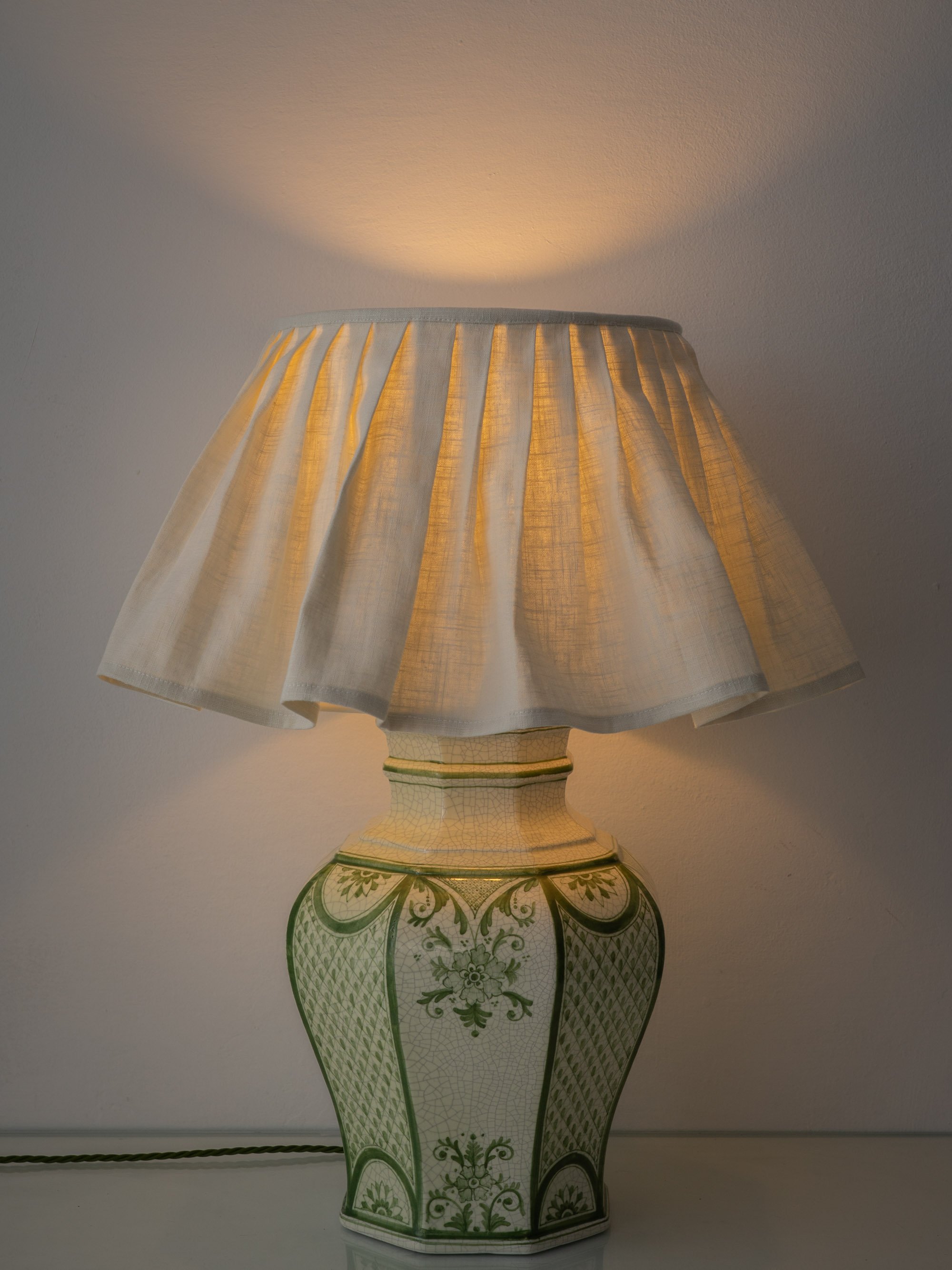
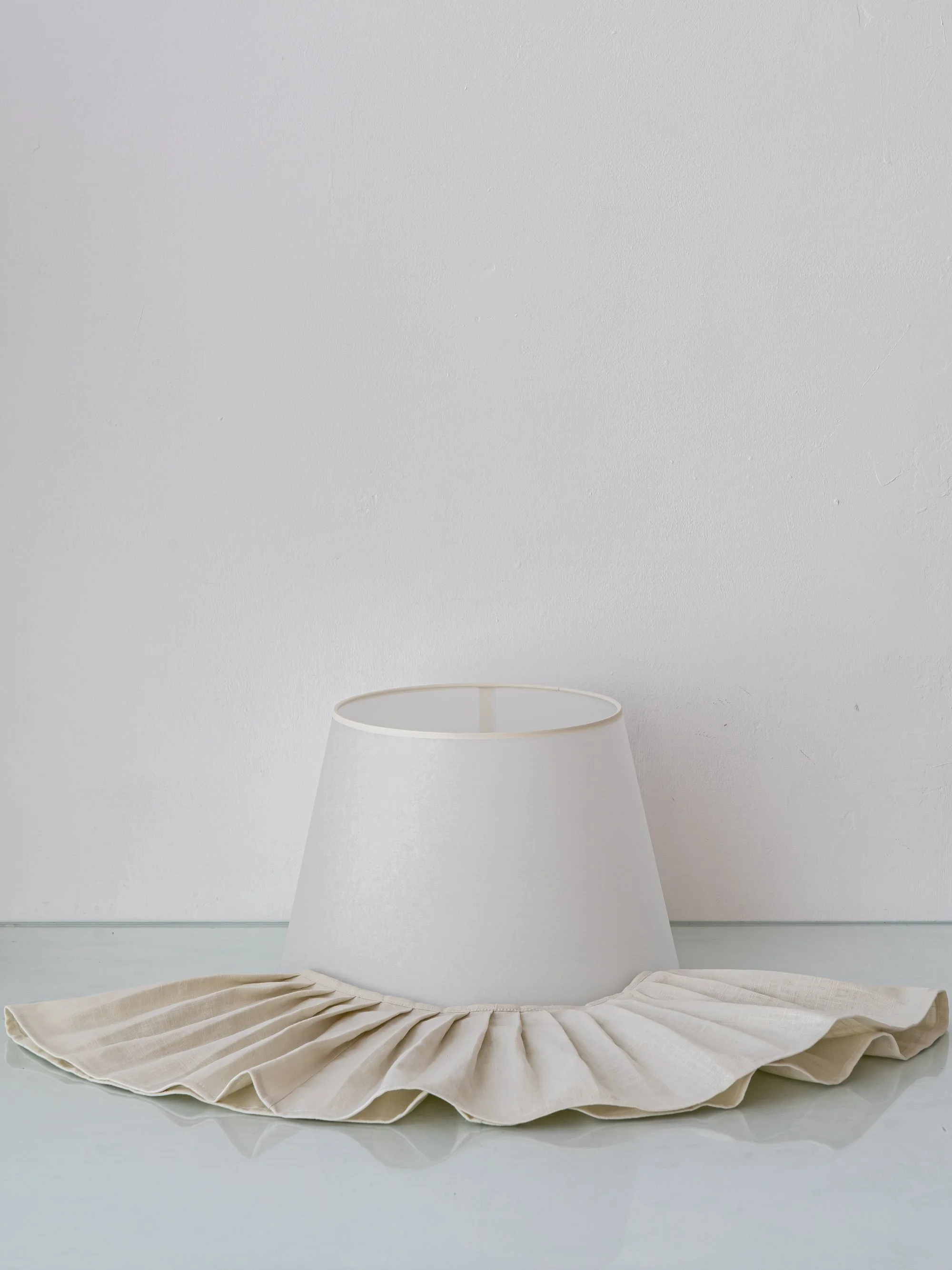
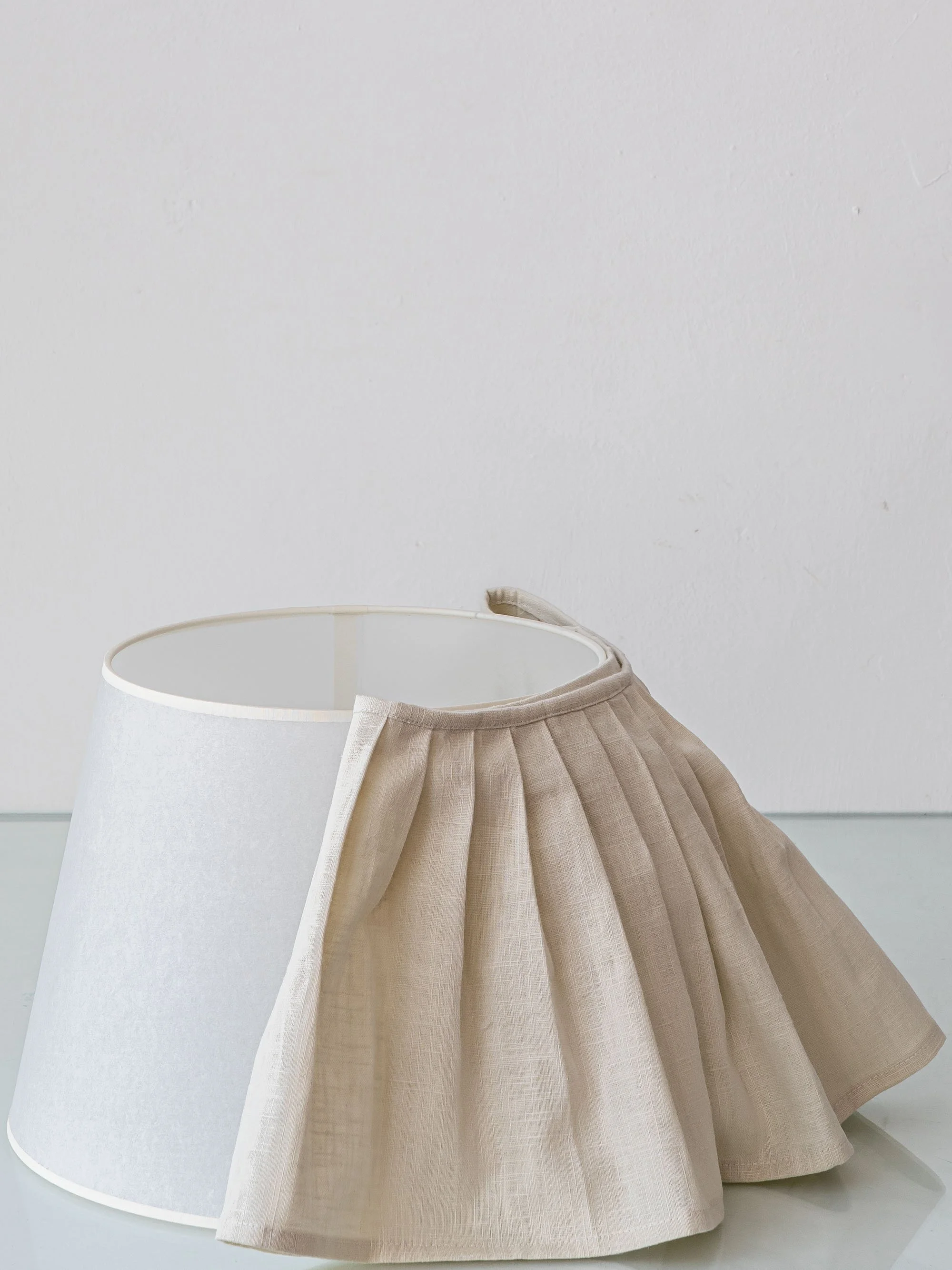
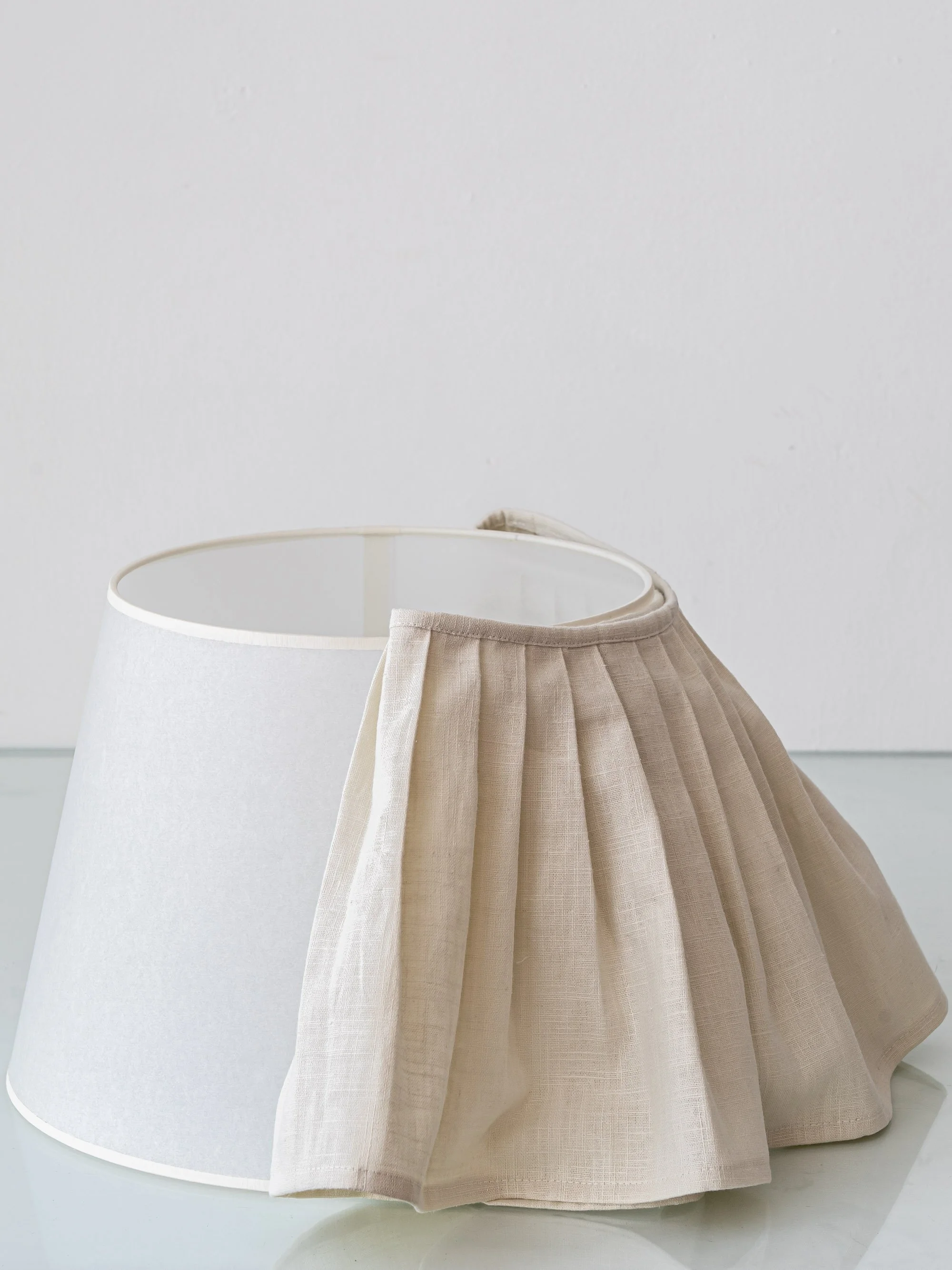
At 72 cm to the top of the shade these are substantial pieces. The new cream linen shades, trimmed in Houlès linen passementerie, compliment the vase bases beautifully.
About Cerámica de Fajalauza
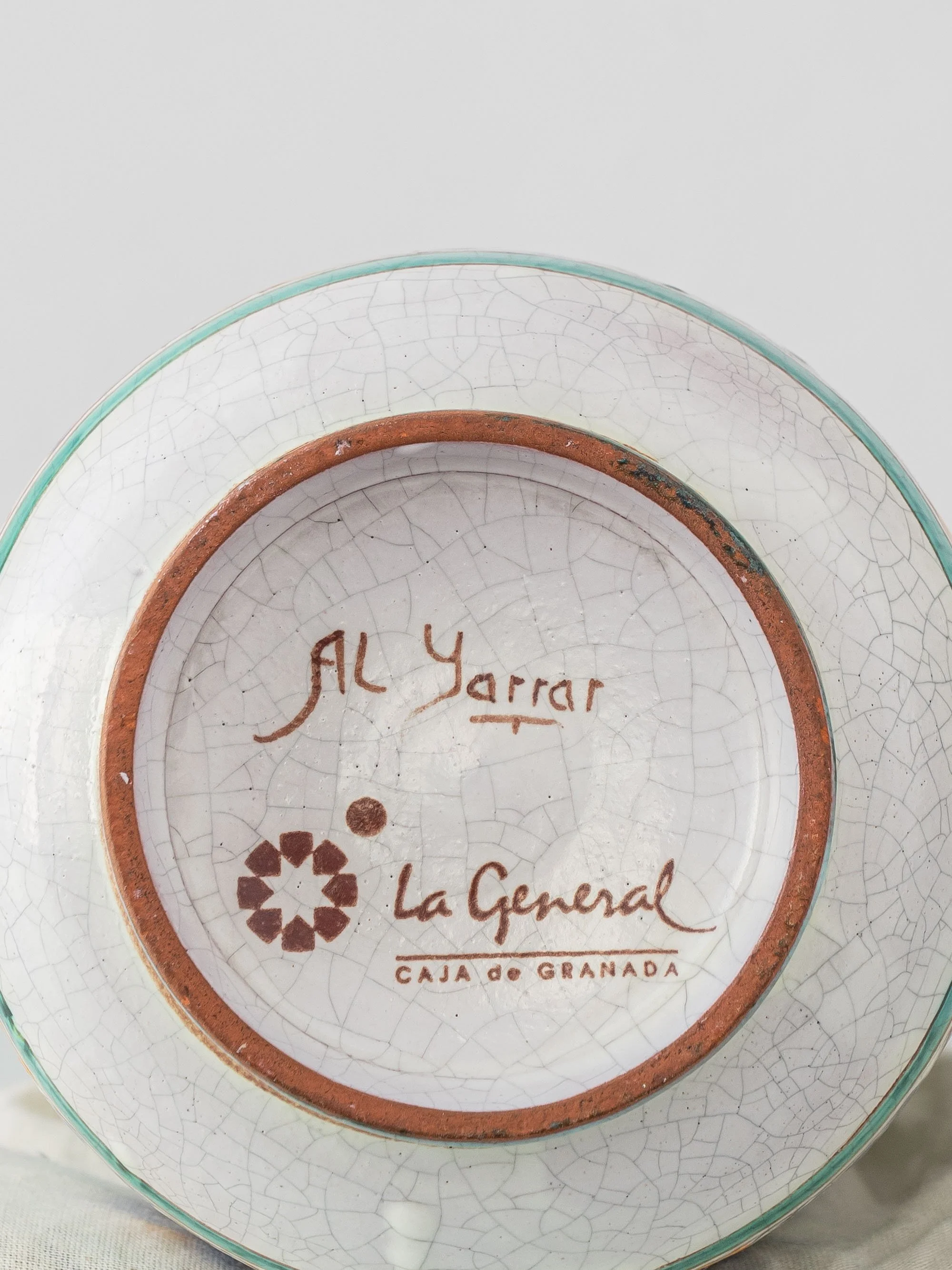
Fajalauza is Granada's most distinctive ceramic tradition, named after the historic Fajalauza Gate in the Albayzín district where its workshops first gathered. The first written record dates to 1517, when a potter filed a legal complaint in the years following the Christian reconquest of Granada — a moment that shaped the tradition itself, as Moorish and Spanish artistic influences fused into something new. The characteristic palette — copper green and cobalt blue on a cream tin-glazed ground — and the recurring motifs of pomegranates, palm fronds, and stylized foliage have remained the visual language of Fajalauza for five centuries. These bases are made in Bailén, in the province of Jaén, in a direct continuation of that Granada style: hand-thrown earthenware decorated freehand in the Fajalauza manner, a living craft produced today much as it has been since the sixteenth century.