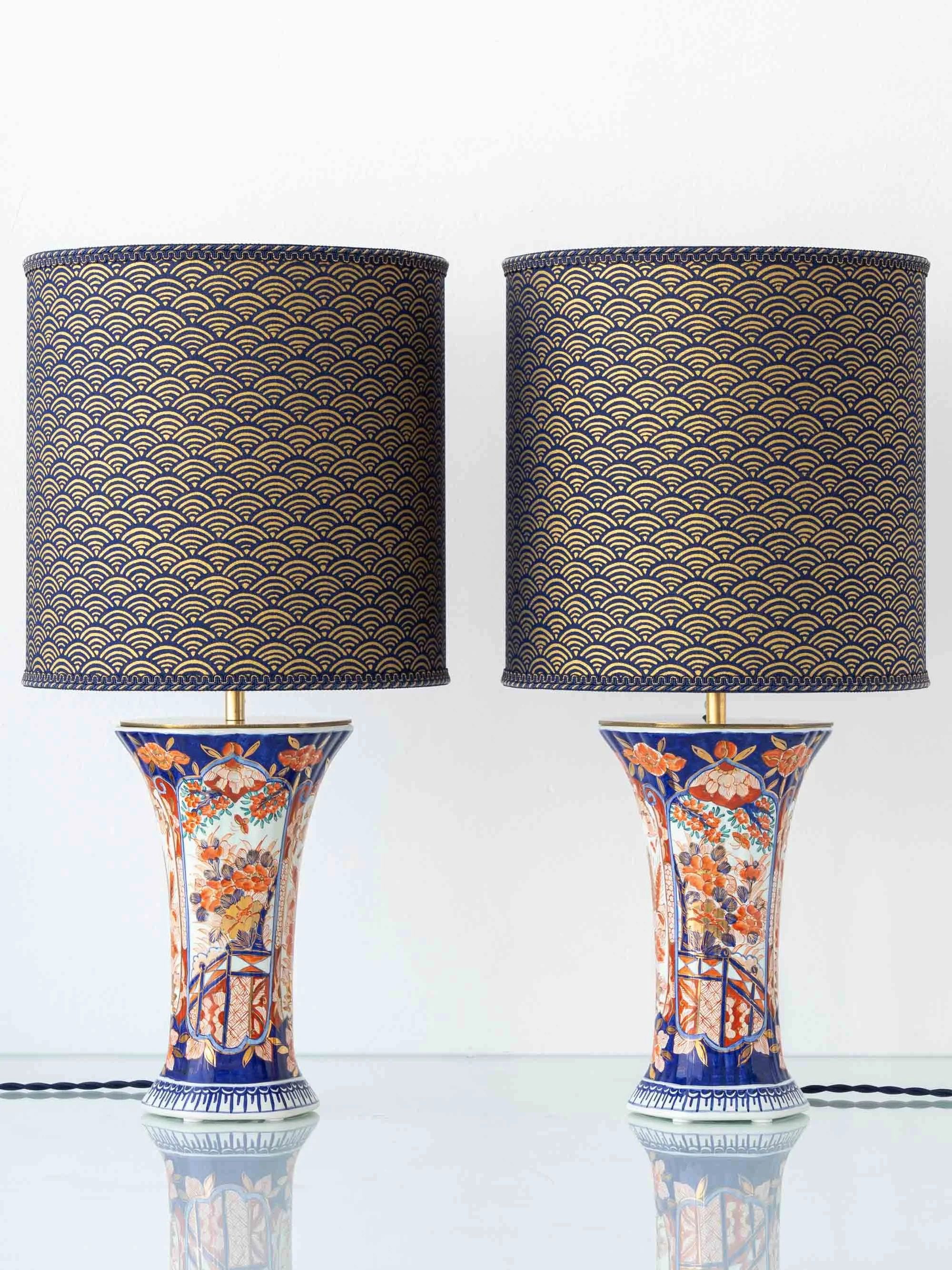
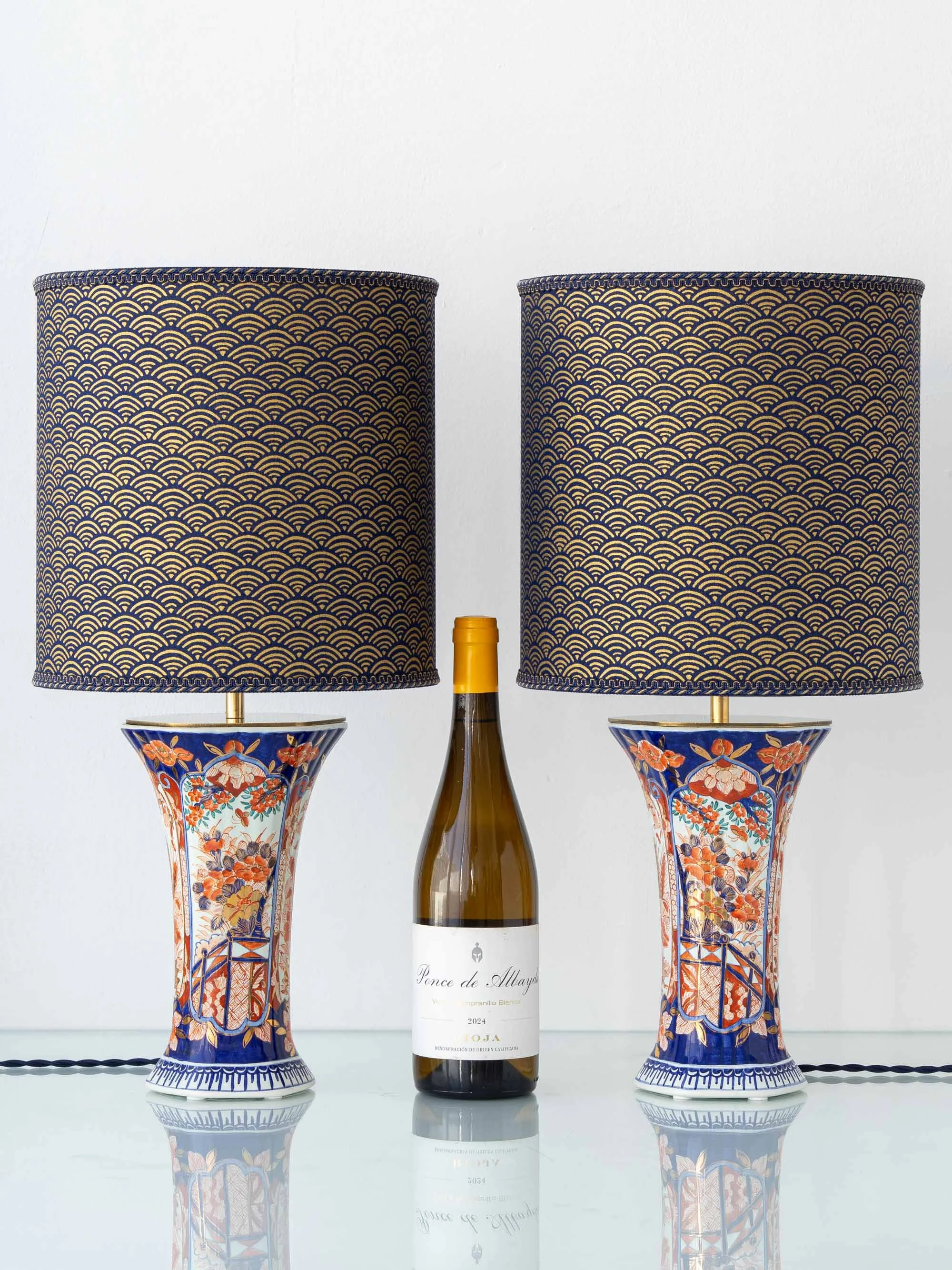
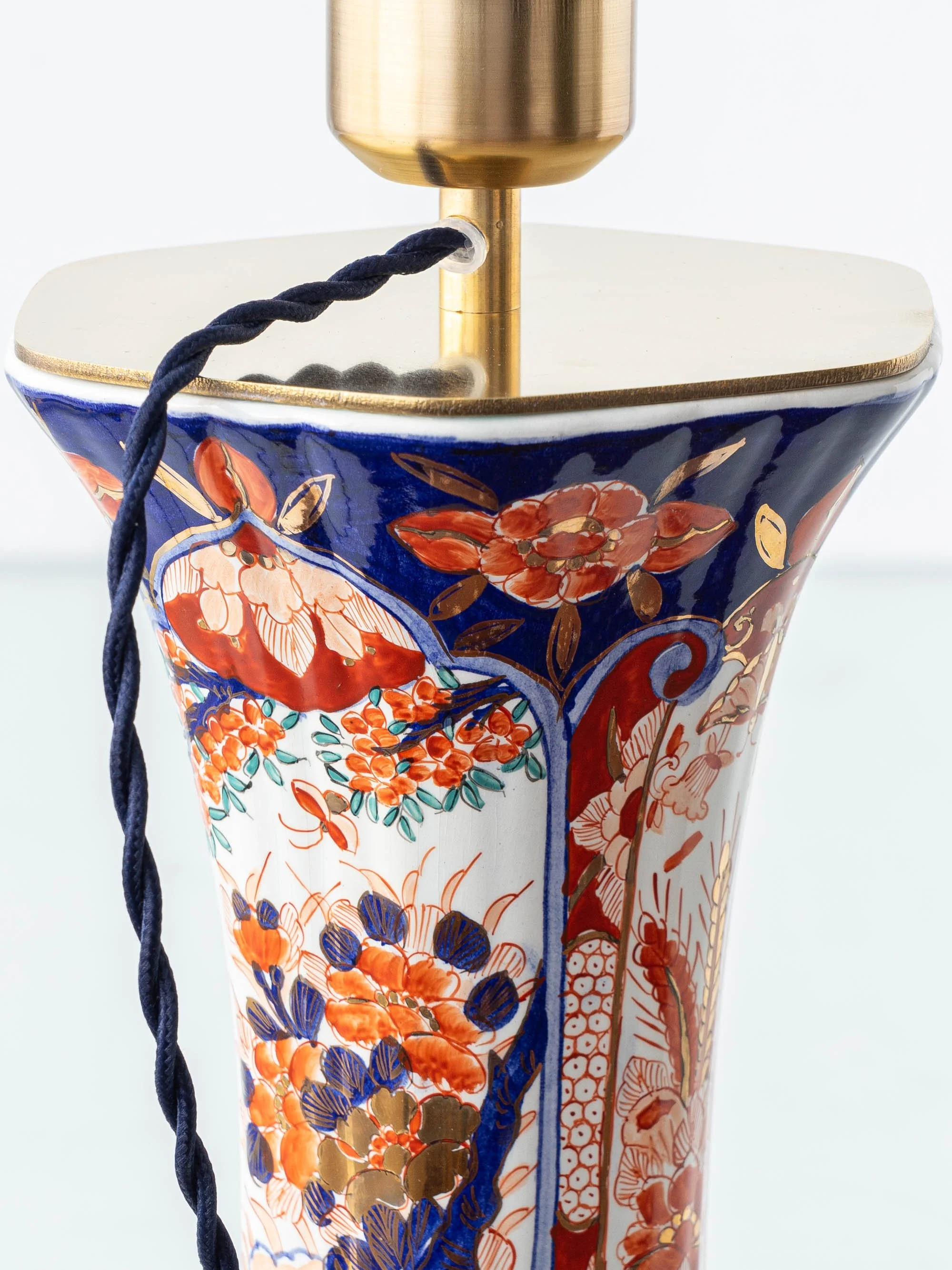
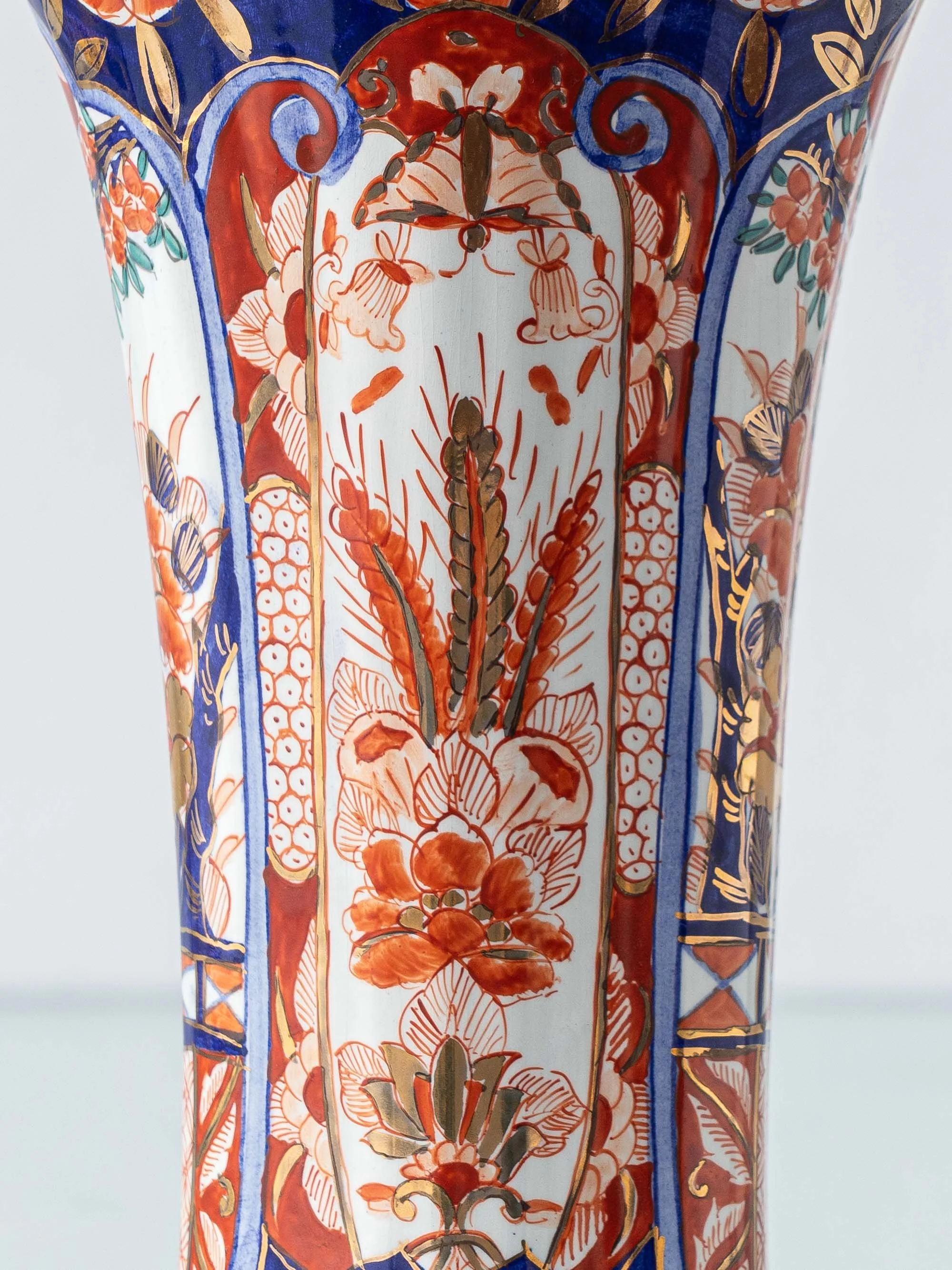
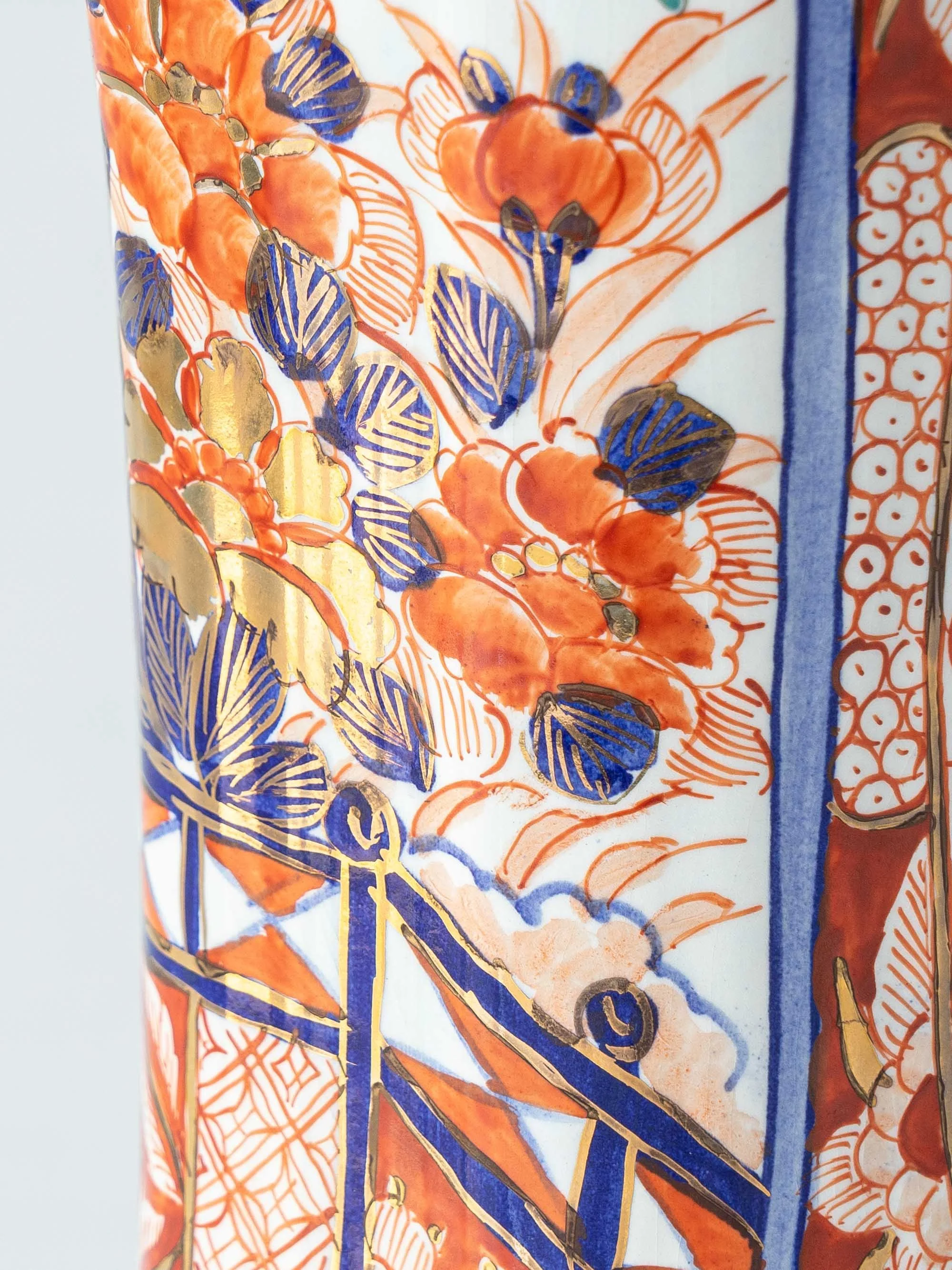
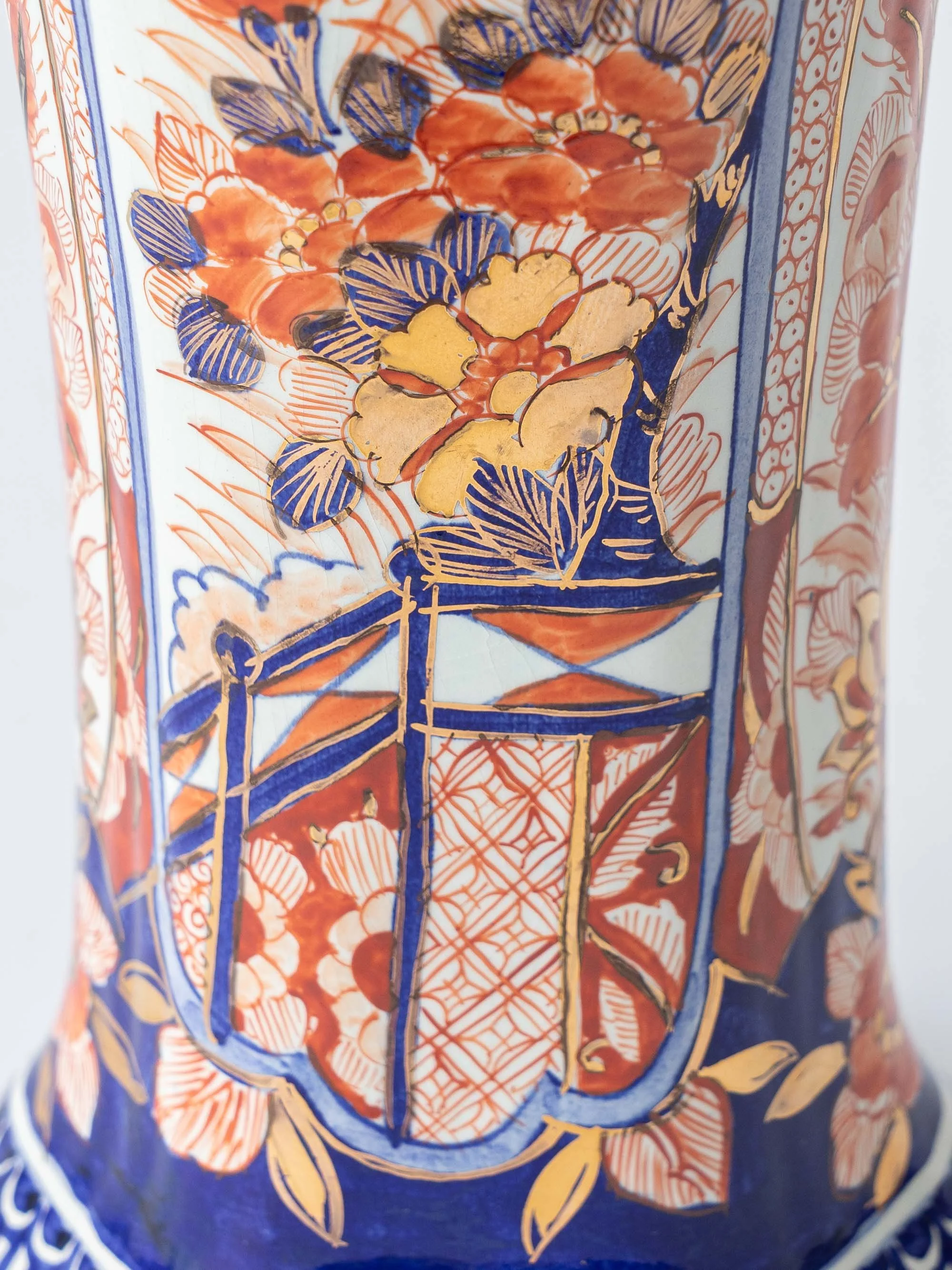
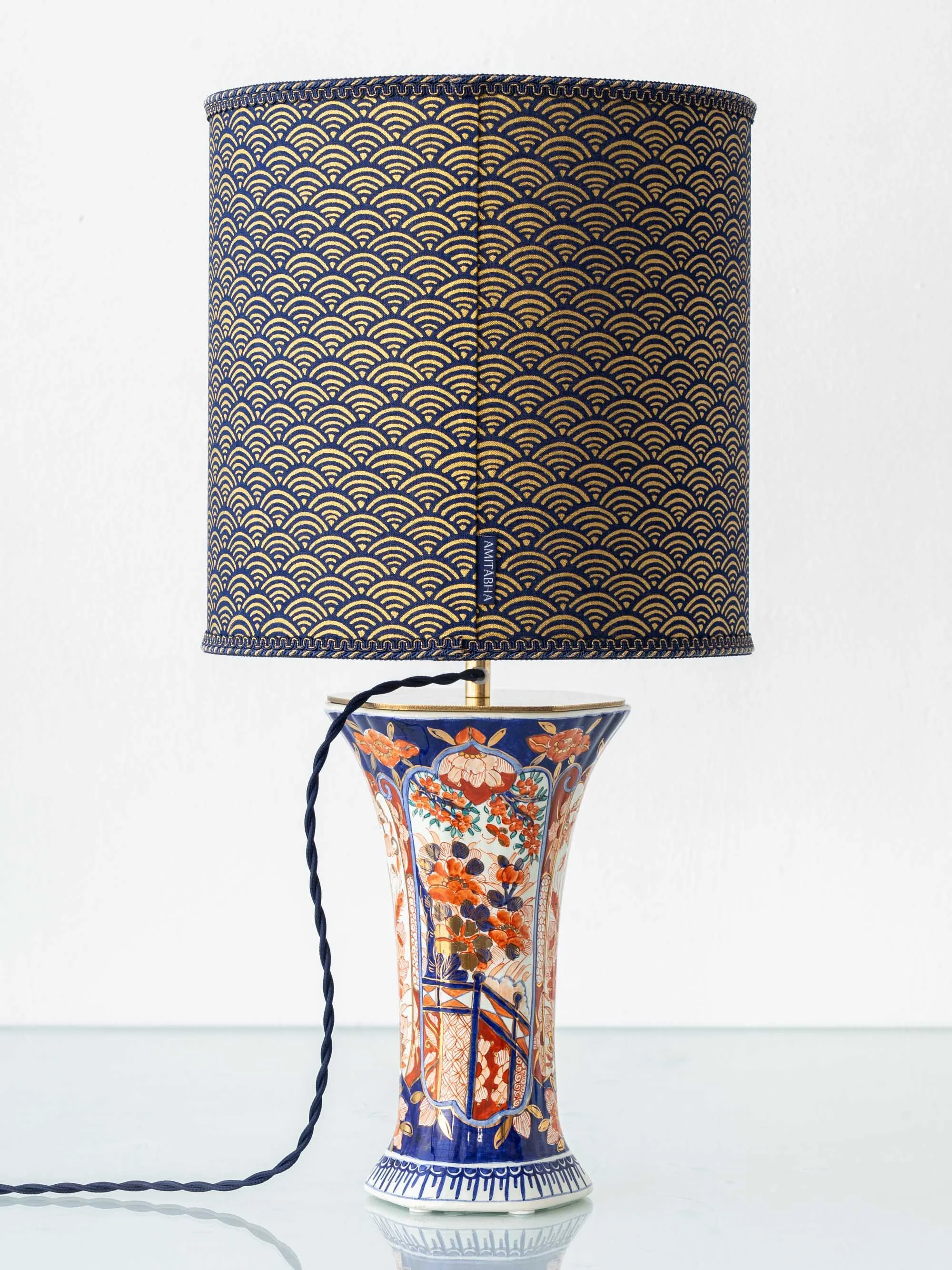
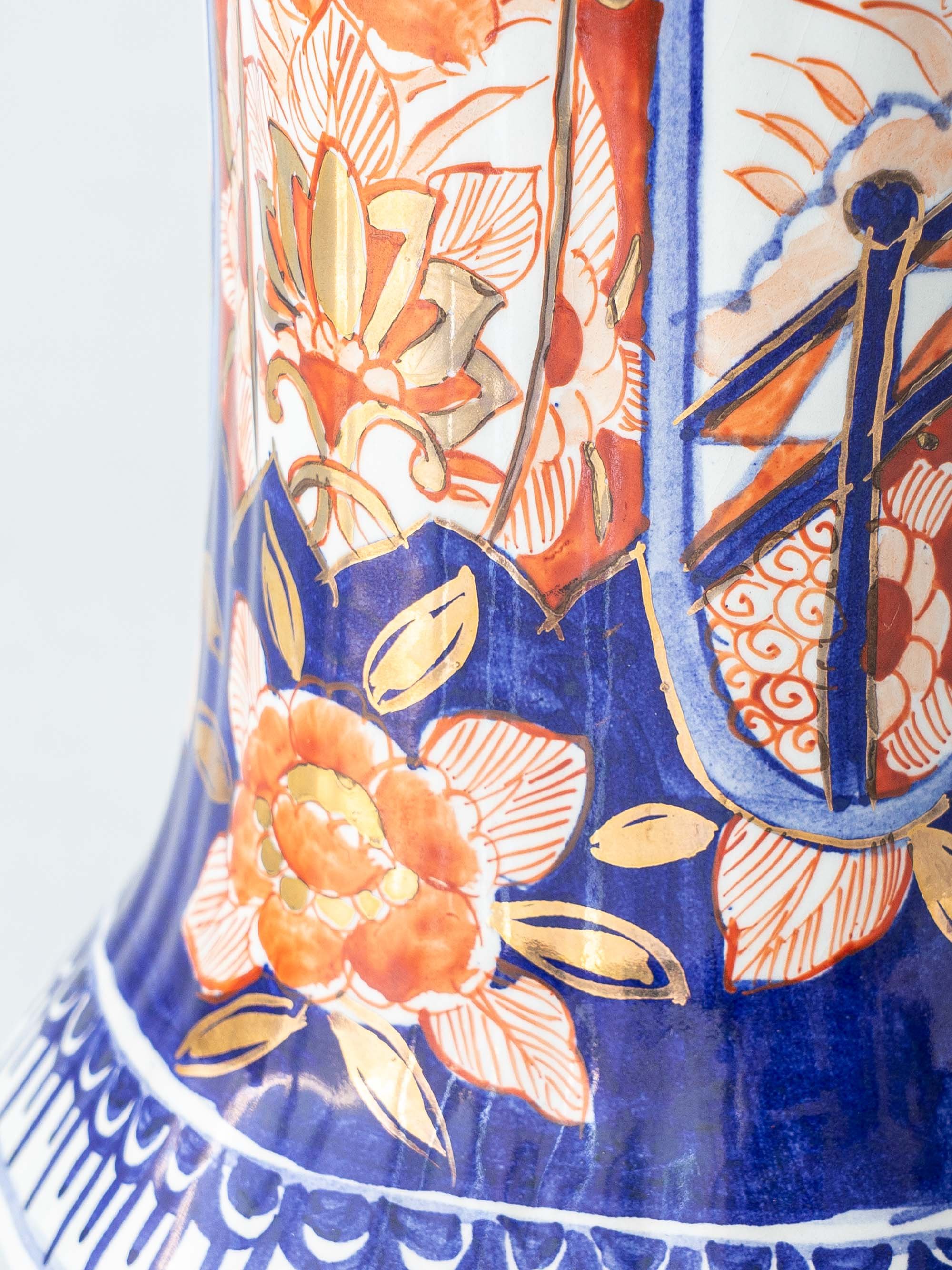
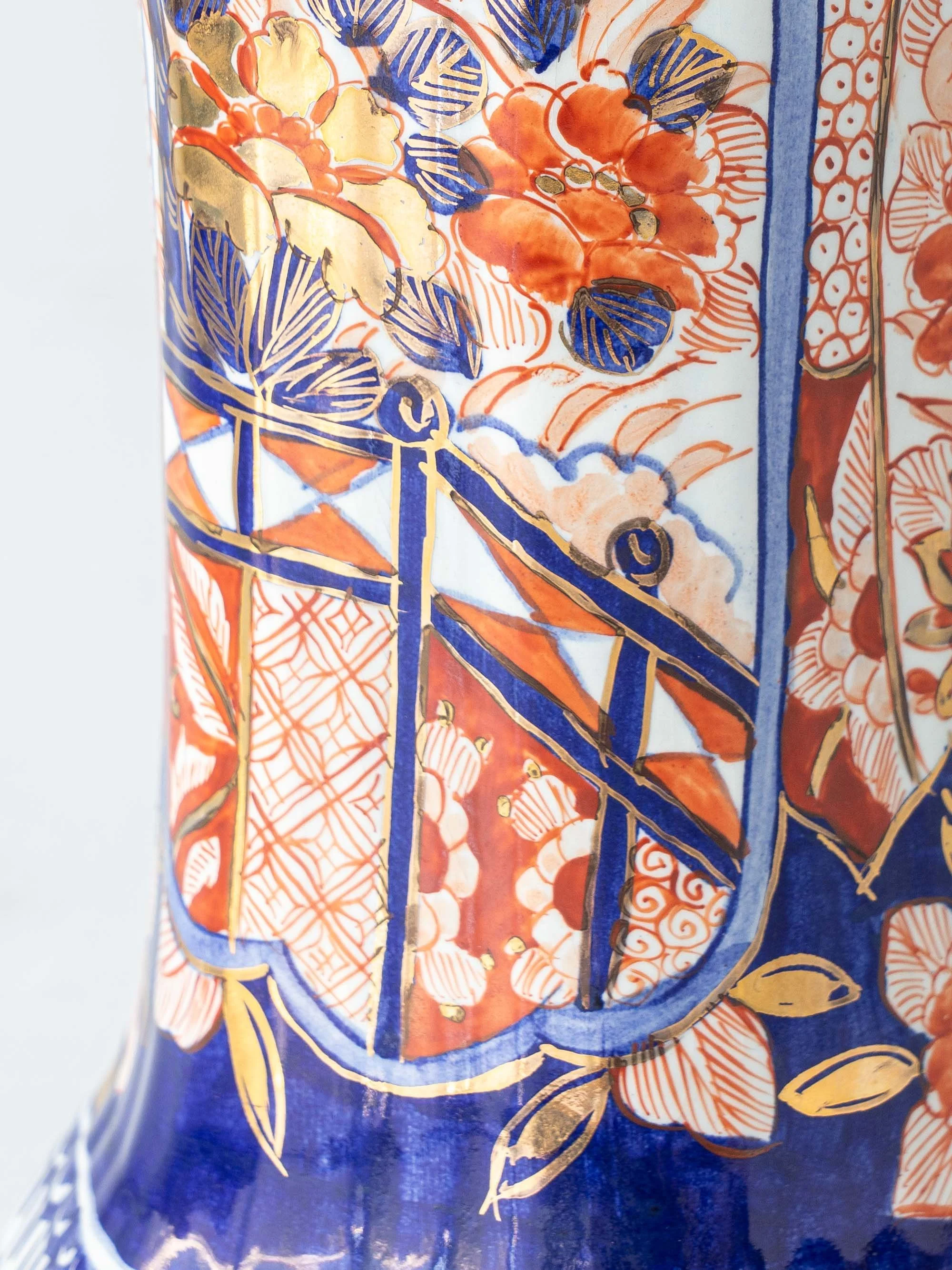
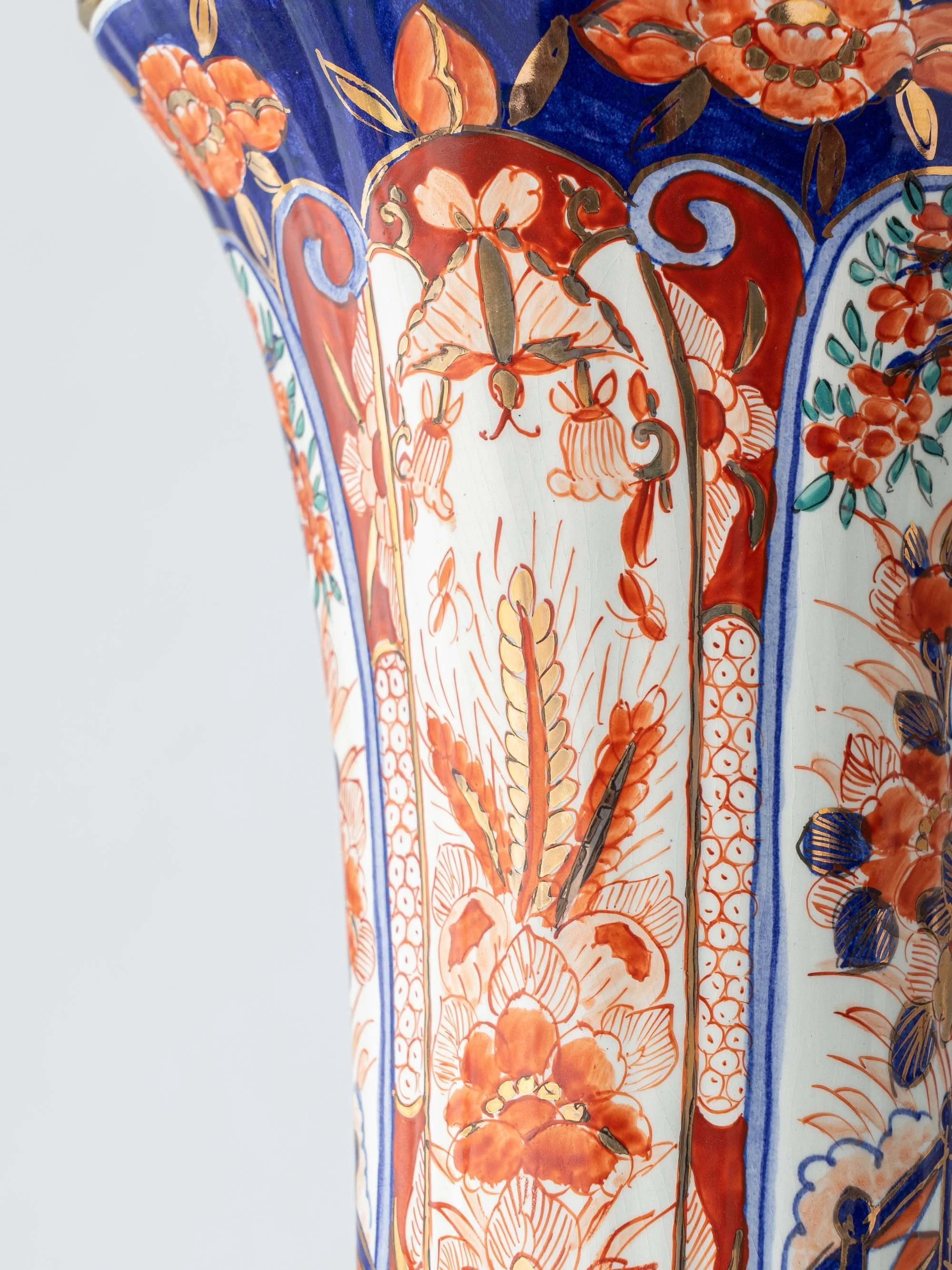
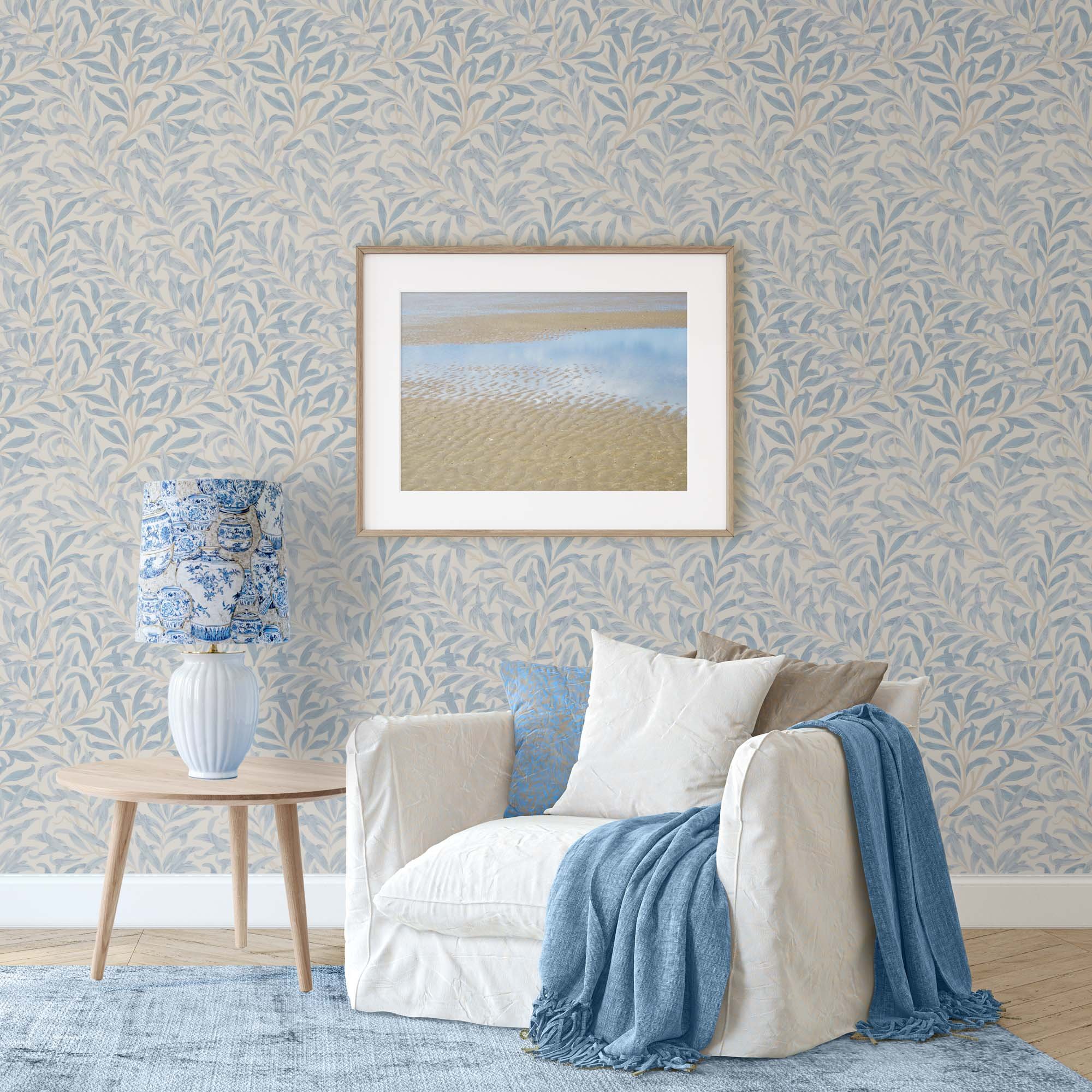
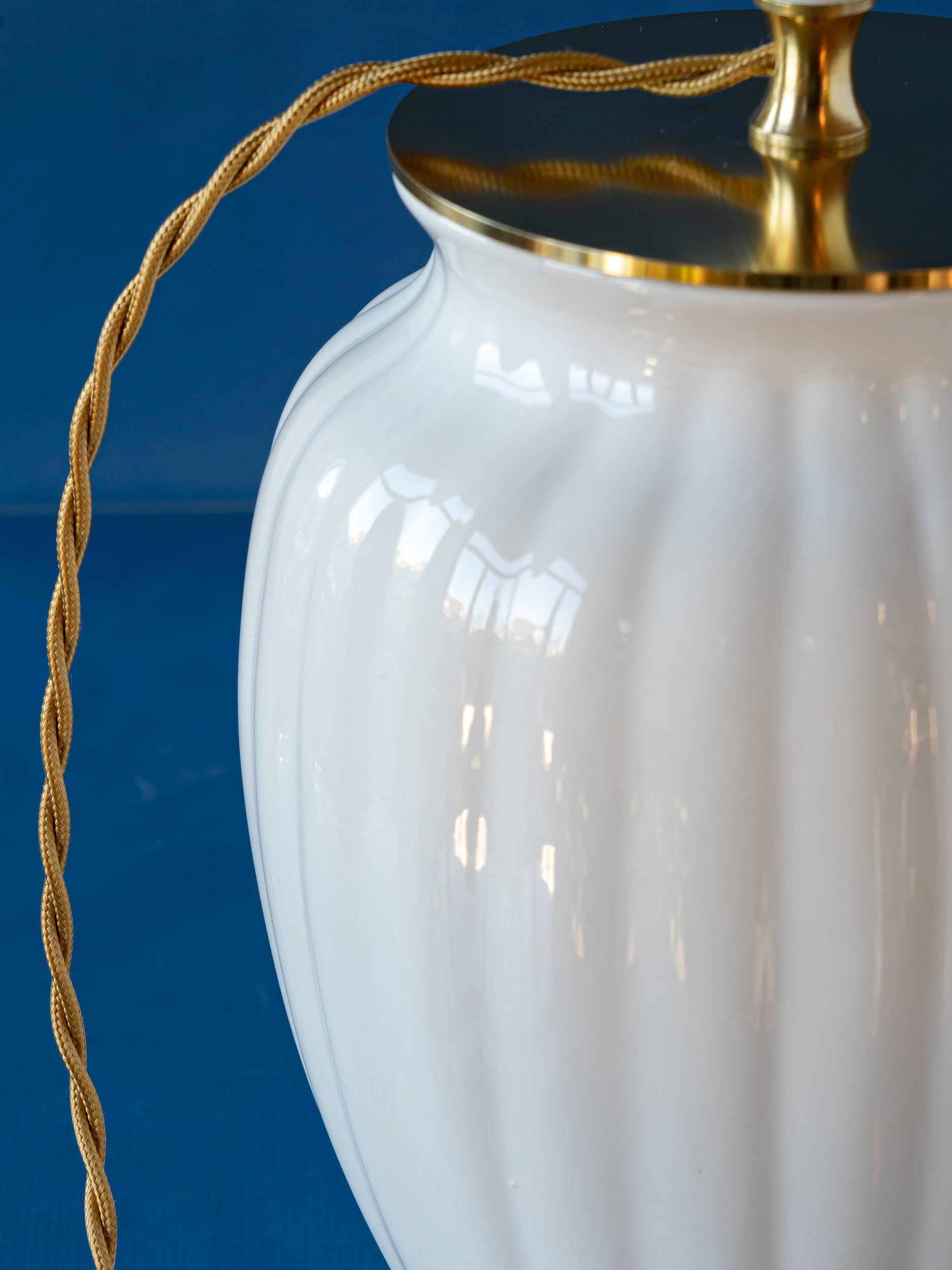
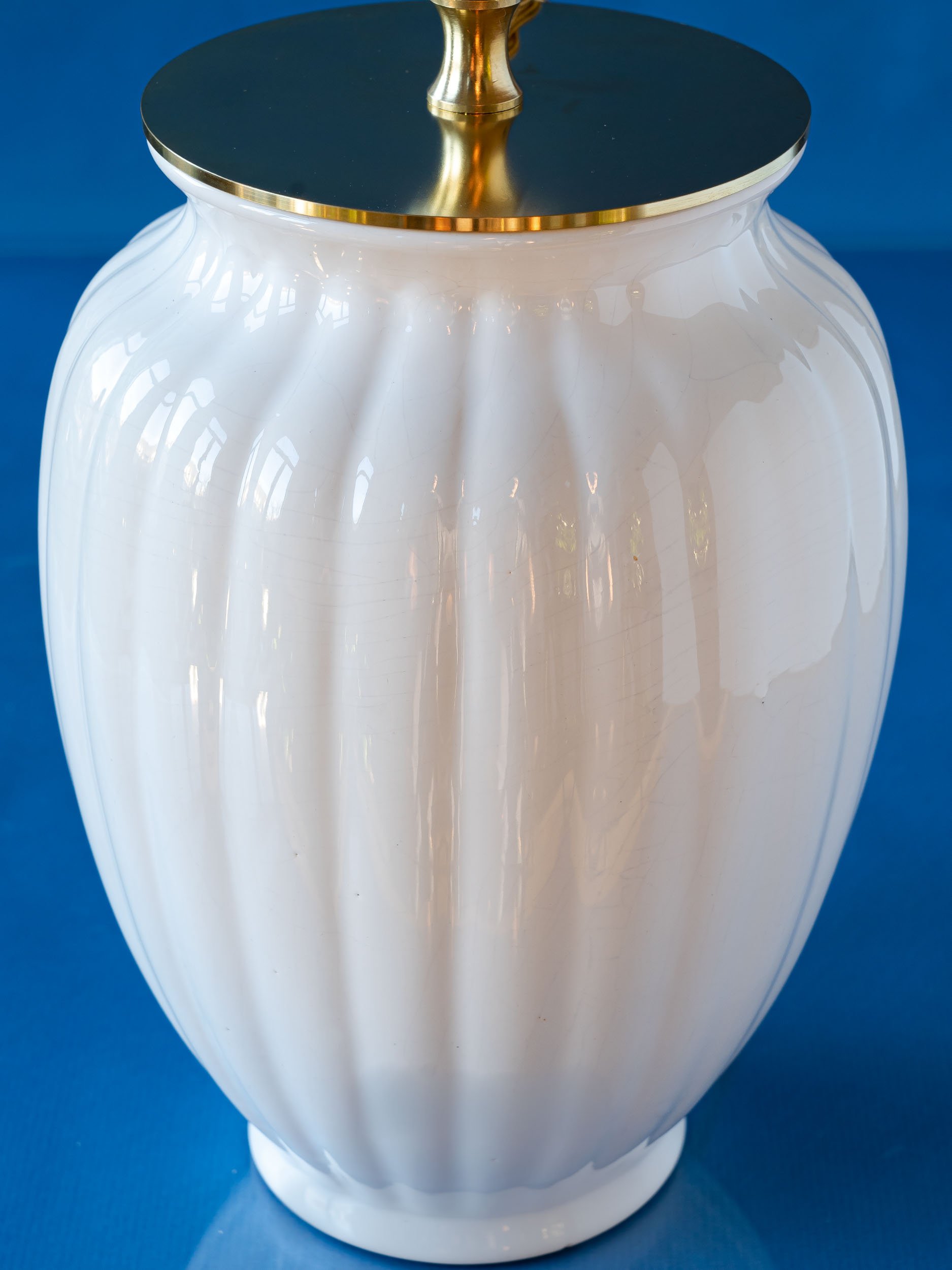
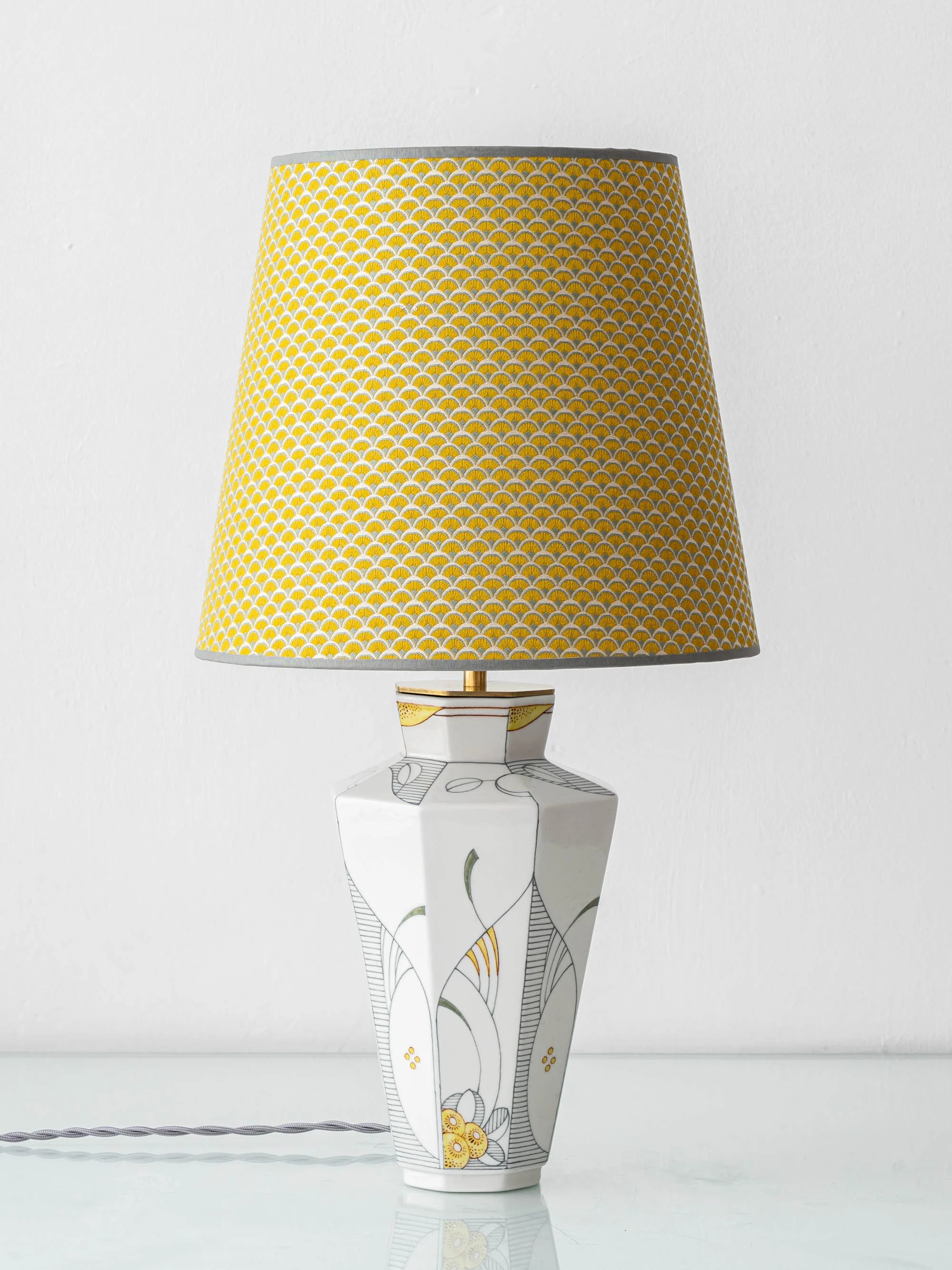
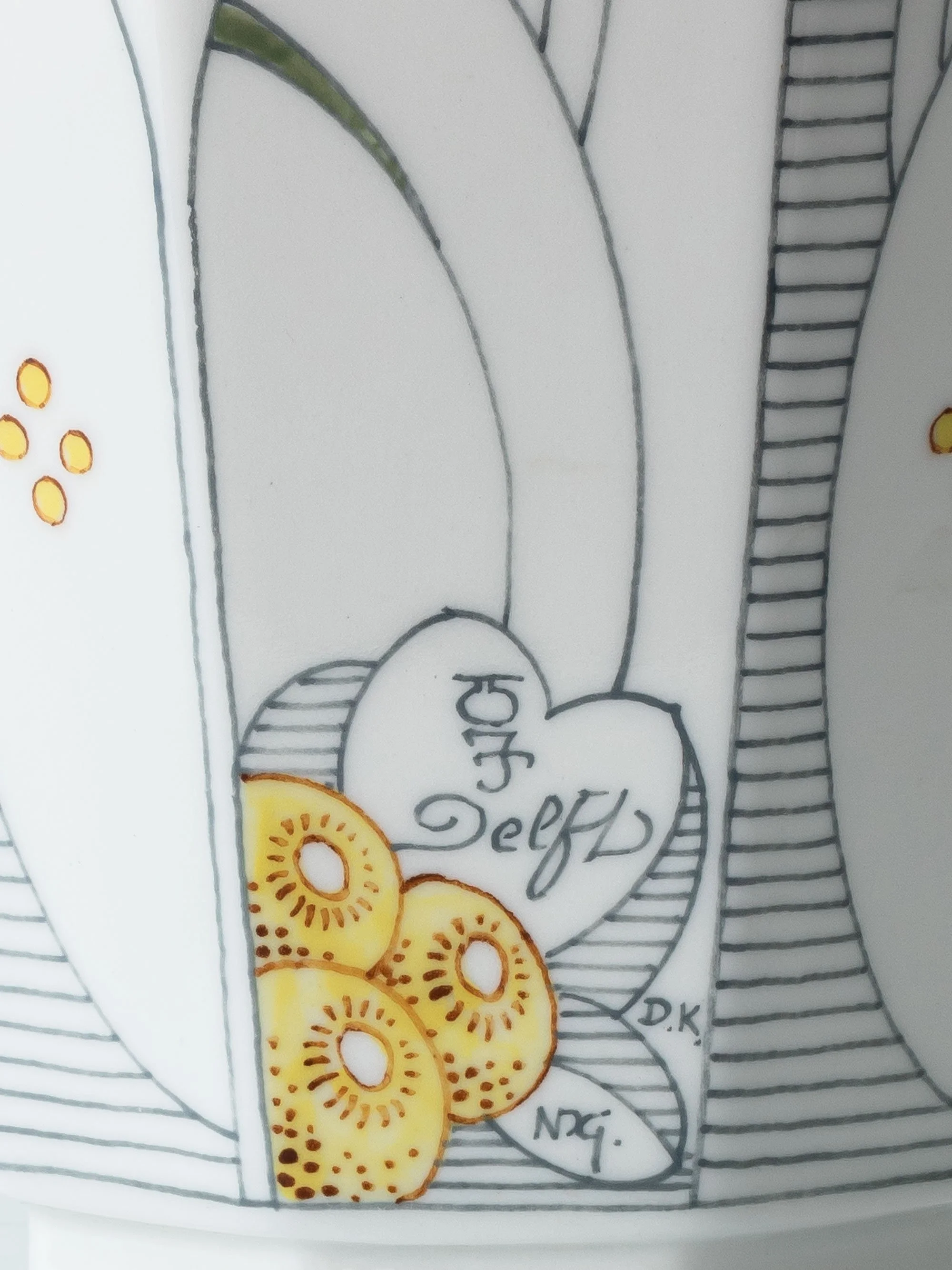
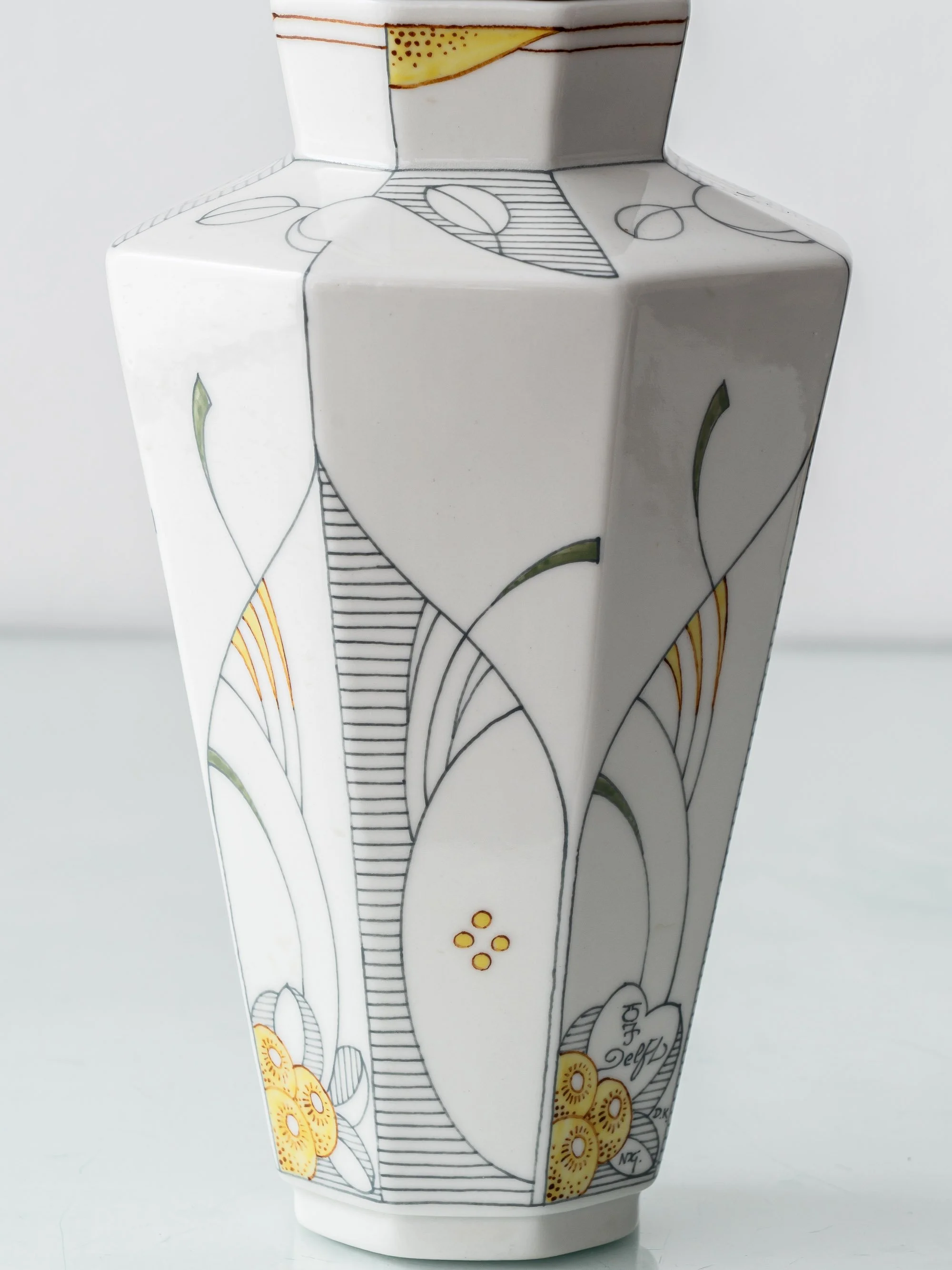
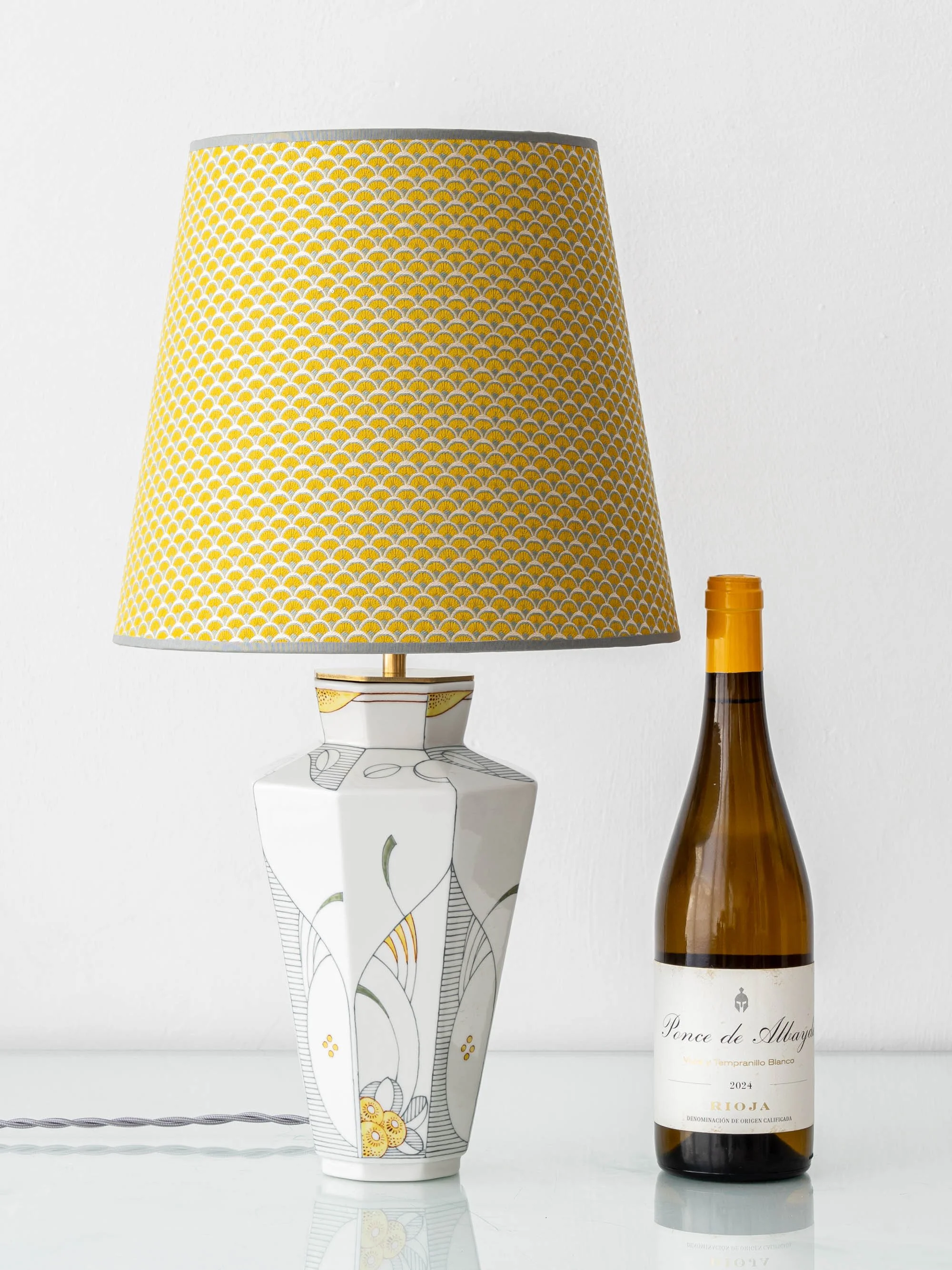
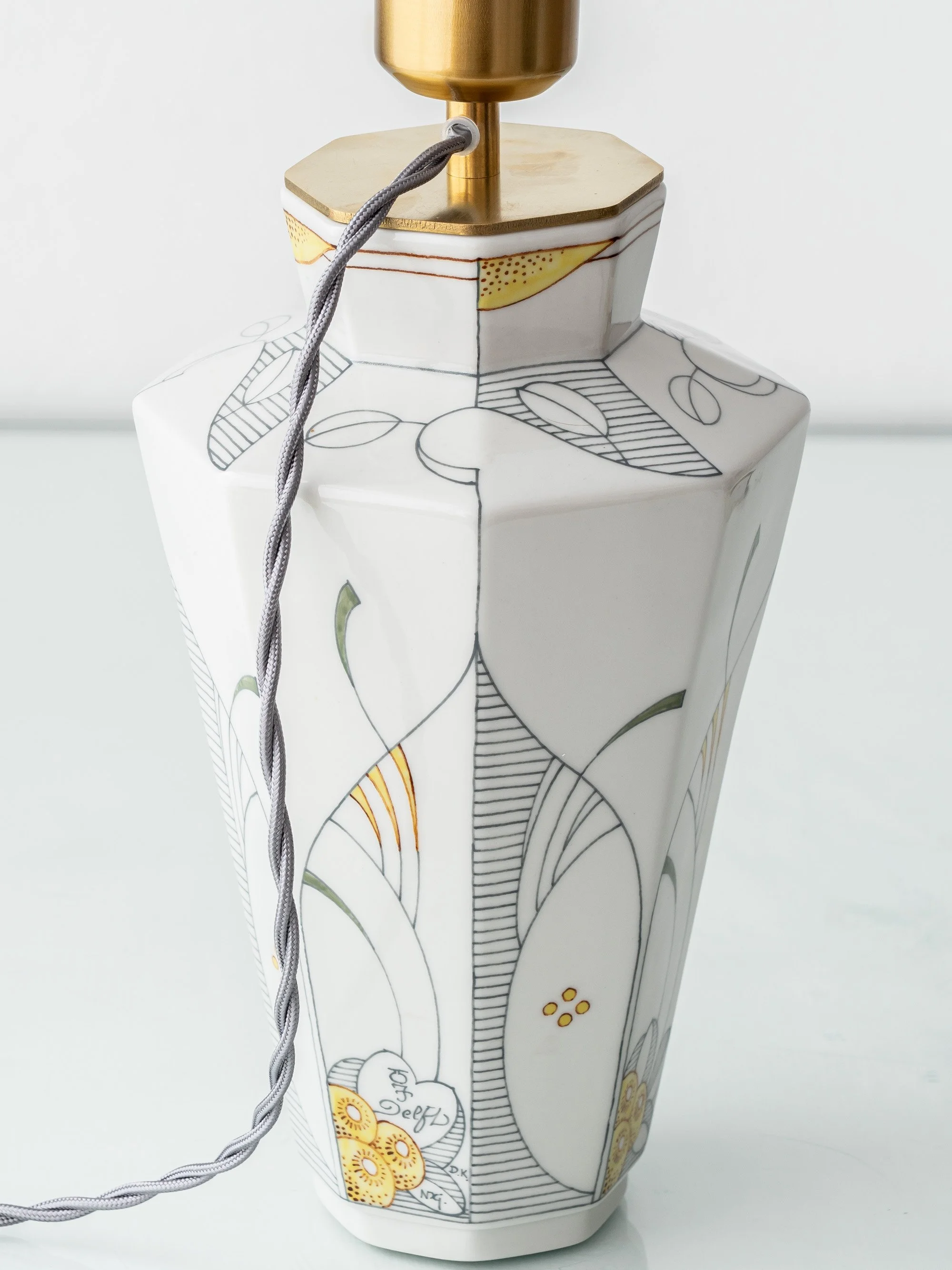
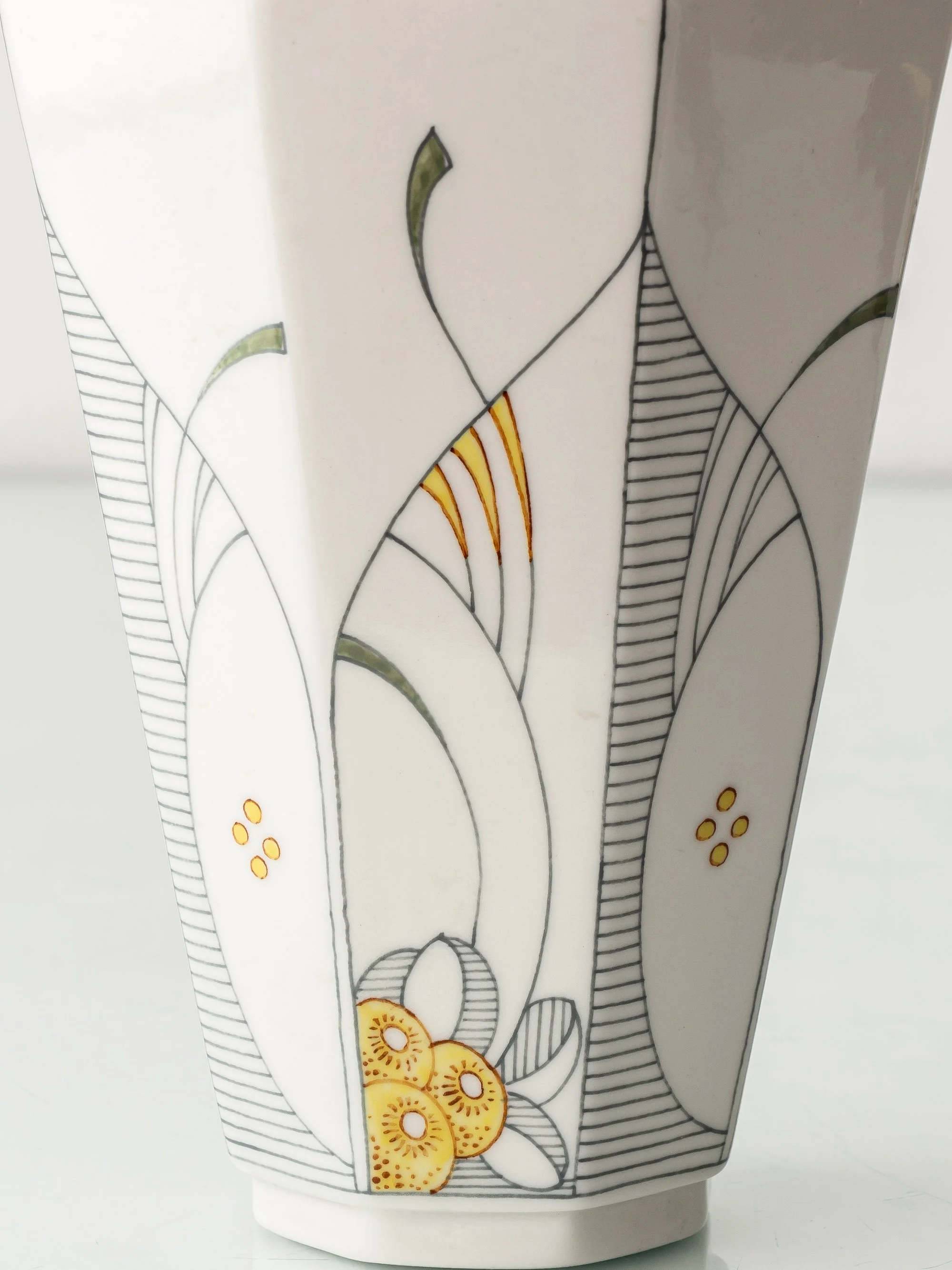
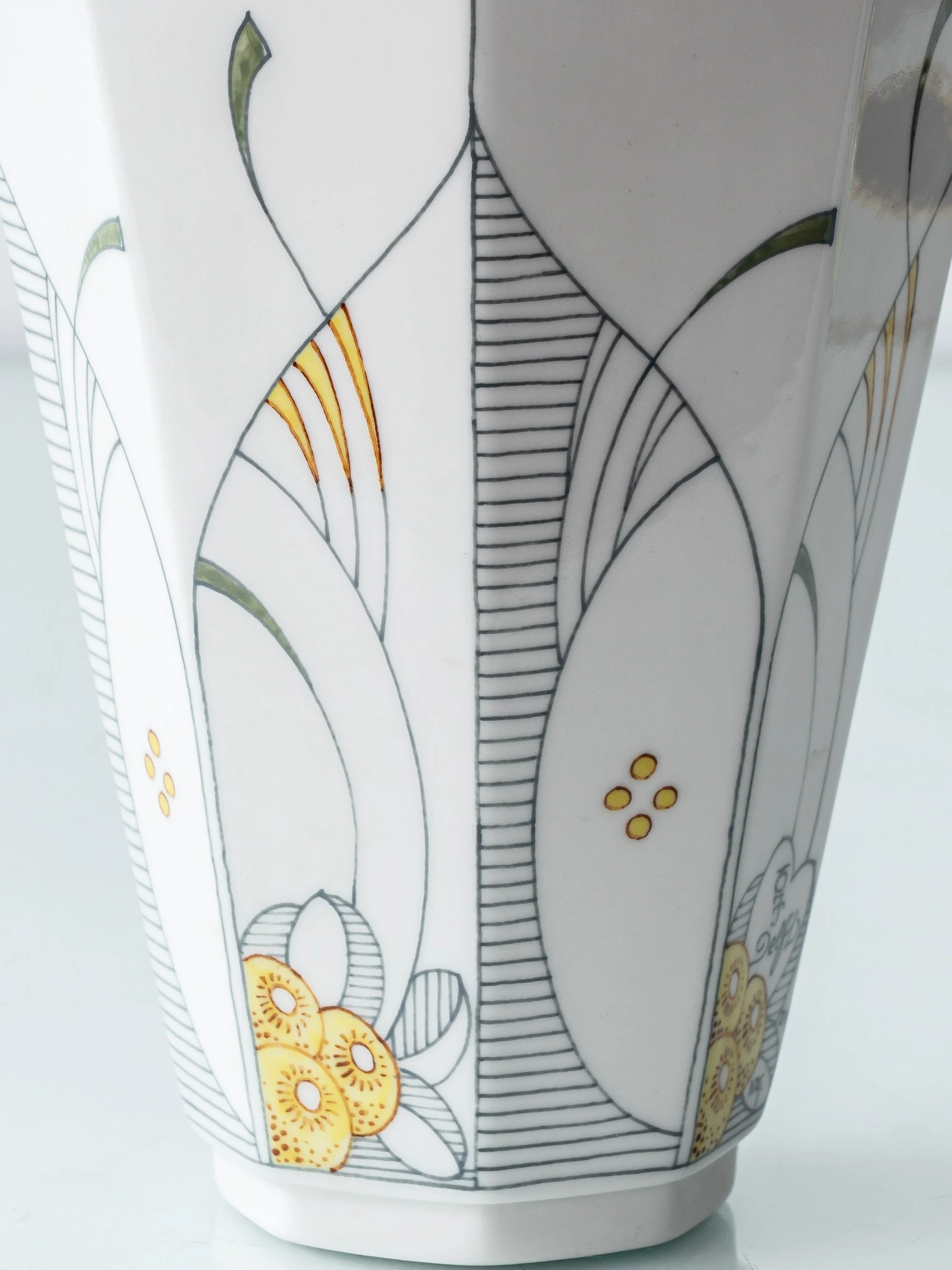
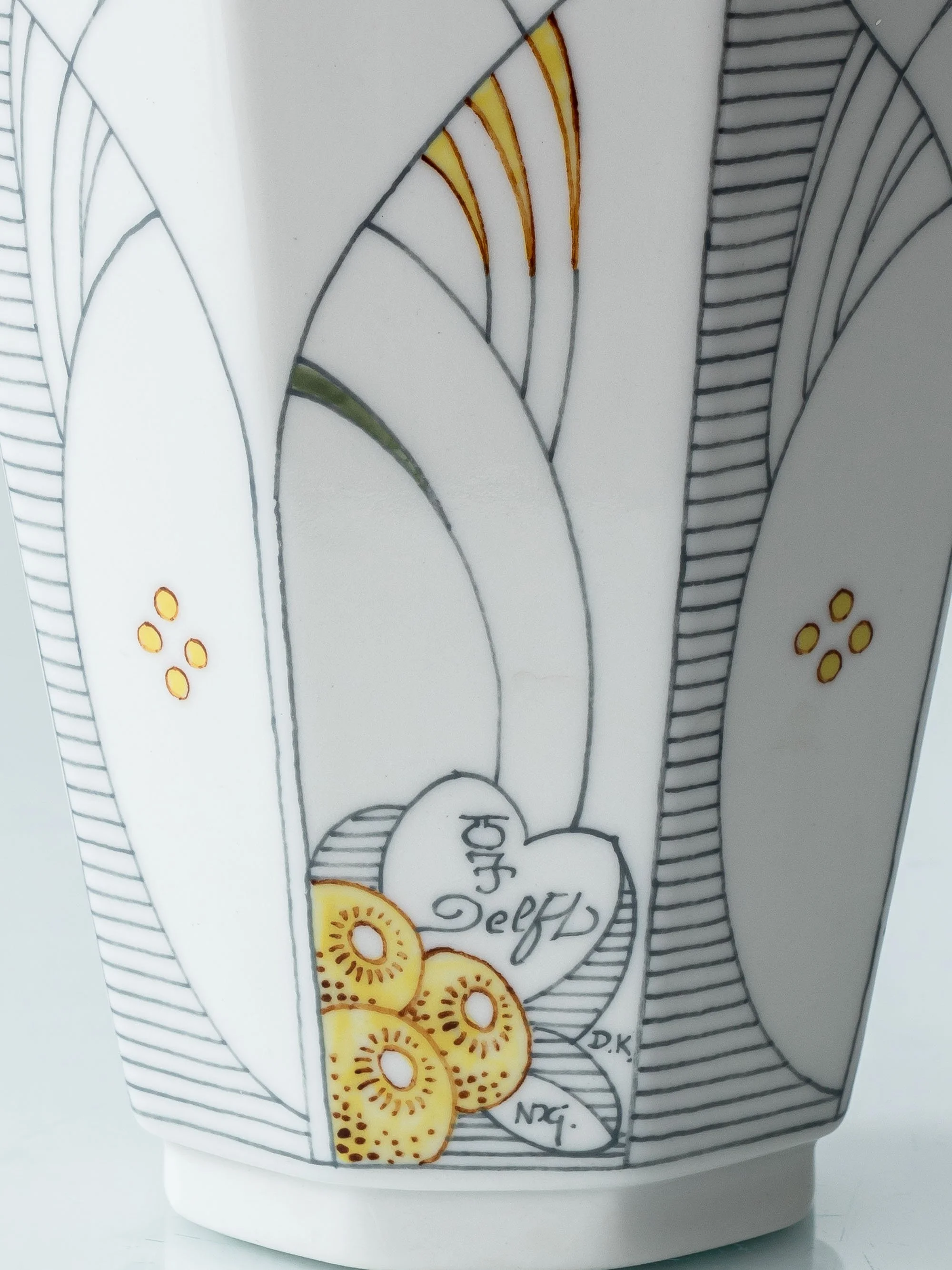
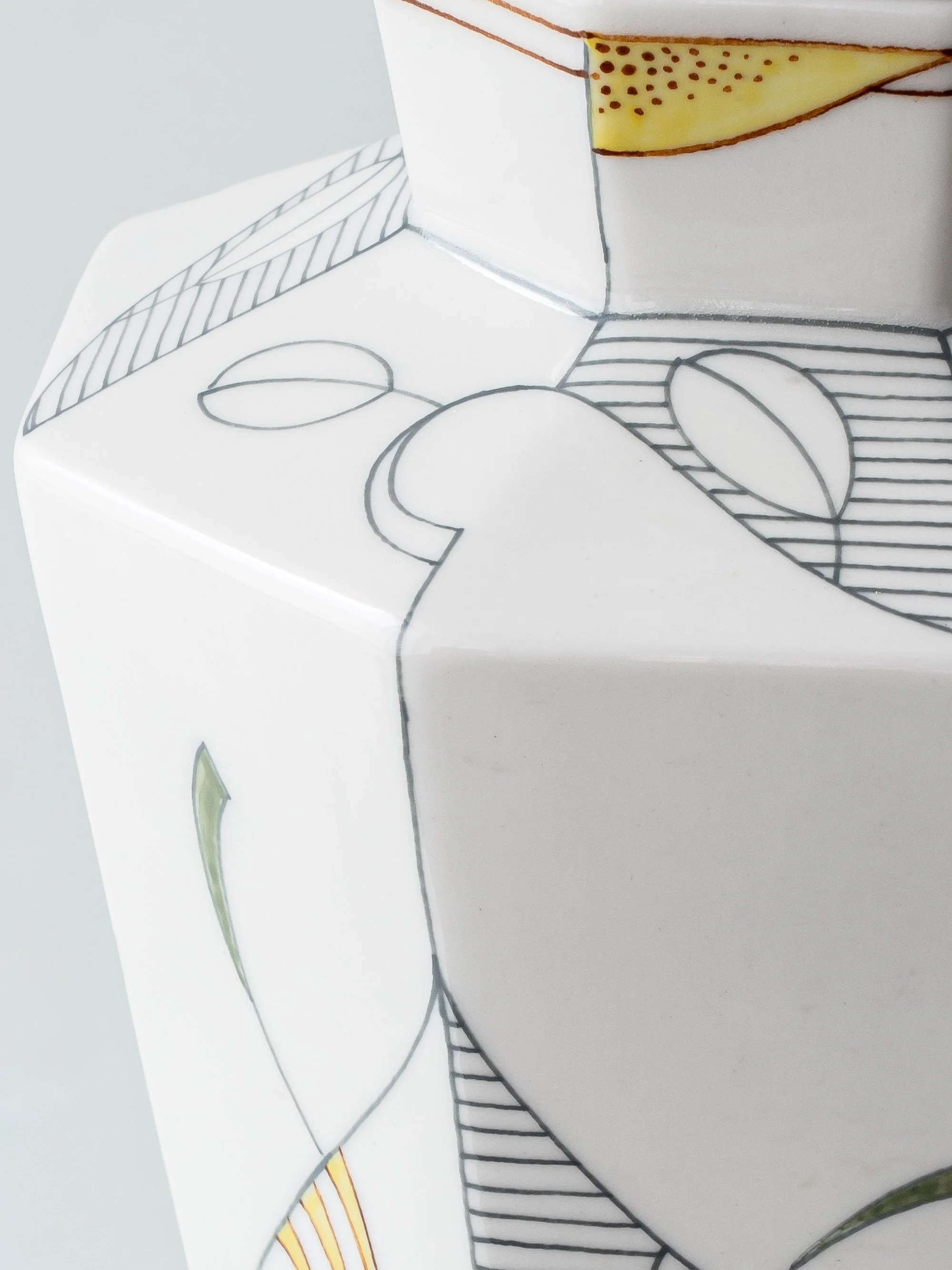
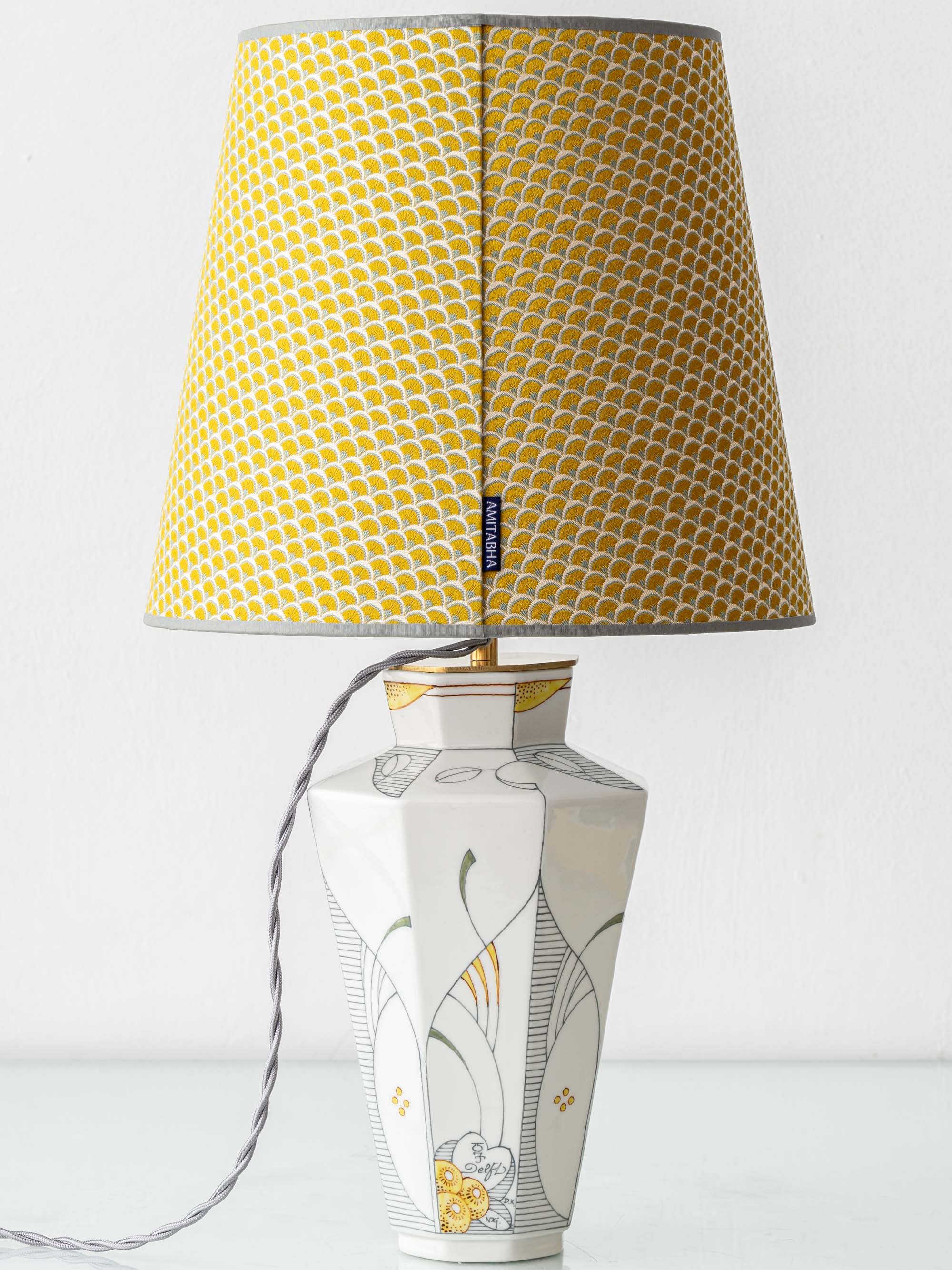
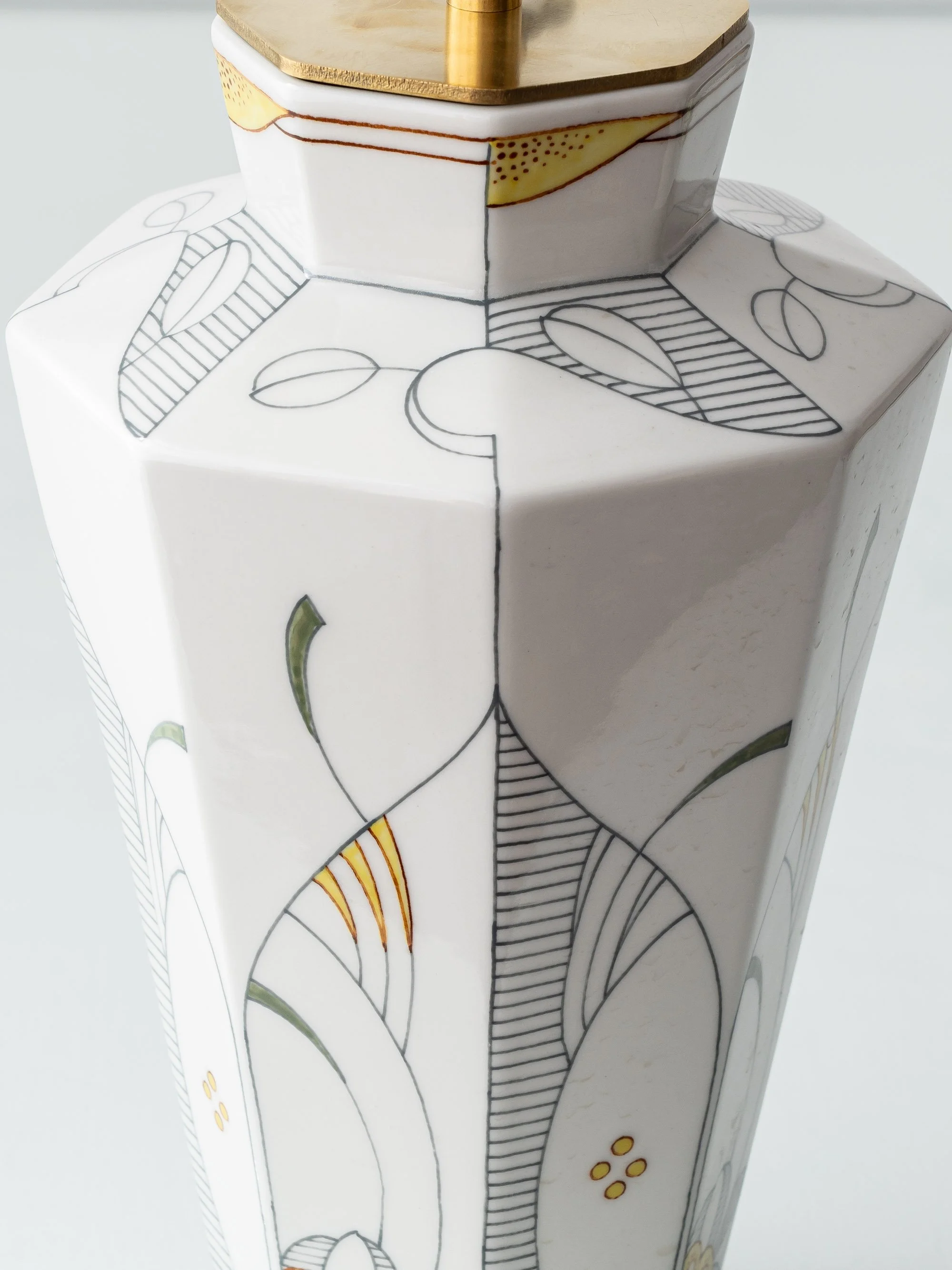
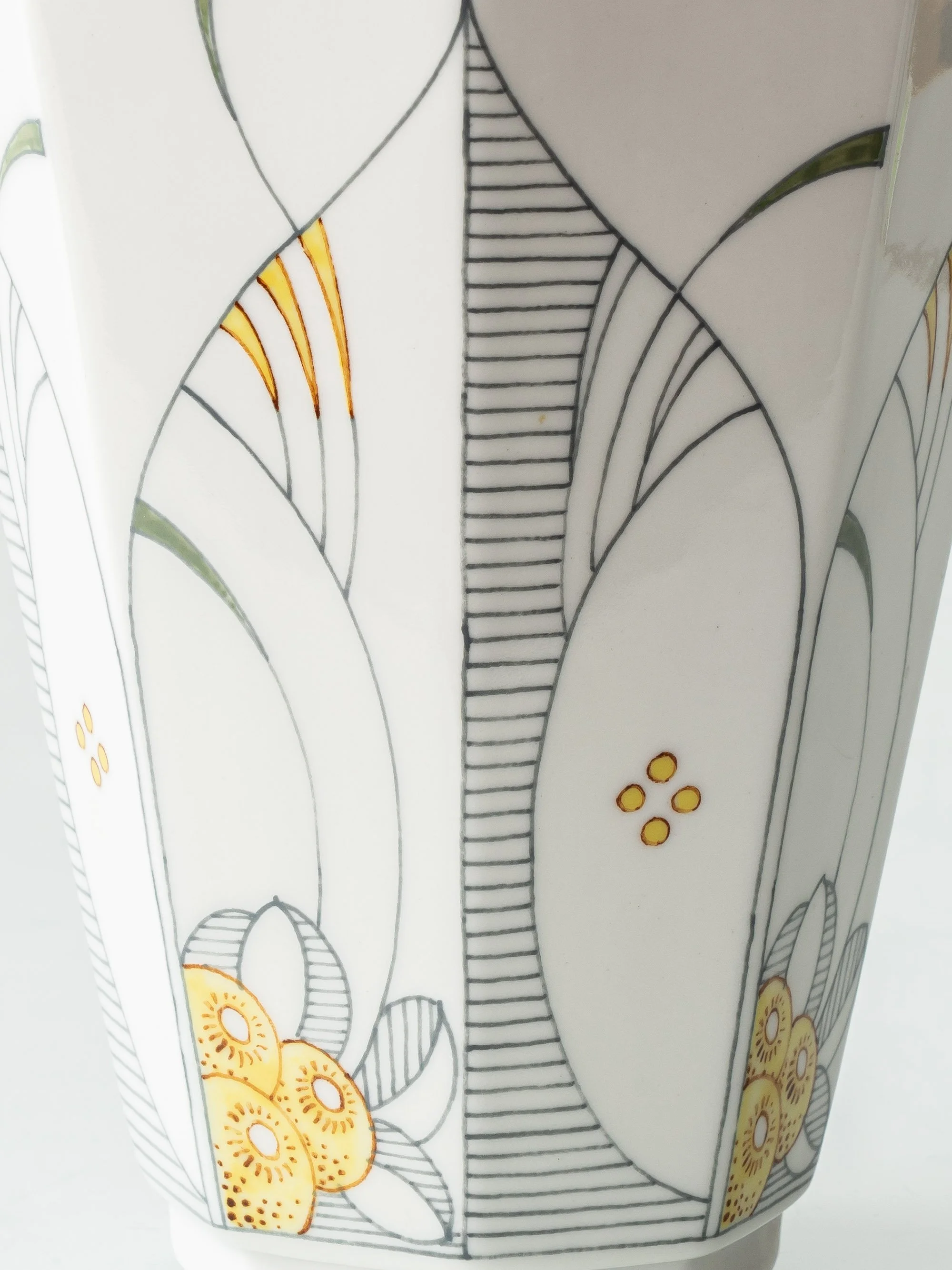
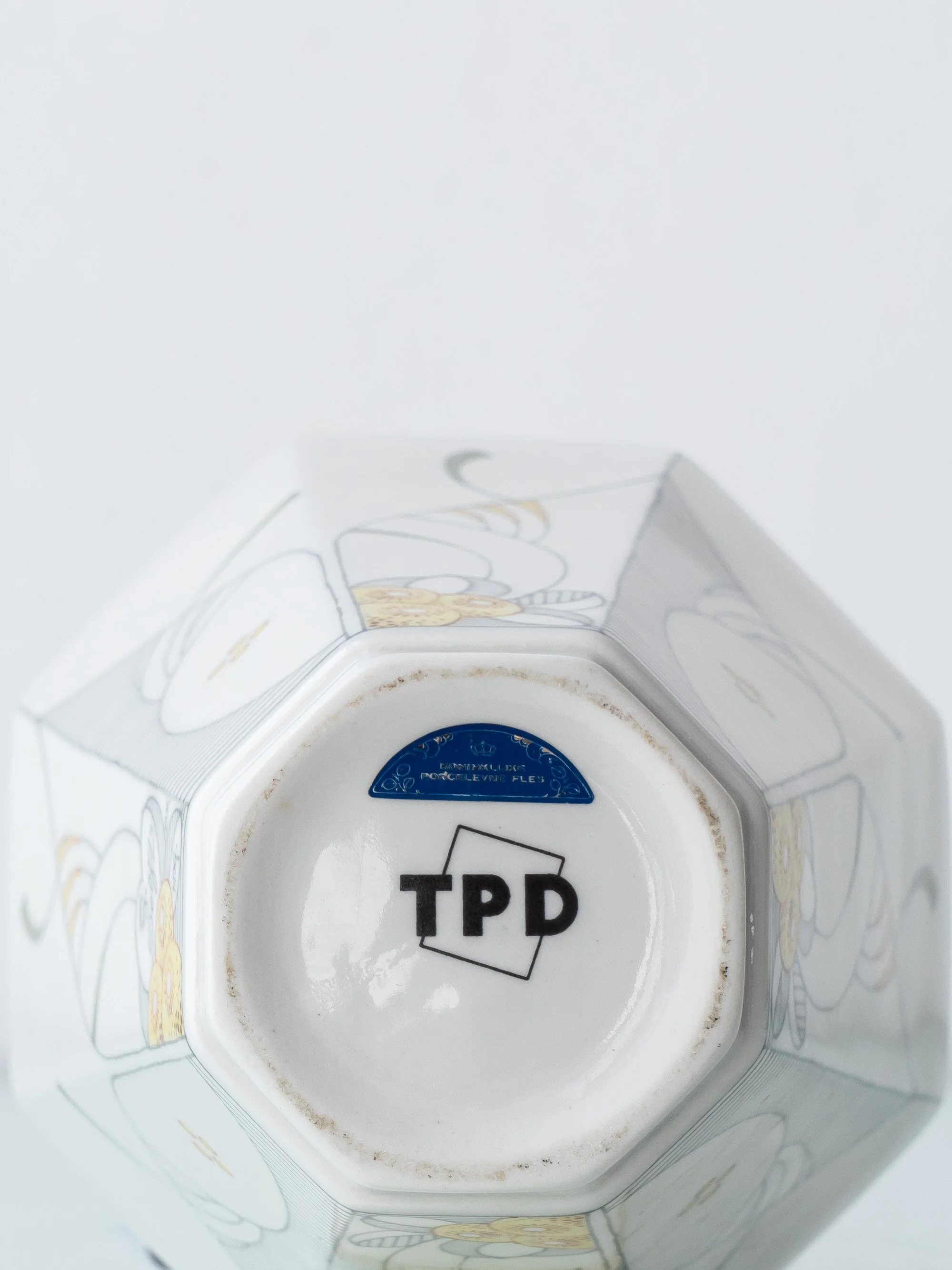
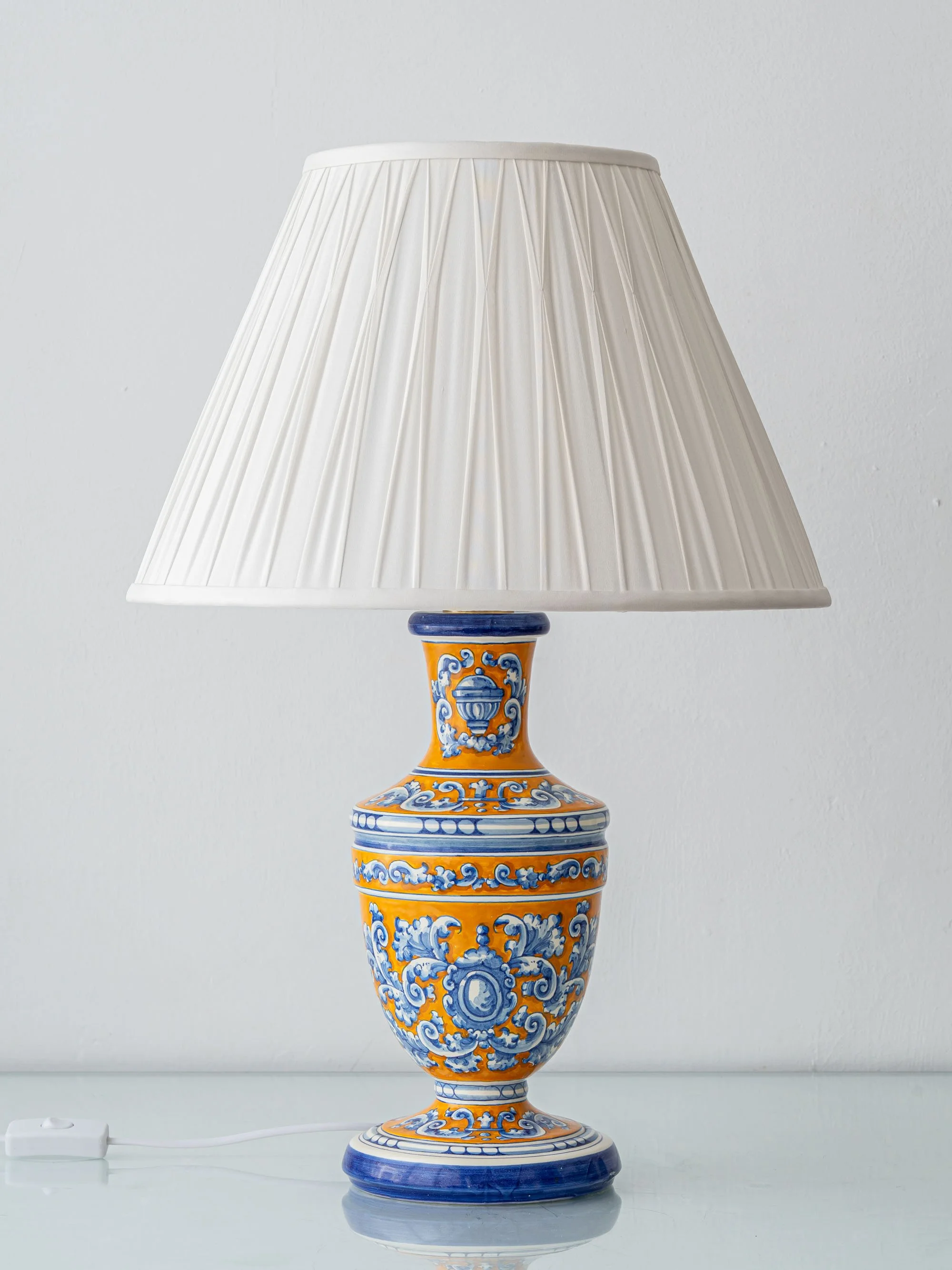
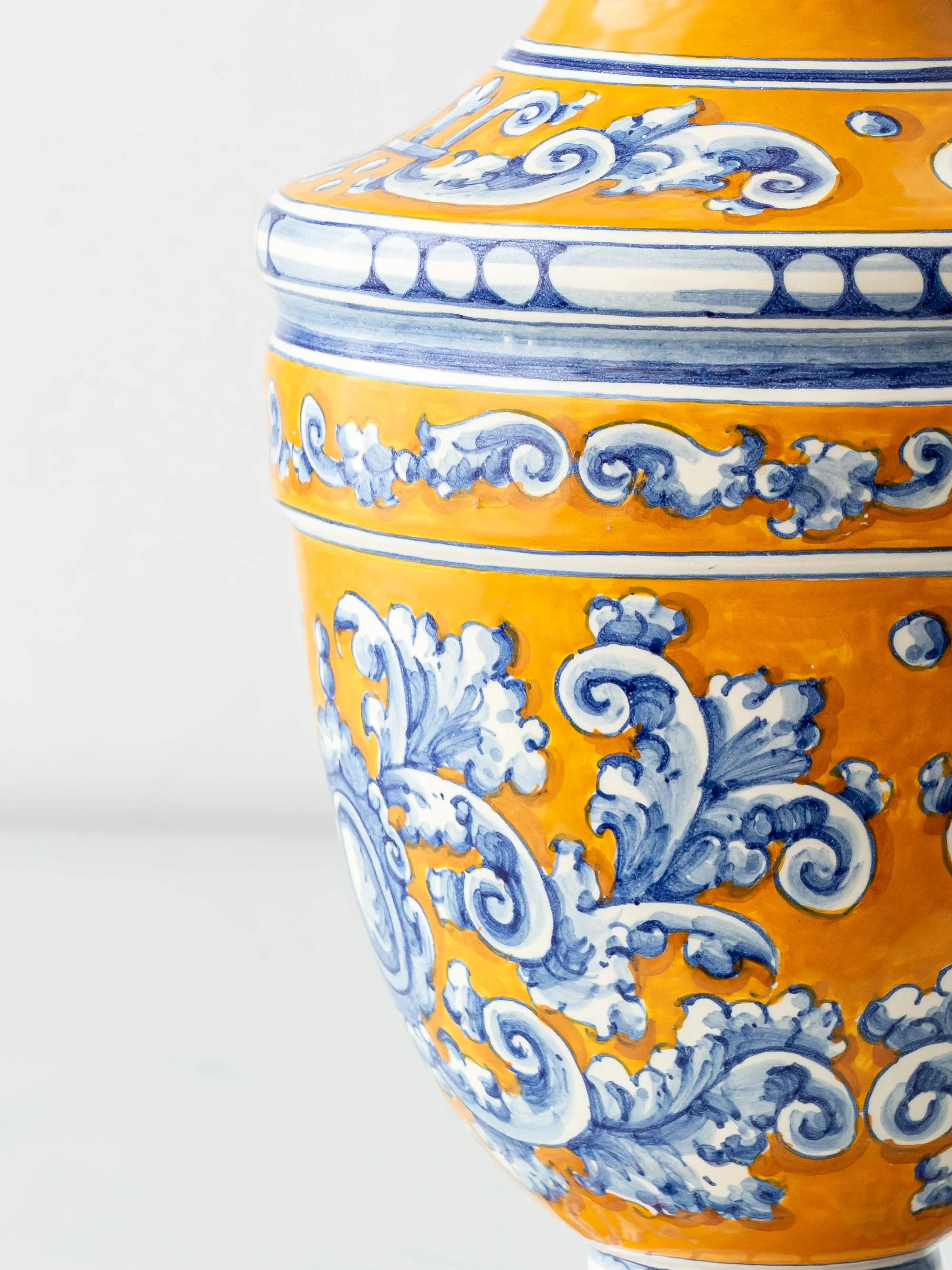
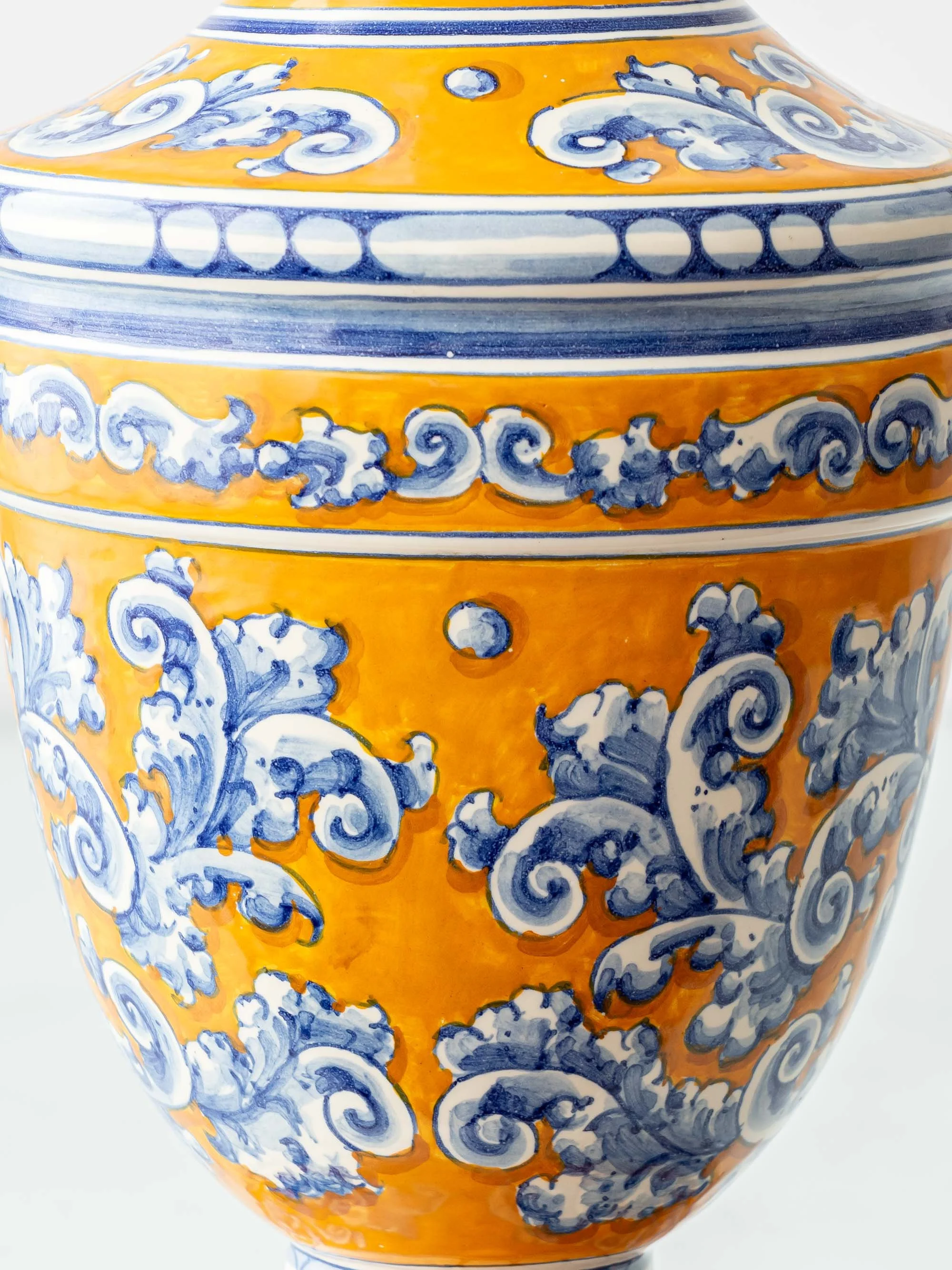
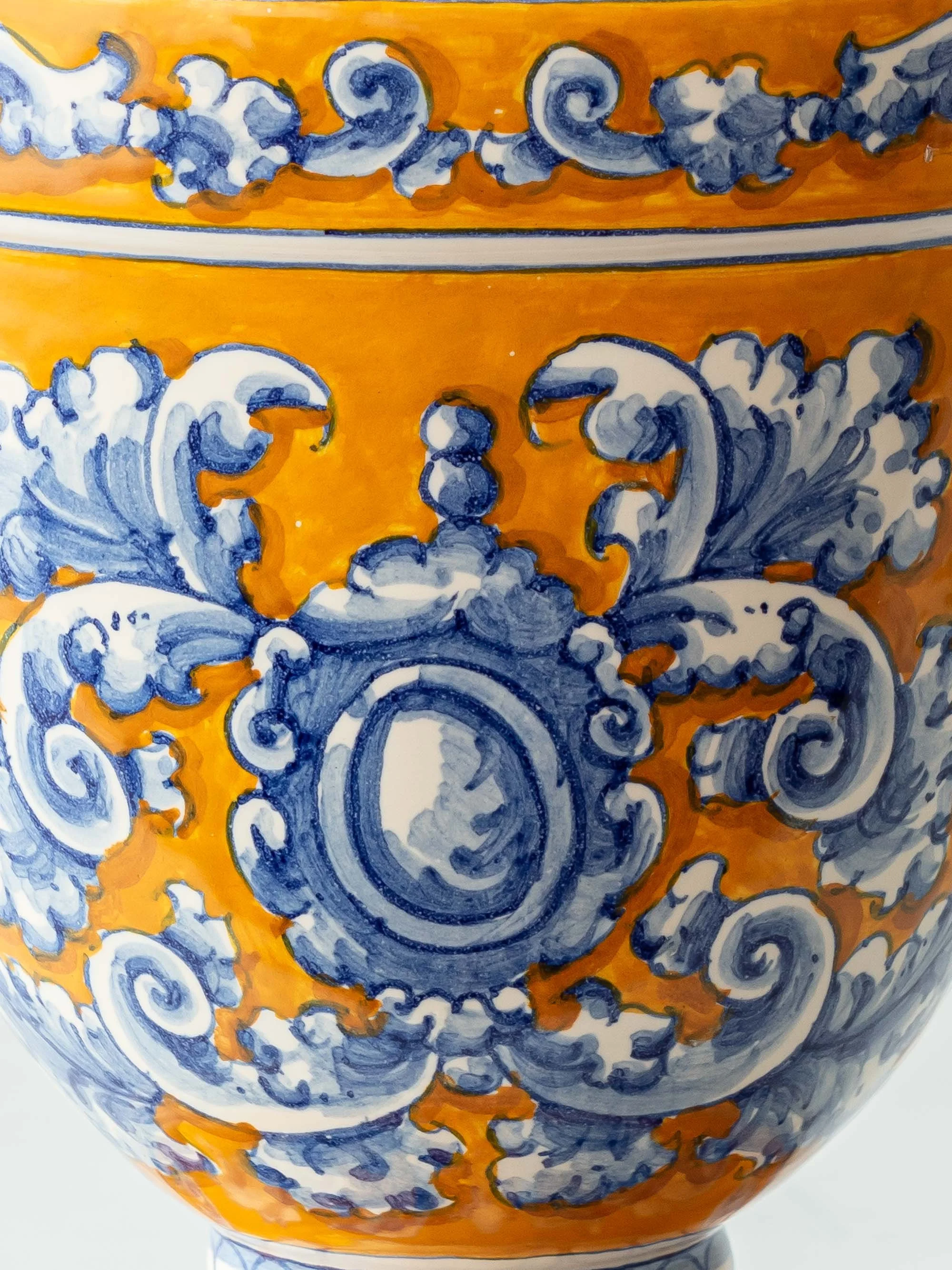
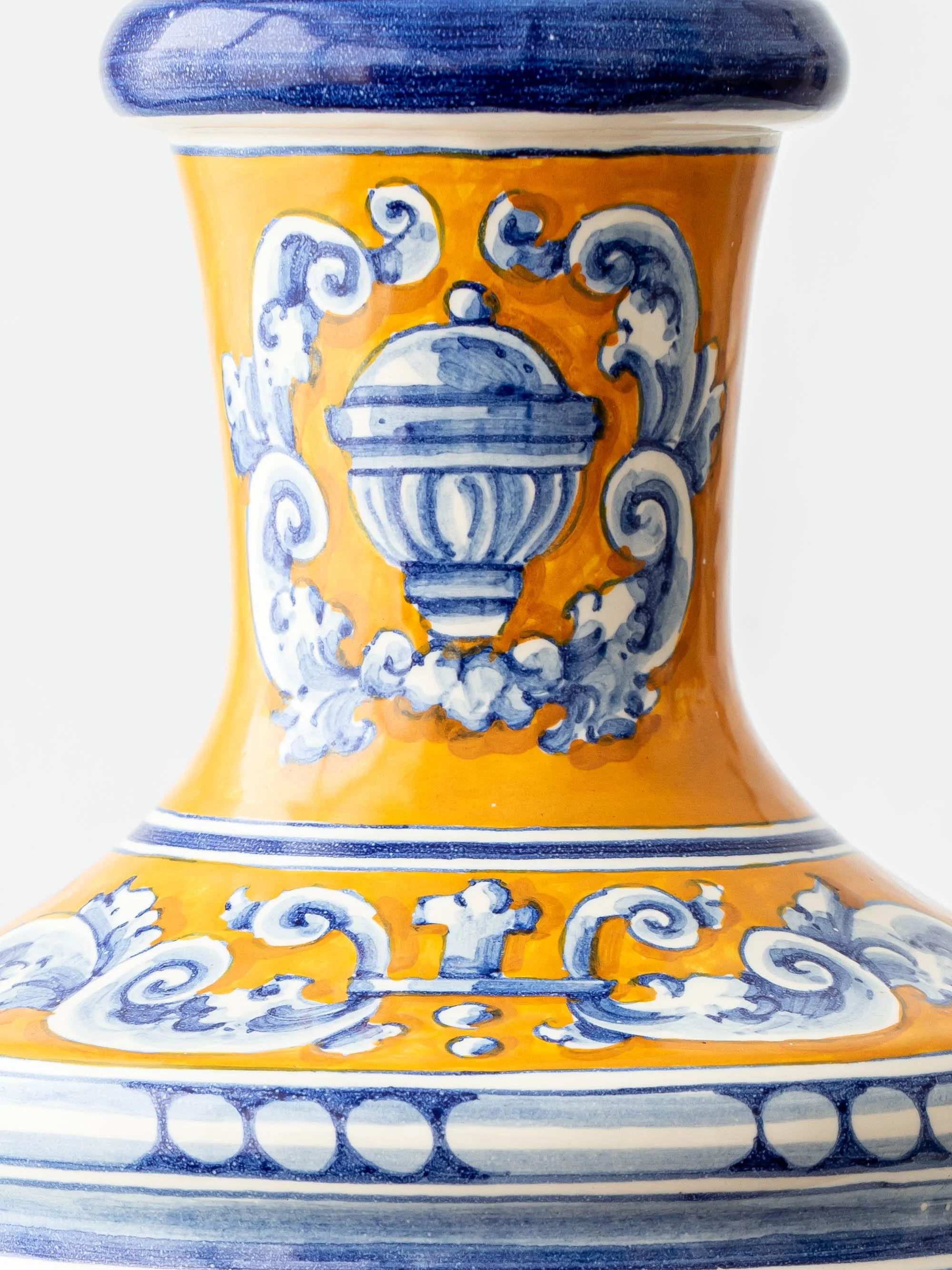
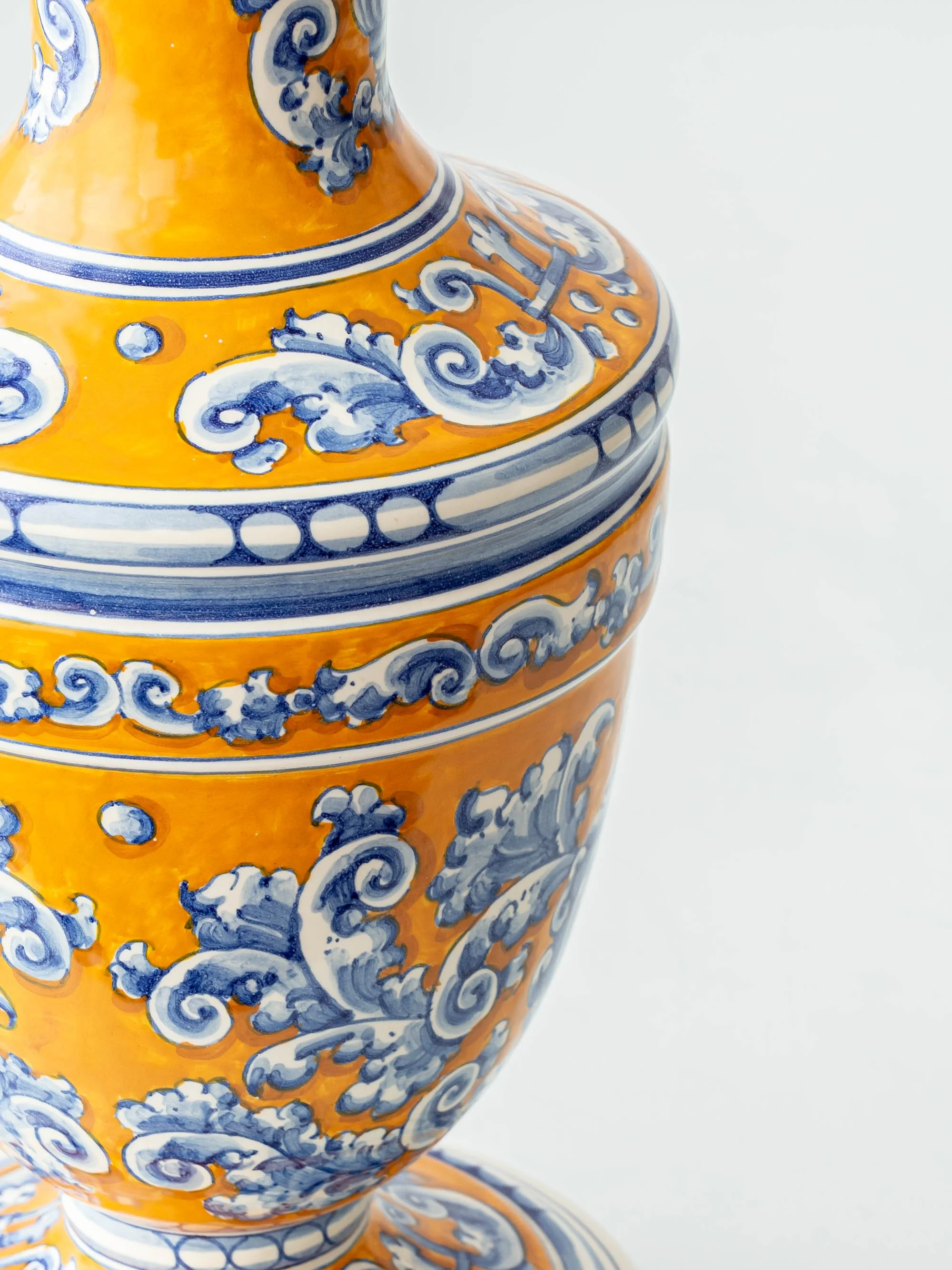
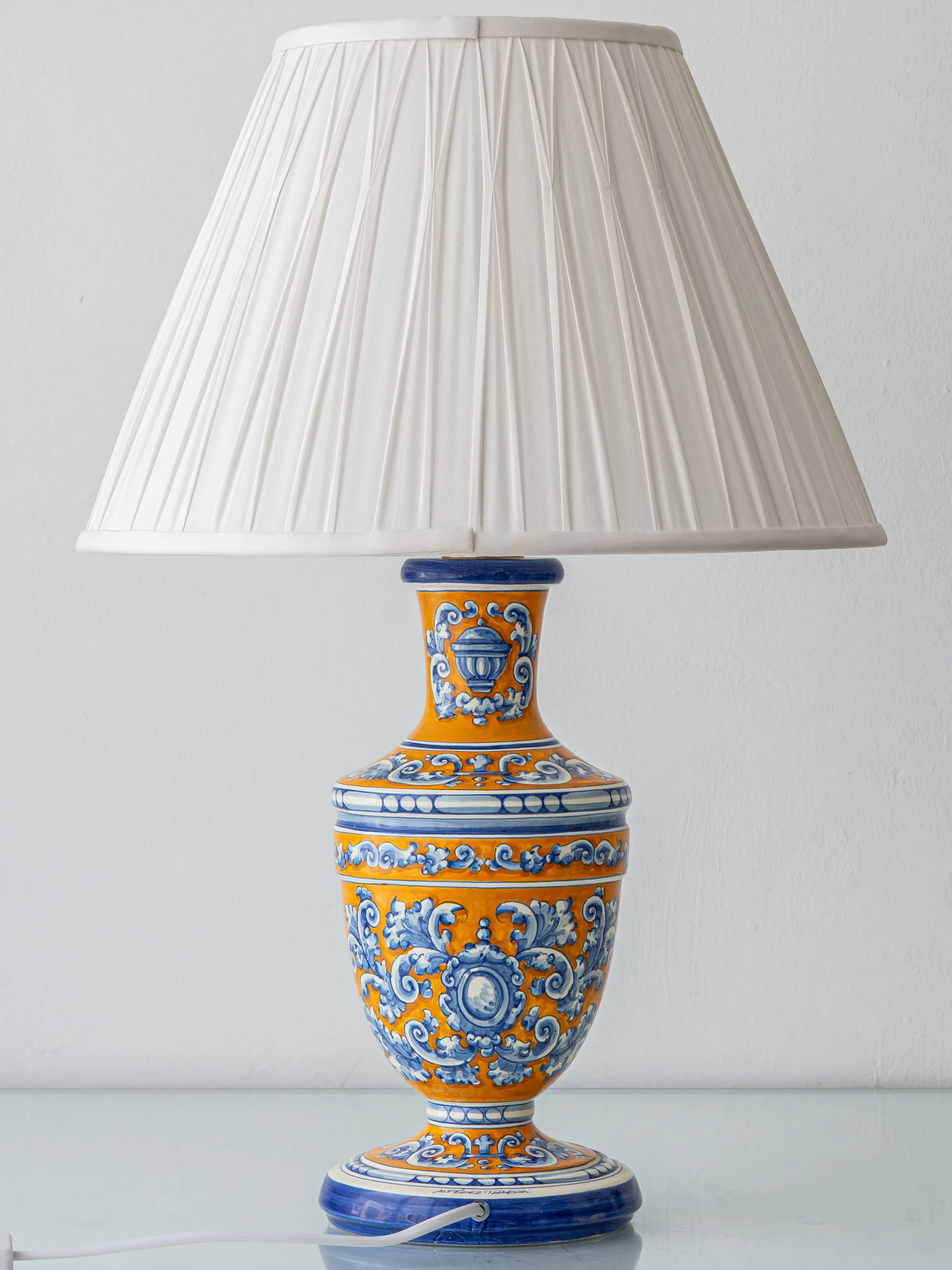
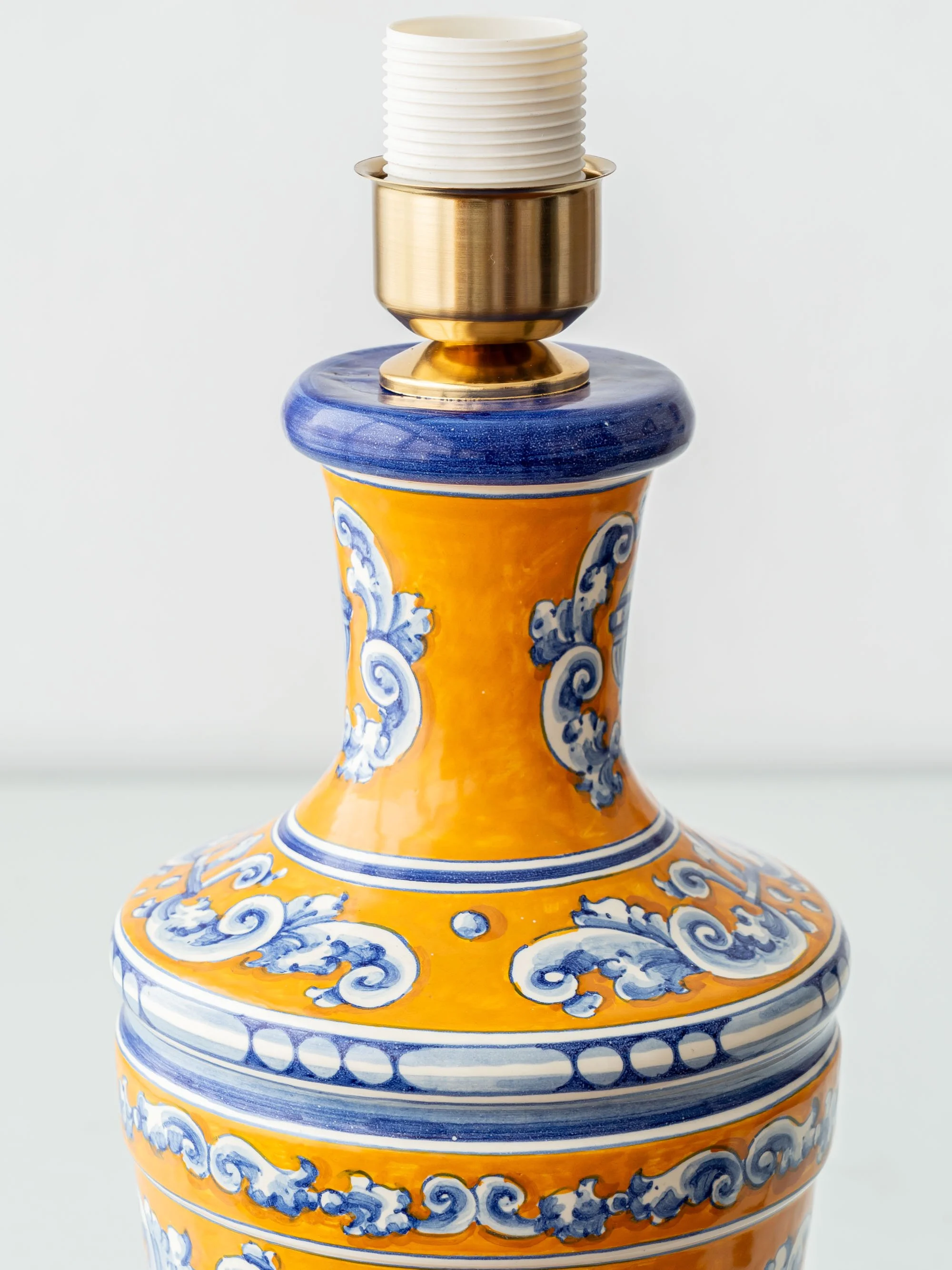
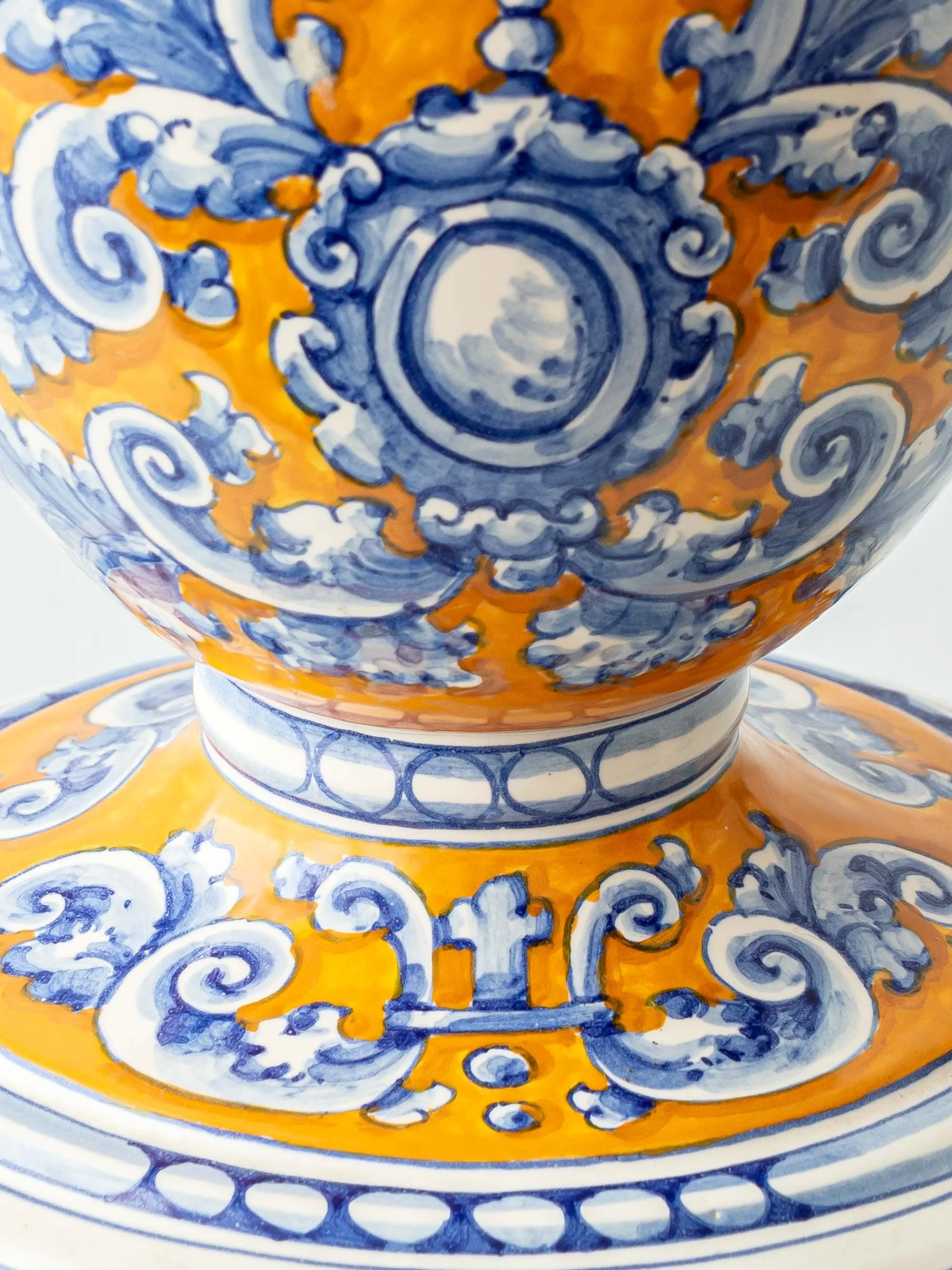
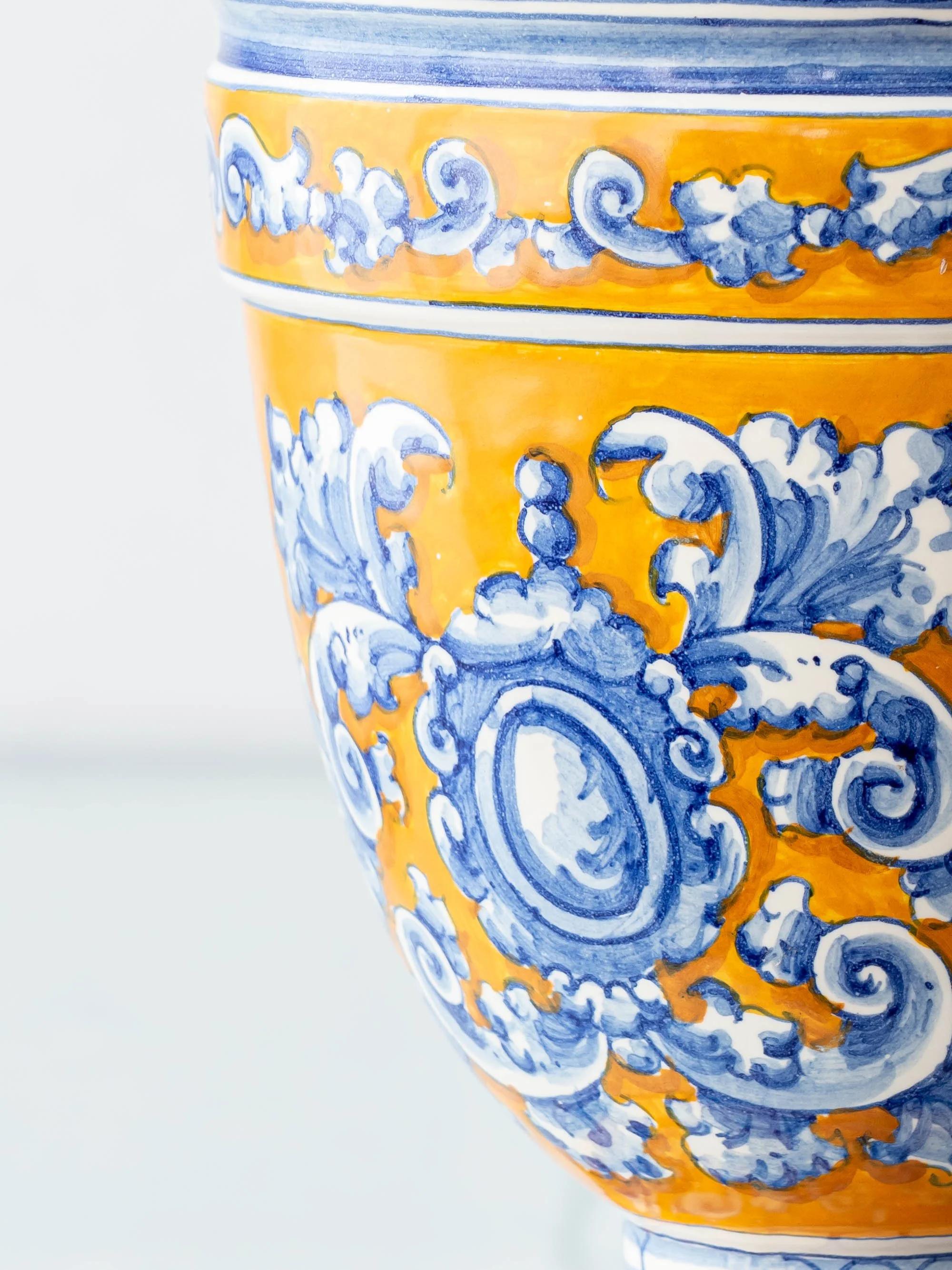
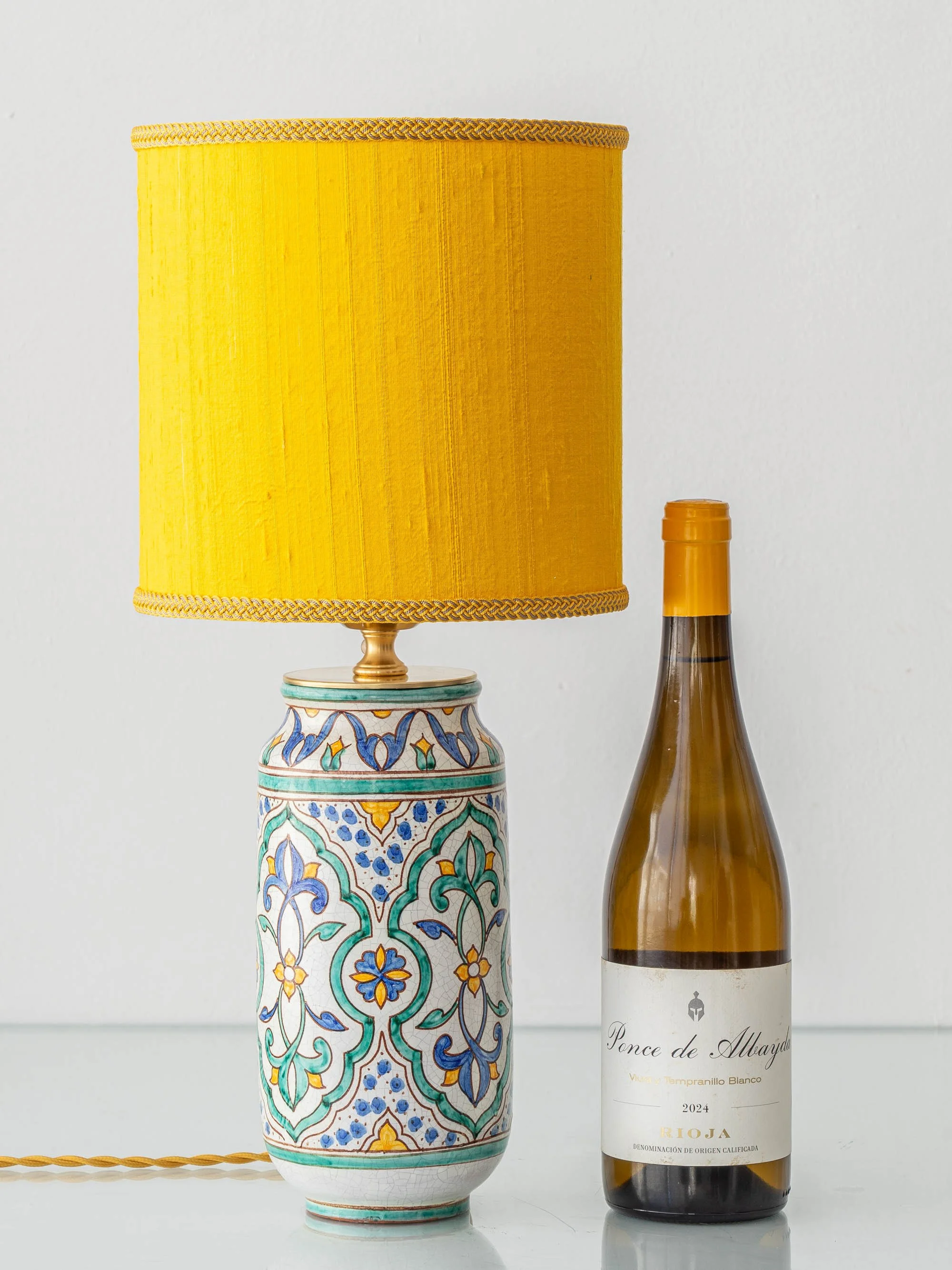
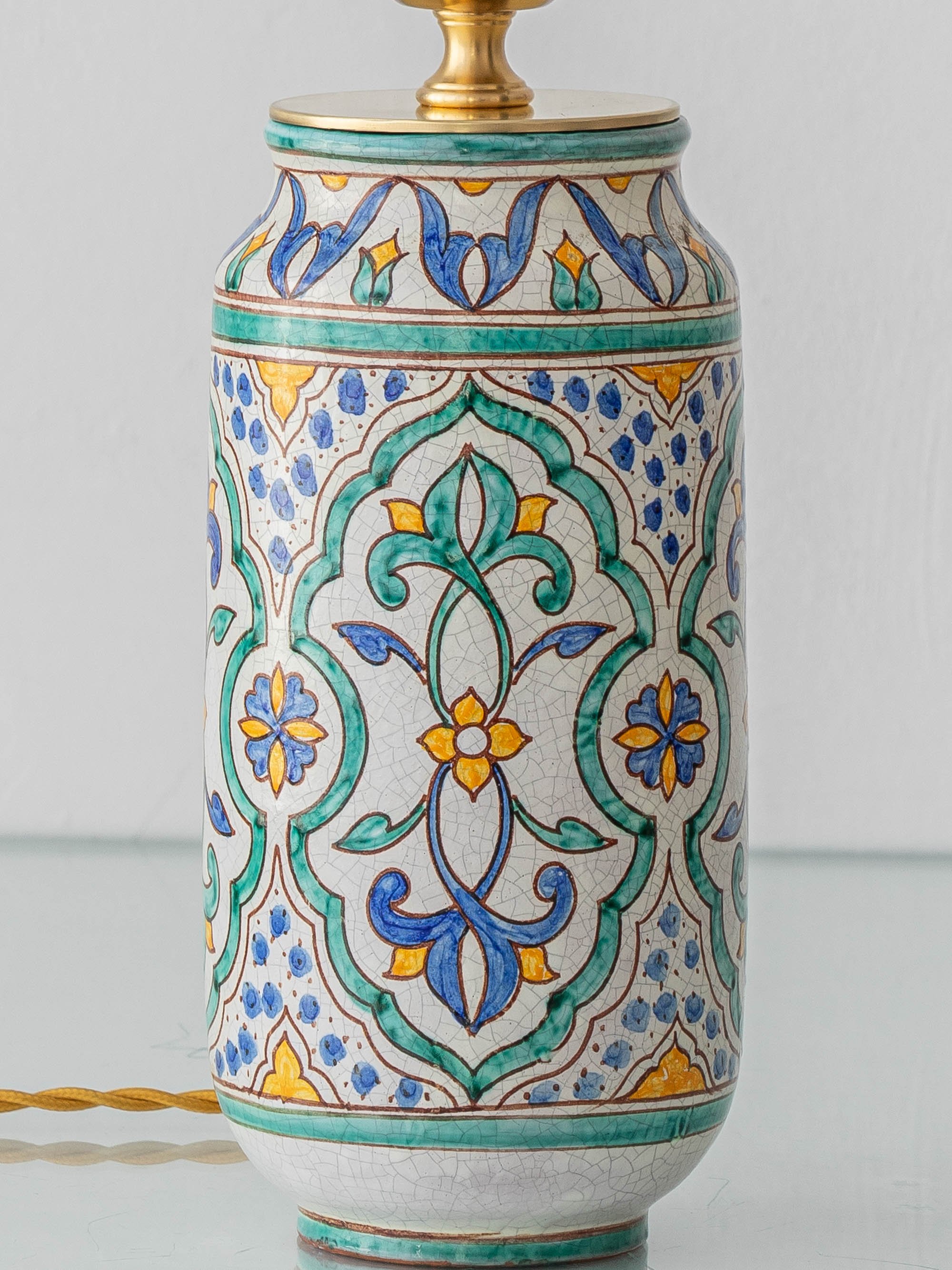
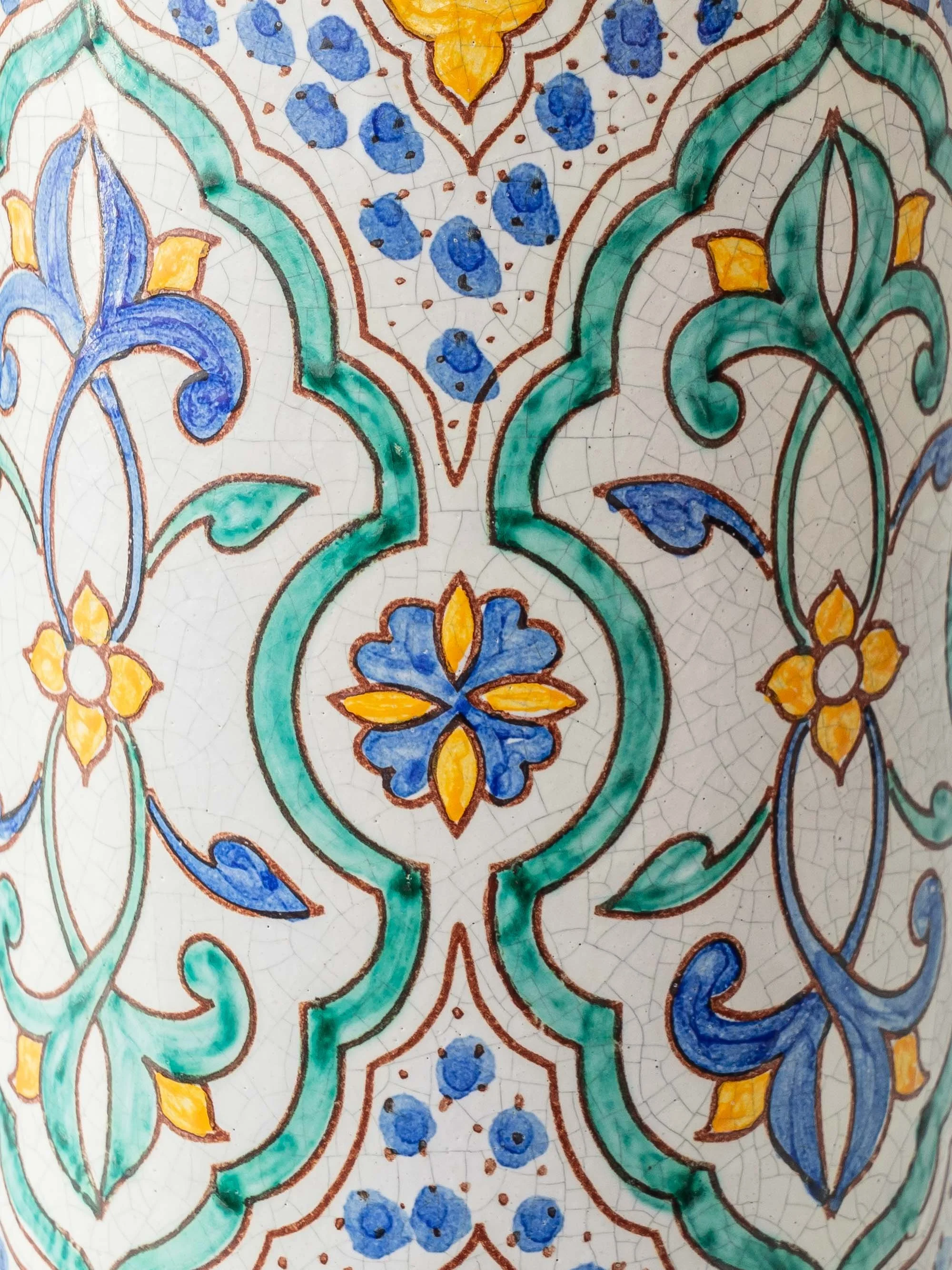
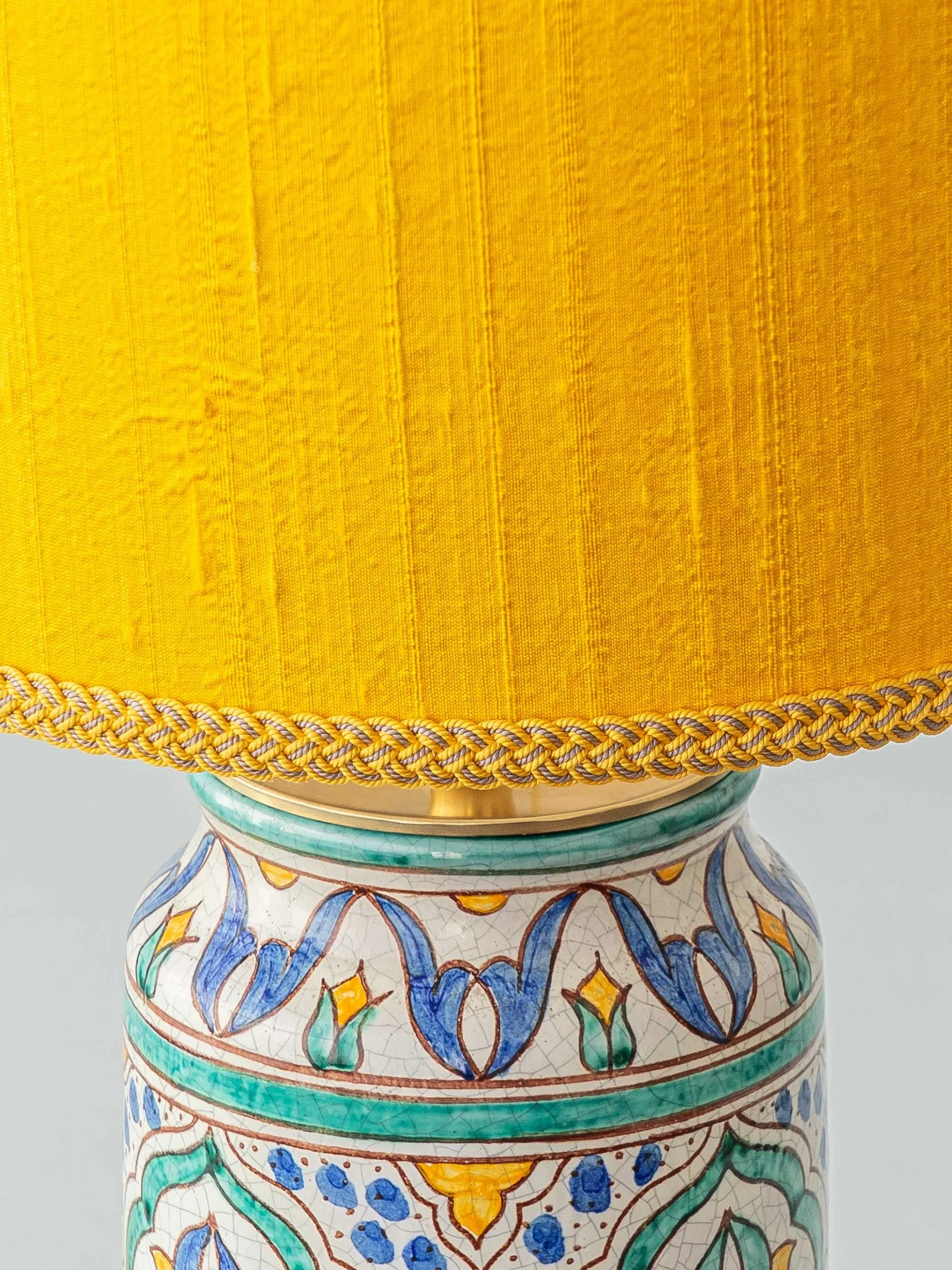
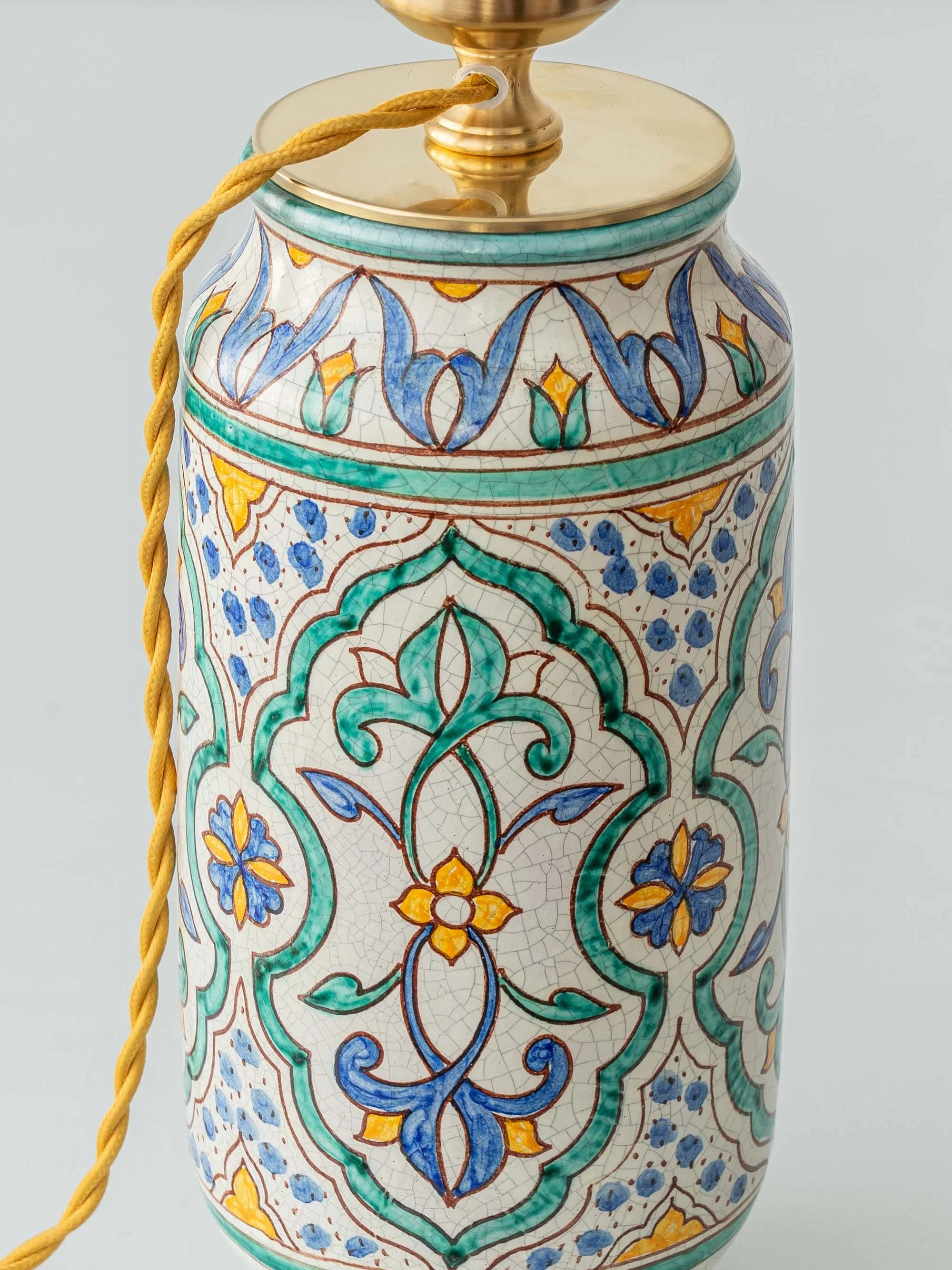
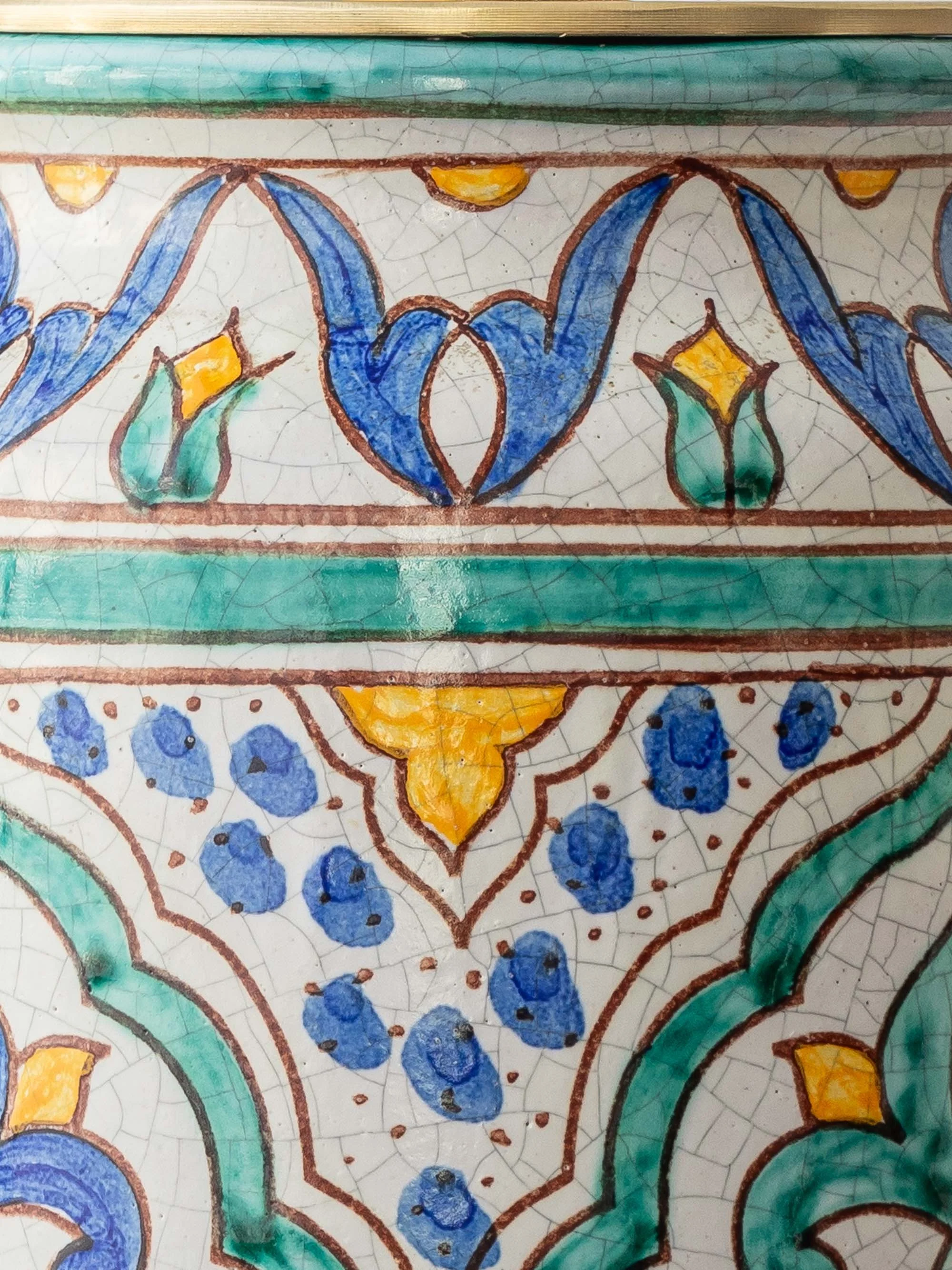
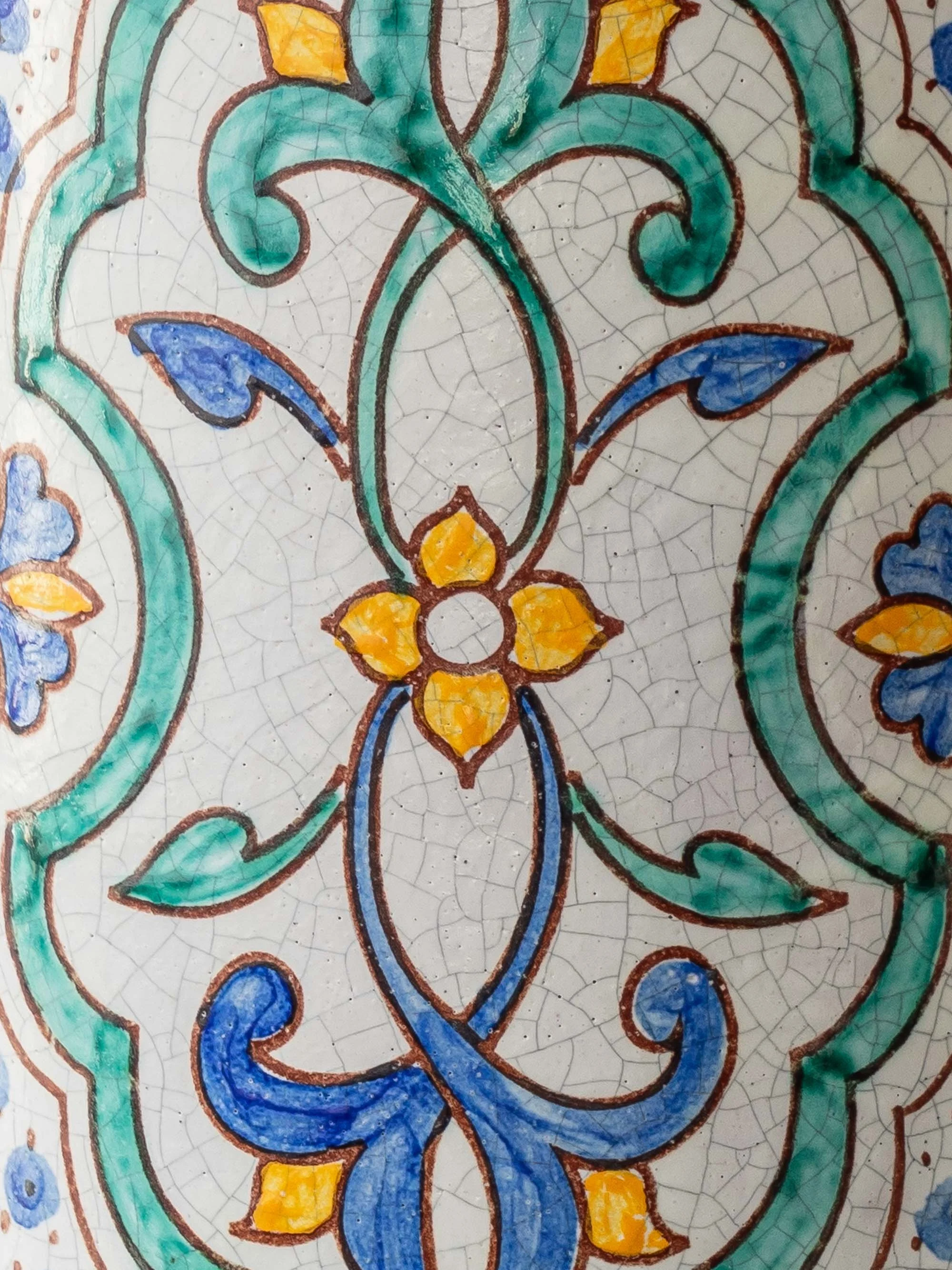
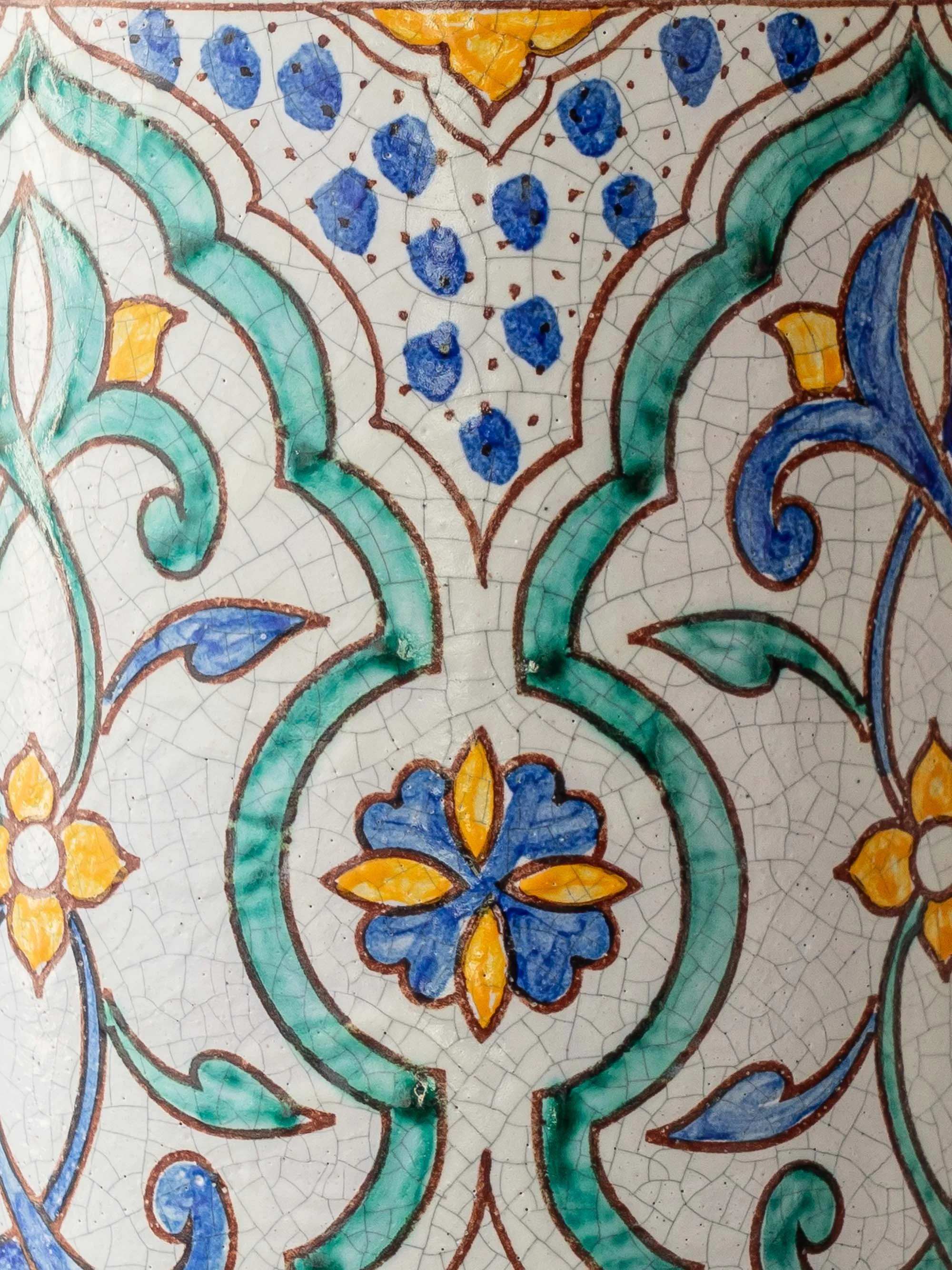
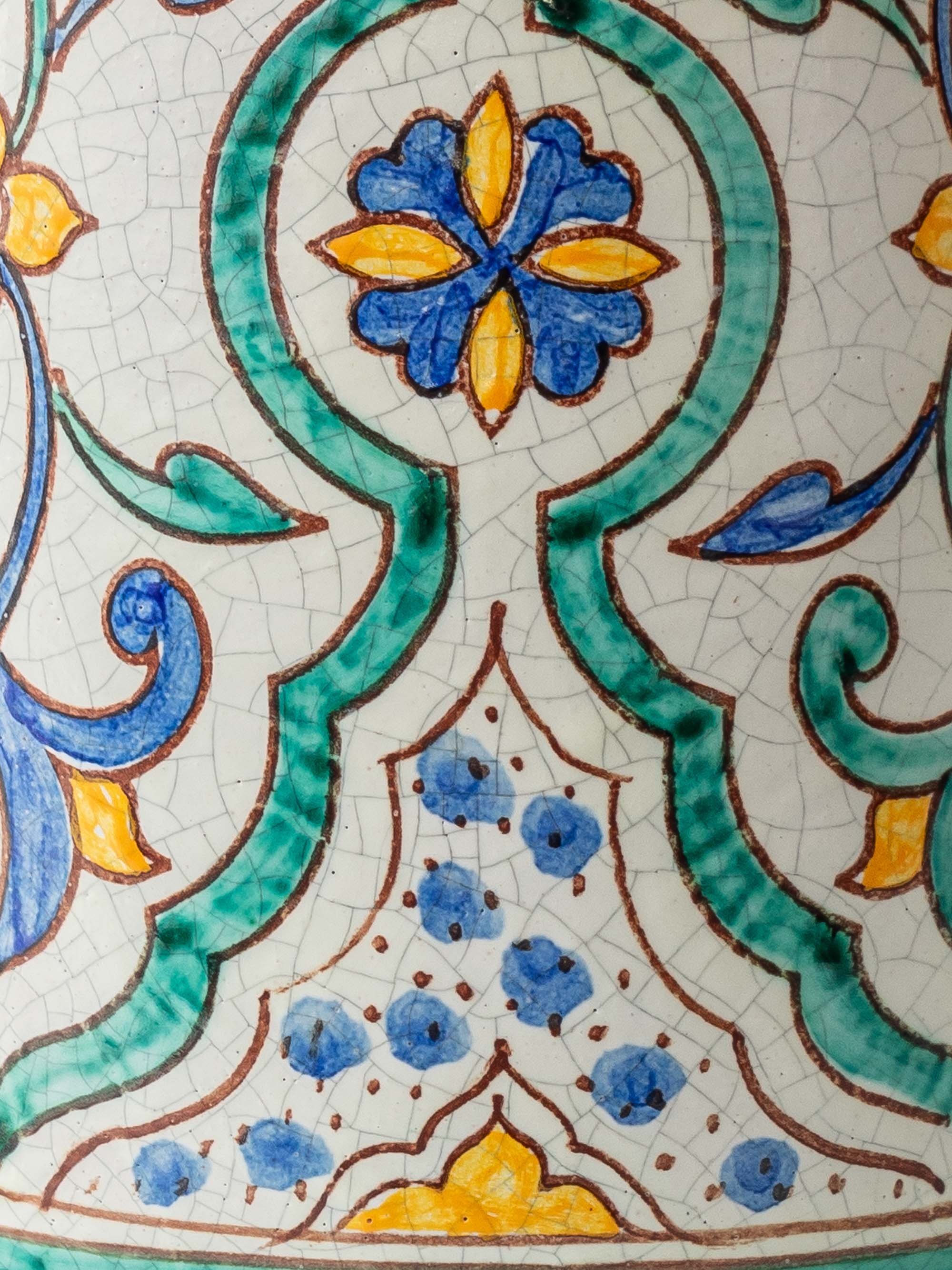
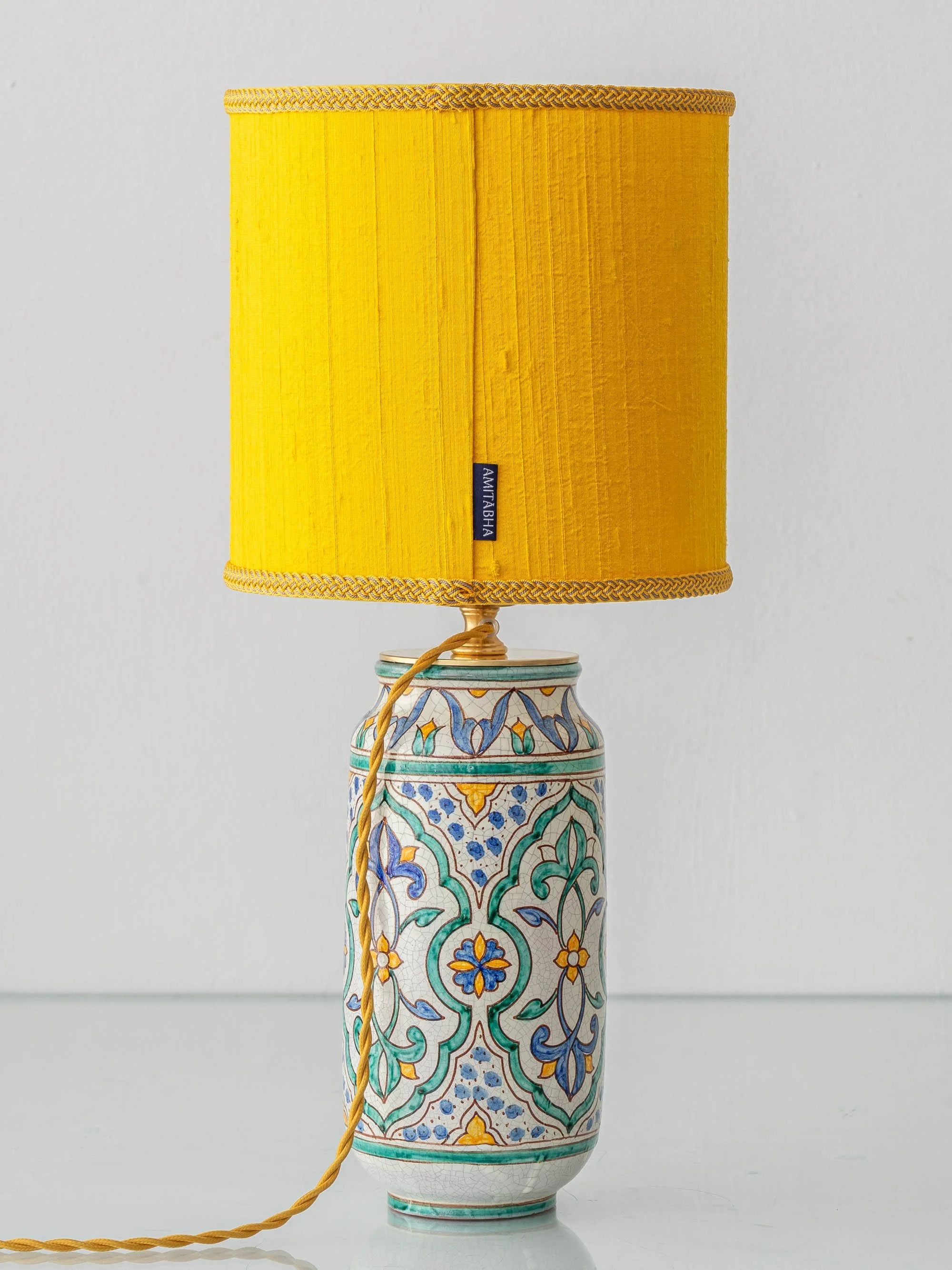
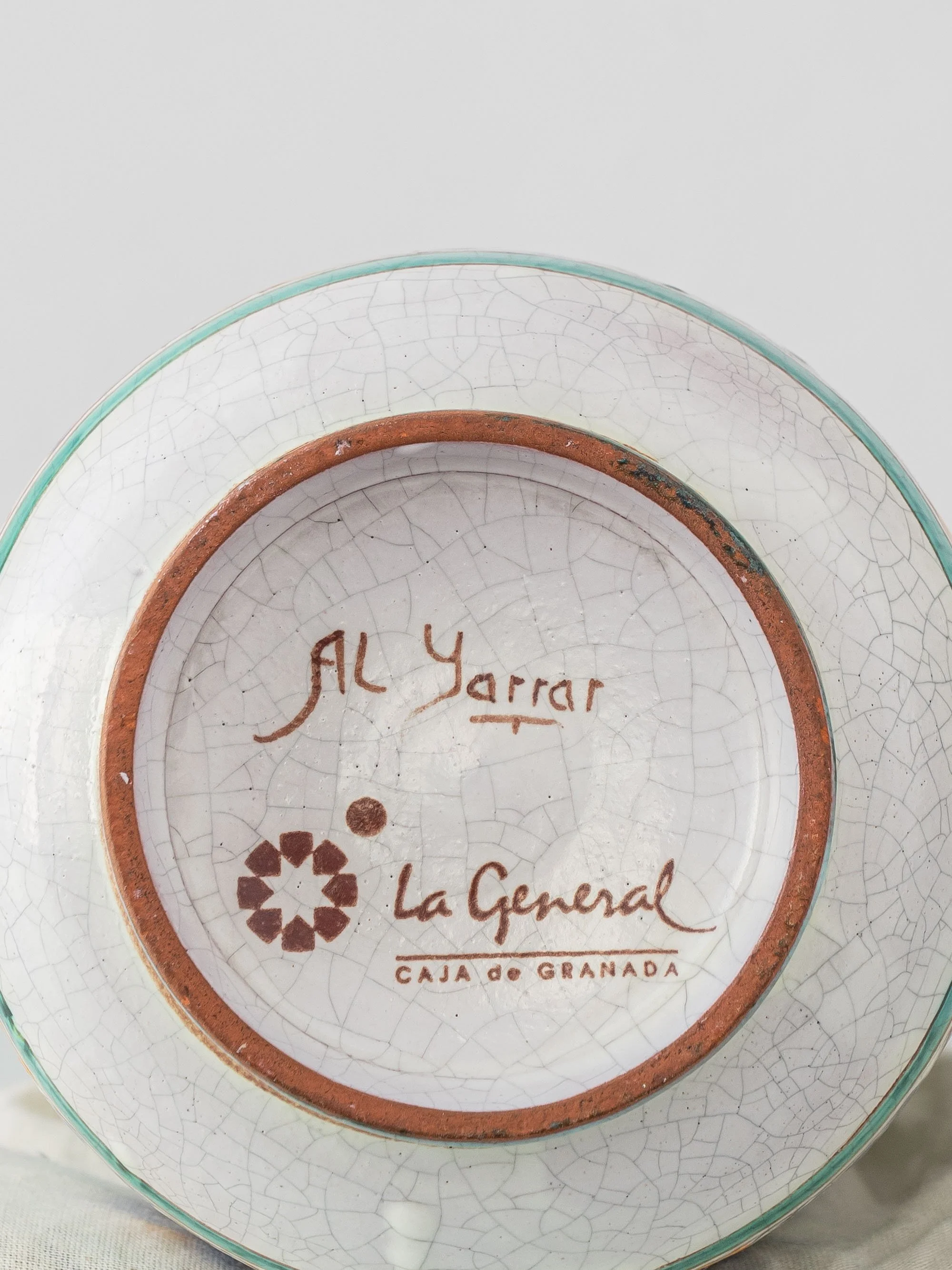
Meet Acantha, a one-of-a-kind vintage table lamp created from a Roman-inspired amphora vase by Flora Gouda, part of their Porcelina series produced between 1950 and 1970. With its soft matte glaze in pale, slate-toned blue and crisp relief details at the base and neck, the vase channels classical form with mid-century restraint. Made in the Netherlands during a transitional period in Dutch ceramics—when makers like Flora balanced tradition with pared-back modernity—this piece reflects a neoclassical sensibility interpreted through post-war design.
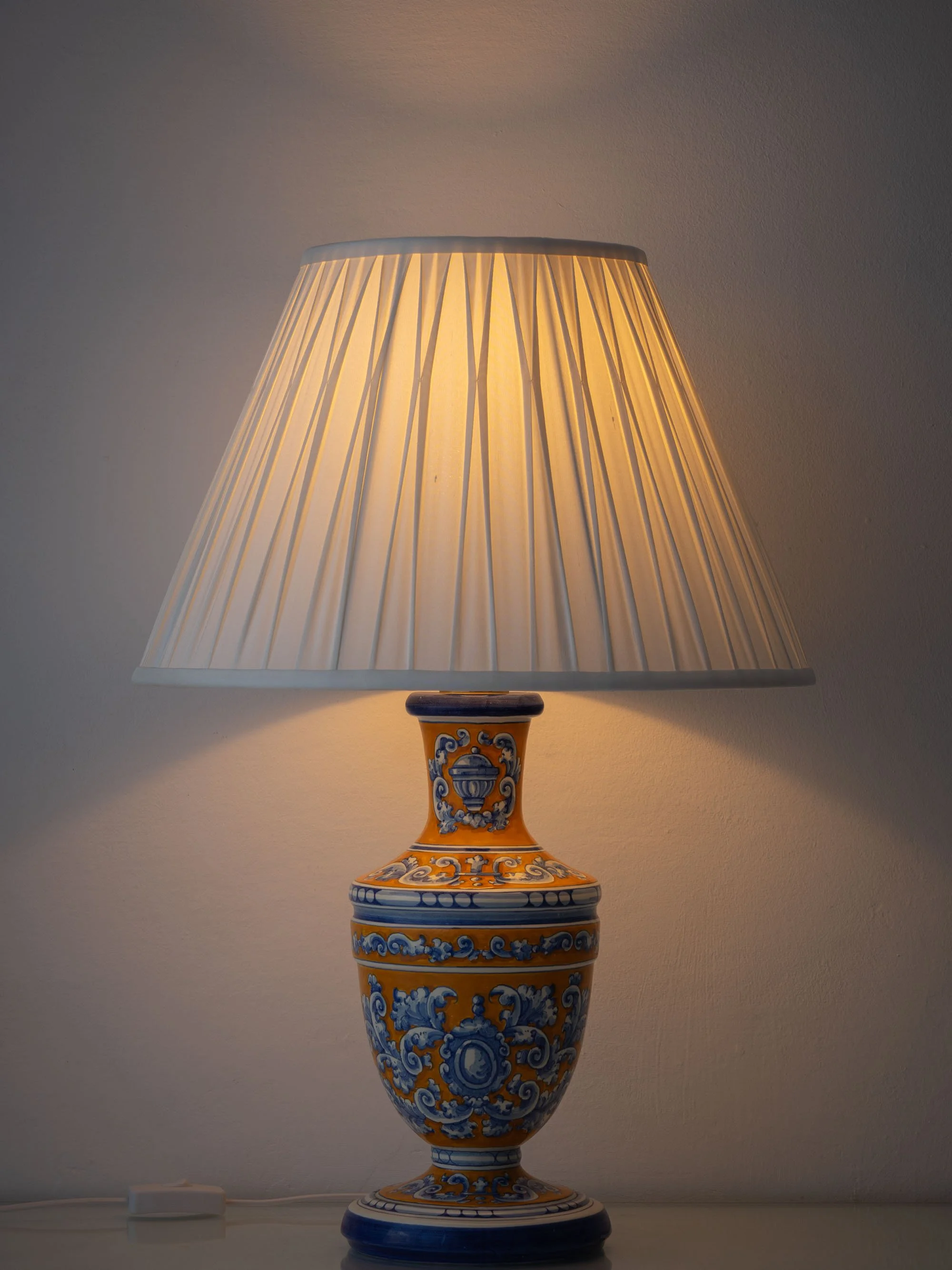
The Porcelina range was developed by Flora Gouda as a response to evolving tastes in mid-20th-century interiors, offering graceful silhouettes in muted, porcelain-like finishes. This particular form—with its fluted pedestal and gently swelling curves—draws from ancient amphorae, but its finish and clean lines situate it firmly in the refined aesthetic language of the 1950s and ’60s. The powdery glaze subtly absorbs and diffuses light, giving the lamp an understated architectural presence.
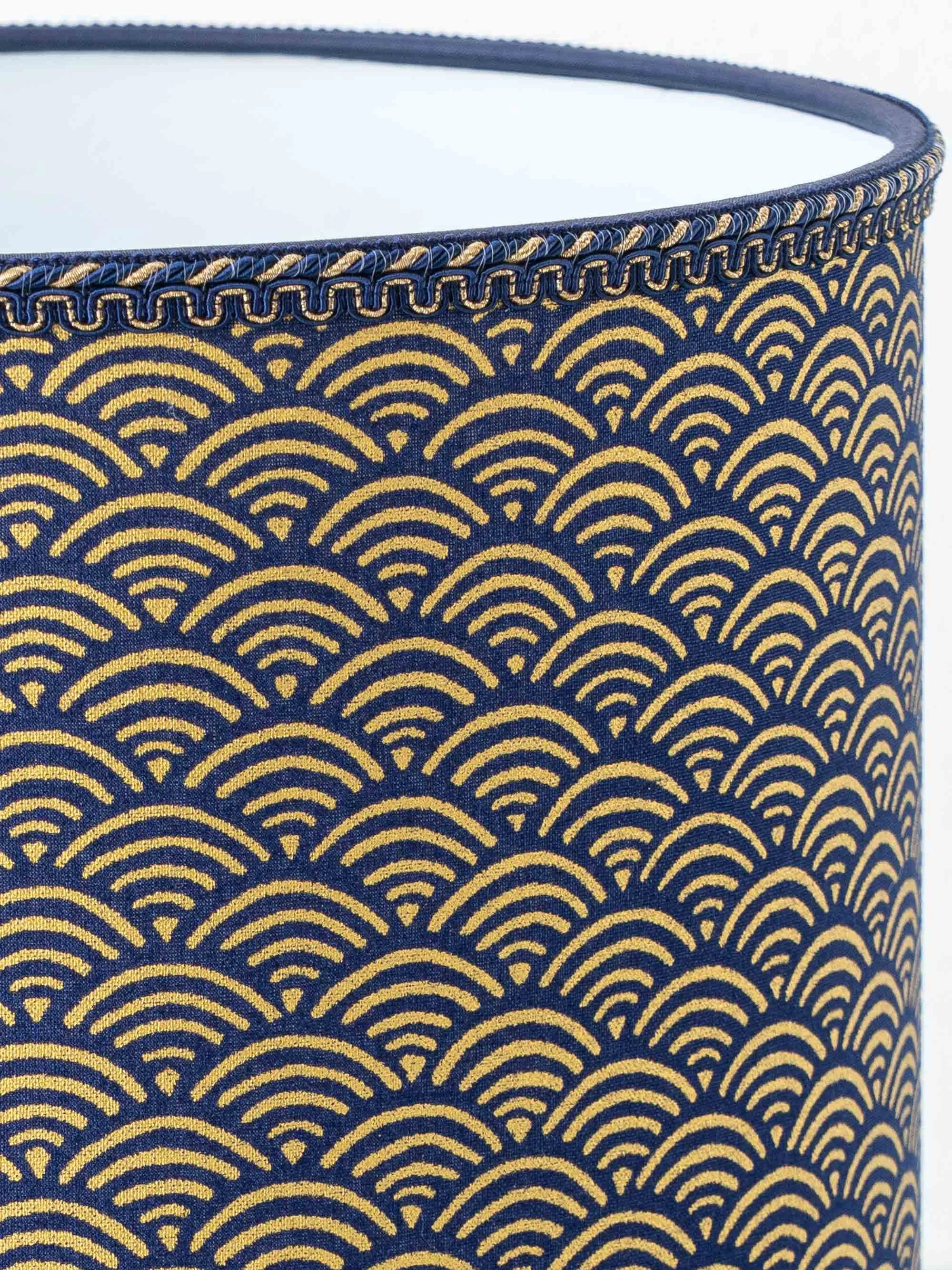
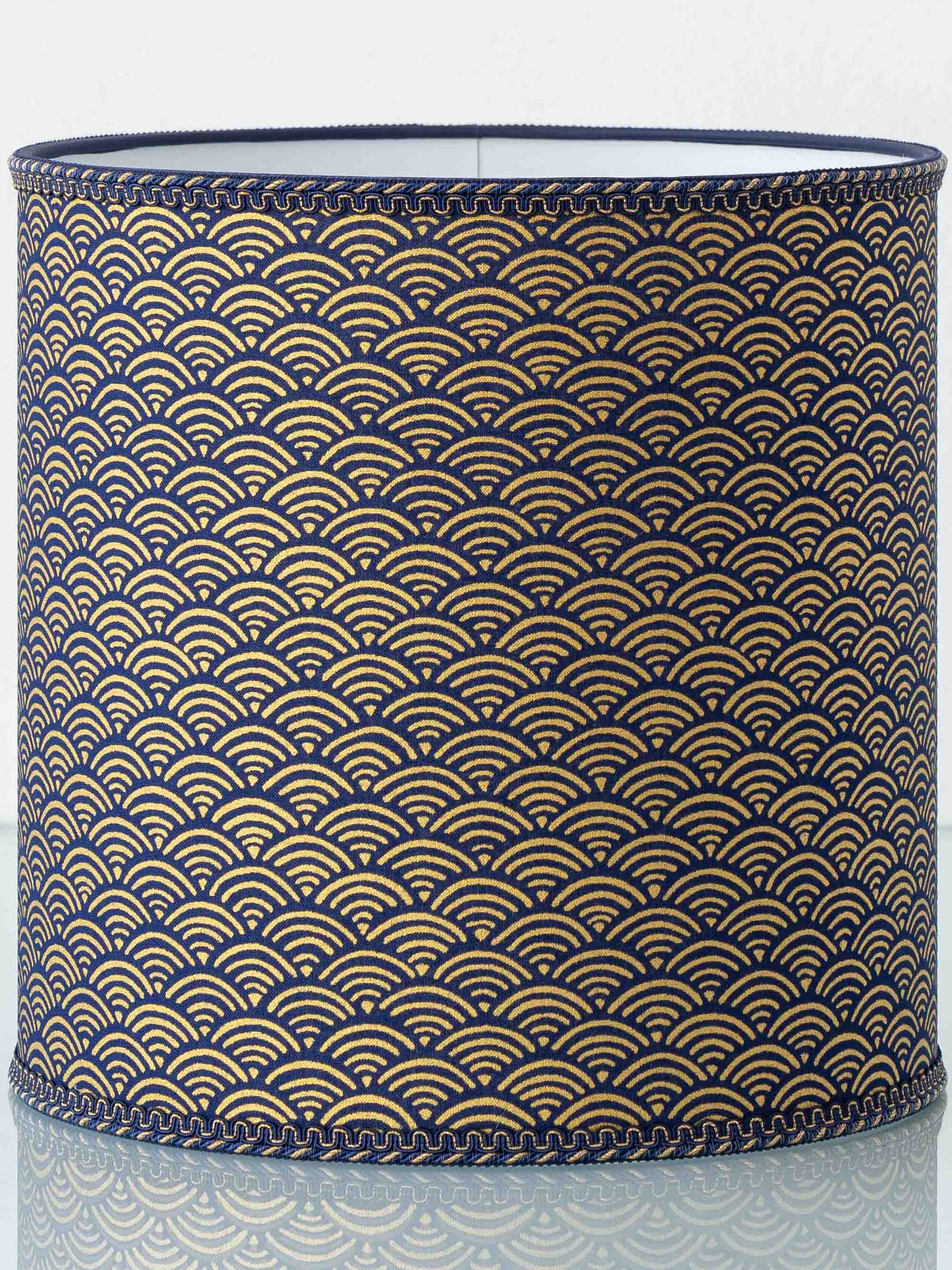
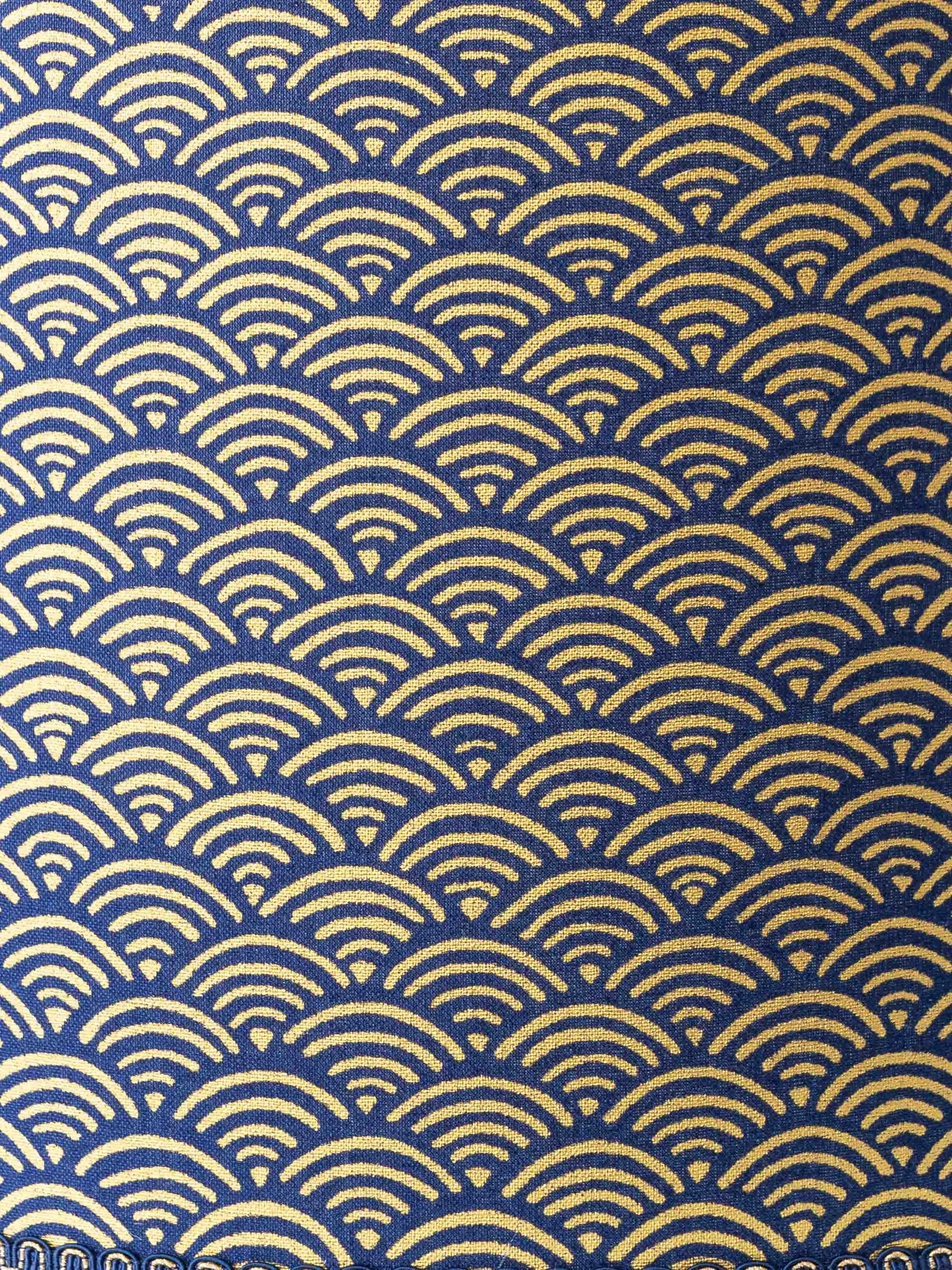
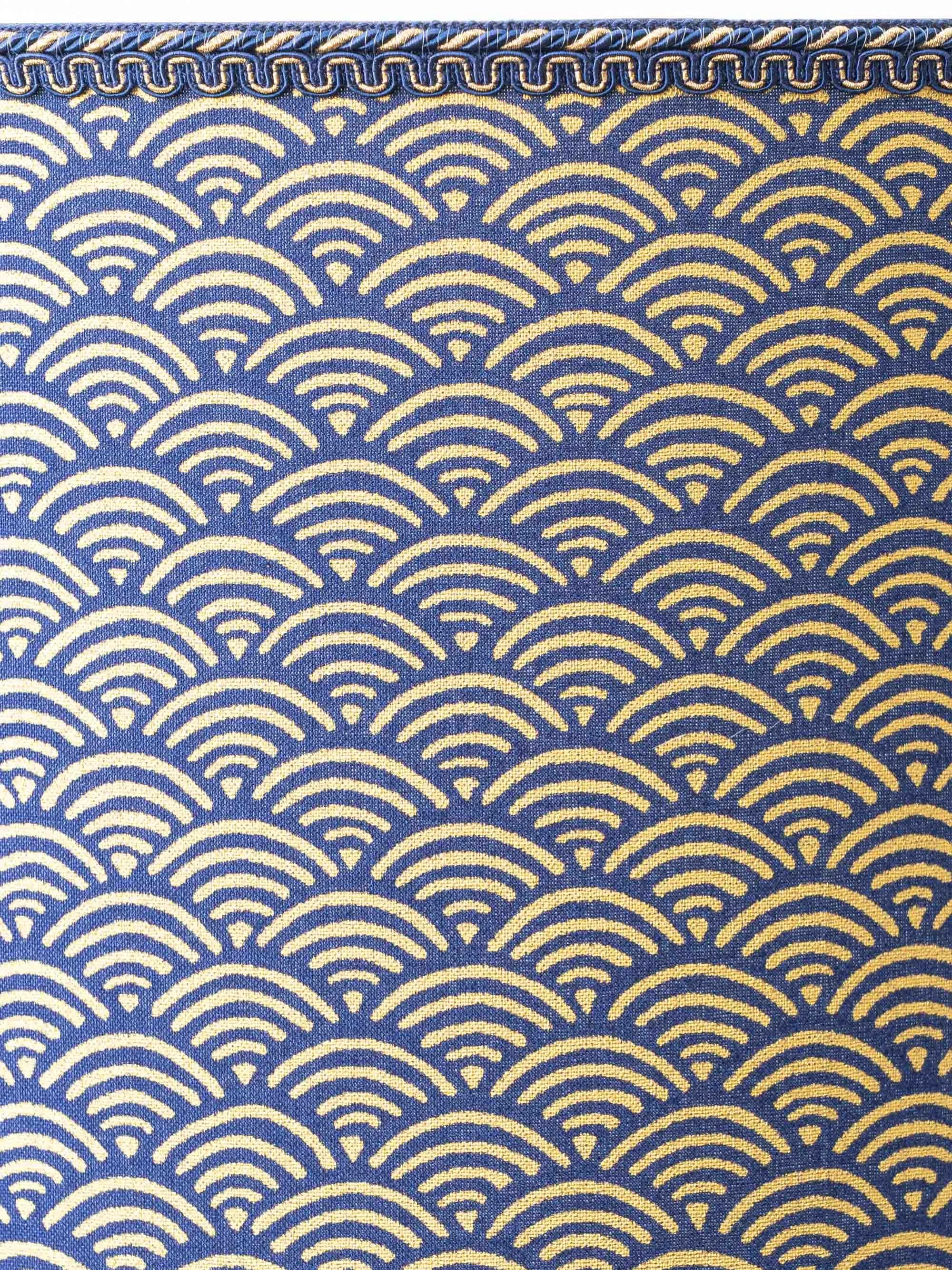
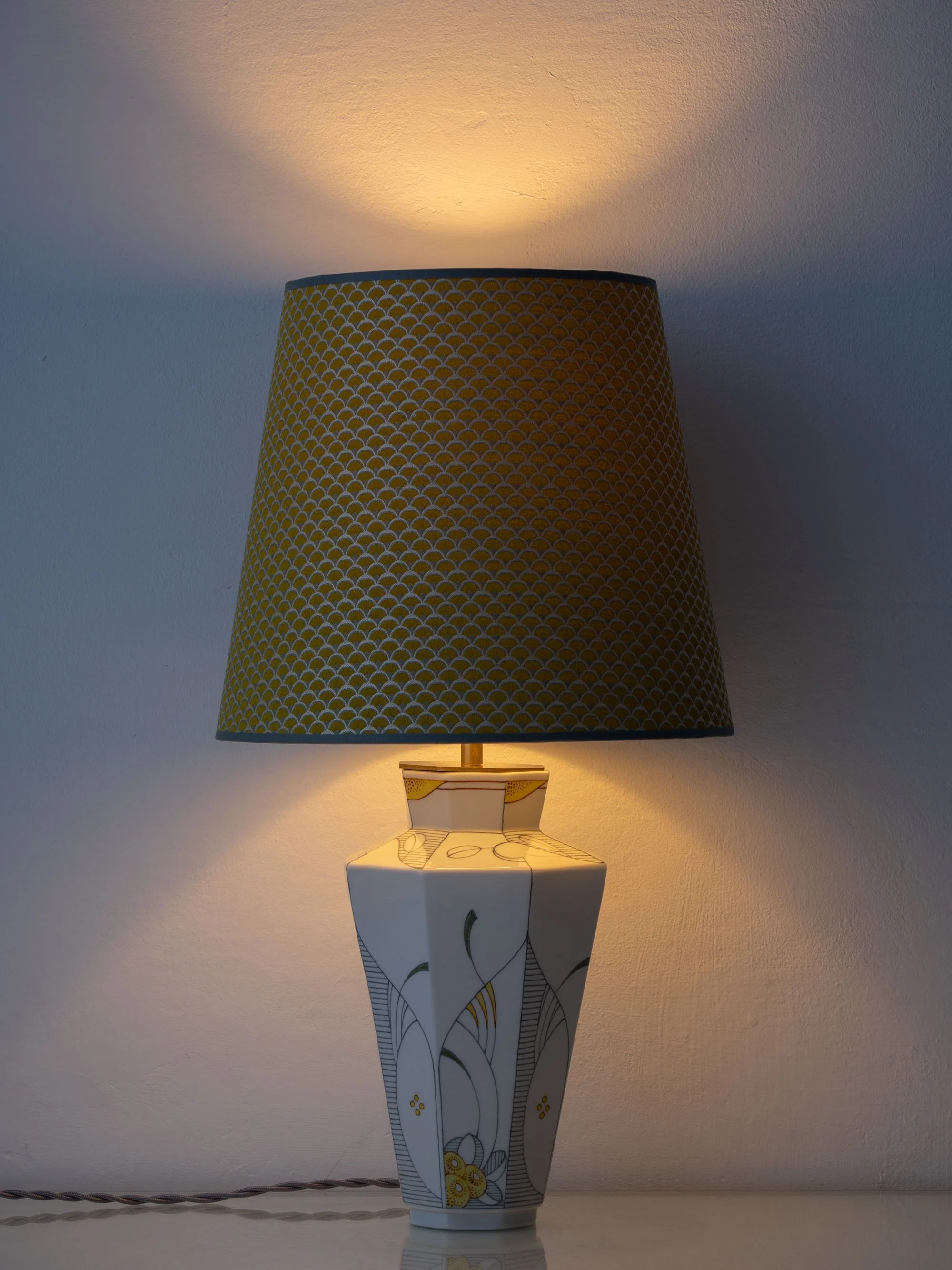
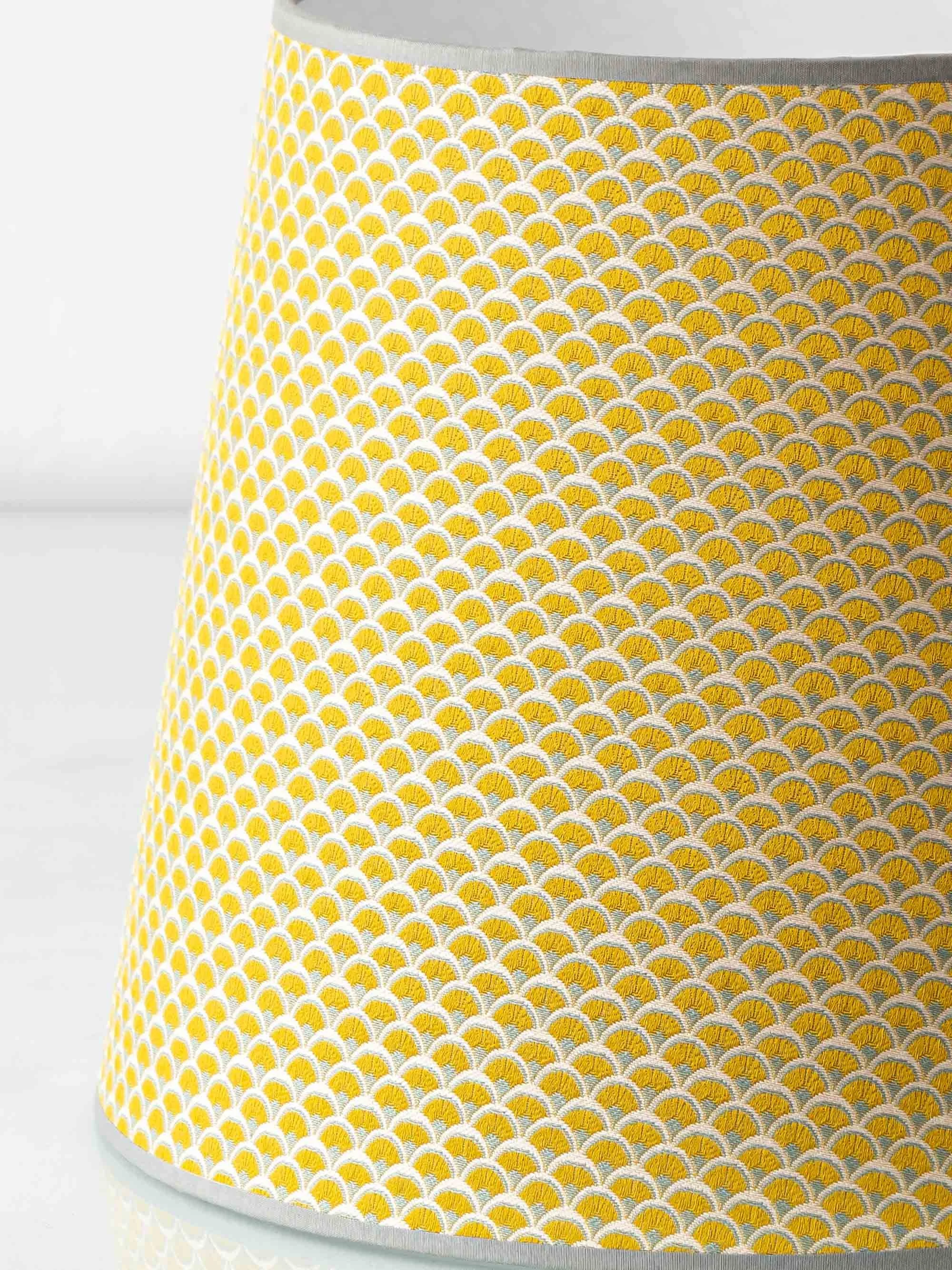
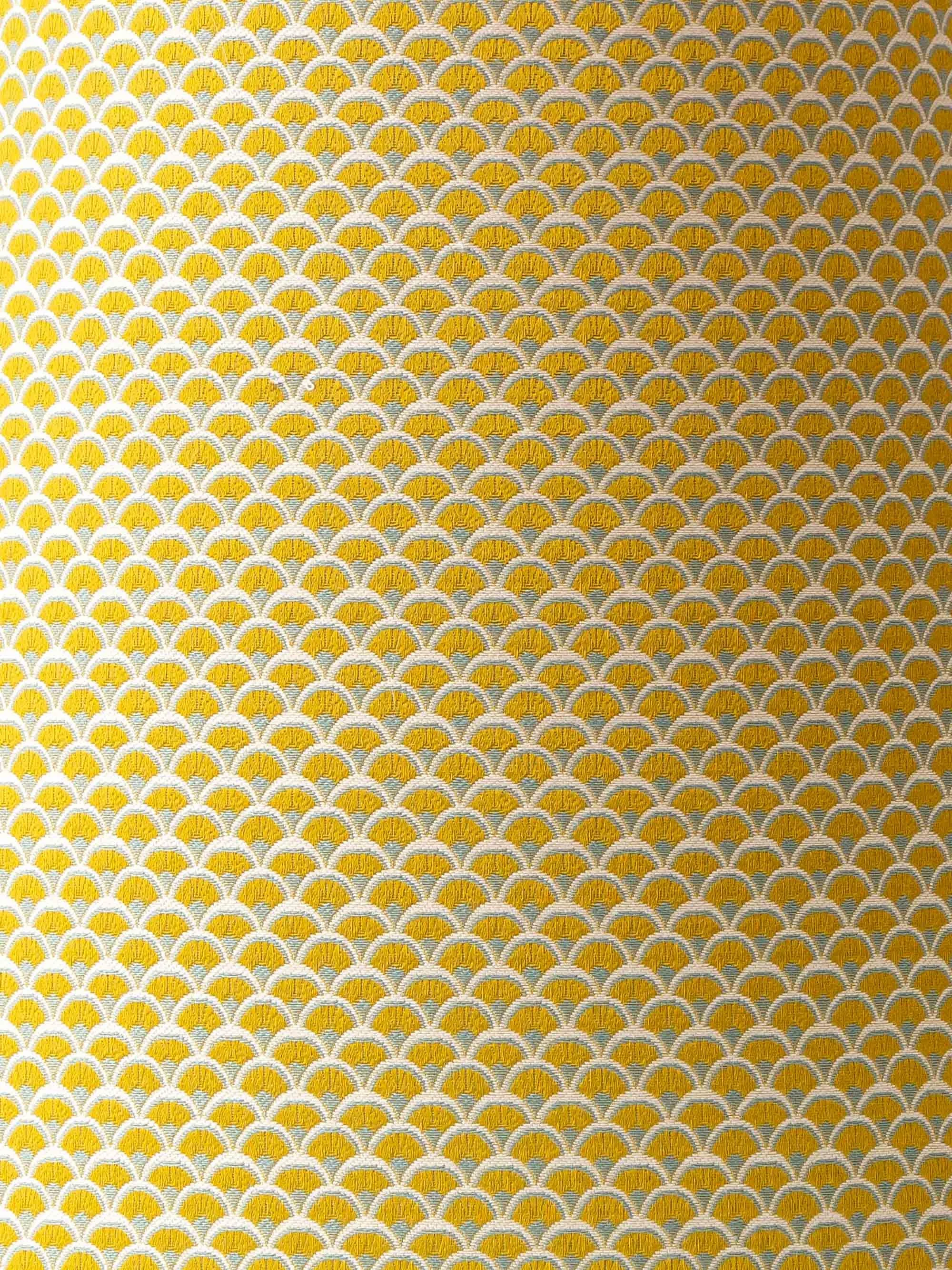
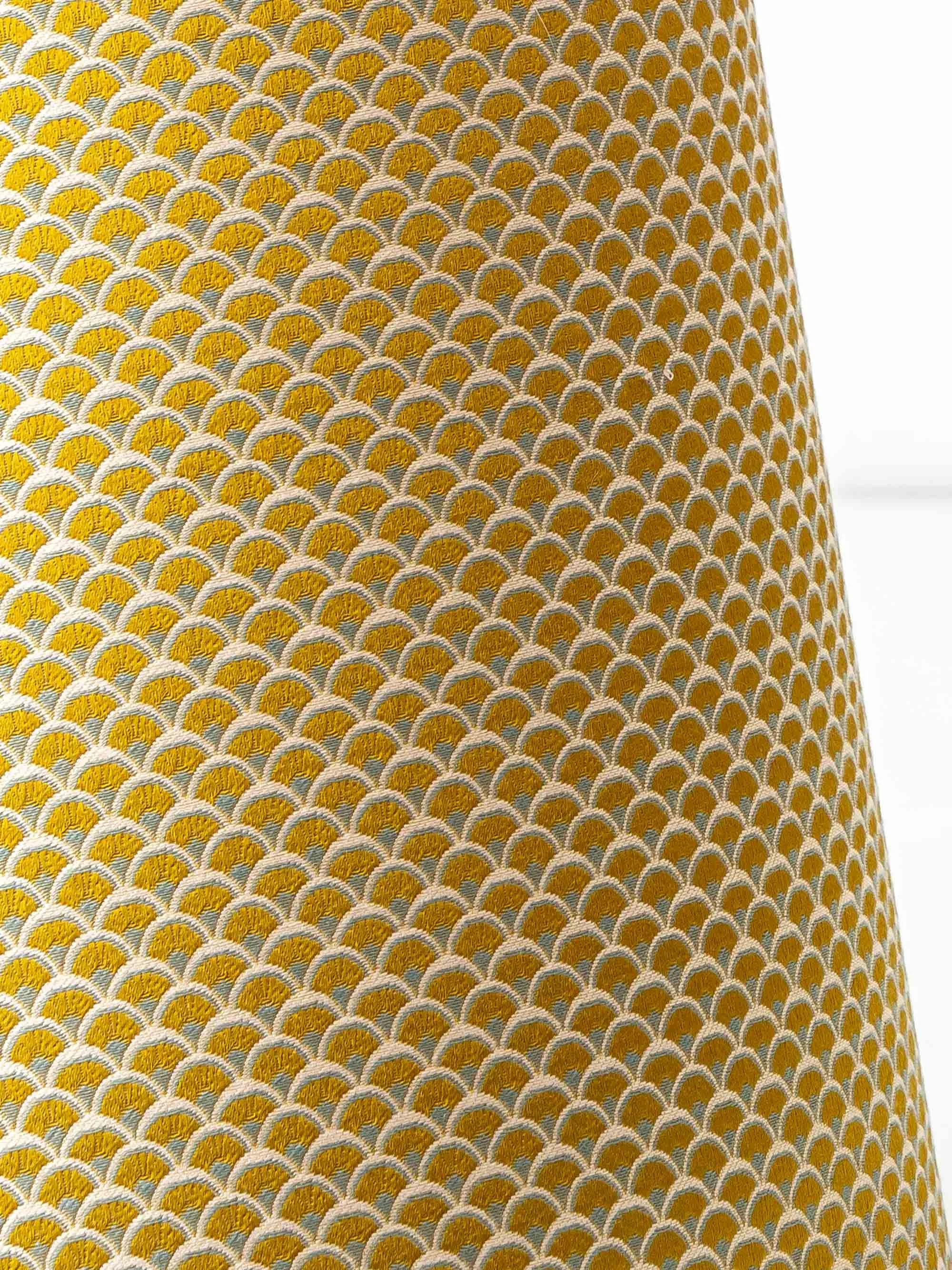
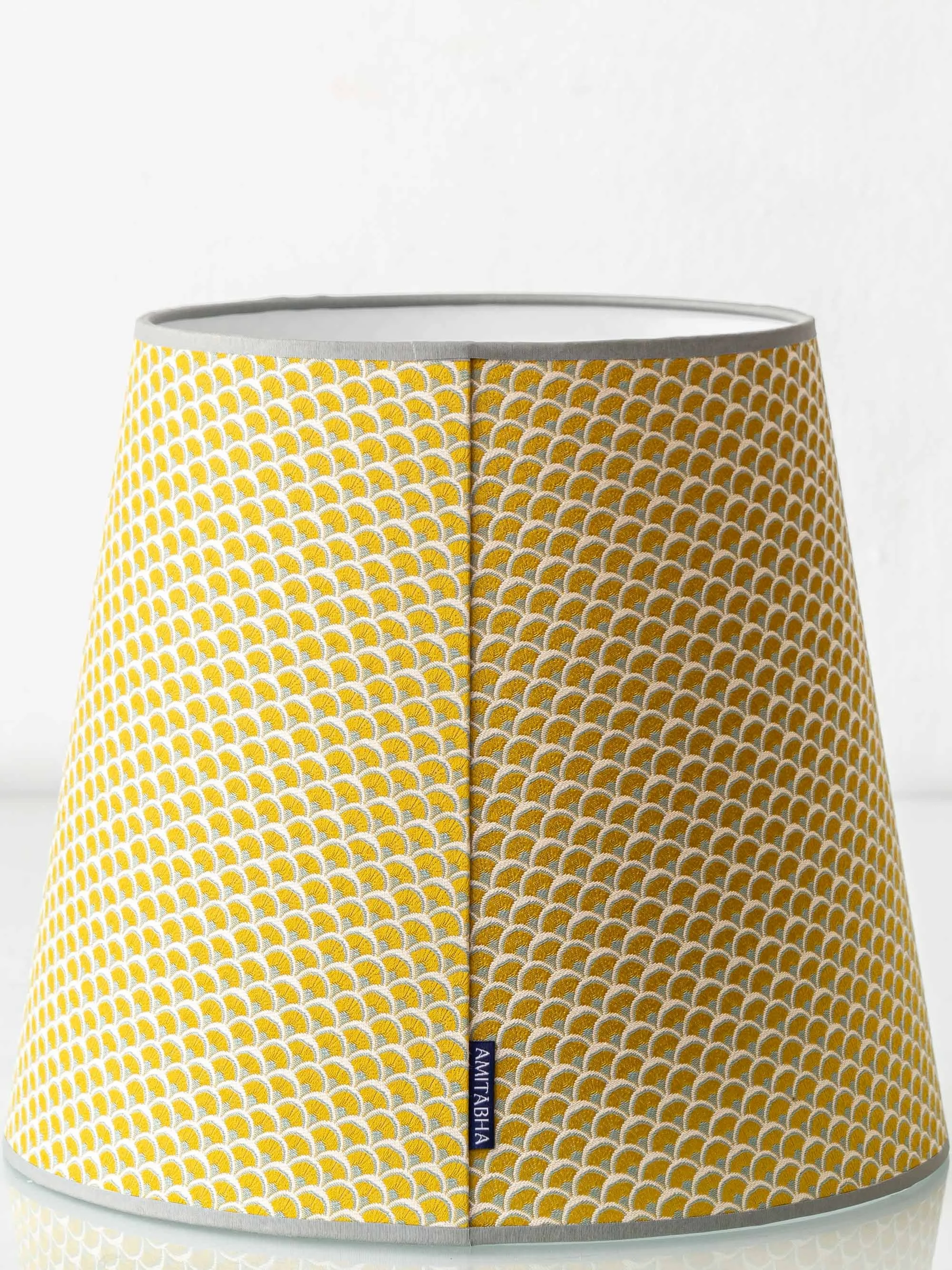
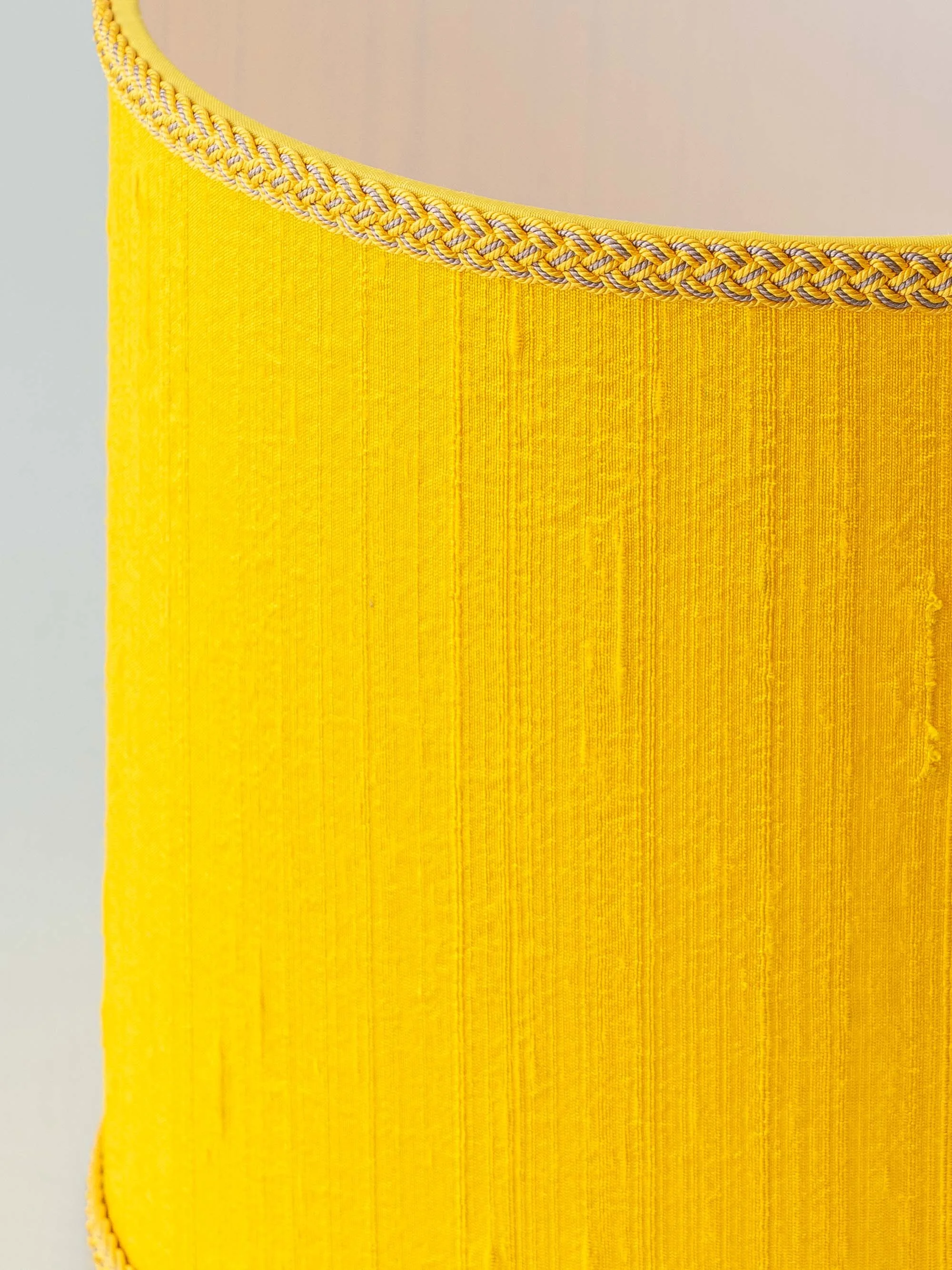
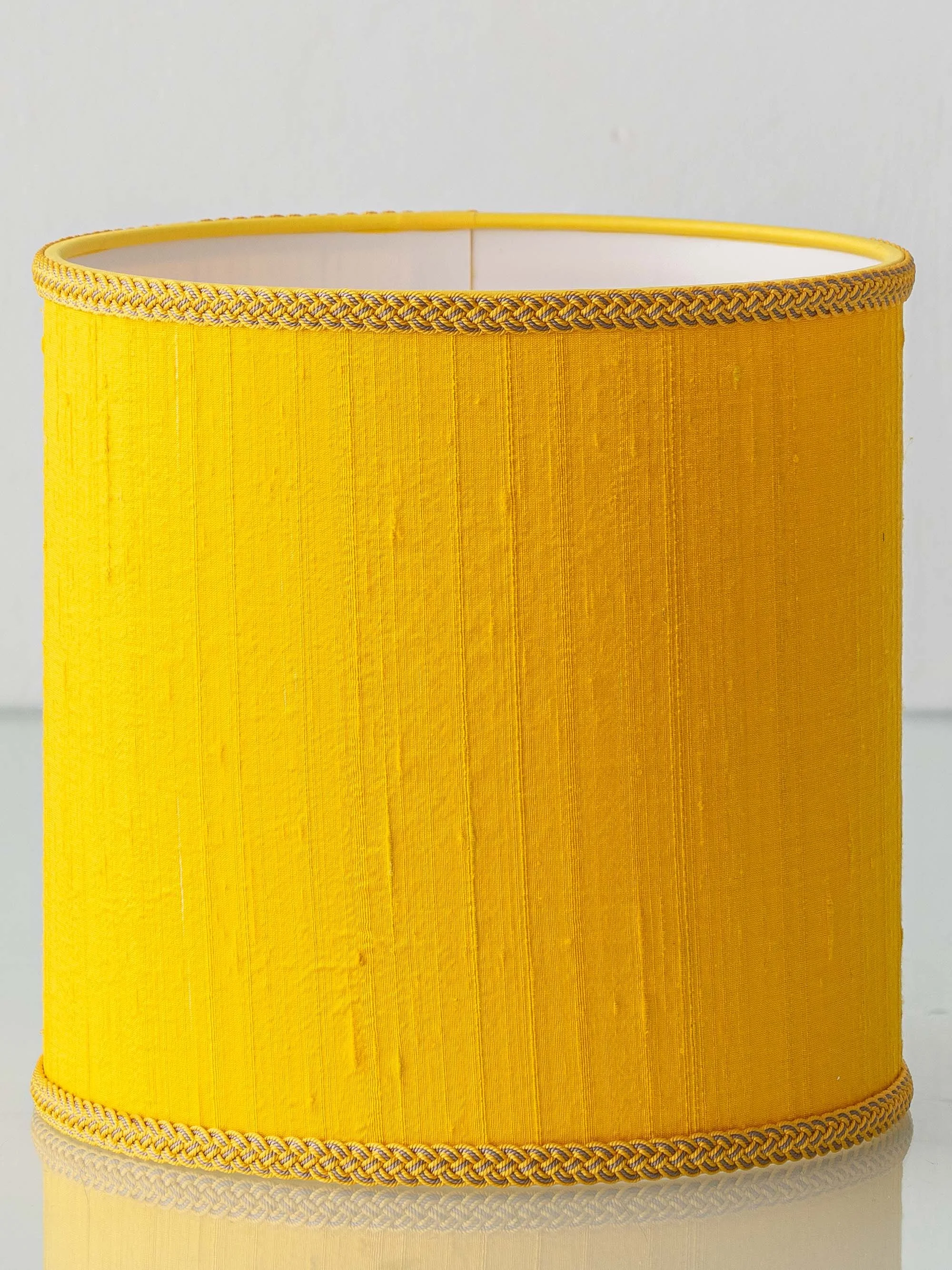
Acantha is paired with a bespoke, hand-pleated lampshade, made in an atelier near Amsterdam, in a reinterpreted colorway of William Morris’s iconic 1875 Acanthus pattern. The foliage, rendered in cool indigo and sky blues on ivory, brings movement and texture while quietly echoing the lamp’s classical inspiration. The craftsmanship of the pleating complements the vase’s ribbed detailing, allowing both elements to resonate without competing.
Well-suited to intimate settings such as a writing desk, reading corner, or hallway table, Acantha offers a refined accent with a strong sense of character.
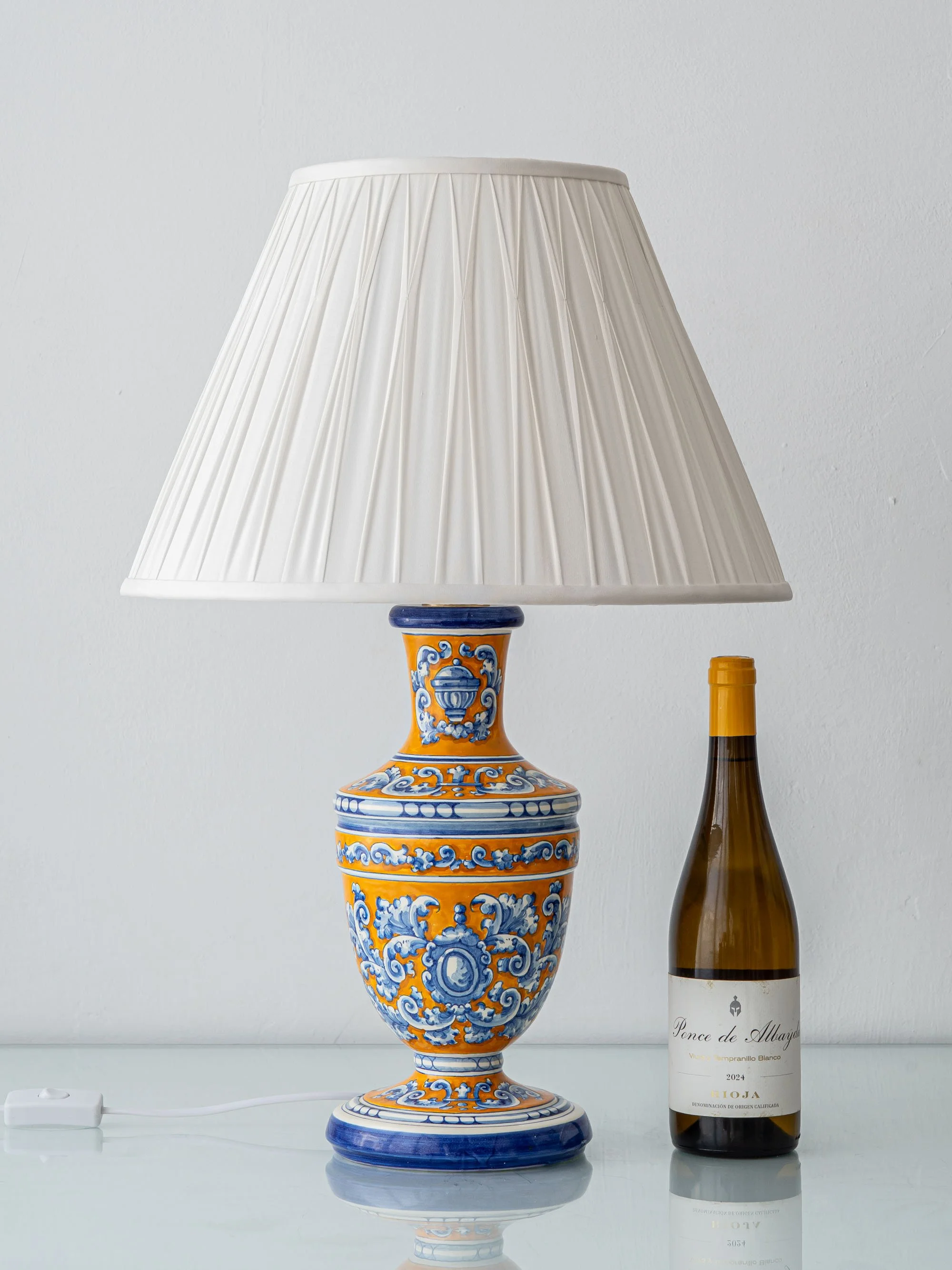
Height: 44 cm (17 in) with lampshade
Diameter: 30 cm (12 in) with lampshade
*Please note that after the subtotal page, at checkout, 21% VAT will be applied for customers within Europe. Customers in the UK, USA, and other countries may be subject to local taxes, duties or tariffs which are not included in our prices. Rates can differ widely based on your location, and we advise you to check with your local customs office for more information.
Meet Acantha, a one-of-a-kind vintage table lamp created from a Roman-inspired amphora vase by Flora Gouda, part of their Porcelina series produced between 1950 and 1970. With its soft matte glaze in pale, slate-toned blue and crisp relief details at the base and neck, the vase channels classical form with mid-century restraint. Made in the Netherlands during a transitional period in Dutch ceramics—when makers like Flora balanced tradition with pared-back modernity—this piece reflects a neoclassical sensibility interpreted through post-war design.
The Porcelina range was developed by Flora Gouda as a response to evolving tastes in mid-20th-century interiors, offering graceful silhouettes in muted, porcelain-like finishes. This particular form—with its fluted pedestal and gently swelling curves—draws from ancient amphorae, but its finish and clean lines situate it firmly in the refined aesthetic language of the 1950s and ’60s. The powdery glaze subtly absorbs and diffuses light, giving the lamp an understated architectural presence.
Acantha is paired with a bespoke, hand-pleated lampshade, made in an atelier near Amsterdam, in a reinterpreted colorway of William Morris’s iconic 1875 Acanthus pattern. The foliage, rendered in cool indigo and sky blues on ivory, brings movement and texture while quietly echoing the lamp’s classical inspiration. The craftsmanship of the pleating complements the vase’s ribbed detailing, allowing both elements to resonate without competing.
Well-suited to intimate settings such as a writing desk, reading corner, or hallway table, Acantha offers a refined accent with a strong sense of character.
Height: 44 cm (17 in) with lampshade
Diameter: 30 cm (12 in) with lampshade
*Please note that after the subtotal page, at checkout, 21% VAT will be applied for customers within Europe. Customers in the UK, USA, and other countries may be subject to local taxes, duties or tariffs which are not included in our prices. Rates can differ widely based on your location, and we advise you to check with your local customs office for more information.

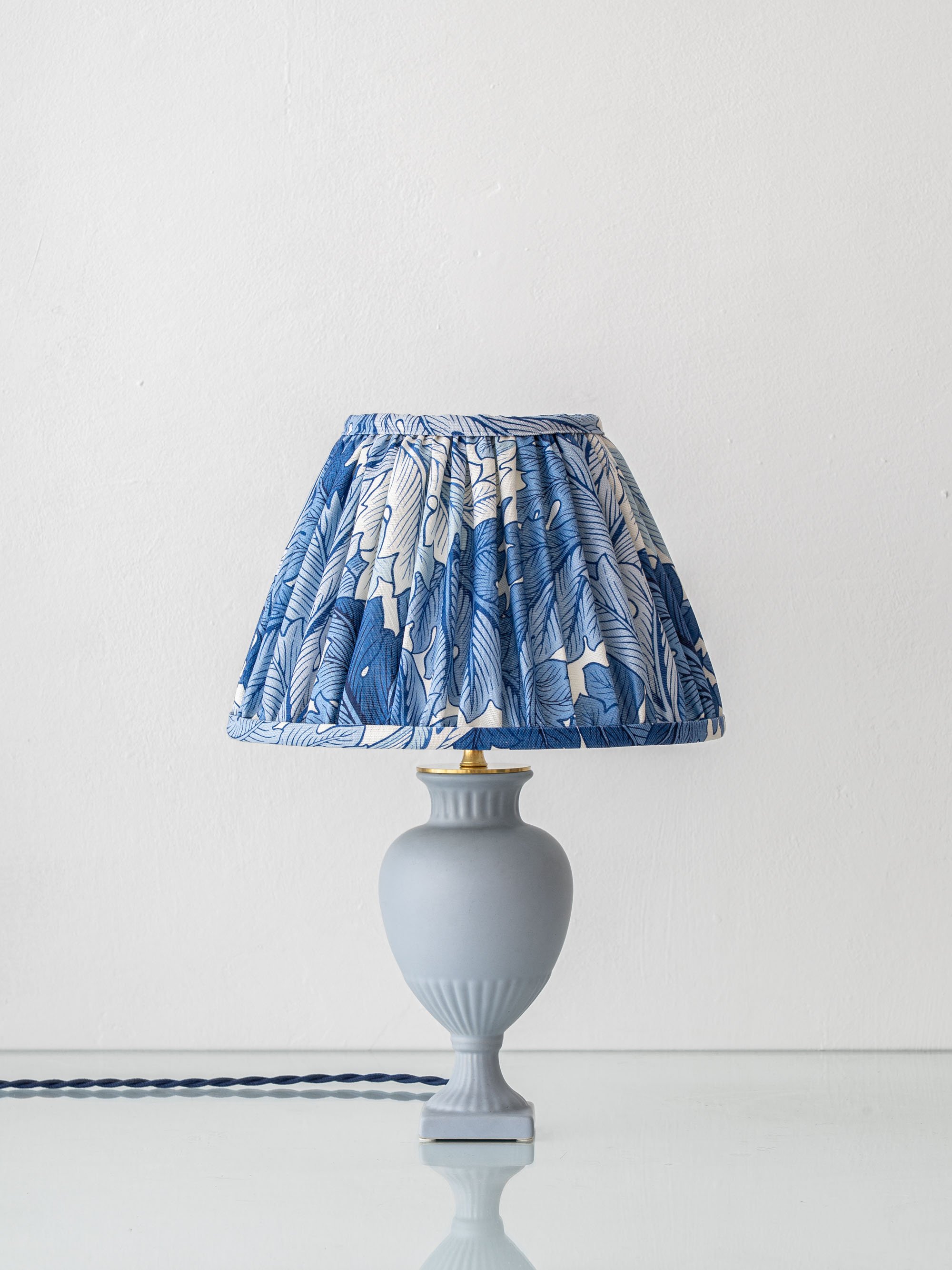 Image 1 of 12
 Image 2 of 12
 Image 3 of 12
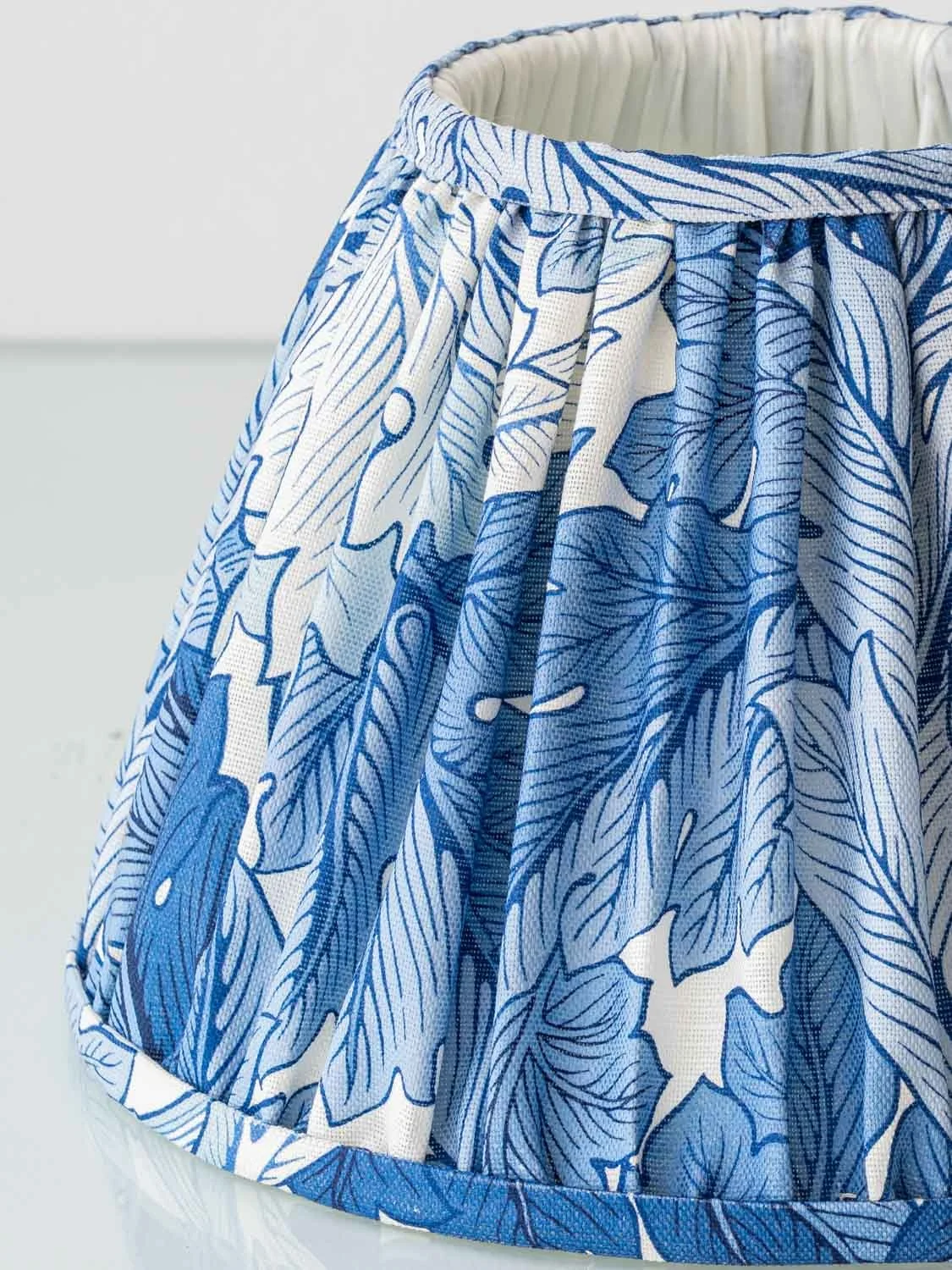 Image 4 of 12
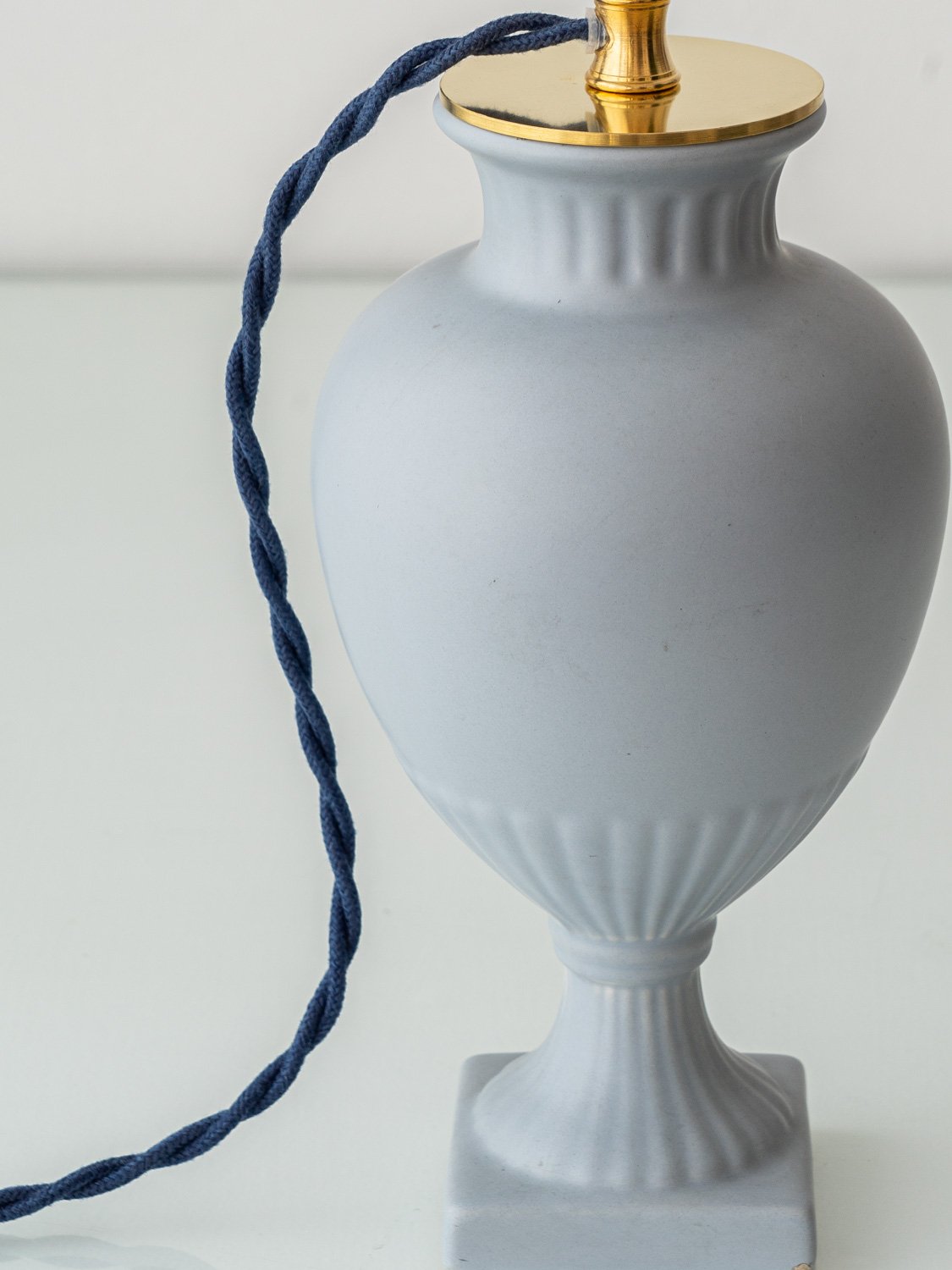 Image 5 of 12
 Image 6 of 12
 Image 7 of 12
 Image 8 of 12
 Image 9 of 12
 Image 10 of 12
 Image 11 of 12
 Image 12 of 12