 Image 1 of 18
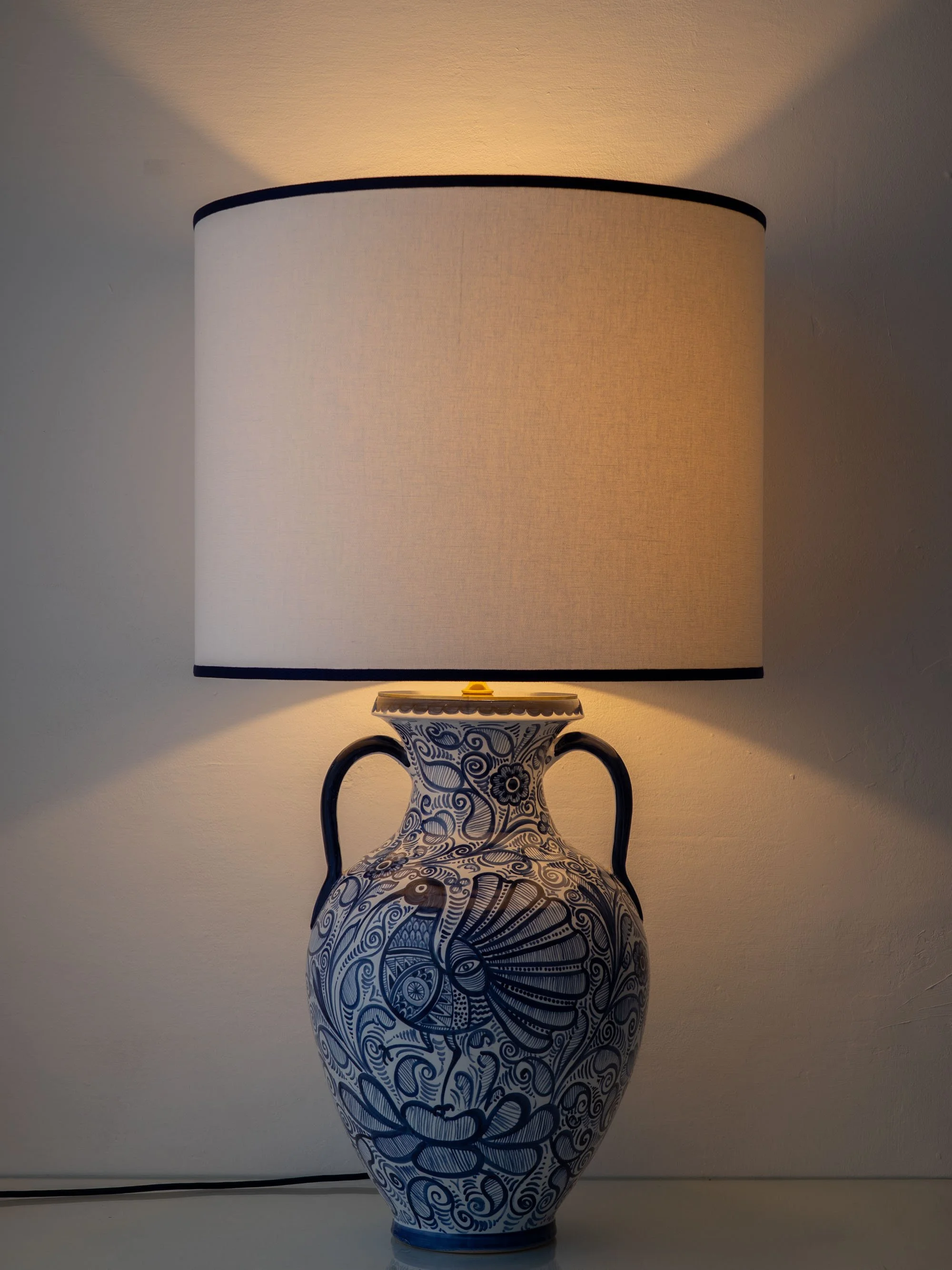 Image 2 of 18
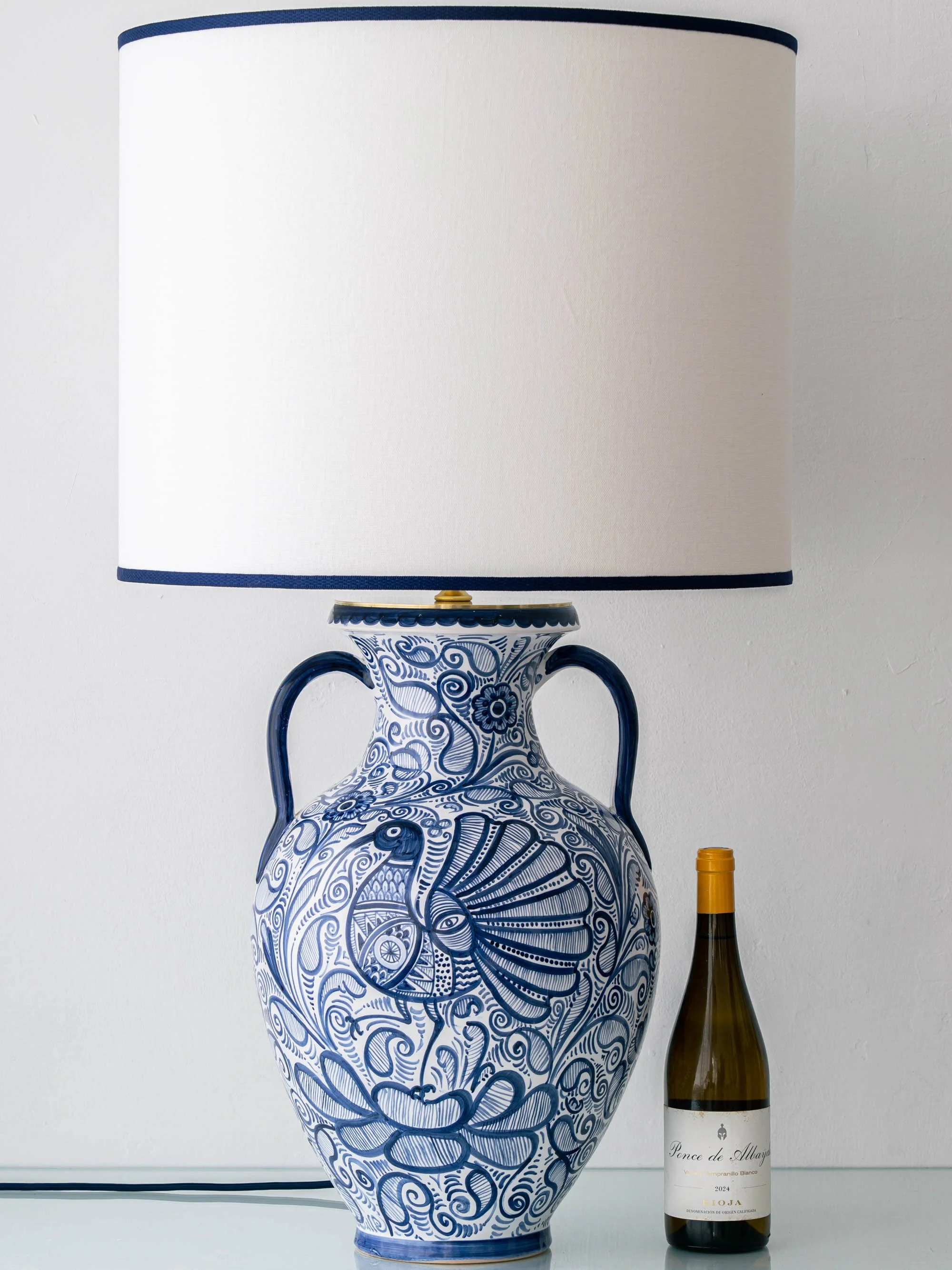 Image 3 of 18
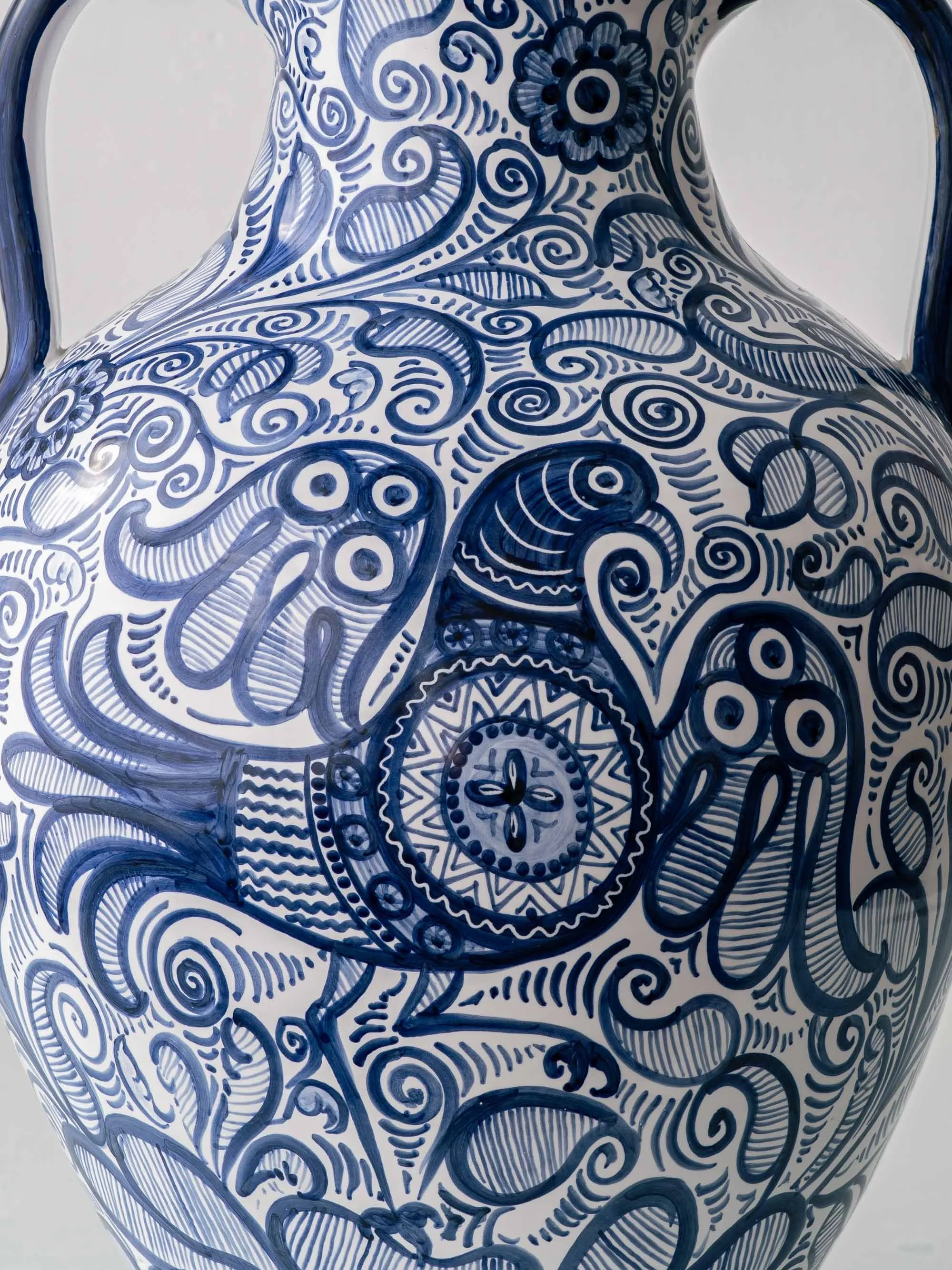 Image 4 of 18
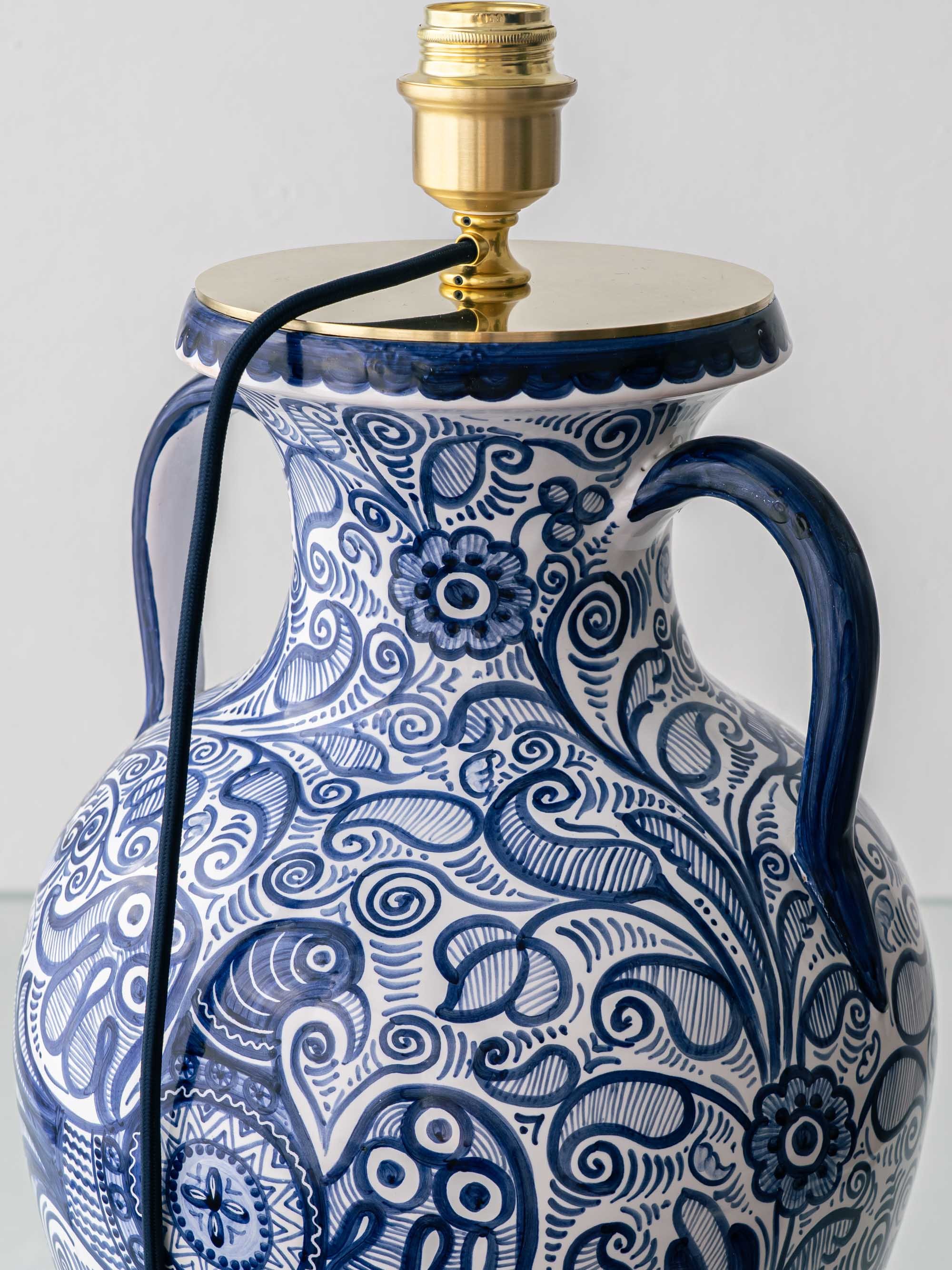 Image 5 of 18
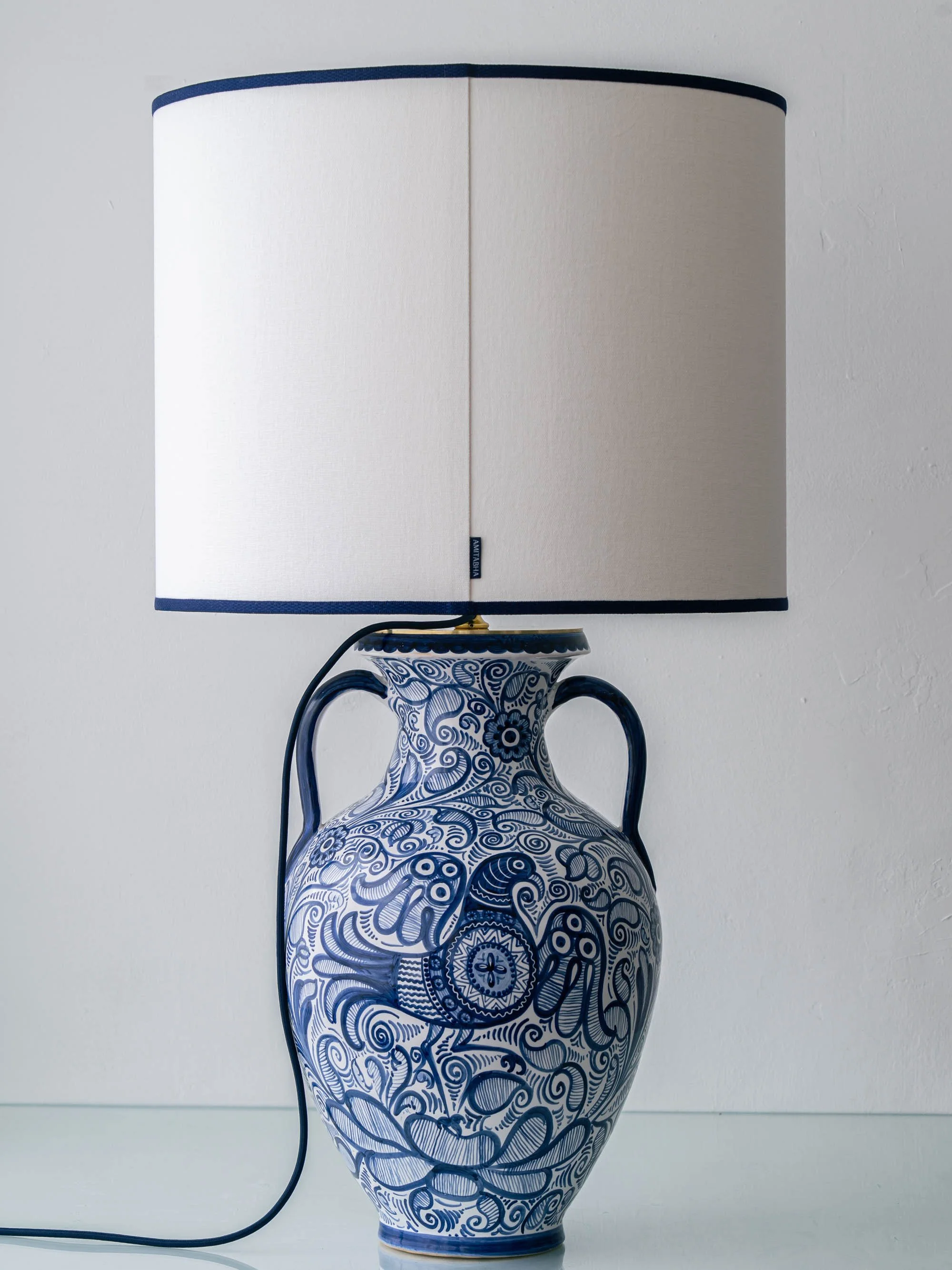 Image 6 of 18
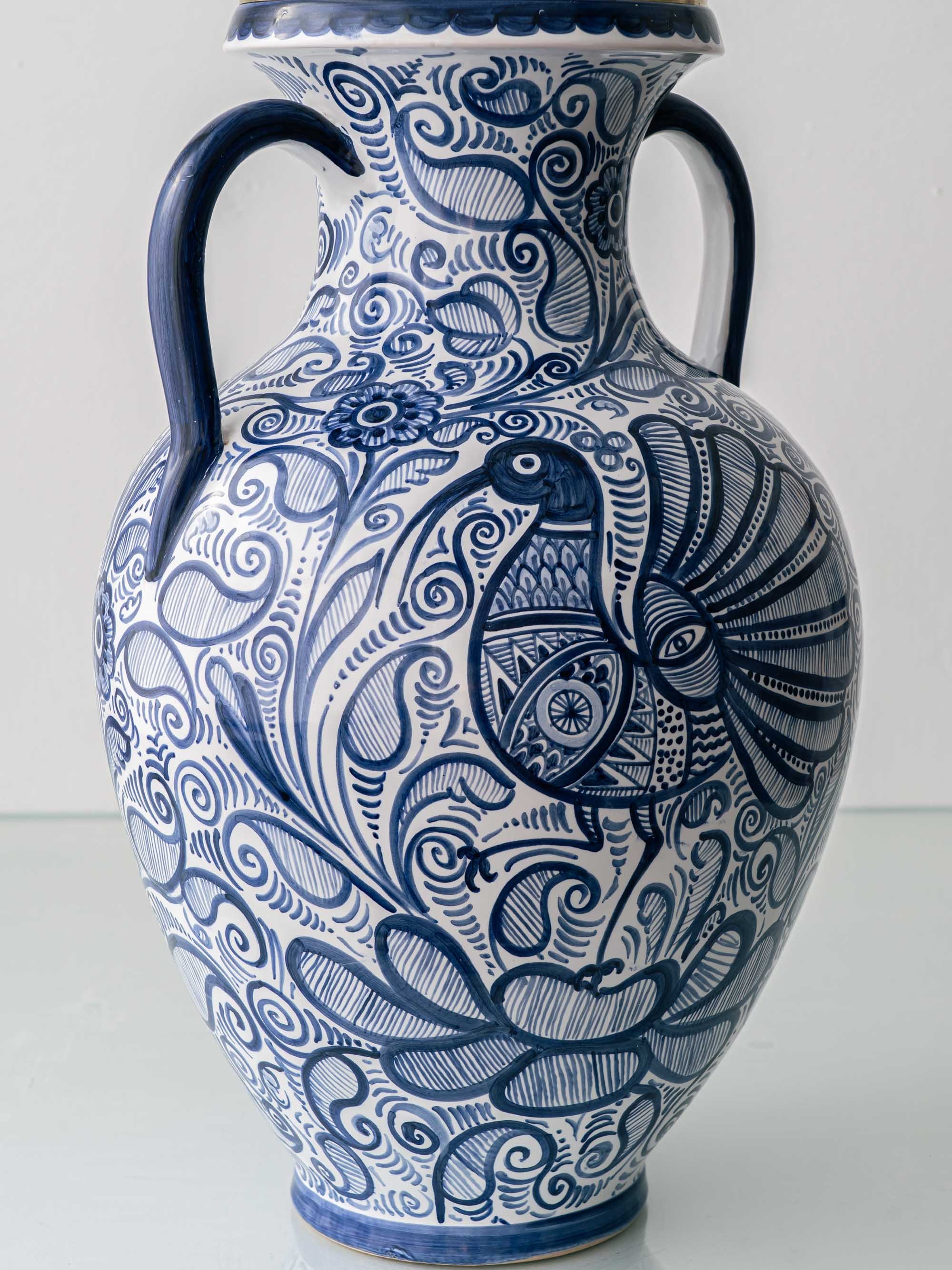 Image 7 of 18
 Image 8 of 18
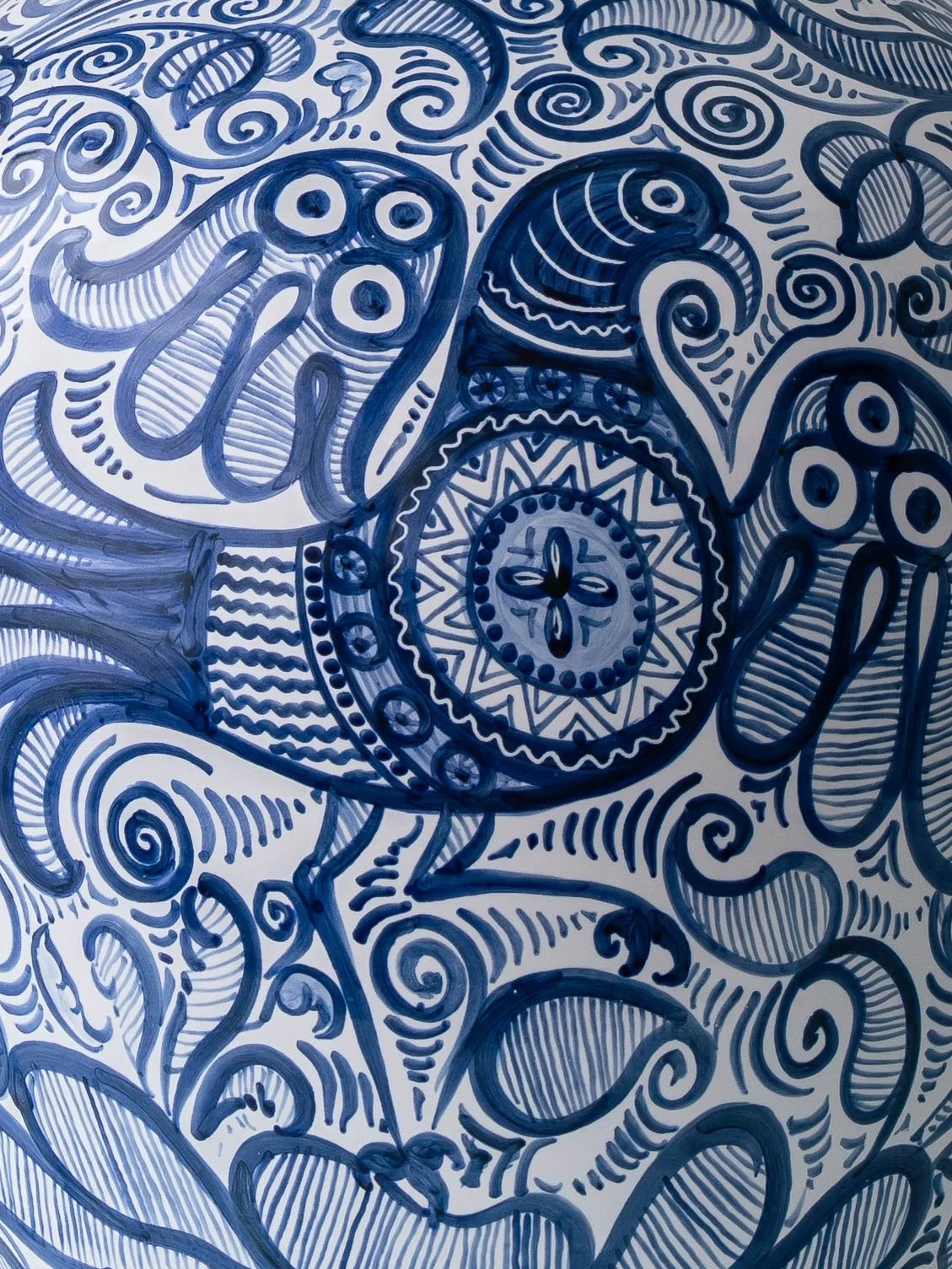 Image 9 of 18
 Image 10 of 18
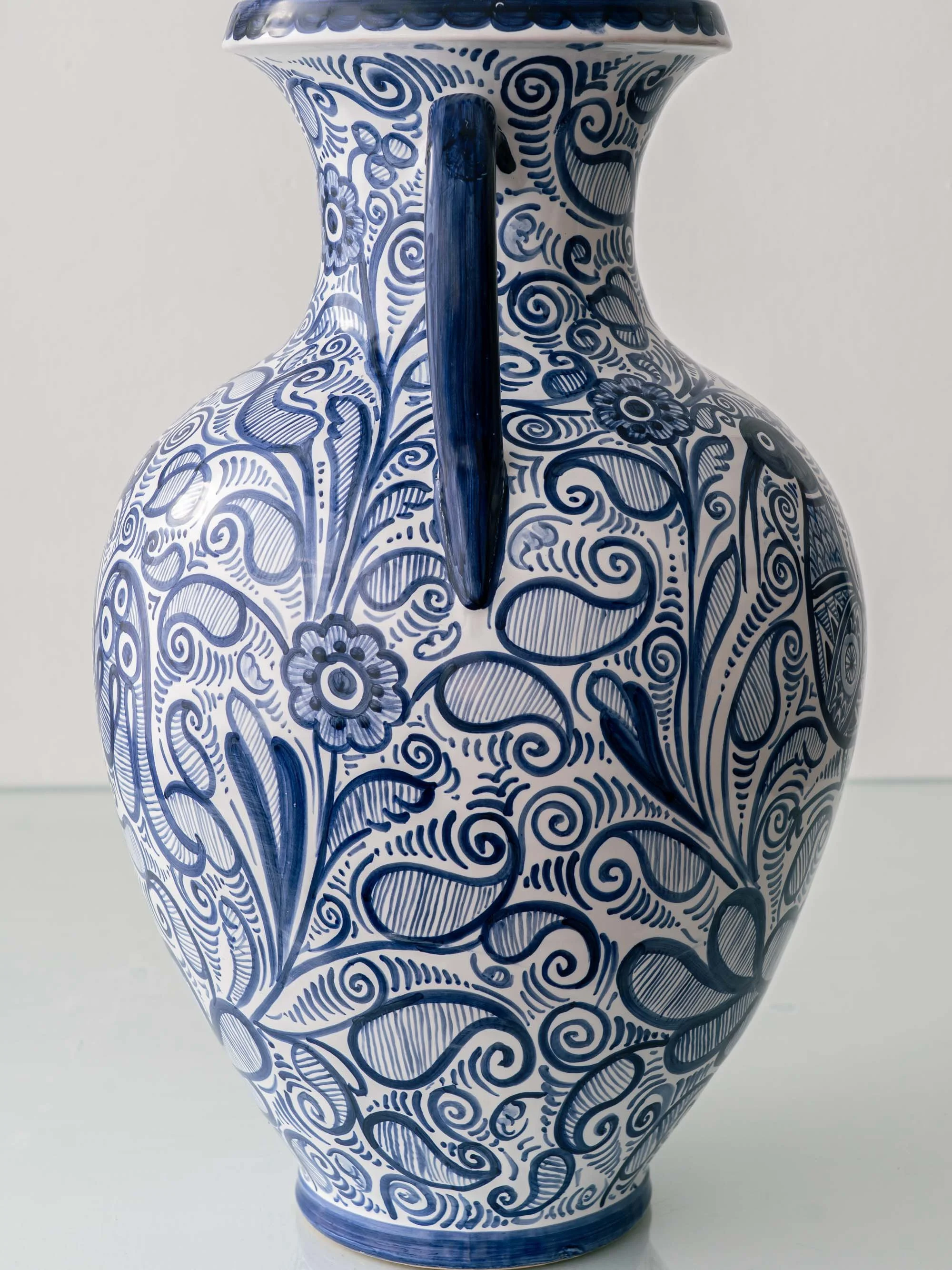 Image 11 of 18
 Image 12 of 18
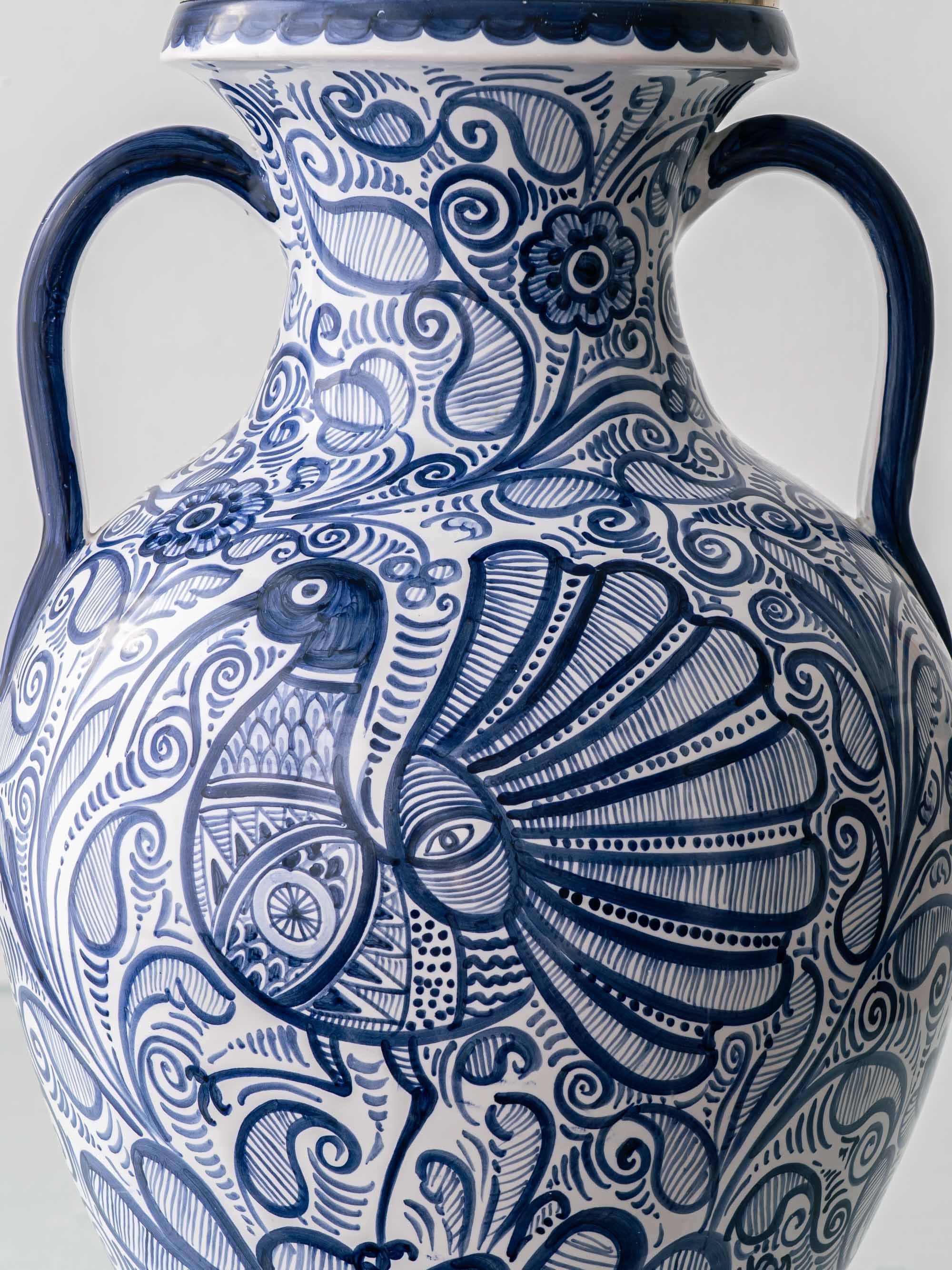 Image 13 of 18
 Image 14 of 18
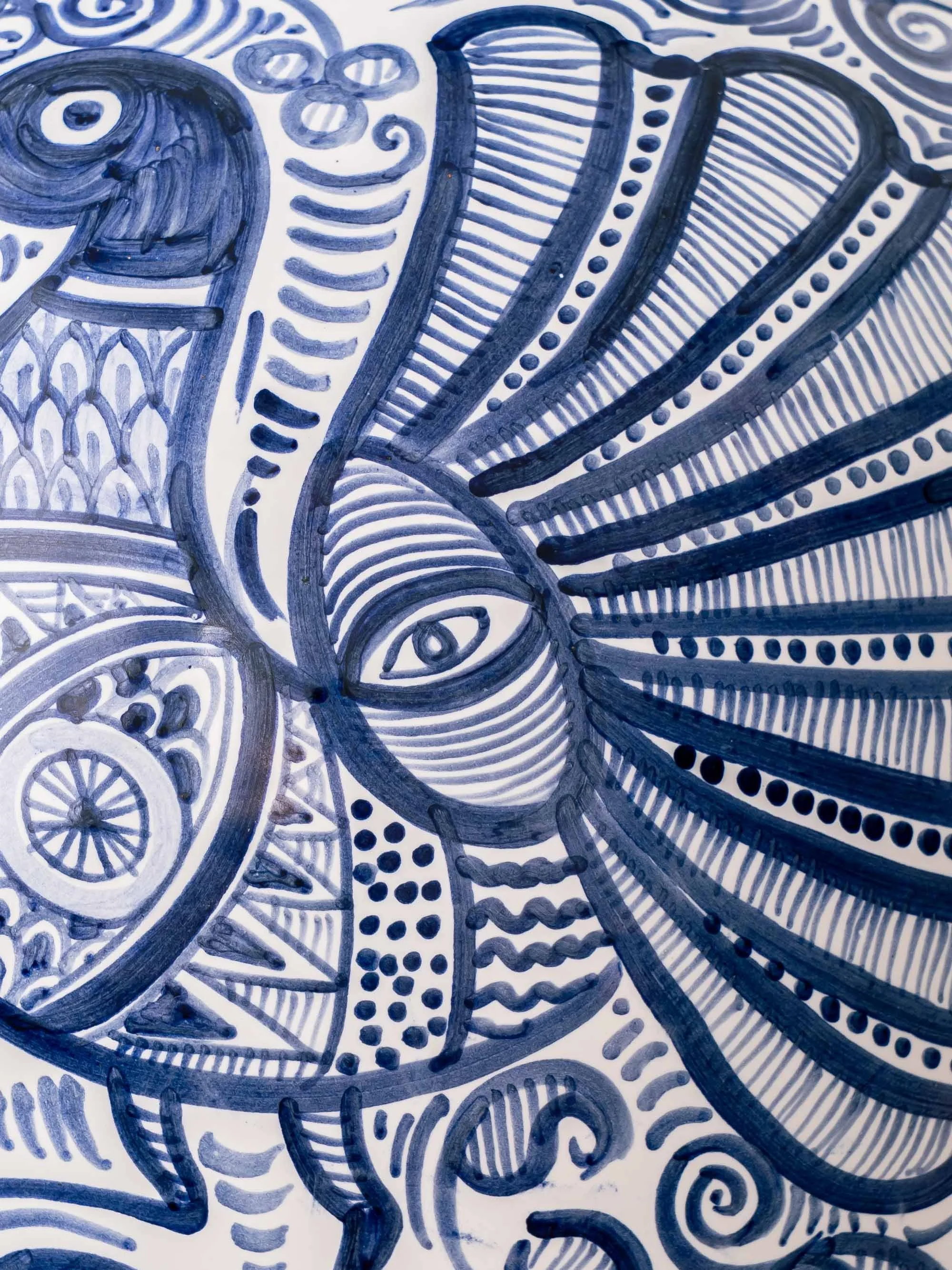 Image 15 of 18
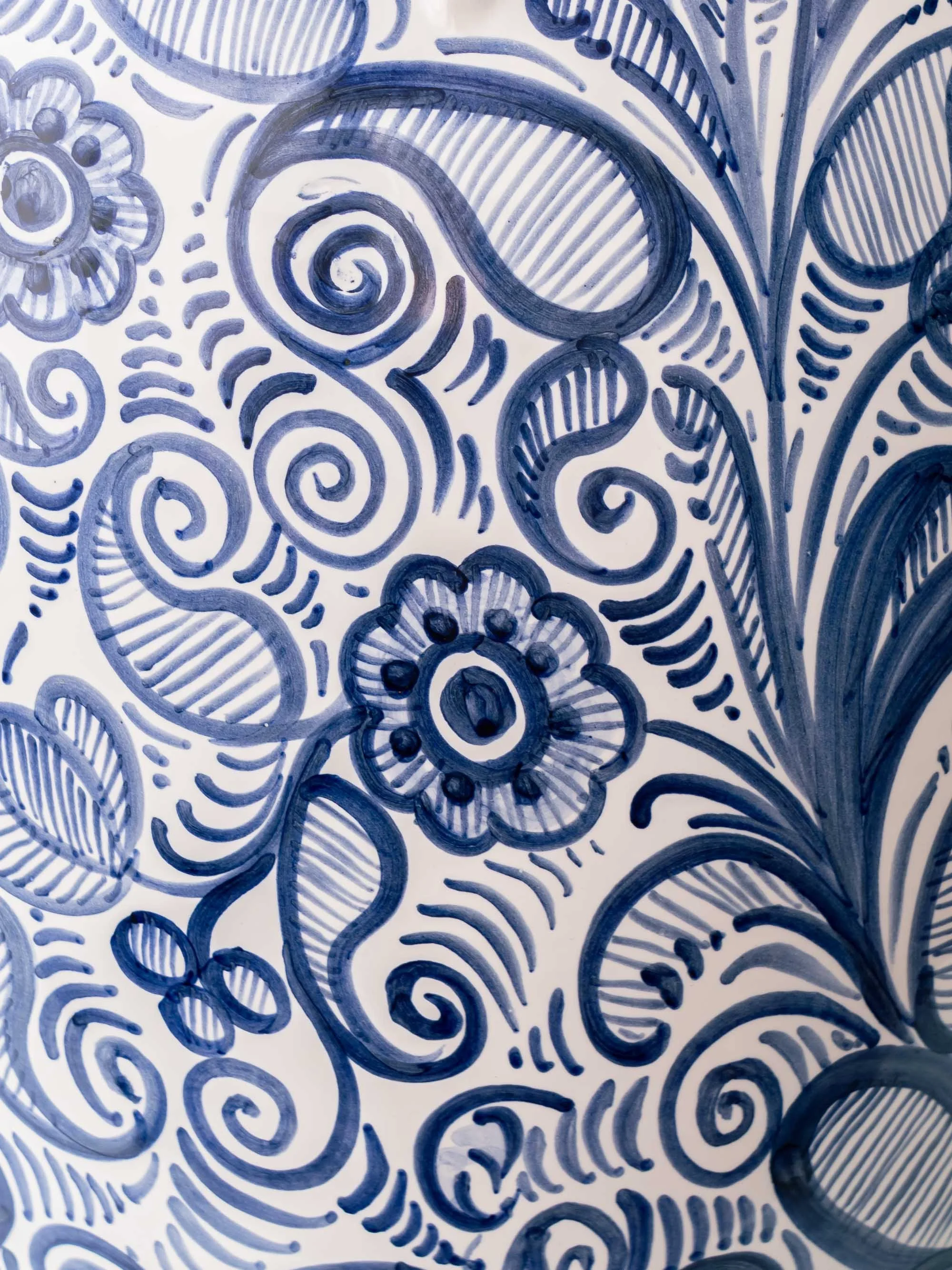 Image 16 of 18
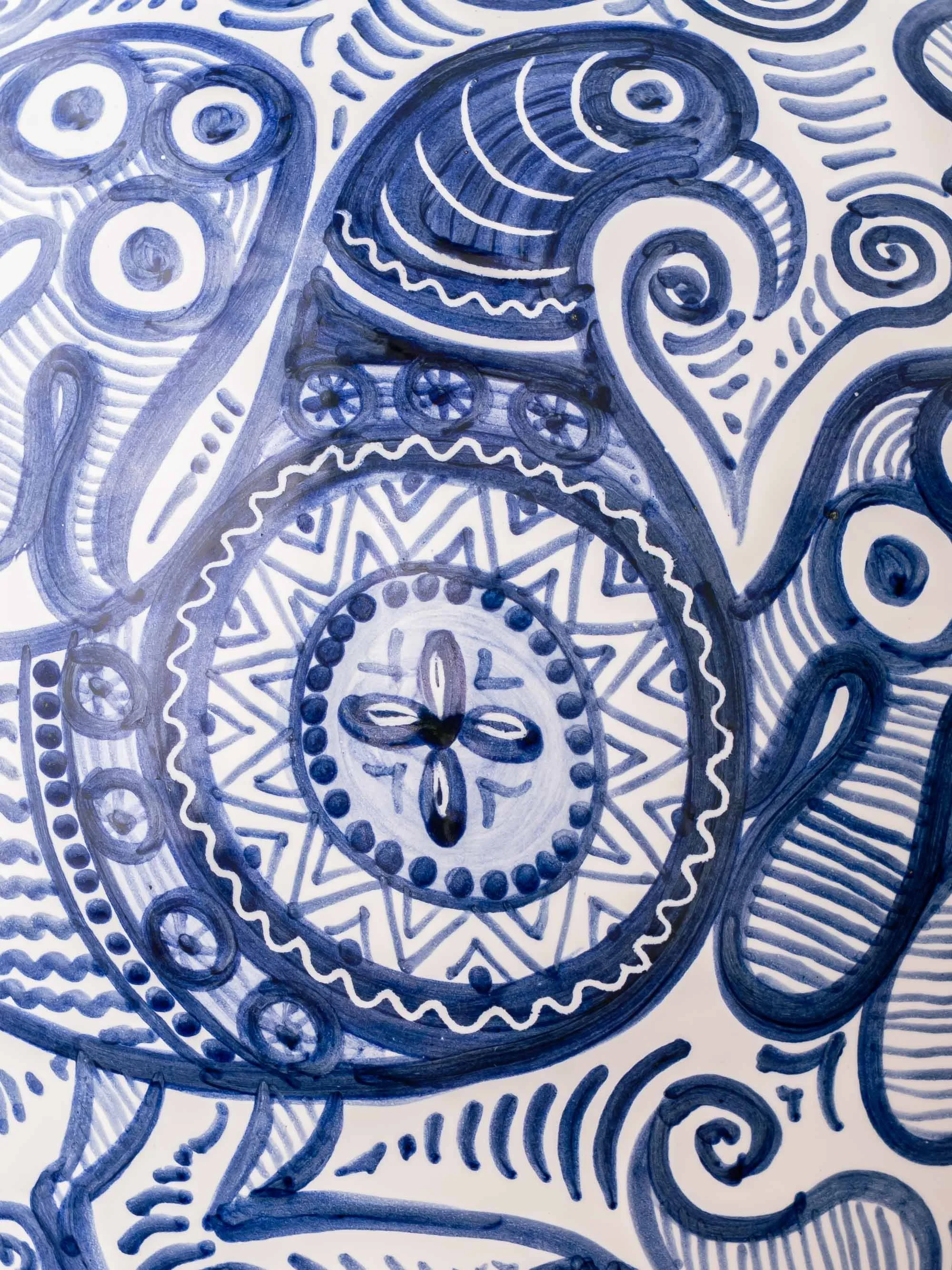 Image 17 of 18
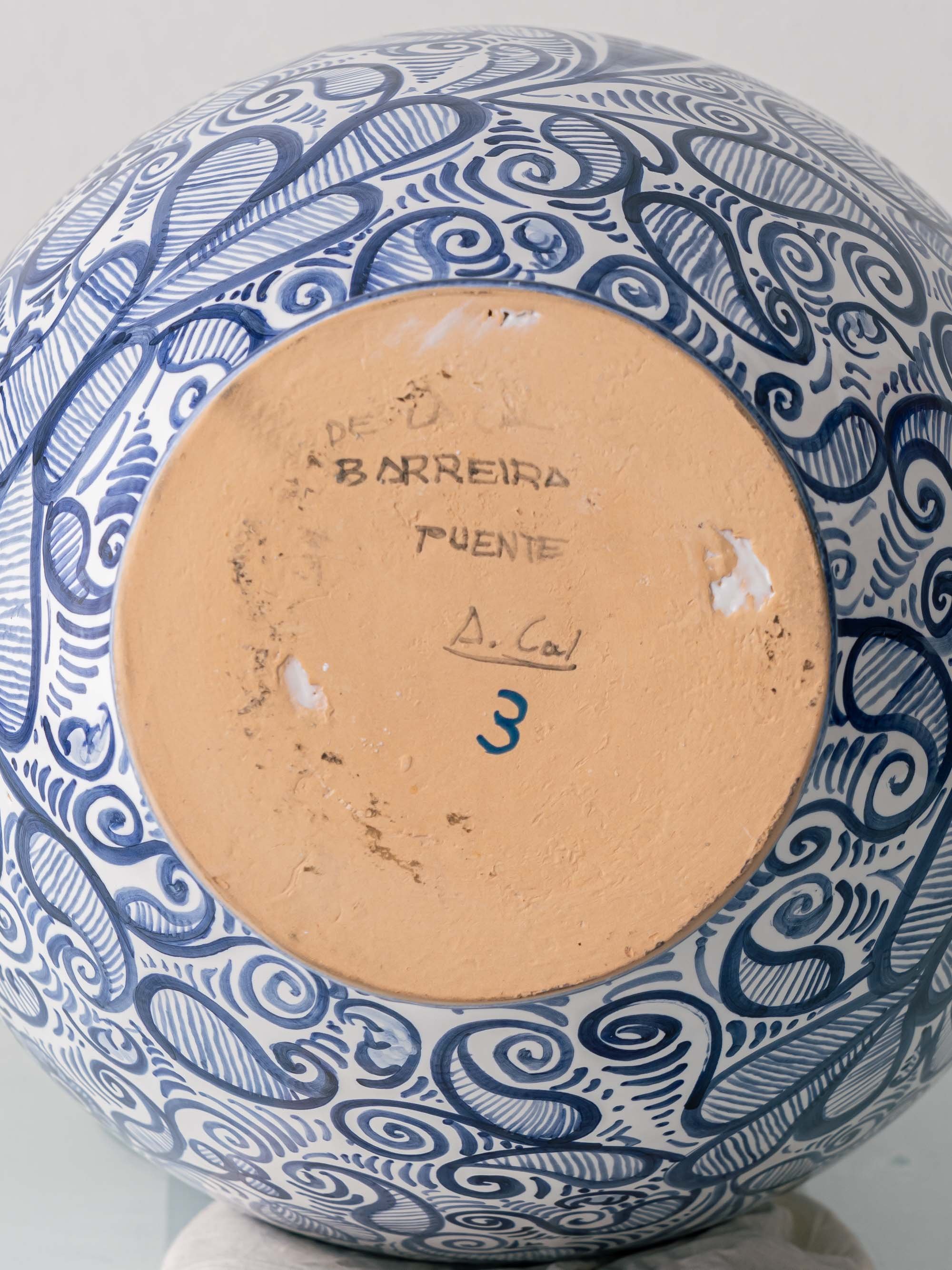 Image 18 of 18
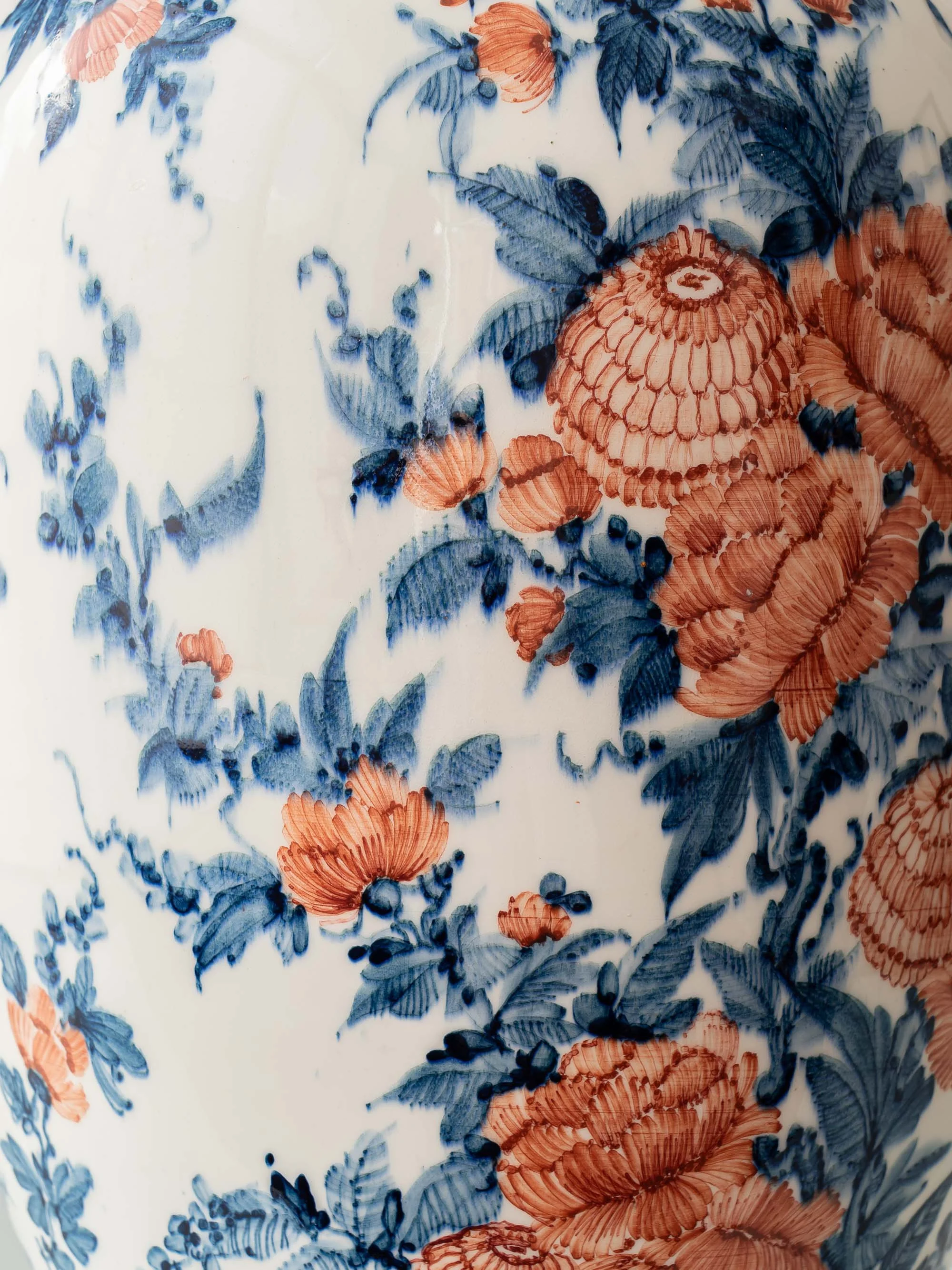
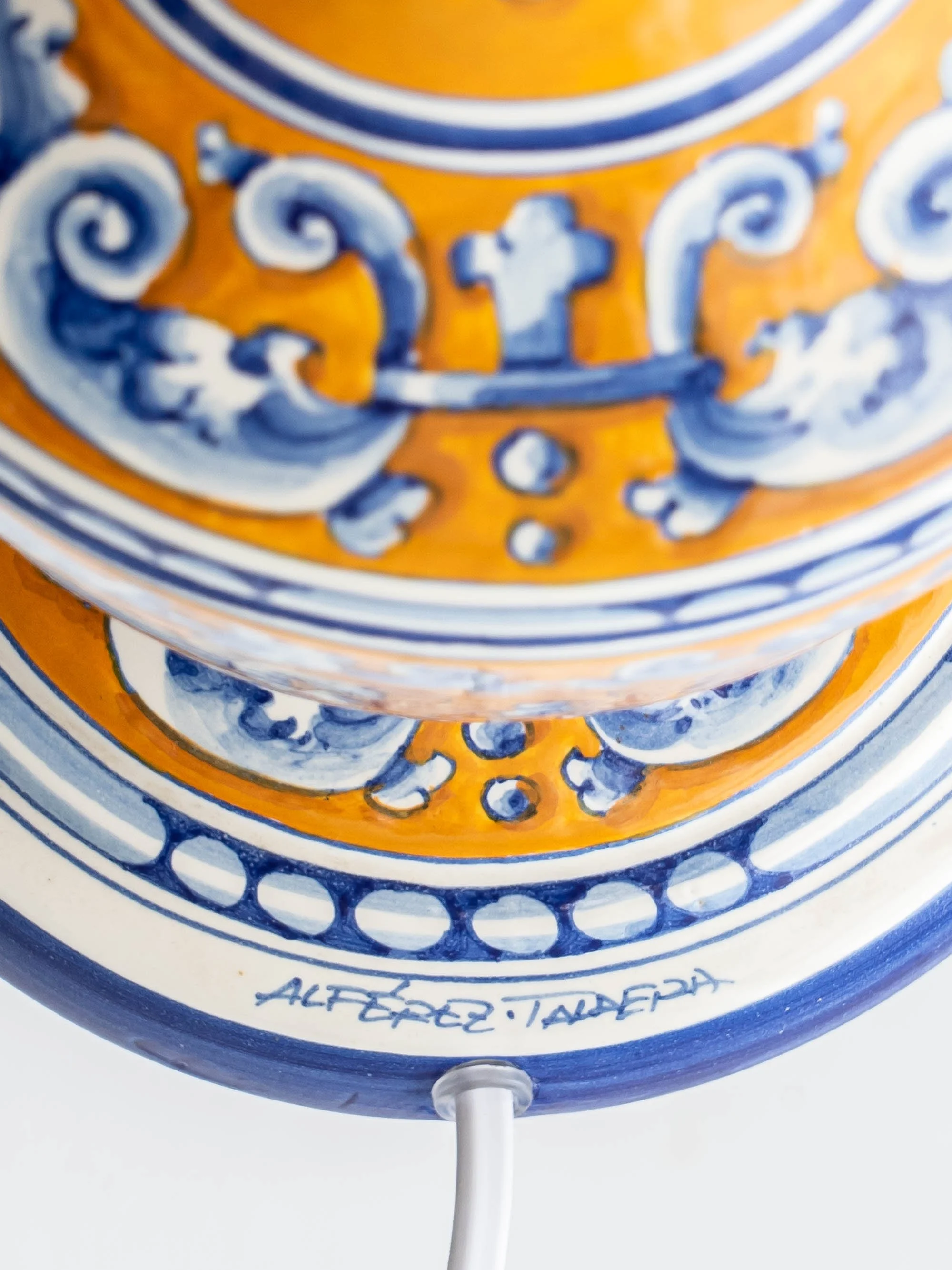
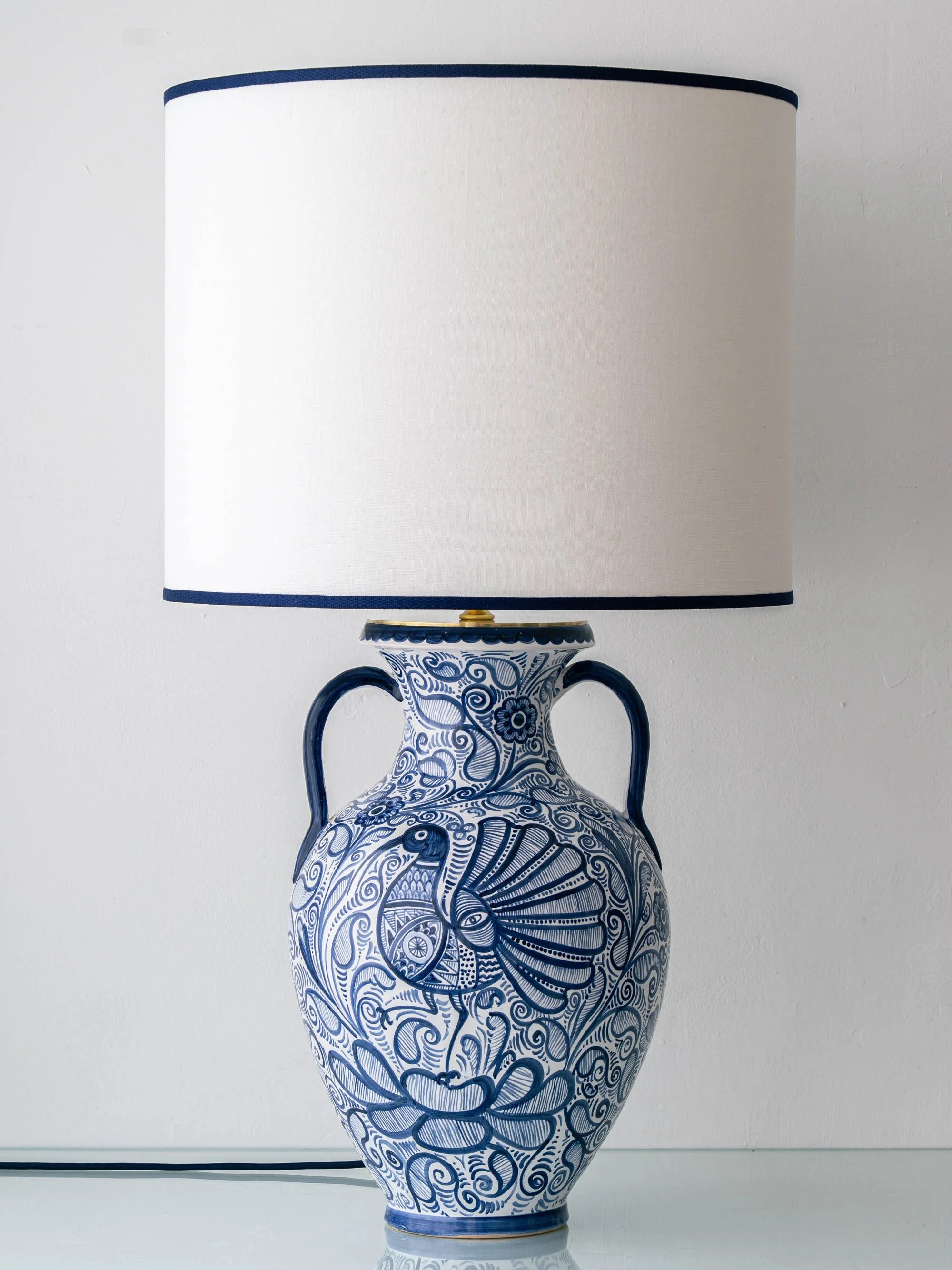
Agustín’s base is a classic two-handled amphora, painted freehand over its entire surface in blue on white. A fan-tailed bird fills the front, its body scaled in fine hatching and its tail spread in radiating bands of dotted and solid blue; a second bird appears on the back. Spirals, concentric rosettes, dotted bands and a large flower below the bird fill the ground, in a loose, folk-inflected hand.
Blue and white has deep roots in this region. Potters in Talavera de la Reina adopted white and cobalt blue as their dominant colors in the seventeenth and eighteenth centuries, under the influence of Chinese porcelain, and this Spanish ceramic amphora carries that tradition forward. El Puente del Arzobispo, a small town on the Tagus west of Toledo, is Talavera’s sister pottery town. In 2019 UNESCO inscribed the ceramic-making processes of both, jointly with those of Puebla and Tlaxcala in Mexico, as Intangible Cultural Heritage of Humanity.
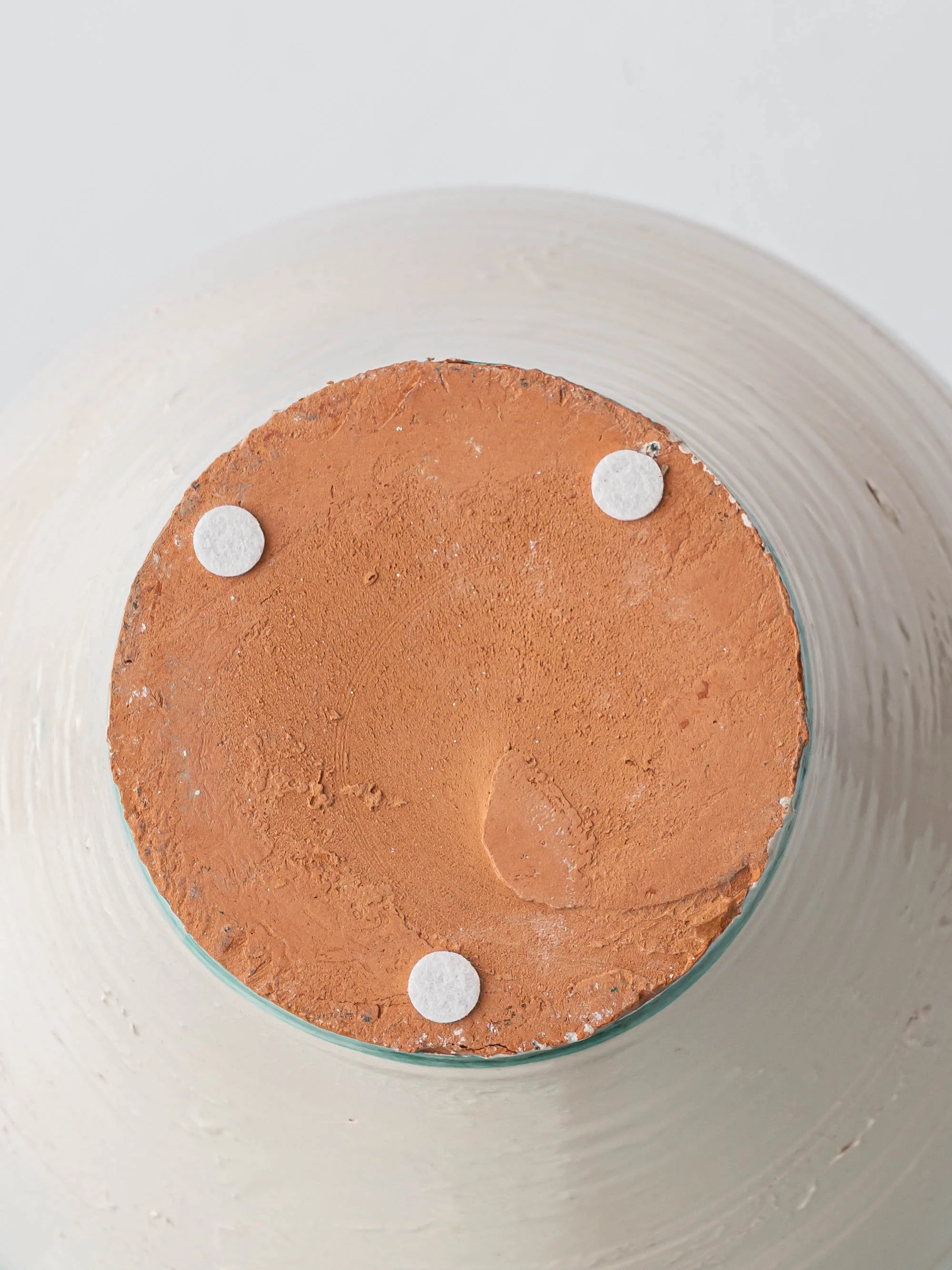
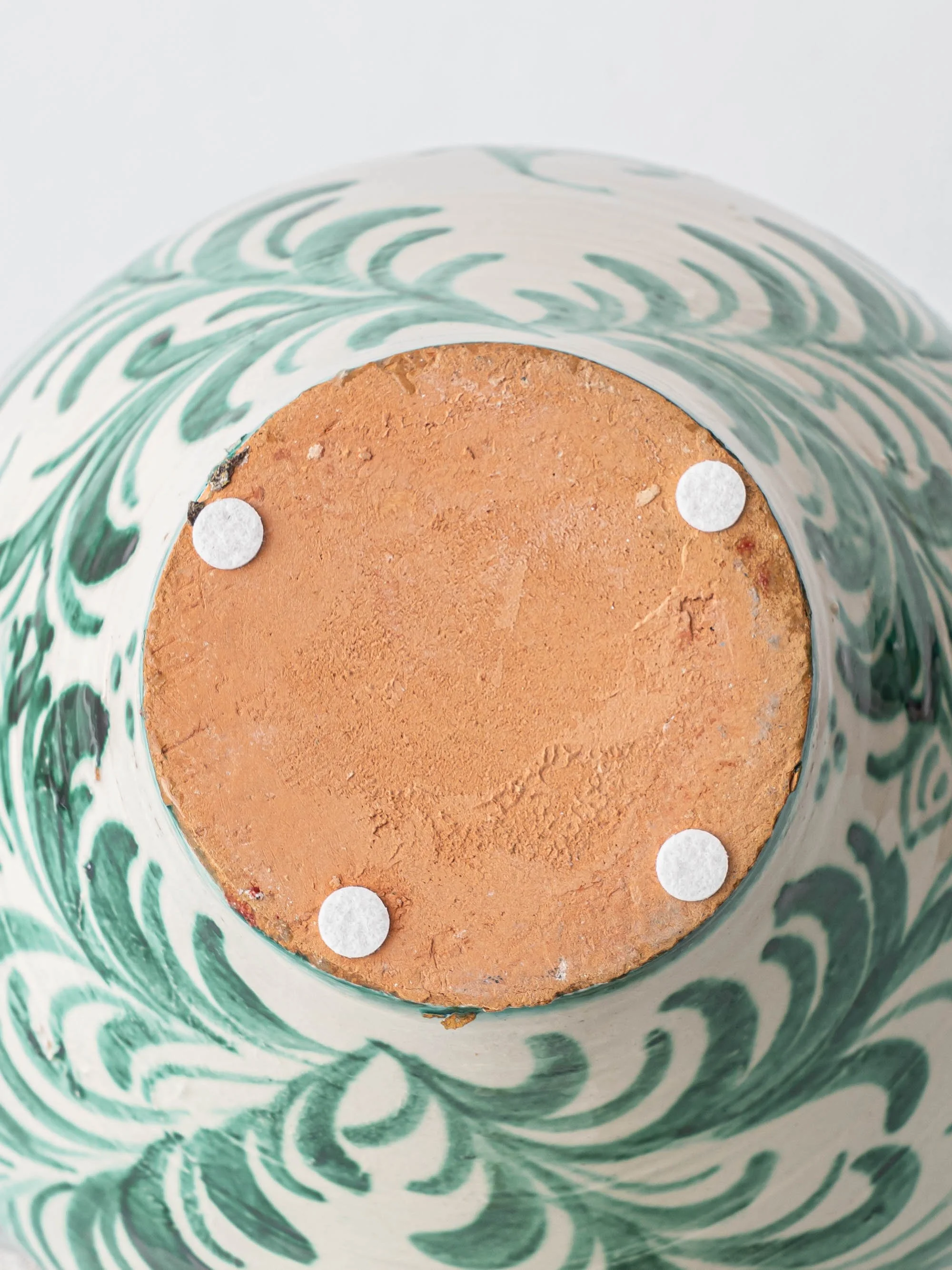
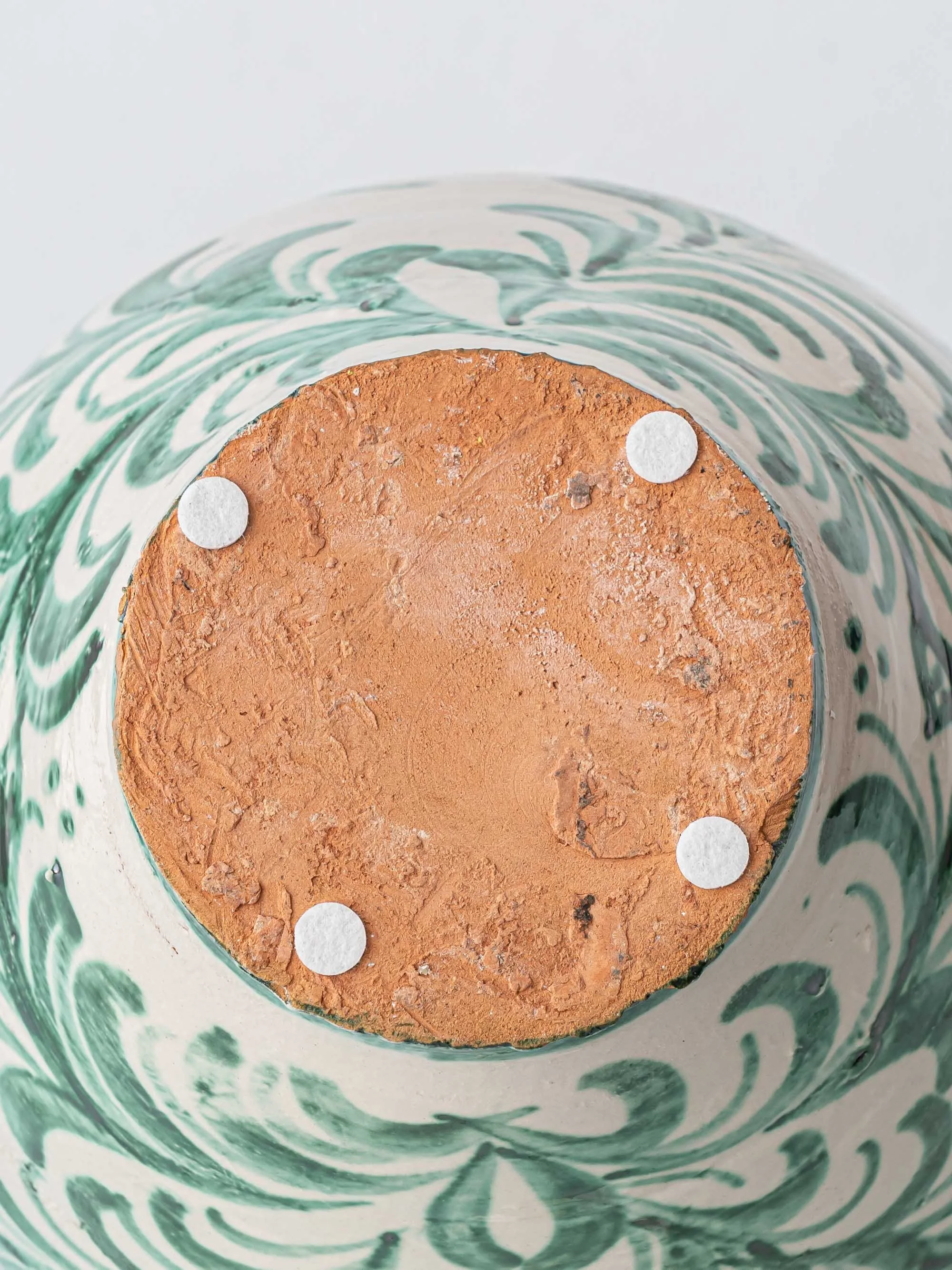
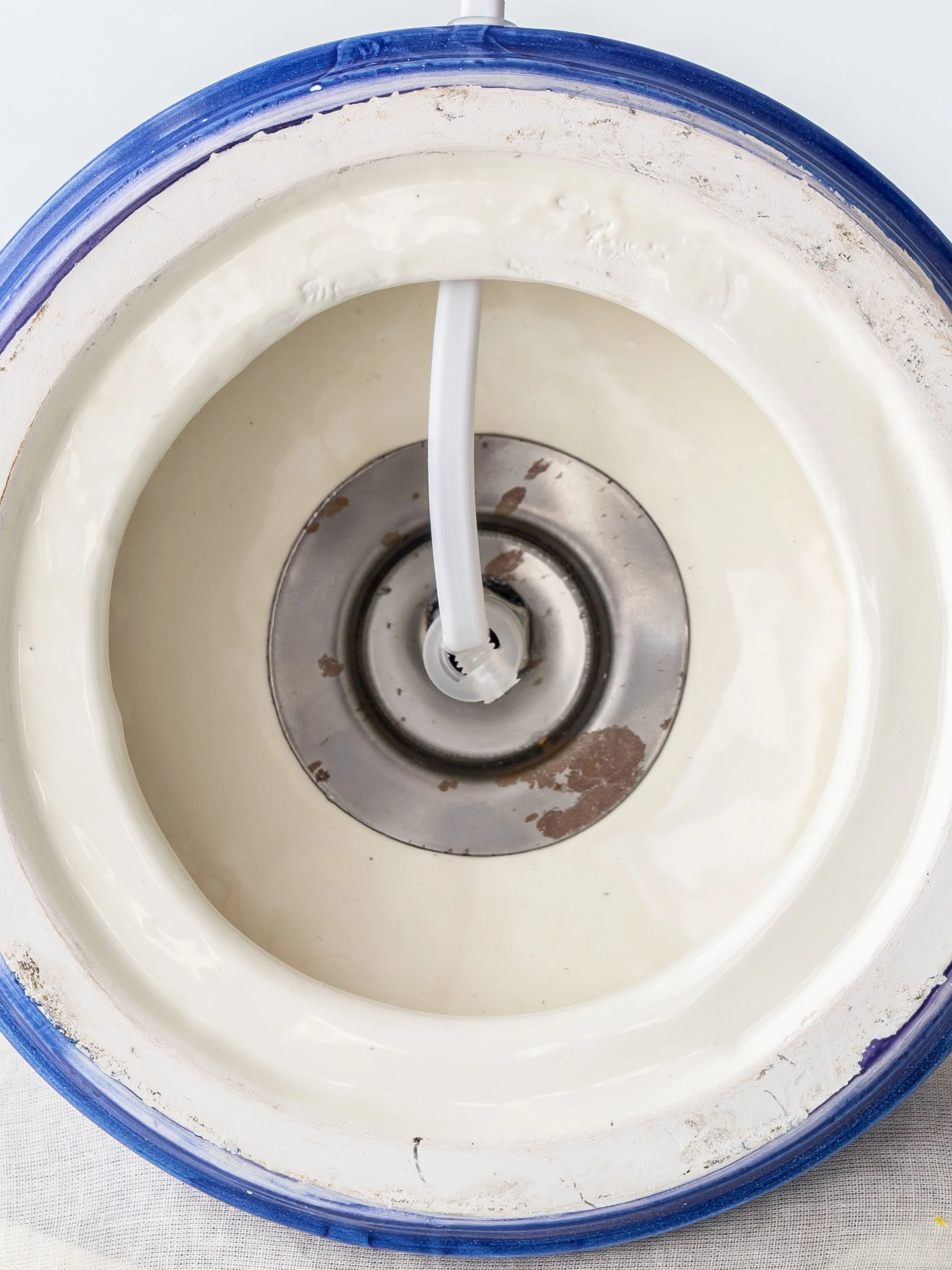
The underside of the unglazed foot is hand-lettered in dark pigment “De la Cal / Barreira / Puente,” the first line partly worn, and signed “A. Cal” with an underline and numbered “3” in blue. The workshop name matches documented pieces from the Cerámica de la Cal workshop in El Puente del Arzobispo.
About Cerámica de la Cal
El Puente del Arzobispo has made tin-glazed earthenware for centuries; a town register of 1578 already lists twenty-six potters. The De la Cal family’s line of potters begins with Agustín de la Cal Fernández (1871–1950), for whom this lamp is named. His descendant José Antonio de la Cal Barreira, born in 1946, founded Cerámica de la Cal Barreira, whose mark this lamp carries. On his retirement the business passed to his daughter, Ana Belén de la Cal, who now runs the family workshop, Cerámica de la Cal, with Juan de Dios Fernández.