 Image 1 of 19
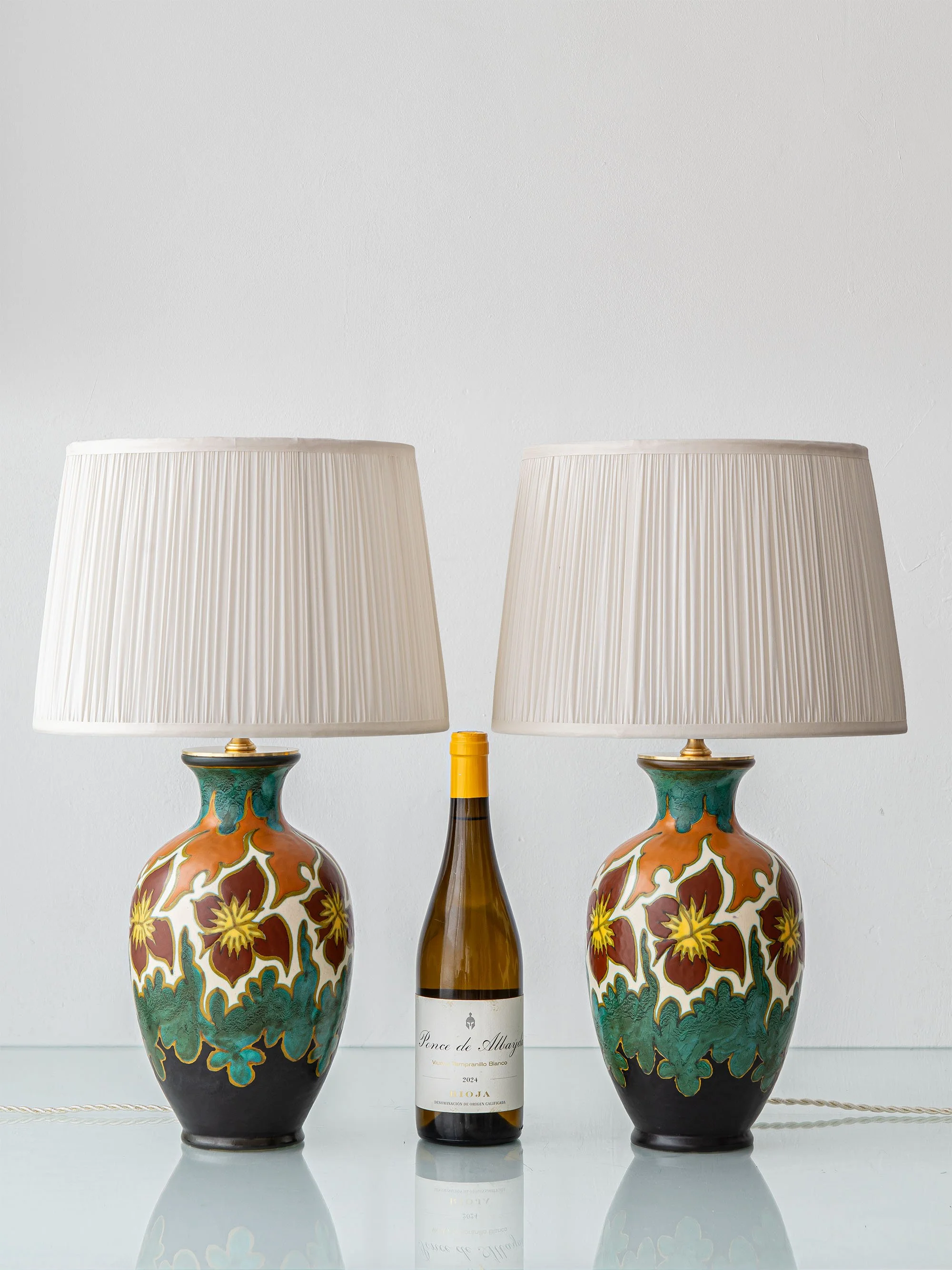 Image 2 of 19
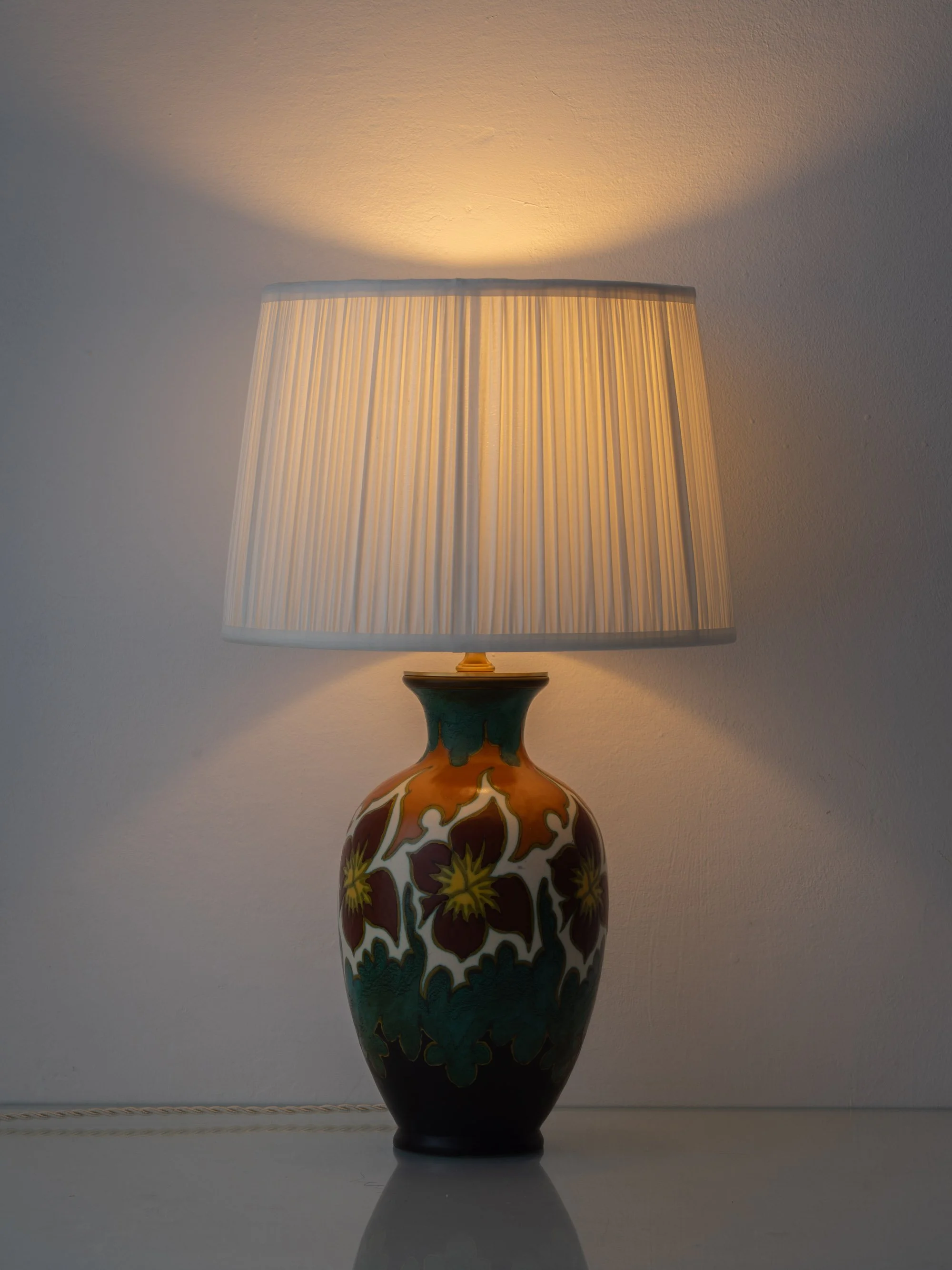 Image 3 of 19
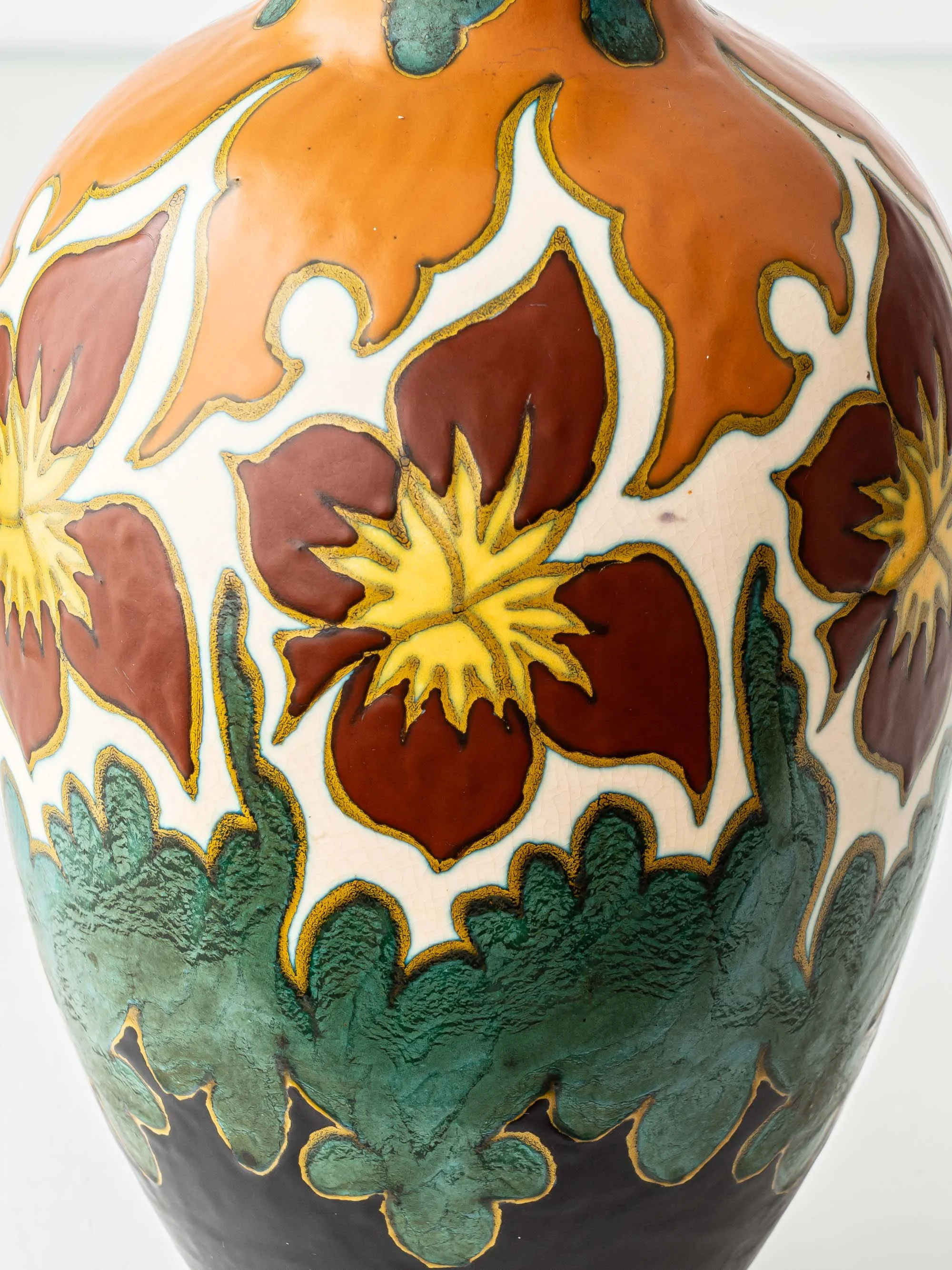 Image 4 of 19
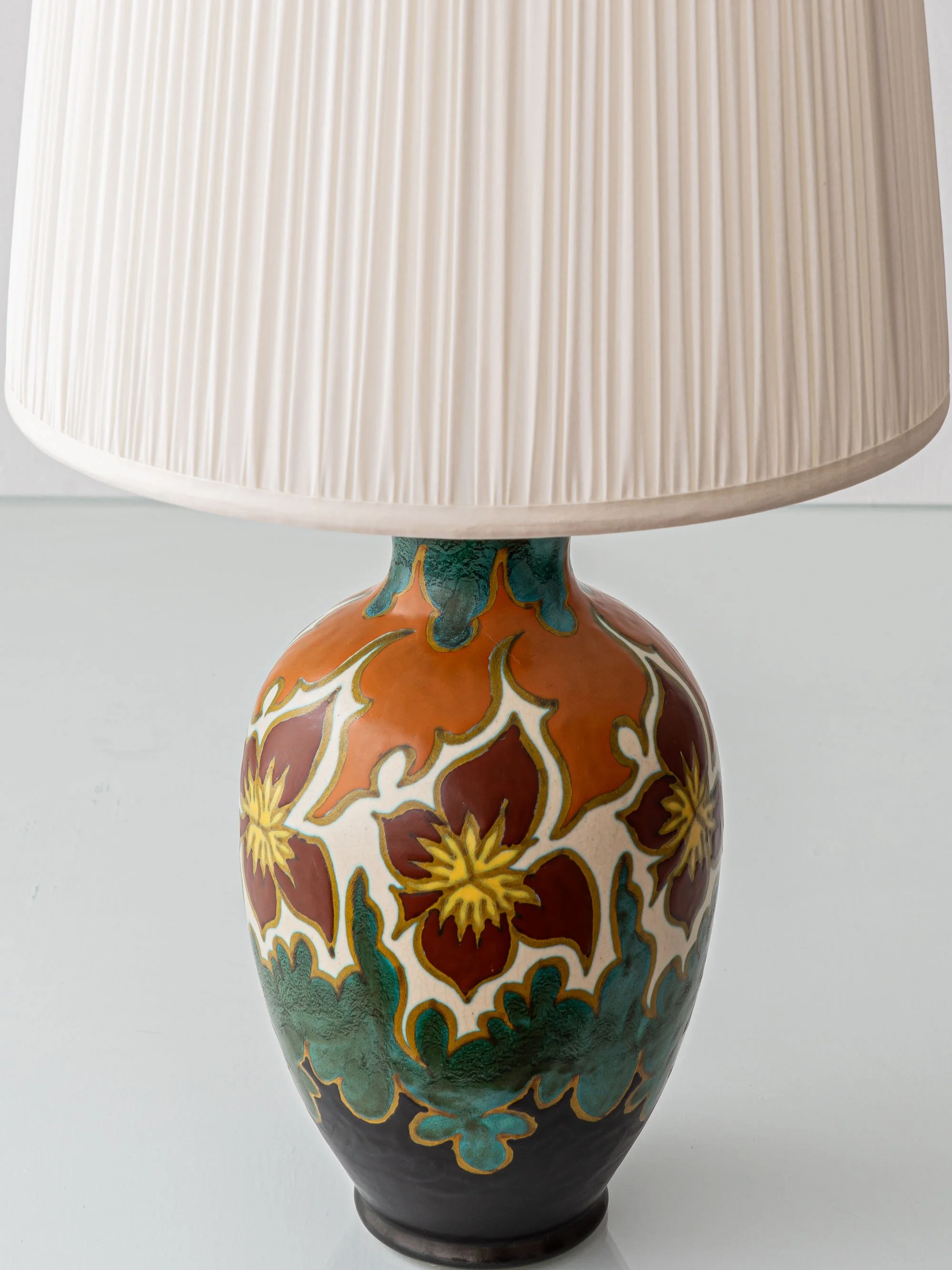 Image 5 of 19
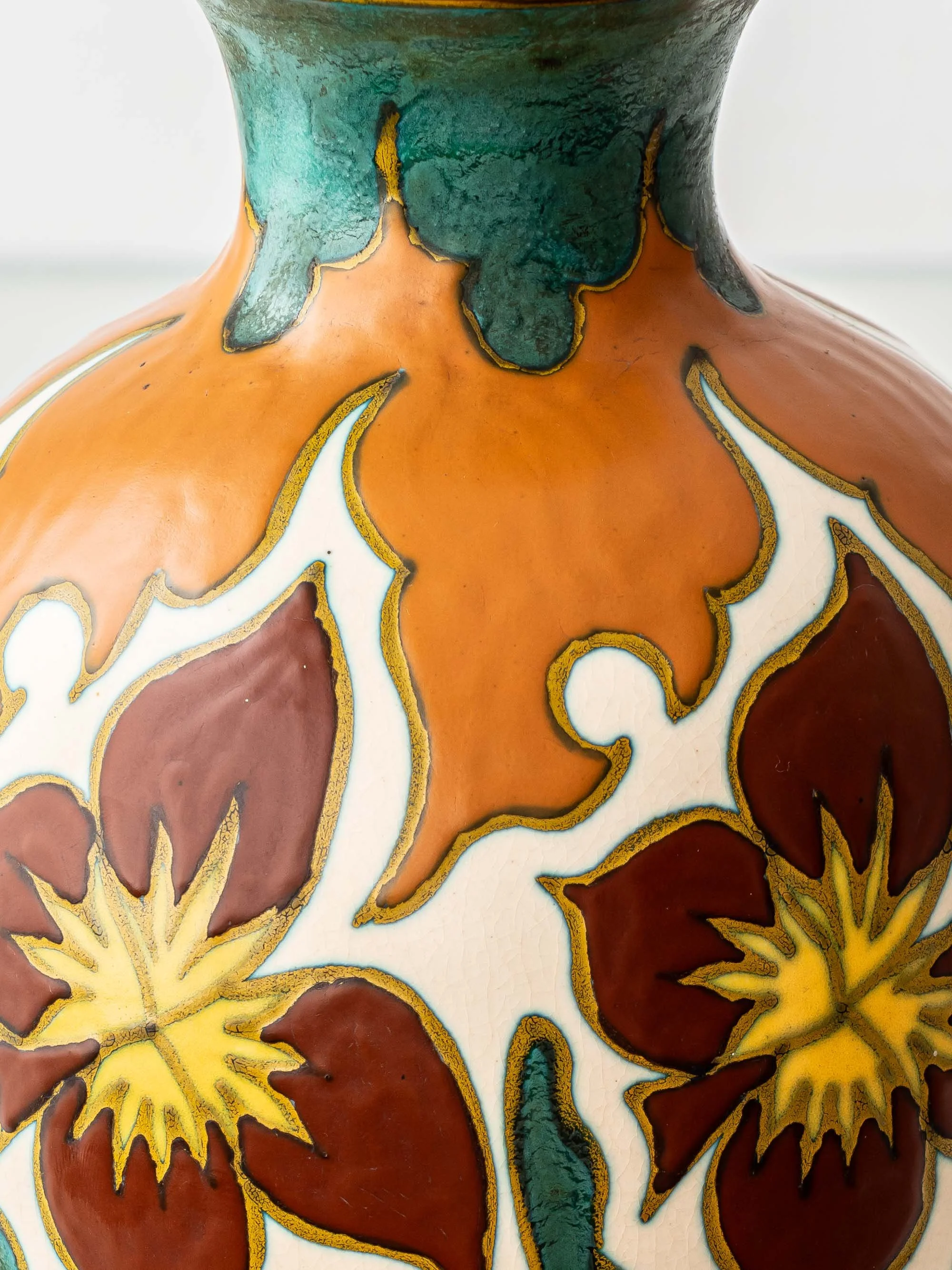 Image 6 of 19
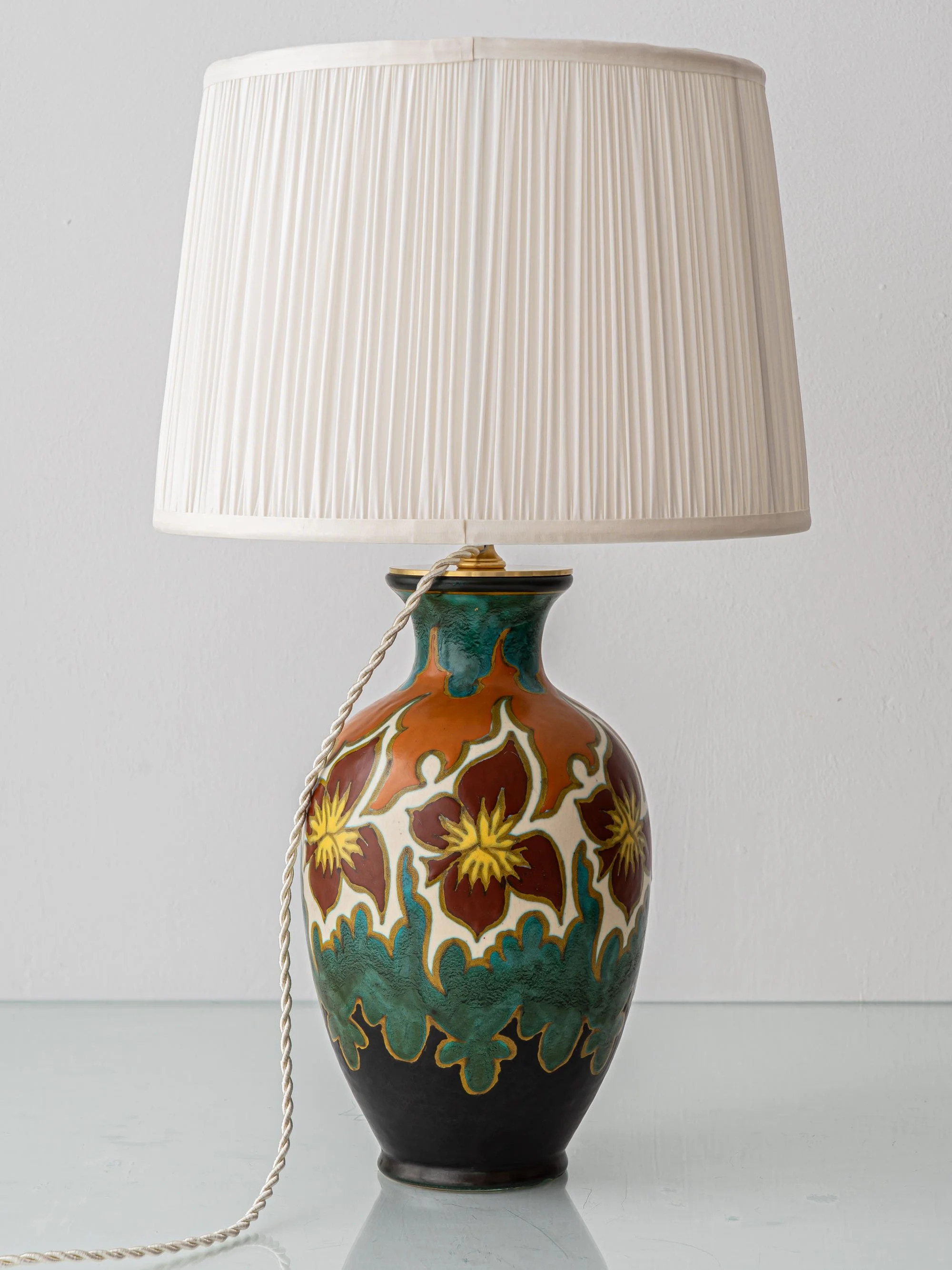 Image 7 of 19
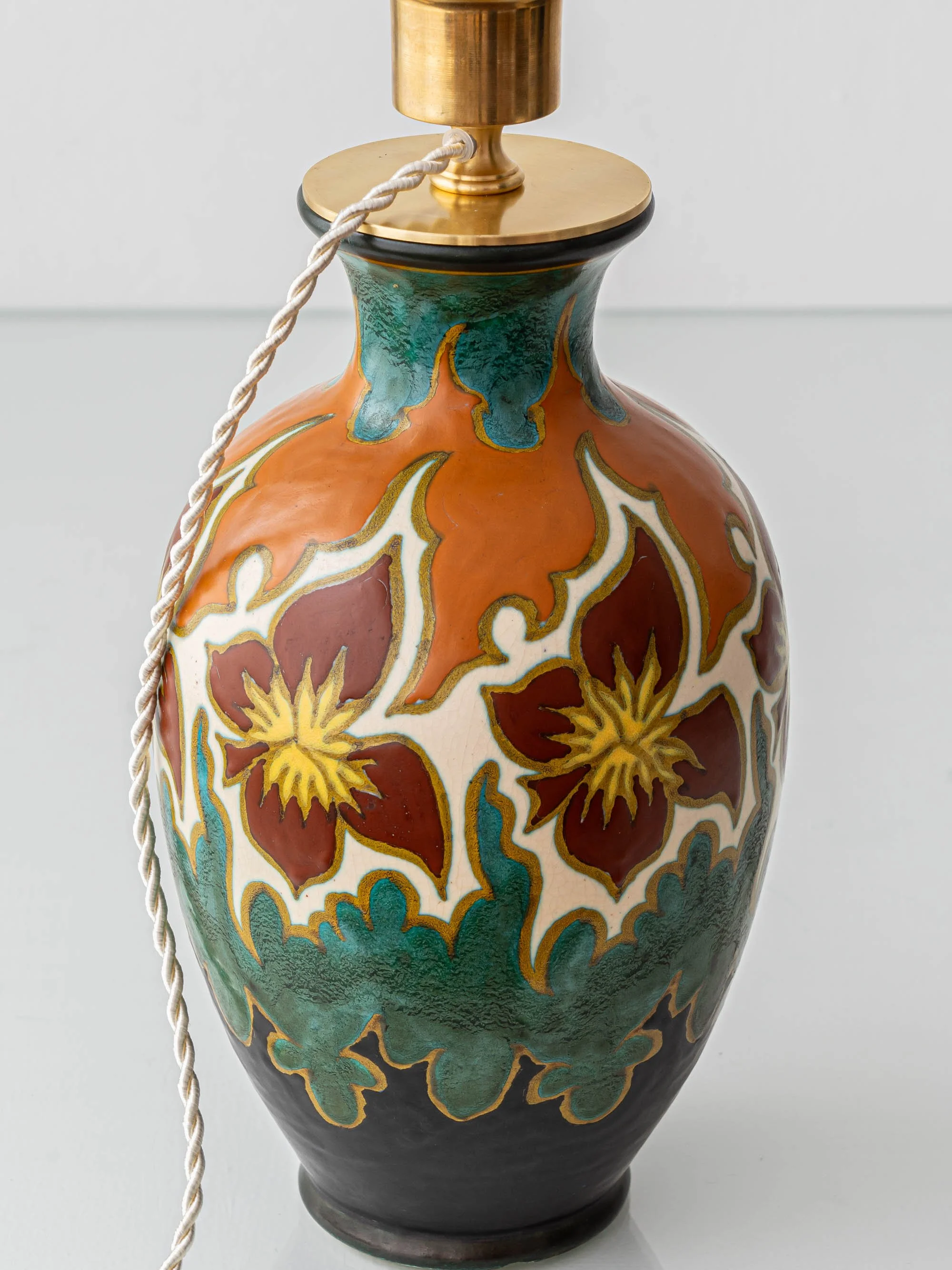 Image 8 of 19
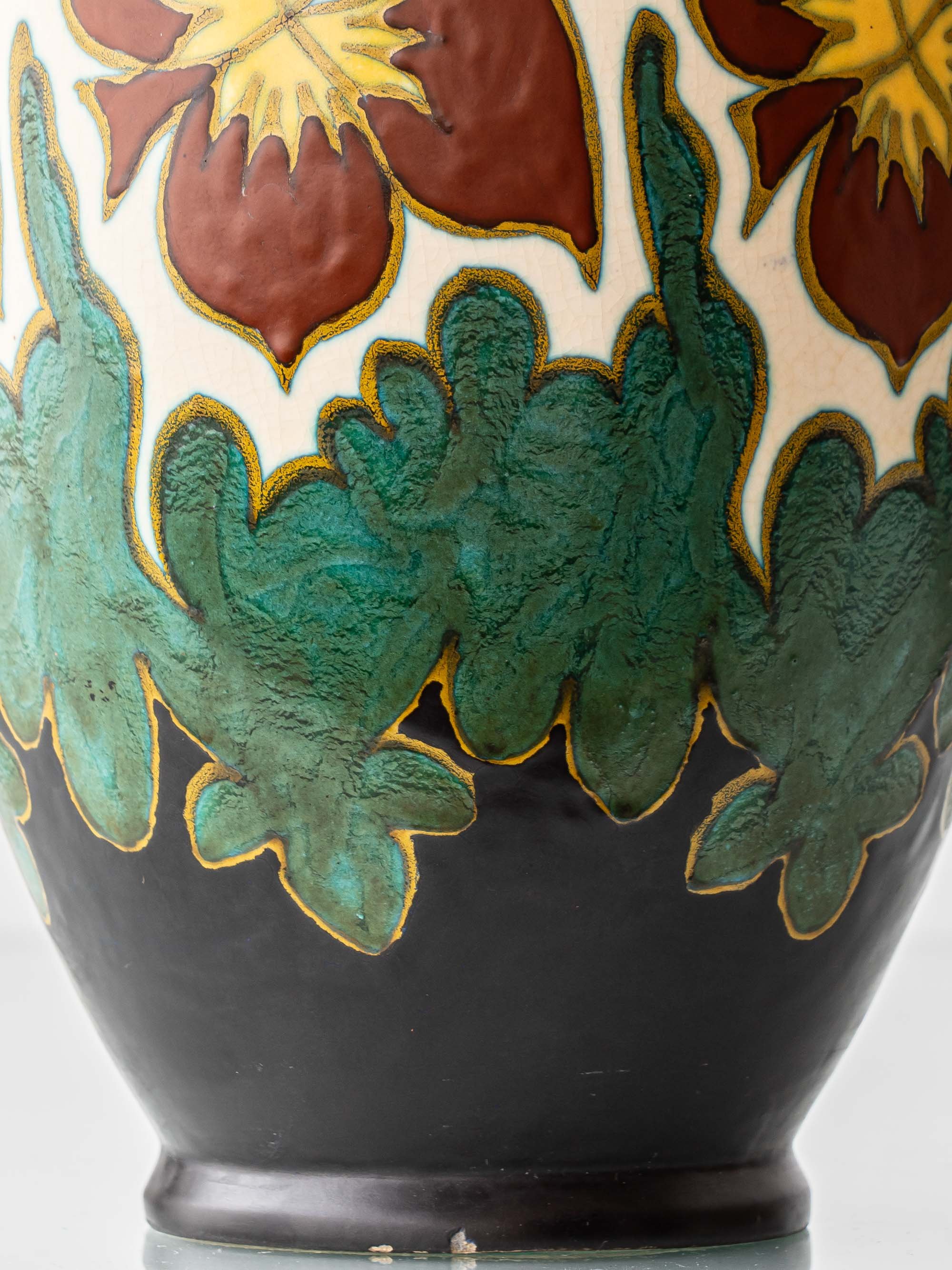 Image 9 of 19
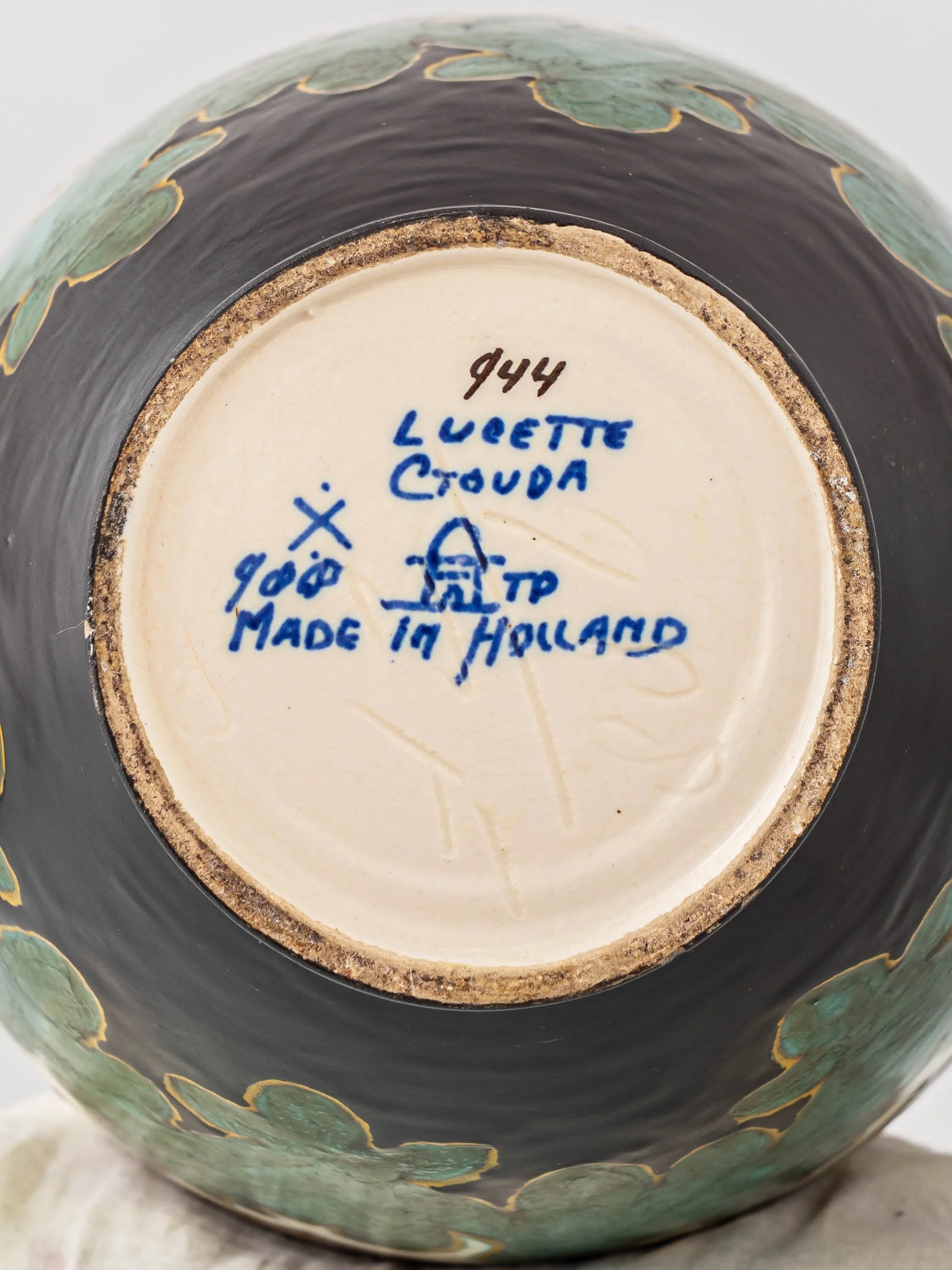 Image 10 of 19
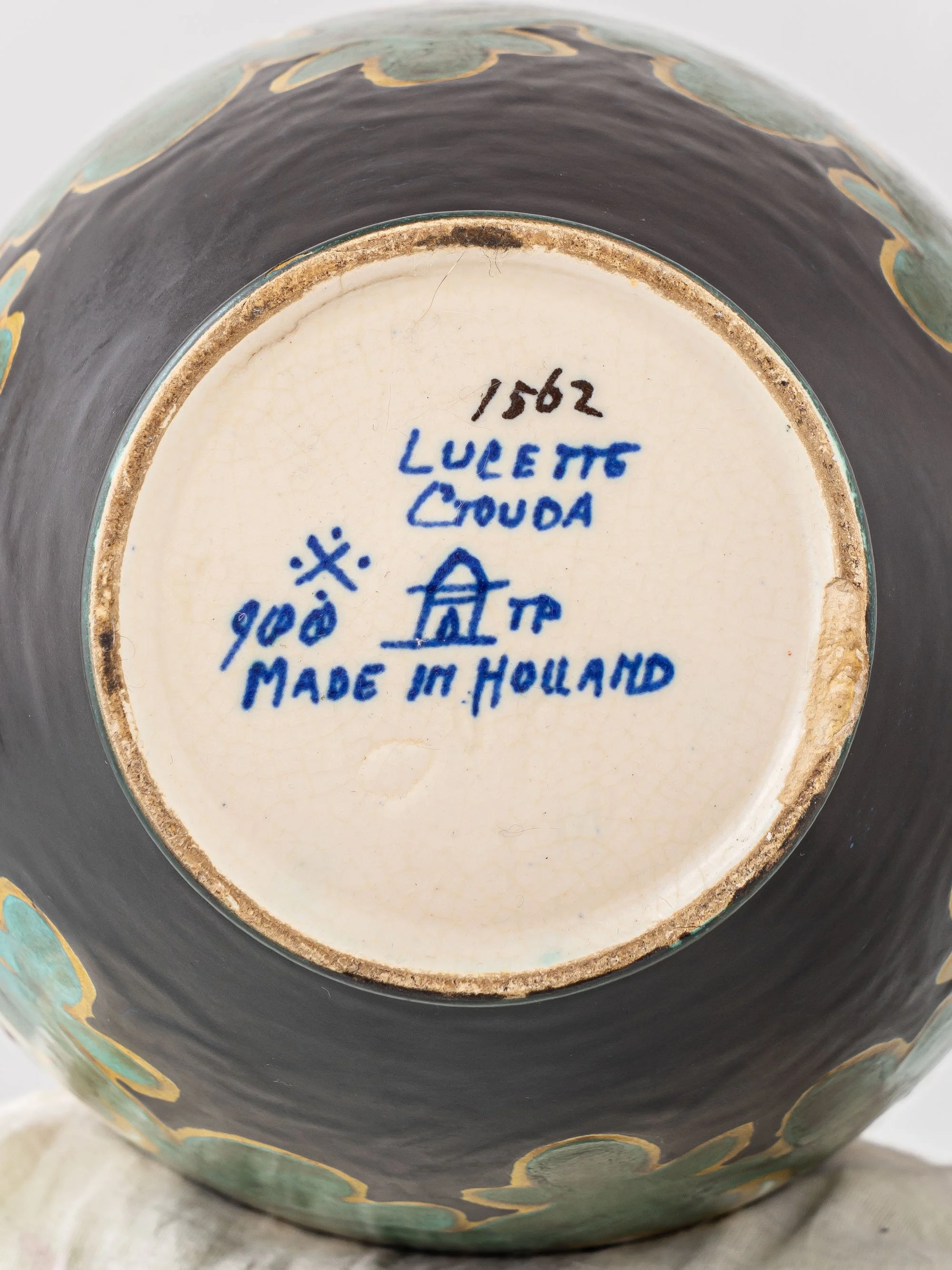 Image 11 of 19
 Image 12 of 19
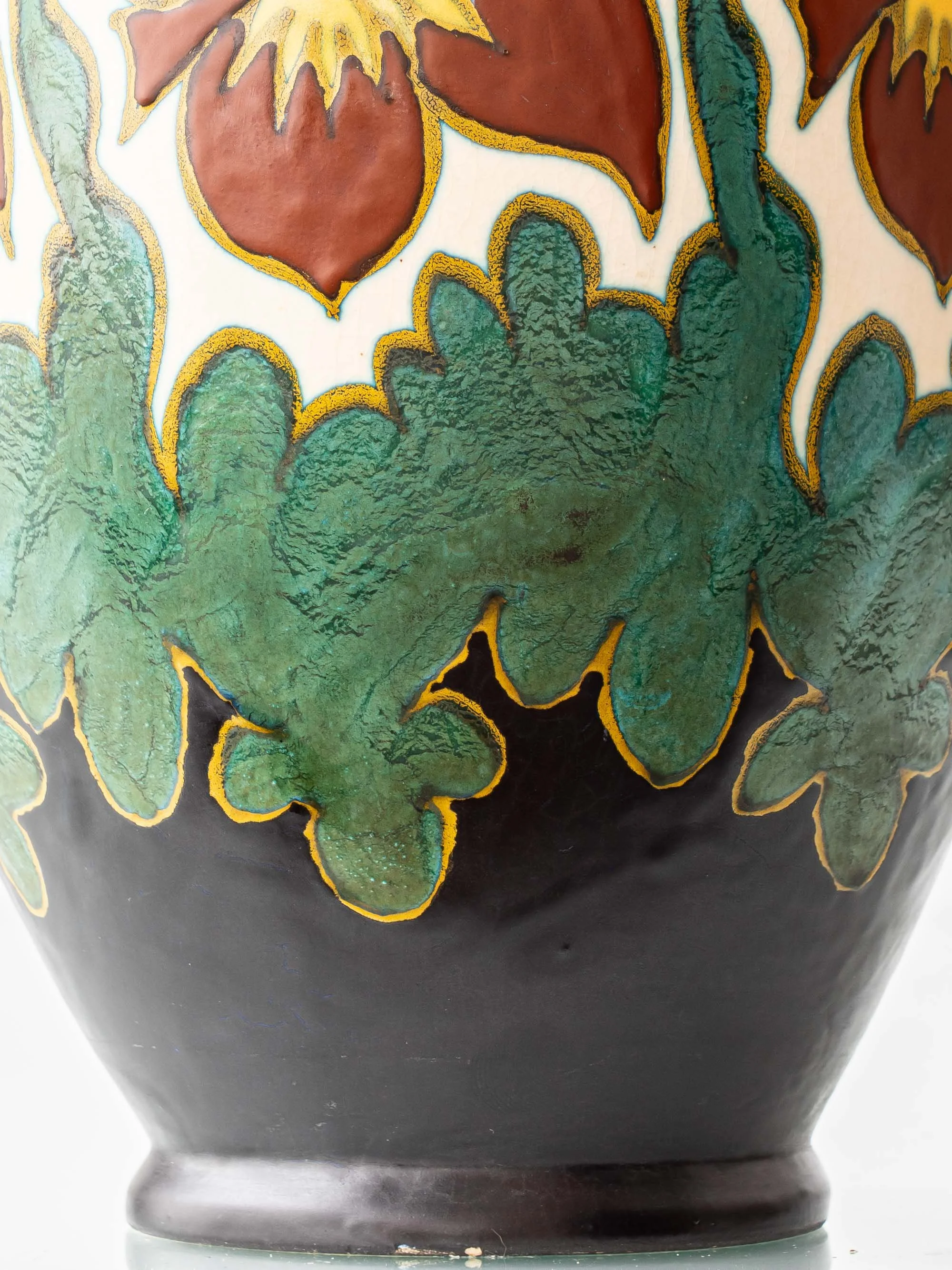 Image 13 of 19
 Image 14 of 19
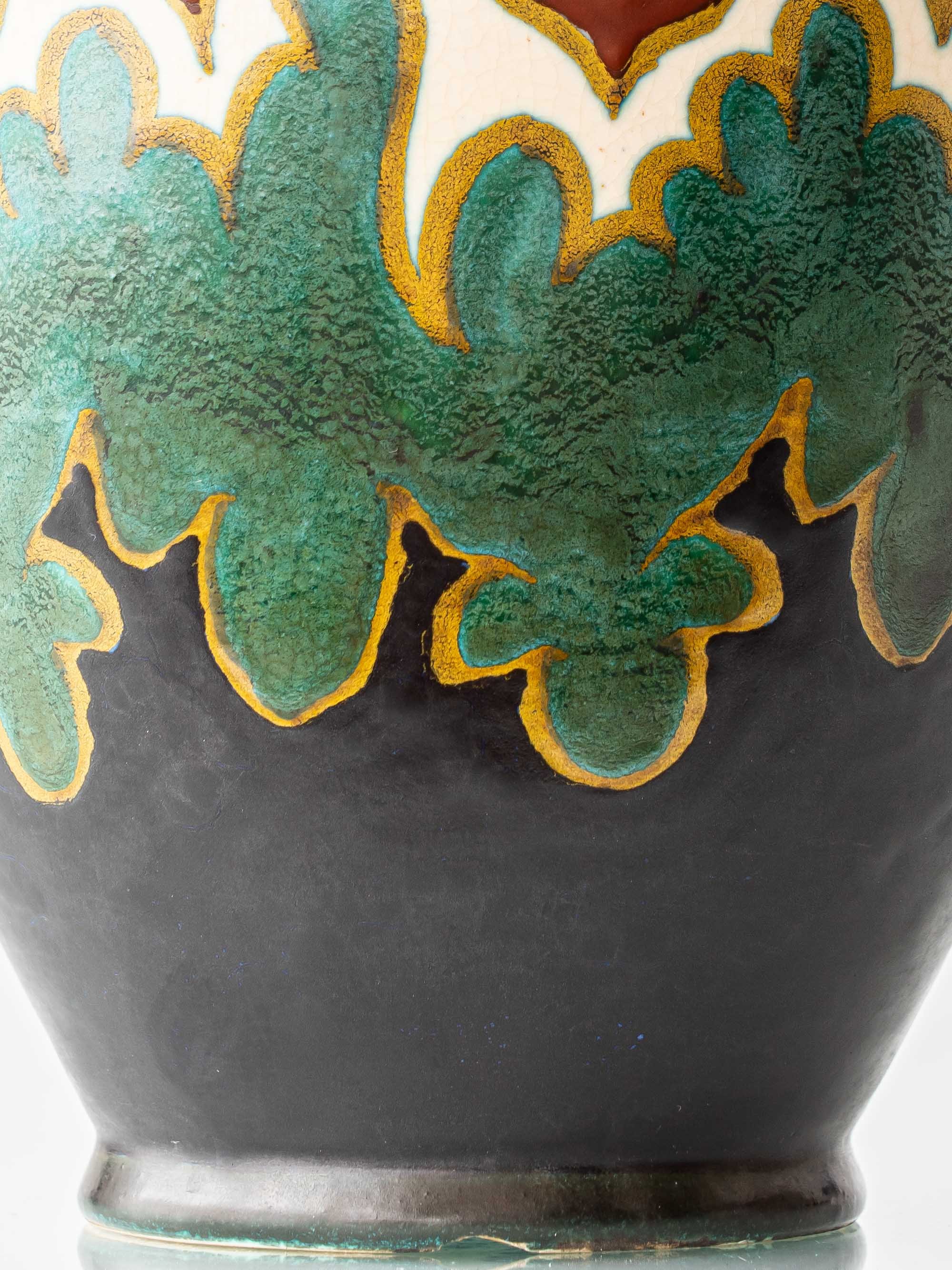 Image 15 of 19
 Image 16 of 19
 Image 17 of 19
 Image 18 of 19
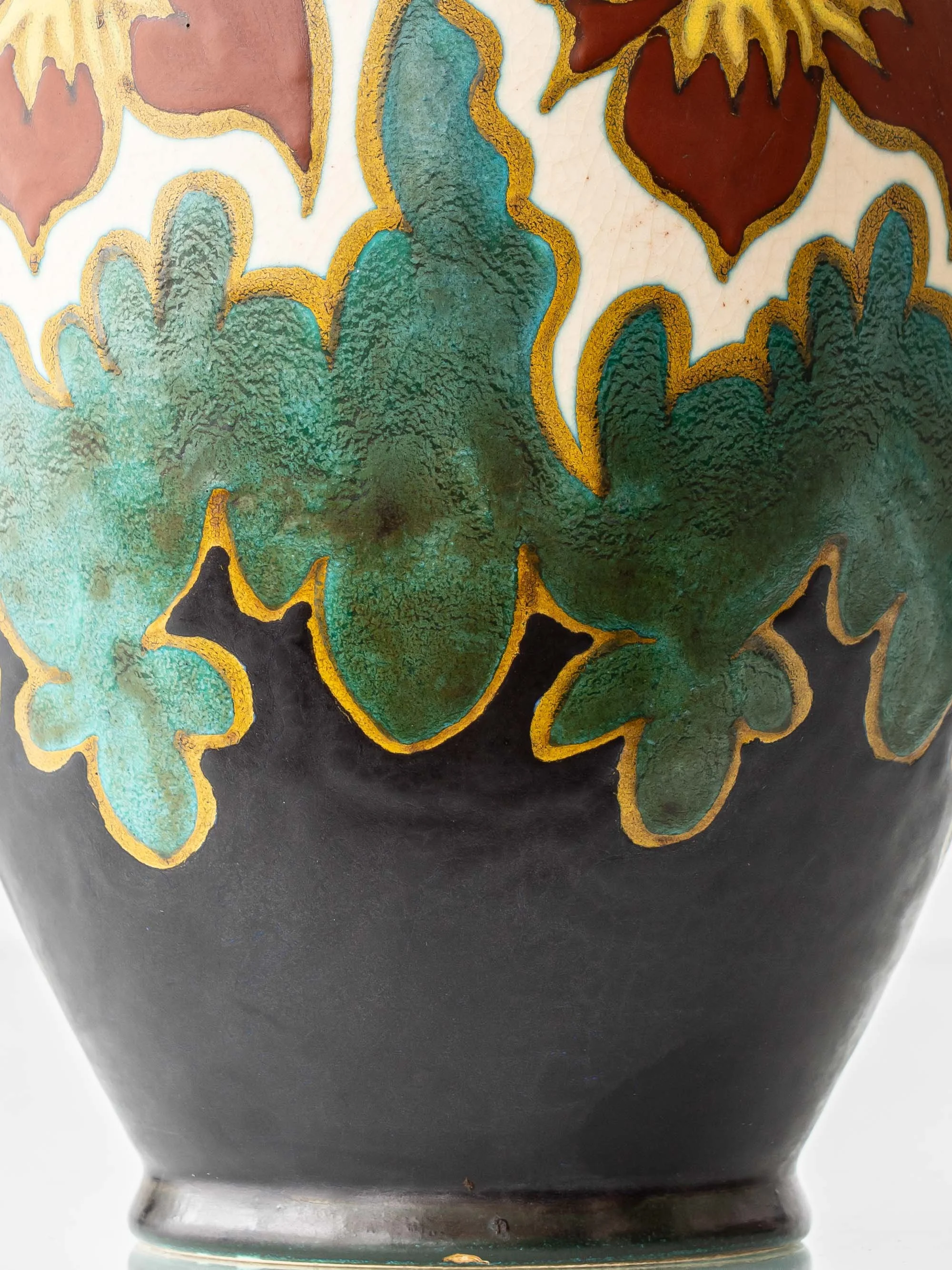 Image 19 of 19
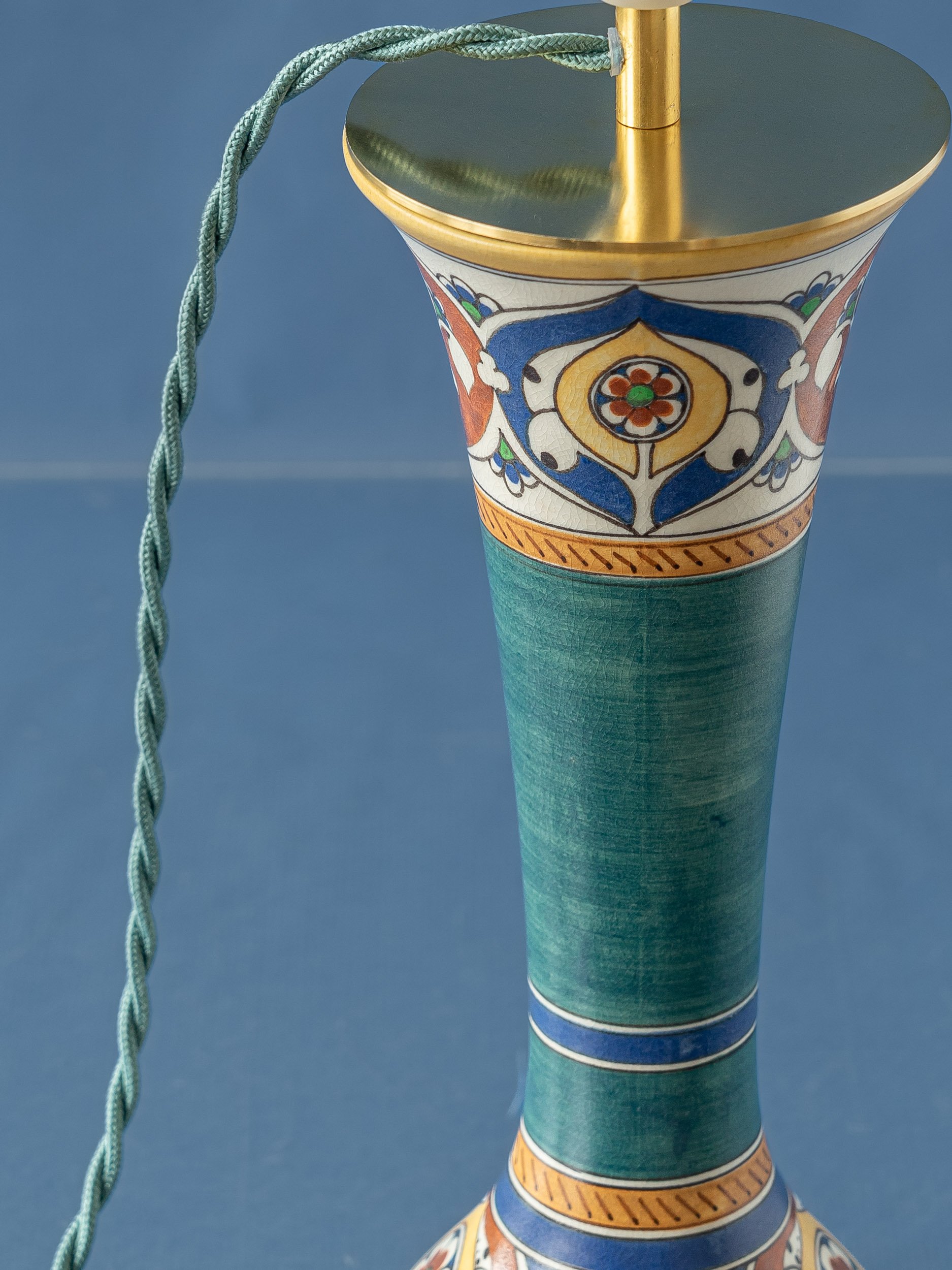
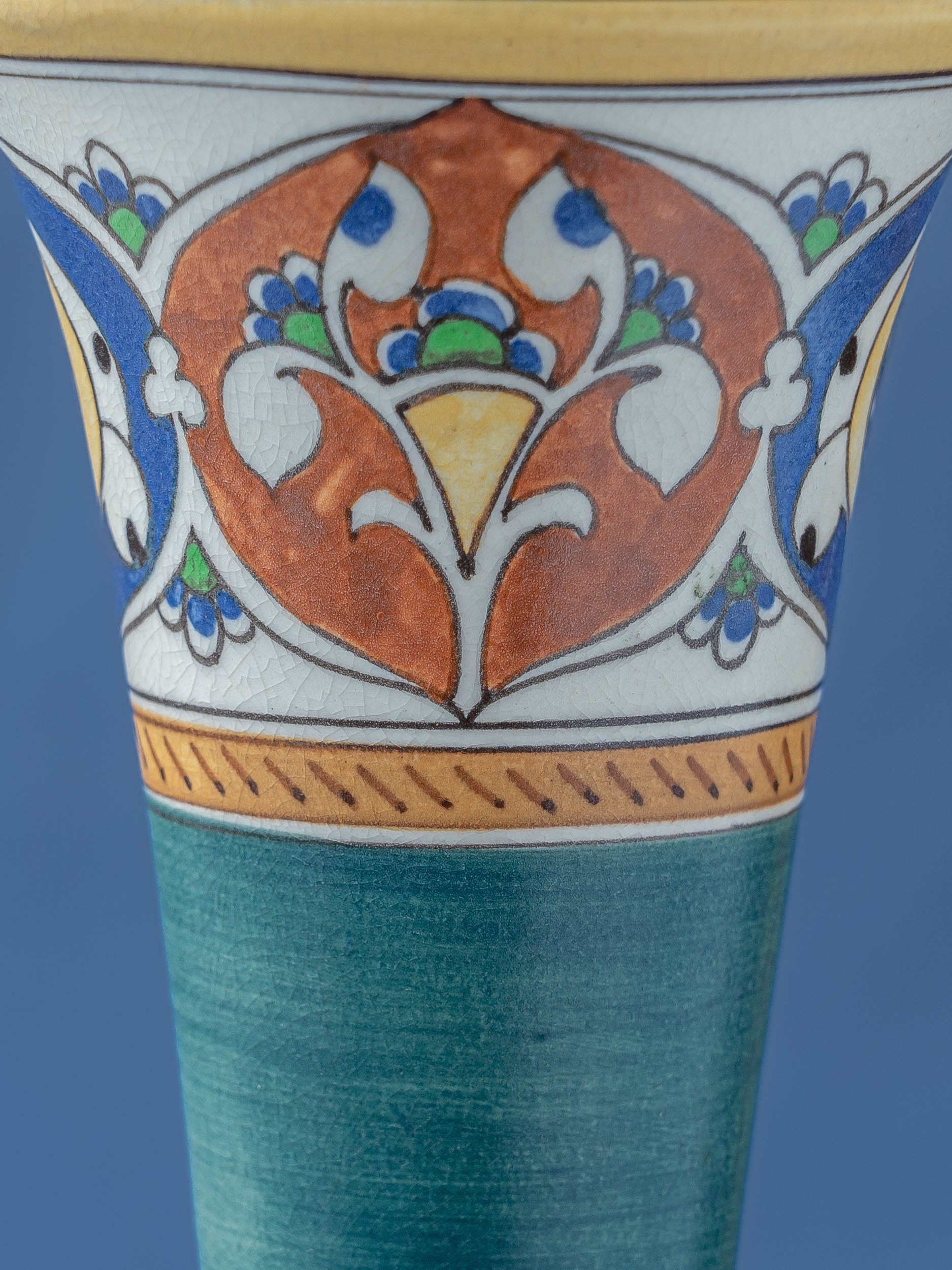
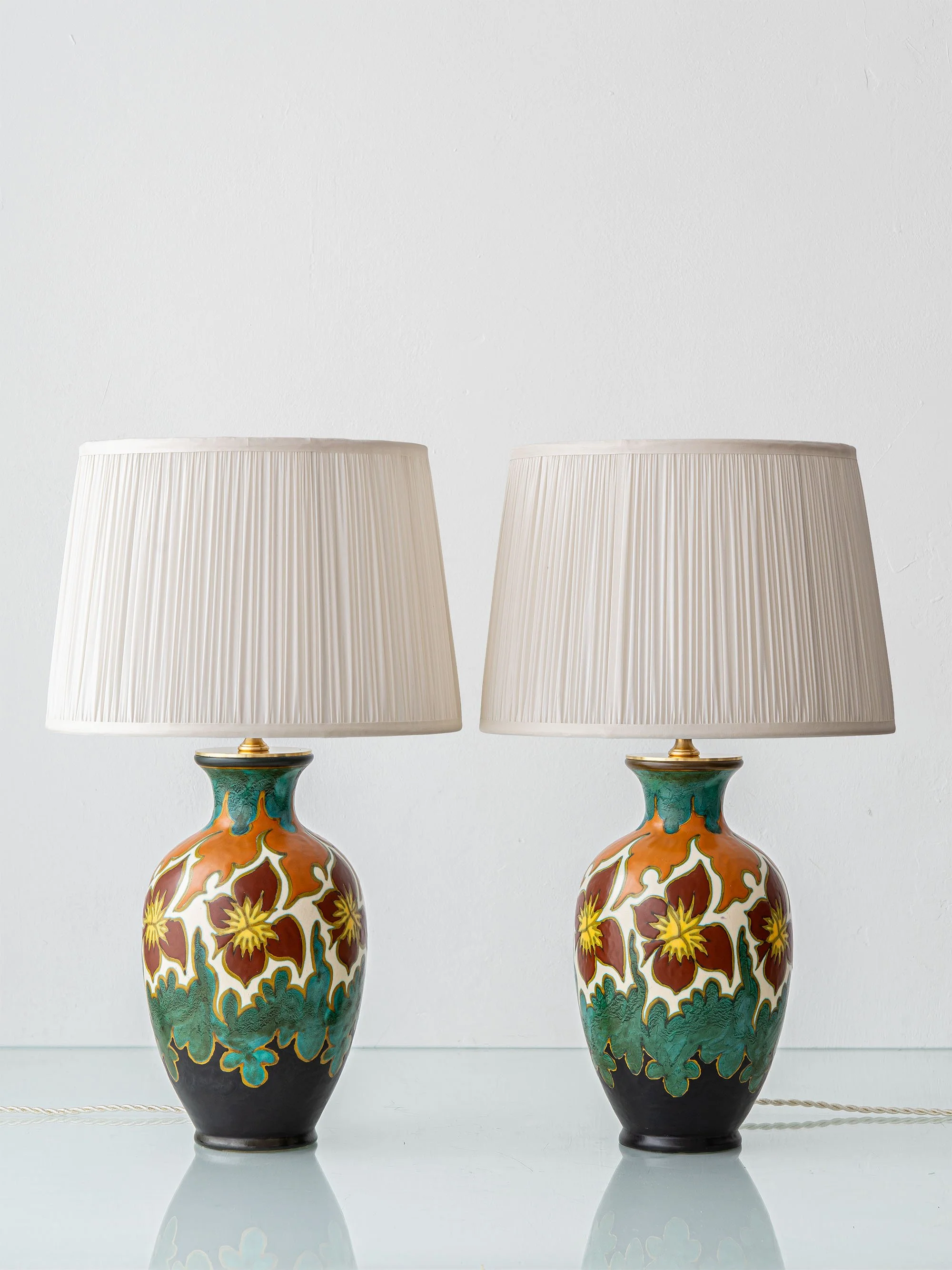
Each base takes a full baluster form, painted with a bold stylized floral that wraps the entire circumference: oxblood-red and yellow blooms on an ivory ground, an orange-glazed shoulder above, and a band of mottled teal foliage descending to a deep matte-black foot. Every element is outlined in fine gold — a cloisonné-like technique that gives the matte surface its graphic, jewel-like clarity. Because the pair is hand-painted, the two differ in their smallest details.
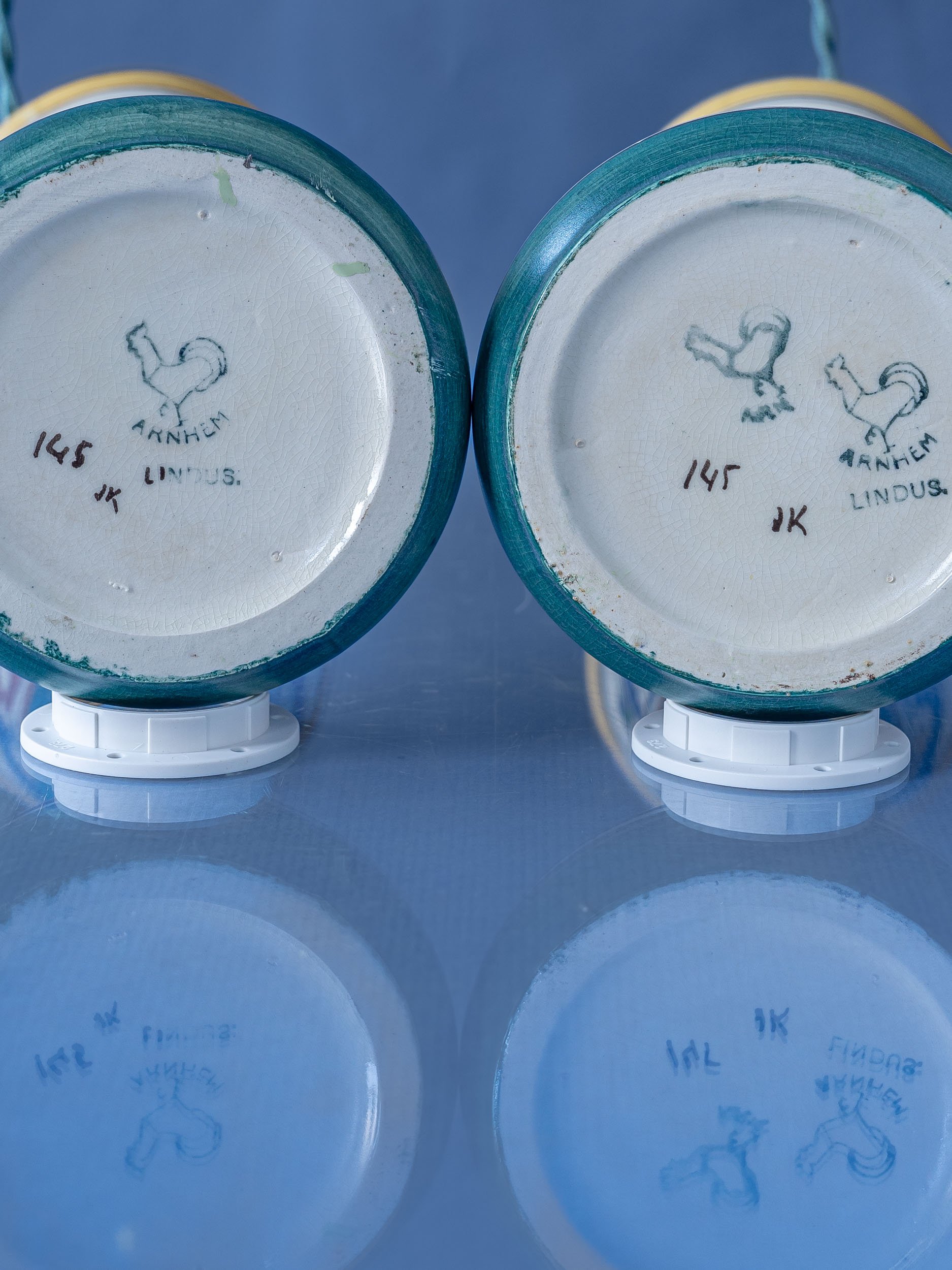
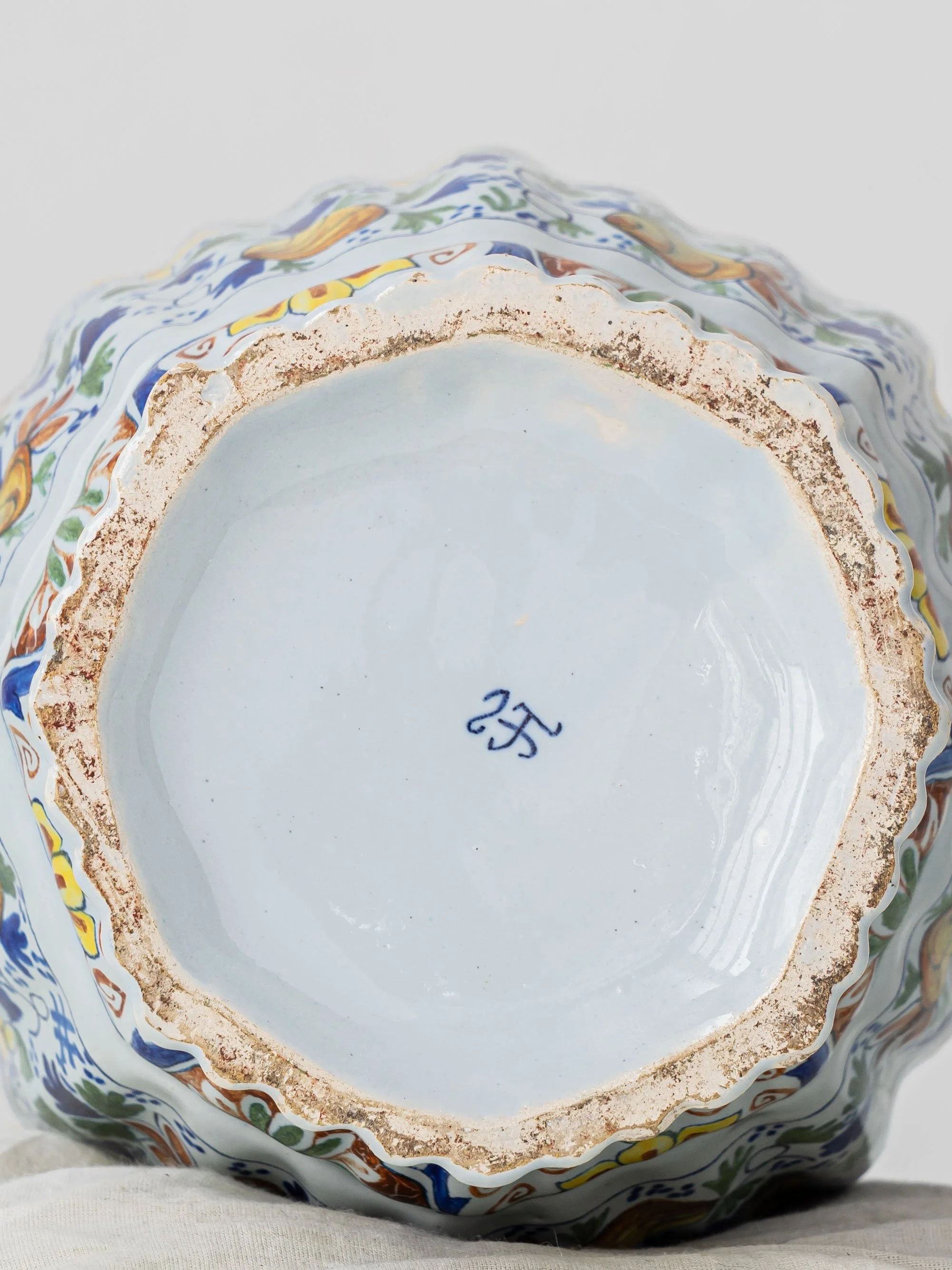
The matte glaze shows the fine crazing characteristic of Gouda pottery of this period, consistent with age. The underside of each base carries the Plateelbakkerij Zuid-Holland house mark — the Lazarus gate of Gouda — together with the pattern name "Lucette," the model number 1562, a painter's monogram, the year symbol (one base 1926, the other 1927), and "Made in Holland." One base has a small chip to the bottom rim, barely visible and not affecting display. A surviving, dated, matched pair from this period is increasingly difficult to find together.
About Plateelbakkerij Zuid-Holland (PZH)
Plateelbakkerij Zuid-Holland was founded in Gouda in 1898 by Adrianus Jonker and Egbert Estié, and grew into one of the most celebrated of the Dutch art potteries. Around 1909 it perfected the matte glaze that defined the Gouda look, and through the 1920s paired that surface with the bold, stylized Art Deco designs now sought by collectors. Its export ware, marked "Made in Holland," sold widely in Britain and the United States as "Gouda ware." The factory received its Royal designation in 1930 and operated until the 1960s.