
 Image 1 of 13
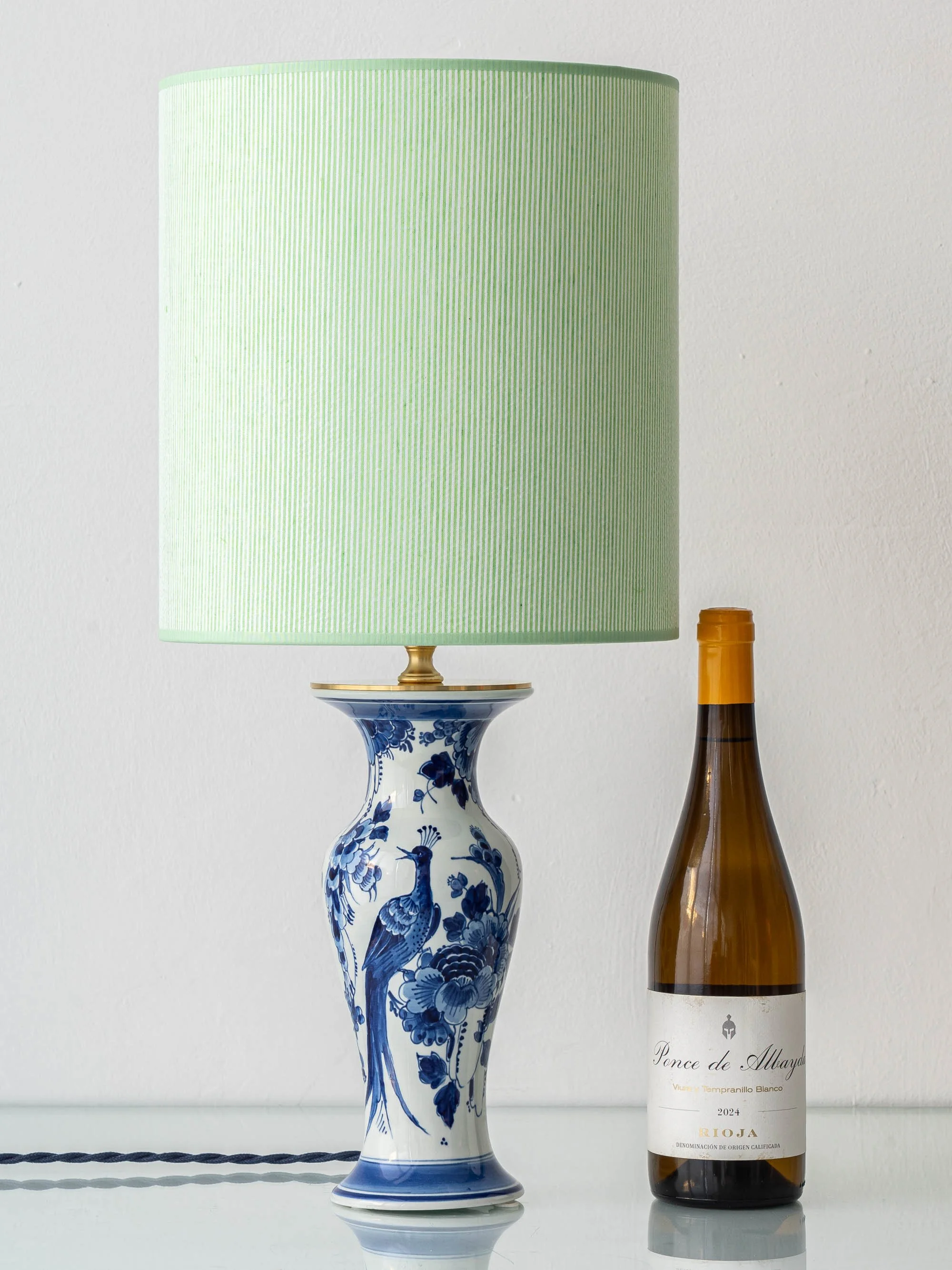 Image 2 of 13
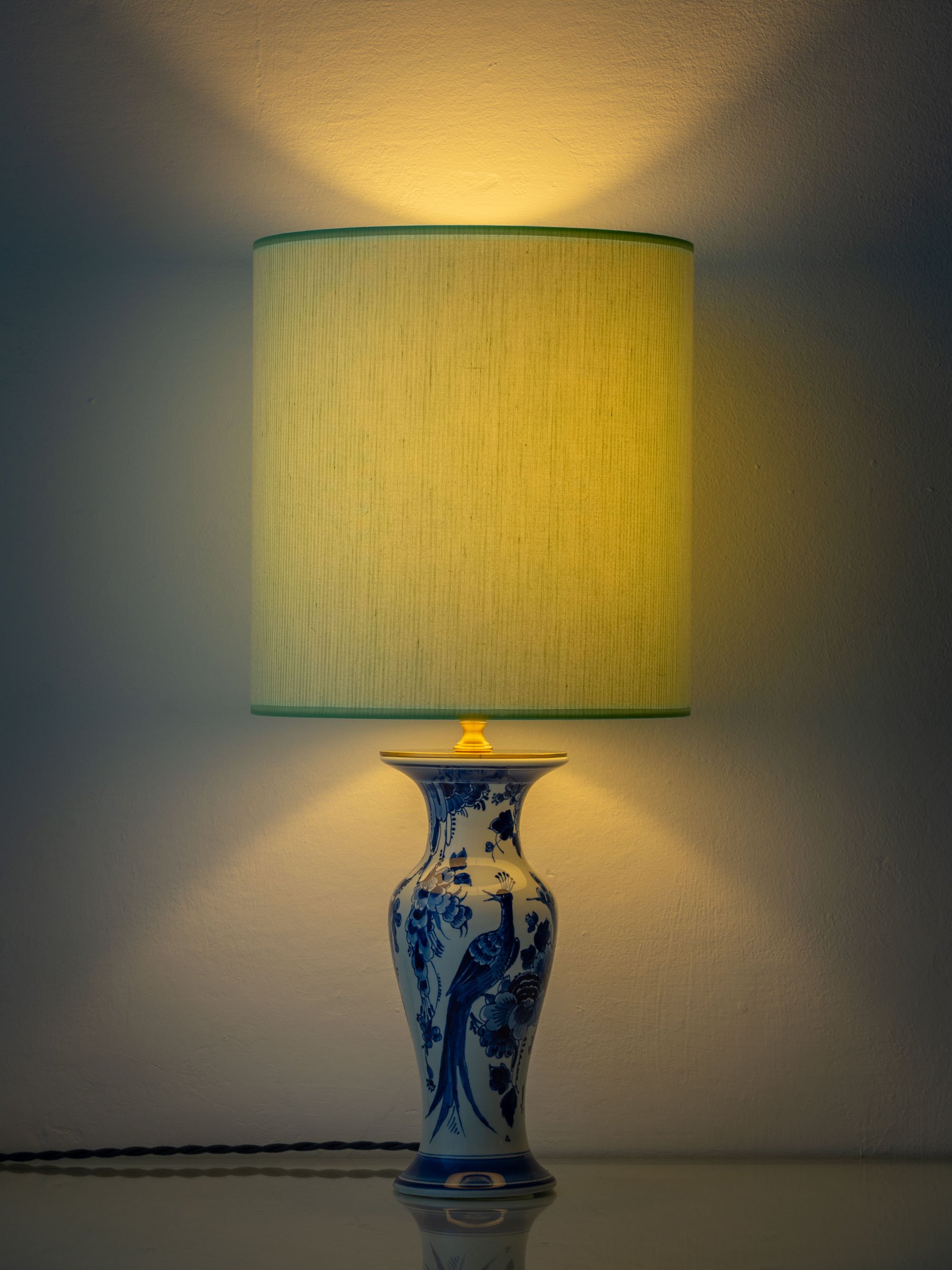 Image 3 of 13
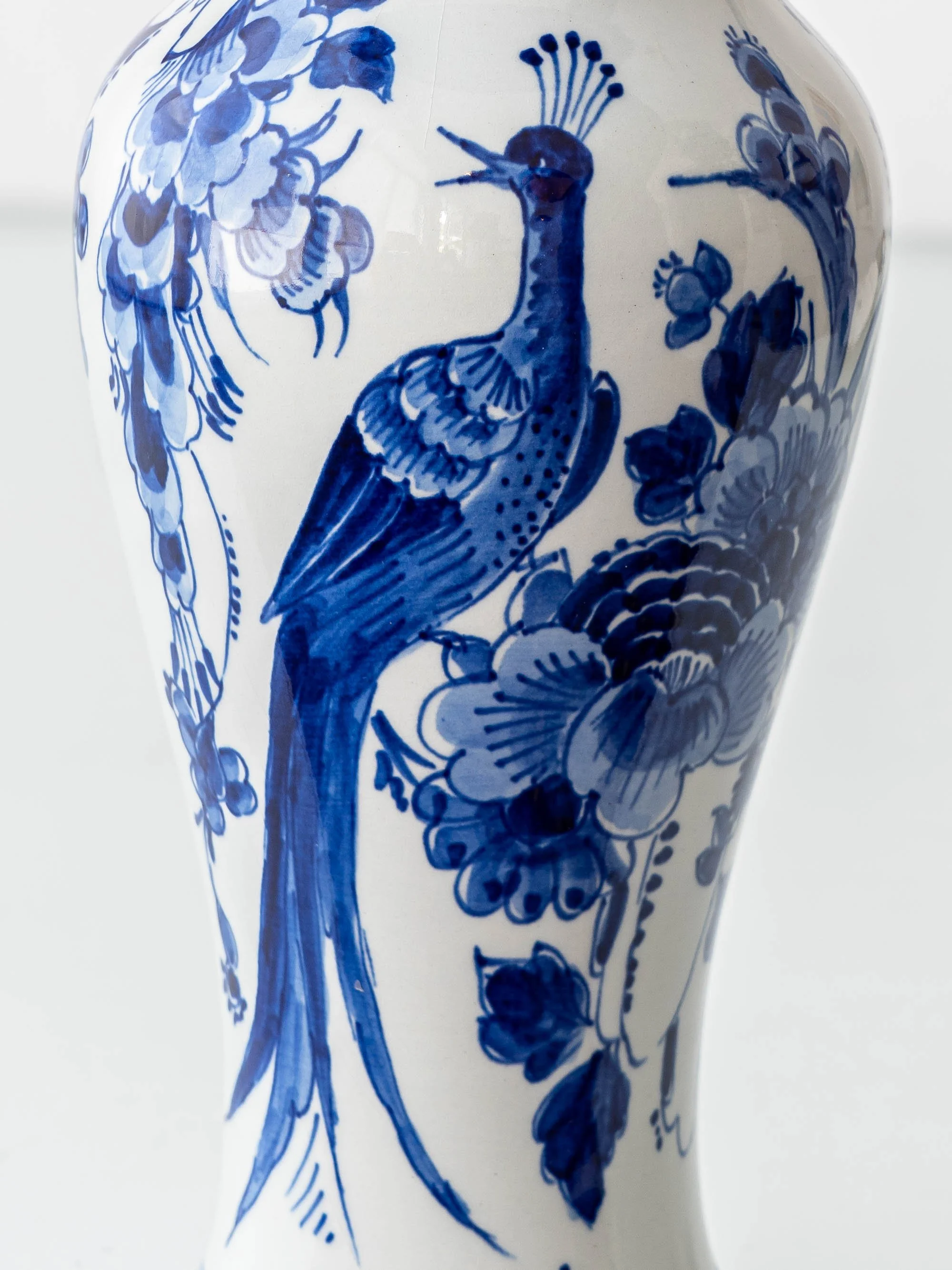 Image 4 of 13
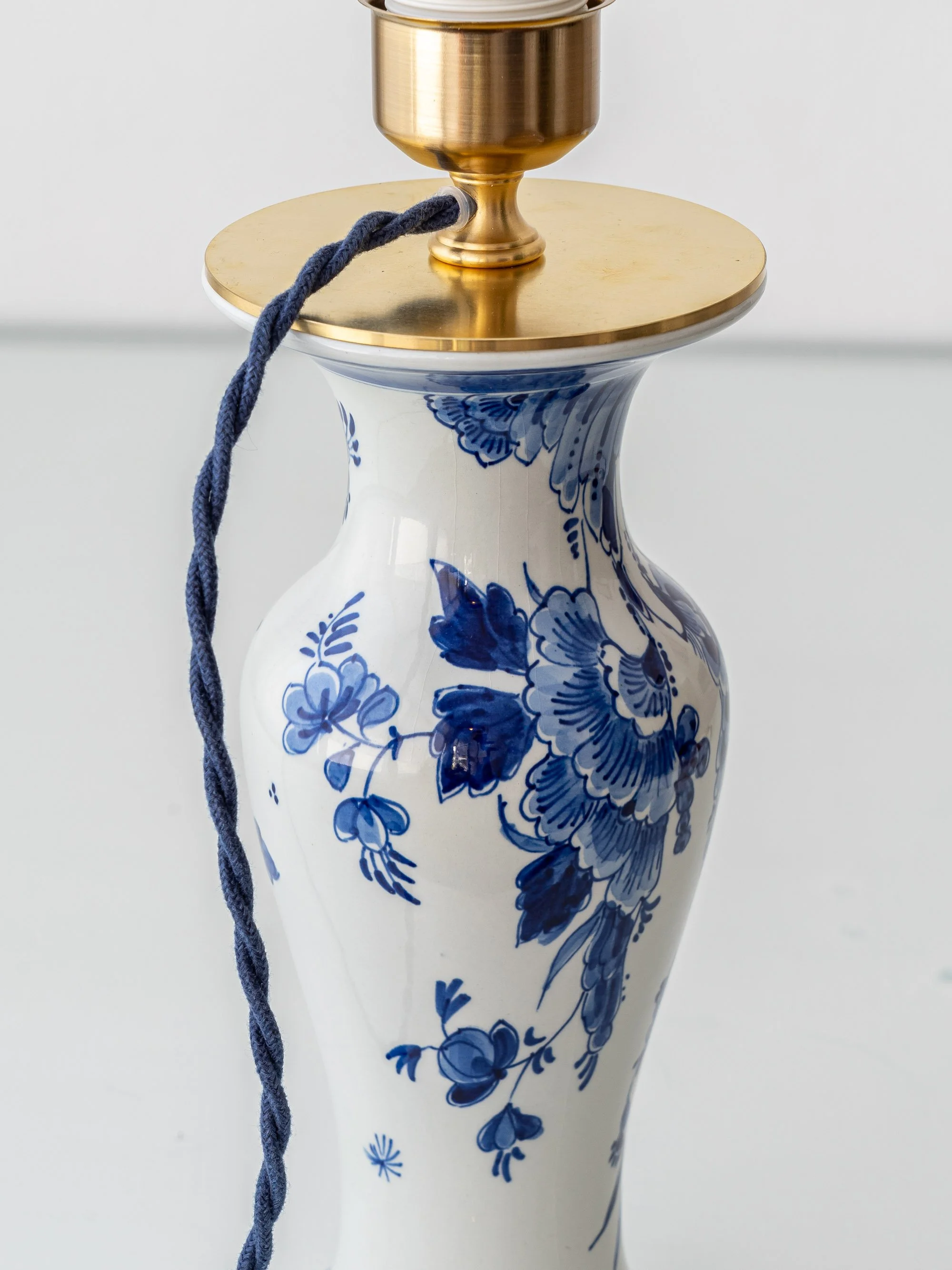 Image 5 of 13
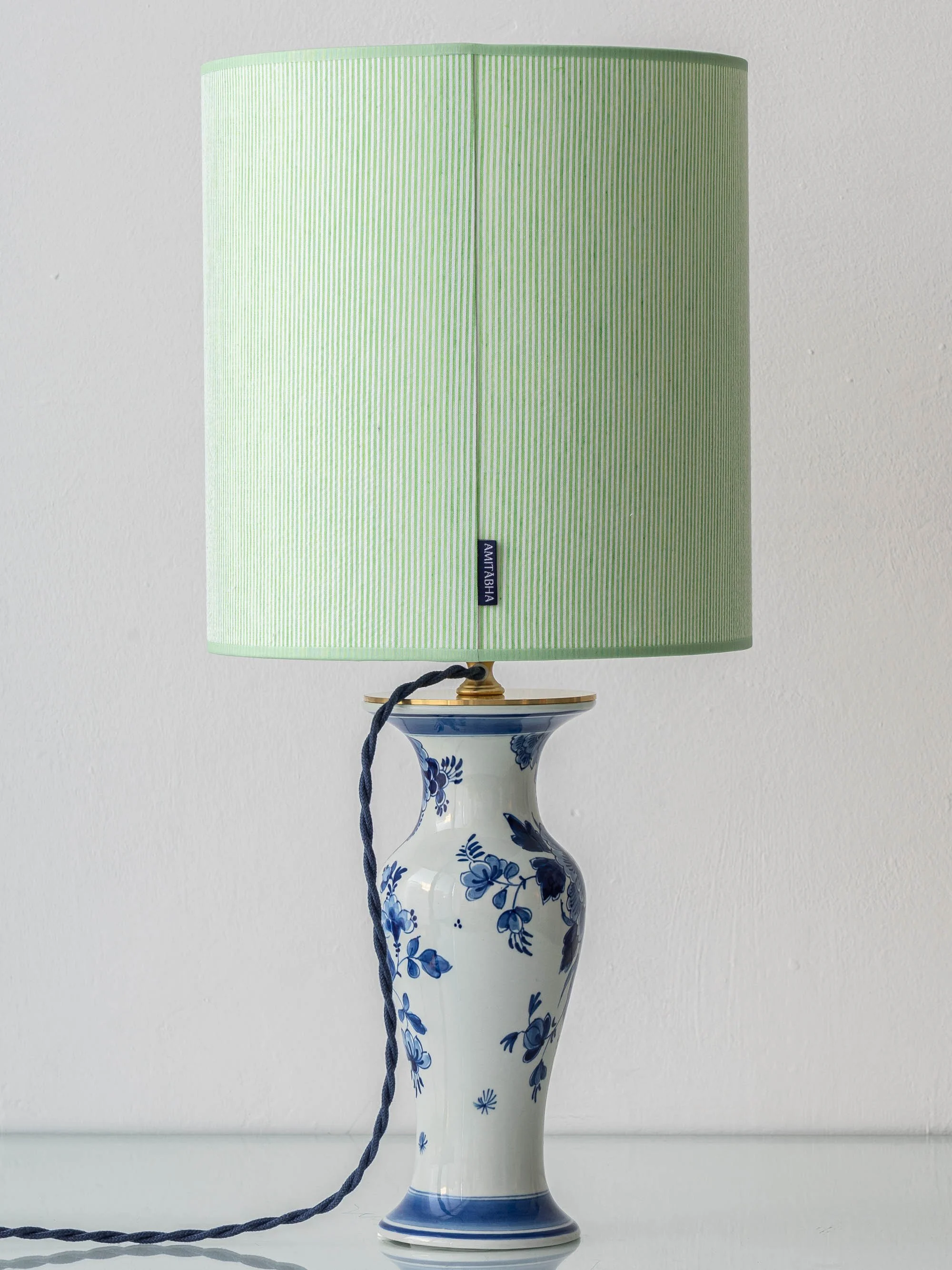 Image 6 of 13
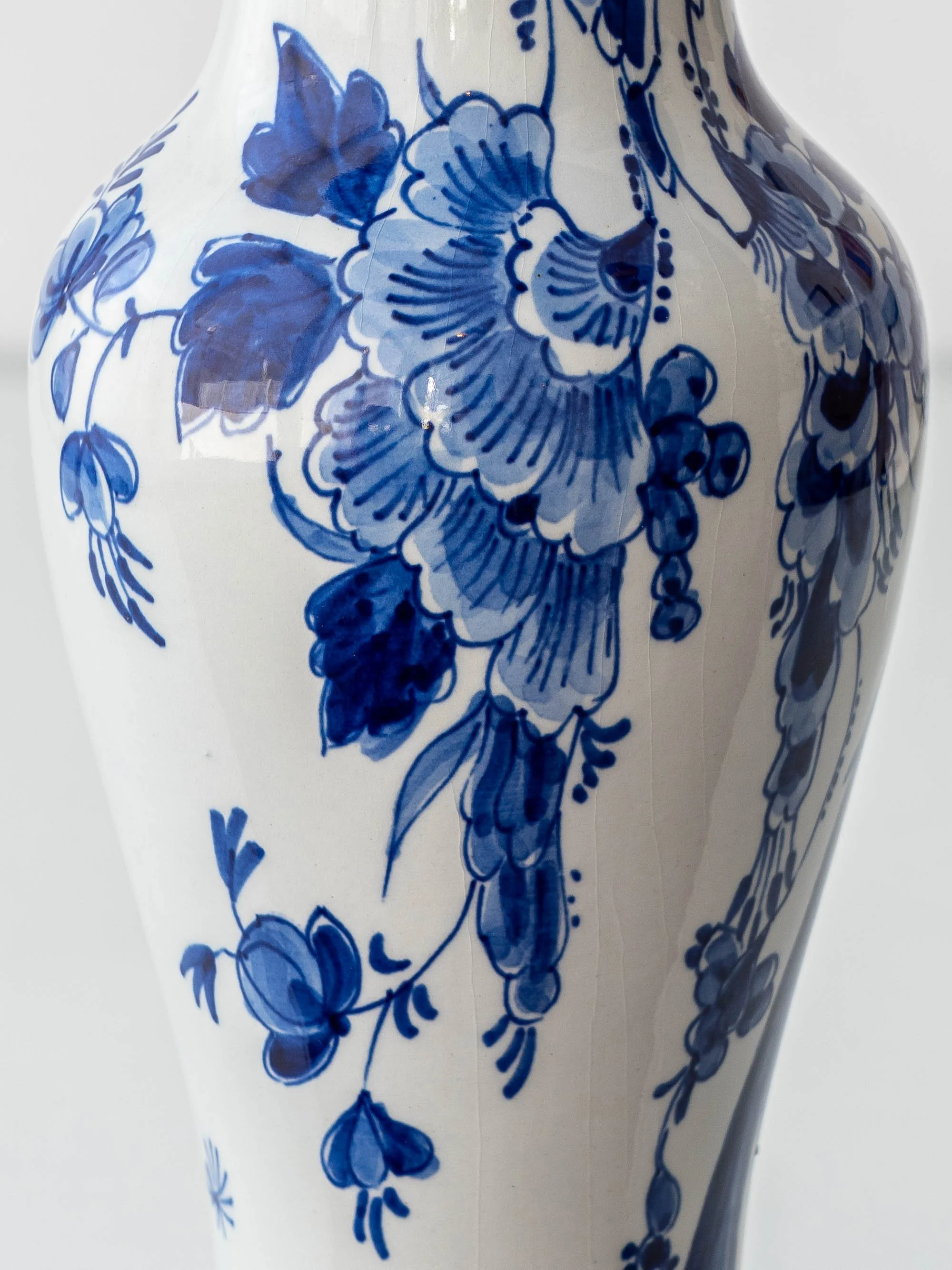 Image 7 of 13
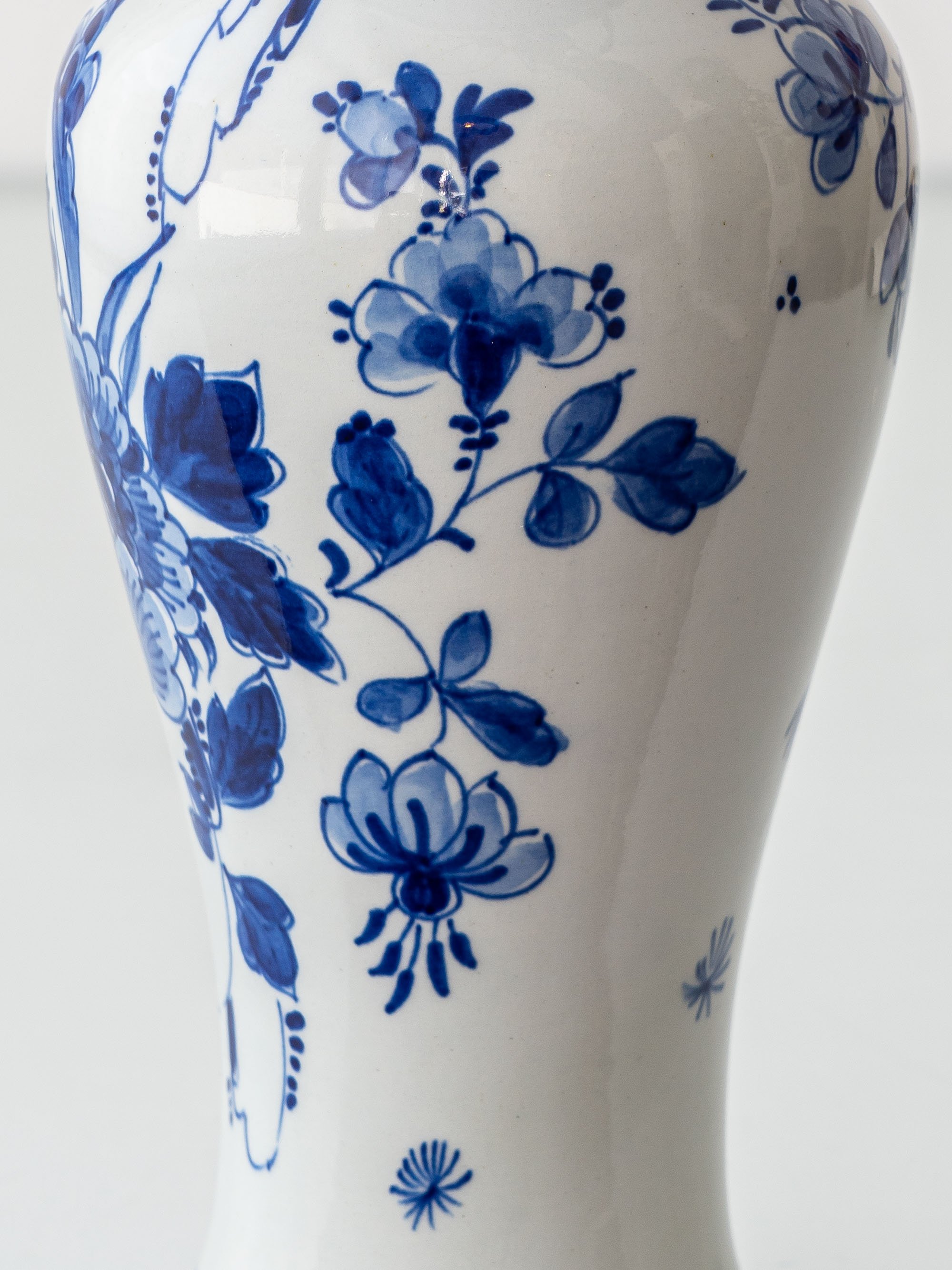 Image 8 of 13
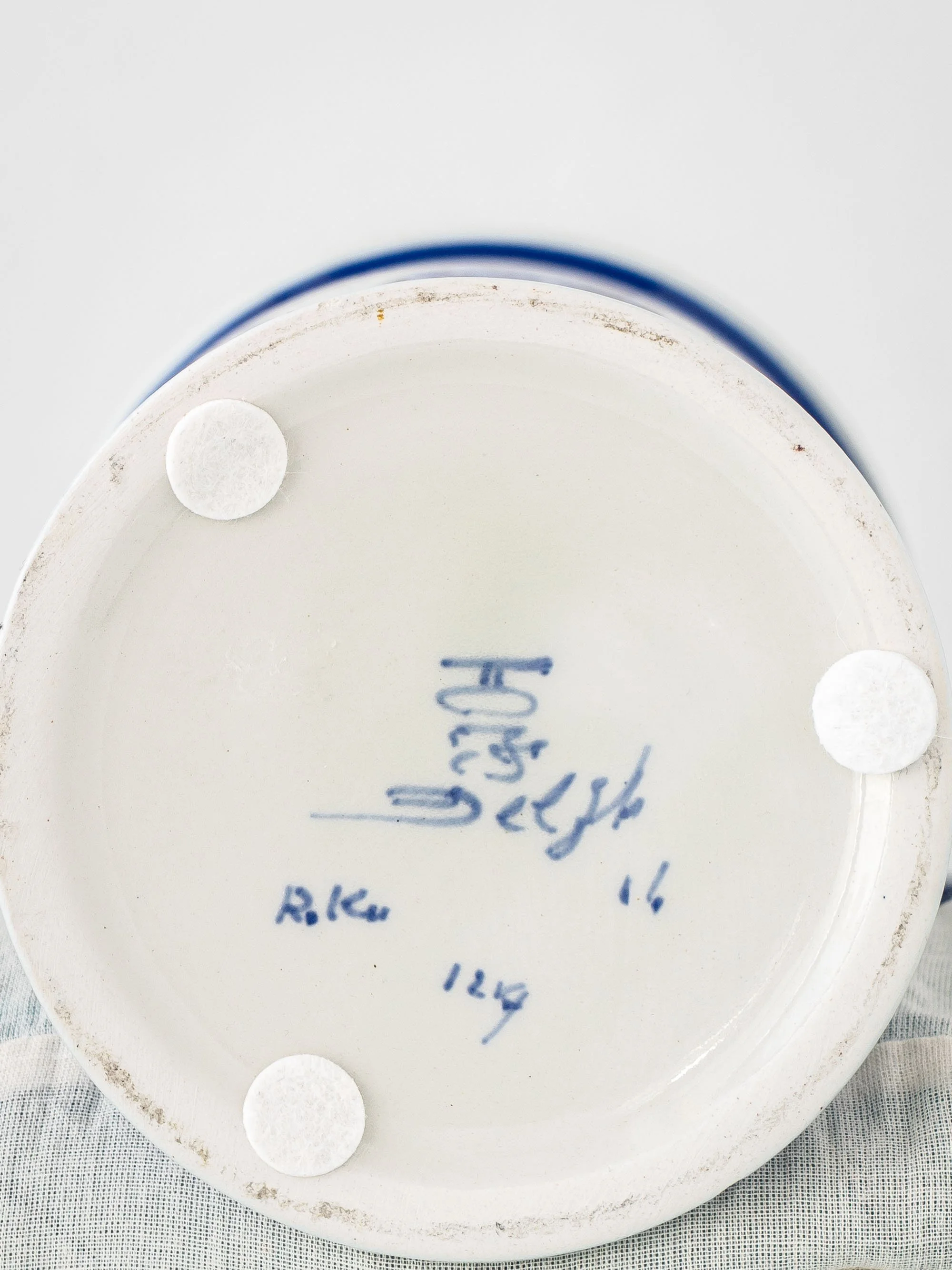 Image 9 of 13
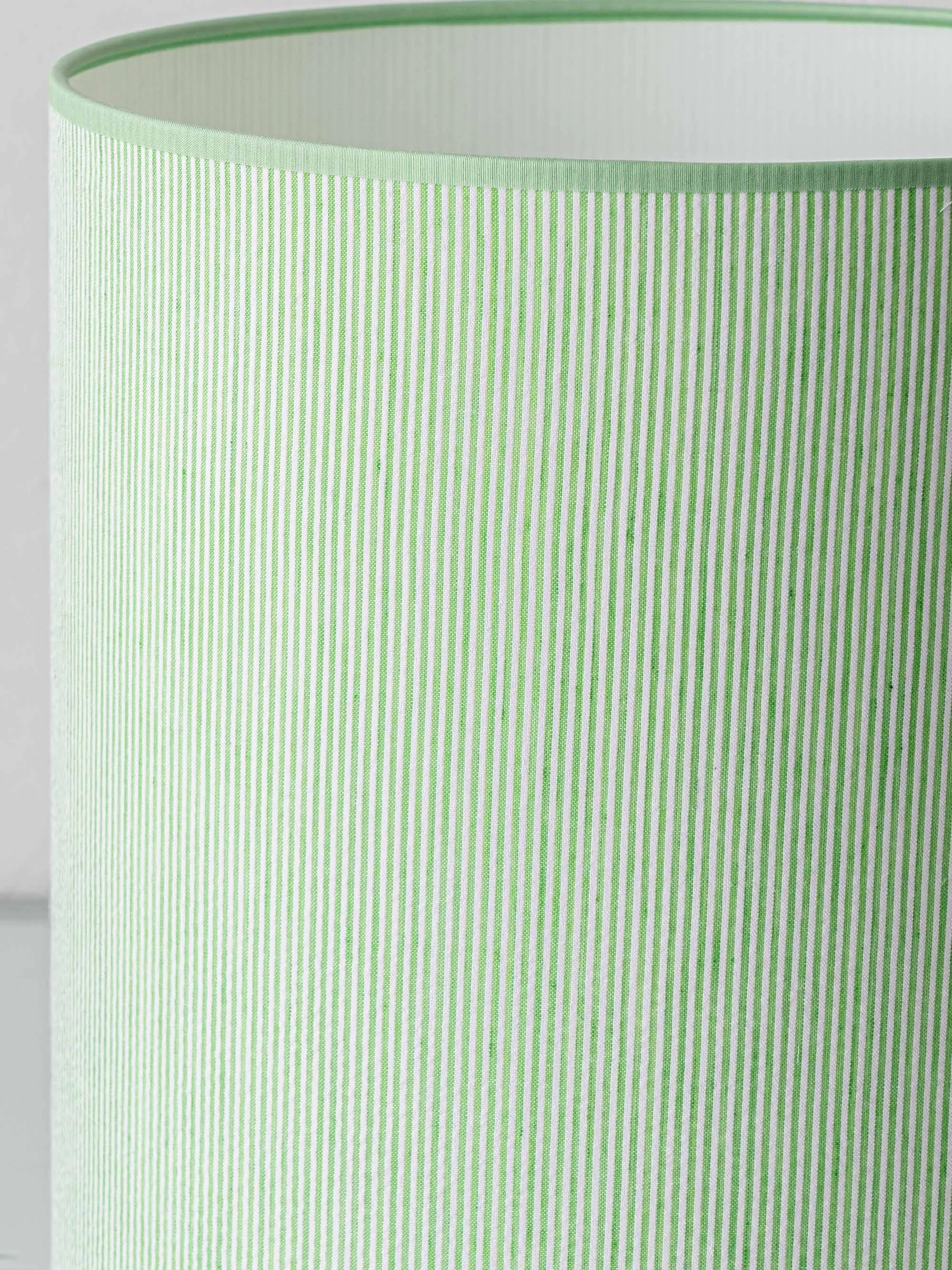 Image 10 of 13
 Image 11 of 13
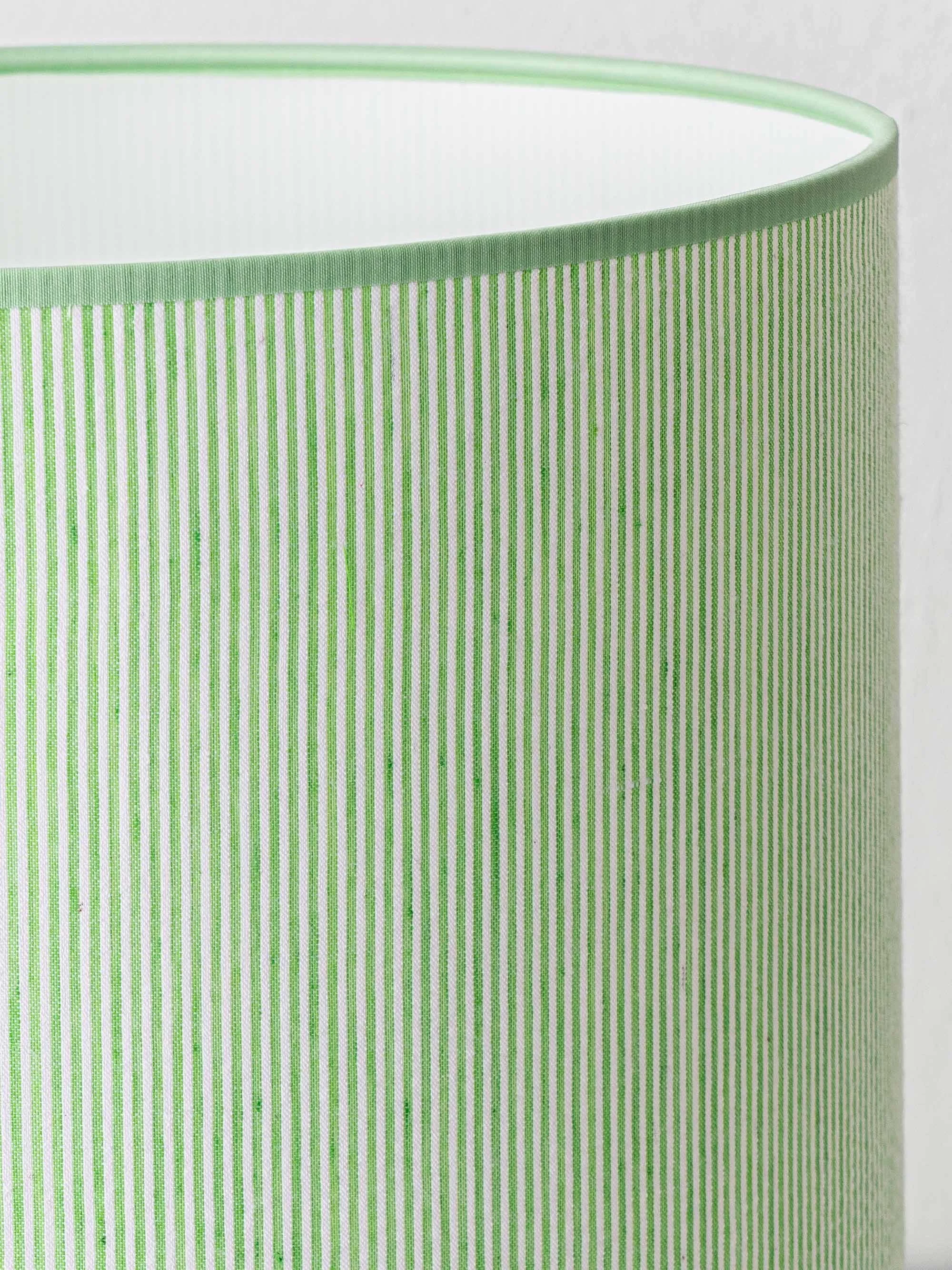 Image 12 of 13
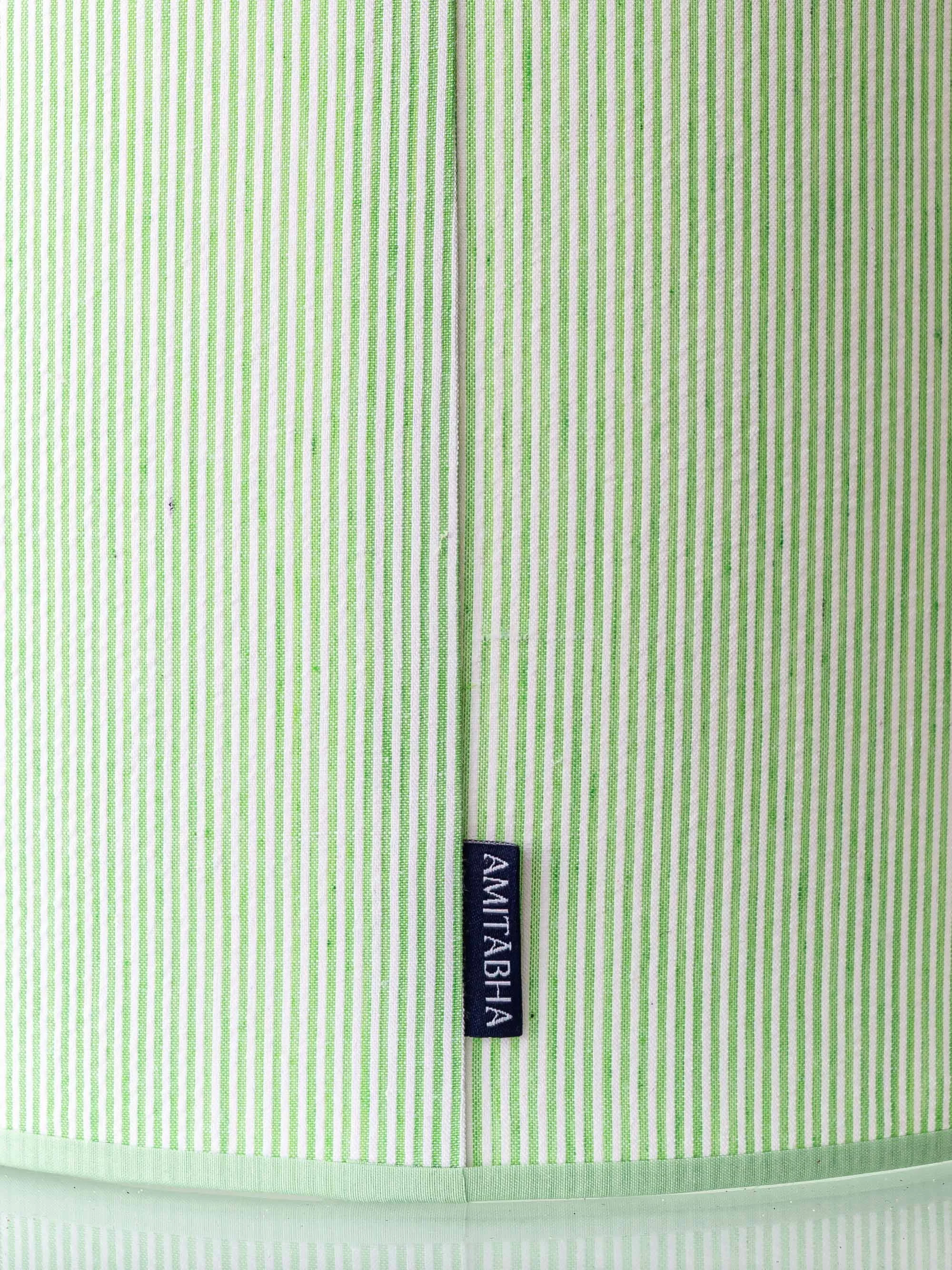 Image 13 of 13
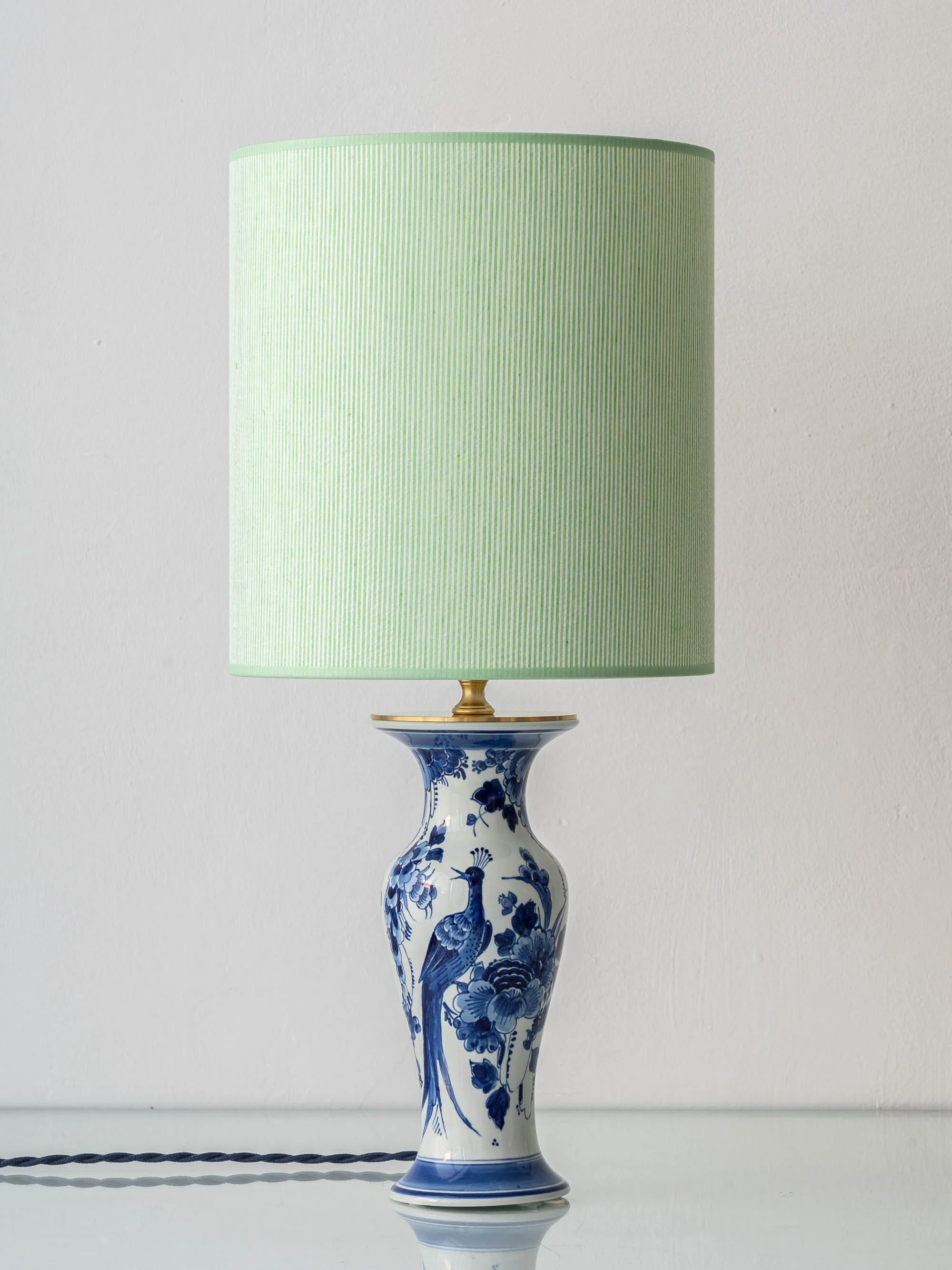
The vase is a Royal Delft baluster, painted by hand with a Chinoiserie scene: a long-tailed bird settled among oversized peonies and loose foliage, all in cobalt on a bright white field. The shape is a Royal Delft staple, and the brushwork rewards a close look — the blue deepens and lightens across the petals in a way that only freehand painting produces. From a brass collar the eye travels up to the new shade, a green-and-white pinstripe drum finished with a band of solid green at the rim; cobalt and apple green together pitch the lamp brighter and more playful than blue-and-white usually runs.
Turn it over and the attribution is unambiguous. The base shows the printed blue semicircle of De Porceleyne Fles, with the hand-painted JT monogram, the little bottle device, and "Delft" in cursive — the marking scheme the factory has kept since 1879. A painter's initials sit on one side, and the year letter CX on the other pins the piece to 1979. The cord is twisted navy, fabric-wrapped.
About Royal Delft (De Porceleyne Fles)
Founded in Delft in 1653, De Porceleyne Fles is the last survivor of the cluster of Delft faience houses that worked in the 17th century. Joost Thooft took it over and modernised it in 1876 — his JT still sits in the mark — and under royal patronage it became known abroad simply as Royal Delft. Because each hand-painted piece records a year letter, the painter, and a shape number, any example can be dated and traced precisely; the house's blue-and-white is in major museum holdings and stays in steady demand among collectors.