 Image 1 of 23
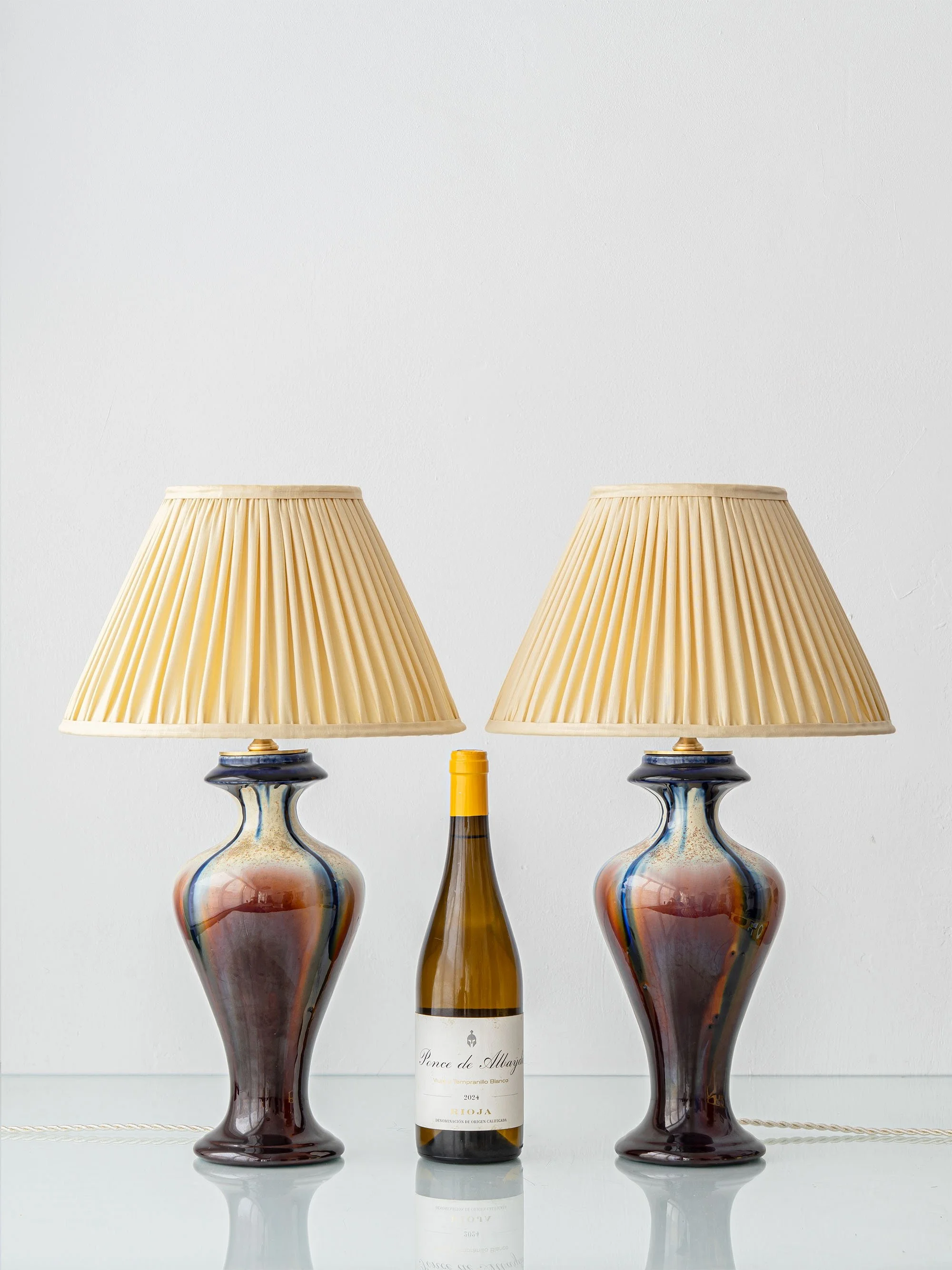 Image 2 of 23
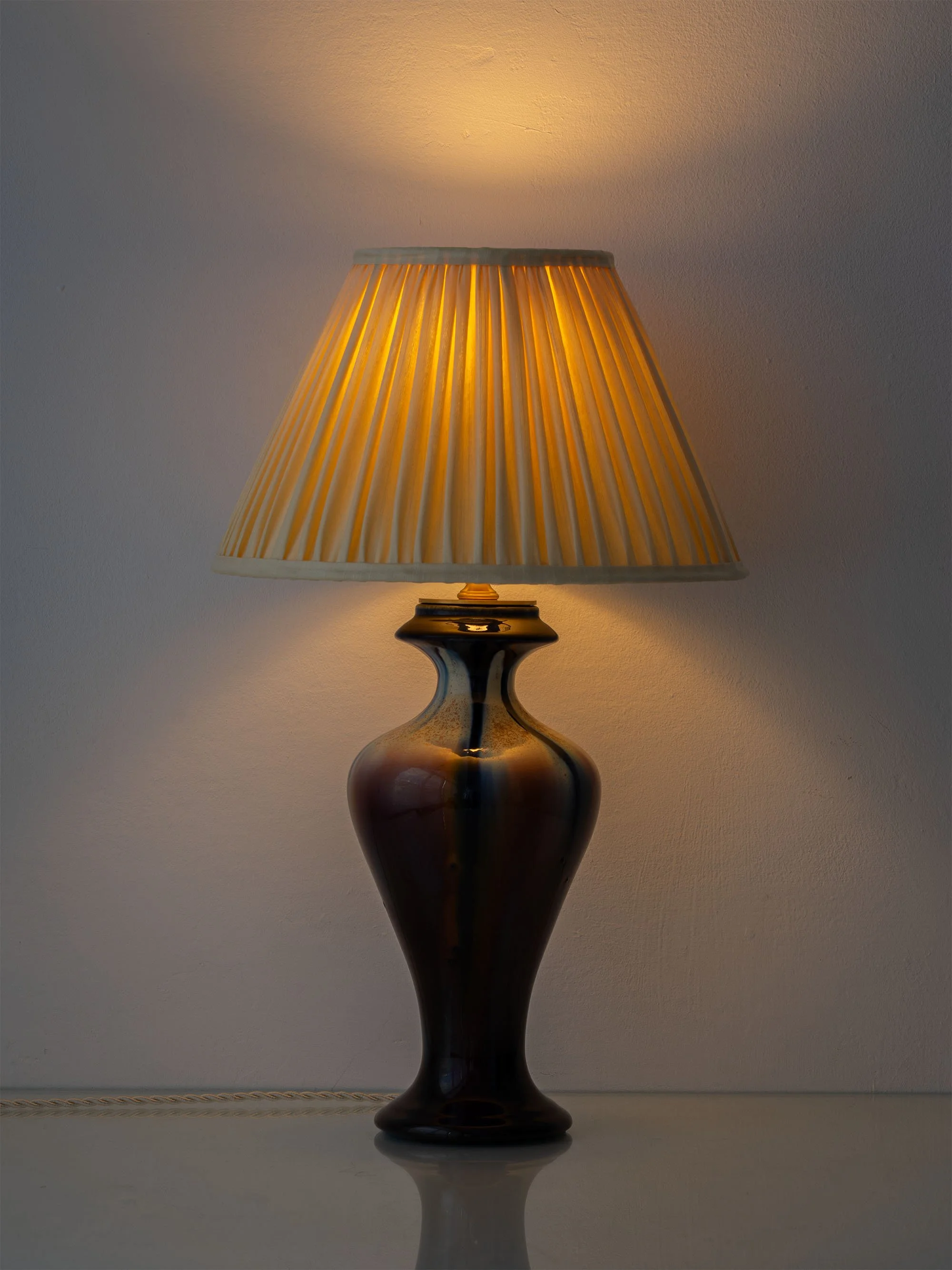 Image 3 of 23
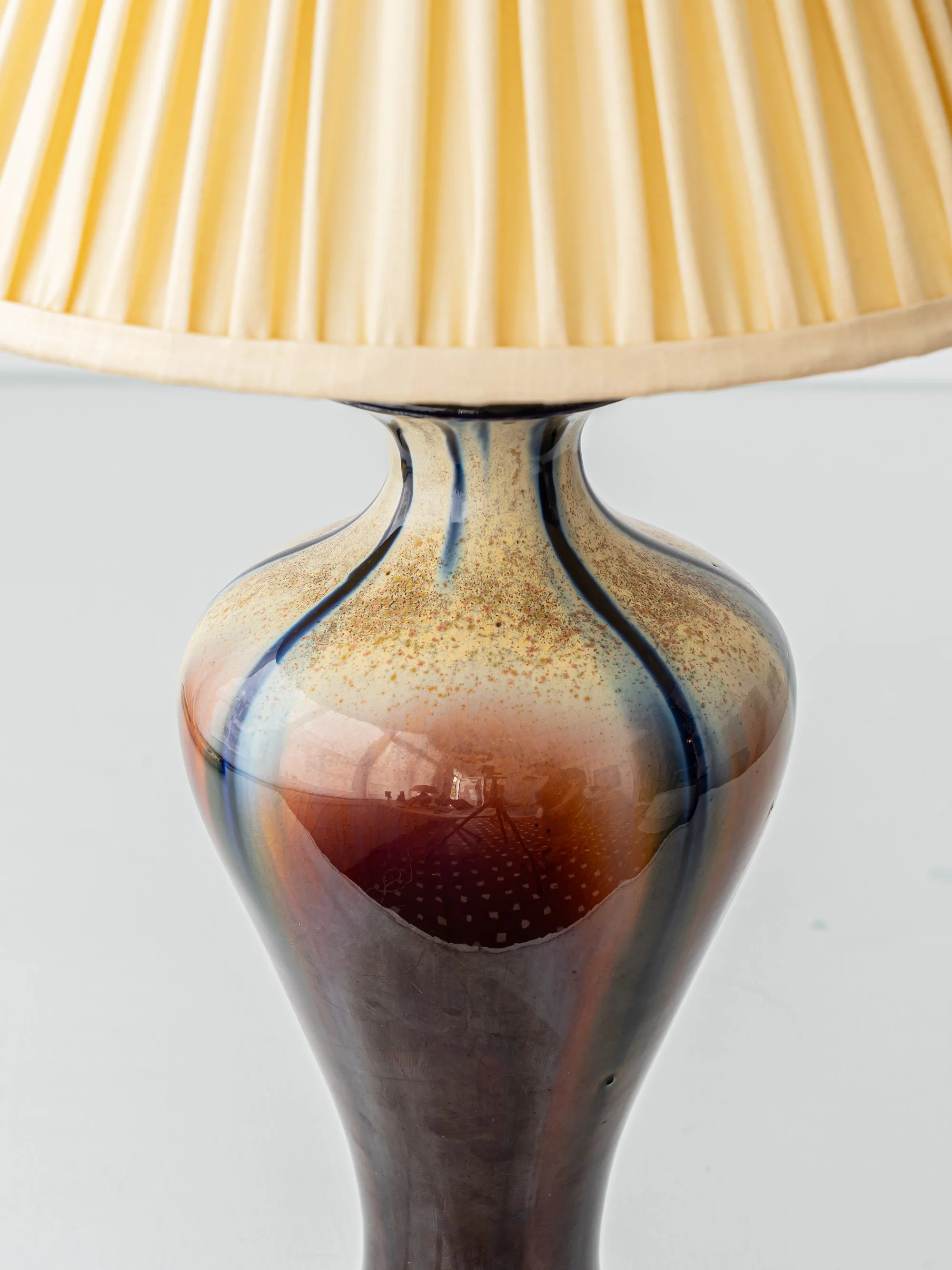 Image 4 of 23
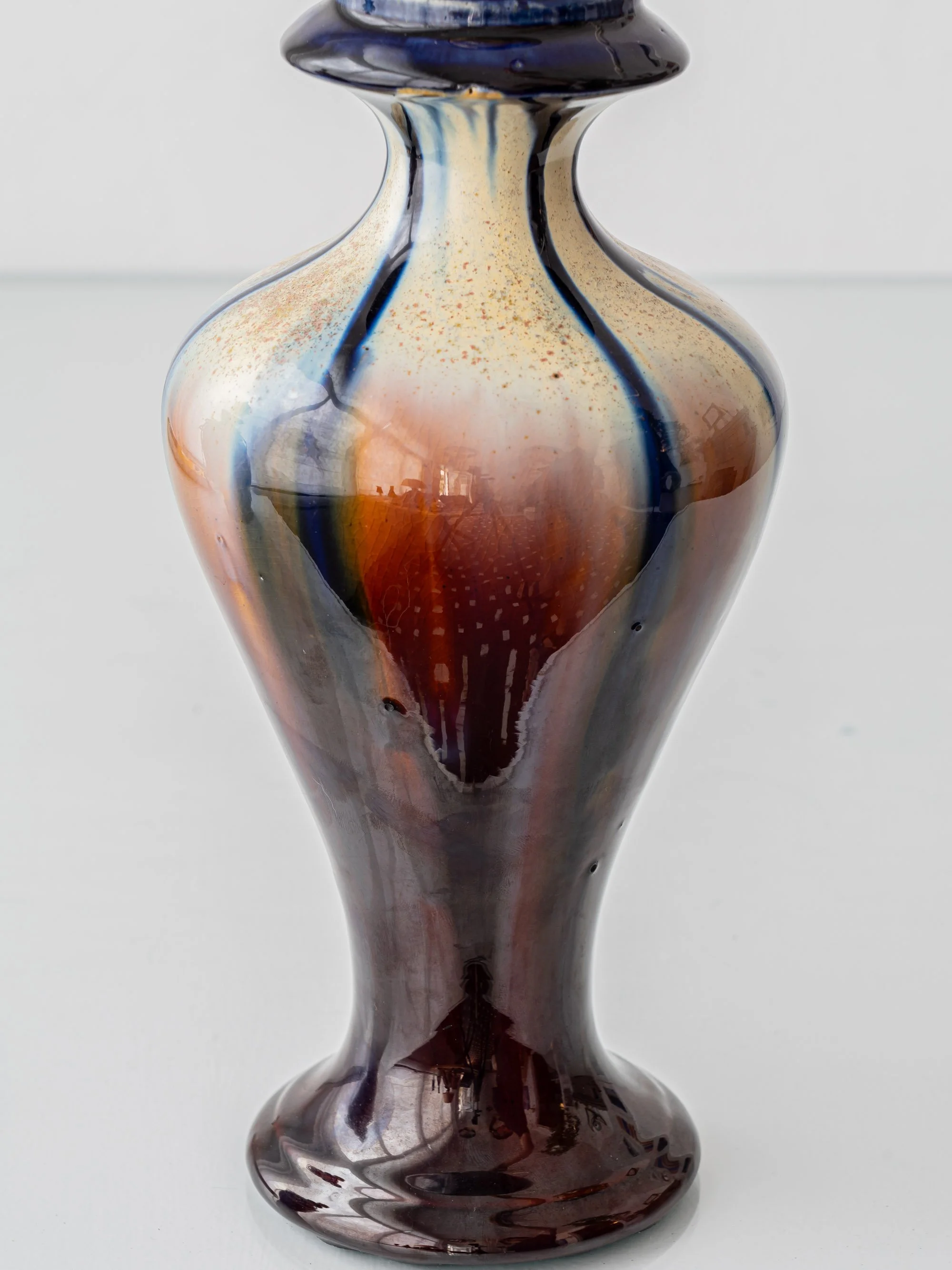 Image 5 of 23
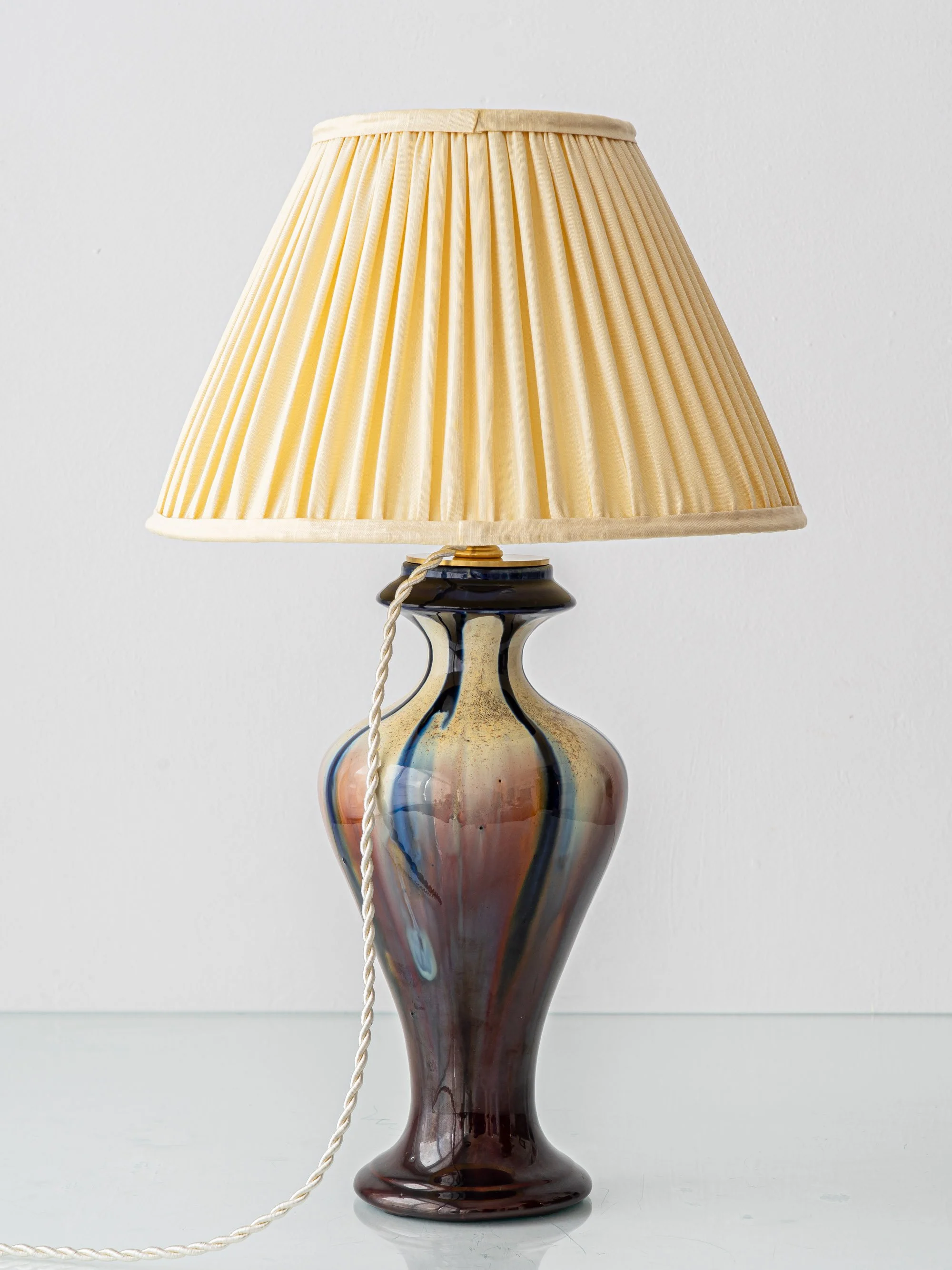 Image 6 of 23
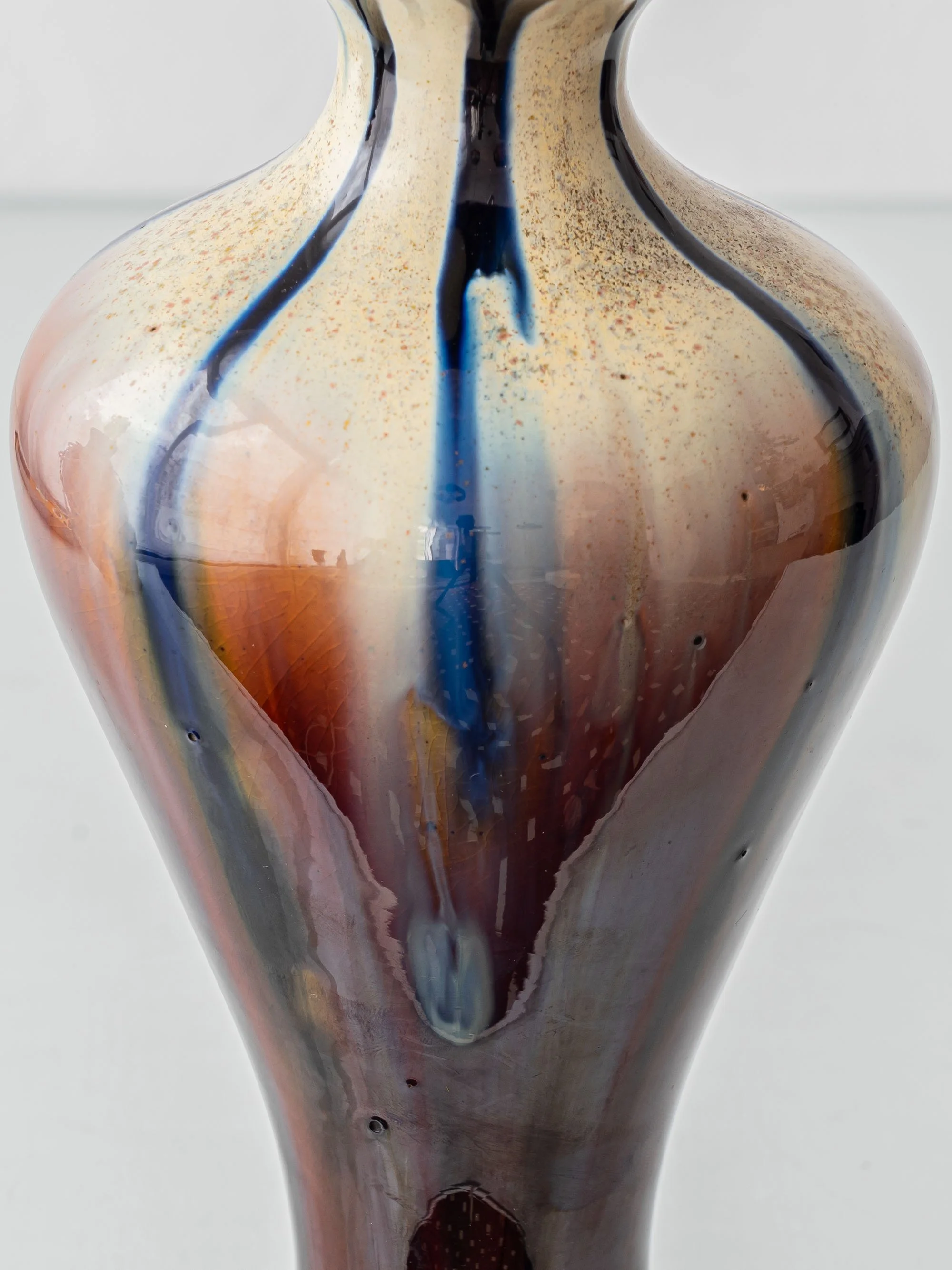 Image 7 of 23
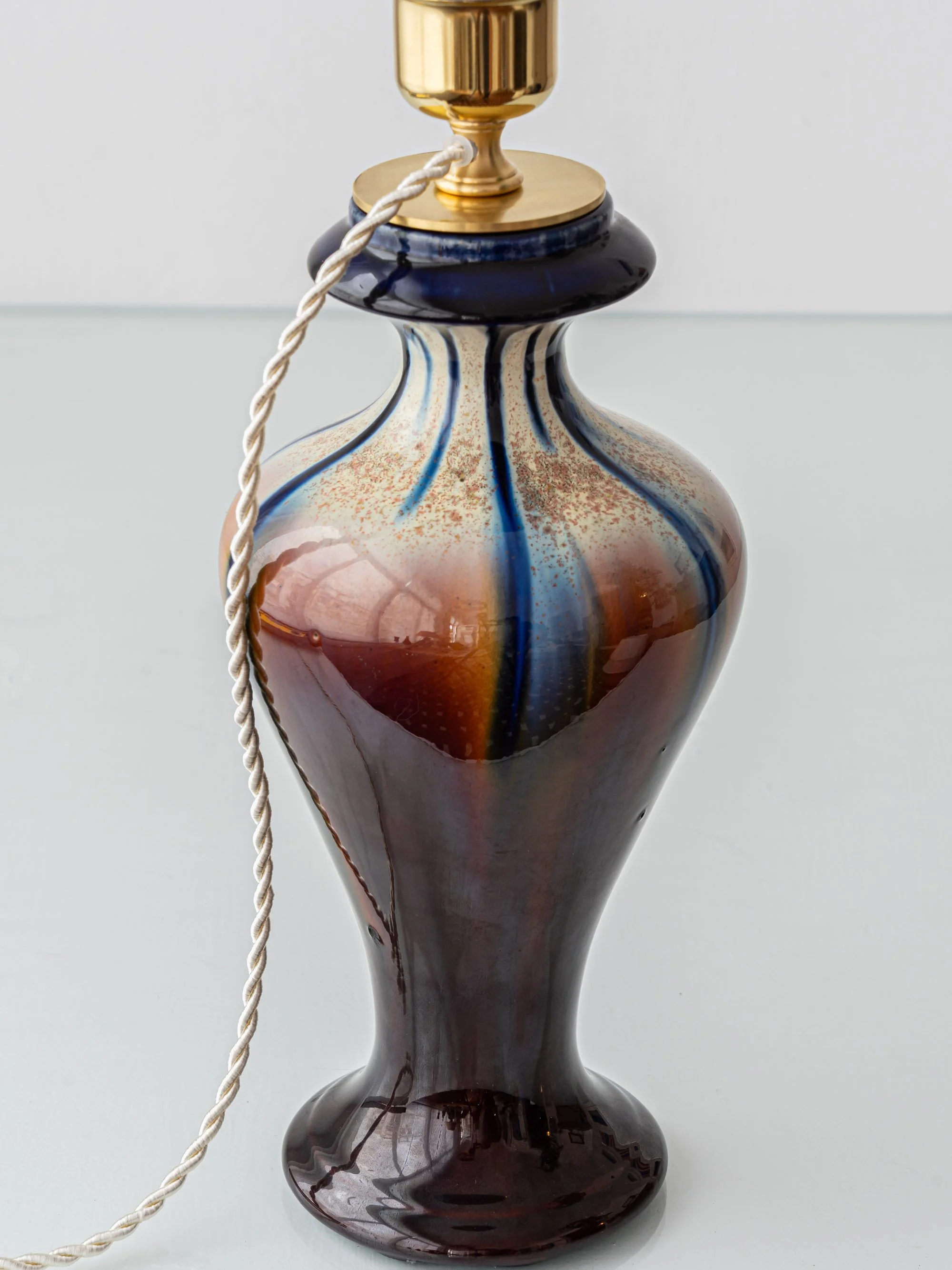 Image 8 of 23
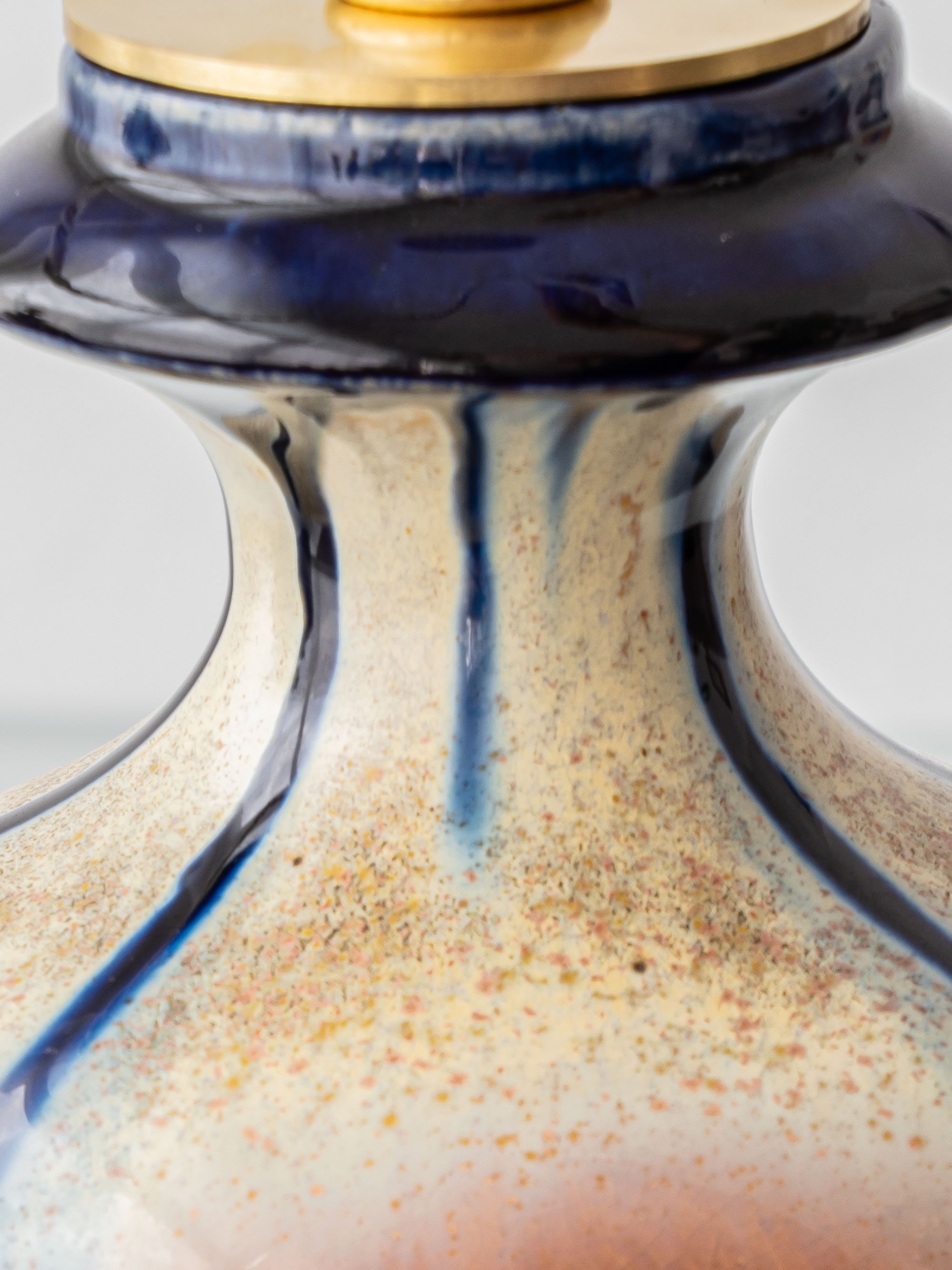 Image 9 of 23
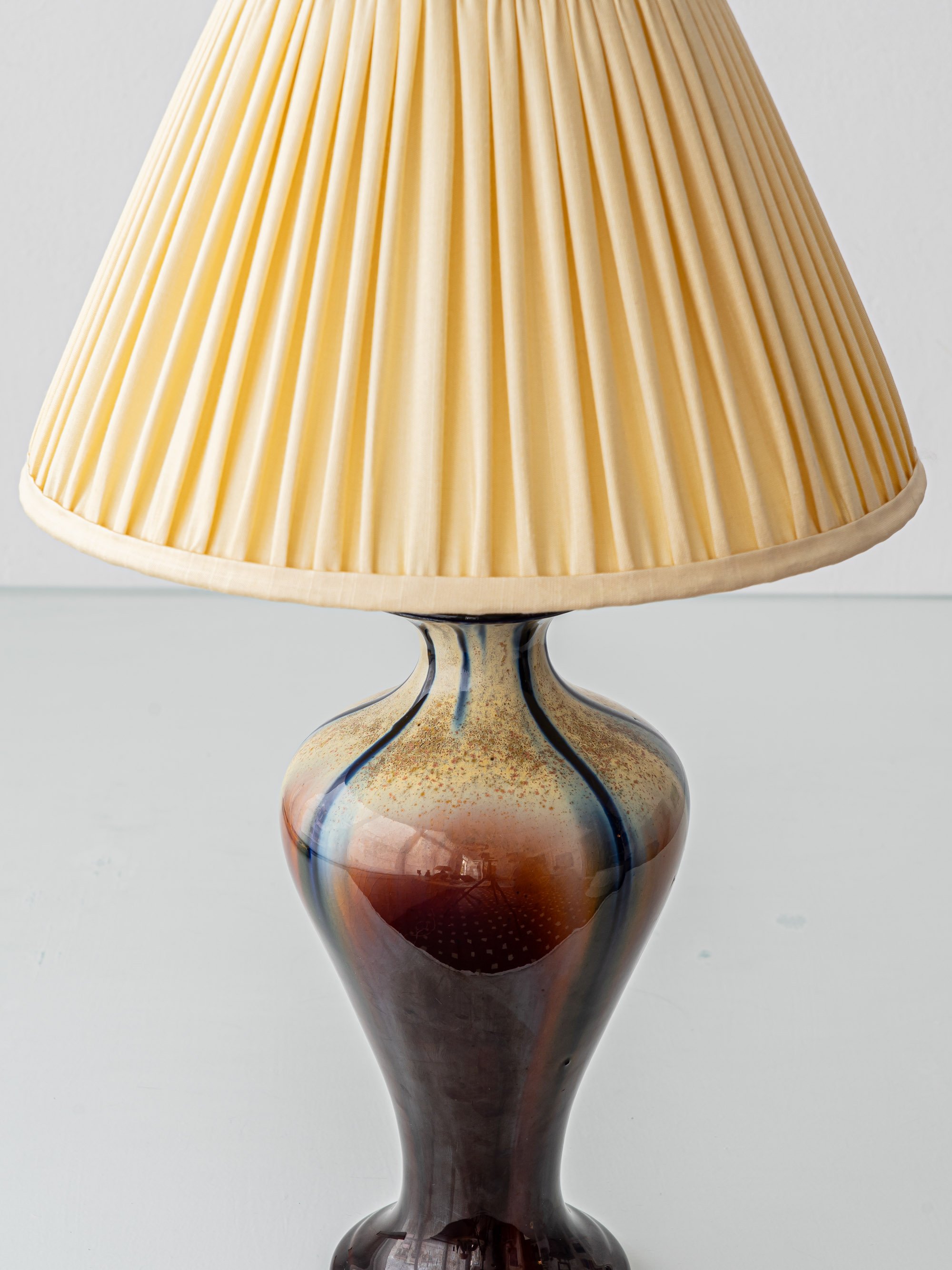 Image 10 of 23
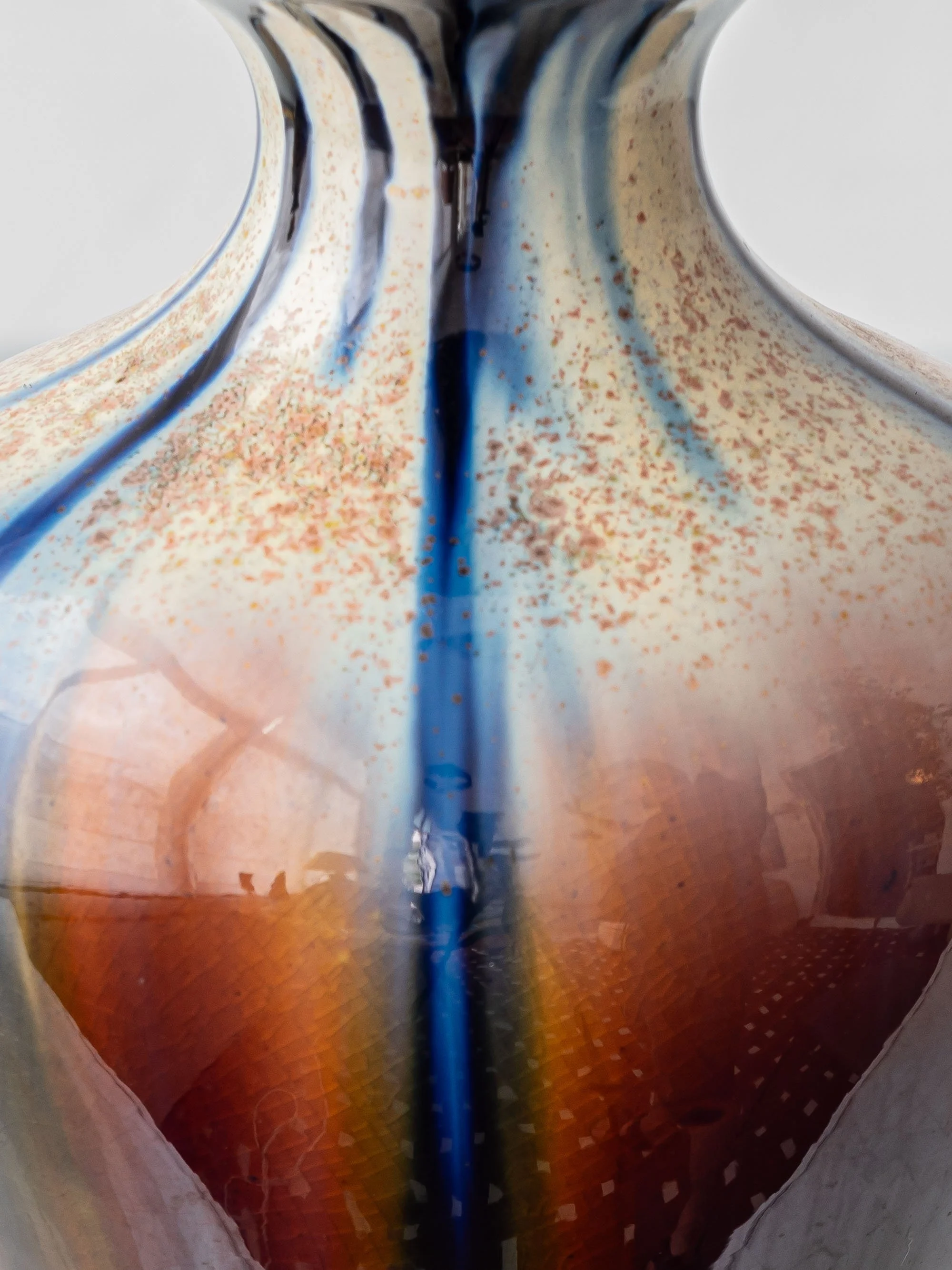 Image 11 of 23
 Image 12 of 23
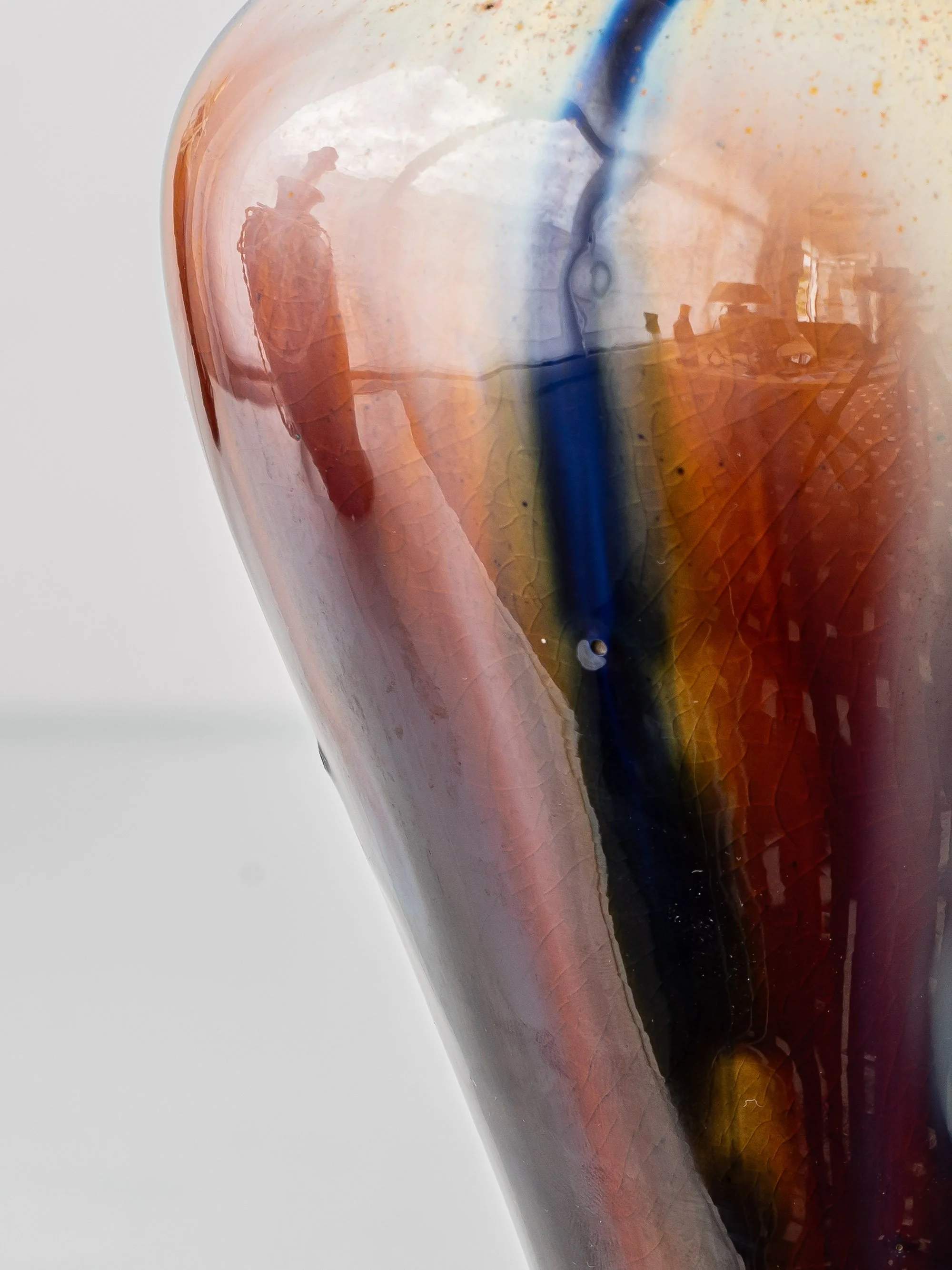 Image 13 of 23
 Image 14 of 23
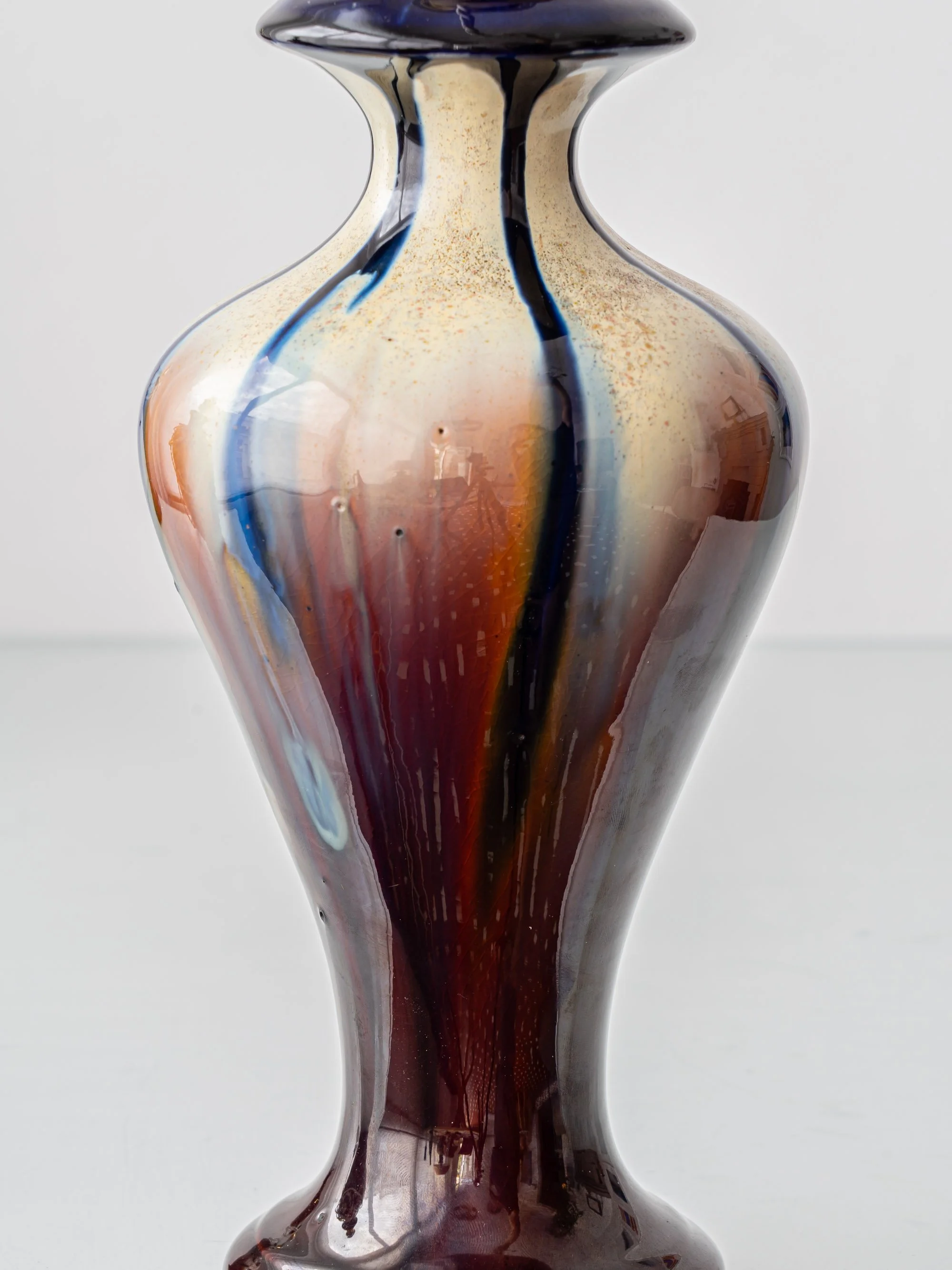 Image 15 of 23
 Image 16 of 23
 Image 17 of 23
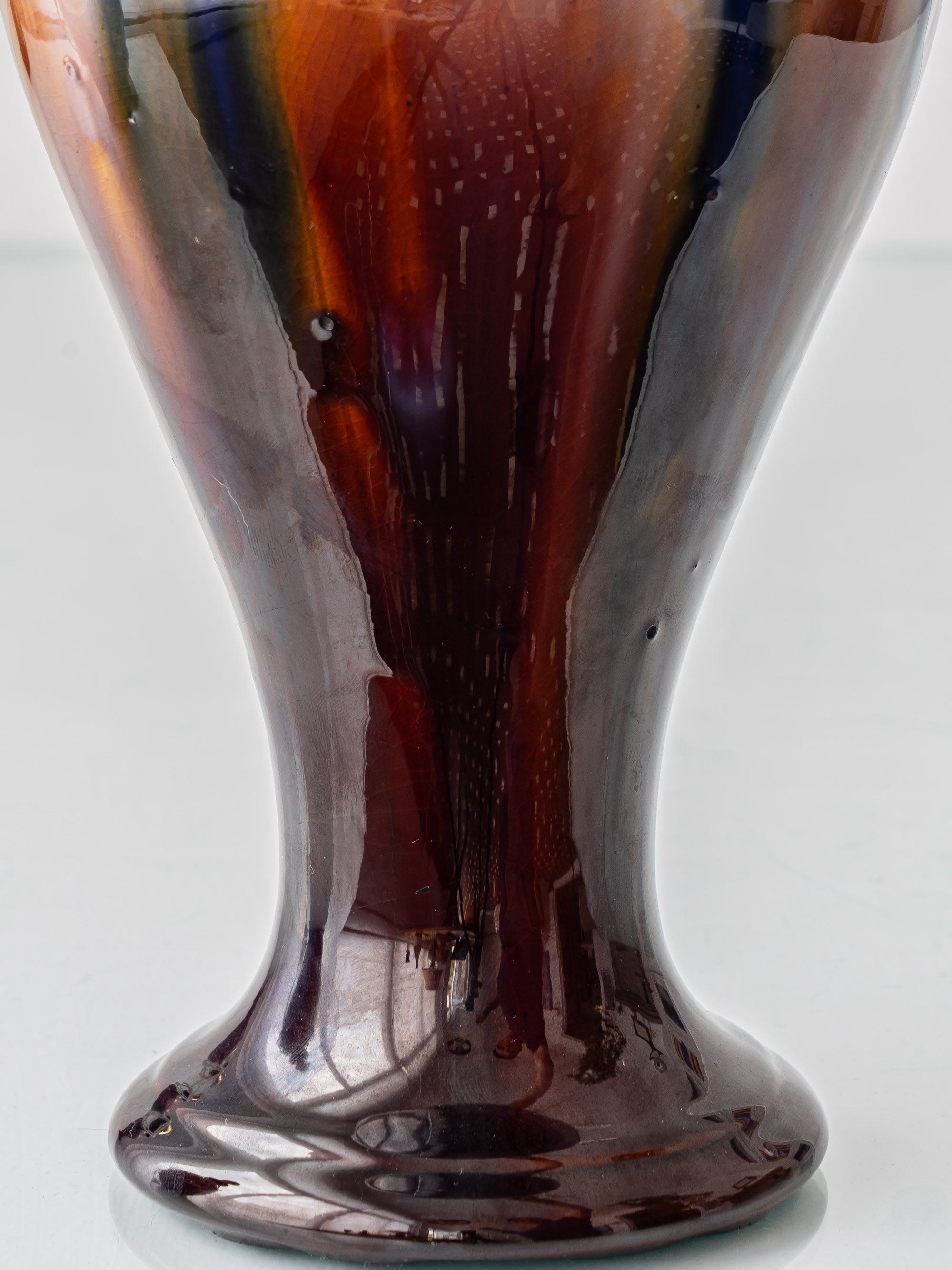 Image 18 of 23
 Image 19 of 23
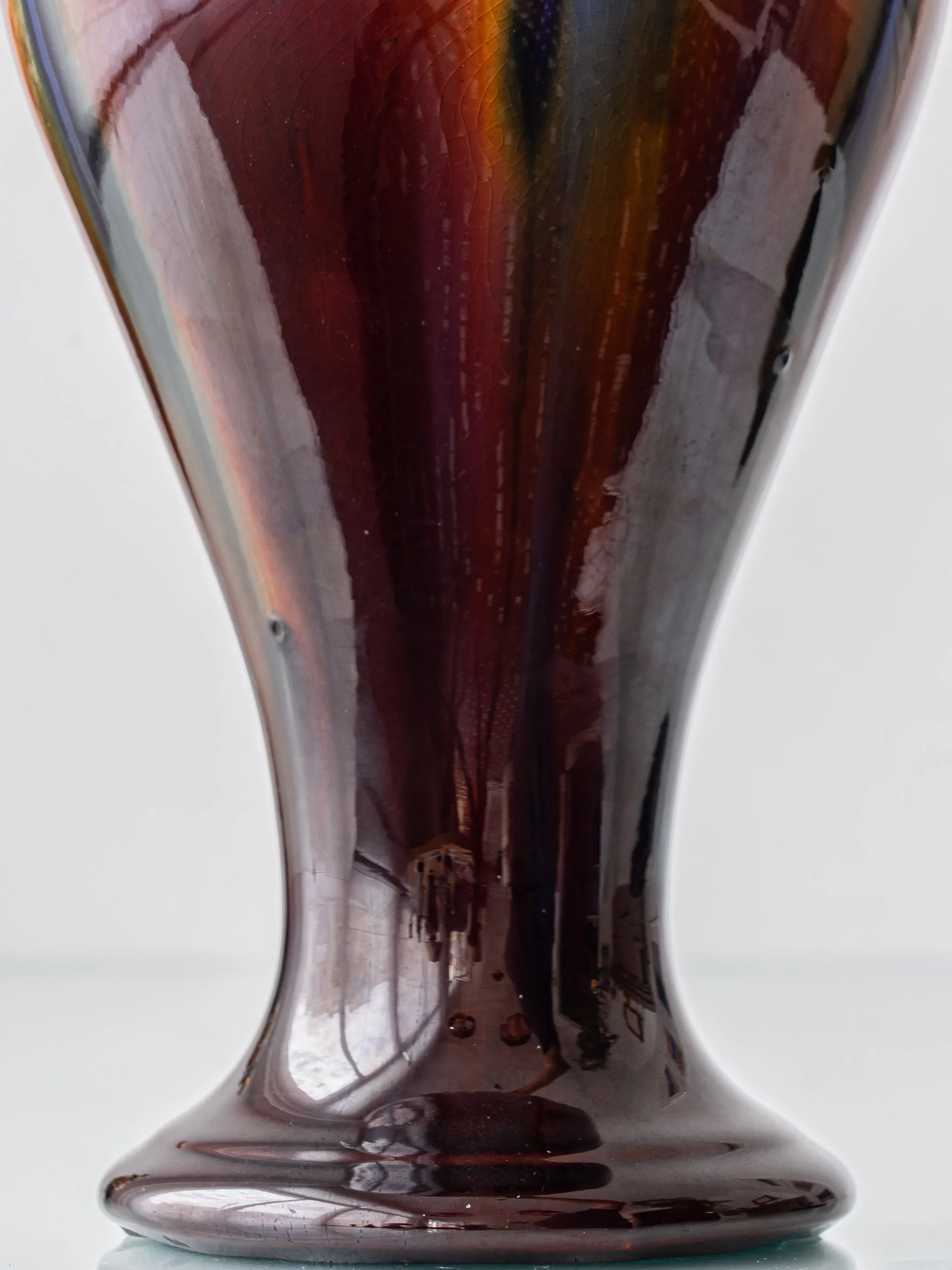 Image 20 of 23
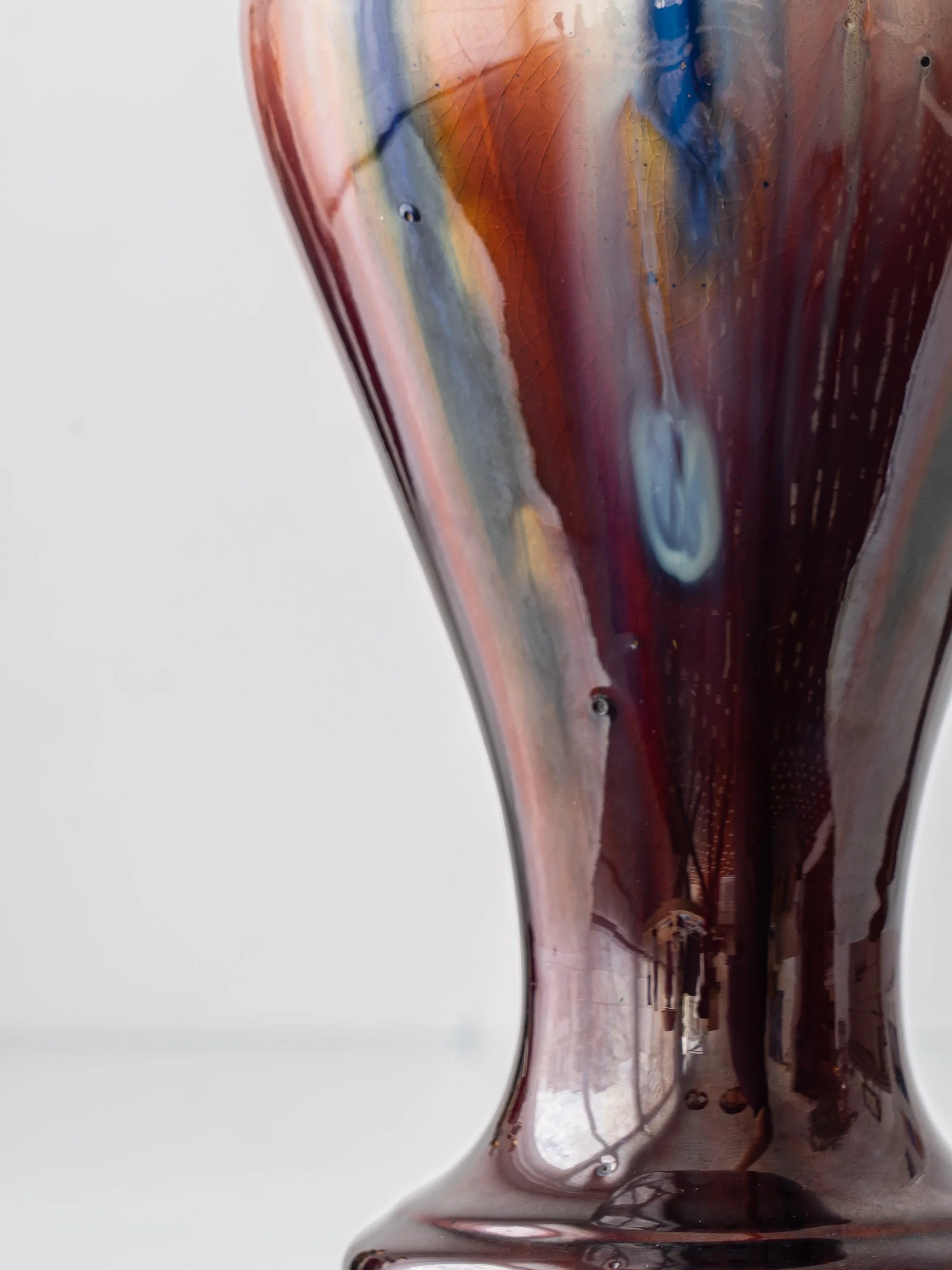 Image 21 of 23
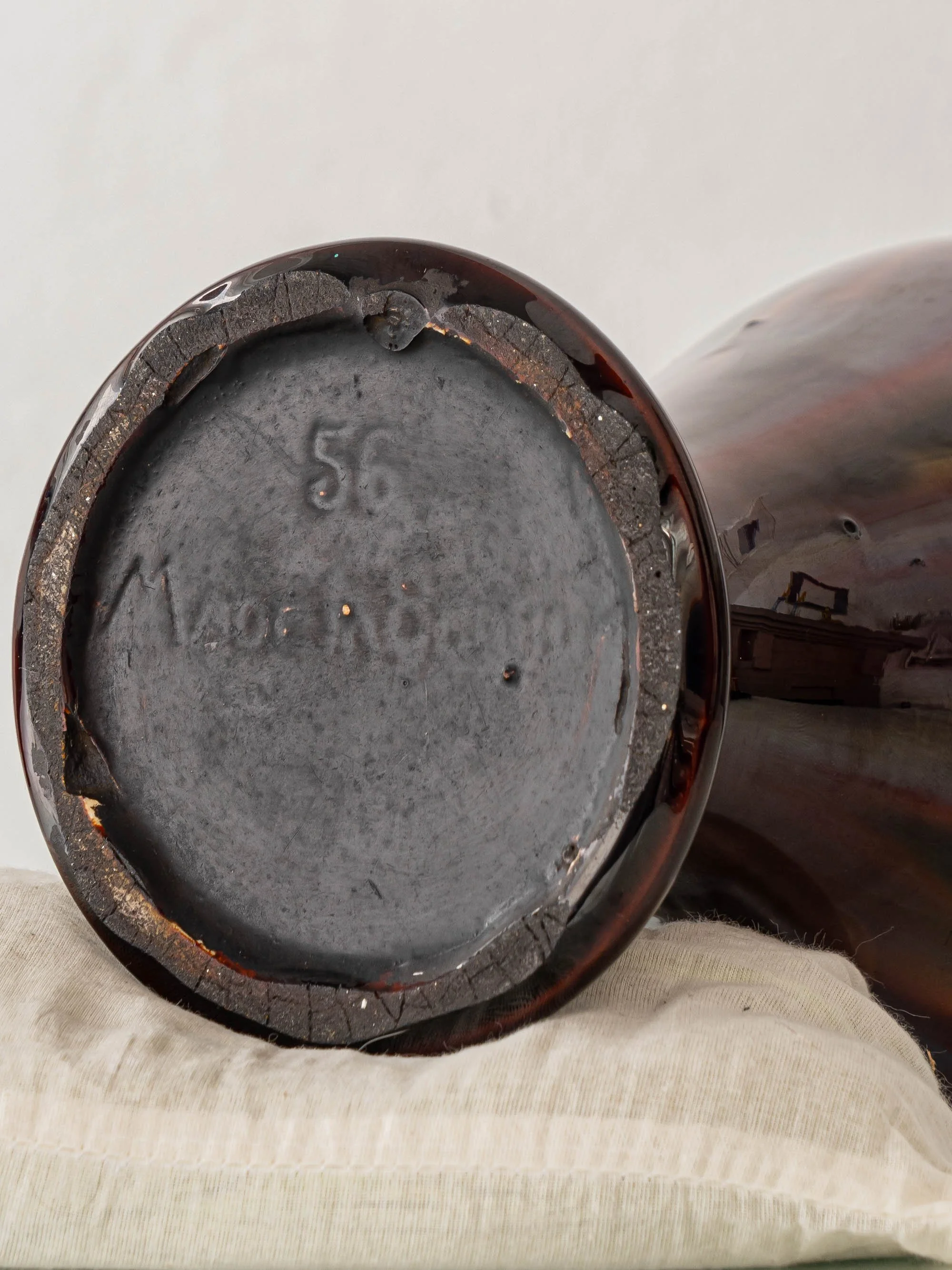 Image 22 of 23
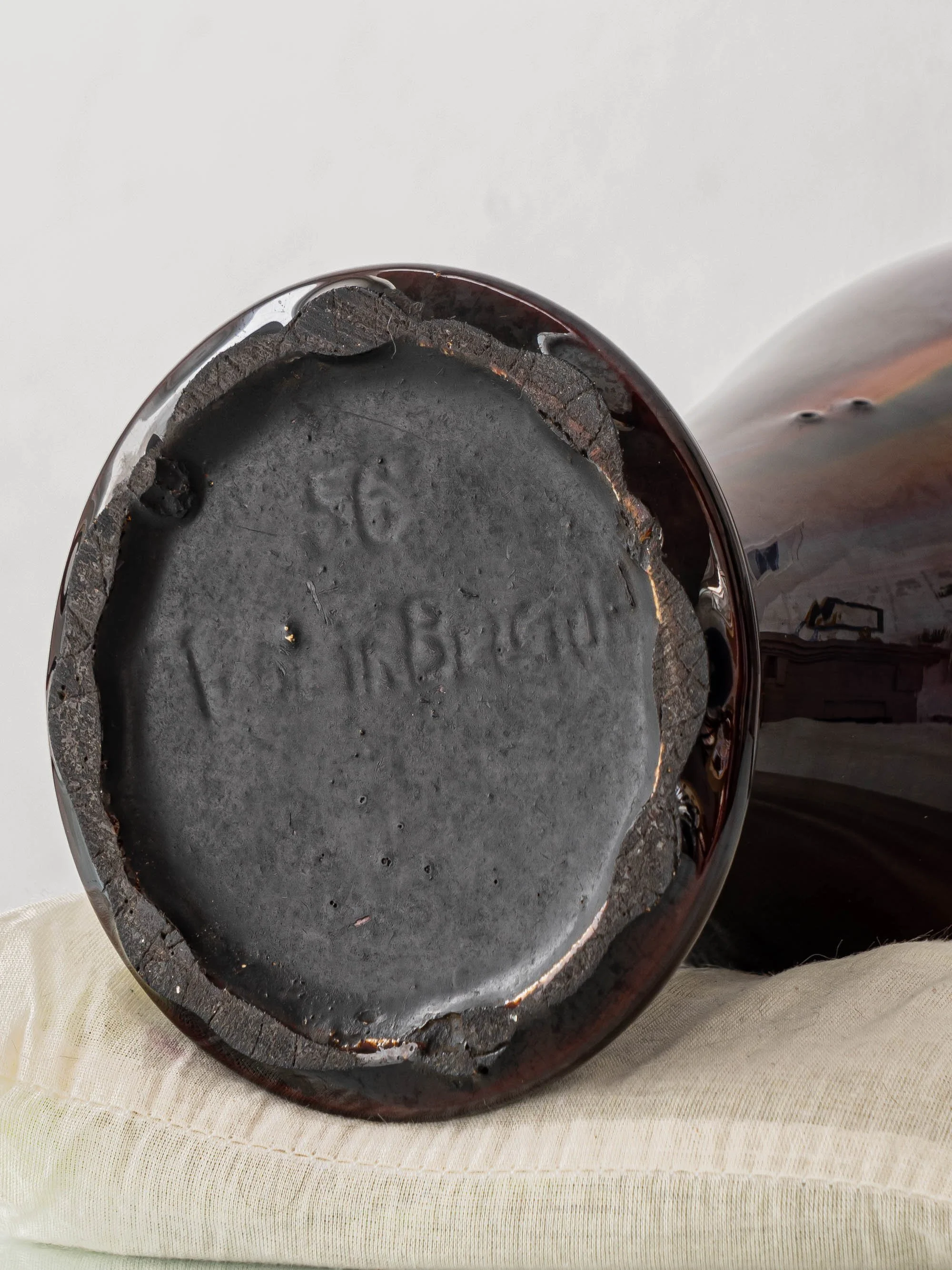 Image 23 of 23
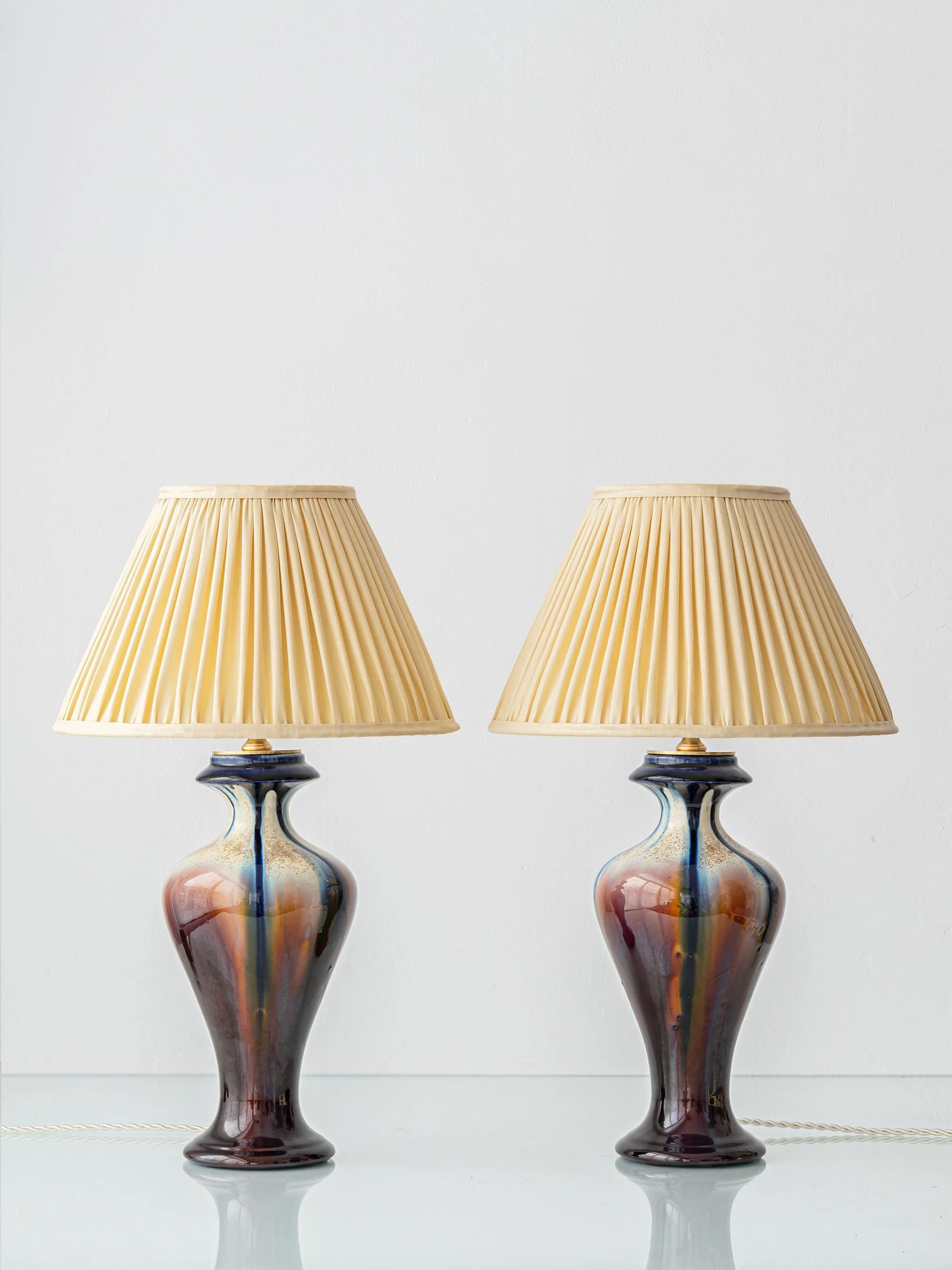
Each base is built on a tall baluster profile — narrow through the waist, rising to a generous shouldered swell beneath a thick, rolled cobalt collar. Over that form runs the technique Thulin was known for: differently coloured enamels poured from the top and allowed to run downward, so that dark cobalt streams through cream and oxblood and pools into aubergine and chestnut at the foot. No two pieces resolve the same way, which makes a surviving, intact pair the more unusual.
The condition is excellent — no chips, cracks, or restoration. The glaze shows the fine crazing and occasional pinholing natural to thick running glazes of this kind, consistent with age and entirely characteristic of the technique rather than a flaw. Each earthenware base is impressed underneath with the model number 56 and "Made in Belgium," the spare marking typical of the factory in this period.
About Faïenceries de Thulin
The faïence of Thulin, near Mons in the Belgian Hainaut, is among the most distinctive of the Art Deco period. Founded in 1887 by the industrialist Victor Ducobu-Decaudin and reorganized as the Société Anonyme des Faïenceries de Thulin in 1923, the factory cast its wares in fine earthenware and finished them in coloured enamels, employing some seventy to a hundred workers through the 1920s and 1930s and selling in Belgium and Paris. It was known above all for its glazing — colours poured and run downward to produce the fluid, unrepeatable flambé seen here — and for forms bolder than those of rival potteries.