 Image 1 of 14
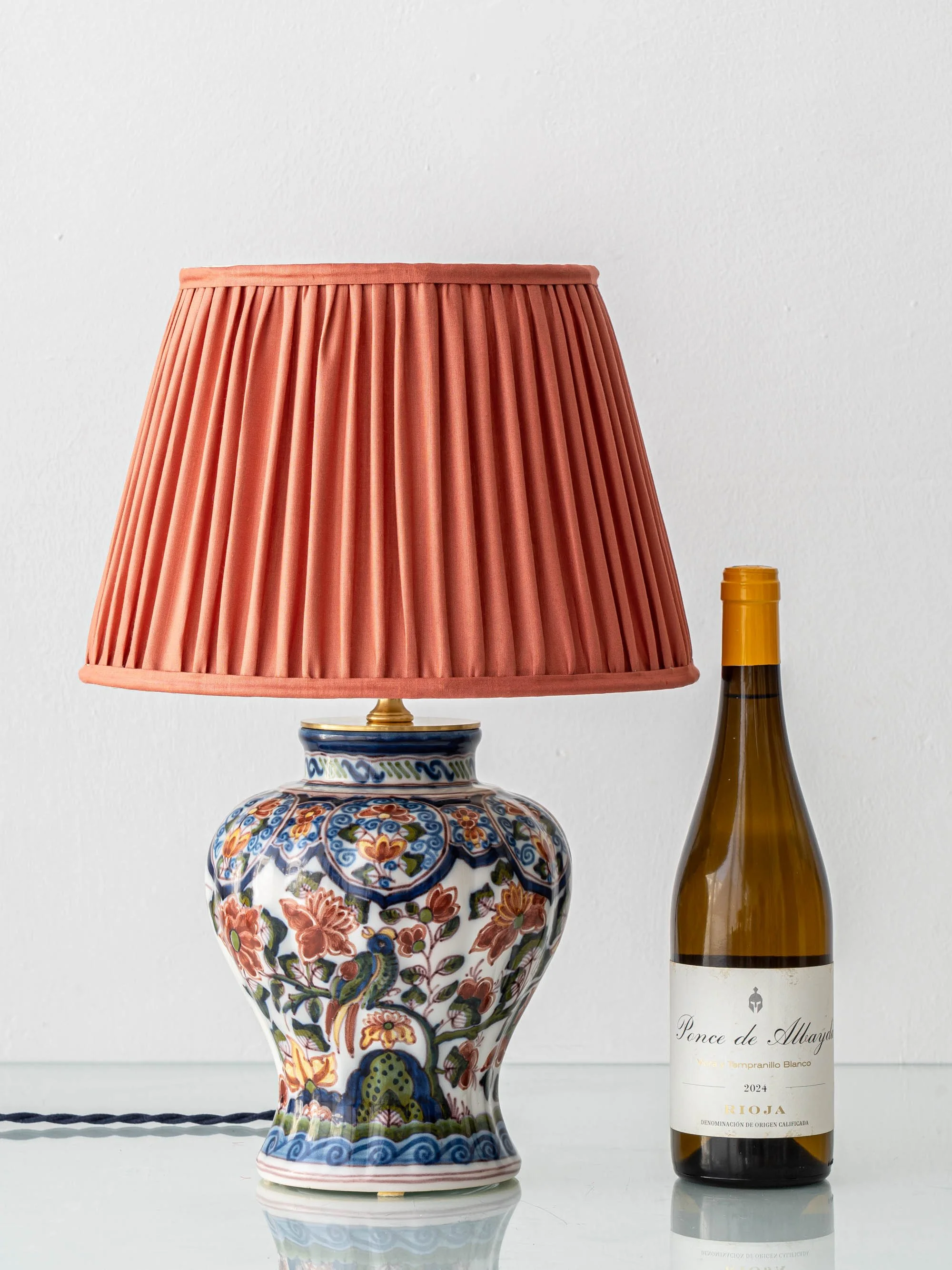 Image 2 of 14
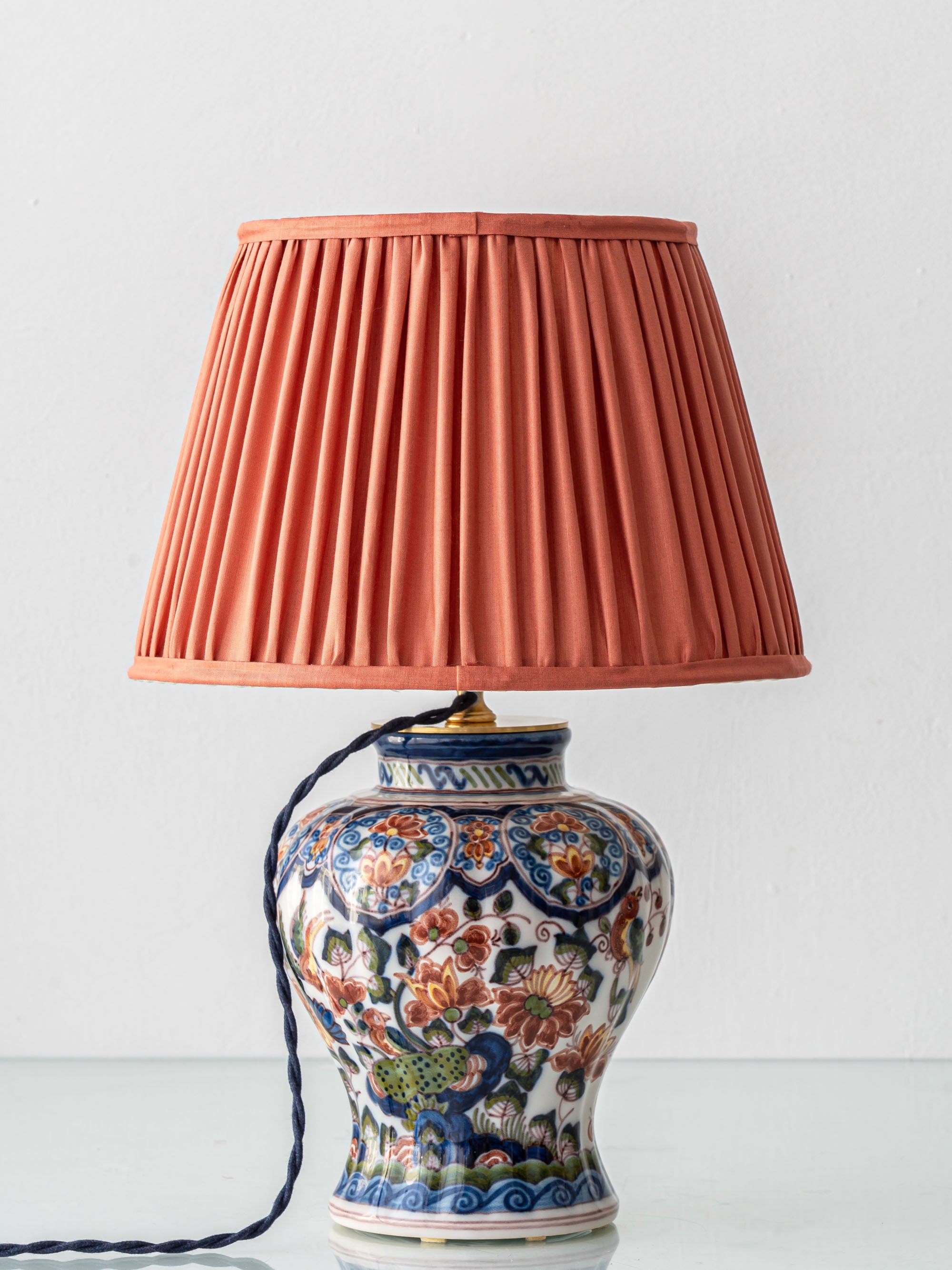 Image 3 of 14
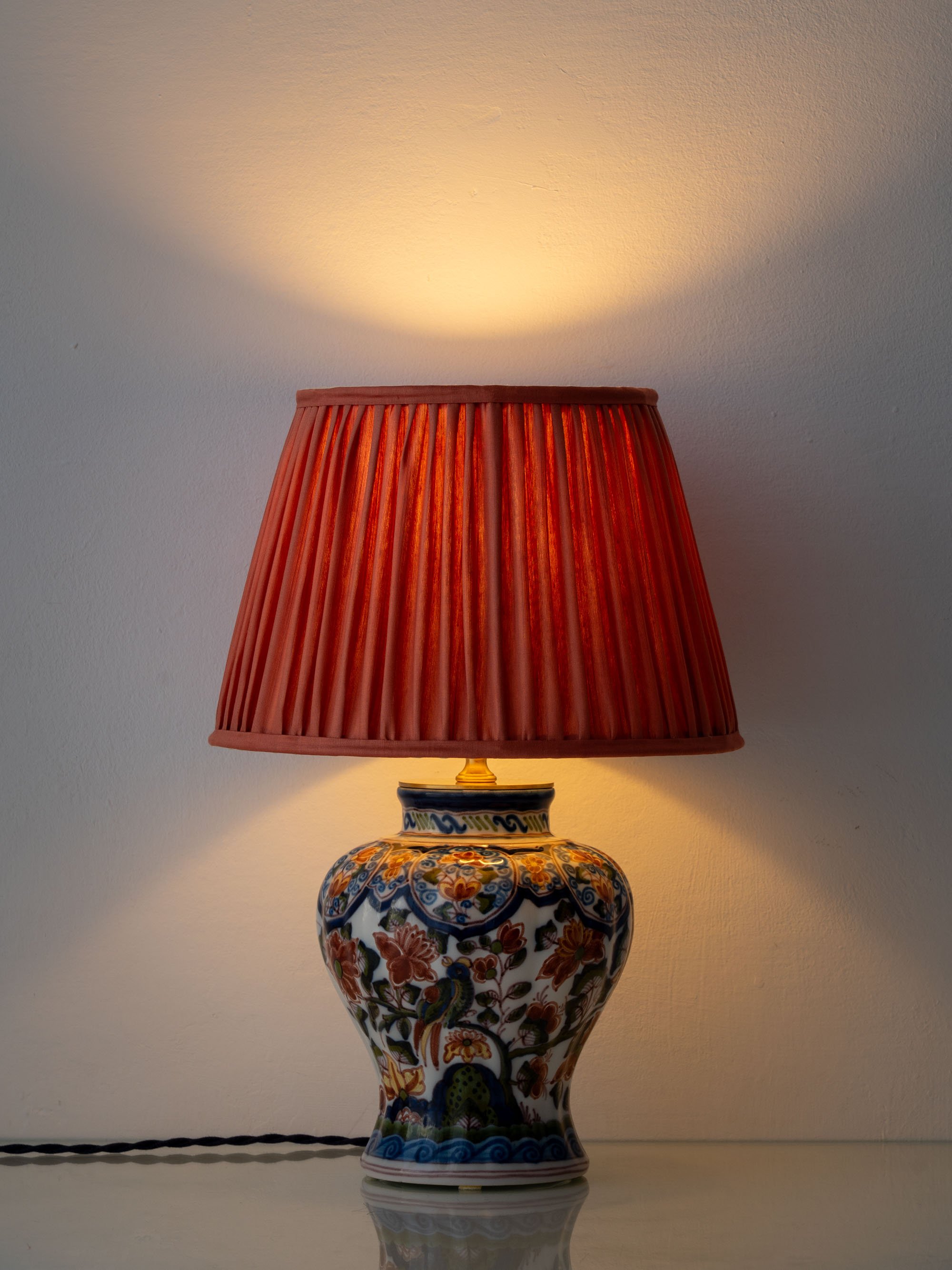 Image 4 of 14
 Image 5 of 14
 Image 6 of 14
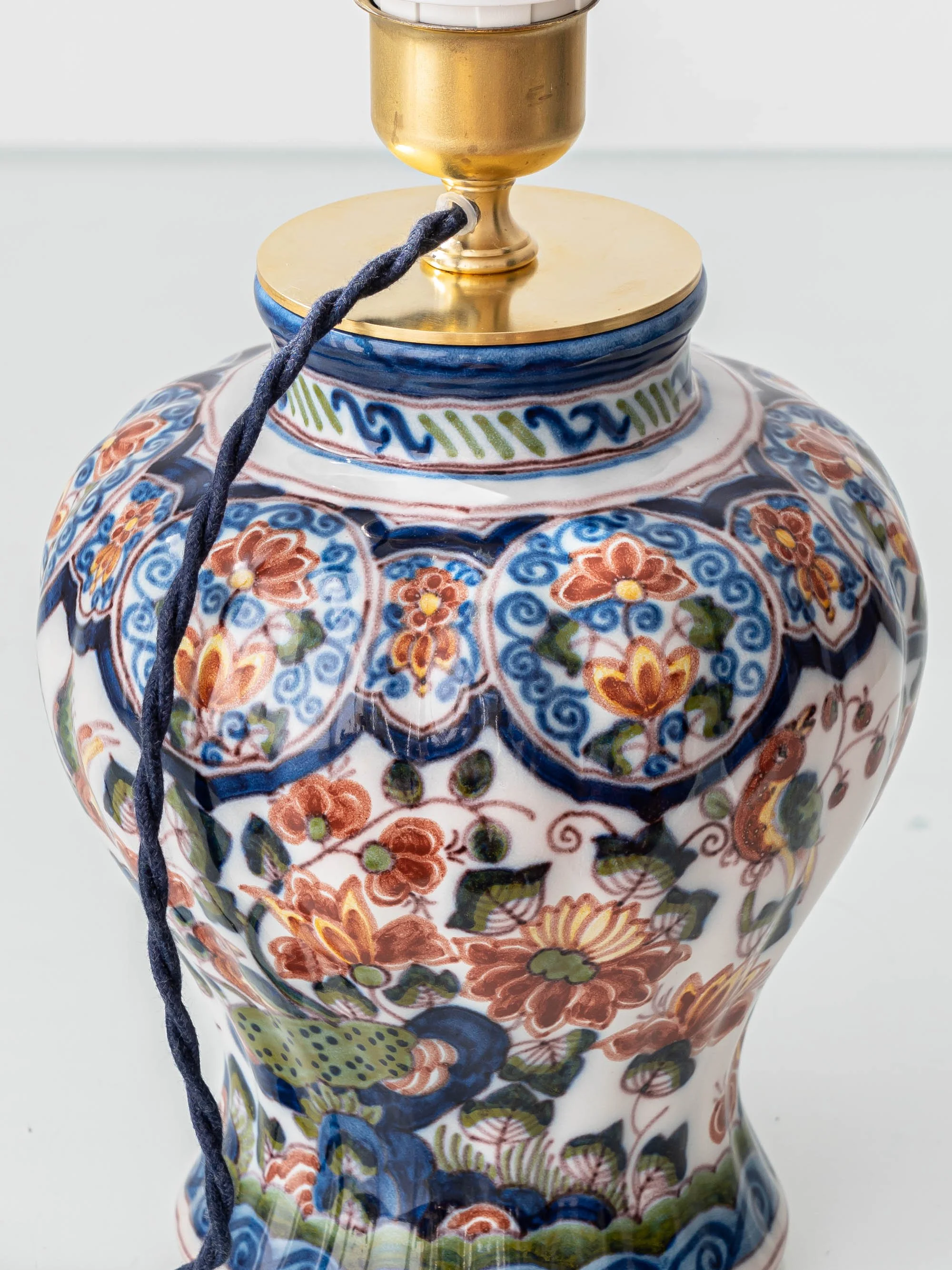 Image 7 of 14
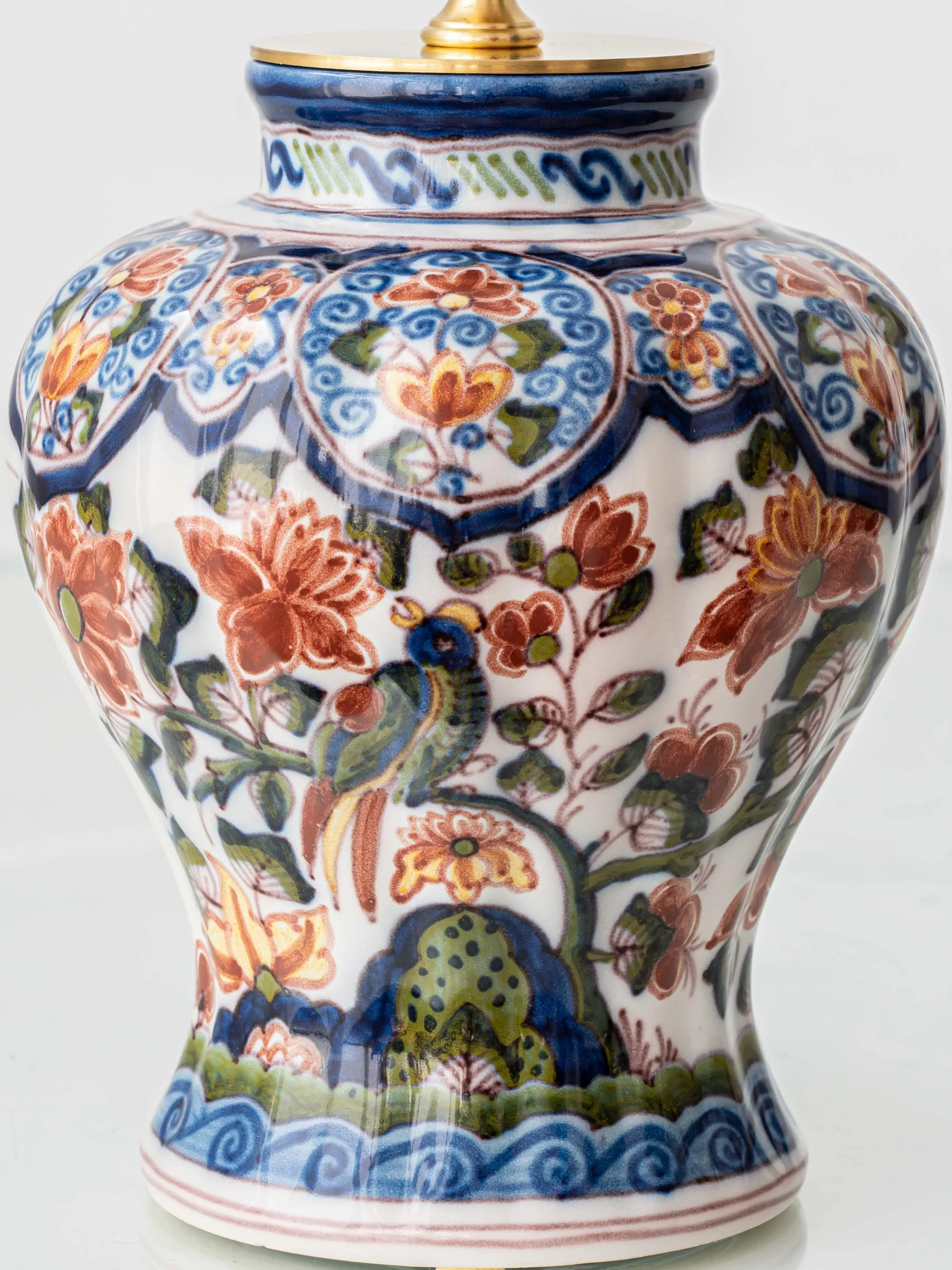 Image 8 of 14
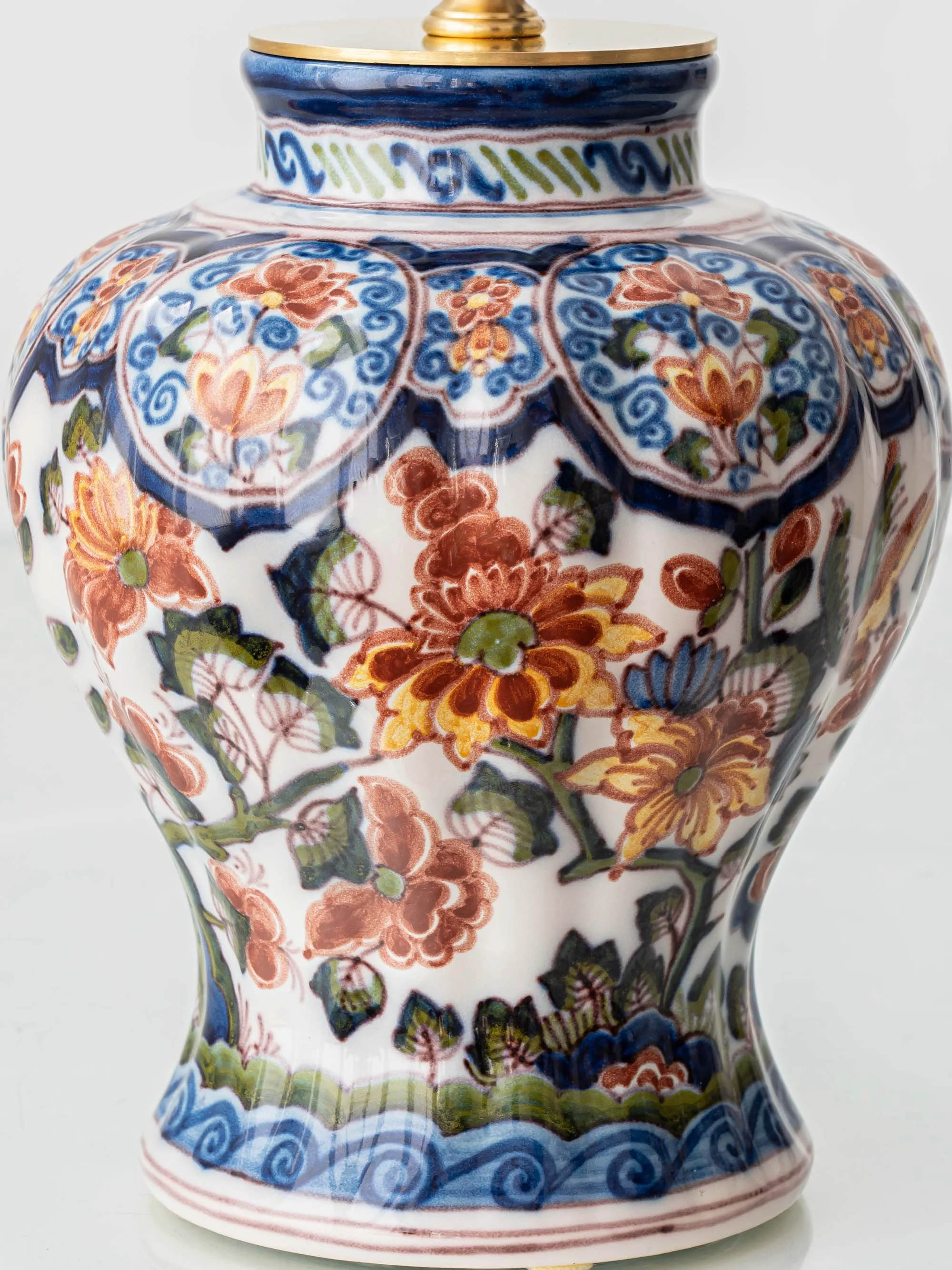 Image 9 of 14
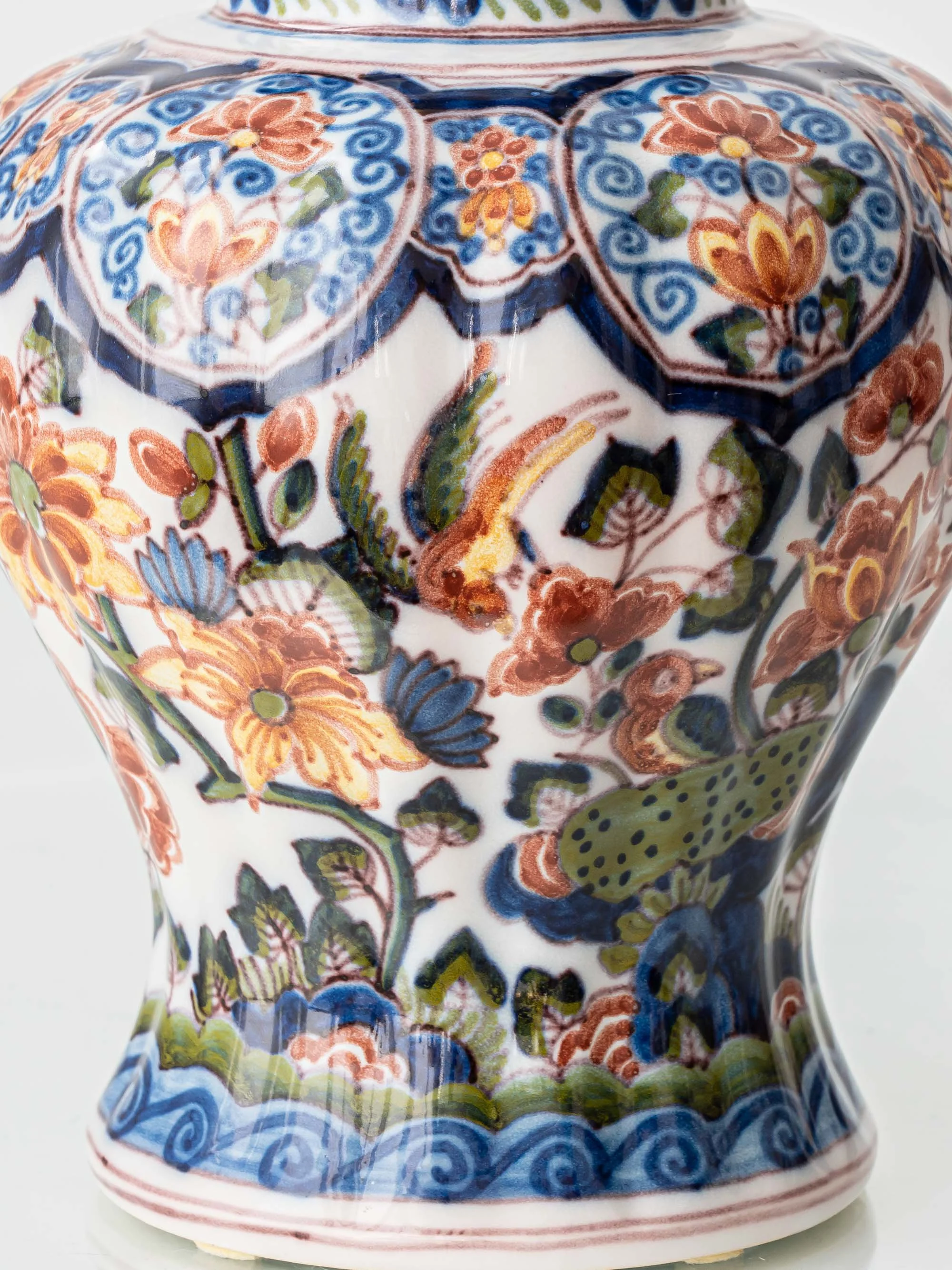 Image 10 of 14
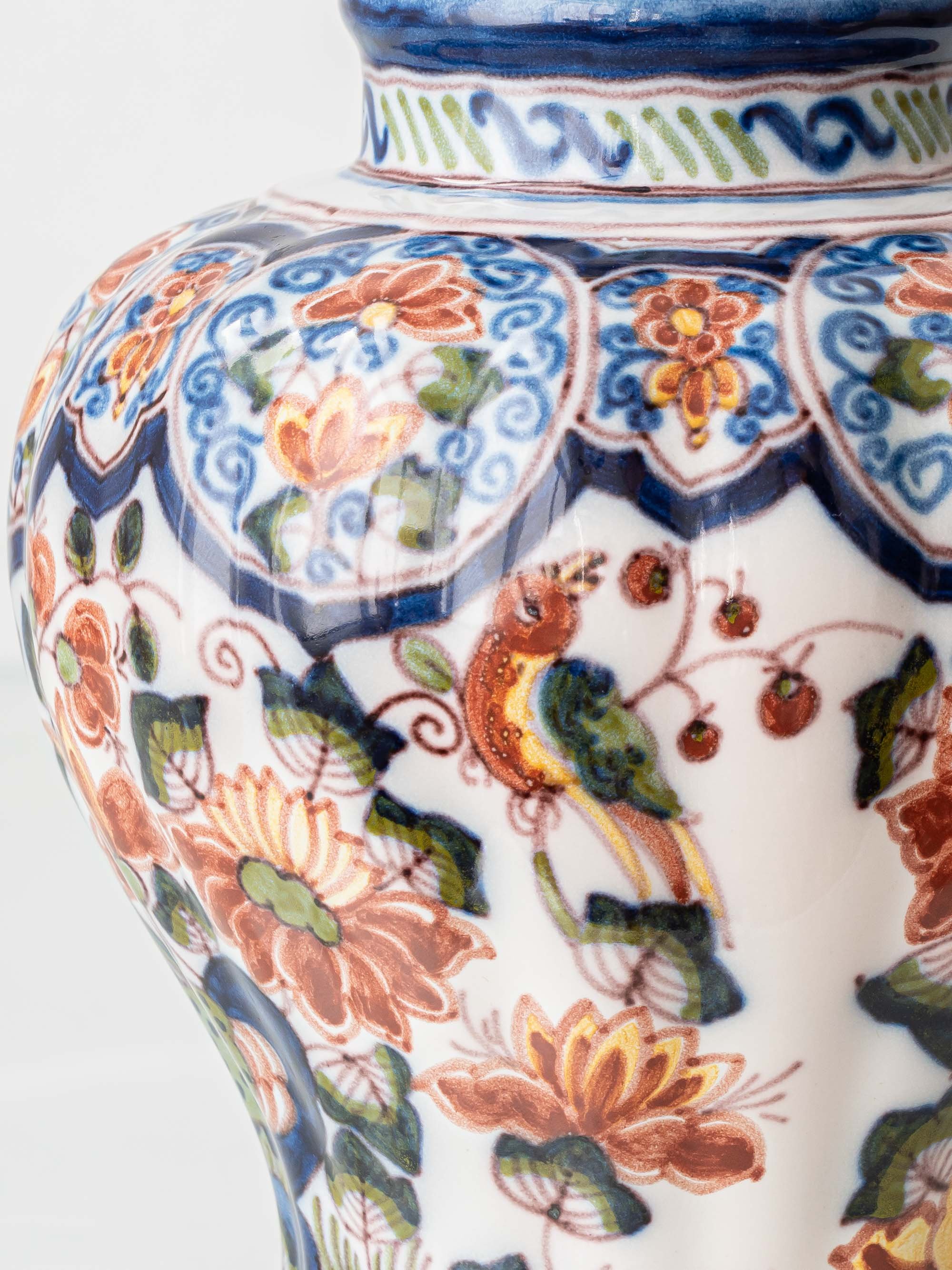 Image 11 of 14
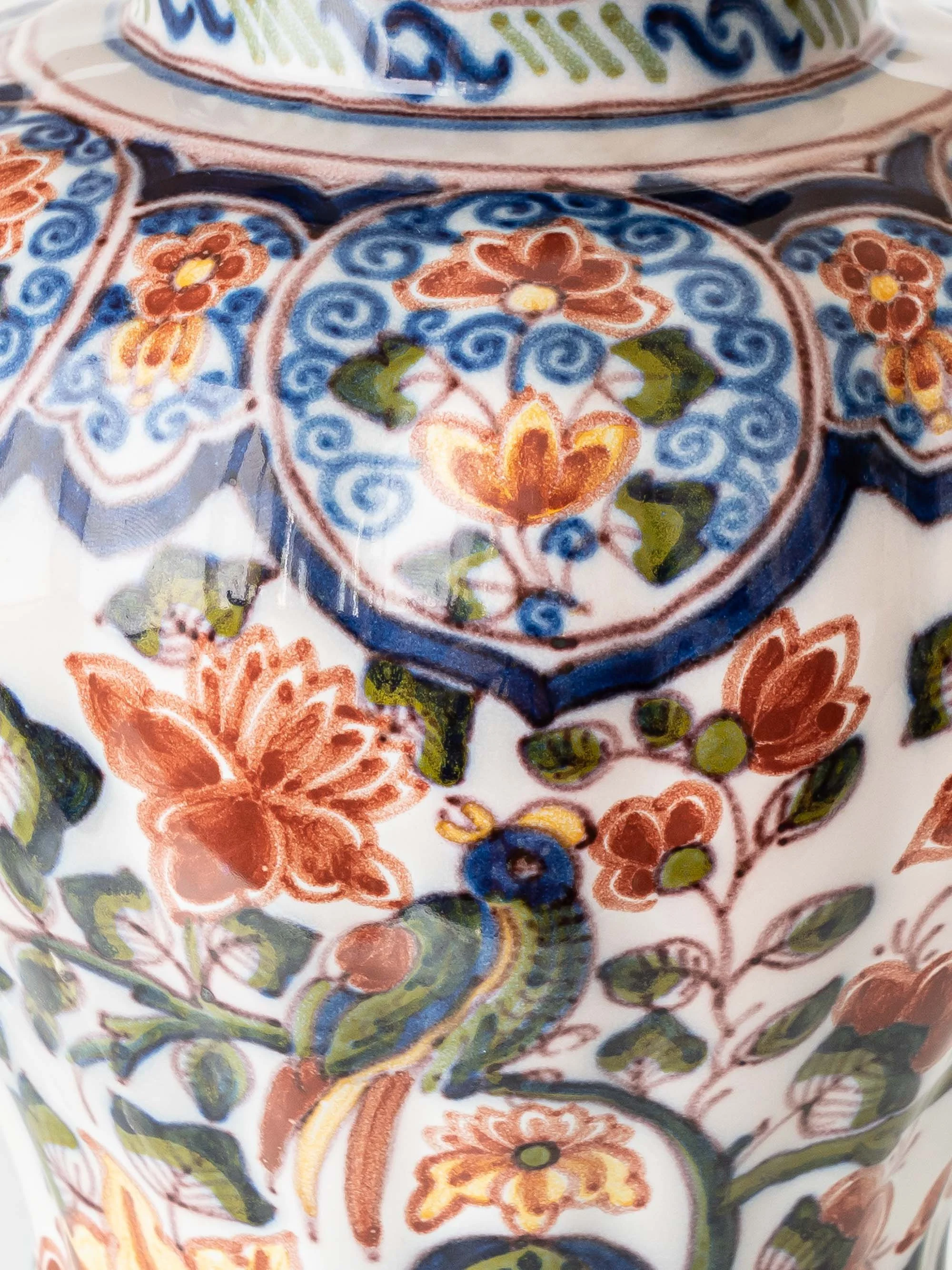 Image 12 of 14
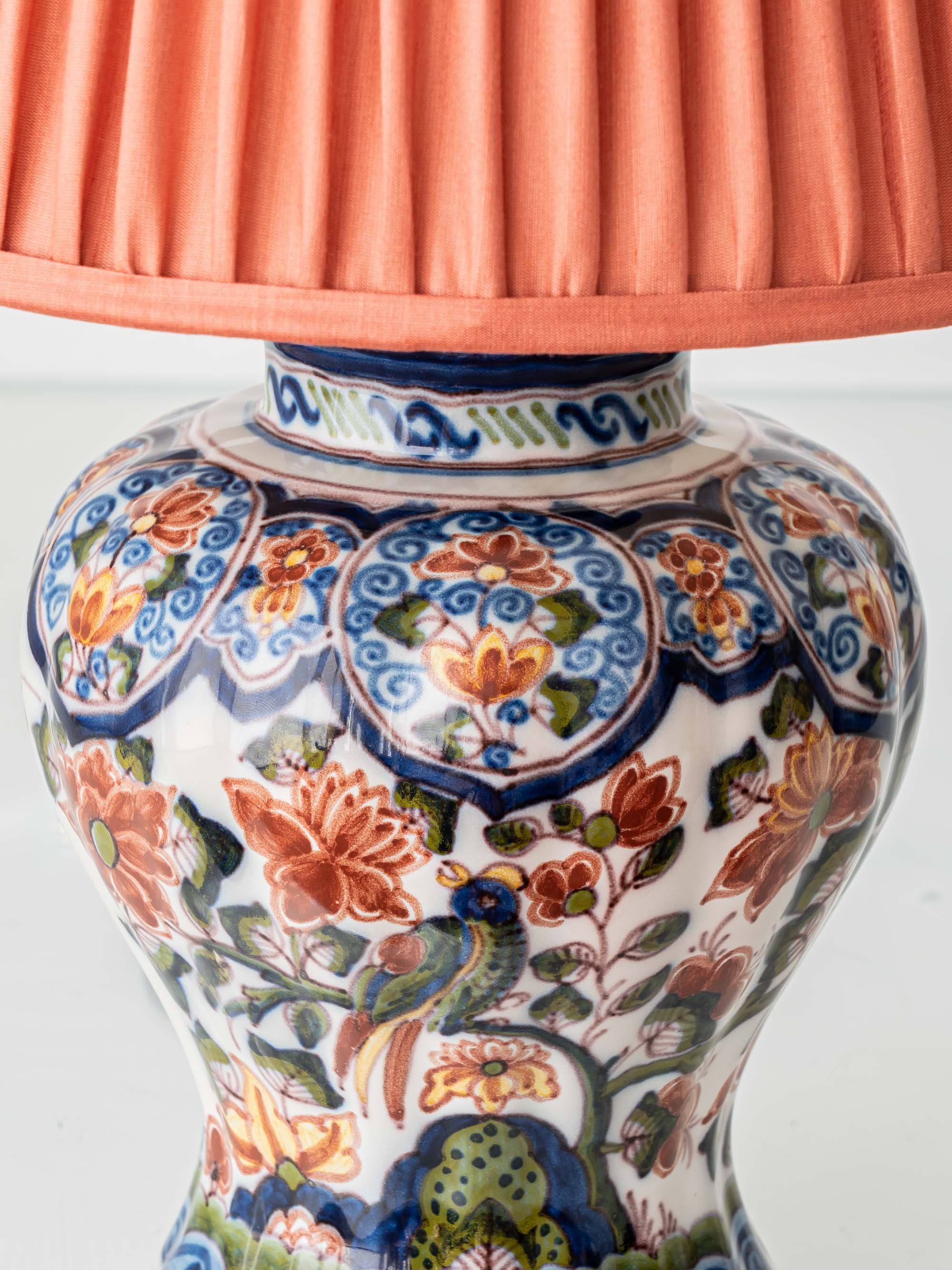 Image 13 of 14
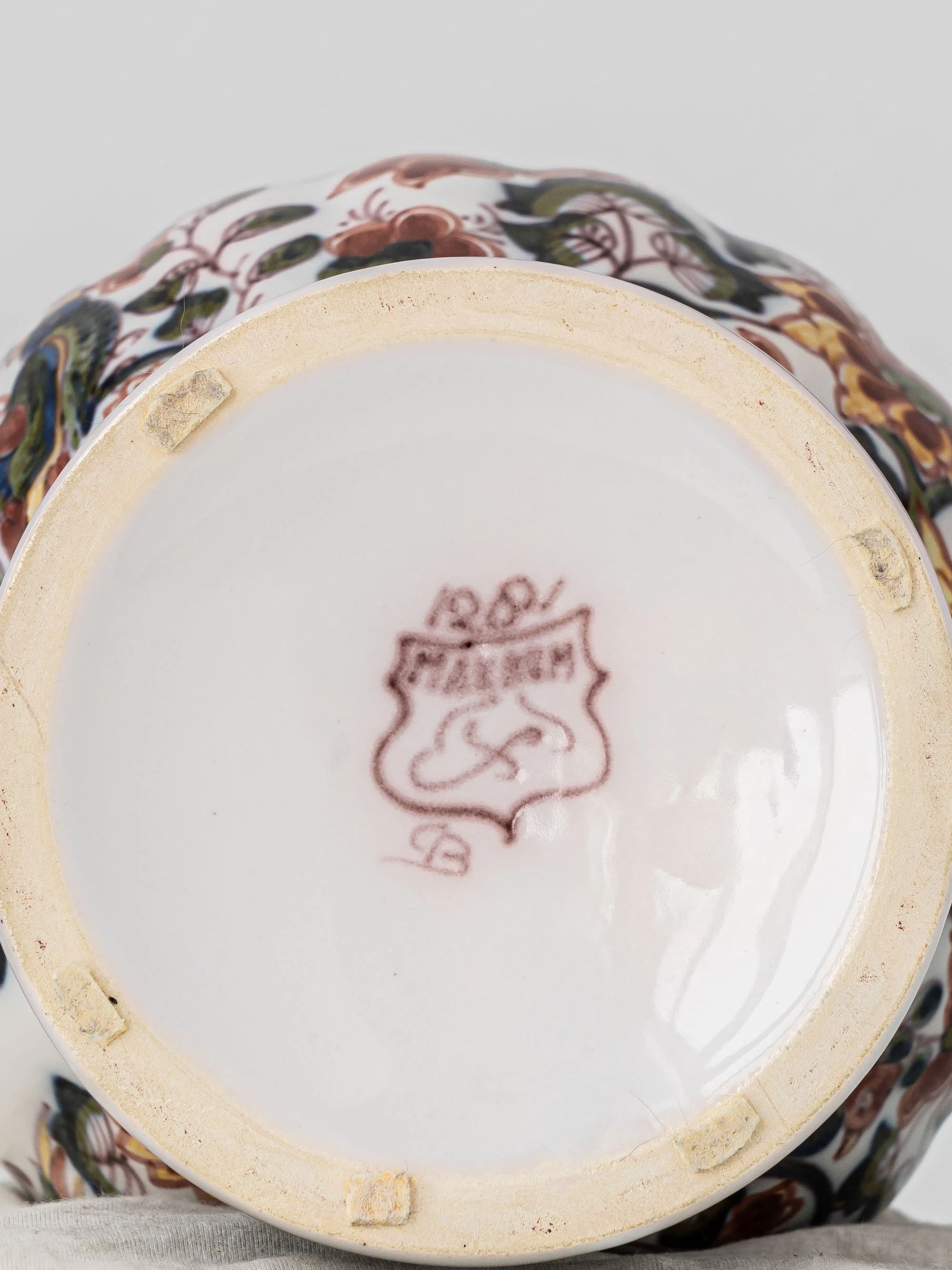 Image 14 of 14
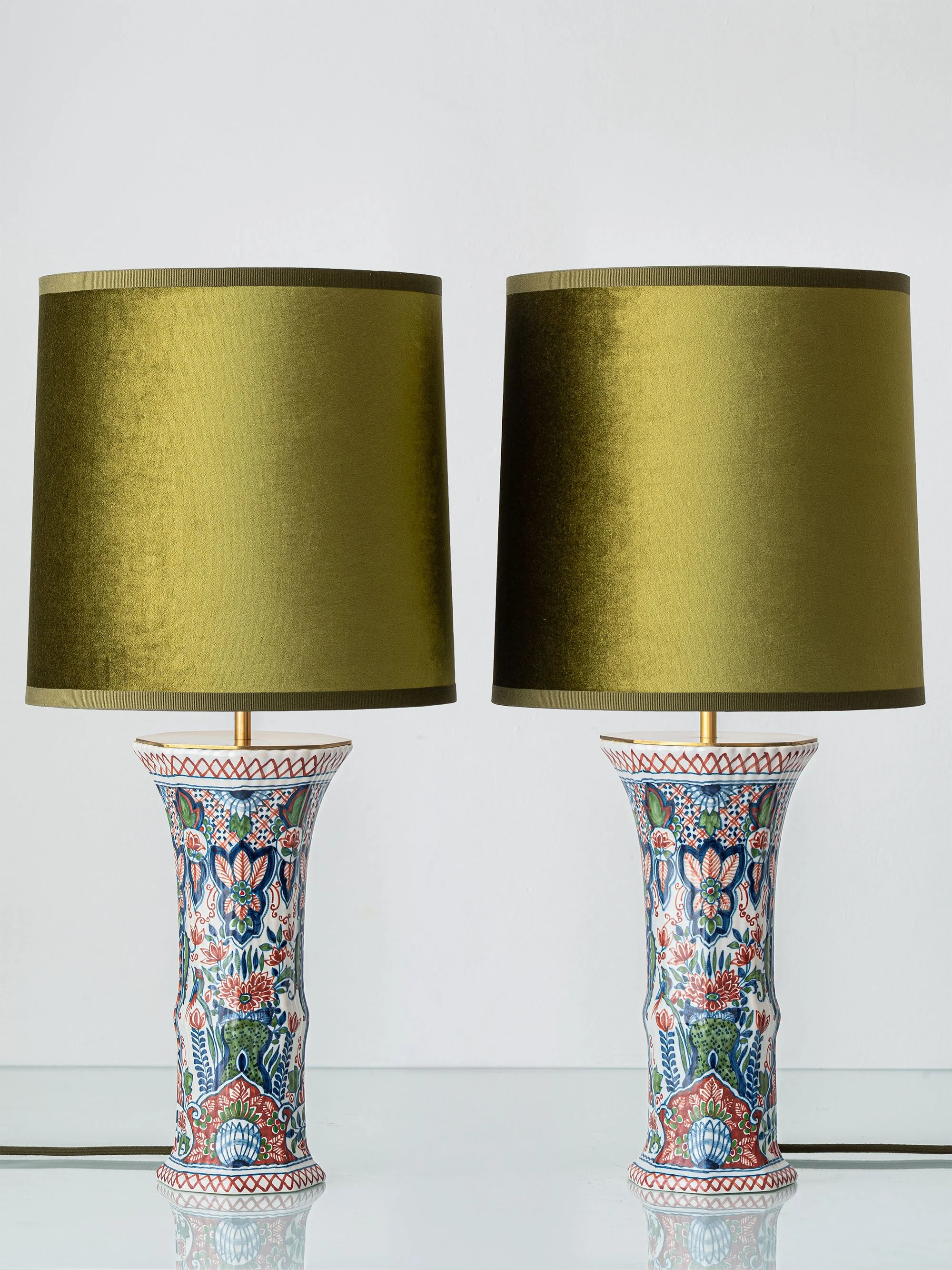
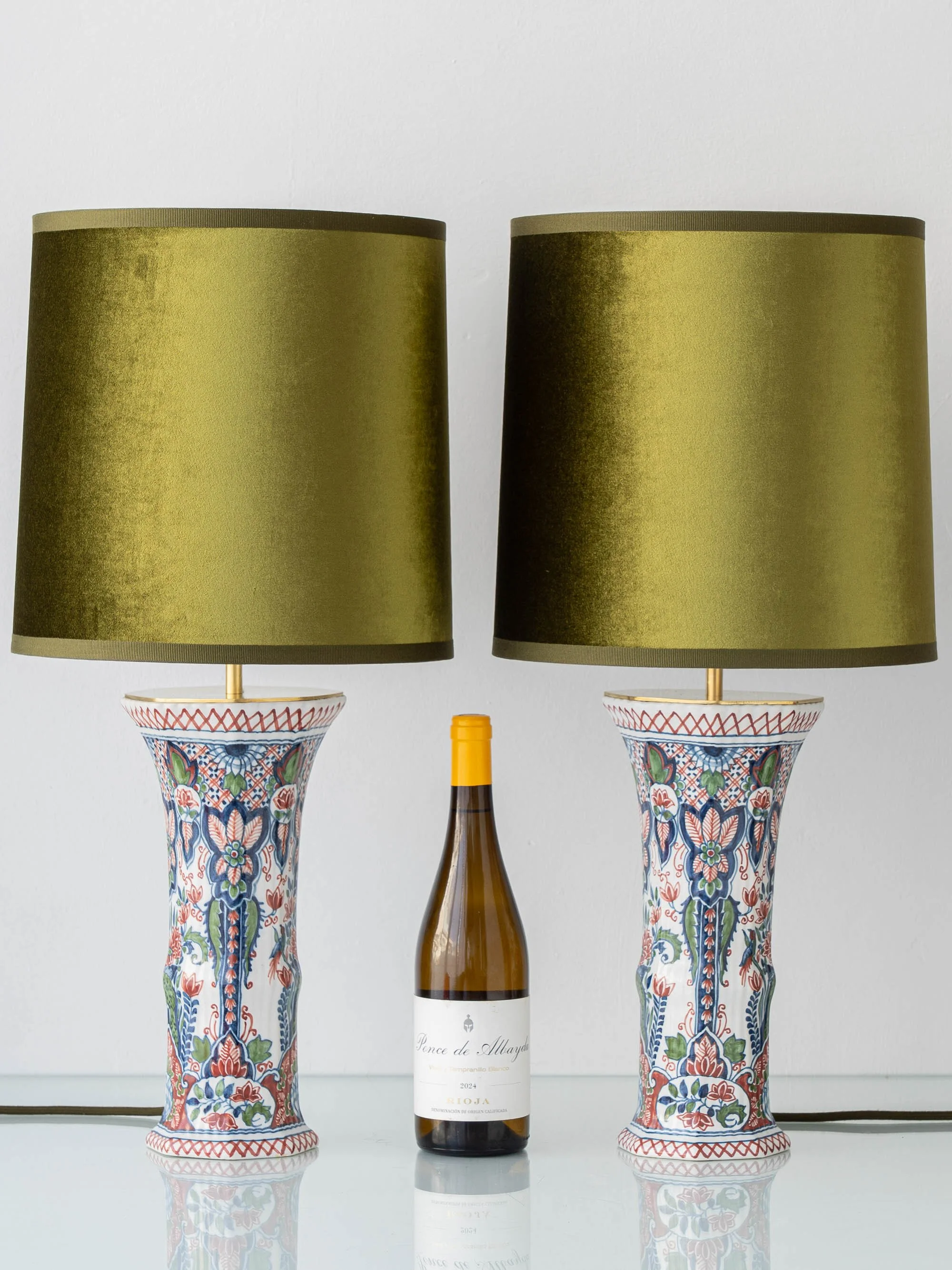
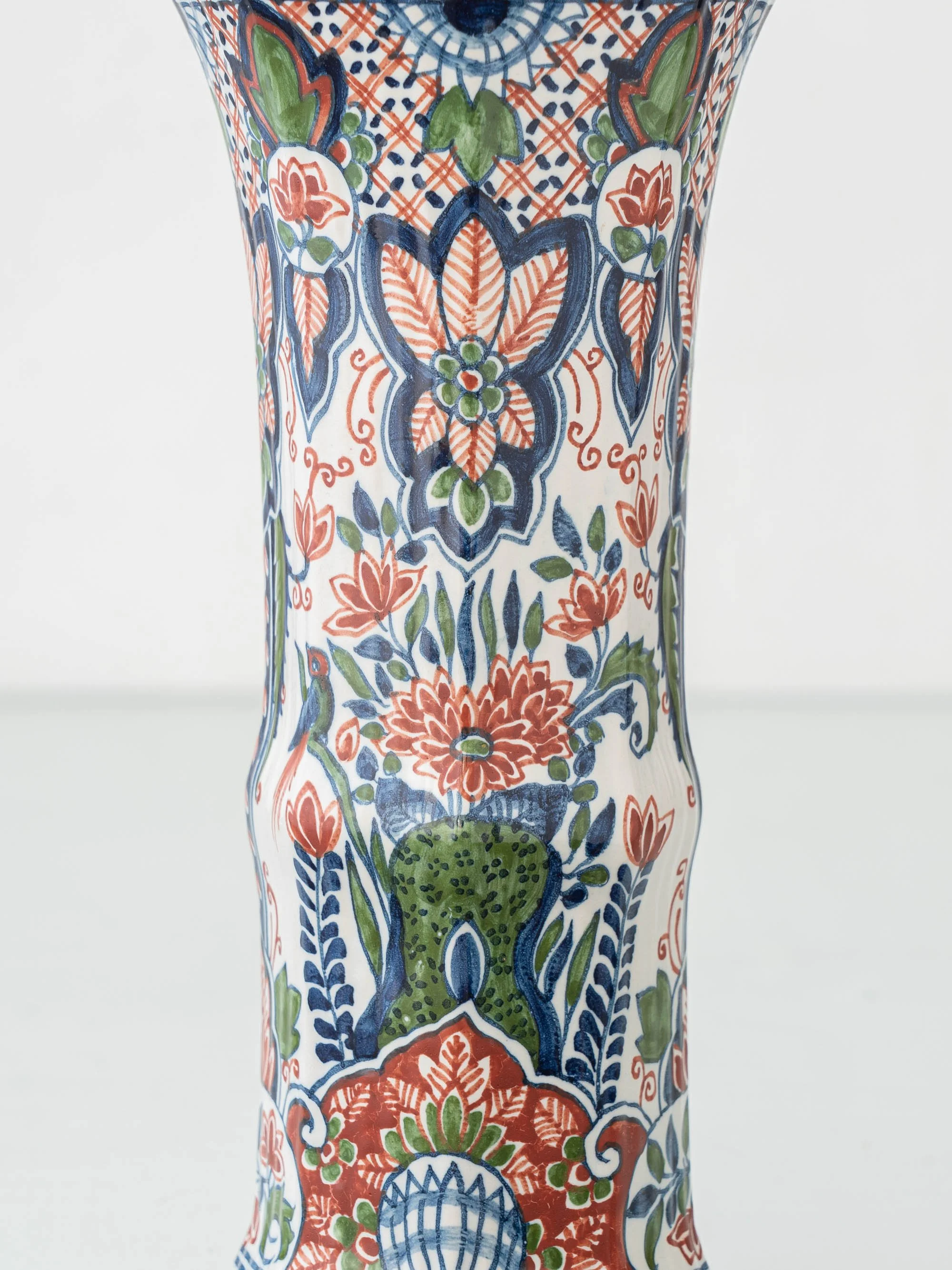
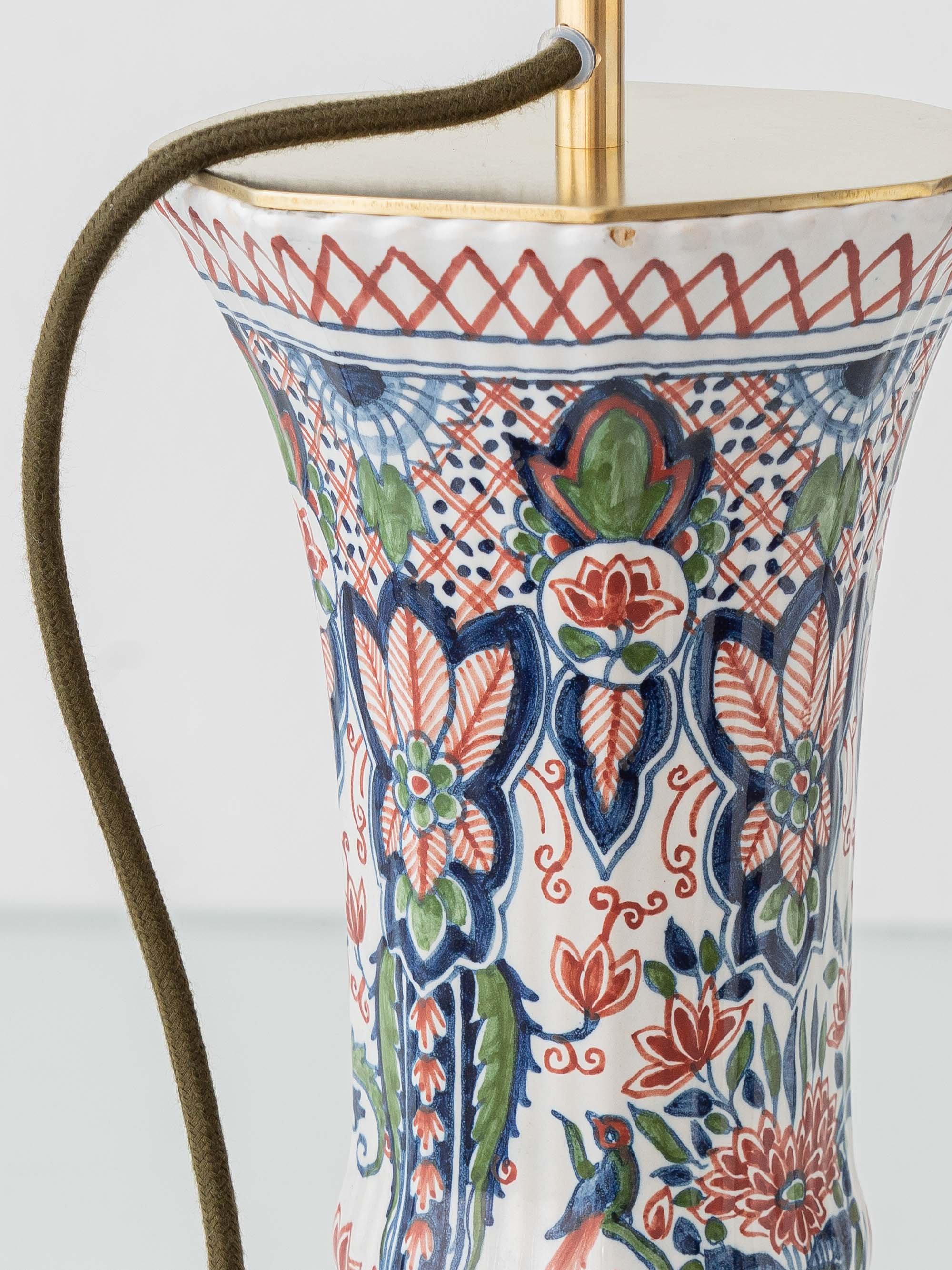
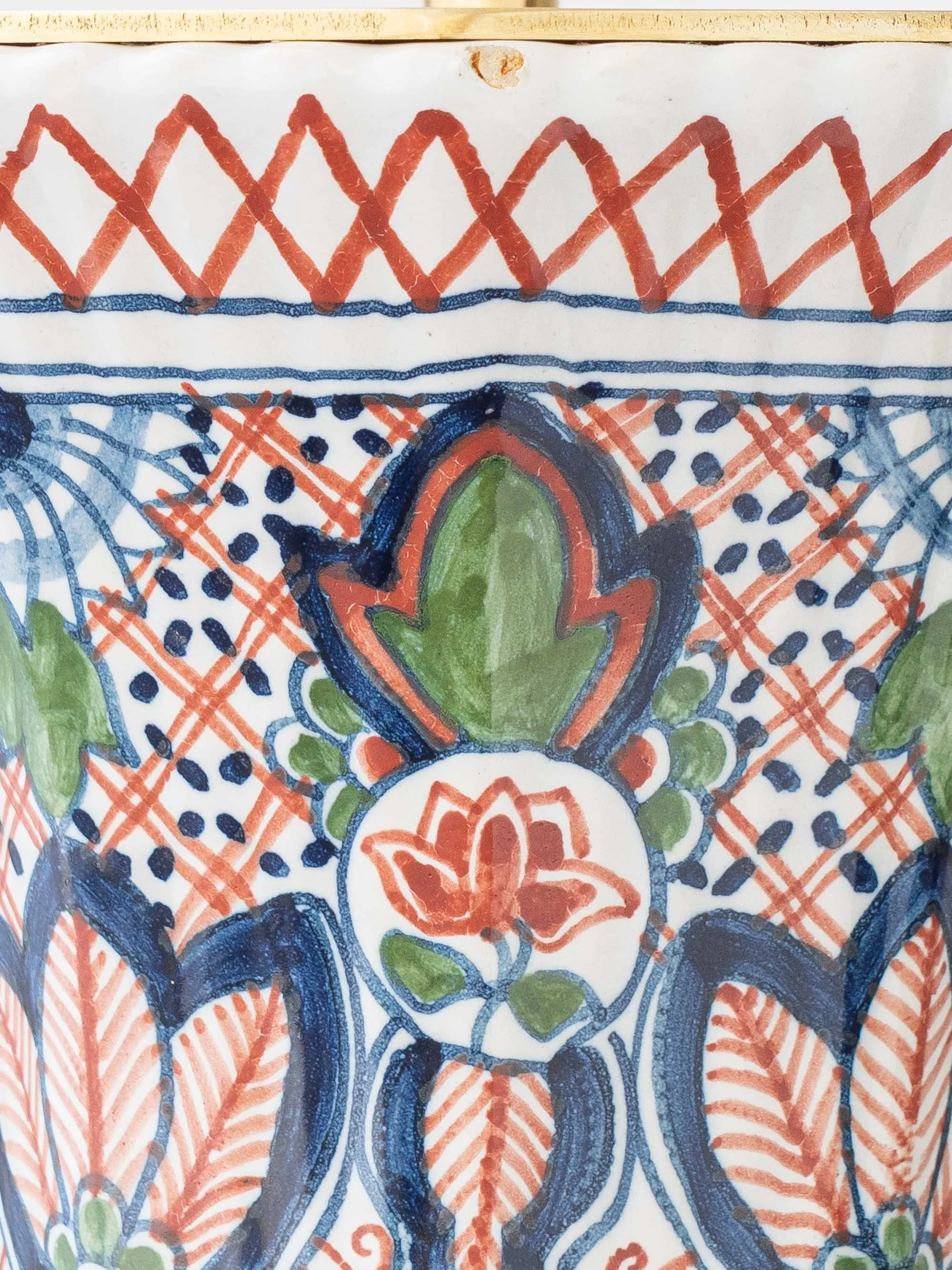
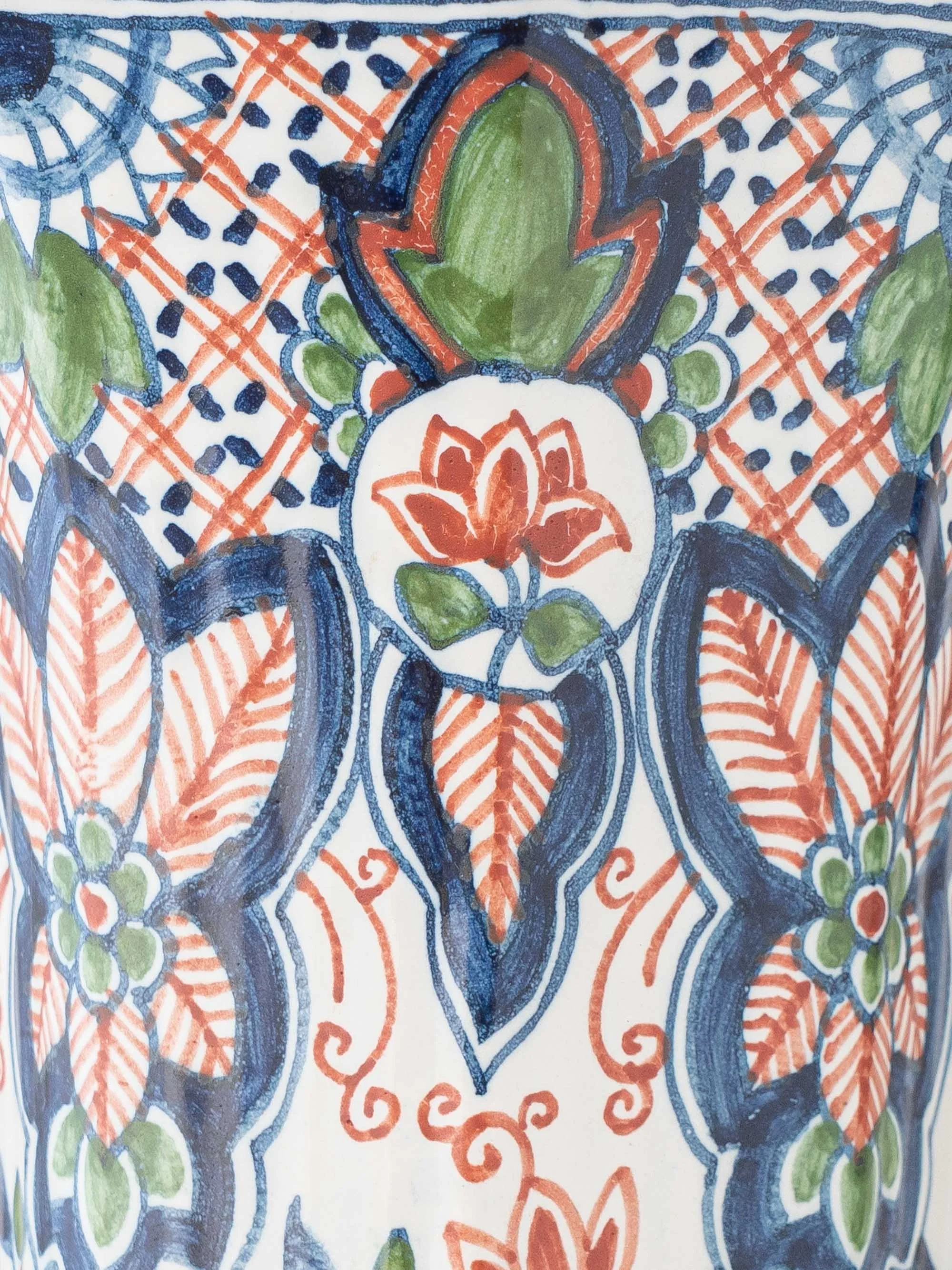
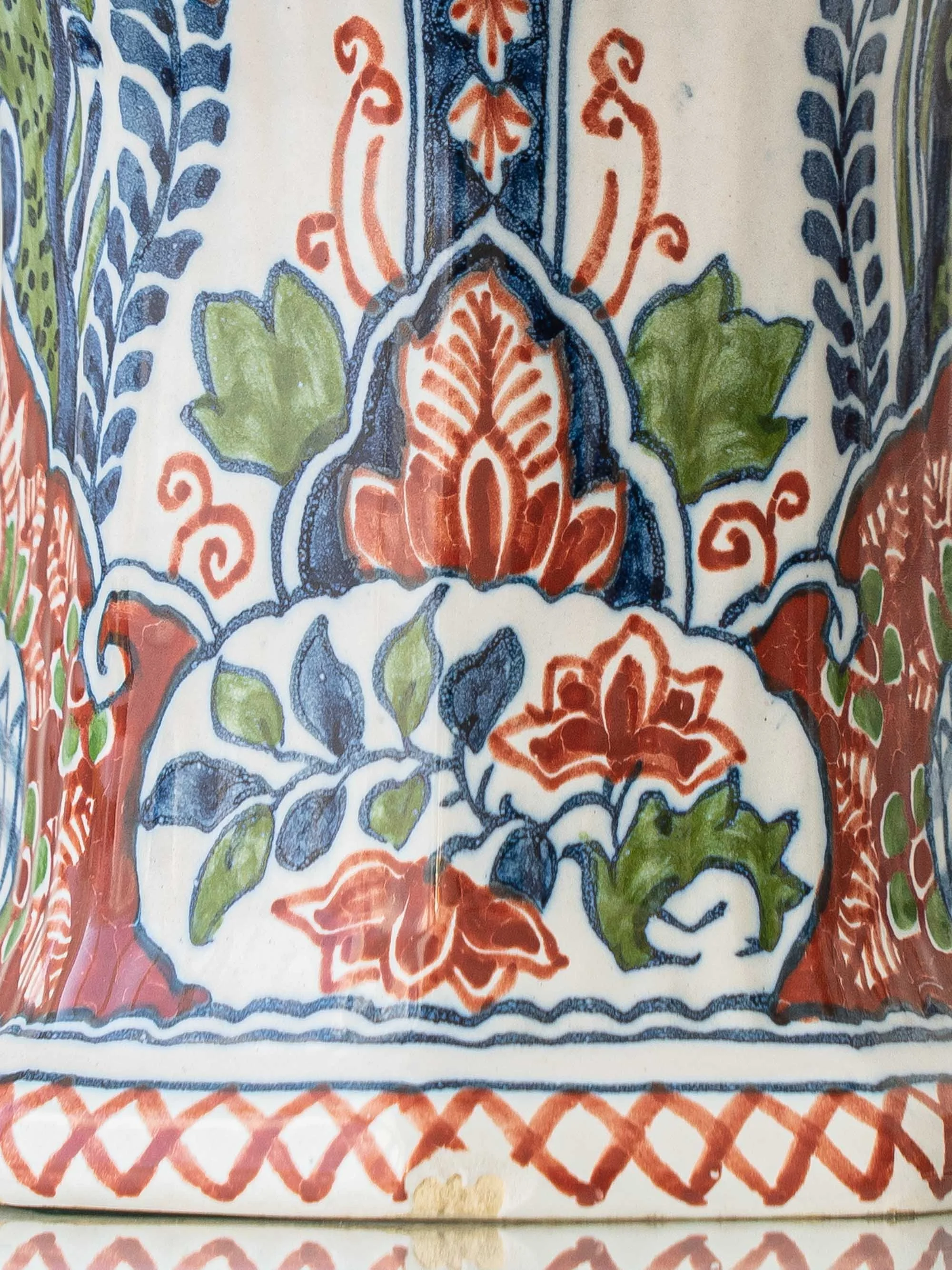
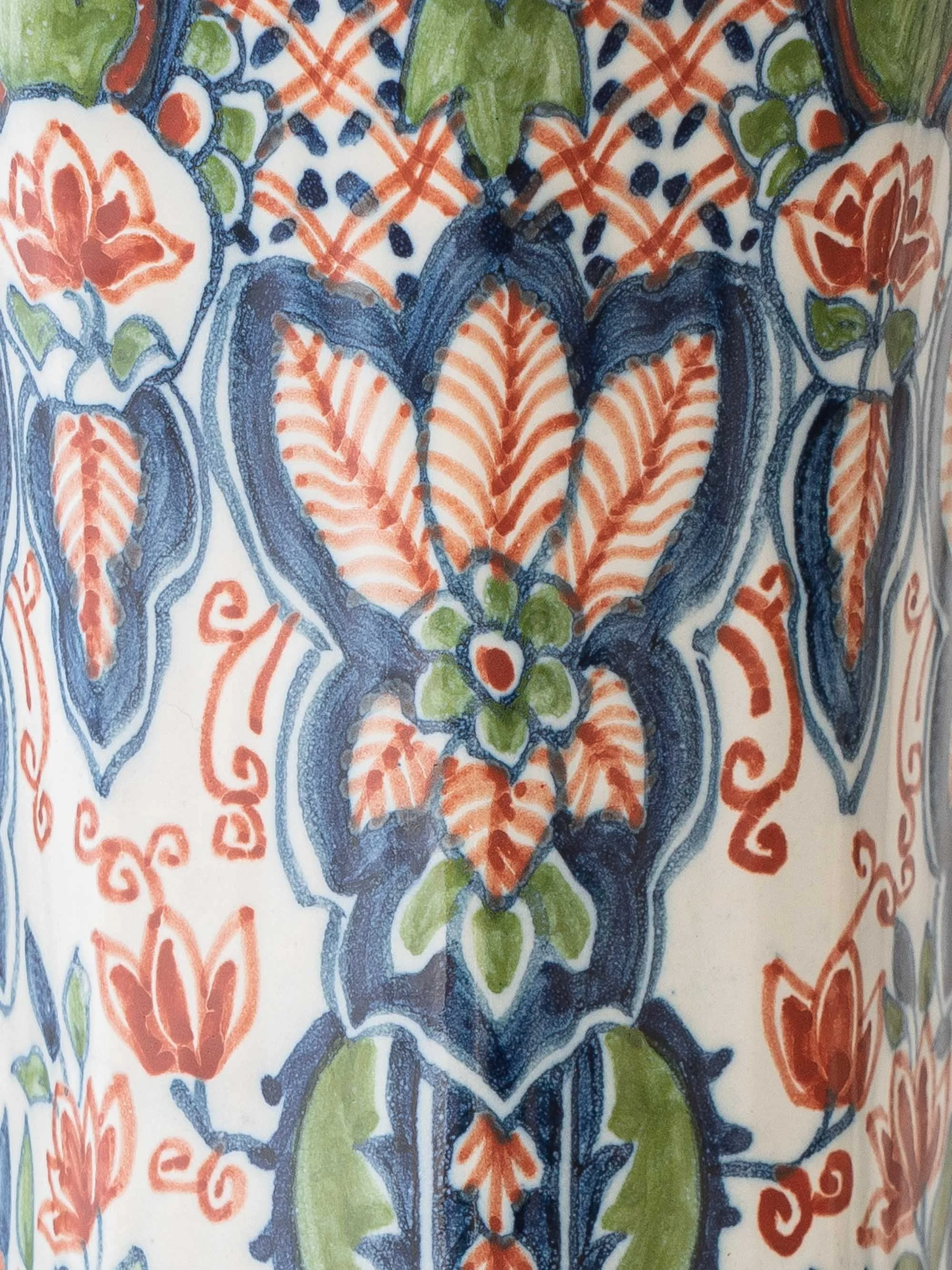
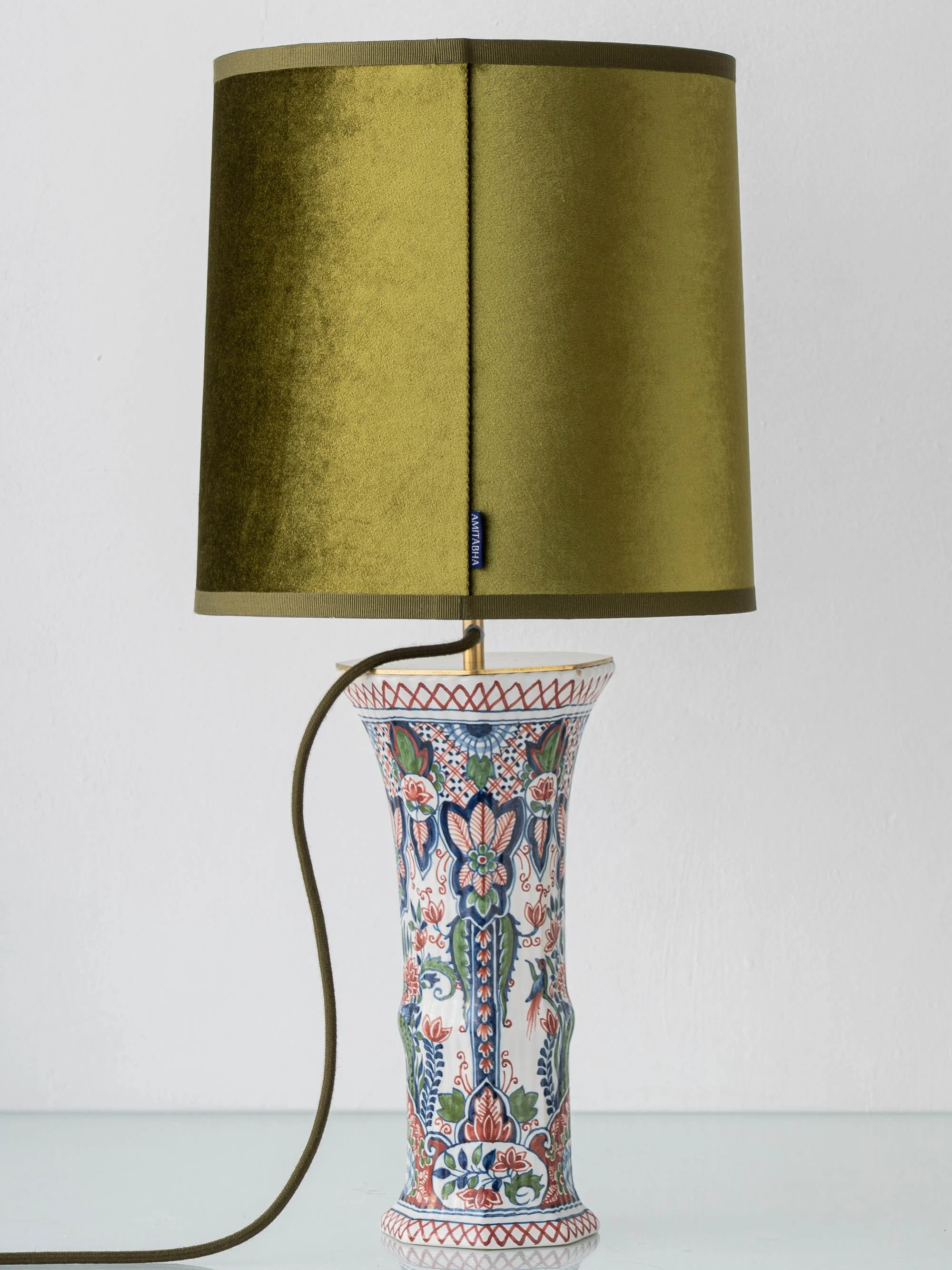
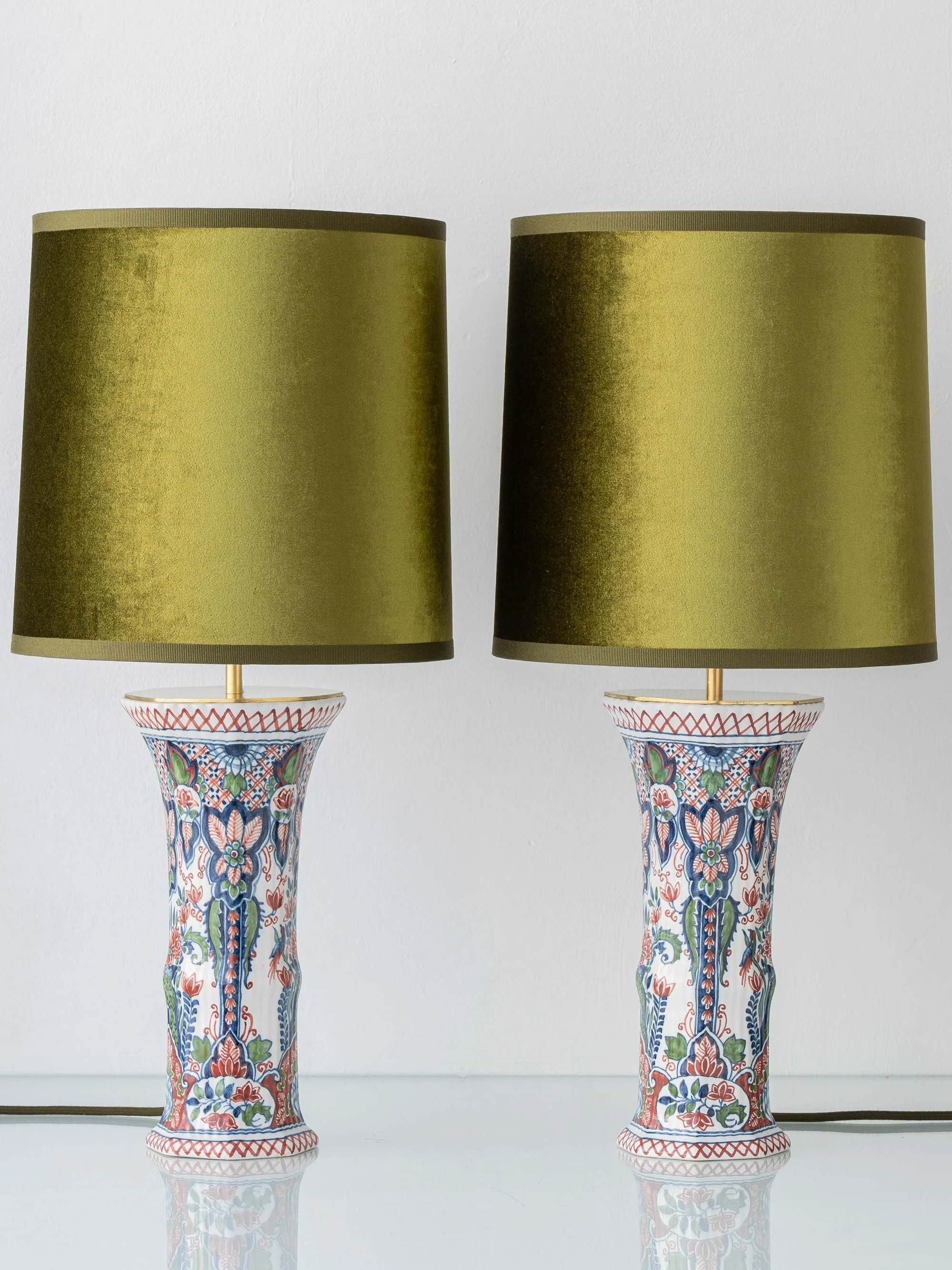
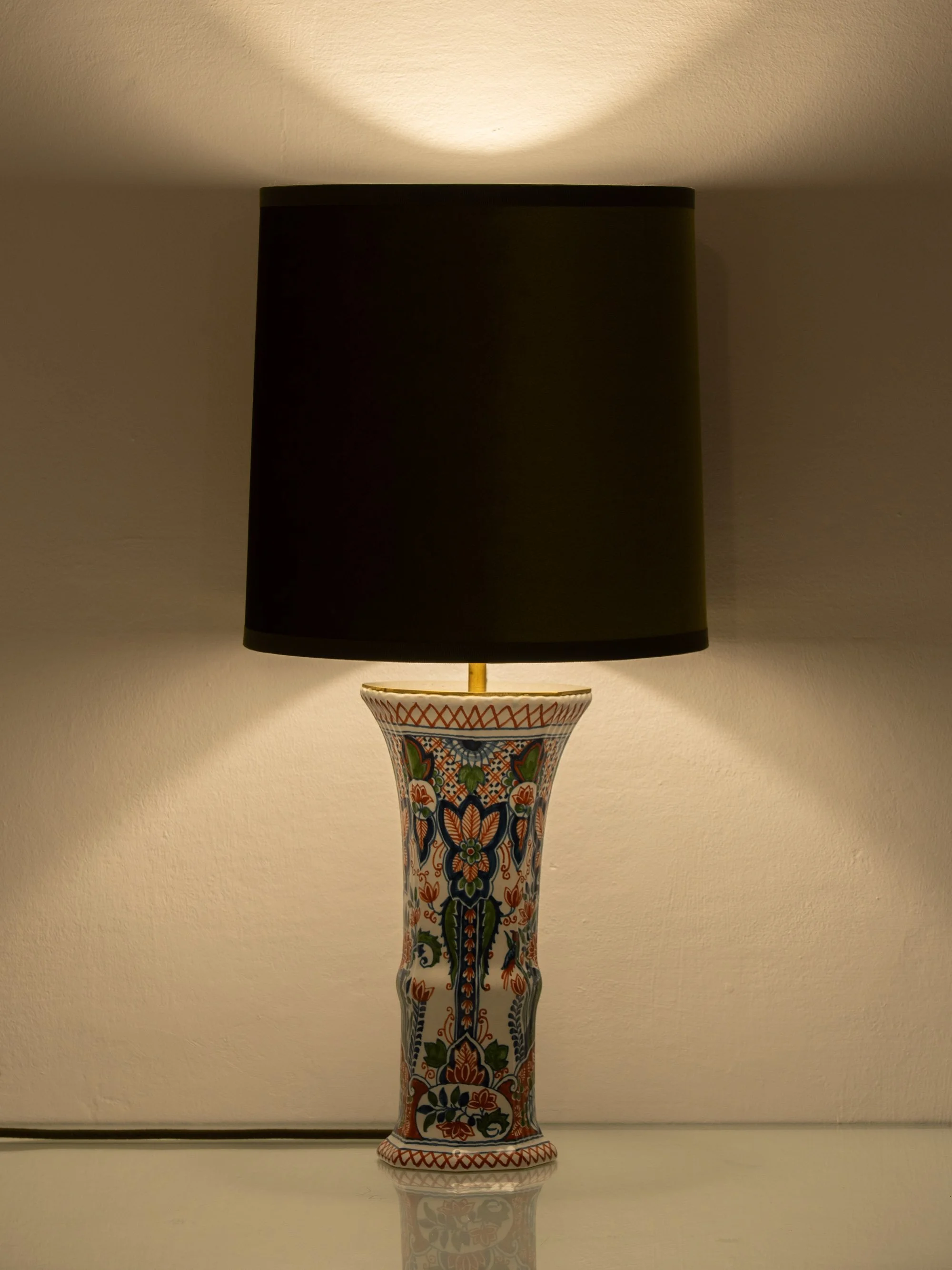
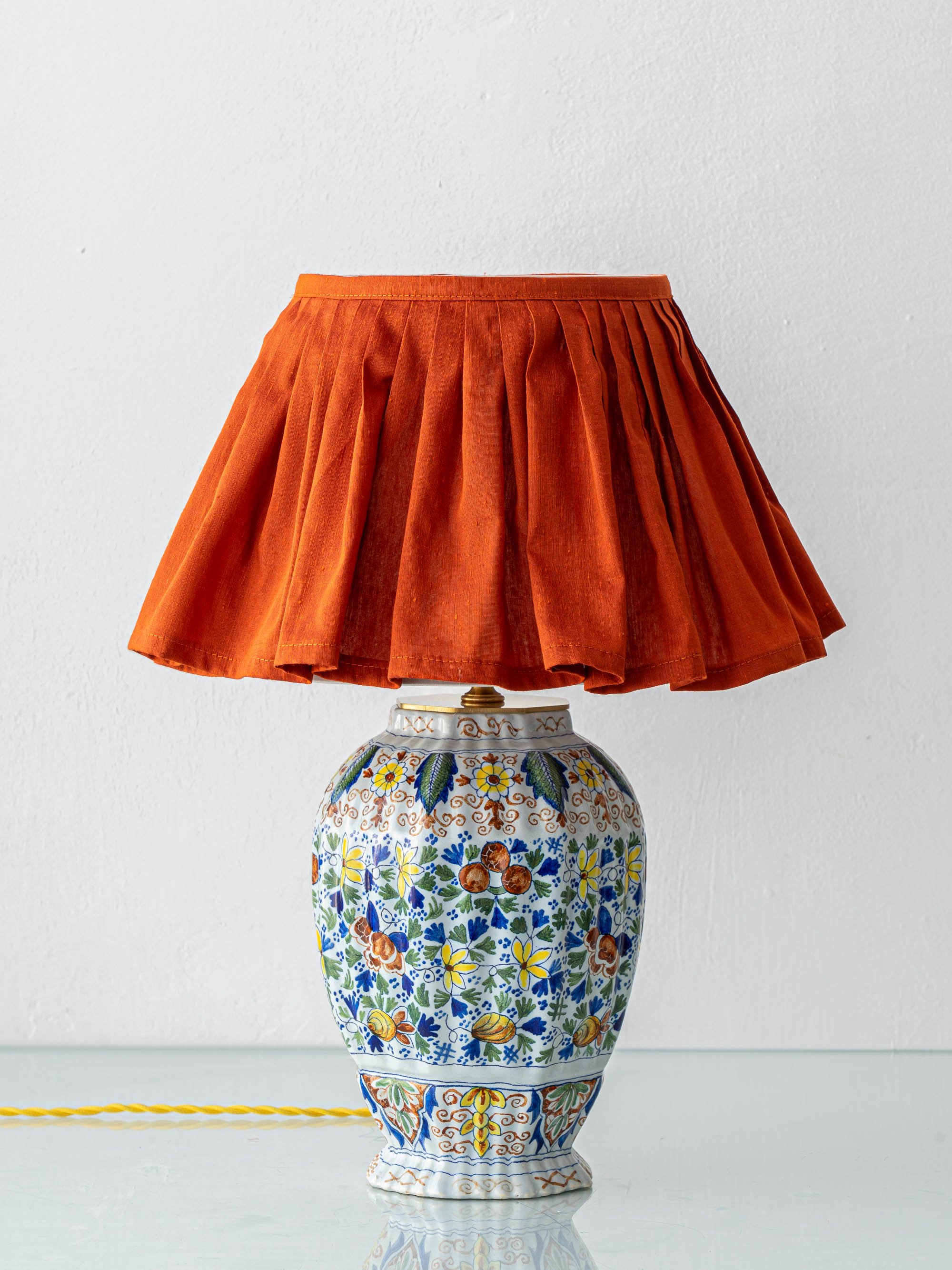
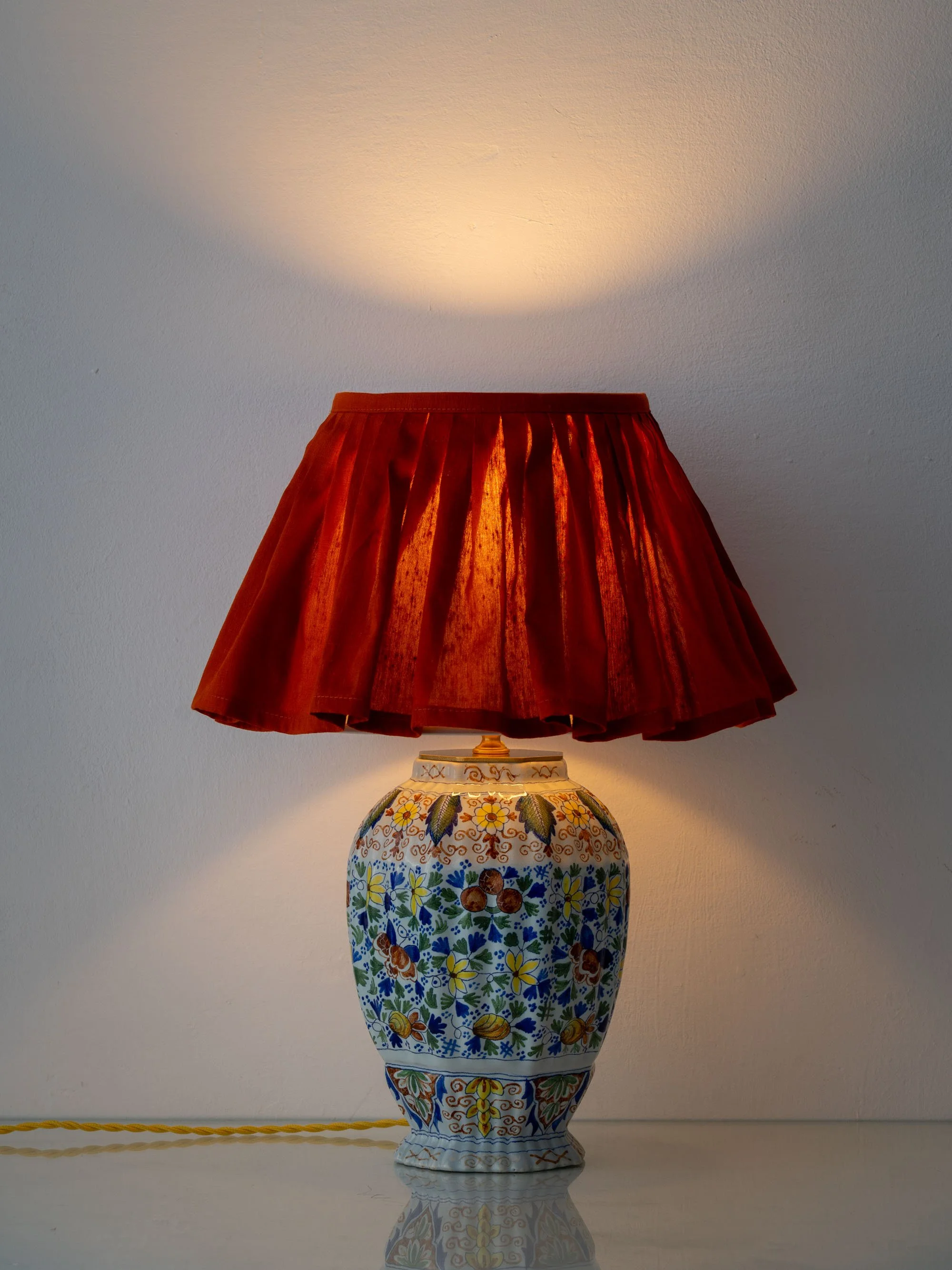
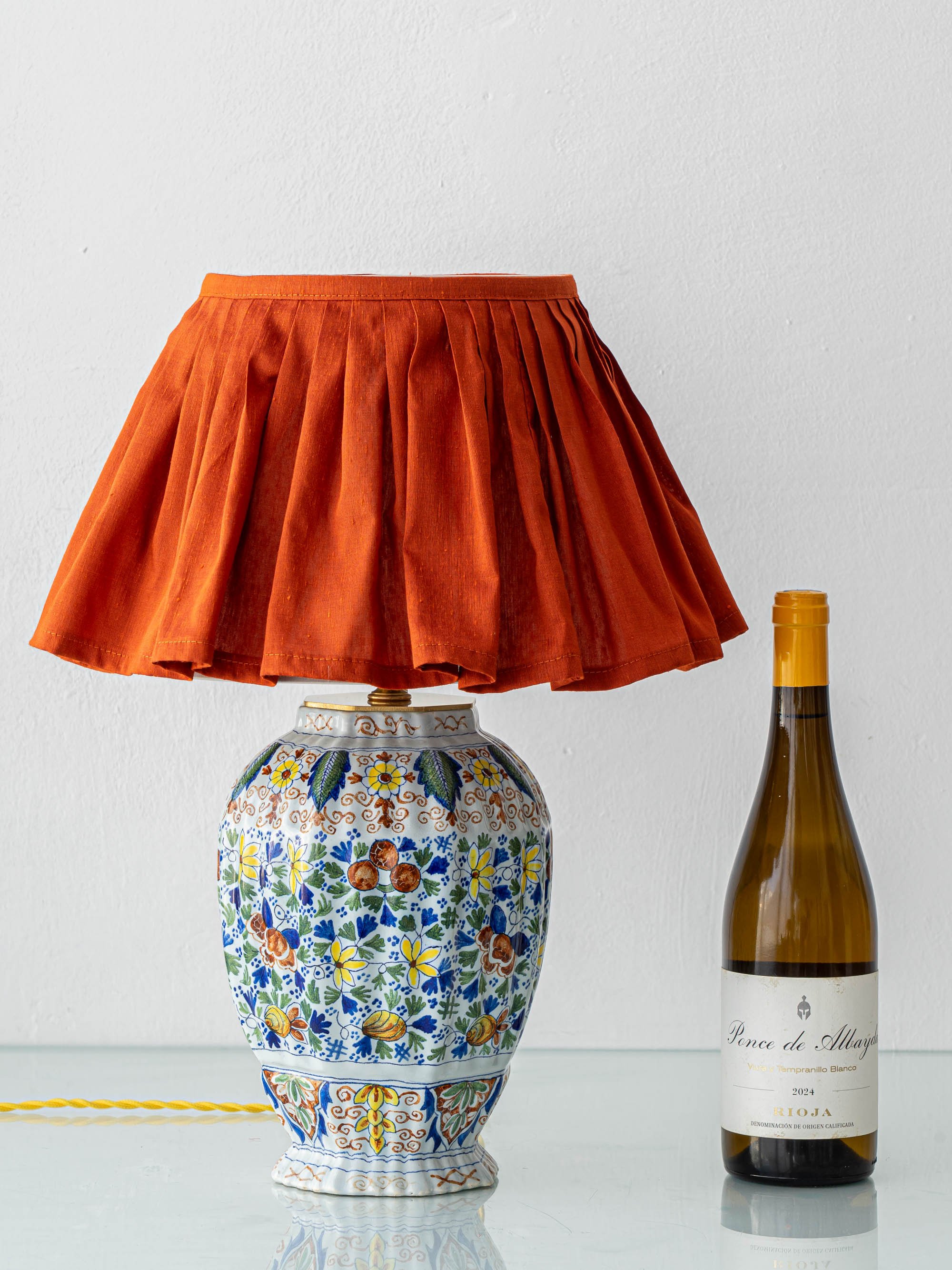
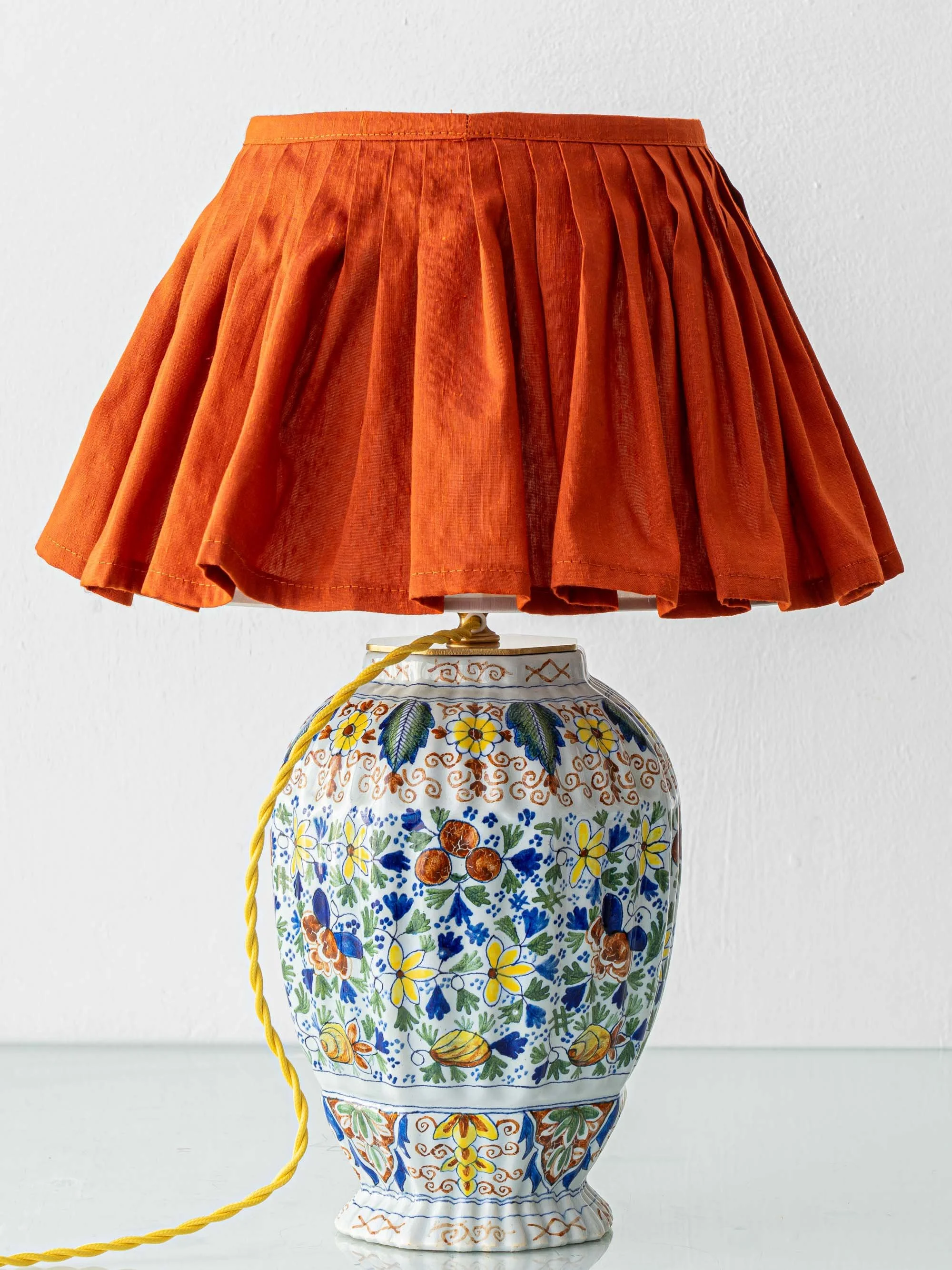
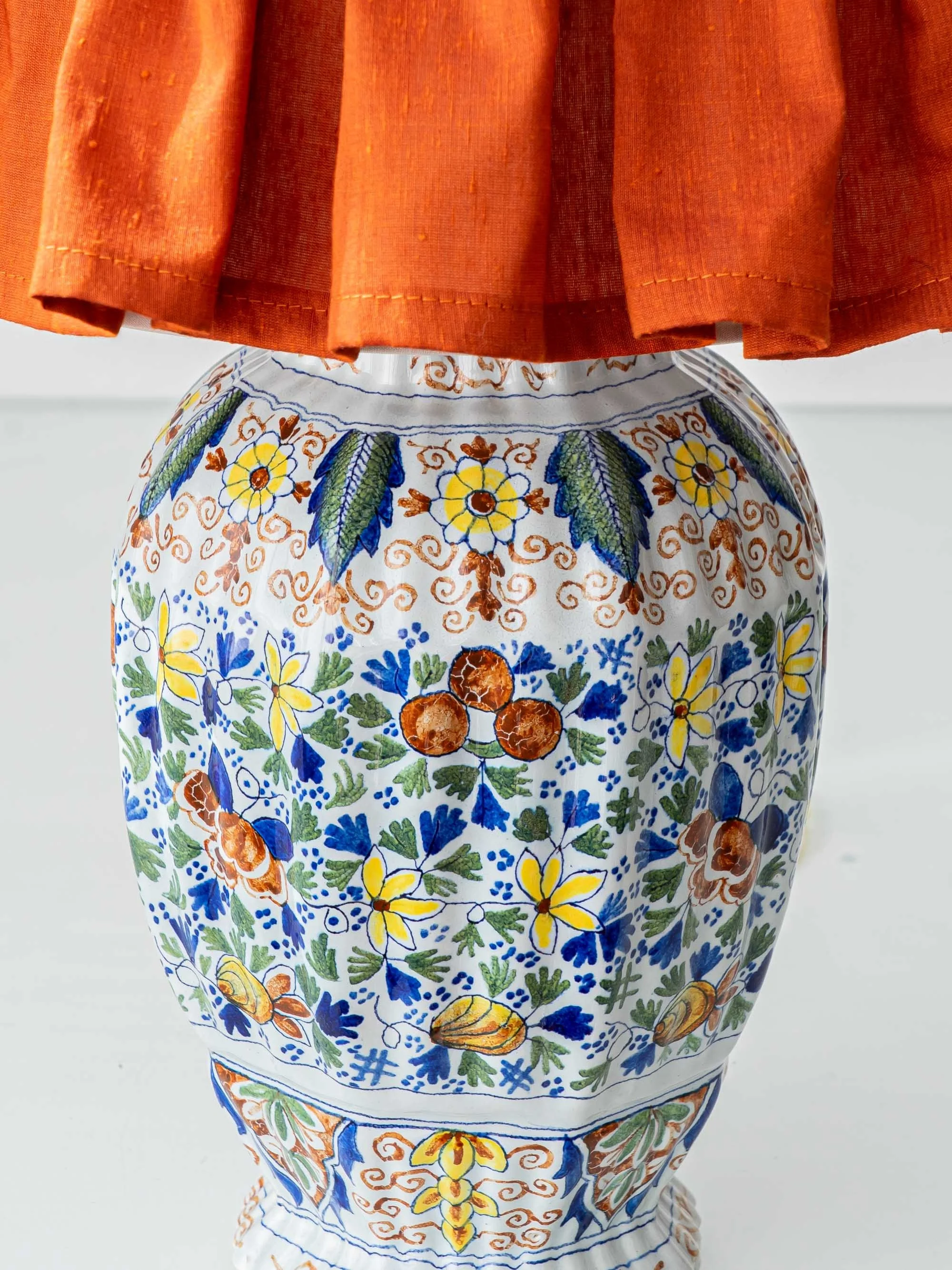
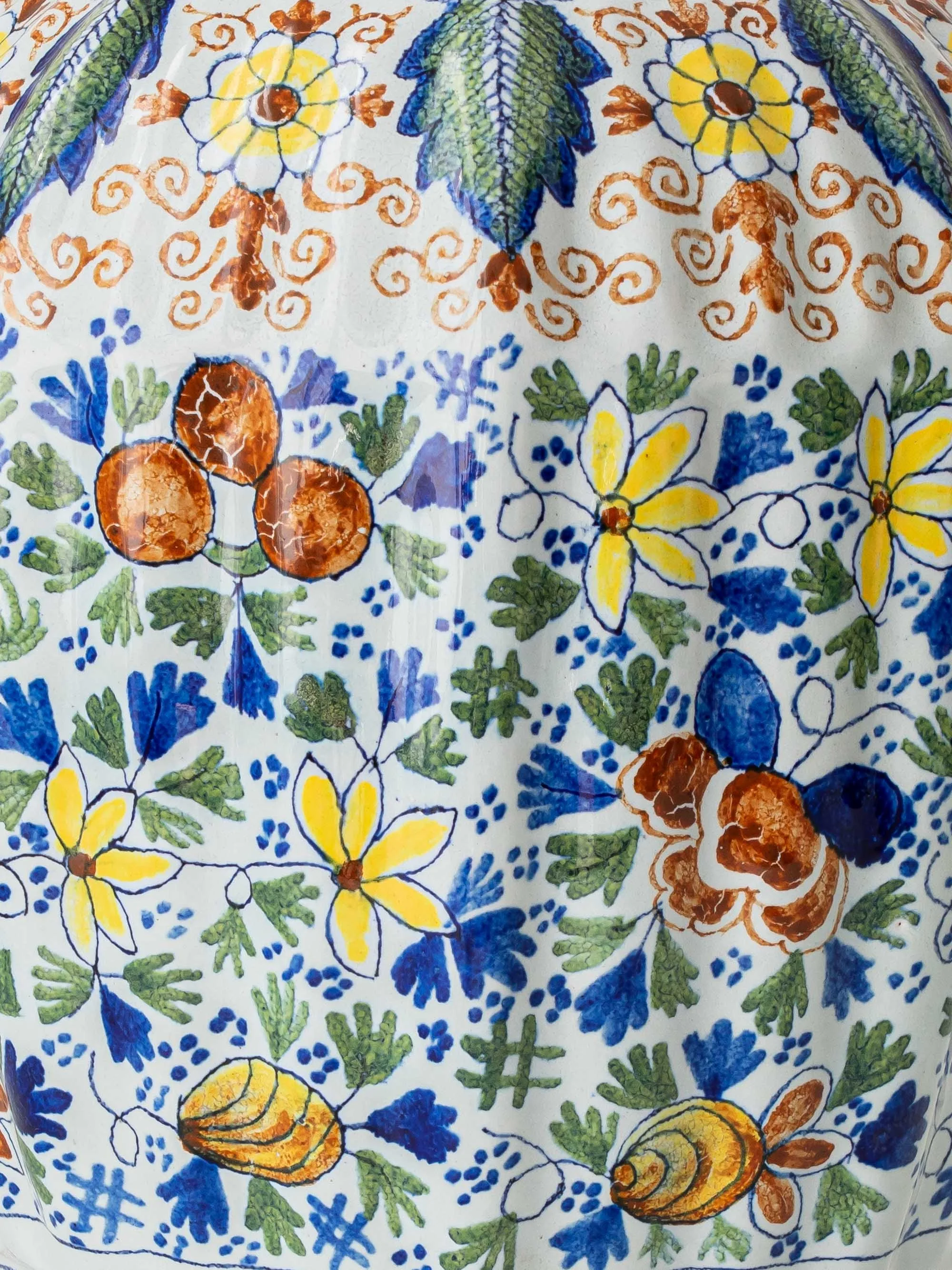
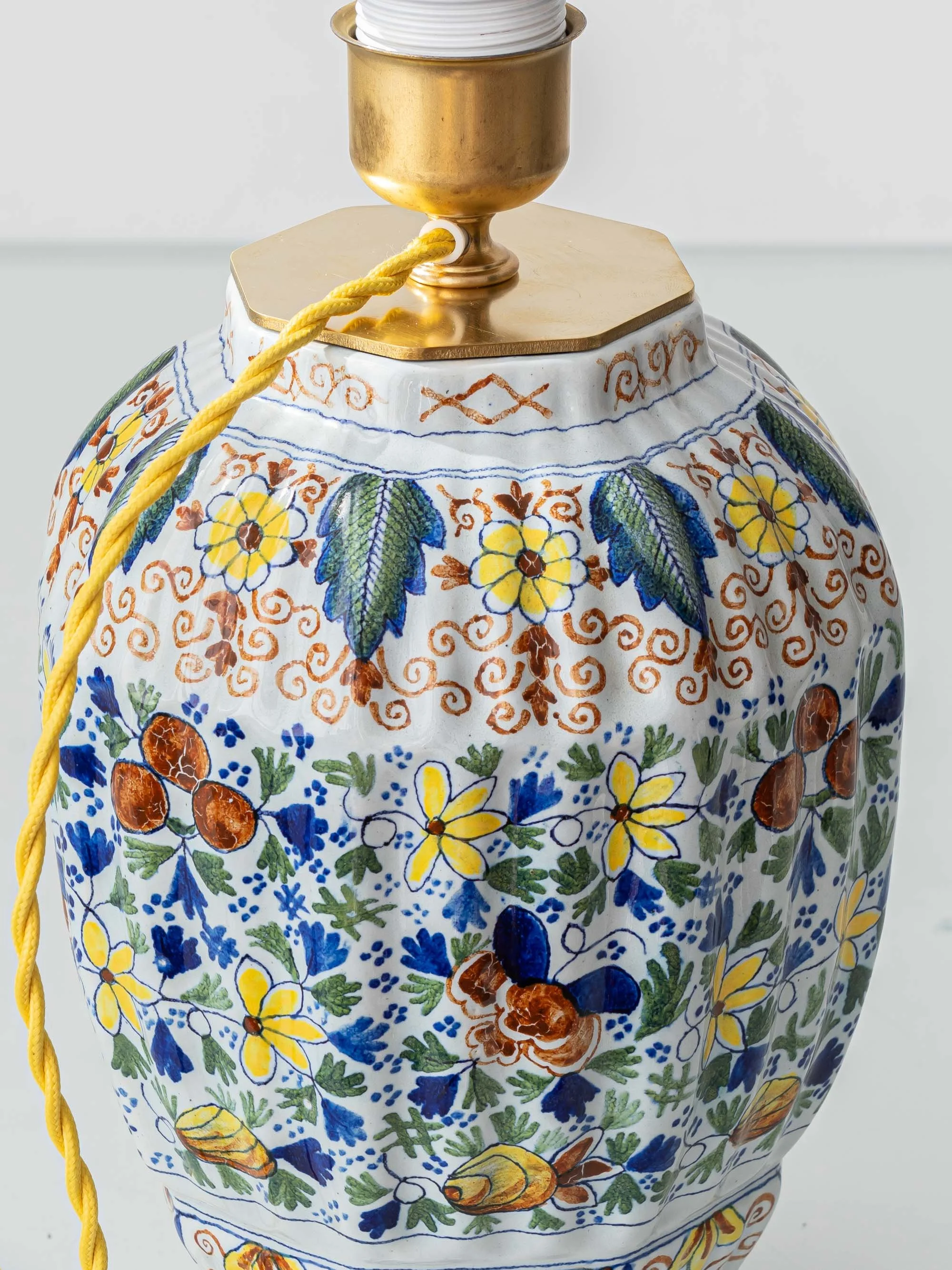
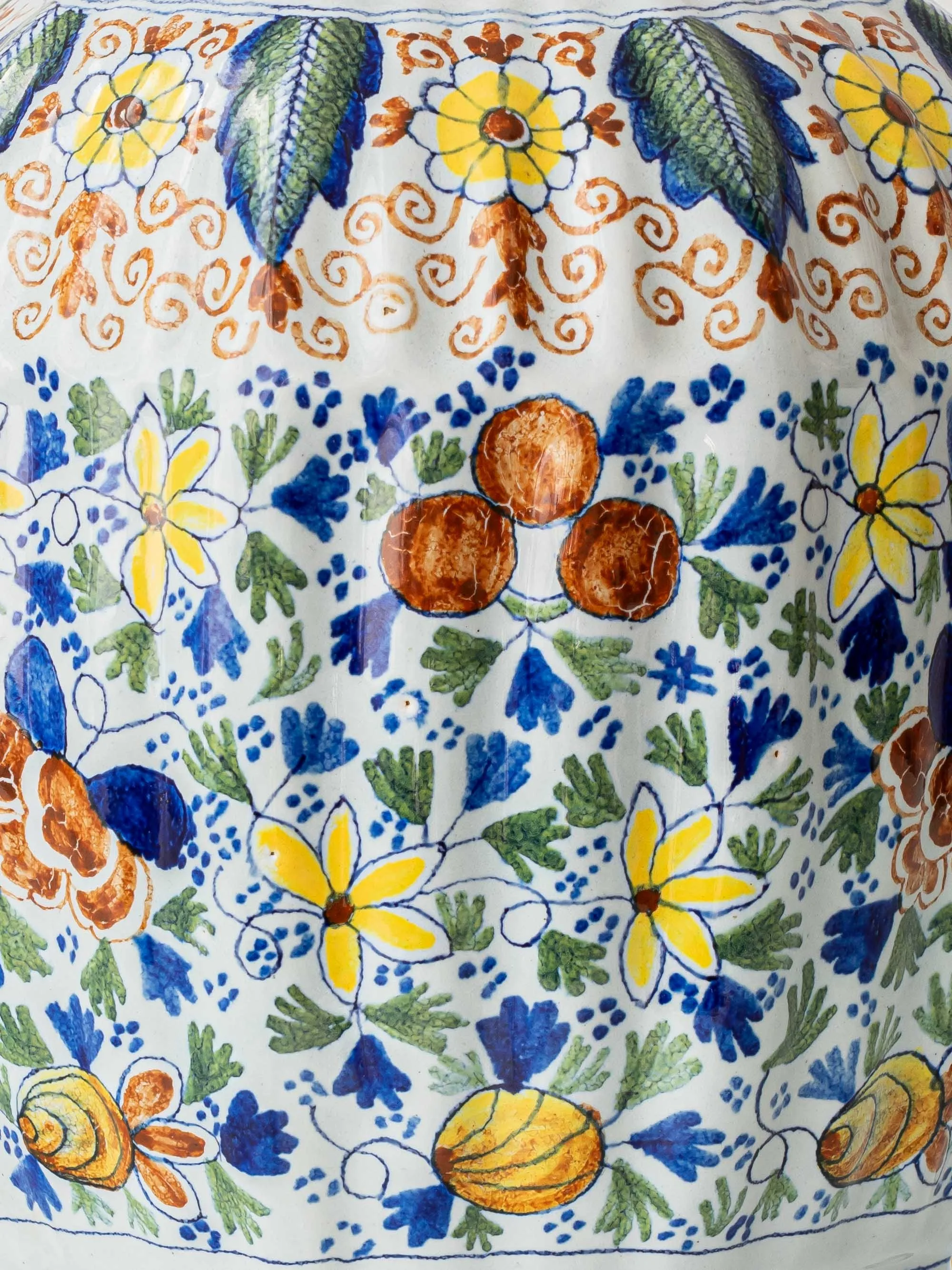
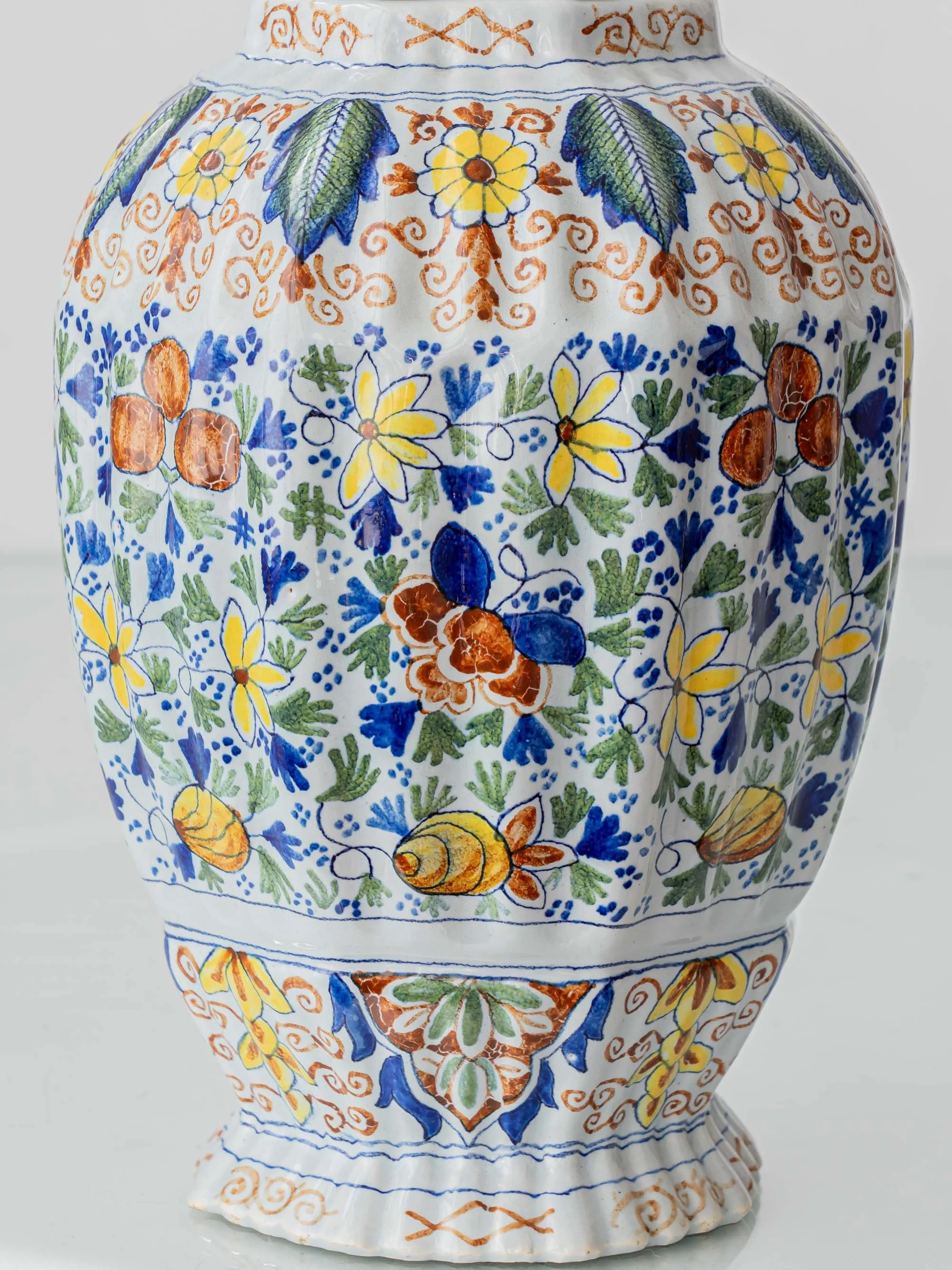
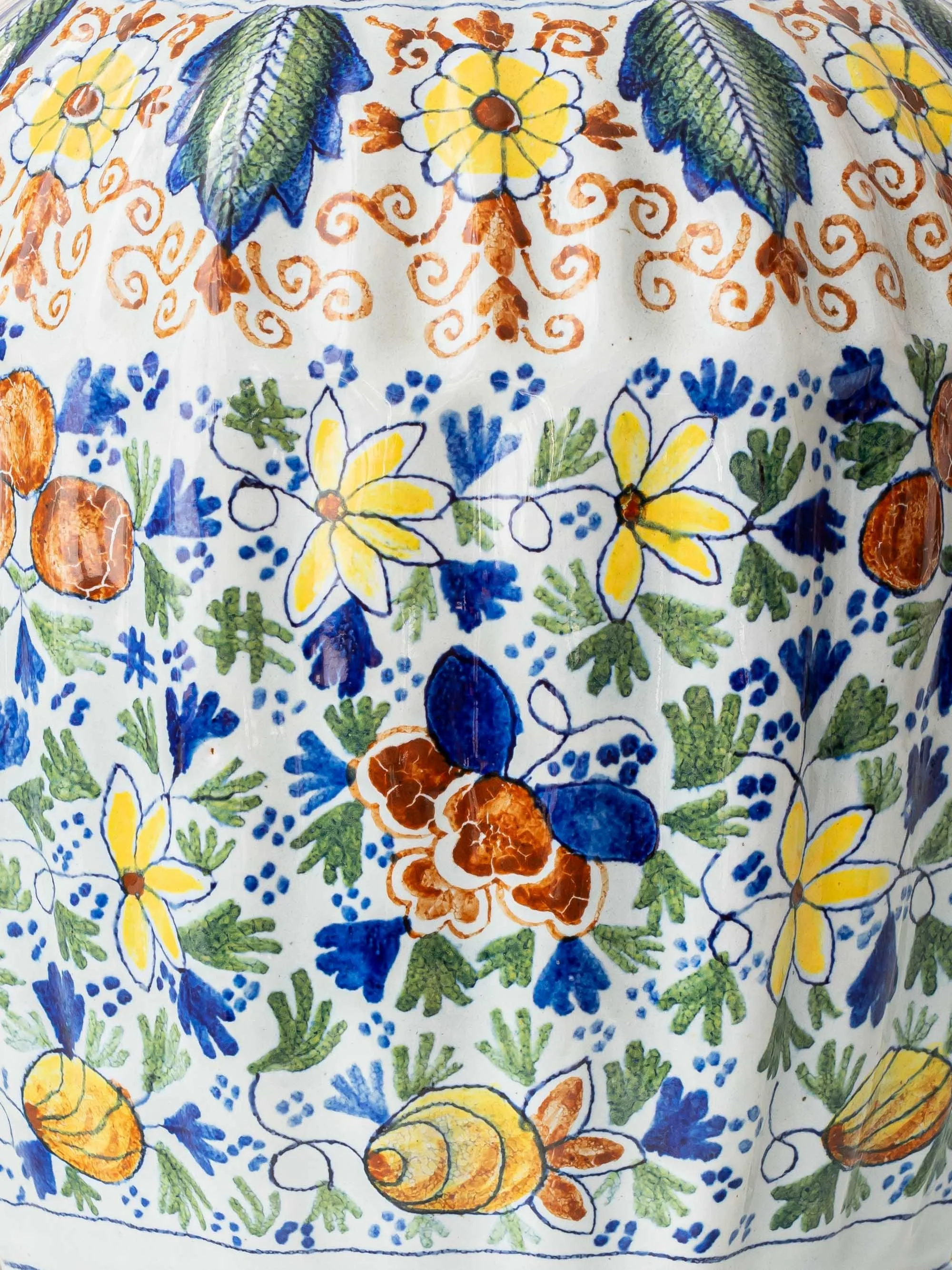
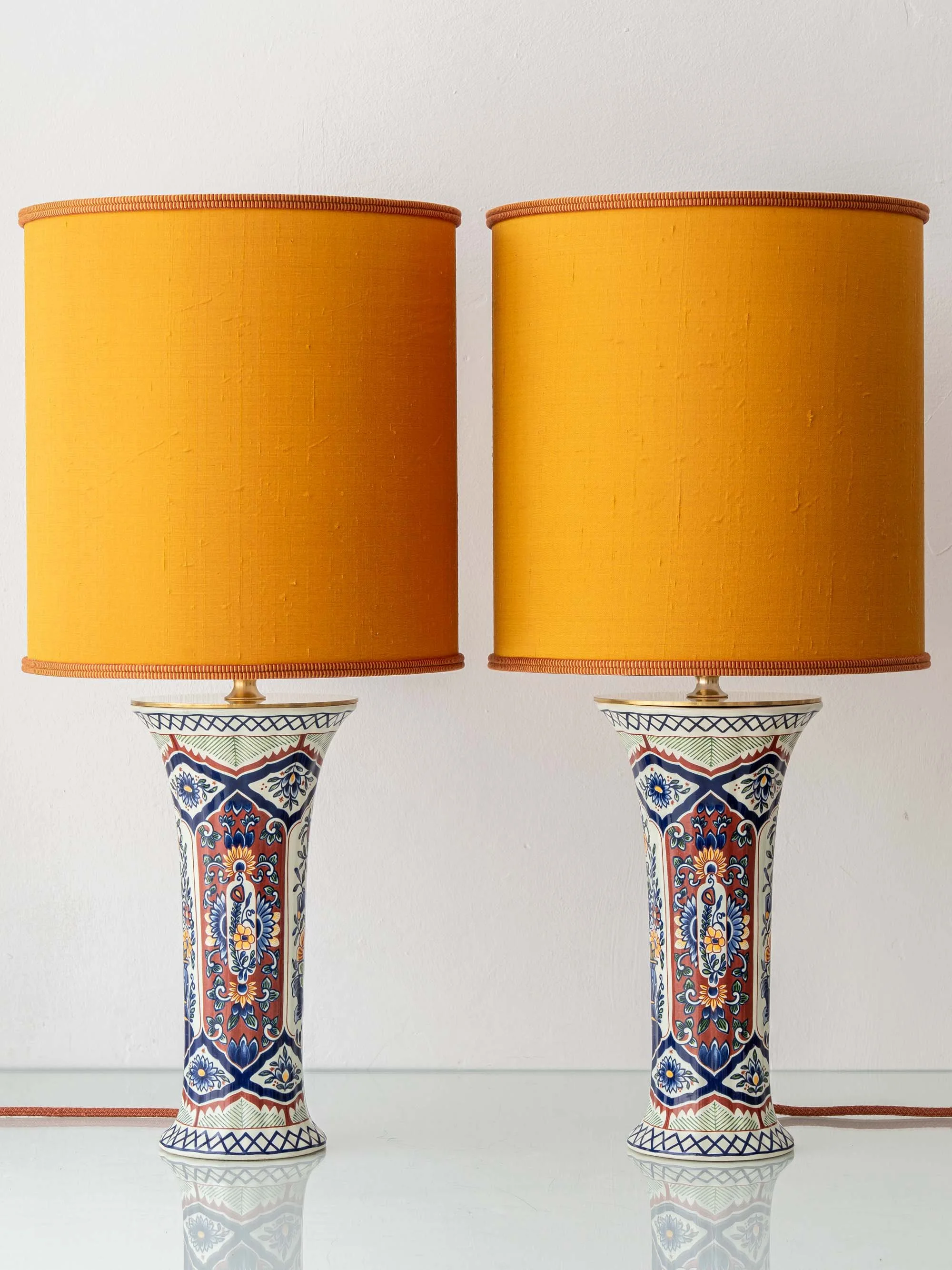
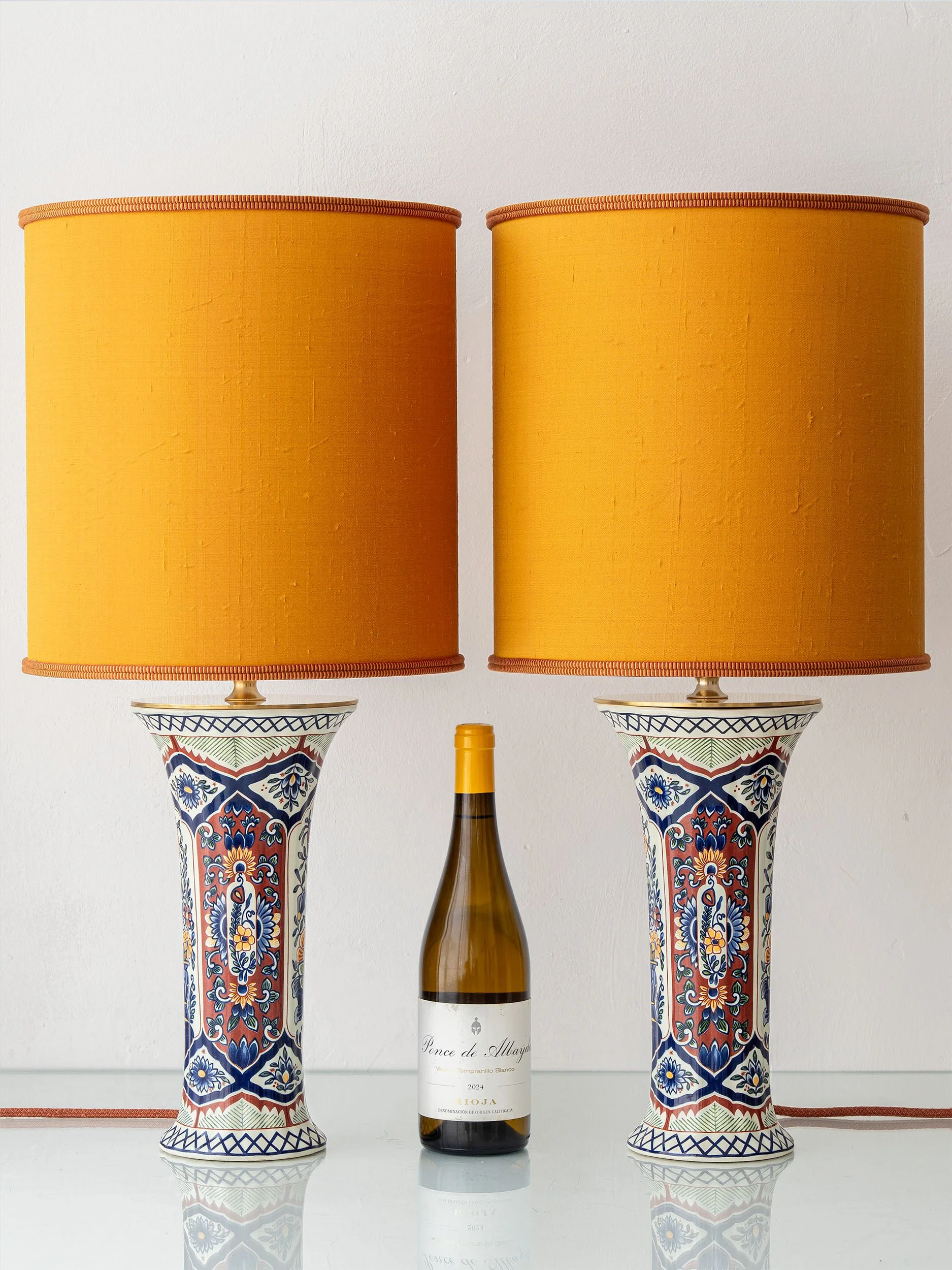
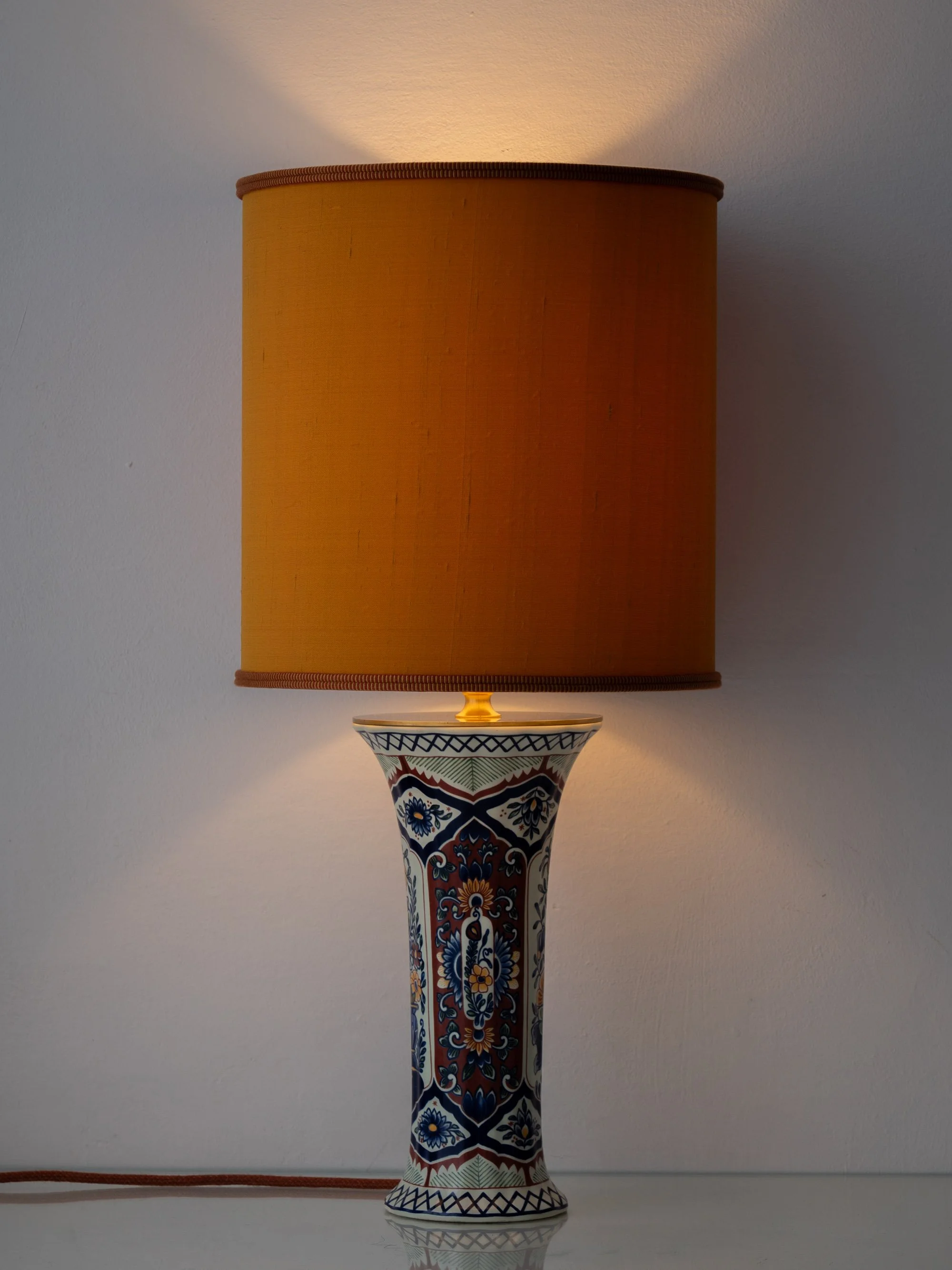
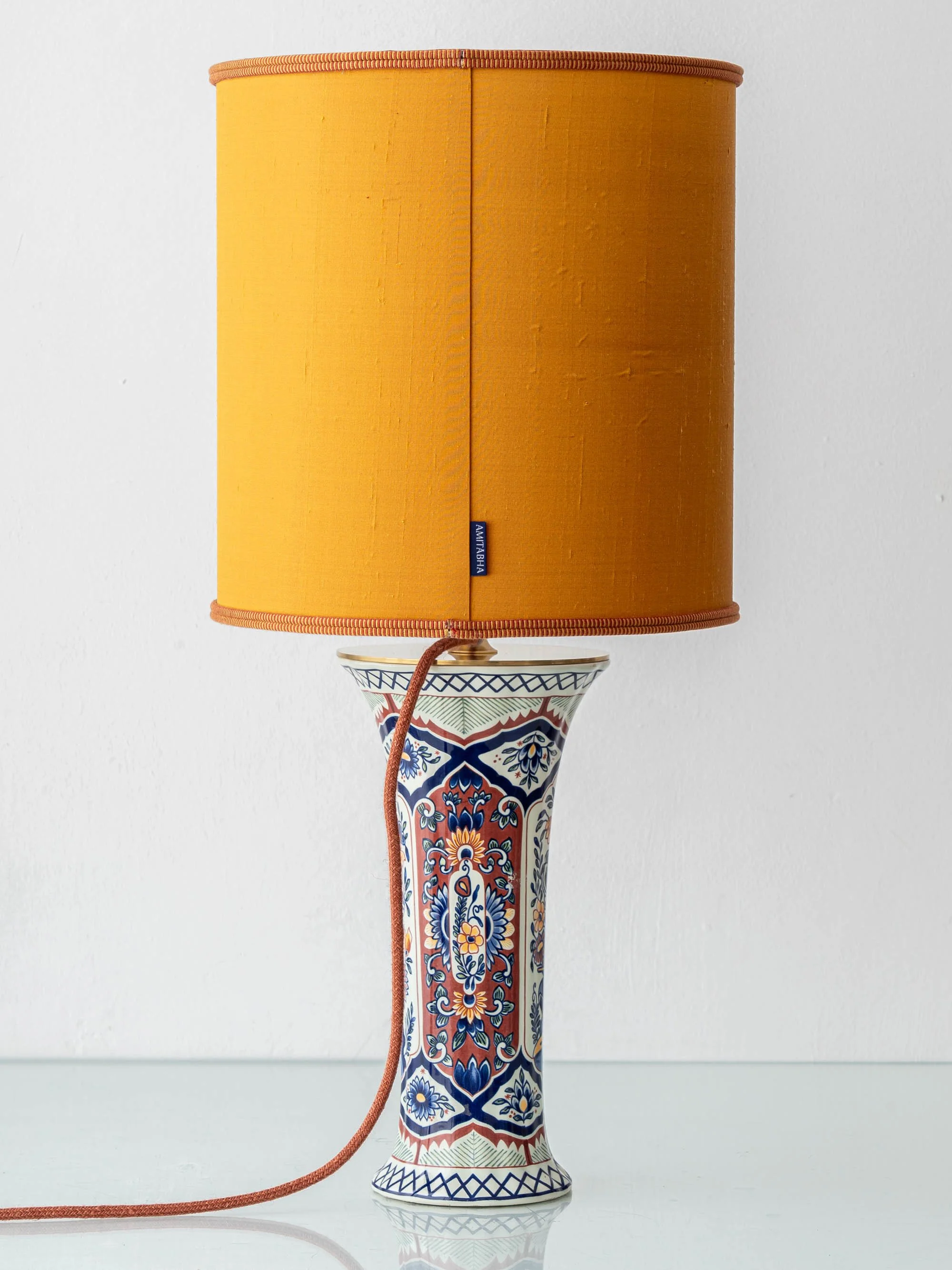
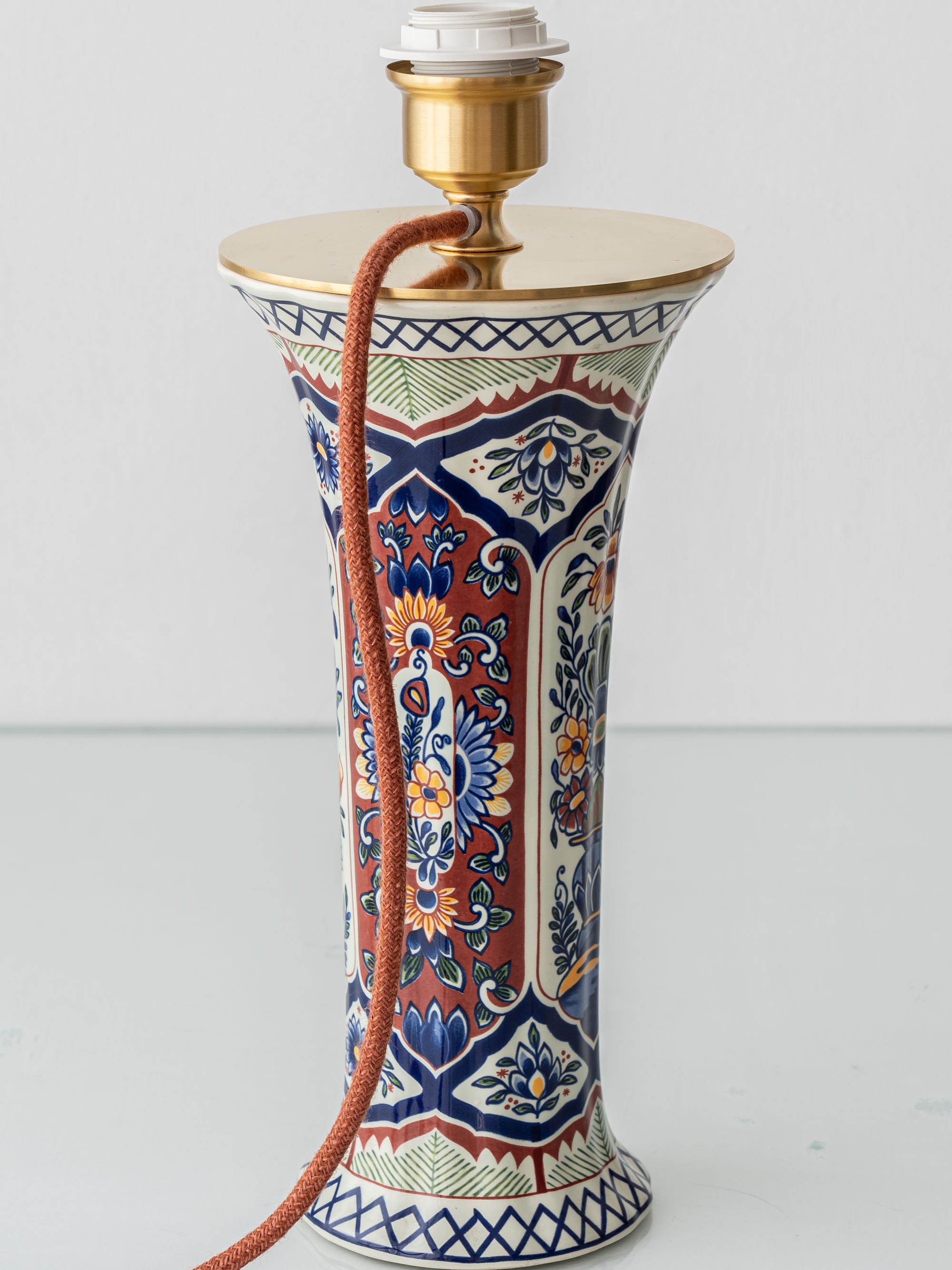
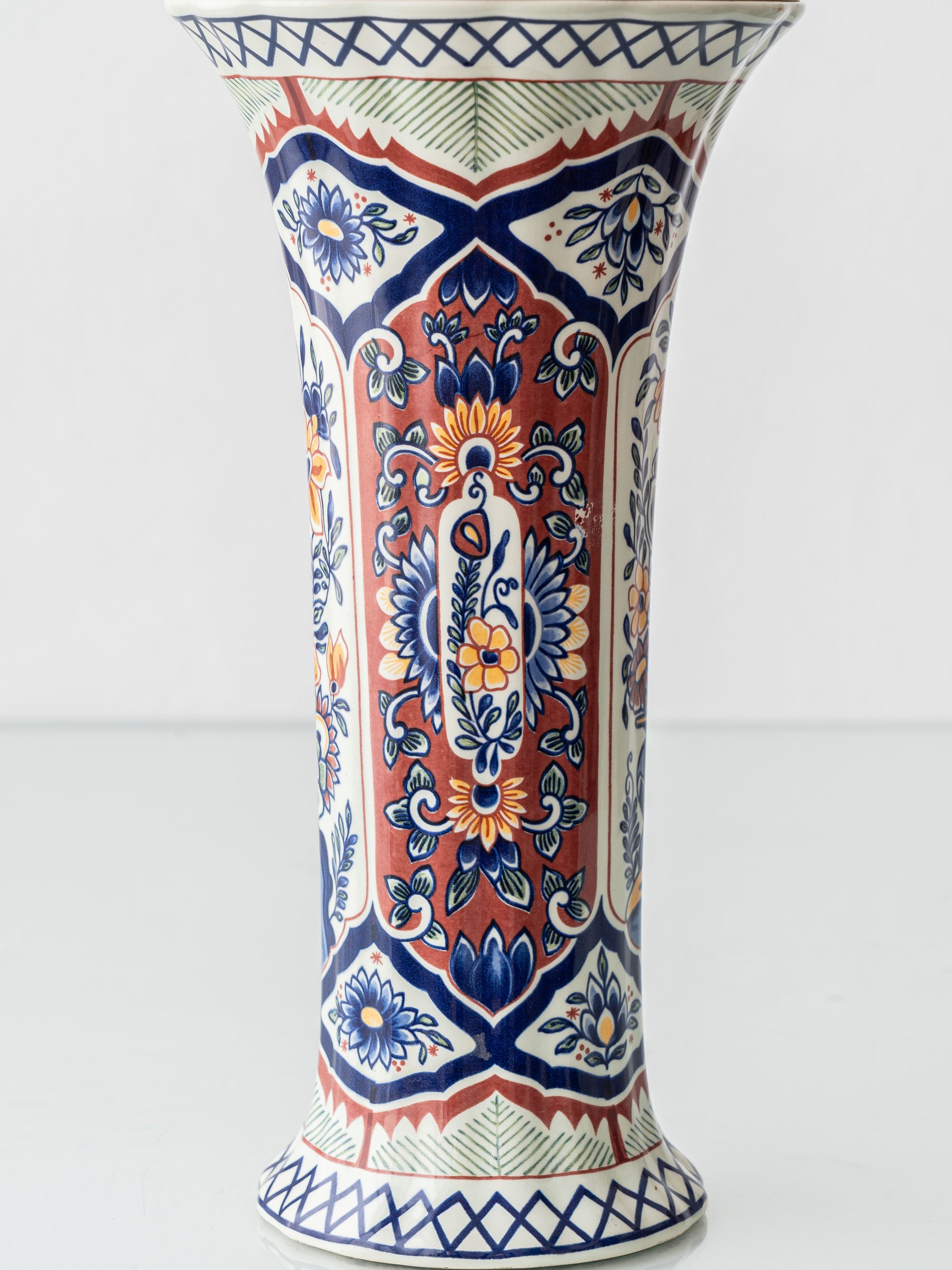
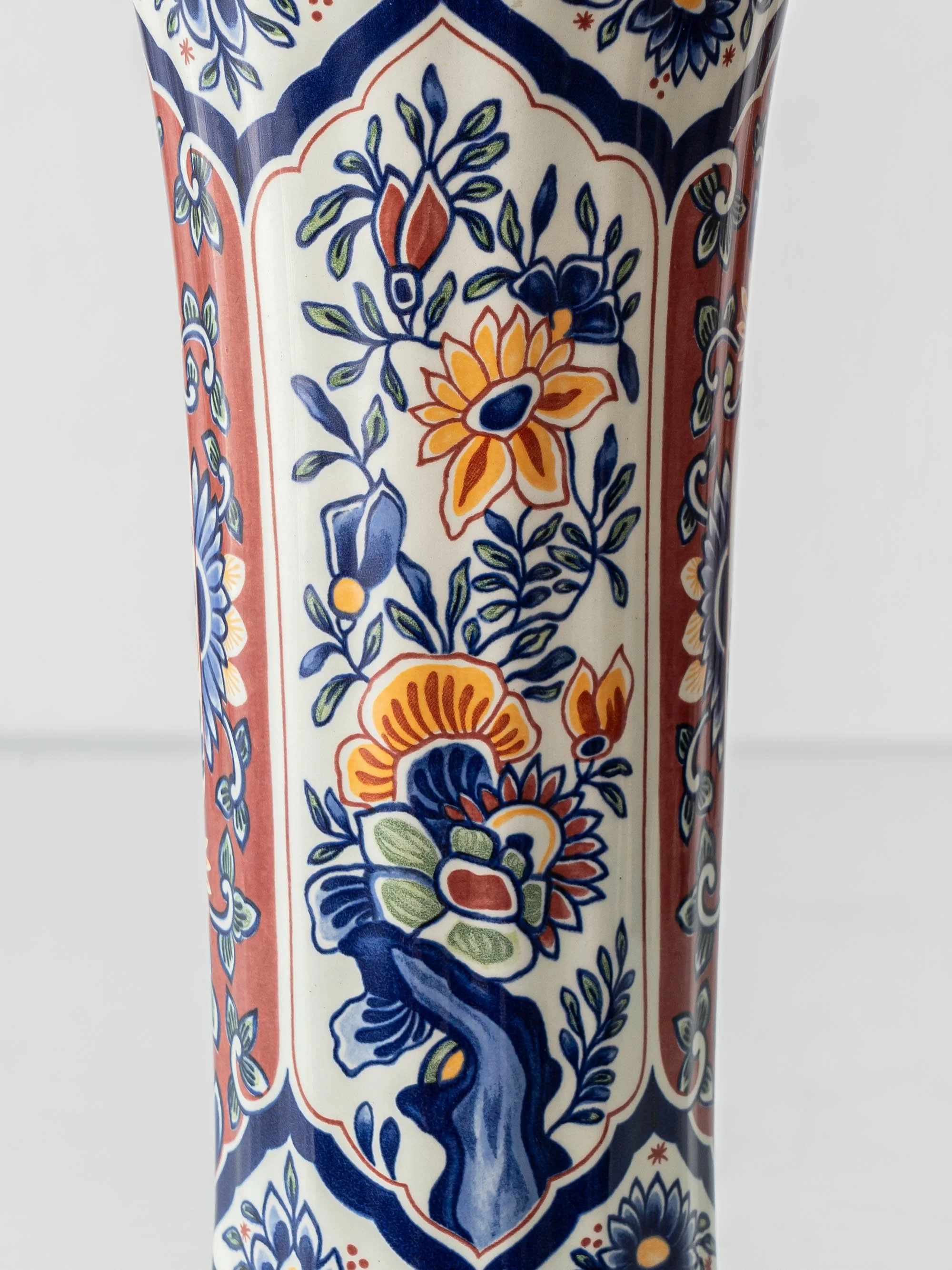
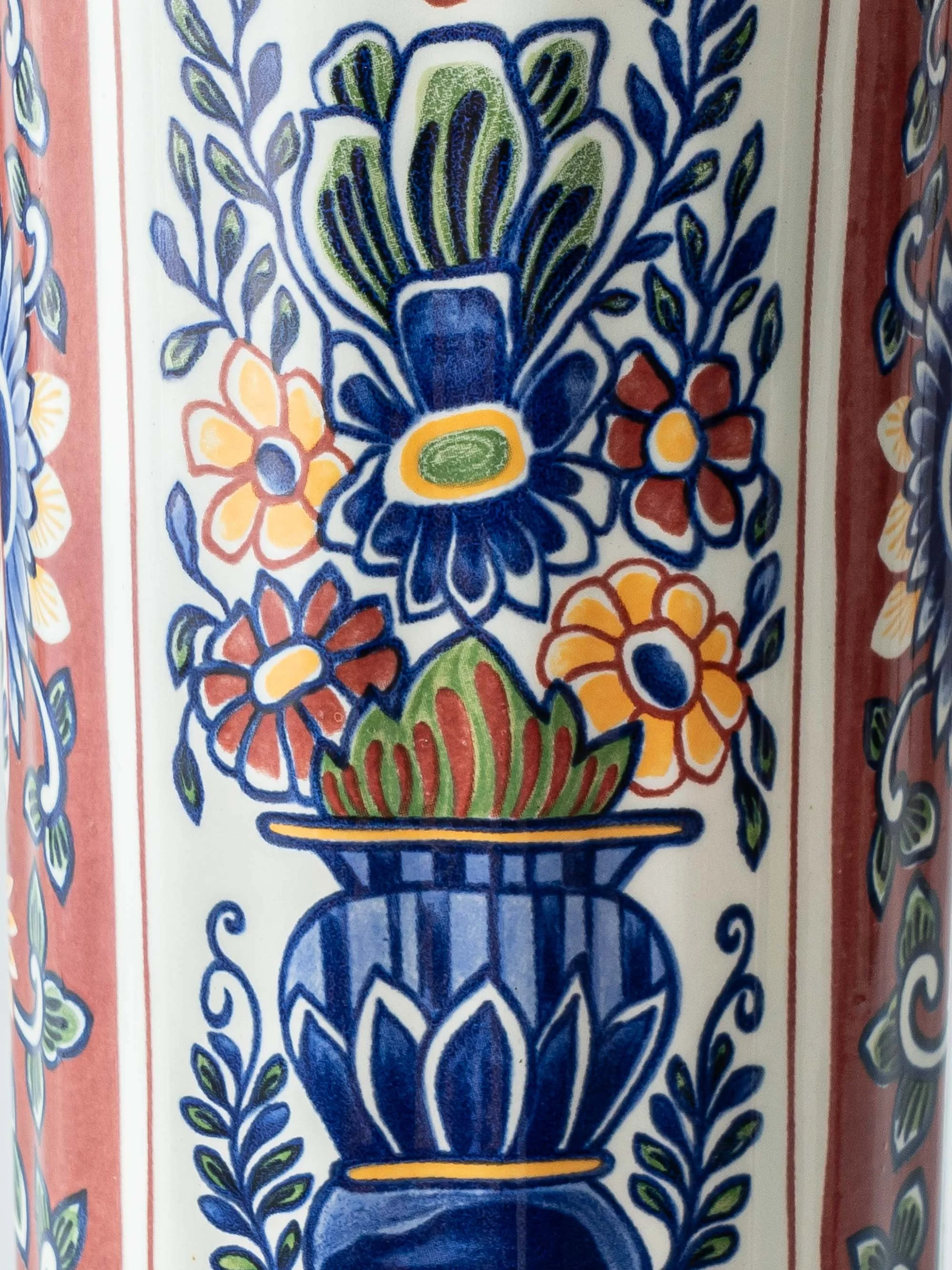
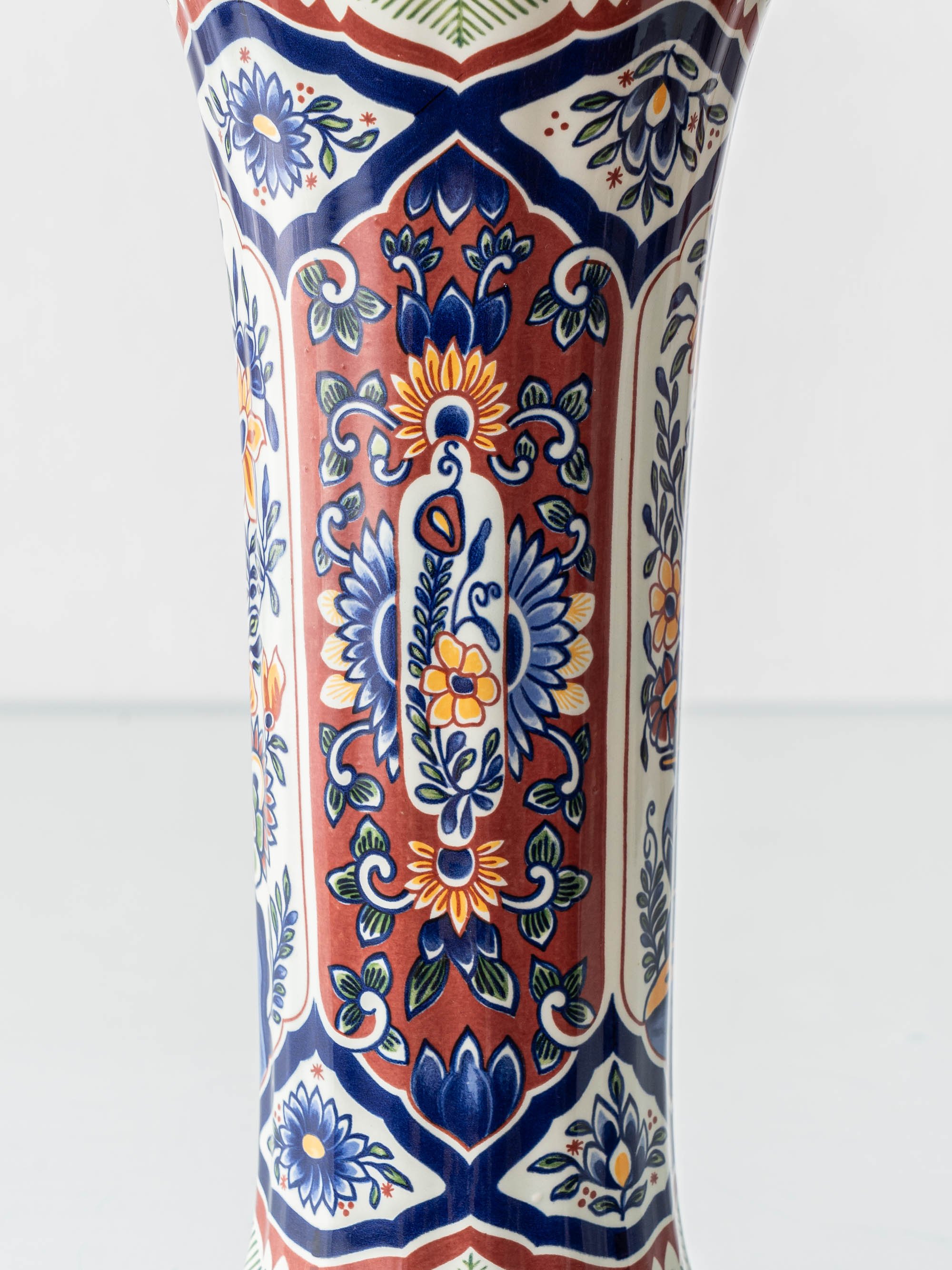
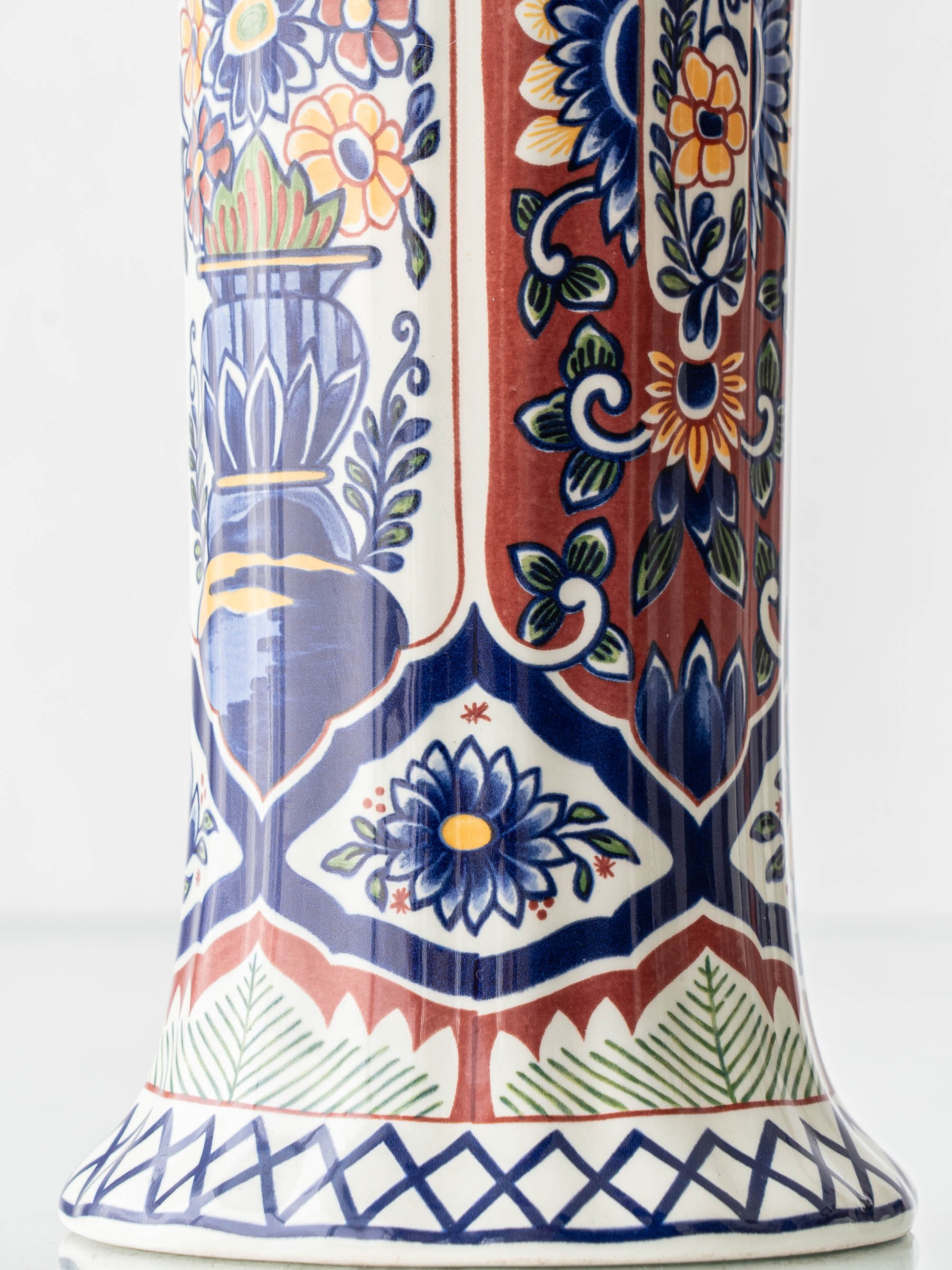
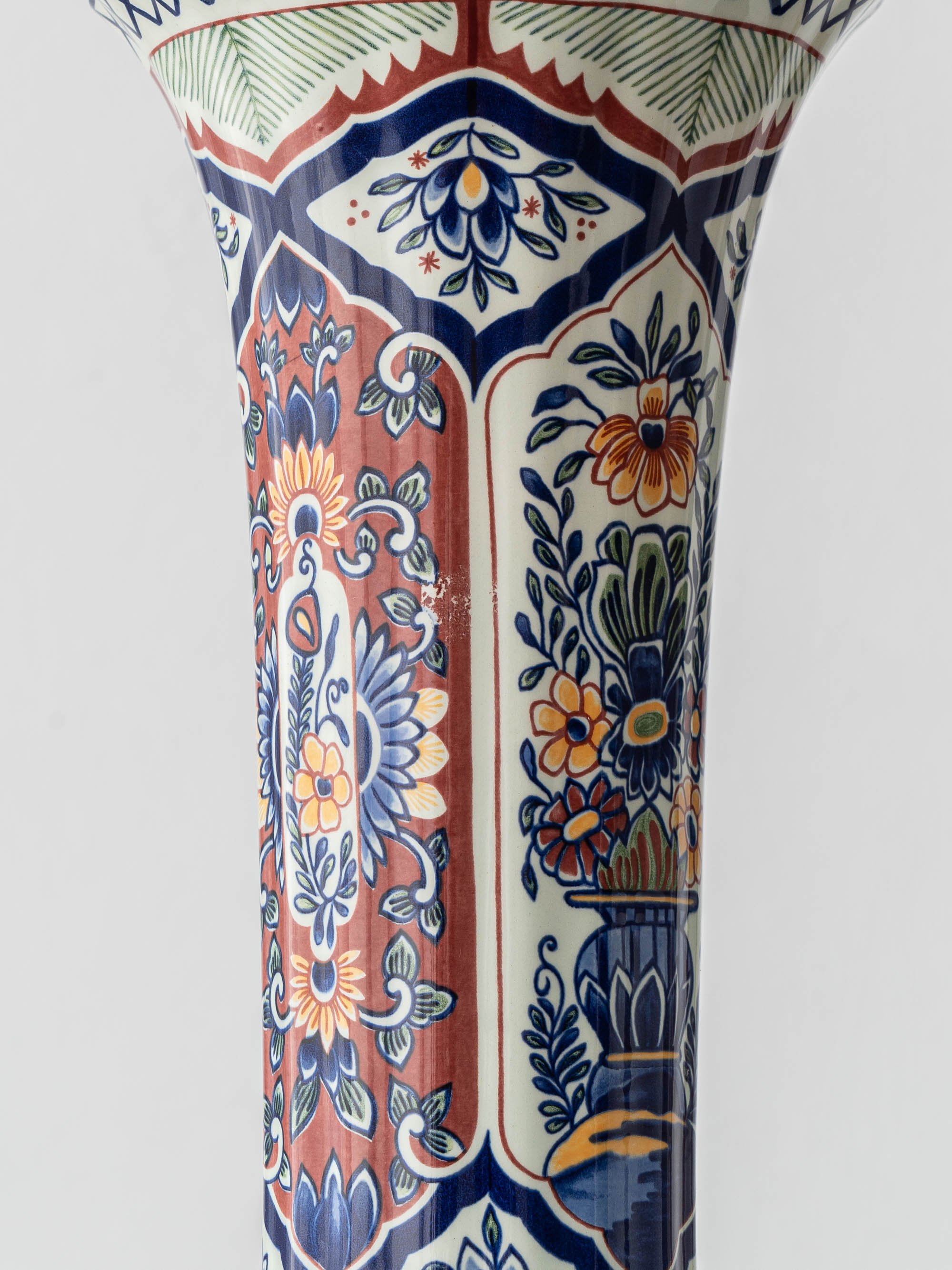
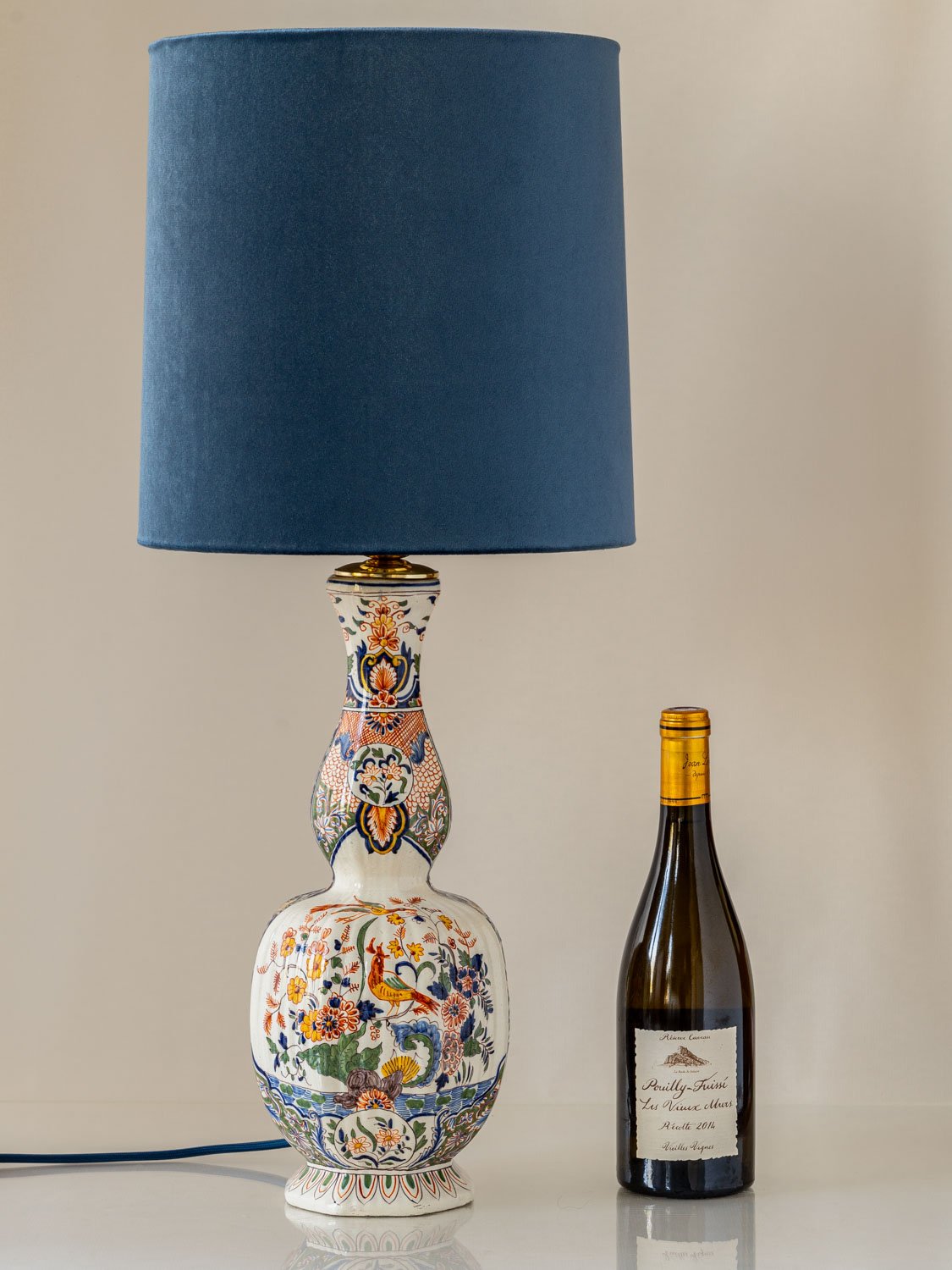
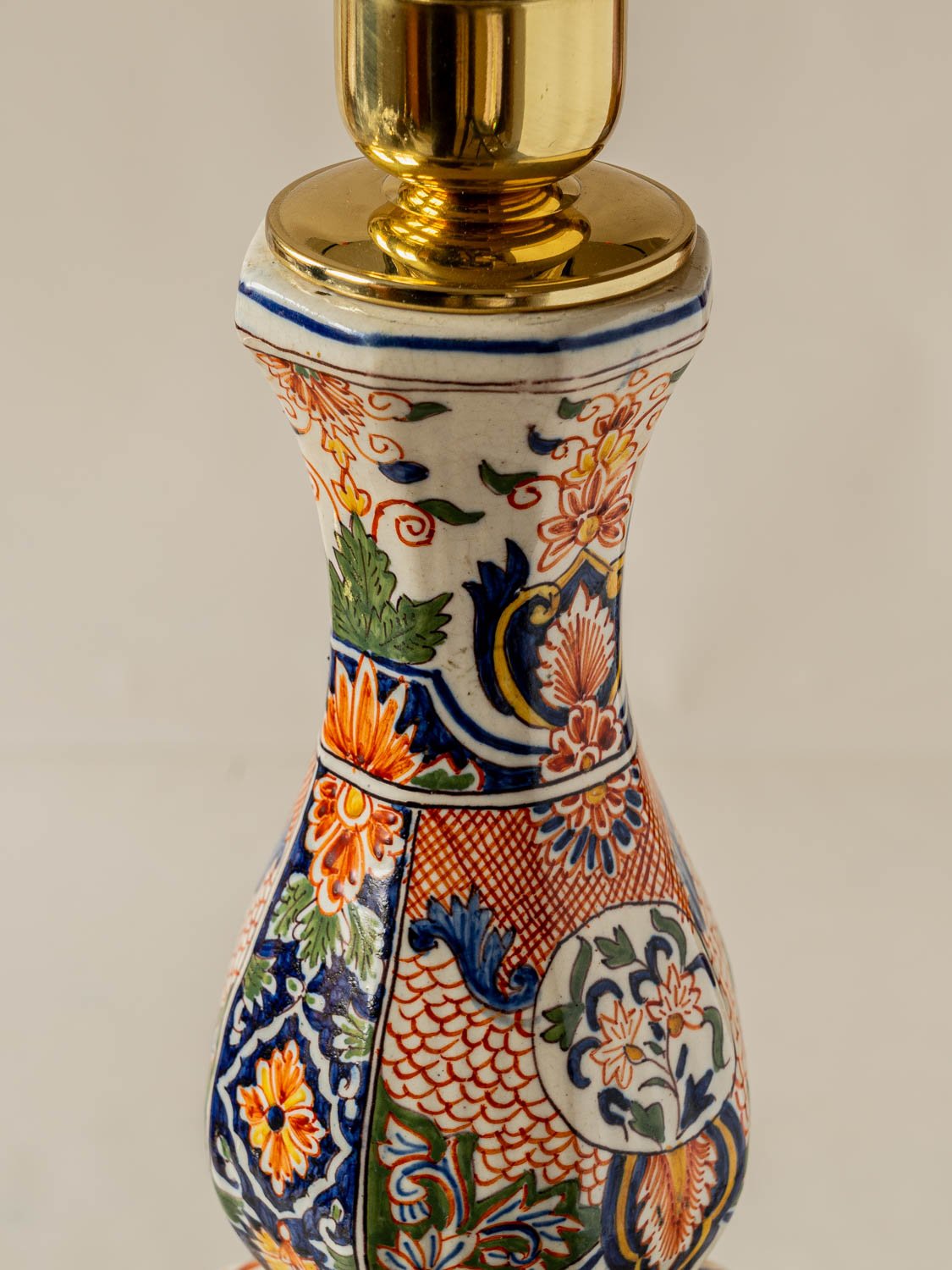
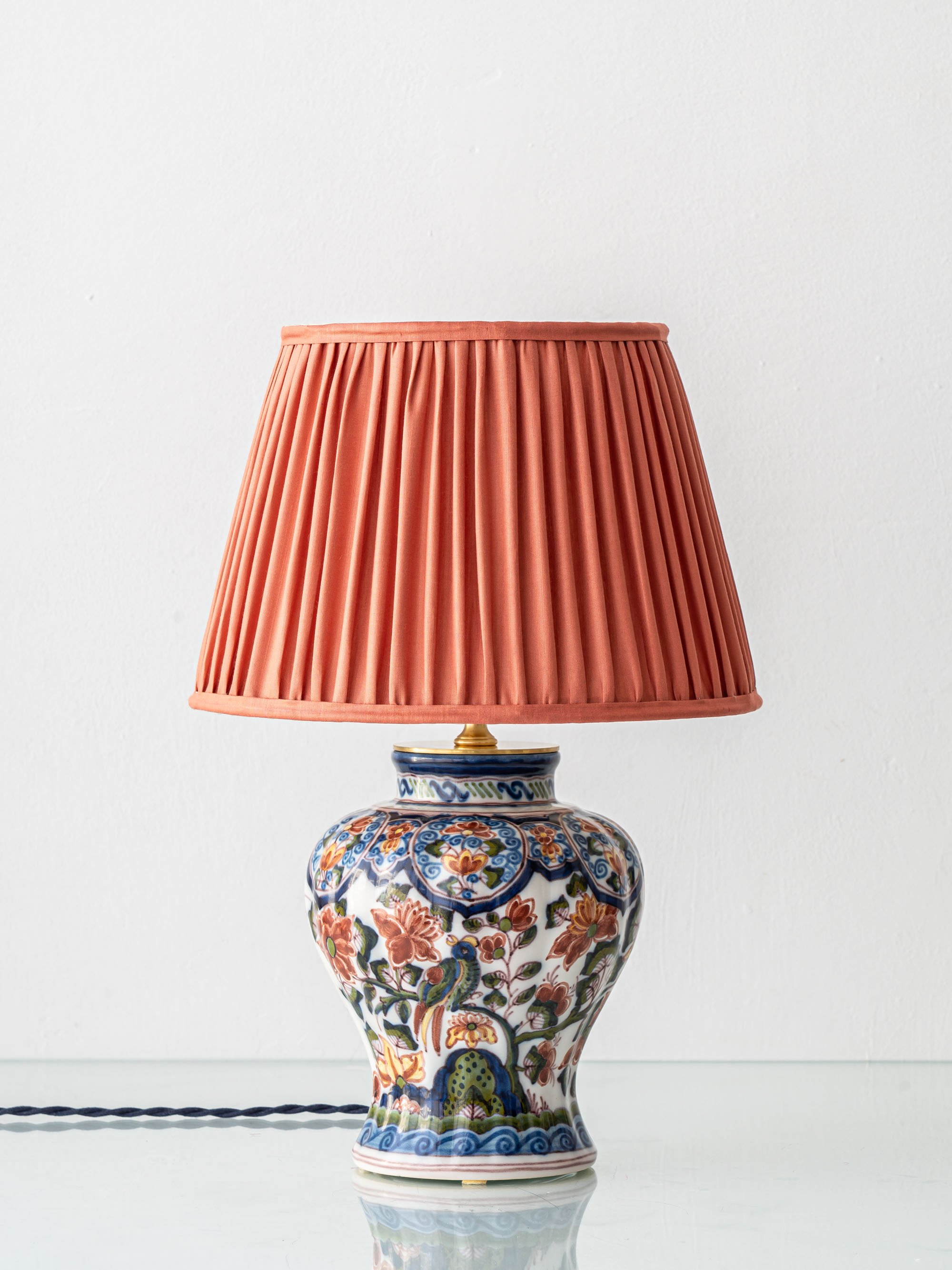
The base of the lamp is a tin-glazed vase hand-painted with a flowering garden: large iron-red and ochre blooms, green foliage, and trees, with birds perched among the branches. A scalloped scroll band runs around the shoulder, and a stylized blue wave border finishes the foot. The colours are painted over the white tin glaze and fired into it — the method Makkum has used for its polychrome wares across generations — which gives the surface its depth and the slight softness where pigment meets glaze.
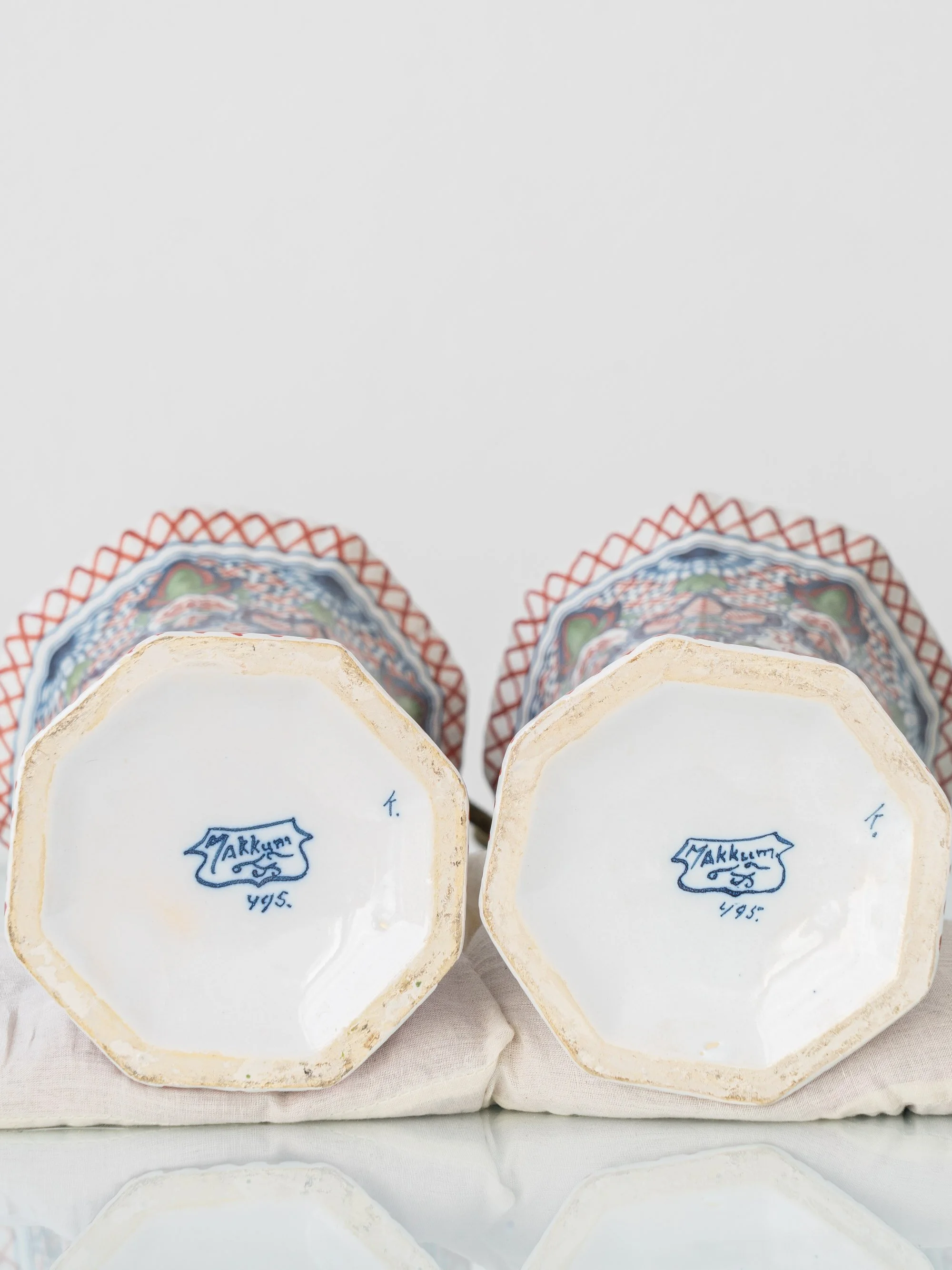
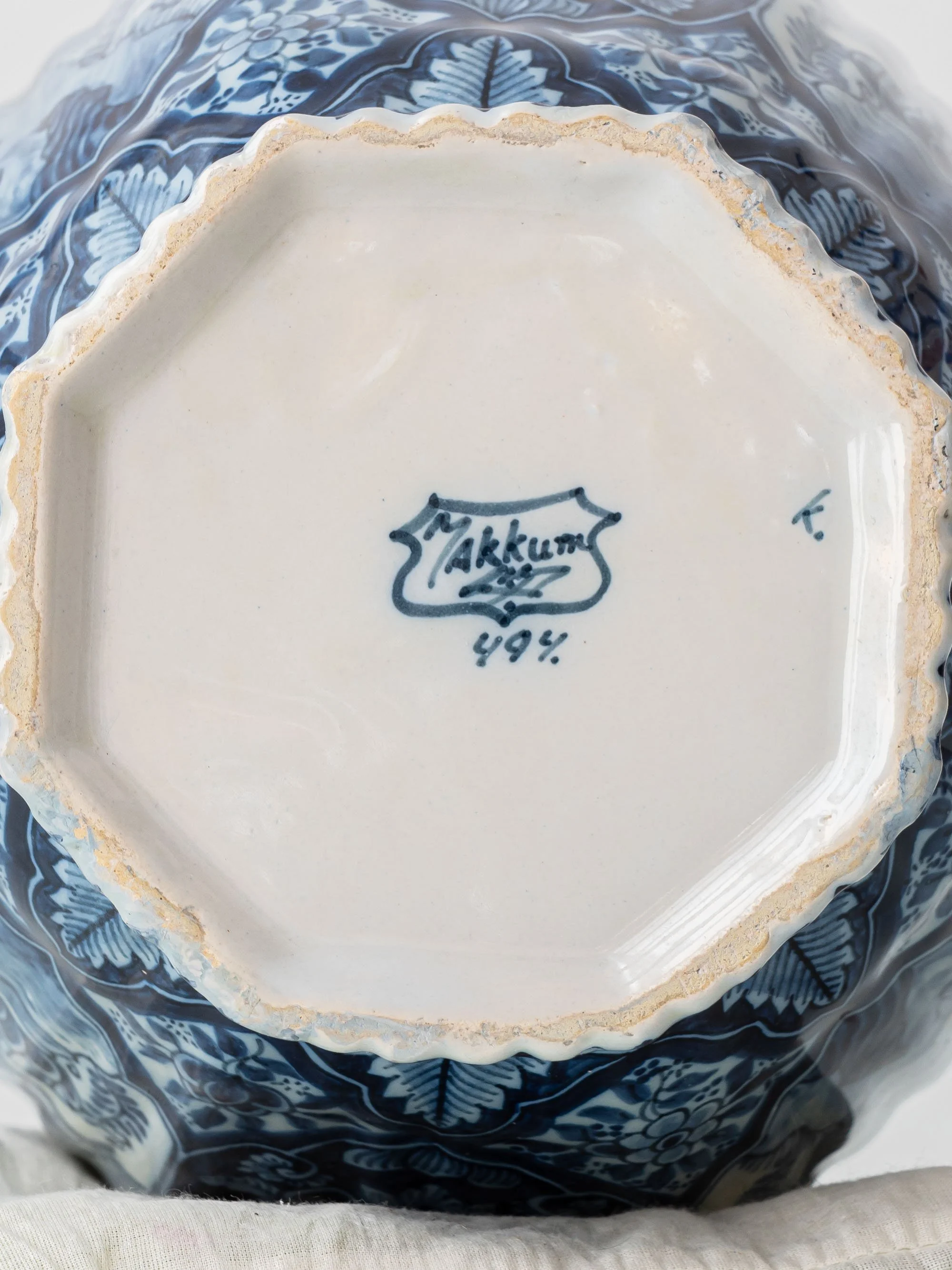
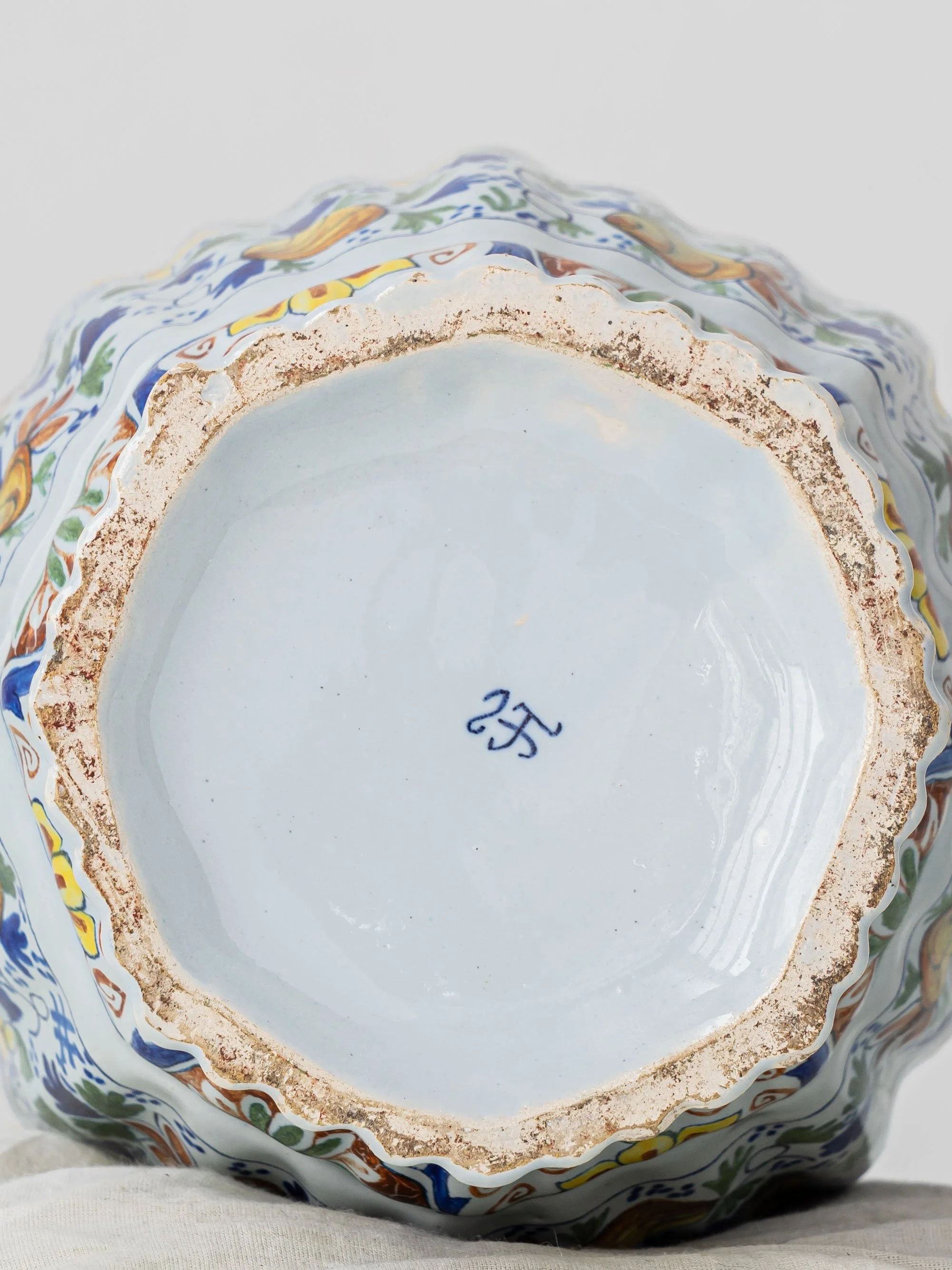
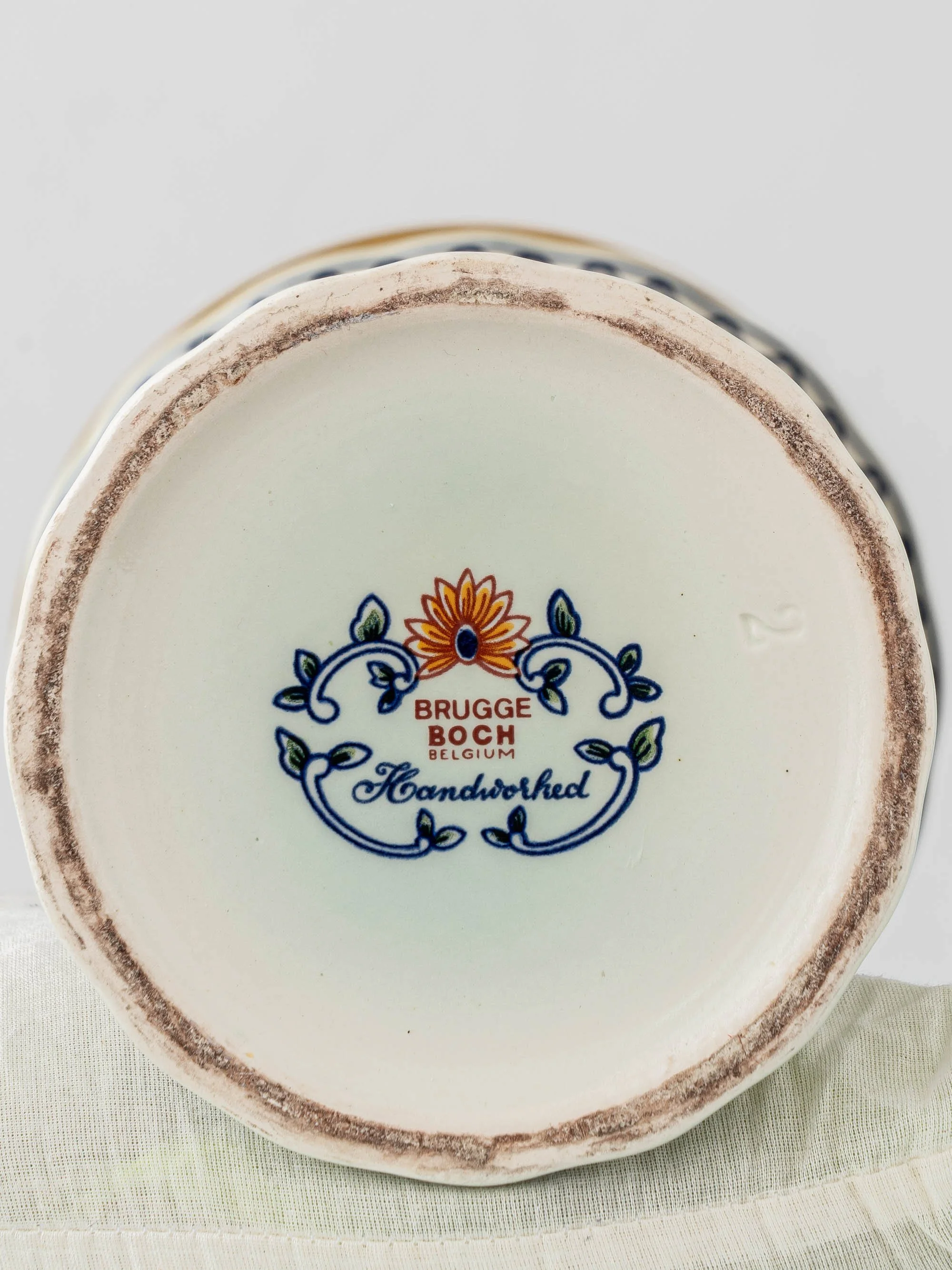
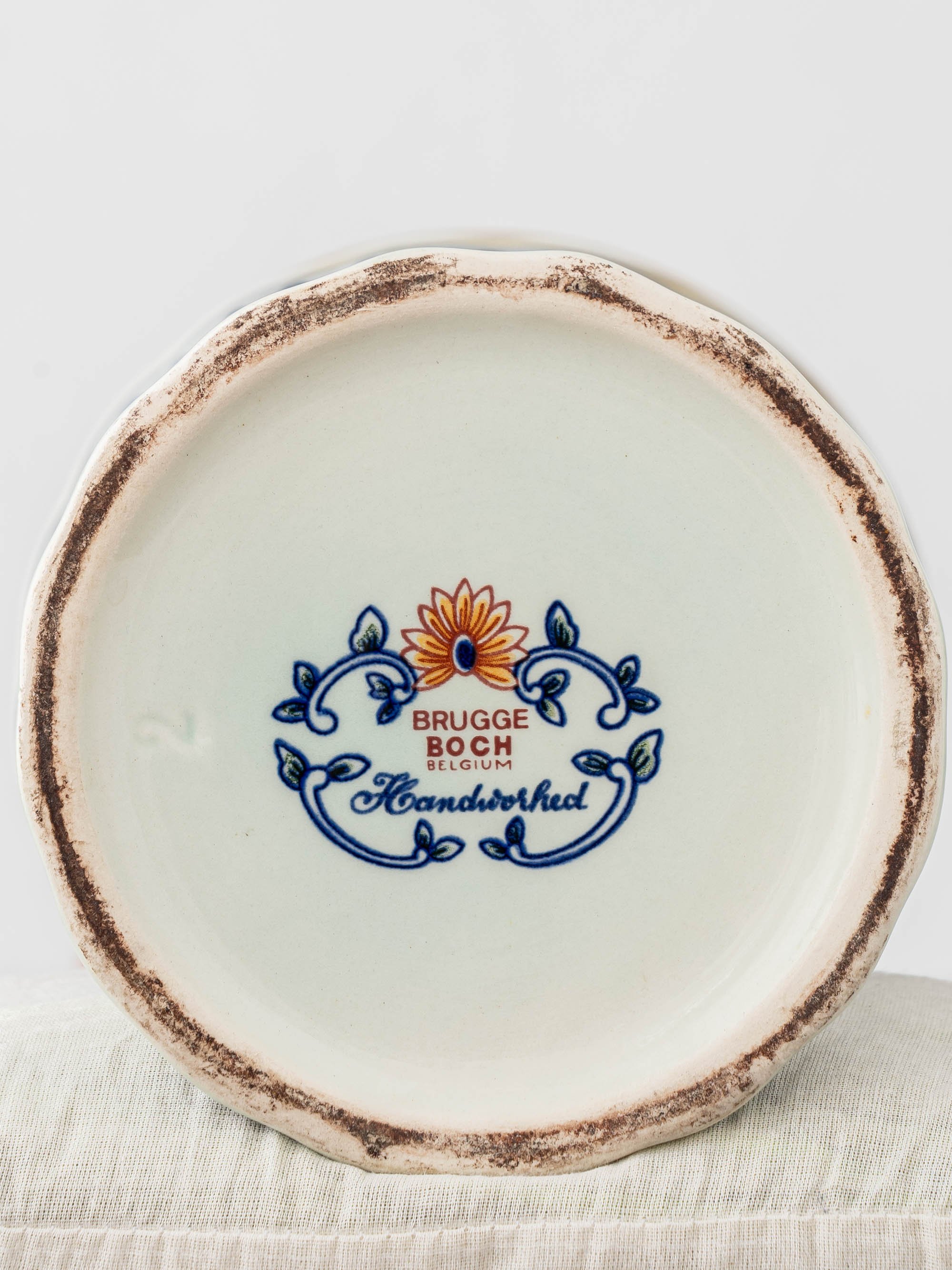
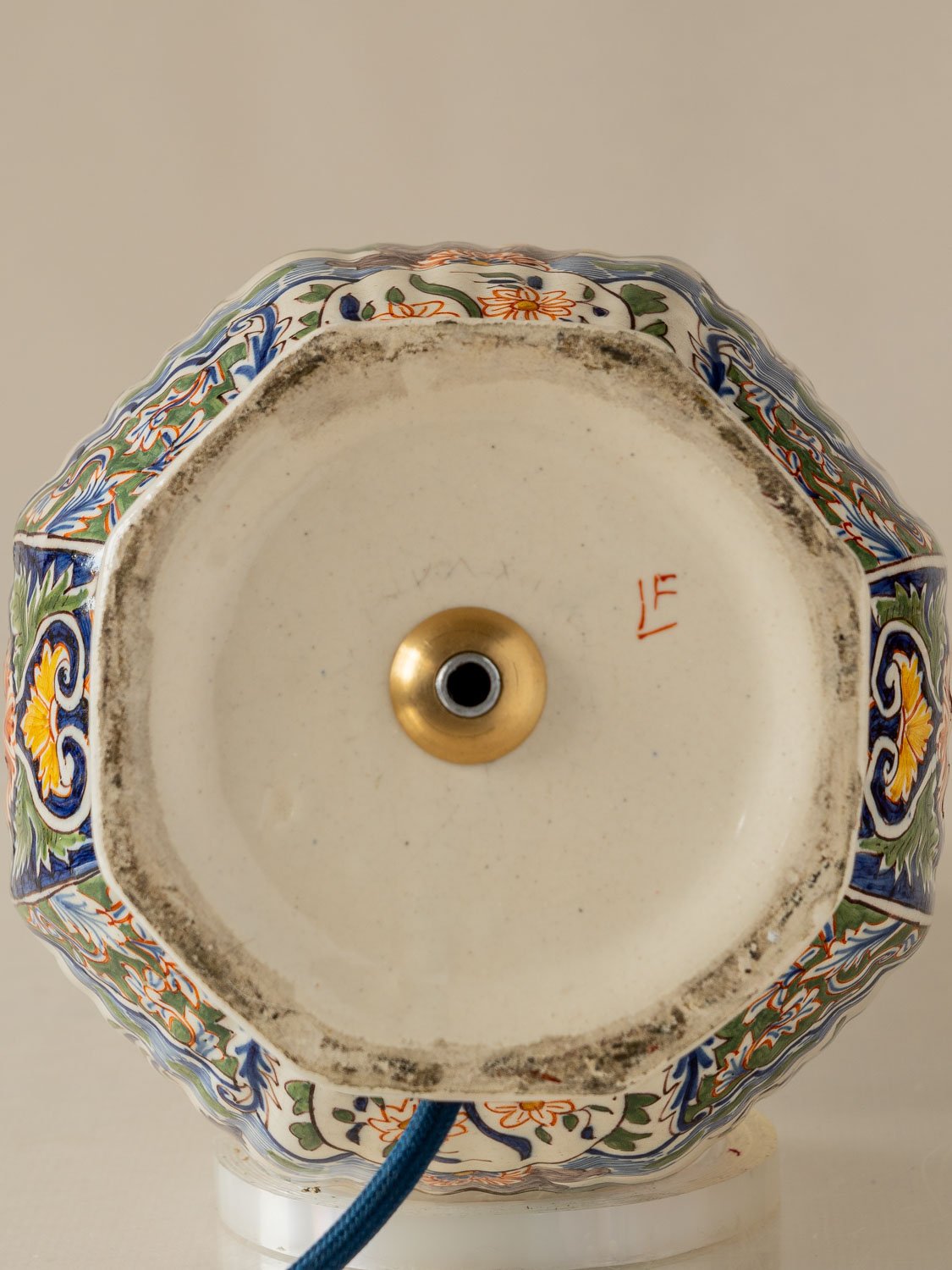
This is chinoiserie as the Dutch interpreted it: a garden scene drawn from the East but filtered through the Delftware tradition, more relaxed and more painterly than its porcelain sources. The underside carries the hand-painted brown Makkum shield mark with a model number and a painter's monogram, the form the workshop used through the mid-twentieth century — confirming both maker and period.
About Royal Tichelaar Makkum
Royal Tichelaar Makkum is the oldest company in the Netherlands, based in the Frisian town of Makkum, where a brickworks on the site is documented as early as 1572. The Tichelaar family has run the pottery since the seventeenth century, and from around 1890 concentrated on decorative tin-glazed earthenware in the Delft tradition. Its hand-painted blue-and-white and polychrome wares are valued by collectors for their crisp draftsmanship and faithful continuation of historic Dutch methods.